2026 Cheongsong White Porcelain Festival: Experience 500 Years of Korean Ceramic Art and Tradition

2026 Cheongsong White Porcelain Festival: Experience 500 Years of Korean Ceramic Art and Tradition

Cheongsong White Porcelain Festival

🗓️ 2026.09.11 ~ 2026.09.13

Cheongsong White Porcelain is a precious cultural heritage that has been passed down for over 500 years through the soil, water, and fire of Cheongsong, and through the fingertips of artisans. The process of completing a piece—where an artisan’s sincerity and waiting are added to materials obtained from Cheongsong’s nature—is a cultural asset containing the unique life and stories of Cheongsong.

The slogan “500 Years of History, 500 Years of Future, a Thousand-Year Promise” captures the festival’s intention to cherish the memories of the past 500 years and carry that value forward for the next 500 years. It is a promise to look at today’s Cheongsong White Porcelain anew, based on the tradition of the past, and to naturally pass on its beauty and meaning to the next generation.

The 2026 Cheongsong White Porcelain Festival offers a chance to look back at the time Cheongsong White Porcelain has walked, meet the current Cheongsong White Porcelain, and create new stories that will follow. A history of 500 years is not a time that stays in the past; it passes through today and leads to the future. The festival is designed as a time to remember the past 500 years, imagine the next 500 years together, and share a new promise that will eventually lead to a thousand years of history.

Visitors can encounter the beauty of Cheongsong White Porcelain up close through exhibitions, sales, experiences, and various cultural programs, and experience the special value of white porcelain born from soil, fire, and the fingertips of artisans.

Programs and Highlights

Performances

  • Opening and closing ceremony performances
  • Madang-geuk (traditional outdoor play)
  • Puppet shows
  • Samulnori
  • Street performances
  • Local resident performances

Exhibitions

  • Cheongsong White Porcelain photo staging exhibition
  • Artist collaboration exhibition
  • Cheongsong White Porcelain Research Society exhibition
  • Local resident exhibition

Experiences

  • Potter’s wheel experience
  • Hand-painting experience
  • Cheongsong White Porcelain play experience
  • Hanging wish wind chimes
  • Stamp experience

Sales & Food

  • Cheongsong White Porcelain sales zone
  • Craft market
  • Food trucks
  • Jumak (traditional tavern) operation

Festival Information

📍 Address: 36 Cheongsongbaekja-ro, Juwangsan-myeon, Cheongsong-gun, Gyeongsangbuk-do

🛏️ Accommodation near the event

💰 Fee: Free admission (some experience programs have a fee)

📞 Inquiry: 054-874-0101

⭐️ Instagram: https://www.instagram.com/cswp500/

🖥️ Homepage: https://www.cctf.or.kr/
Cheongsong White Porcelain Festival

Cheongsong white porcelain (Korean: Cheongsong baekja) is a white-glazed ceramic made in the Cheongsong area of North Gyeongsang Province, in the mountains of southeastern Korea. From roughly the sixteenth to the nineteenth century, local kilns produced a range of daily-use vessels that have been grouped together under this regional name. Unlike the white porcelain made for the royal court near Seoul, Cheongsong wares were not part of a centrally administered industry. They served a mostly local economy, and their reputation developed from the available materials and the skills of potters who settled in the area.

The color of the fired clay is the most noticeable property of Cheongsong baekja. The local clay contains less iron than many other Korean clays, so the body remains pale after firing. A thin glaze over the body produces a slightly milky surface. Depending on the kiln atmosphere and the exact composition of the clay, the resulting tone can have a faint blue cast or a warmer ivory tint. These differences are not treated as defects; they are used as clues for identifying where a piece was made.

The shapes are generally plain and practical. Large jars were used to store grain or fermented sauces; smaller jars held condiments and personal goods; bowls and bottles were made for everyday meals and drinks. Scholars could have used small brush rests or water droppers, but these too are modest in size and decoration. A line incised into the damp clay, a handle attached to a jar, or an iron-brown brushstroke are about as far as decoration usually goes. The surface itself carries the visual interest, and a piece changes appearance as the light moves across the glaze.

Modern visitors to the Cheongsong White Porcelain Festival can see the process in person: clay refinement, throwing, glazing, and firing. The festival also exhibits historical and contemporary pieces, with enough labels and demonstrations to clarify the differences between regional white porcelains. The tradition continues because the basic set of techniques is still practiced, not because the work is presented as an exceptional or mystical art form. It is a regional craft with a clear history, and its look follows from the materials and the uses it was designed for.
2026 Cheongyang Chili Pepper and Goji Berry Festival: Complete Guide to Korea’s Spiciest Autumn Celebration (Dates, Activities & Free Admission)

2026 Cheongyang Chili Pepper and Goji Berry Festival: Complete Guide to Korea's Spiciest Autumn Celebration (Dates, Activities & Free Admission)

<output>

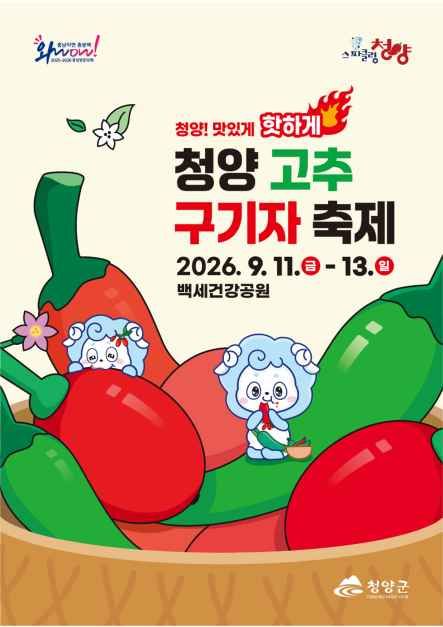
Cheongyang Chili Pepper and Goji Berry Festival

🗓️ 2026.09.11 ~ 2026.09.13

As autumn arrives in South Korea’s Chungcheongnam-do province, the Cheongyang Chili Pepper and Goji Berry Festival transforms this agricultural heartland into a celebration of two ingredients that define the region’s identity. What distinguishes this festival from countless other harvest celebrations across the country is its unwavering focus on participatory experiences—the organizers have designed nearly every element to engage visitors directly rather than keep them at arm’s length as spectators.

Cheongyang-gun has built its agricultural reputation on these two crops: the slender, vividly red cheongyang chili pepper (청양고추), among the spiciest varieties cultivated in Korea, and the antioxidant-rich goji berry (구기자), which thrives in the area’s continental climate with its sharp temperature swings between day and night. The festival leverages these specialties through what organizers describe as “five-sense satisfying” programs—experiences that engage sight, sound, smell, touch, and taste in equal measure.

What to Experience

The festival unfolds across five interconnected zones, each with a distinct focus:

Food Zone
The culinary offerings extend well beyond typical festival fare. A dedicated food court pavilion houses multiple vendors, while the specialized food experience village zone grants more intimate access to preparation techniques. The spicy liquor (酒) and spicy pride provincial college zone represents a particular curiosity—this appears to be a competitive or exhibition space where regional universities present their interpretations of how these ingredients intersect with alcohol. Food trucks provide additional flexibility for visitors with limited time.

Culture Zone
The World Chili Pepper and Goji Berry Welcome Center anchors this area, presumably offering historical and agricultural context for these crops. The Jicheon Stream photo zone and night landscape installations suggest the festival maintains its atmosphere after dark—a practical consideration given that September evenings remain pleasantly temperate.

Experience Zone
This zone concentrates the festival’s hands-on programming. The chili pepper and goji berry photo booth offers a predictable souvenir opportunity, but more substantively, children can engage with a wood experience booth and participate in making Cheongyang-i character snacks. Rice cake making, face painting, and “magic sponge” activities broaden the appeal for families with younger children.

Market Zone
Direct sales channels connect visitors with regional producers. Chili pepper and goji berry sales booths offer the raw ingredients, local agricultural specialty sales booths expand the selection to other regional products, and Cheongyang bread sales suggest that local bakeries have developed signature items incorporating these flavors.

Event Zone
The scheduled performances and competitions form the festival’s public face. Chef Yeo Kyung-rae’s cooking show provides professional culinary demonstration, while the national high school cooking survival competition—a format familiar from Korean television—offers amateur competitors a substantial platform. The Catch! Teenieping sing-along show addresses the preschool and early elementary demographic through a currently popular animated character. The King of Spicy Pride competition presumably tests participants’ tolerance for the chili pepper’s heat. More communally oriented activities include making giant geotjeori (fresh, unfermented kimchi) and assembling goji berry rice cake mosaics—both yielding tangible, shareable results.

Evening entertainment features invited singers including Song Ga-in (a prominent trot vocalist), Park Ji-hyun, Park Hyun-bin, and Solji (former member of the girl group EXID). The “Spread the Excitement of Cheongyang” and resident autonomy performances suggest additional programming drawn from local community groups.

For Families

The 2026 edition has specifically expanded its offerings for families with children. Beyond the aforementioned Catch! Teenieping performances and photo zones, the kids zone incorporates a wooden culture experience area and appearances by Cheongyang’s official mascots: Cheongyang-i, Cheong-chorong, and Cheong-hong-i. This represents a calculated effort to transform what might otherwise be a niche agricultural festival into multi-generational destination.

Practical Information

📍 Address: 16-6 Euncheondong-gil, Cheongyang-eup, Cheongyang-gun, Chungcheongnam-do

🛏️ Accommodations near the event

💰 Fee: Free

📞 Inquiry: 041-940-4852

🖥️ Homepage: https://칠갑마루.com/_festa

Cheongyang Chili Pepper and Goji Berry Festival

What are Cheongyang chili peppers?

Cheongyang chili peppers (청양고추) are a Korean chili variety developed in the 1980s and named after Cheongyang County in South Chungcheong Province. The peppers are slender, finger-sized, with pointed tips and skin that ranges from deep green to bright red depending on ripeness.

These peppers occupy a specific position on the heat spectrum. At 12,000 to 23,000 Scoville Heat Units, they exceed the mild heat of standard Korean green peppers without approaching the intensity of habaneros or ghost peppers. This range makes them useful for cooks who want noticeable spice without masking other flavors. The heat arrives quickly and lingers, followed by a mild sweetness that becomes more pronounced when the peppers are cooked or dried.

Several environmental factors in Cheongyang County contribute to the pepper’s character. The region’s mountainous elevation, significant temperature variation between day and night, and volcanic-derived soils with good drainage all promote higher capsaicin concentration. These conditions are not unique to Cheongyang, but local agricultural research and selective breeding have refined the variety over four decades.

Cheongyang now dominates domestic production of Korean hot peppers, accounting for roughly 70% of the national supply with annual shipments exceeding 200 billion won. This concentration has created a substantial processing economy. The fresh peppers appear in markets from late summer through autumn, but the harvest extends through year-round products: dried flakes (gochugaru), fermented pastes, oils, flavored snacks, and even capsaicin extracts for topical applications. The county hosts an annual pepper festival that draws visitors primarily from surrounding regions, where the crop serves as both agricultural product and local identifier.

In Korean cooking, “Cheongyang” functions as a shorthand for substantial heat. Restaurant menus often specify Cheongyang peppers to signal that a dish will be noticeably spicy rather than mildly seasoned. Home cooks use them fresh in stews and stir-fries, or dried and ground as a finishing spice. The commercial success of the variety has prompted some consideration of geographical indication protections, though the name has already entered general usage for similarly hot peppers grown elsewhere.

Jangsu Hanwoo and Apple Festival 2026: Dates, Programs, and How to Experience Korea’s First Red Food Festival

Jangsu Hanwoo and Apple Festival 2026: Dates, Programs, and How to Experience Korea's First Red Food Festival

Jangsu Hanwoo and Apple Festival

🗓️ 2026.09.10 ~ 2026.09.13

*The following festival details are from the previous year’s (2025) festival; details for the 2026 festival are currently being updated.*

With Hanwoo (Korean beef) and apples as its central themes, this is Korea’s first “Red Color Festival”—a distinction it has held since its inception in 2007. The festival reached its 19th edition in 2025, making it one of the more established regional celebrations in Jeonbuk Province. What began as a straightforward agricultural showcase has undergone a notable transformation; starting in 2024, the festival moved beyond its two original pillars to encompass what organizers now term “Jangsu Red Food,” incorporating omija (Schisandra berry) and tomato alongside Hanwoo and apples.

This expansion into a broader culinary category has accompanied a push into value-added products. Visitors now encounter not merely raw ingredients but a range of processed goods: apple beer, apple soju, apple bread, and omija liquor among them. The festival’s evolution from Korea’s first Red Color Festival to what it bills as Korea’s first Red Food Festival reflects a deliberate effort to reposition itself within the competitive landscape of Korean cultural tourism events.

Programs and Activities

The festival divides its offerings into four categories, allowing visitors to calibrate their participation according to interest and energy level.

1. Main Programs

The core experience centers on three large-scale installations: the Jangsu Hanwoo Yard, which organizers describe as the nation’s largest; the Apple Yard; and the Red Food Zone. Beyond these exhibition and market spaces, the festival has incorporated interactive culinary programming, including a Jangsu Red Food cooking experience featuring chefs from Culinary Class Wars (the Netflix series known for its Black and White Chefs format). Additional main-stage activities include a Jangsu Red Food temple food making experience and a parent-child cooking program focused on tomato spaghetti preparation.

2. Side Programs

For those drawn to spectacle and physical competition, the festival offers the National Hanwoo carcass carrying experience—a test of strength involving the literal transport of beef carcasses—and the National Jangsu Hanwoo power arm-wrestling competition.

3. Consumer Participation Programs

Hands-on activities with lower barriers to entry include Jangsu apple bracelet making, Jangsu apple keyring crafting, apple golf, apple fishing, and apple rice cake pounding (a twist on the traditional tteok preparation ritual).

4. Other Content

Younger visitors or those seeking gentler interactions can access pony riding and horse feeding experiences.


📍 Address: 378 Hannuri-ro, Jangsu-eup, Jangsu-gun, Jeonbuk Special Self-Governing Province

🛏️ Accommodations near the event

💰 Fee: Free

📞 Inquiry: 063-350-2356

🖥️ Website: https://www.jangsufestival.com/index.php

Jangsu Hanwoo and Apple Festival

What is Hanwoo?

Hanwoo is Korea’s native cattle breed, Bos taurus coreanae. For centuries, these animals were bred on the Korean Peninsula primarily as draft animals for rice farming, with written records of their husbandry appearing as early as the second century BCE. Their transition to beef production occurred gradually through the twentieth century as mechanization reduced demand for agricultural labor and rising incomes created new markets for premium domestic meat. By the 1990s, Hanwoo had been repositioned as a luxury product, differentiated from imported beef through branding and quality controls that emphasized its Korean origin.

The breed’s physical characteristics reflect both its history and its current purpose. Hanwoo cattle are generally smaller and slower-maturing than European beef breeds, with a genetic disposition toward intramuscular fat deposition that differs from the more subcutaneous fat typical of Angus or Hereford. Their meat shows fine, web-like marbling rather than the larger fat seams common in heavily grain-finished American beef. The fat itself has a lower melting point and a higher proportion of oleic acid, which produces the clean, slightly sweet flavor that distinguishes Hanwoo from the richer, more complex taste of Japanese Wagyu. The muscle color tends toward bright cherry red, a visual marker that Korean consumers associate with freshness and quality.

Production standards are intensive and tightly controlled. The national grading system, administered by the Korean Ministry of Agriculture, assigns numerical scores for marbling distribution, meat color, fat color, and texture, with 1++ reserved for carcasses meeting the most stringent criteria across all categories. Most cattle enter feedlots at twelve to sixteen months and remain on grain-based finishing rations for an additional six to twelve months—substantially longer than the typical four-to-six-month finishing period for American beef. This extended feeding, combined with the breed’s slower growth rate, means Hanwoo cattle often reach market weight at twenty-four to thirty months of age. The result is higher feed costs and lower throughput, which producers recoup through premium pricing in a domestic market that has historically limited imported beef through tariffs and quotas.

Regional variations within Hanwoo production have developed their own reputations. Hoengseong in Gangwon Province, located in the mountainous interior where the 2018 Winter Olympics were held, established the benchmark for premium Hanwoo during the 1990s and early 2000s through coordinated marketing and consistent grading. More recently, Jangsu County in North Jeolla Province has built comparable recognition by emphasizing longer finishing periods—often pushing cattle past thirty months—and by documenting lineage through bloodline registries that appeal to consumers seeking assurance of genetic purity. The region’s producers cite local water quality and temperature differentials between day and night as factors contributing to cattle health and feed conversion, though the extent to which these variables meaningfully affect meat quality remains subject to the interpretive preferences of graders and consumers rather than controlled analysis.

The economics of Hanwoo production continue to evolve. Domestic consumption peaked in the mid-2000s as beef prices rose and pork, which Korea produces more efficiently, captured market share. Export efforts have been limited by production volume constraints and by the breed’s adaptation to a specific palate—Korean consumers generally prefer leaner, less marbled meat than Japanese or American markets. Recent research programs have attempted to reduce finishing times through selective breeding without sacrificing marbling scores, with mixed results. Meanwhile, the status associations of Hanwoo consumption persist: the meat remains a fixture of gift-giving, celebratory meals, and business entertainment, occasions where its price reinforces rather than constrains its appeal.

2026 Pyeongchang Hyoseok Cultural Festival Guide: Experience the Magic of Buckwheat Flowers and Korean Literature

2026 Pyeongchang Hyoseok Cultural Festival Guide: Experience the Magic of Buckwheat Flowers and Korean Literature

Pyeongchang Hyoseok Cultural Festival

🗓️ 2026.09.04 ~ 2026.09.13

The Pyeongchang Hyoseok Cultural Festival is a representative autumn cultural tourism festival of South Korea, held every September in Bongpyeong-myeon, Pyeongchang-gun, Gangwon-do. Since its launch in 1999, the festival has taken place in the actual setting of Gasan Lee Hyo-seok’s novel “When Buckwheat Flowers Bloom,” a masterpiece of modern Korean short stories. The festival’s defining scenery is the white buckwheat flower fields blooming profusely, as if salt had been sprinkled across the land. Visitors can personally experience the natural landscape of Bongpyeong that serves as the novel’s backdrop.

Main programs include literary events honoring Lee Hyo-seok’s literary legacy, traditional folk games, a local food market, and cultural and artistic performances staged with local residents and artists. Through these offerings, the festival promotes the region’s literary assets and rural traditional culture while contributing to the revitalization of the local economy.

1. Main Programs

  • Madang-geuk (Traditional Outdoor Play) Performance (When Buckwheat Flowers Bloom) — the festival’s signature theatrical work, recreating the narrative of the novel in a traditional outdoor setting.
  • 47th National Hyoseok Writing Contest — a national competition inviting writers to carry on the festival’s literary tradition.
  • 4th Pyeongchang Buckwheat Flower Song Festival — a musical program celebrating buckwheat flowers and rural life.
  • Lee Hyo-seok Literary Award Ceremony — a formal recognition of literary achievement held as part of the festival.
  • Radio Open Broadcast — a live broadcast from the festival site, bringing its atmosphere to listeners beyond the venue.

2. Side Programs

  • Various performances by local performance troupes, offering a continuous display of regional talent throughout the festival.

3. Consumer Participation Programs

  • Into the Novel via Literary Train — a themed train experience that carries visitors into the world of the novel. The literary train boarding fee is paid.
  • Enjoy the Festival with Stamp Tour — a free stamp-collecting tour of the festival grounds; small prizes are provided.
  • Music Journey with DJ Choi Yong-jin — a free program featuring music story requests.
  • Find the Golden Buckwheat! — a free treasure-hunt program conducted only during program operating hours; winners receive small prizes.
  • Fallen Leaves Burning Experience — a fire-gazing experience conducted after 18:00; free of charge.

4. Other Information

  • Free shuttle bus operation: from Pyeongchang Station to the festival site.

Admission Fee

Paid (5,000 KRW). Free for children under 36 months, disabled persons, and persons of national merit. The exemption applies only when a verifiable certificate is provided. No group discounts and no senior discounts are available.

📍 Address: 157 Hyoseok-gil, Bongpyeong-myeon, Pyeongchang-gun, Gangwon-do

🛏️ Accommodations near the event

💰 Fee: Paid

📞 Inquiry: 033-335-2323

🖥️ Homepage: https://www.hyoseok.com/

평창효석문화제

Lee Hyo-seok and the buckwheat flowers of Pyeongchang

Lee Hyo-seok (1907–1942) was a Korean writer from Pyeongchang County. He is known mainly for the short story “When Buckwheat Blooms” (1936), a work that has been widely read in Korea since its publication. The story follows a middle-aged peddler and his younger companion as they travel through a mountain village on a moonlit night. Buckwheat fields line their path, and the white flowers look almost silver in the dark. The plot is not dramatic in the usual sense; the meaning comes from what the travelers notice, remember, and leave unsaid. The story has long been taught in Korean schools and is often cited as an example of how a writer can build a narrative from observation and memory. Lee died in 1942, at thirty-five, and his literary reputation rests on a relatively small but durable body of work.

The connection to Pyeongchang is direct. Lee was born in the county, and his writing repeatedly returns to the kind of landscape he knew there: mountain farms, narrow roads, seasonal crops. In “When Buckwheat Blooms,” the buckwheat field is not a backdrop. The travelers spend the night surrounded by the crop, and the landscape changes how they talk and remember. Every year in September, the Pyeongchang Hyoseok Cultural Festival uses that association to draw visitors to Bongpyeong, where buckwheat is still grown widely. The festival includes literary readings, exhibitions, and local dishes made from buckwheat. It is, in effect, a seasonal return to the landscape Lee wrote about, with the fields blooming again at the same time of year his story takes place.

Ya Taiwan Fest 2026 at Hibiya Park, Tokyo: Savor Taiwanese Street Food, Cool Down with Shaved Ice, and Release Sky Lanterns

Ya Taiwan Fest 2026 at Hibiya Park, Tokyo: Savor Taiwanese Street Food, Cool Down with Shaved Ice, and Release Sky Lanterns

Ya Taiwan Fest 2026

A gathering of fantastical “Sky Lantern Experiences,” piping hot gourmet food to blow away the late summer heat, and cooling drinks and shaved ice!

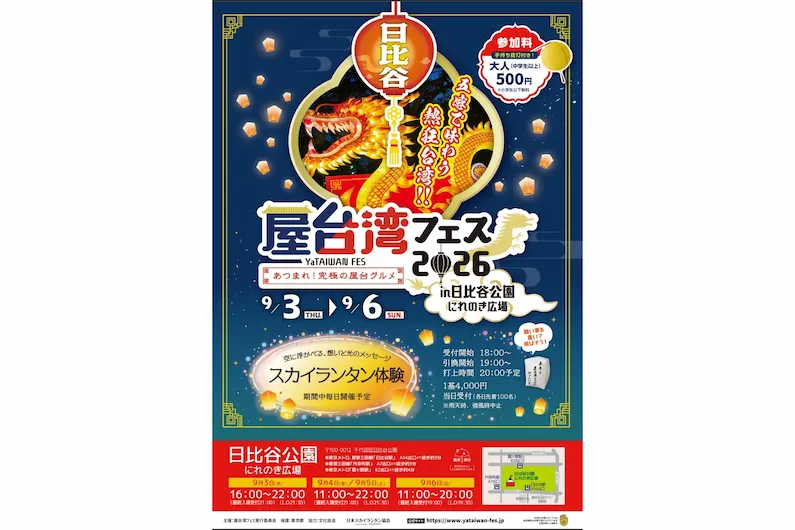
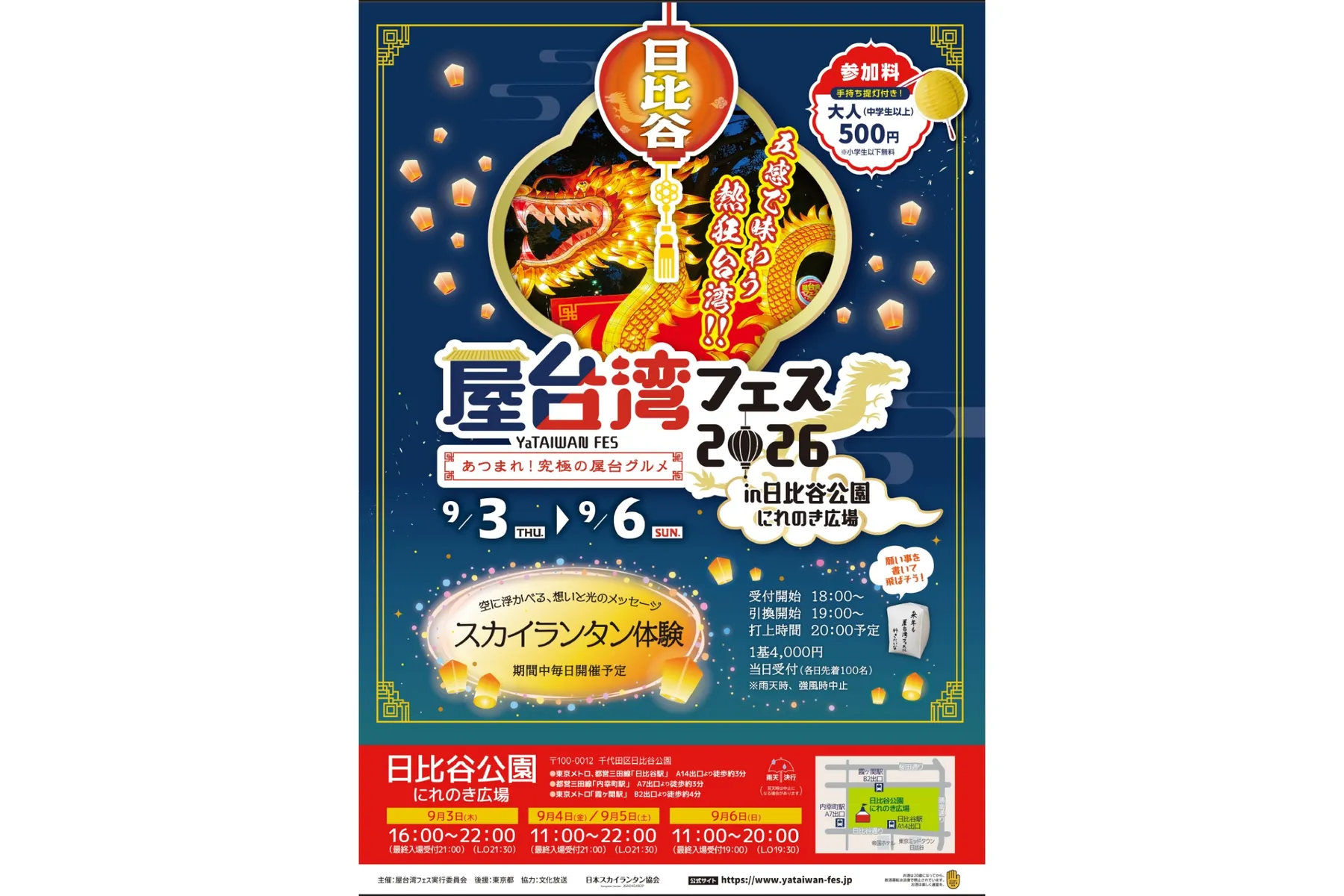
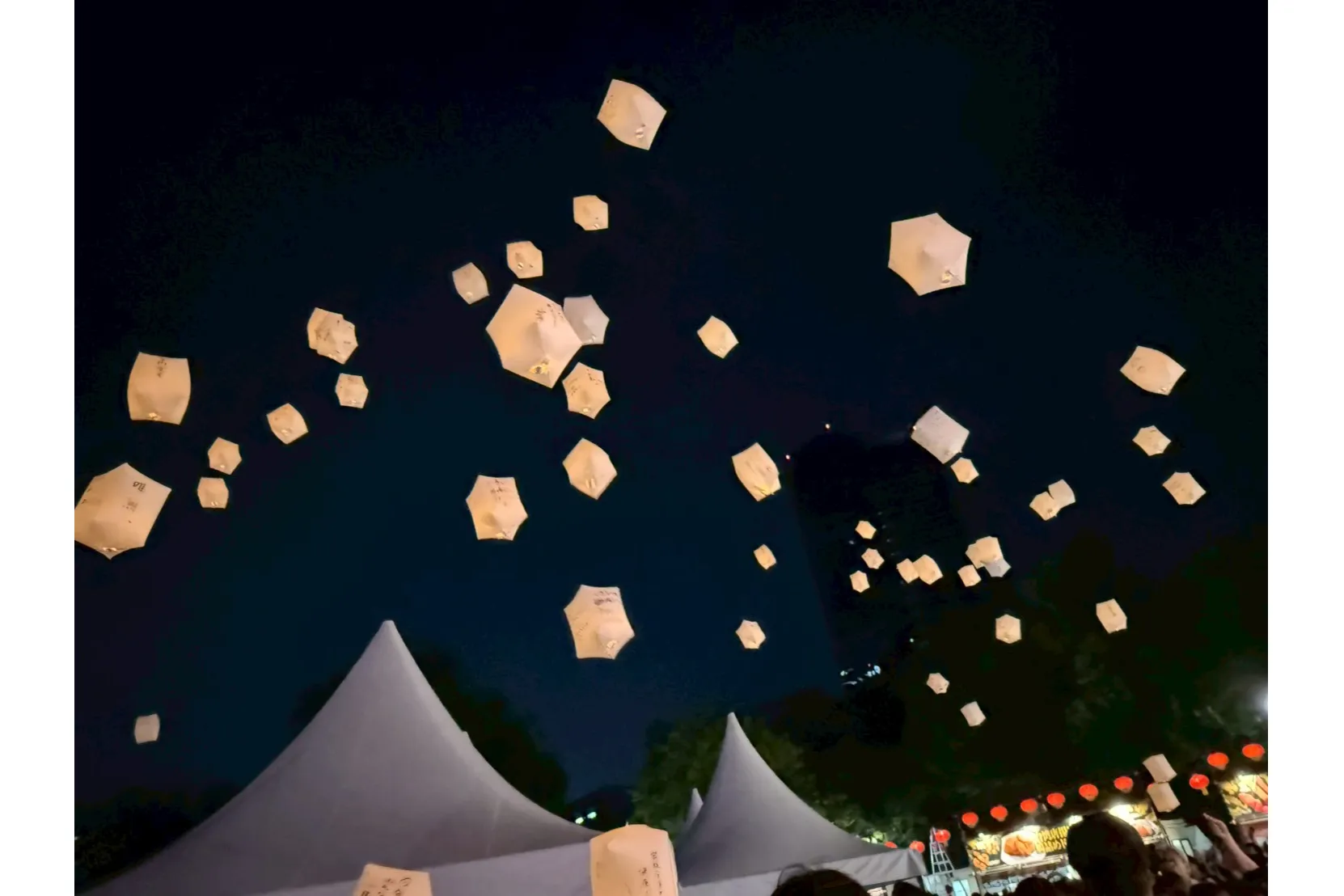
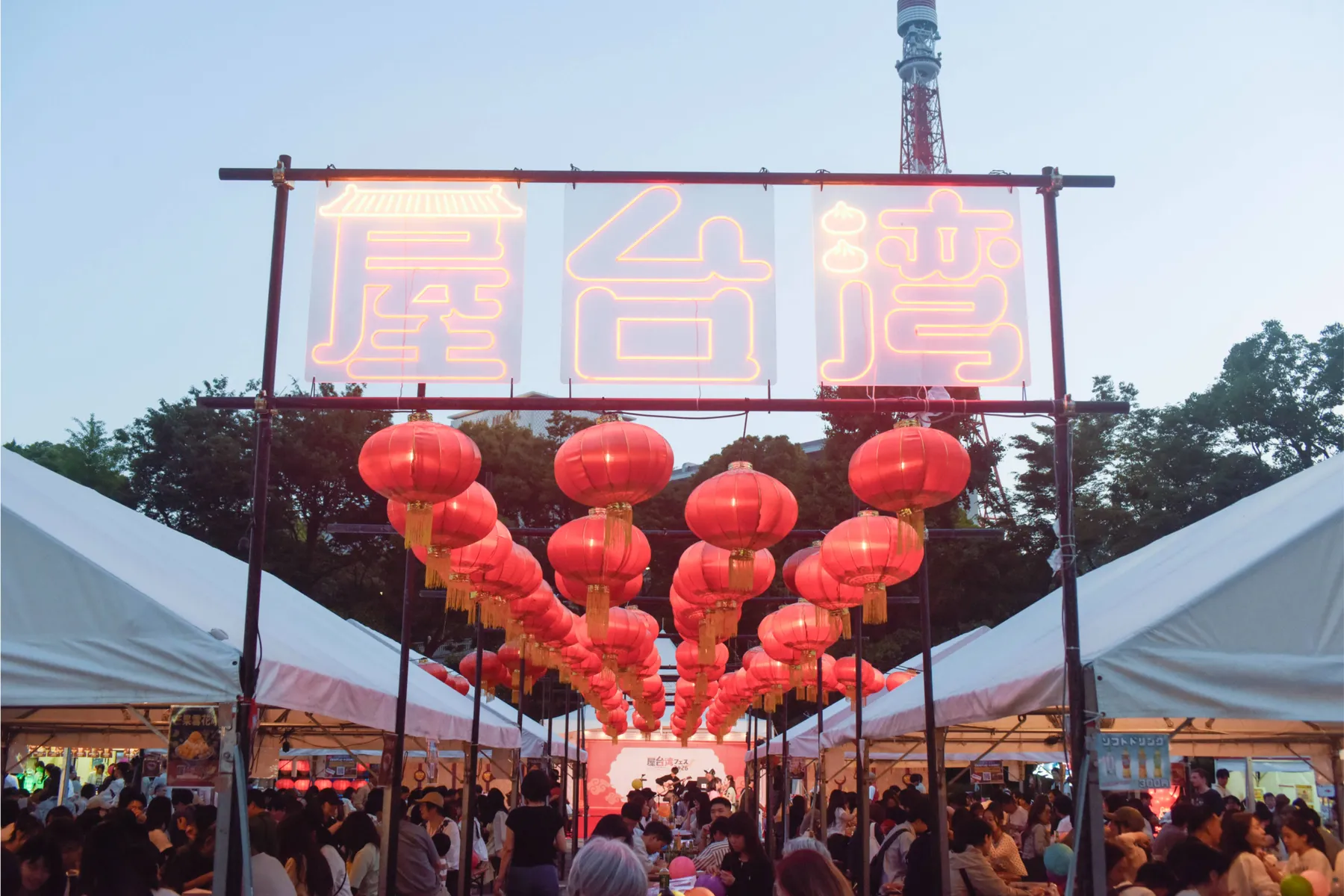
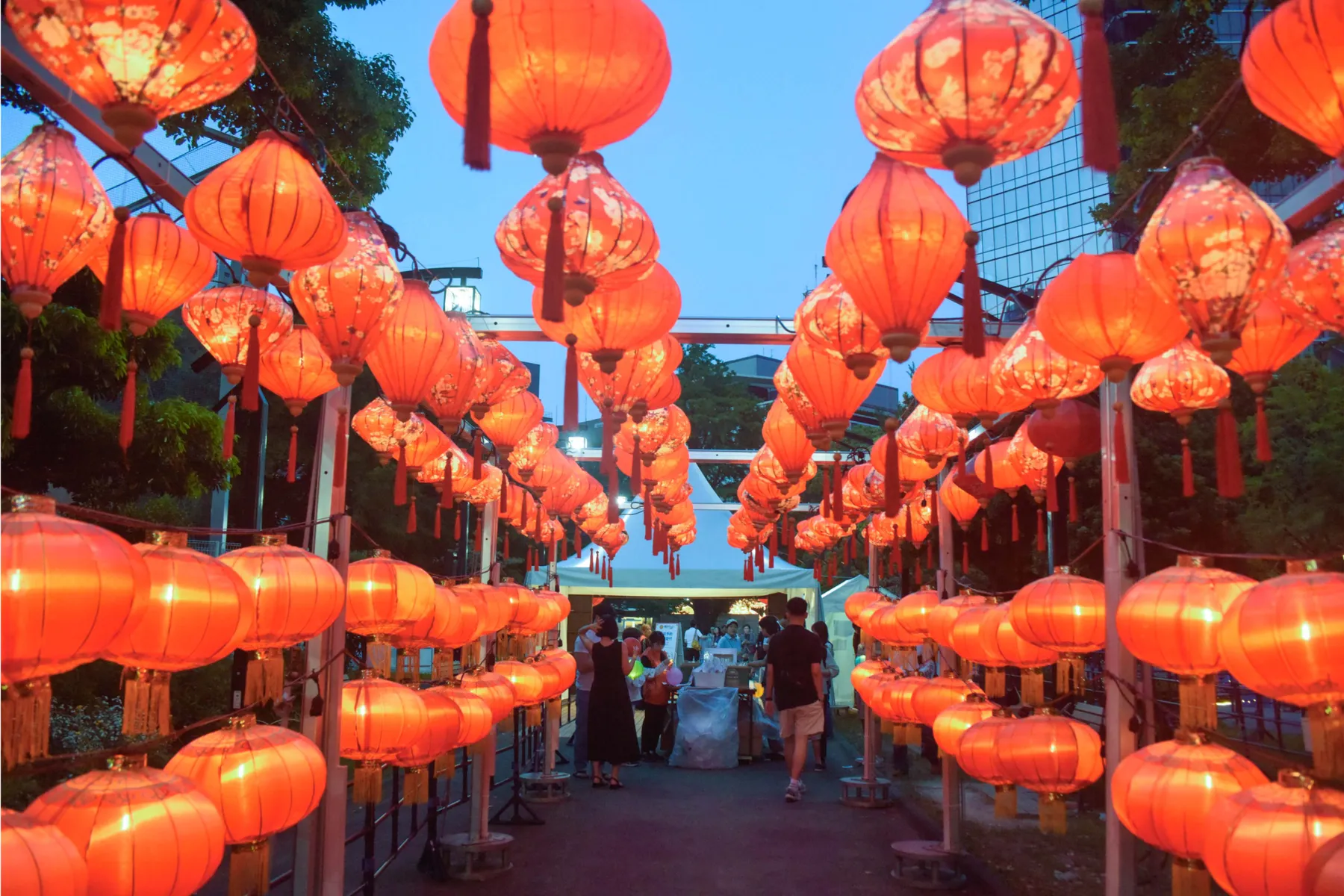
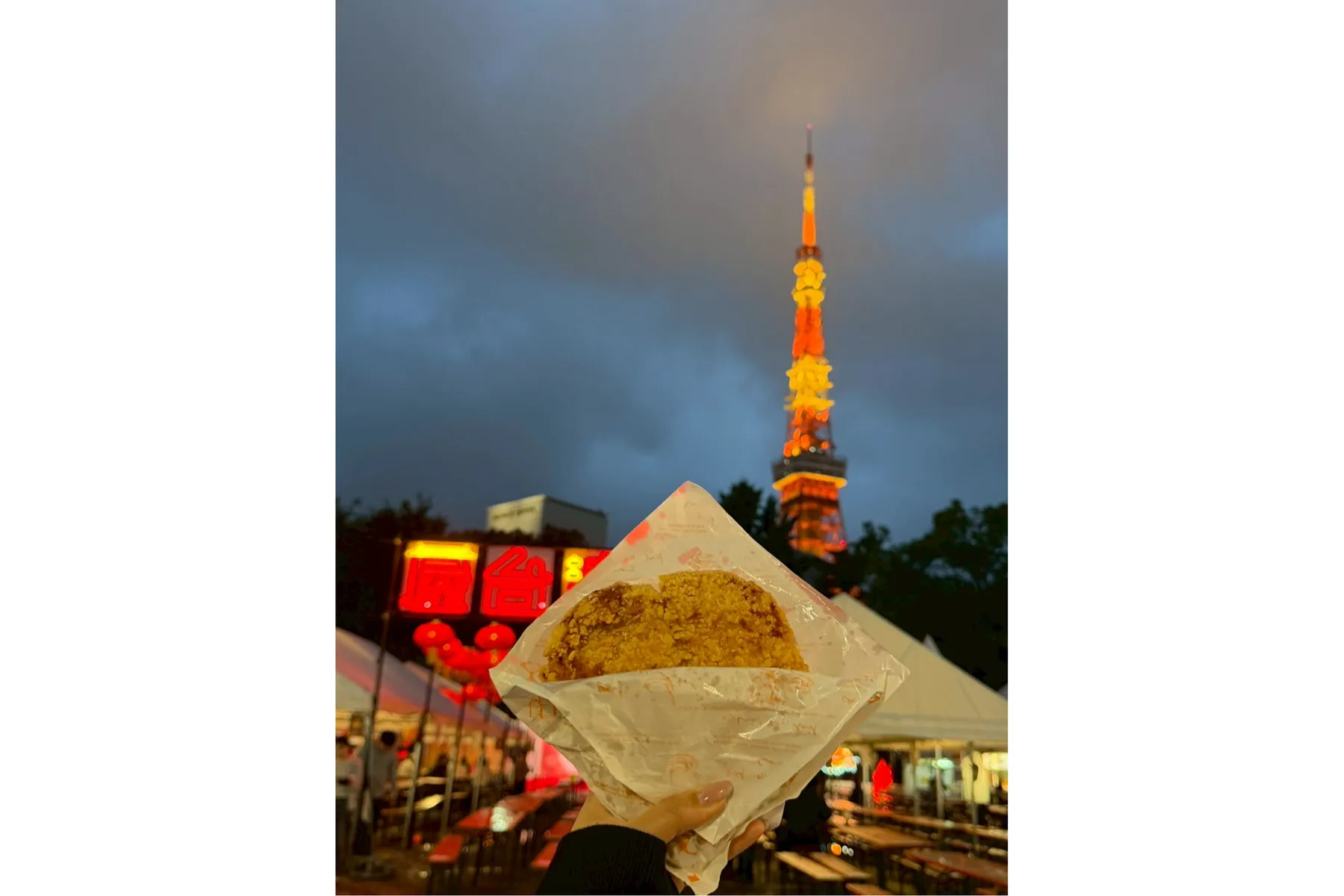
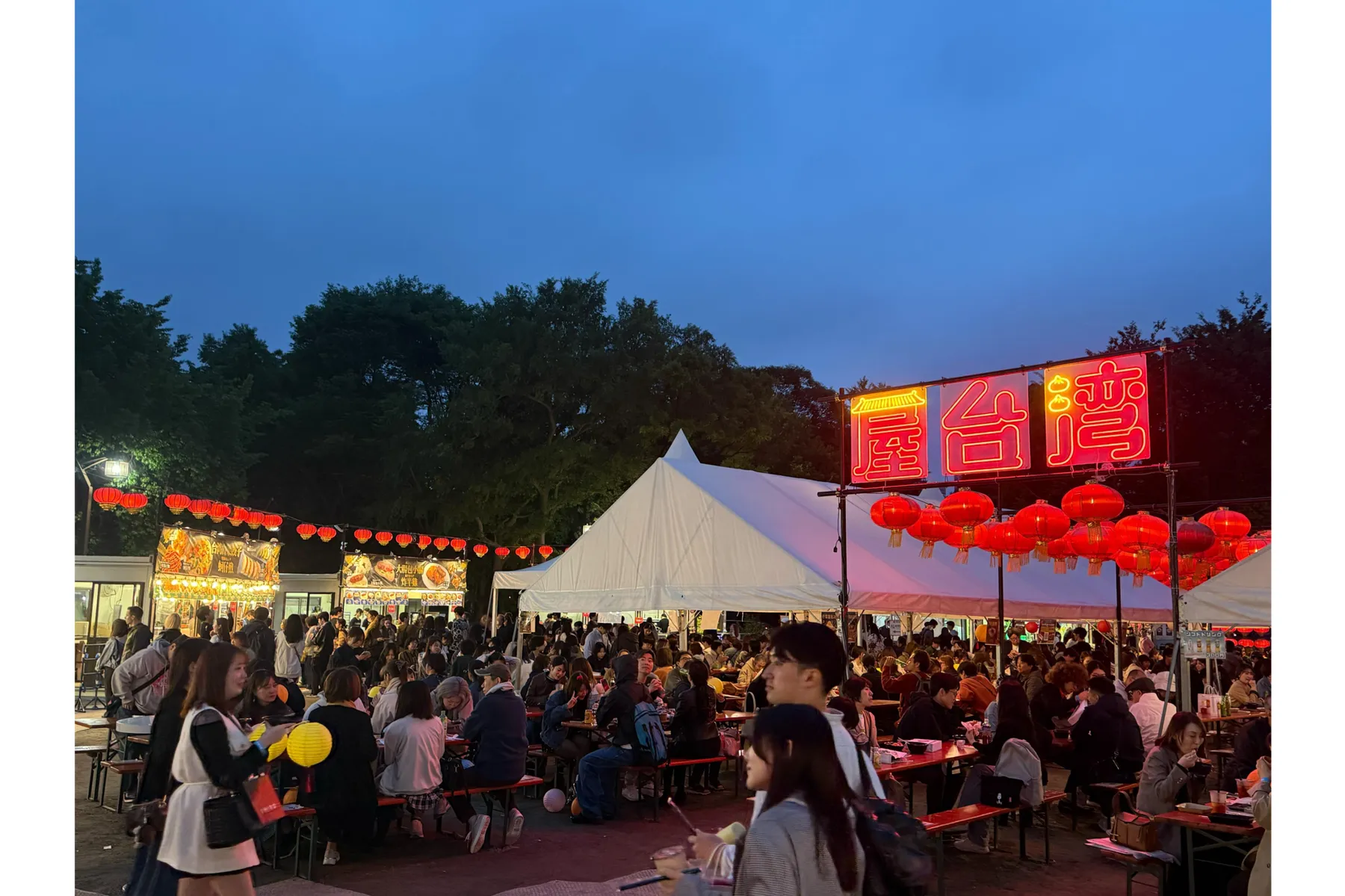
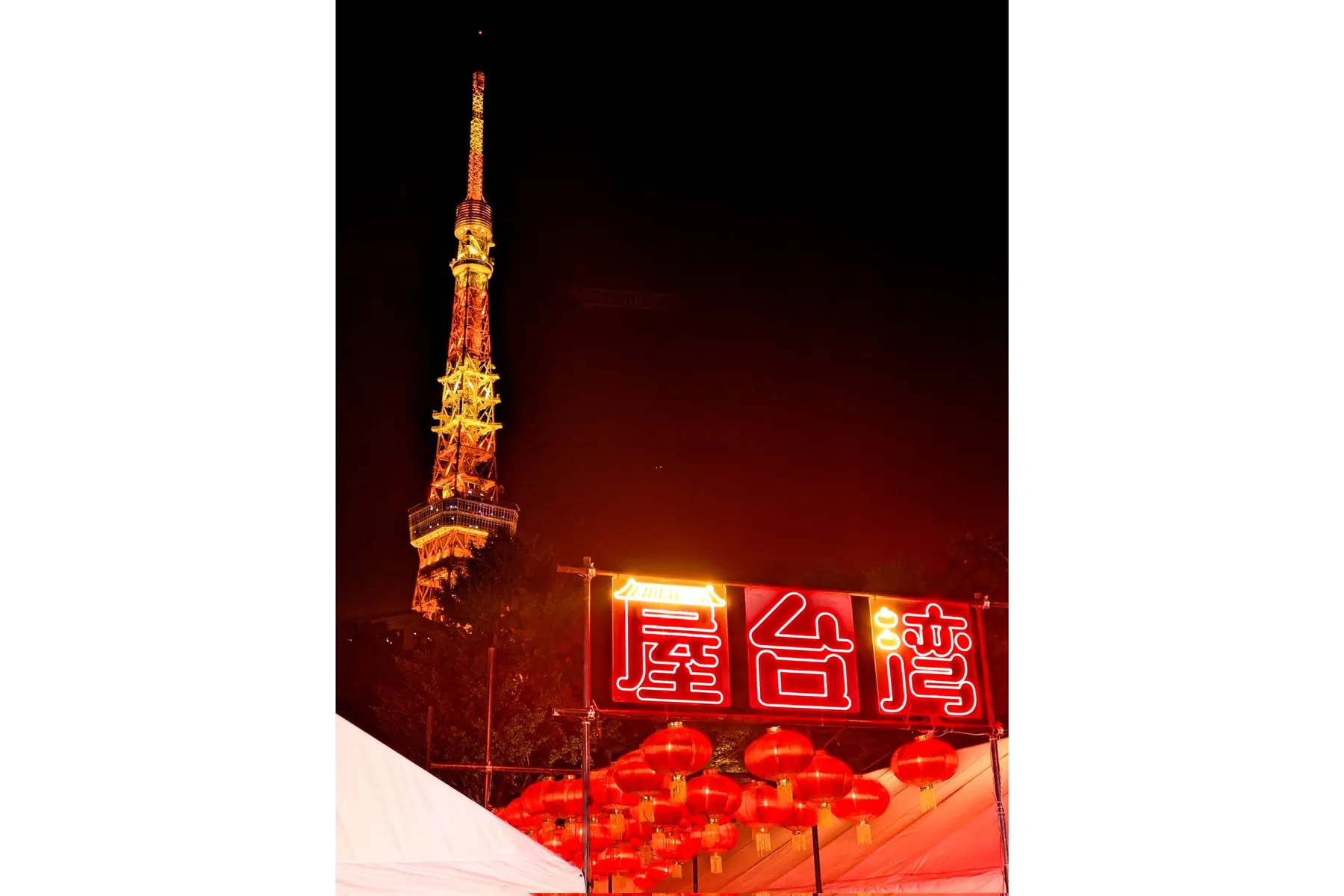
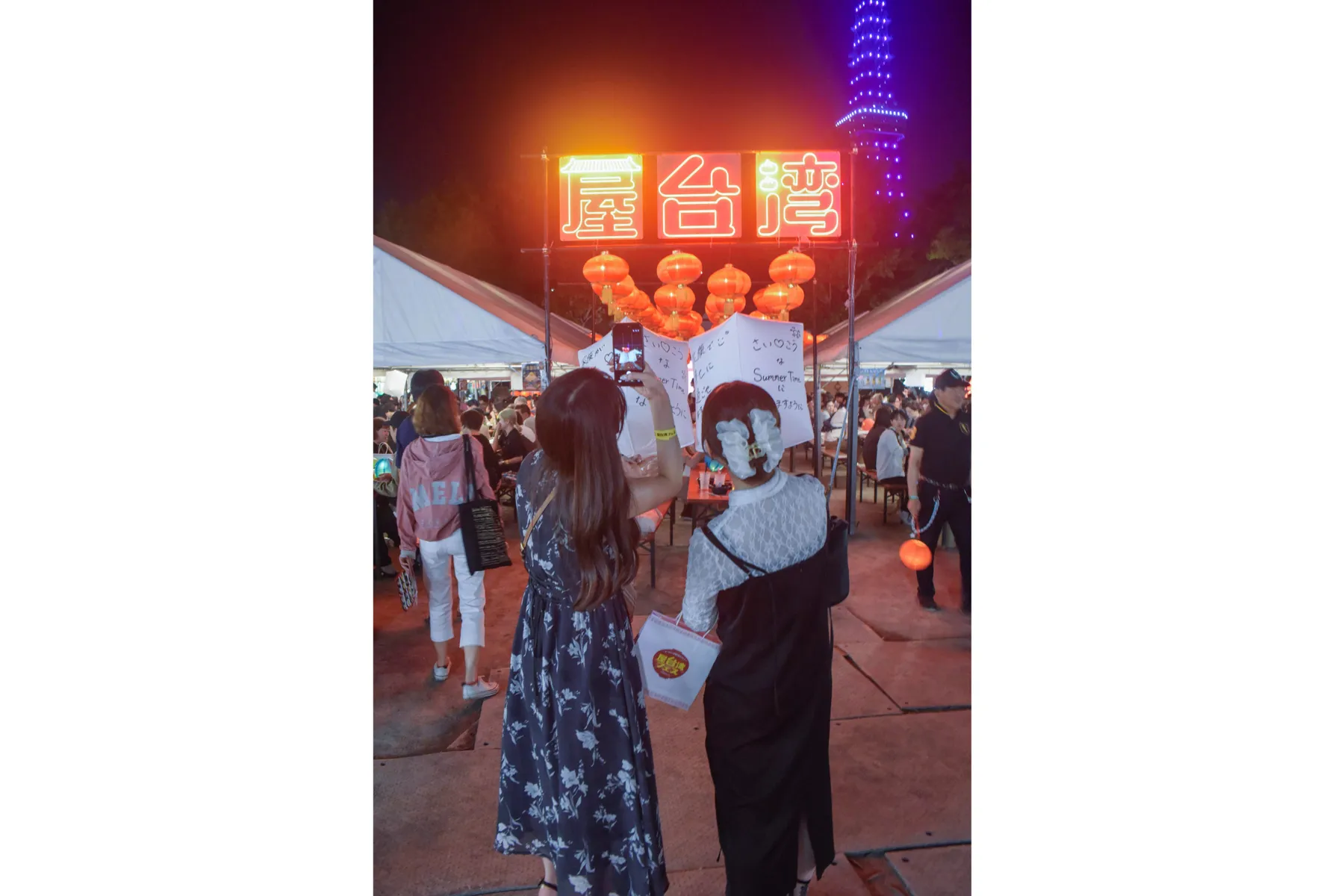
The Yataiwan Fes Executive Committee will hold the first “Yataiwan Fes 2026 ~Gather! The Ultimate Street Food~,” a street food event themed around Taiwan’s “Night Markets,” for four days from Thursday, September 3 to Sunday, September 6, 2026, at the Hibiya Park Nirenokki Hiroba. In addition to a gathering of Taiwan beer, sweets, and street food reminiscent of Taiwan’s popular tourist night markets, the “Sky Lantern Experience,” where lanterns with written wishes are released into the night sky, is scheduled to be held every day during the period. Why not visit the venue to fully experience the charms of a Taiwanese night market, from piping hot gourmet food you’ll want to eat even in the late summer heat to cooling drinks and shaved ice?

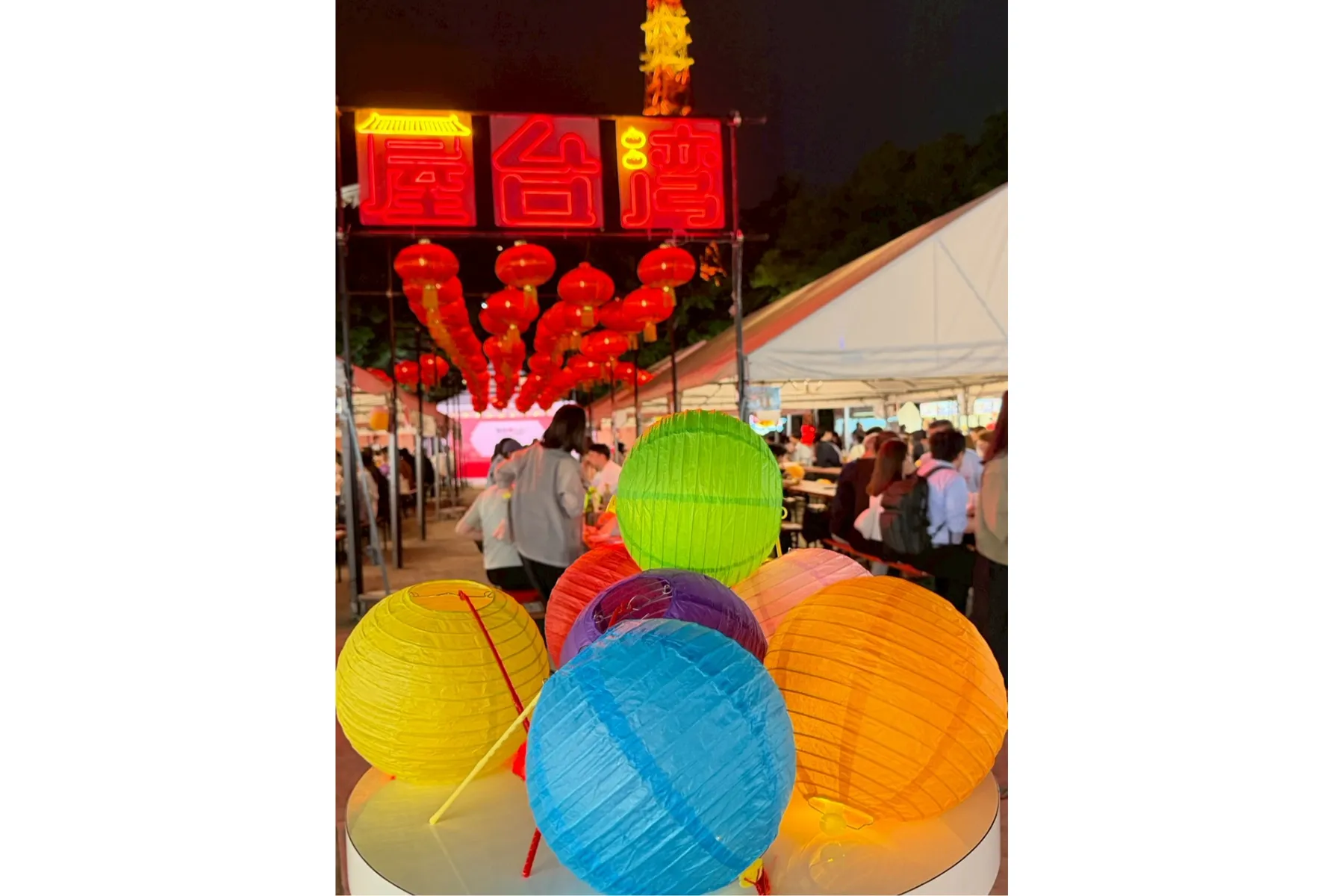
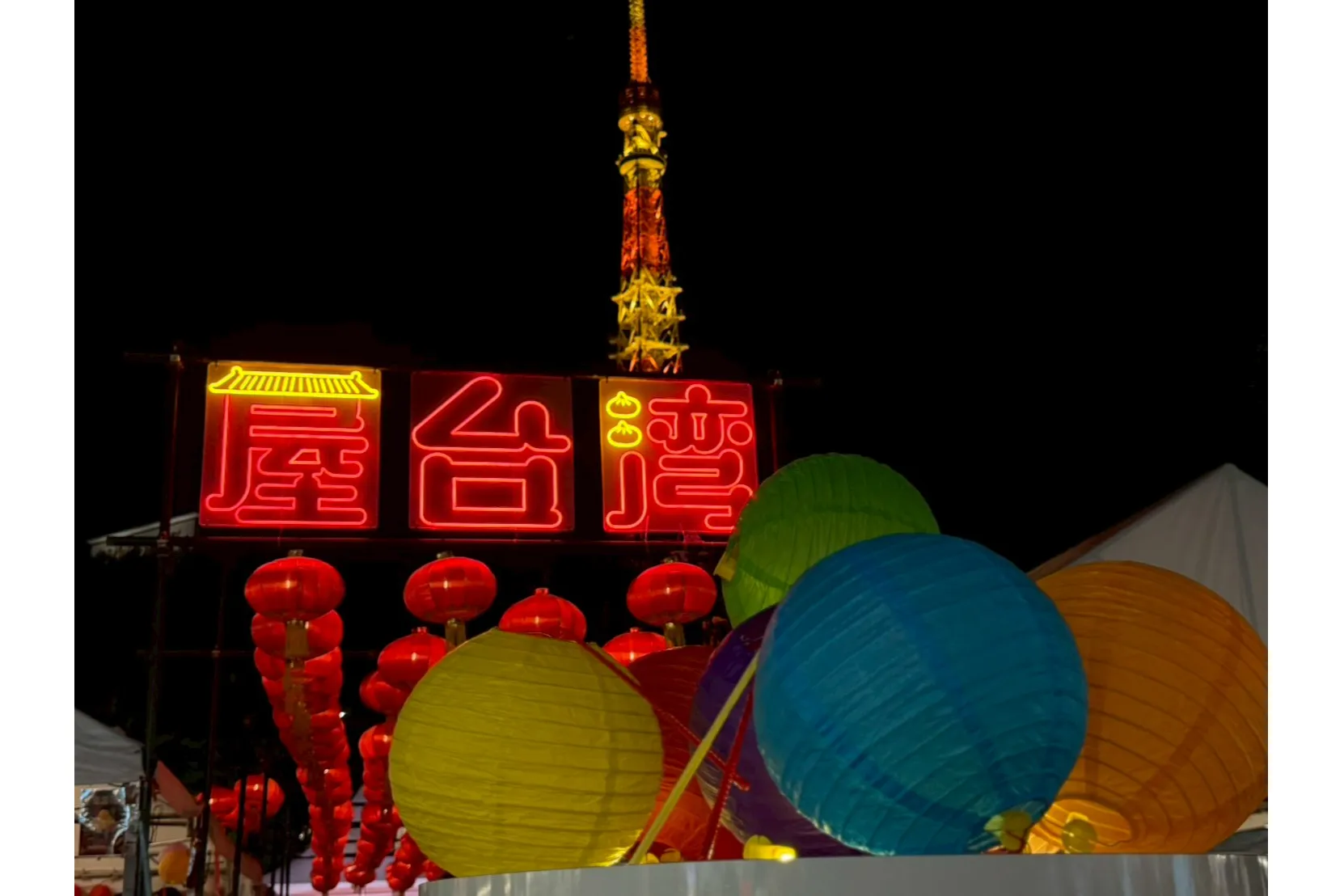
As the first edition of the event, it brings the atmosphere of Taiwan’s night markets to central Tokyo, with food stalls, games, shopping, and performances spread across the park.

Sky Lanterns in Hibiya Park!

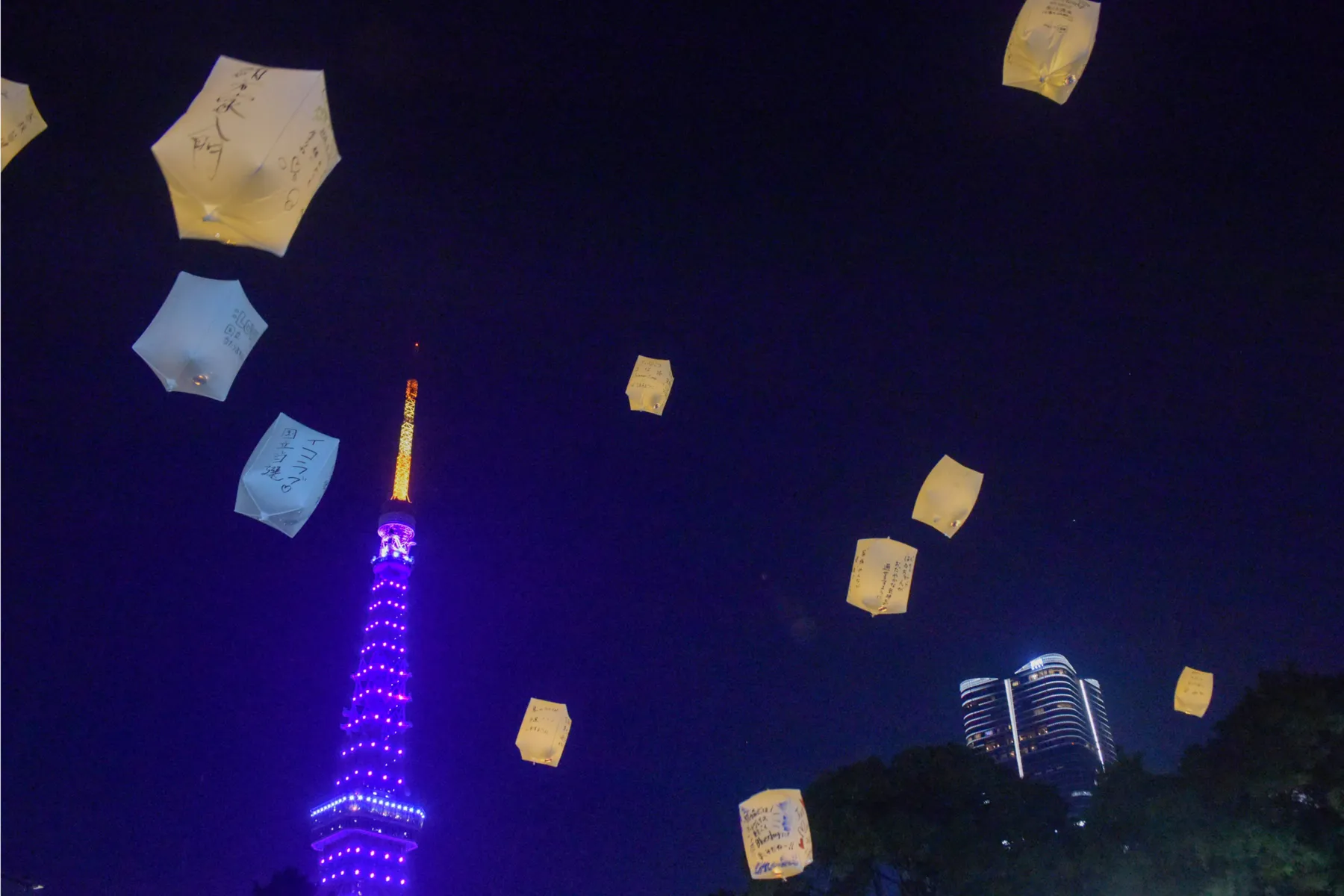
The “Sky Lantern Experience,” which reproduces the lantern release of Taiwan’s popular tourist spot “Shifen,” is scheduled to be held every day during the period. You can enjoy a fantastical moment of light by releasing lanterns written with wishes into the night sky.

  • Reception starts: 18:00~
  • Exchange starts: 19:00~
  • Launch time: Scheduled for 20:00
  • Fee: 4,000 yen per lantern (Same-day reception, first 100 people per day / No advance reservations)

*Cancelled in case of rain or strong winds

Shifen, a town in northern Taiwan, is known around the world for its sky lantern tradition, and this event recreates that experience in the heart of Tokyo. Since participation is limited to the first 100 people each day and no advance reservations are accepted, those hoping to take part should plan to arrive early.

Piping Hot Gourmet You’ll Want to Eat Even in Midsummer!

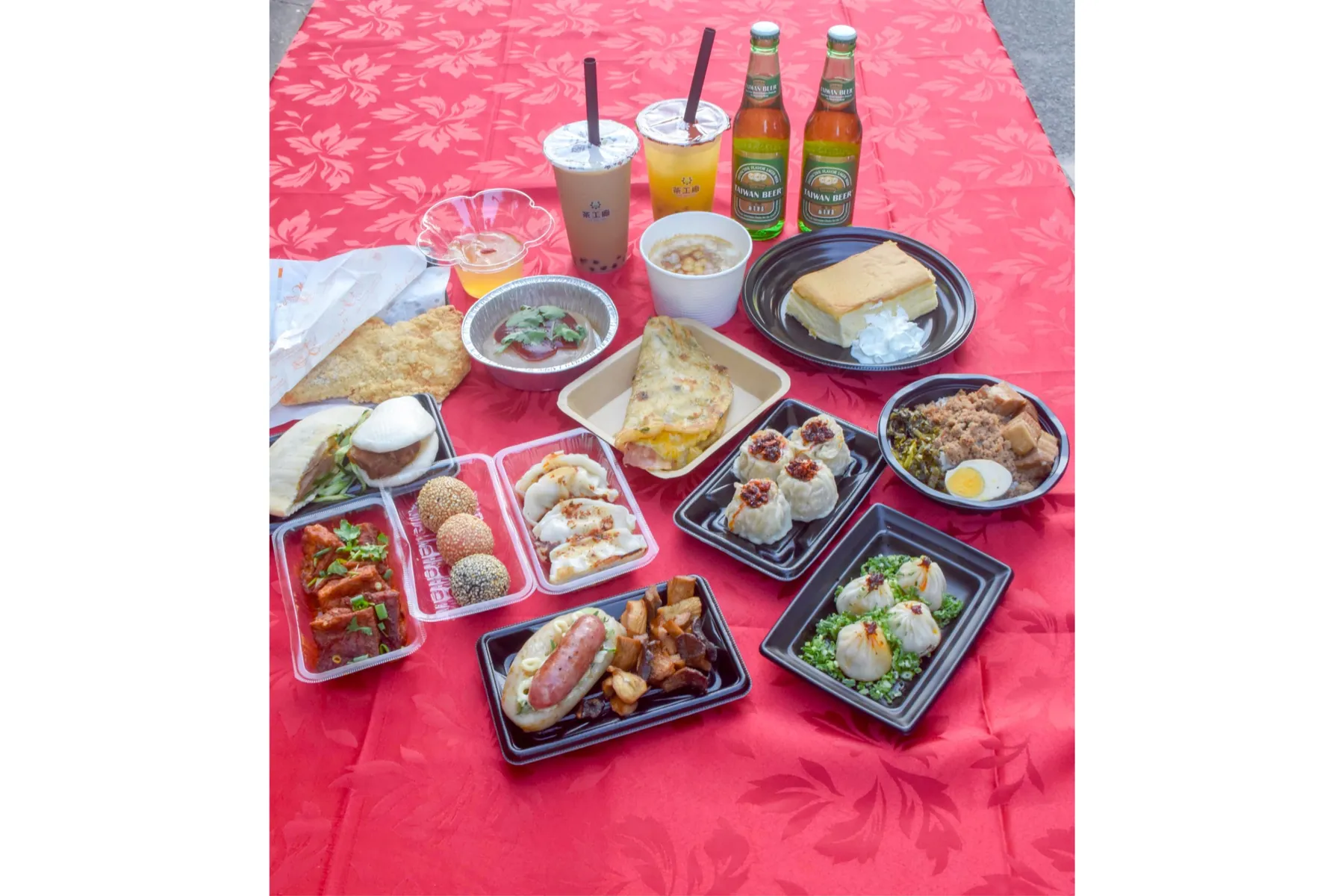
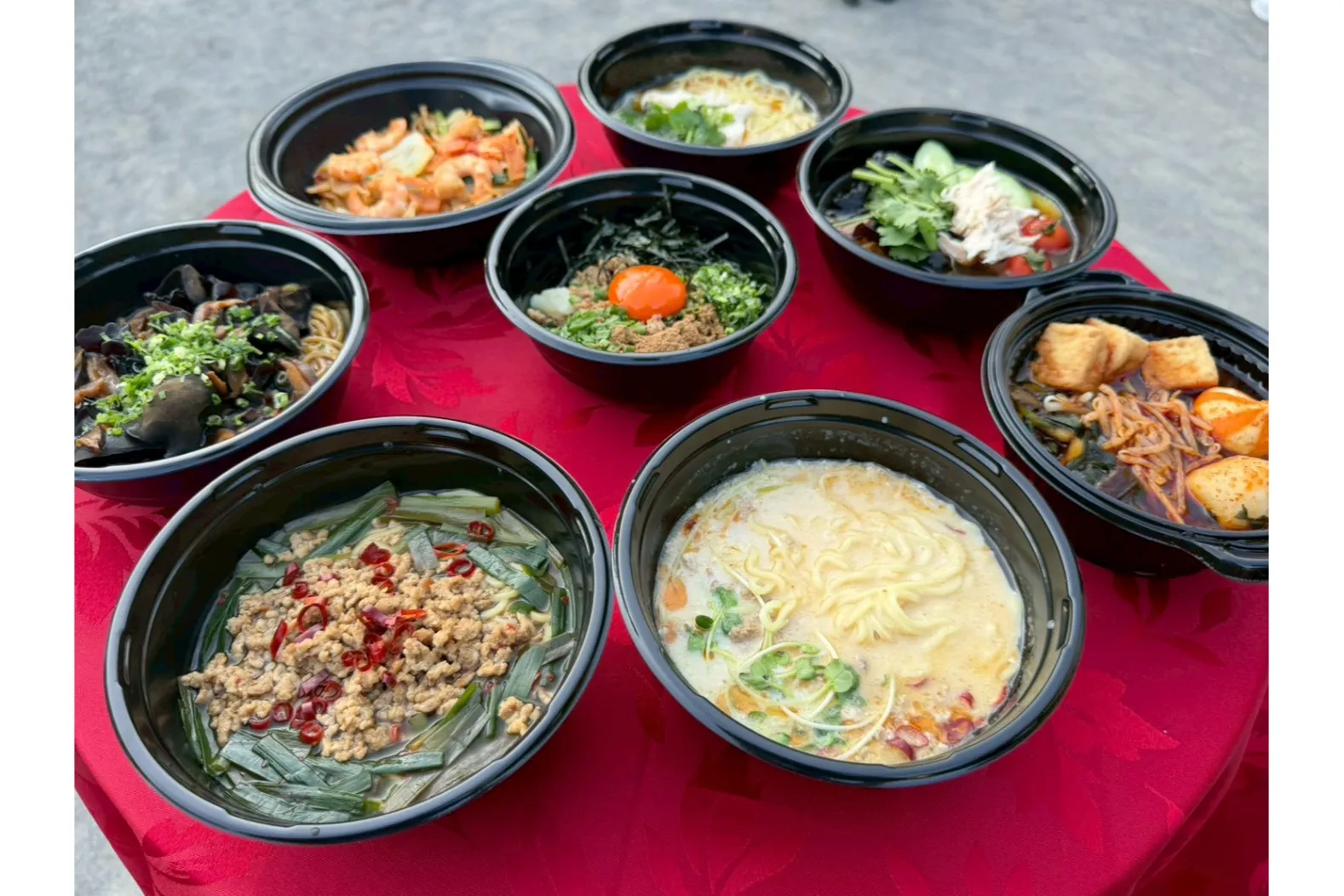
Even in the severe late summer heat of September, freshly made, piping hot Taiwanese street food will stimulate your appetite. A lineup just like the authentic locations will color the venue, featuring:

  • Beef Noodle Soup (Niuroumian)
  • Roasted Duck (Taiwan Duck)
  • Pan-fried Small Buns (Shao Xiao Long Bao)
  • Braised Pork Fried Rice (Lu Rou Fried Rice)
  • Scallion Pancake (Negi Pie)
  • Taiwan Fries
  • Braised Pork Rice (Lu Rou Fan)
  • Large Fried Chicken Fillet (Da Ji Pai)
  • Sausage in a Sausage (Dachang Bao Xiaochang)
  • Meatball (Ba Wan)
  • Taiwanese Chinese Cabbage Dumplings
  • Oyster Omelet
  • Taiwanese Dry Mixed Noodles (Taiwan Mazesoba)
  • Taiwanese Dan Dan Noodles (Taiwan Ramen)
  • Taiwanese Mapo Tofu
  • Pepper Buns (Koshou Man)

From hearty noodle soups and braised pork rice to the Large Fried Chicken Fillet and Sausage in a Sausage, the menu spans the range of Taiwanese night market classics.

Cooling Drinks & Cooling Gourmet (Shaved Ice)

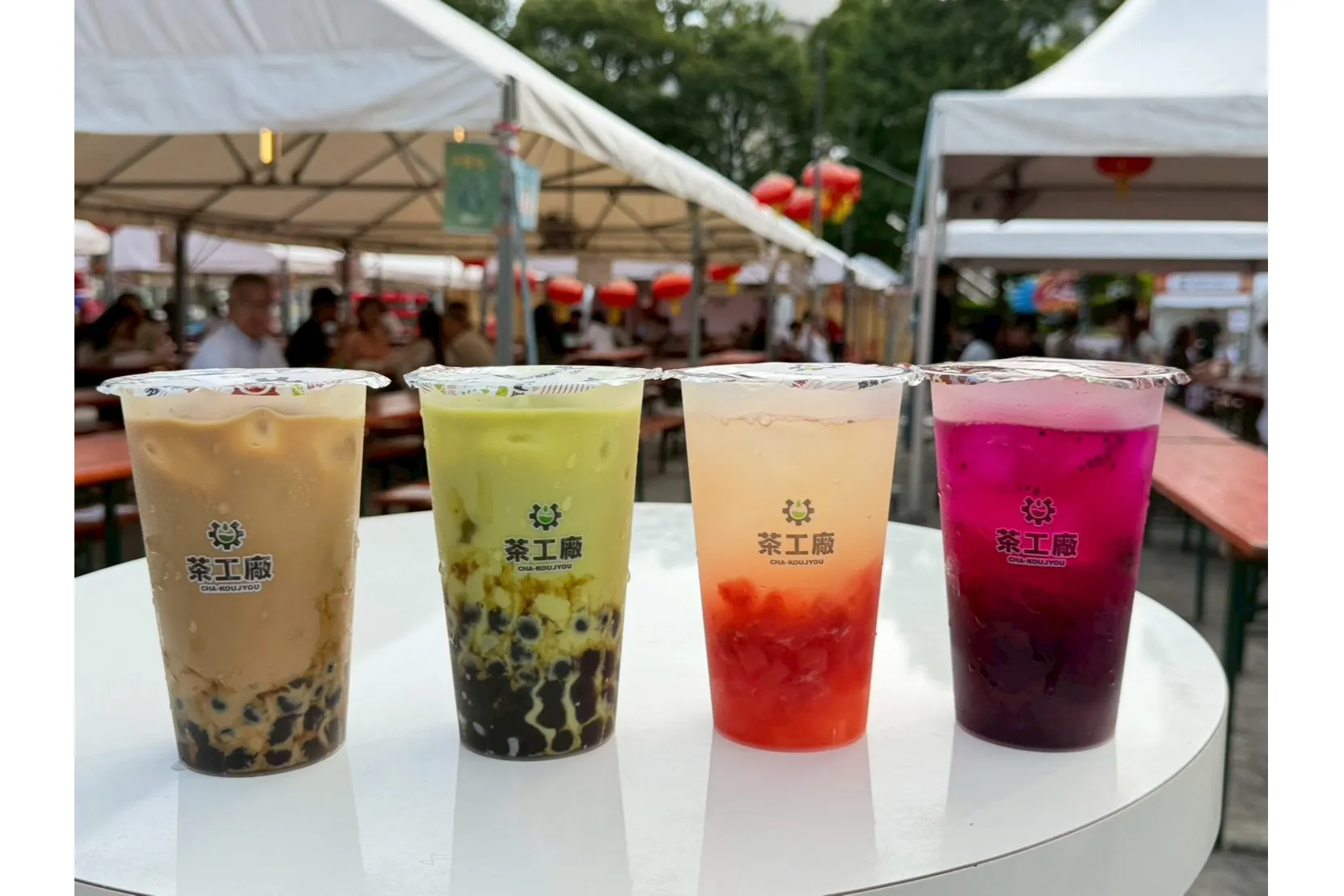
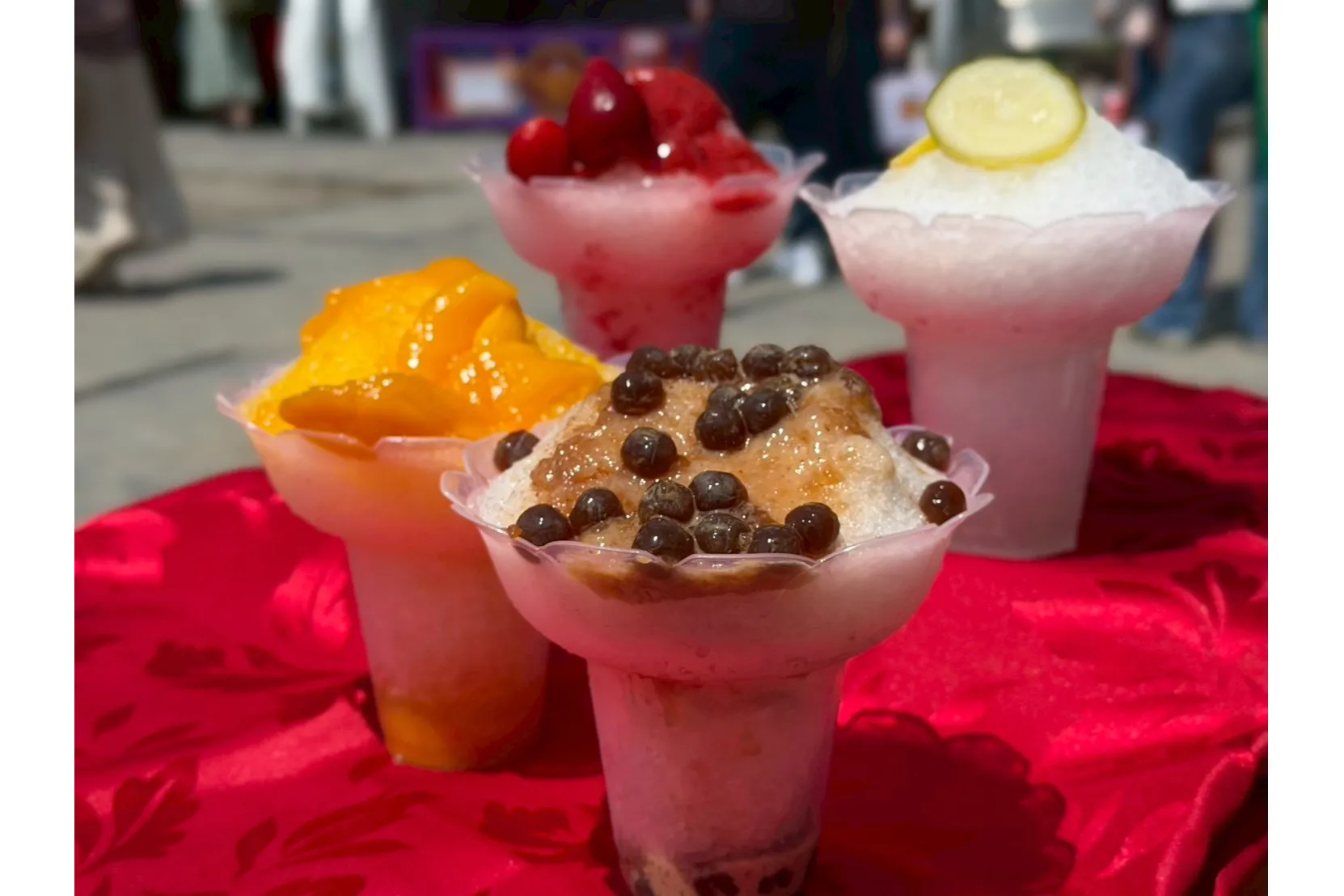
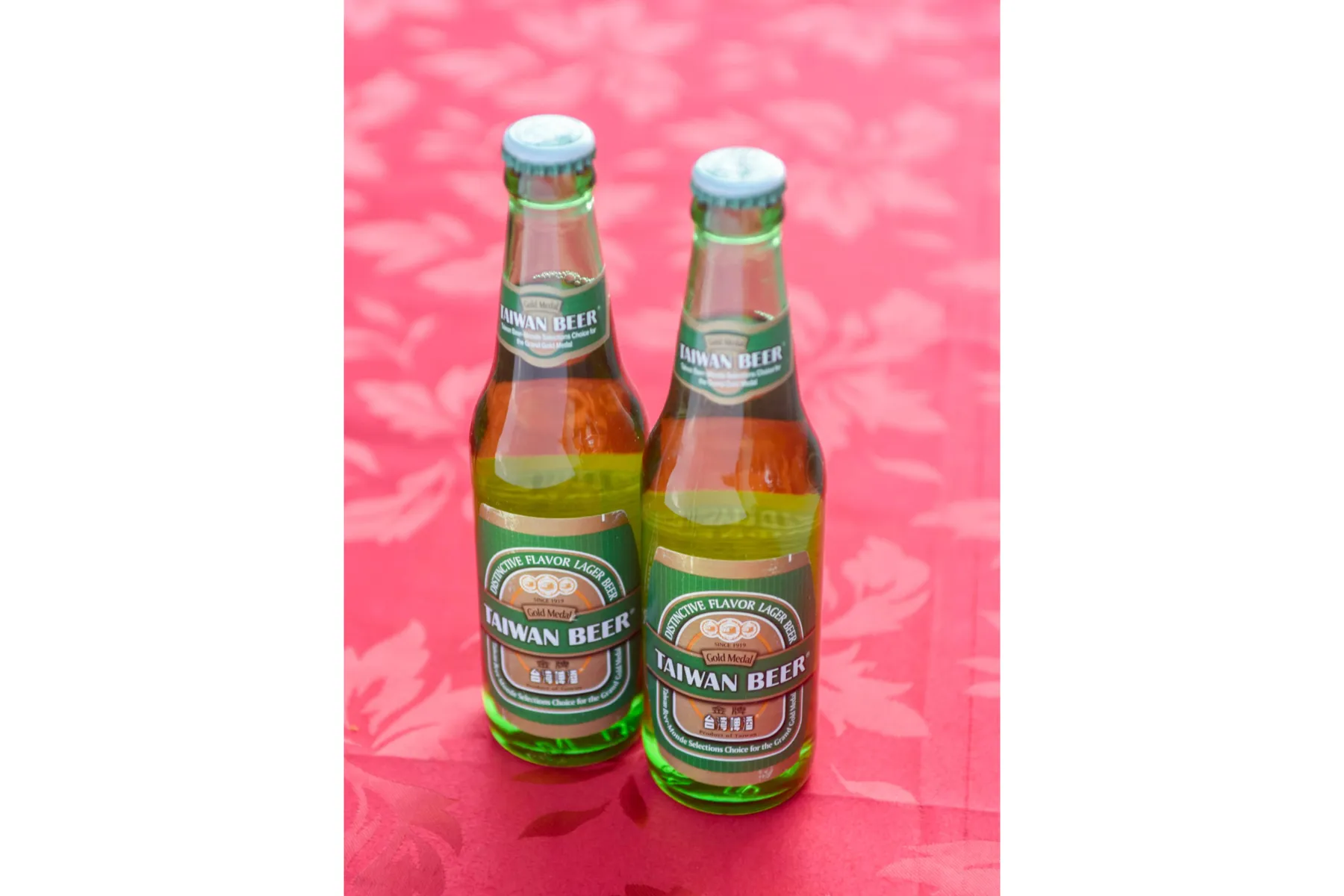
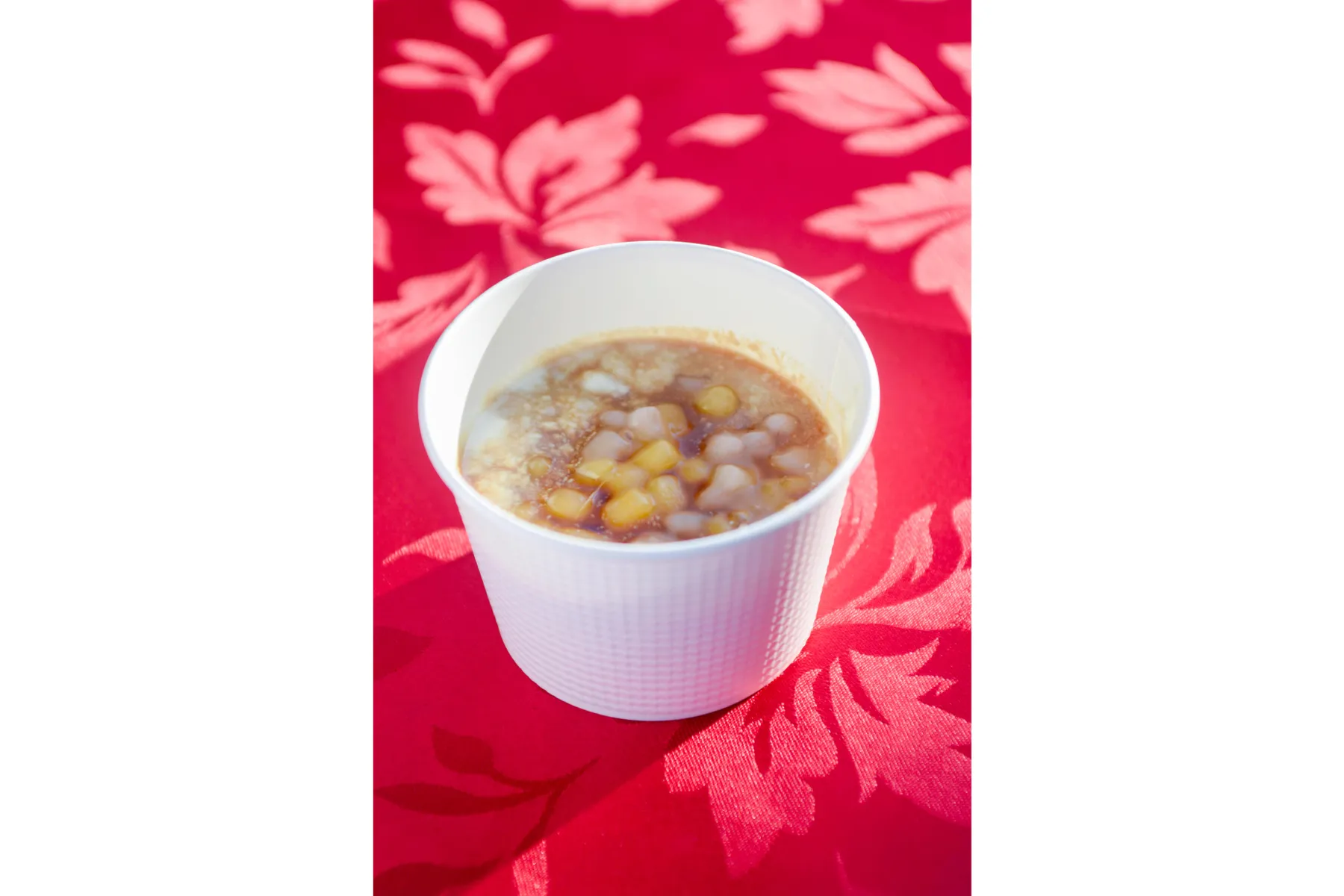
In addition to the “Taiwan Tavern” and booths where you can taste Bubble Milk Tea and Taiwanese tea, cooling sweets such as Tofu Pudding (Douhua), Rainbow Cotton Candy, and fluffy Taiwanese Shaved Ice will also appear. These offer a refreshing counterpoint to the piping hot dishes, making it easy to keep exploring the stalls well into the evening.

Other Ways to Enjoy

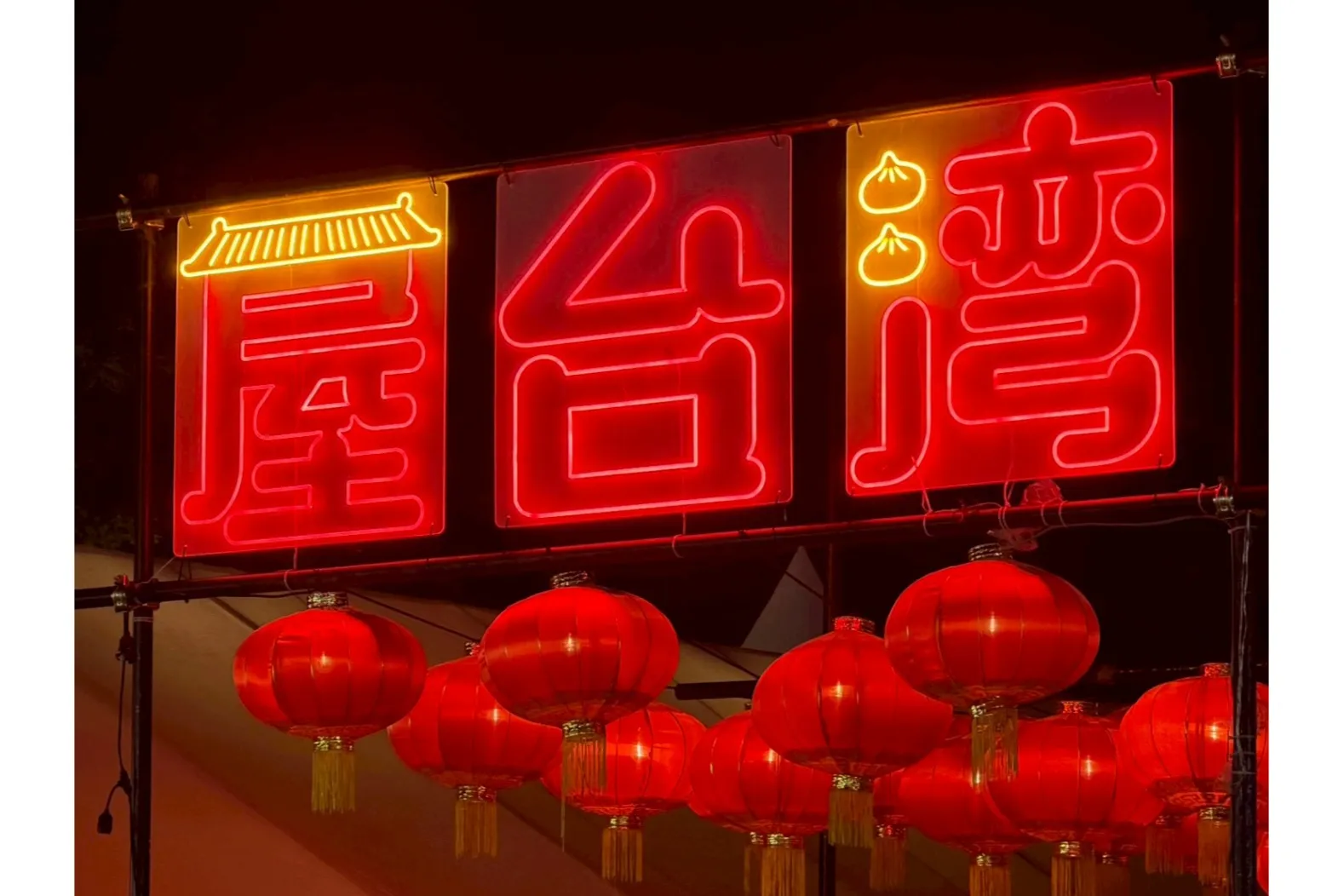
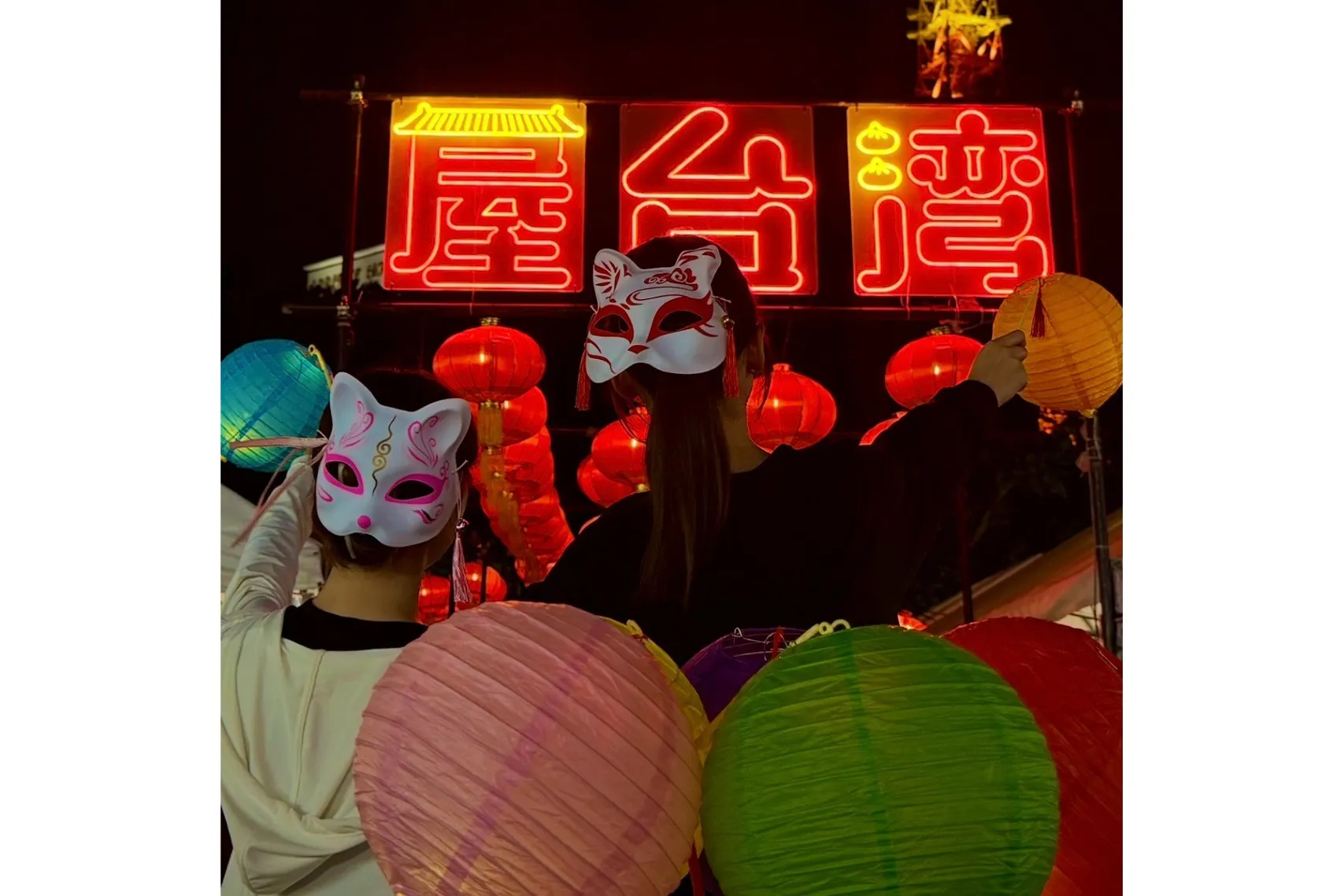
Classic Taiwanese night market games such as ring toss and mask making will also appear. You can also enjoy shopping at the “Taiwan Products (Taiwan Souvenirs/Goods)” corner, which features souvenirs, cup noodles, and soy milk imported directly from Taiwan. Musical performances and shows are also planned for the special stage.

*Please check the official website for detailed information.

Basic Information

Item Details
Location Hibiya Park
Nearest Station Hibiya Station / Uchisaiwachō Station / Yūrakuchō Station / Kasumigaseki (Tokyo) Station
Address 〒100-0012, 1-6 Hibiya Park, Chiyoda-ku, Tokyo (MAP)
Period 2026/09/03 (Thu) ~ 2026/09/06 (Sun)
Hours September 3 (Thu): 16:00–22:00 (L.O. 21:30)<br>September 4 (Fri): 11:00–22:00 (L.O. 21:30)<br>September 5 (Sat): 11:00–22:00 (L.O. 21:30)<br>September 6 (Sun): 11:00–20:00 (L.O. 19:30)
Admission Adults (junior high school students and above): 500 yen<br>Free for elementary school students and below<br>Includes a handheld lantern
Official Website https://www.yataiwan-fes.jp/
Rain Information Will be held in rain; cancelled in case of severe weather

*The posted content may have changed. For the latest information, please check the official website of the venue or the organizer.

🛏️ View hotels near Tokyo

屋台湾フェス2026_1
屋台湾フェス2026_2
屋台湾フェス2026_3
屋台湾フェス2026_4
屋台湾フェス2026_5
屋台湾フェス2026_6
屋台湾フェス2026_7
屋台湾フェス2026_8
屋台湾フェス2026_9
屋台湾フェス2026_10
屋台湾フェス2026_11
屋台湾フェス2026_12
屋台湾フェス2026_13
屋台湾フェス2026_14
屋台湾フェス2026_15
屋台湾フェス2026_16
屋台湾フェス2026_17
屋台湾フェス2026_18
屋台湾フェス2026_19
屋台湾フェス2026_20

What is Hibiya Park?

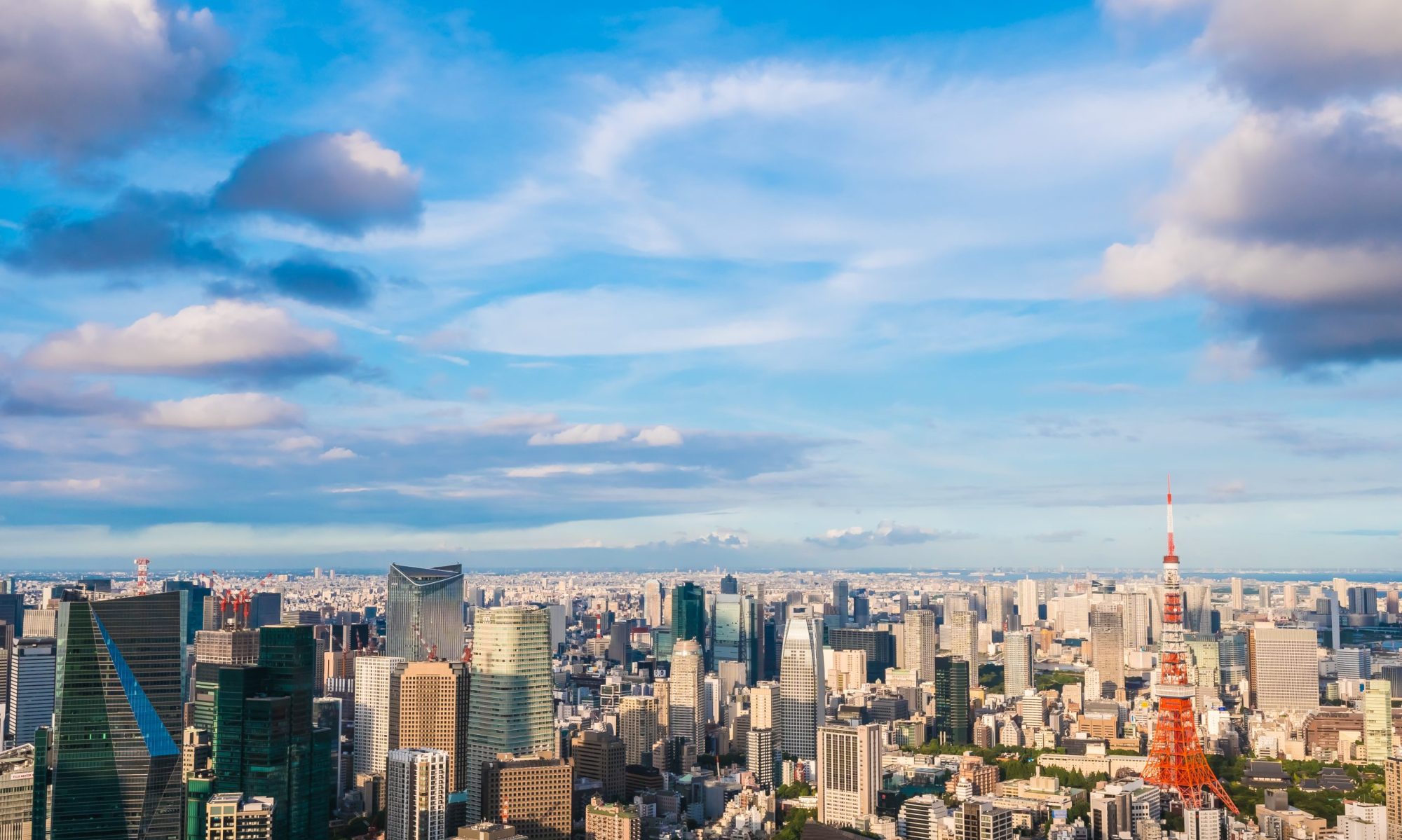
Hibiya Park is a public park in central Tokyo, a short walk from the Imperial Palace and close to Yurakucho, Kasumigaseki, and Hibiya stations. It opened in 1903 on land that had previously served as an army parade ground. At the time, it was an unusual project: a Western-style park built to give the city’s residents a place to walk, sit, and spend time outdoors. Its design was straightforward—wide paths, open lawns, flower beds, a central fountain, and rows of trees—and that layout has largely remained since.

The park has never been limited to quiet use. Over the years, its open areas have been used for charity bazaars, outdoor concerts, and cultural festivals. The Hibiya Open-Air Concert Hall gives the park a permanent performance venue, and the large plazas around it can accommodate stages, stalls, and seating. At the same time, the side paths and shaded benches provide a place to get away from the nearby office district.

For Ya Taiwan Fest, the park works for practical reasons. It is central and easy to reach, it has room for the festival’s market-style layout, and it is familiar with hosting crowds. The mix of food and live performances suits the informal, open environment, and visitors can eat in the grass or at tables without feeling cramped.

2026 Jikji Cultural Festival Cheongju: World’s Oldest Metal-Printed Book Comes Alive with Hands-On Experiences, Escape Rooms & AI Calligraphy

2026 Jikji Cultural Festival Cheongju: World's Oldest Metal-Printed Book Comes Alive with Hands-On Experiences, Escape Rooms & AI Calligraphy

Jikji Cultural Festival

🗓️ 2026.09.04 ~ 2026.09.06

The 2026 Jikji Cultural Festival returns to Cheongju with a program designed to make one of humanity’s most important printing artifacts feel immediate and accessible rather than distant and academic. At its core sits Jikji, the world’s oldest surviving metal-printed book—predating Gutenberg by seven decades—which UNESCO recognized as a Memory of the World in 2001. The festival uses this credential not as a static honor, but as a living foundation for exploring how knowledge spreads, how technology evolves, and how a single artifact can embody both.

This year’s theme, “Jikji, Opening the Door of Time,” deliberately collapses the distance between 1377 and 2026. The date is fixed to September 4th, when Jikji officially entered UNESCO’s register, and the programming reflects an assumption that historical value deepens through direct engagement rather than passive observation.


What You Can Actually Do

The festival organizes around five tracks, ranging from formal ceremony to casual wandering:

1. Official Events

The Opening Ceremony and UNESCO Jikji Prize Award Ceremony anchor the schedule with institutional weight, followed by celebratory performances that translate the formal into something watchable.

2. Exhibition Events

  • Special exhibition on records before paper— clay, stone, bamboo, and other surfaces humans used before woodblock and metal type
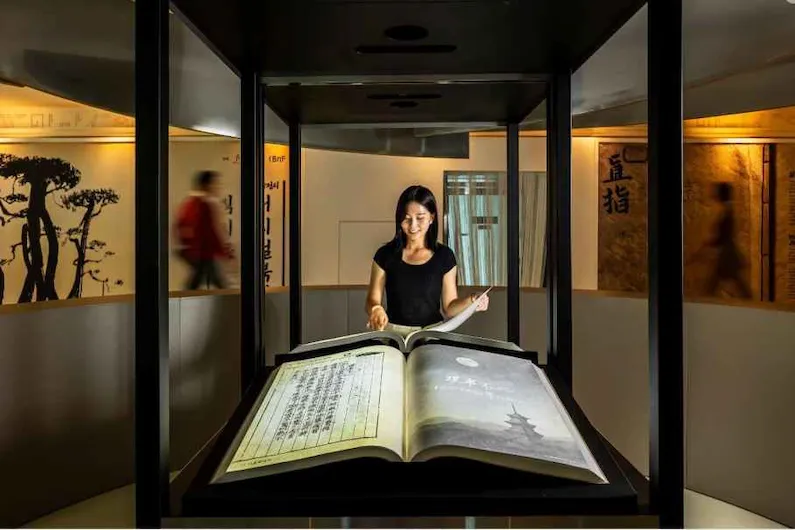
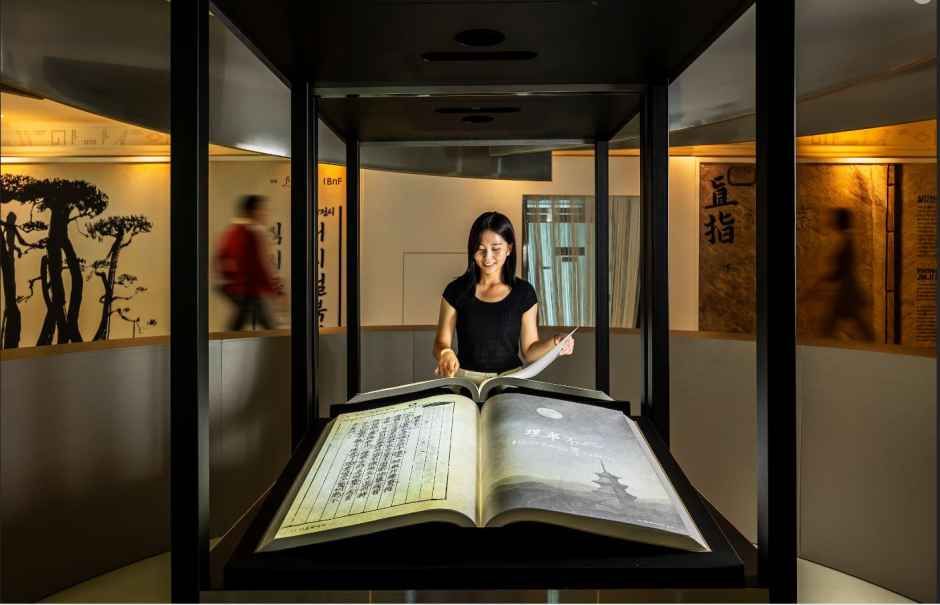
  • Jikji facsimile and digital book Jikji— physical and screen-based presentations of the original
  • Exhibition of Jikji Korean translation— the text made legible to modern readers
  • Winning works of “One Person One Book Publishing”— contemporary self-publishing in conversation with the first
  • Exhibition of press releases related to metal type— documentary evidence of how Jikji entered global consciousness
  • Geumdang-yagyeong exhibition— paintings of Buddhist temple landscapes
  • Permanent museum exhibition— the host venue’s standing collection

3. Experience Events

This is where the festival distinguishes itself from a standard museum visit:

  • Citizen-participatory content media wall— your contributions become part of the display
  • Room escape game themed on Jikji and metal type— puzzle-solving through historical knowledge
  • Demonstration of Eastern and Western metal type casting— side-by-side technical comparison
  • Four Treasures of the Study experience with artisans— brush, ink, paper, and inkstone handled under guidance
  • Jikji Golden Bell competition— presumably a quiz format (the Korean “Golden Bell” reference)
  • My own AI calligraphy experience— machine learning generating your written name or phrase in historical style
  • Making the light of my heart lanterns— handcrafted takeaways
  • Singing bowls— acoustic meditation
  • Topdoli (circumambulating the pagoda) experience— walking meditation in Buddhist practice

4. Performances and Lectures

  • Jikji-related cosplay competition— historical or literary costume interpretation
  • Jikji Concert— hybrid format combining lecture with singer performance
  • Citizen content contest and busking performances— open participation
  • Jikji-related performance works— theater, dance, or music explicitly engaging the text

5. Side Events

  • Free market
  • Food trucks
  • Promotional booths
  • Photo zones (trick art, etc.)
  • Jikji promotional fam tour inviting diplomatic missions to Korea— international presence deliberately cultivated

Practical Information

📍 Address 713 Jikji-daero, Heungdeok-gu, Cheongju-si, Chungcheongbuk-do (Uncheon-dong)
🛏️ Accommodation near the event
💰 Fee Free
📞 Inquiry 043-201-3666
⭐️ Instagram https://www.instagram.com/jikjifestival_official/
🖥️ Homepage https://jikjifestival.com/

Jikji Cultural Festival


Why This Matters Now

Cheongju has something most heritage sites do not: a genuine claim to a technological first that was subsequently forgotten, then rediscovered, then globally validated. The metal type used for Jikji represents a path not taken—East Asian printing developed along woodblock lines until the nineteenth century, despite this earlier breakthrough. The festival does not resolve this historical paradox so much as stage it: you can watch Eastern and Western casting demonstrations, compare their outputs, and recognize that “progress” is neither linear nor guaranteed.

For visitors, the value lies in compressed access. In three days, you can handle replica materials, watch master artisans, participate in a competition, attend a concert-lecture, and eat from a food truck—none of which requires prior expertise. The free admission removes the typical museum barrier where cost shapes who enters. The room escape game and AI calligraphy specifically target visitors who might otherwise skip a “cultural festival” as too sedate.

What separates this from other Korean regional festivals is the specificity of its anchor object. Jikji is not interchangeable with generic “traditional culture.” It is a single, datable, locatable artifact with documented provenance and contested ownership—the original sits in Paris, and Cheongju’s relationship to it remains complicated. The festival does not avoid this; the “press releases related to metal type” exhibition implicitly traces how Jikji became known, debated, and finally celebrated.


What is Jikji?

Jikji is the world’s oldest surviving book printed with movable metal type, predating Europe’s Gutenberg Bible by approximately 78 years. Created in 1377 at Heungdeok Temple in Cheongju, Korea, this Buddhist text was compiled by the monk Baegun to distill the essential teachings of Zen Buddhism’s most revered masters. The original surviving volume, containing the second volume of the two-part work, is housed at the National Library of France in Paris, while Cheongju remains the spiritual and historical home of this achievement.

The book reveals several interconnected developments worth examining. The technology itself—casting individual metal characters, arranging them into pages, then distributing them for reuse—required sophisticated metallurgy and systematic organization. The choice of content matters too: Baegun selected commentaries on Zen practice rather than scripture itself, suggesting an audience of practitioners seeking guidance rather than mere doctrinal preservation. The preservation of only the second volume in France meanwhile traces a path through colonial history that continues to shape discussions about cultural heritage and repatriation.

Understanding Jikji requires moving past the instinct to claim priority or national distinction. The movable type technology developed independently in Korea and later in Europe; neither instance diminishes the other. What survives in Paris allows us to examine specific material details—the alloy composition, the wear patterns on certain characters, the consistent imperfections that indicate production at scale. These particulars offer more insight than any narrative of revolutionary transformation. The book records a moment when Korean artisans solved practical problems of casting, composition, and duplication, embedding those solutions in an object that has outlasted the specific religious community that produced it.

Ganggyeong National Heritage Night 2026 in Nonsan: Full Schedule of 8 Themes, 30 Programs, and Visitor Tips

Ganggyeong National Heritage Night 2026 in Nonsan: Full Schedule of 8 Themes, 30 Programs, and Visitor Tips

Ganggyeong National Heritage Night Trip

🗓️ 2026.08.28 ~ 2026.09.05

Ganggyeong National Heritage Night

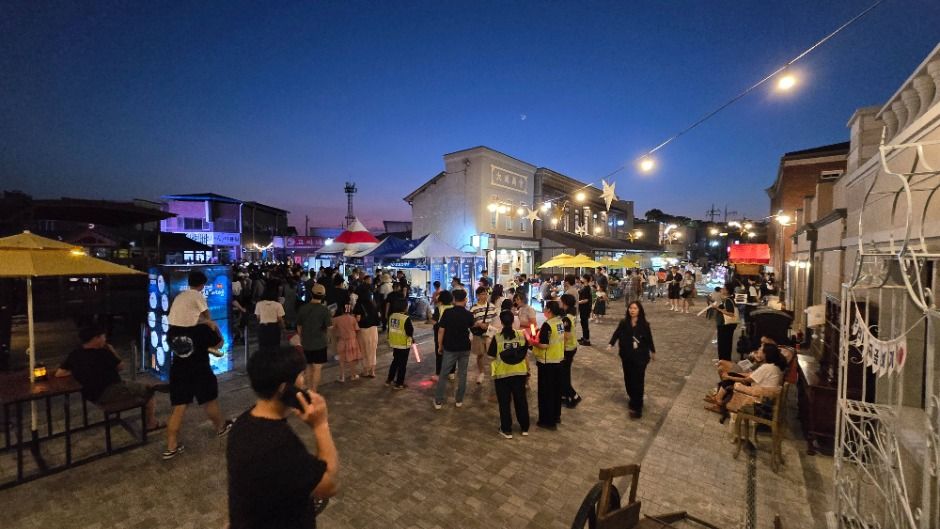
Ganggyeong National Heritage Night moves away from a preservation-only framework and instead puts the area’s modern historical and cultural resources to active use. By linking the scattered modern heritage sites around Ganggyeong, the event turns the entire district into one open historical and cultural space for nighttime visitors. It runs from August 28 to September 5, 2026, with 30 detailed programs organized under 8 themes: Night View (야경), Night Road (야로), Night History (야사), Night Painting (야화), Night Performance (야설), Night Food (야식), Night Market (야시), and Night Stay (야숙).

Night View and Night Road improve physical and psychological access to heritage by presenting the Ganggyeong Modern History and Culture Street after dark through landscape lighting and media art. Visitors can naturally absorb the historical atmosphere while walking the night paths. Night History, Night Painting, and Night Performance reinterpret Ganggyeong’s modern heritage through performances, exhibitions, and hands-on experiences with a contemporary sensibility, making topics that might otherwise feel difficult more intuitive. Night Food, Night Market, and Night Stay are built in collaboration with local commercial districts and residents, linking Ganggyeong’s specialties, food, and shops to extend visitor stays and create a virtuous cycle in which networked heritage resources help revitalize the local economy. Together, the 8 themes and 30 programs are expected to bring modern vitality to Ganggyeong’s national heritage and provide a differentiated nighttime cultural heritage experience.

1. Main Programs

  • Opening and Lighting Performance (Night View – Memories Revealed Upon Light): An opening ceremony featuring light, illumination, fireworks, and performances connecting Ganggyeong Port to the Modern History and Culture Street.
  • Night Opening of National Heritage and Cultural Facilities (Night View – Ganggyeong Modern Culture Night Opening): Free nighttime viewing of national heritage and major cultural/public facilities within Ganggyeong.
  • National Heritage Landscape Lighting (Night View – National Heritage Imbued with Light): Landscape lighting installations inside and outside major national heritage buildings, such as the former Ilhan Bank, the former Ganggyeong Labor Union, Ganggyeong Cathedral, and Ganggyeong Lock.
  • Representative Theme Performance (Night Performance – Gilnori Junggoje): A traditional Gilnori performance combining the Junggoje singing style and Dure-pungjang, reflecting the historical significance of being the birthplace of Pansori Junggoje.
  • History Reenactment Performance (Night Performance – Following the Footsteps of the Refusal of Japanese History Lessons): A play/performance reenacting the actual event where students in the Ganggyeong area refused Japanese history lessons.
  • Storytelling Puppet Show (Night History – Ganggyeong Port Where Voices of Sleeping Time Are Heard): A puppet show featuring resident-participatory storytelling and vivid old tales of the Ganggyeong Port market.

2. Supplementary Programs

  • Theme Walkway Exploration (Night View – The Story of the ‘Cat Family’ Embracing Memories of Ganggyeong): A nighttime walkway themed around stories of cats from the old Ganggyeong Port market.
  • Professional Docent Tour (Night Road – Speaking Heritage, Listening Ganggyeong): A nighttime exploration tour of national heritage and modern streets led by professional commentators and youth commentators.
  • Street Busking (Night Performance – Modern Culture Street Busking): Street performances by local artists unfolding freely throughout the Modern History and Culture Street.
  • Family-Participatory History Story (Night History – Stories within Ganggyeong’s Memories): A program that unfolds the history, culture, and memories of Ganggyeong through various performances, experiences, and exhibitions.
  • Real-time Time-Slip Exhibition (Night Painting – BE:Ganggyeong, RE:Ganggyeong – Film of Memory): A historical archive exhibition including the Old Ganggyeong Gallery, Nonsan Promotion Zone, and AI-customized travel within the Welcome Center.
  • Modern Costume Experience (Night Painting – Modern Costume Salon): Virtual fitting of modern costumes in a dress shop space, era-specific makeup methods (Powder Zone), and digital window experiences of modern landscapes.
  • AI Photo Studio (Night Painting – Meta-Graphy: Ganggyeong Reflection): An antique photo zone and a hologram interactive AI photo booth within the Ganggyeong Photo Studio.
  • Media Art Experience Hall (Night Painting – Modern Culture Cinema Theater): An interactive media art experience with themes of a mysterious parallel universe and the lock within the Ganggyeong Cinema space.
  • Ballroom Banquet Experience (Night Painting – Dance Hall: Ganggyeong Ballroom Banquet): Social dance lessons and stage production, a time-travel elevator presentation, and a nostalgic game lounge.
  • Media Newspaper Experience (Night Painting – Lighthouse of Memory: Ganggyeong Newspaper): A magic newspaper where visitors explore Ganggyeong’s history by rolling a trackball, and a Maurice Column media show.

3. Consumer Participation Programs

  • Stamp Tour (Night Road – Mission Stamp Tour ‘Ganggyeong Heritage Notebook’): Distribution of Ganggyeong Tongbo (local currency) and specialized Night tour goods upon collecting stamps from each national heritage course.
  • Eco-friendly Plogging (Night Road – Polishing the Texture of Ganggyeong, Carbon Neutral Plogging): Walking through national heritage sites while collecting trash with an eco-friendly kit and exchanging it for upcycled goods.
  • Outdoor Mission Mystery Game (Night History – Outdoor Mission Mystery Game, Ganggyeong History Story): An outdoor escape-room style game where players solve stories while taking a walking tour around Ganggyeong.
  • Participatory Antique Auction (Night Market – Ganggyeong Starlight Goblin Auction House): An event where modern antiques and props donated/provided by residents are traded directly with a professional auctioneer.
  • Local Flea Market (Night Market – Ganggyeong Specialty Tribute Exhibition): A market for exhibition, tasting, and sale of Nonsan/Ganggyeong specialties such as salted seafood (jeotgal), agricultural products, and workshop products.
  • Character Pop-up Store (Night Market – Ganggyeong Cat Pop-up Store): Exhibition and sale of artworks by cat-themed artists and a character goods pop-up store.
  • Water Purification Experience (Climate Response – Saving Eco-friendly Waterways): An edu-tour featuring the making and throwing of EM enzyme mud balls for water purification in the section from Ganggyeong Lock to Daeheungcheon.
  • Recycling Flea Market (Climate Response – Resource Recycling Anabada Market): A flea market where children and family participants trade used items directly using ‘Ganggyeong Tongbo’.

4. Other Content (Food, Accommodation, and Transportation Links)

Other Food (Night Food)

  • Ganggyeong Tongbo Lunchbox Picnic: A food culture experience where visitors exchange currency for Ganggyeong Tongbo, hear explanations directly from salted seafood merchants, and compose their own salted seafood lunchboxes.
  • Ganggyeong Yajang: An outdoor street food stall area with a Newtro vibe, blending food trucks from the Youth Mall with traditional local foods from existing merchants.
  • Modern Street Gourmet Tour: A gastronomic tour linked with 9 fixed restaurants and cafes within the Ganggyeong Modern History and Culture Street.
  • Afternoon Tea Outdoor Cafe: European-style tea and refreshments enjoyed in a themed garden of modern architecture.
  • Ganggyeong Lighthouse BAR ’37’: An EDM standing party enjoyed with wine, beer, makgeolli, etc., against the backdrop of the Lighthouse of Memory.

Accommodation Links (Night Stay)

  • Ganggyeong Hotel Stay: Ganggyeong Tongbo rewards provided to guests staying at the Ganggyeong Hotel within the modern-concept Ganggyeong Club.
  • Ganggyeong 1-Night Stay: Night view viewing benefits and rewards provided to users of accommodation facilities throughout the Ganggyeong-eup area.

Transportation and Visitor Benefits

  • Night Train Travel (Night Road): Upon verification of a same-day train ticket (Daejeon/Iksan, etc.), event experience vouchers and discount coupons (Ganggyeong Tongbo) for the returning destination station are provided.

Fees

  • Free: Fixed facilities and programs conducted by the foundation, such as the stamp tour.
  • Paid: Booths selected through the experience/promotion/sale food truck open call (varies, around 5,000 KRW).

Event Information

📍 Address: Jungang-ri, Ganggyeong-eup, Nonsan-si, Chungcheongnam-do

🛏️ Accommodation near the event

💰 Fee: Free (Some paid)

📞 Inquiry: 041-730-2971,3

⭐️ Instagram: https://www.instagram.com/nonsan.night/

Ganggyeong in Nonsan developed as a river-port trading hub on the Geumgang River. From the Joseon period onward, it functioned as a transshipment point where grain, fish, salt, and other goods from inland agricultural areas were transferred to boats for destinations along the western coast and, in later periods, further afield. By the late 19th century, the waterfront was lined with warehouses, brokerage houses, and market stalls, making Ganggyeong one of the busiest commercial districts in the region.

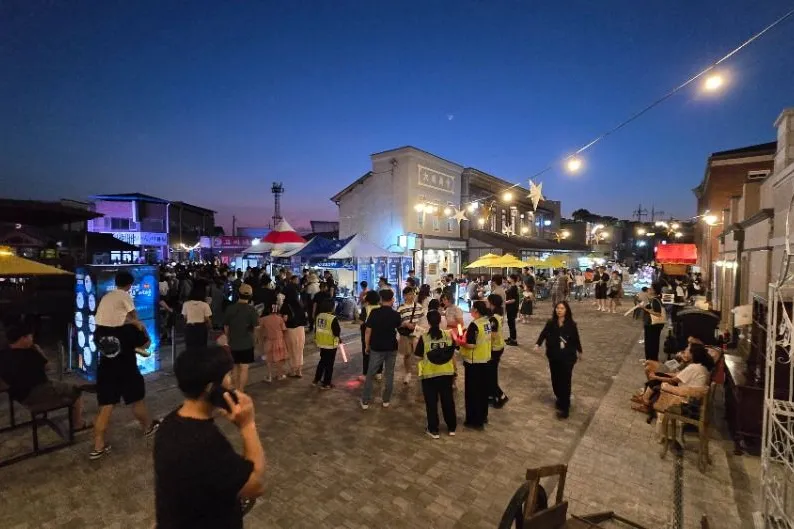
The town’s commercial role continued into the early 20th century, and the period left a visible mark on its built environment. Several of the buildings still standing date from those decades: brick warehouses, shops, and houses that show how merchants and residents adapted newer construction methods and styles to local needs. The old streets, docks, and alleyways retain the layout of a working riverside port, and they give a practical sense of how trade organized daily life.

That built heritage is now the basis for Ganggyeong’s participation in National Heritage Night. The event draws attention to the port’s history by opening its streets and buildings to visitors, offering a direct look at the commercial architecture and urban fabric that developed around the Geumgang River in Nonsan.

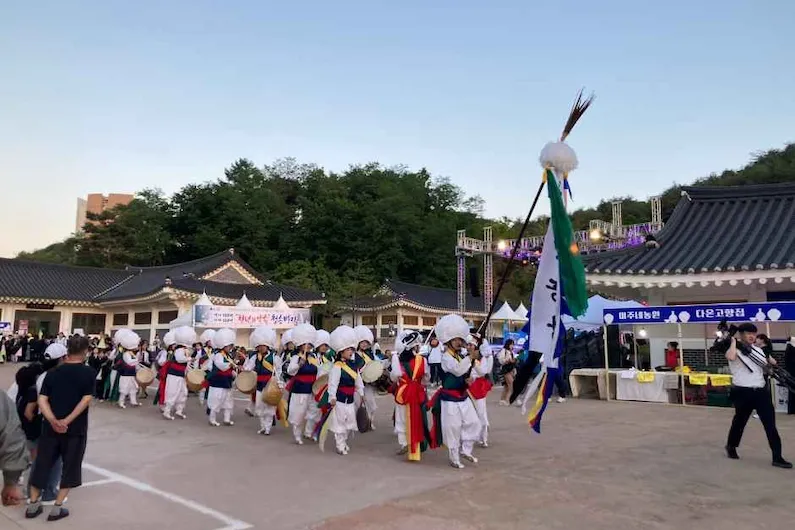
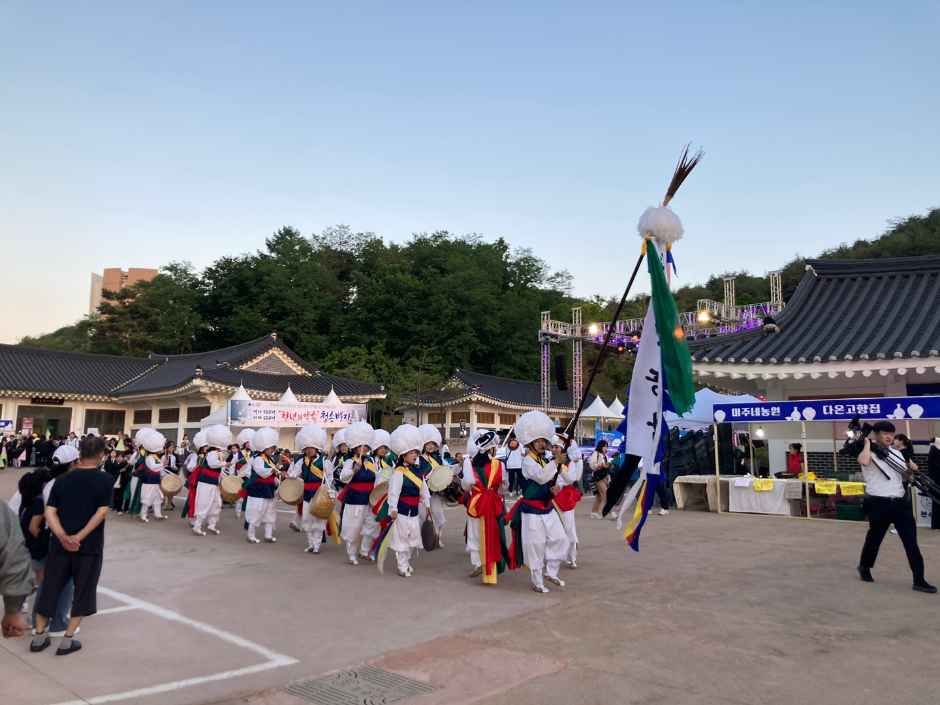
Visit the 7th Gochang Nongak Flower Festival 2026: Experience Traditional Korean Performing Arts and Communal Rituals in Jeonbuk State

Visit the 7th Gochang Nongak Flower Festival 2026: Experience Traditional Korean Performing Arts and Communal Rituals in Jeonbuk State

The 7th Gochang Nongak Flower Festival

🗓️ 2026.08.28 ~ 2026.08.30

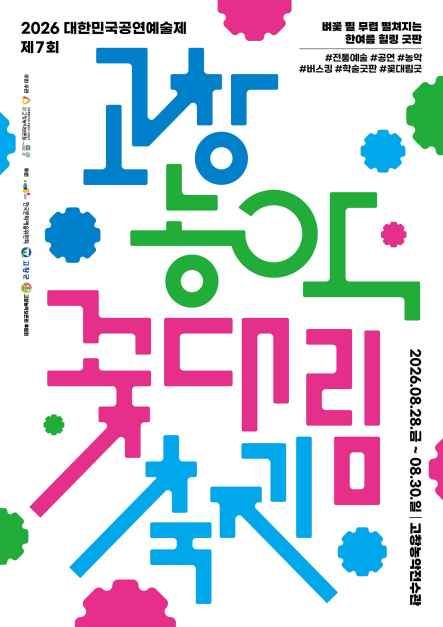
The Gochang Nongak Kkotdaerim Festival is a performing arts festival built on the community spirit of Gochang Nongak, an intangible heritage of Jeonbuk State. At its center is the Kkotdaerim-gut, a village ritual traditionally held around Chilseok, the seventh day of the seventh lunar month, when residents come together to perform a gut, release the hardships they have accumulated, and pray for abundance for the rest of the year. The festival reinterprets that ritual for a contemporary audience while keeping its communal core intact.

What makes this edition distinctive is the range of formats in a single program. The lineup moves from the foundational forms of Gochang Nongak—Pungjang-gut, Mun-gut, and Pan-gut—to invited works across music, sound, and entertainment. It also includes market, exhibition, academic, and exchange programs. By placing traditional performance arts alongside hands-on activities, the festival brings visitors, cultural artists, local residents, Nongak enthusiasts, and researchers into the same space. The 7th edition runs for three days, from August 28 to 30, 2026, around the Gochang Nongak Training Center. Admission is free.

Main Programs

The festival opens with Kkotdaerim Dangsan-gut and the Kkotdaerim Opening Ceremony, then concludes with the Kkotdaerim Closing Ceremony. The rest of the program unfolds between those.

Performance Plaza

  • Performance Plaza _ Gochang Nongak Pungjang-gut
  • Performance Plaza _ Gochang Nongak Trainees Gutpae – Pan-gut and Japsaek
  • Performance Plaza _ National Intangible Heritage Baltal
  • Performance Plaza _ Gumi Mueul Nongak
  • Gut-jaeng-i Exhibition

Performance Stage

  • Performance Stage _ Kim Bo-ra ‘Fire, Rice, Water, Pot, Steam’
  • Performance Stage _ Bang Ji-won and Gutpae ‘East Sea UNIVERSE-Gochang’
  • Performance Stage _ Seedless Watermelon Kim Dae-jung ‘The Undutiful Child Plays’
  • Performance Stage _ Park In-seon and Generals

Special and International Programs

  • Kkotdaerim Ball _ DJ Peggy Gut
  • Special Stage _ Korea-Japan International Exchange Cooperation Performance ‘One Origin: Accompanying (同行)’
  • Special Stage _ Nenbutsu Kenbai Participatory Workshop

Side Events and Programs

For visitors who want to take part rather than simply watch, the festival offers several participatory formats and market activities:

  • Our Flea Market
  • Cute Rain Boot Headbands
  • Our Kkotdaerim-gut
  • ‘Cham-Cham-Cham’ (Busking), a true gut gathering where participants take part
  • Show Me the Nori – Individual Play Battle

These side events reinforce the festival’s stated purpose: expanding the transmission base of Gochang Nongak and connecting the region’s traditional culture with contemporary performing arts.

Visitor Information

The festival takes place around the Gochang Nongak Training Center in Gochang-gun, Jeonbuk State.

📍 Address: 106 Hyangsan 1-gil, Seongsong-myeon, Gochang-gun, Jeonbuk State

🛏️ Accommodation near the event

💰 Fee: Free

📞 Inquiry: 063-562-2044

🖥️ Homepage: Official Website
Official Instagram

The 7th Gochang Nongak Kkotdaerim Festival

What is Nongak?

Nongak is a traditional Korean performing art that developed among farming communities. It combines percussion, wind, dance, and ritual, and was commonly performed to pray for good harvests, to mark seasonal events, and to strengthen village ties. In the past, most participants were farmers, and the music was played outdoors, often while moving through fields or village lanes.

The ensemble is built around four percussion instruments: the buk (barrel drum), the jing (large hanging gong), the kkwaenggwari (small gong), and the janggu (hourglass drum). A taepyeongso, a conical double-reed instrument, adds melody over the percussion. Dancers and flag bearers accompany the band. Some dancers wear sangmo, hats with long ribbons that are spun in circular motions. The choreography includes walking formations, jumps, turns, and acrobatic elements.

Nongak also has a ritual function. In traditional performances, a ceremony might begin with purification of the village, move to a parade through the fields, and conclude with a communal meal. The exact sequence varies by region.

Today, nongak is staged at festivals and can be studied as a performing art. It was inscribed on UNESCO’s Representative List of the Intangible Cultural Heritage of Humanity in 2014. At the Gochang Nongak Flower Festival, audiences can watch performances by local and invited groups. The event provides an opportunity to see the music, dance, and ritual elements in one place, and to learn about the regional history that shaped them.

Janghang Maekmundong Flower Festival 2026: Dates, Programs, and How to Experience Korea’s Largest Purple Bloom

Janghang Maekmundong Flower Festival 2026: Dates, Programs, and How to Experience Korea's Largest Purple Bloom

Janghang Maekmundong Flower Festival

🗓️ 2026.08.28 ~ 2026.08.30

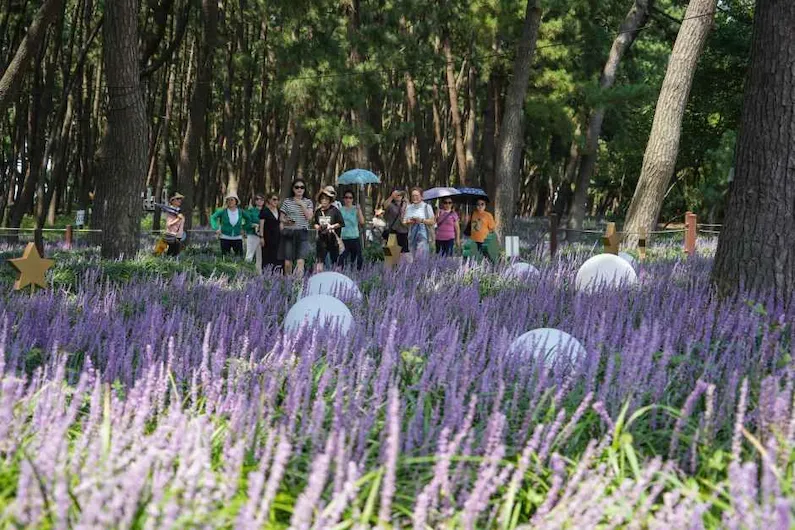
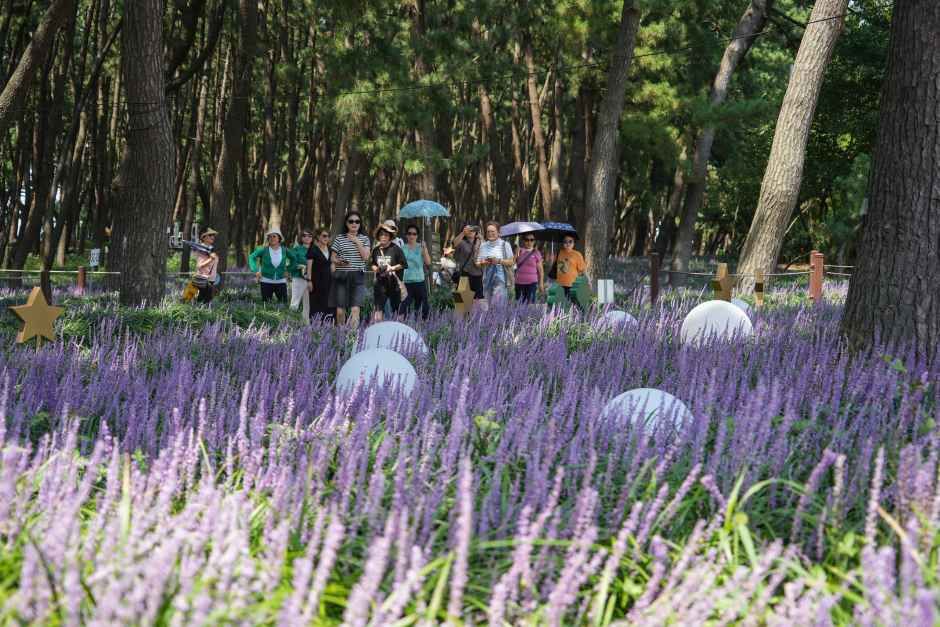
Janghang Songrim Natural Recreation Forest draws roughly one million visitors each year and hosts the largest colony of Maekmundong (Liriope)—known also by its Korean name Maekmundong—anywhere in the country. Six million of these perennial plants spread across approximately 280,000 square meters of coastal pine forest, creating a sea of purple that blooms in late August. The forest itself sits adjacent to the West Coast, offering the rare combination of dense woodland, flowering understory, and open ocean views within a single setting.

The Janghang Maekmundong Flower Festival builds directly upon this landscape. Rather than importing temporary structures or artificial decorations, the event extends what the forest already provides: a seasonal spectacle of color that lasts roughly two weeks at peak bloom. Programming incorporates the surroundings through guided walks, photography points positioned among the flowers, and activities that use Maekmundong or native pine materials. The result is a regional festival where the natural calendar determines the schedule, and human programming merely amplifies what’s already occurring.

Programs and Activities

Performance Programs

  • Opening ceremony performance and Healing Festa
  • Senior fashion show

Participation Events

  • Maekmundong lucky draw
  • Dress code Purple Day (visitors wearing purple receive additional benefits)

Experience and Activity Programs

  • Maekmundong playground (children’s activity area)
  • Maekmundong little water playground
  • Maekmundong ice foot bath
  • Terrarium diffuser making workshop
  • Solbaram (pine breeze) doll making workshop
  • Maekmundong experience outing (guided forest walk)
  • Maekmundong forest cookie baking class

Exhibition Programs

  • Seocheon tourism souvenirs and traditional craft contest exhibition

Food

  • Youth food truck operation

Practical Information

📍 Address: San 58-48, Songrim-ri, Janghang-eup, Seocheon-gun, Chungcheongnam-do

🛏️ Accommodations near the event

💰 Admission: Free

📞 Inquiries: 041-950-4256

⭐️ Instagram: https://www.instagram.com/mmd__festival/

🖥️ Homepage: http://mmdfestival.kr/

Janghang Maekmundong Flower Festival

What is maekmundong?

Maekmundong (Liriope muscari), also known as lilyturf or big blue lilyturf, is a perennial flowering plant native to East Asia, where it has grown for centuries in shaded woodlands and mountain valleys. Despite its common English name, it is not a true lily but belongs to the asparagus family, with grass-like foliage that stays green through most of the year.

The plant is valued for its late-summer flowers: dense spikes of small, bell-shaped blossoms in violet and purple, rising on slender stalks above the arching leaves. These flowers produce glossy black berries that remain through winter, giving the plant presence across seasons.

In Korea, maekmundong carries particular cultural weight. Its tuberous roots have long appeared in traditional medicine, used for respiratory conditions and general health. The plant’s ability to grow in difficult, shaded sites has made it a symbol of persistence in Korean folklore. Gardeners have grown it for generations as ground cover beneath trees and along paths, but the plant shows a different character when left to spread. At sites like Janghang, where it blooms across hillsides in late August and September, the massed purple spikes can transform the forest floor—an effect that draws visitors and photographs poorly because scale and density matter more than individual flowers.

The plant’s practical strengths explain its persistence in cultivation. It tolerates dry shade, poor soil, and root competition from established trees. It spreads slowly by rhizome, filling ground without becoming invasive in most conditions. The evergreen foliage gives structure to winter gardens, and the flowers attract bees at a season when fewer plants are in bloom. These qualities have kept it in use through changing fashions in garden design, from the structured plantings of the Joseon period to contemporary naturalistic landscaping.

Identification requires some care. Liriope muscari differs from Liriope spicata, a more aggressive spreader with narrower leaves and paler flowers, and from Ophiopogon japonicus, a similar evergreen groundcover with fibrous rather than tuberous roots. The specific name muscari refers to the flower’s supposed resemblance to grape hyacinth, though the spikes are looser and the individual flowers more open. Proper naming matters in horticulture and in medicine, where different species carry different chemical profiles and different traditional applications.

The roots contain saponins, the compounds responsible for their traditional use in treating cough and lung inflammation. Modern research has examined these compounds for antioxidant and anti-inflammatory properties, though clinical evidence remains limited. The plant thus occupies a familiar position—valued through long practice, plausible in its mechanisms, not fully validated by contemporary standards. This does not diminish its cultural role, but it does shape how one might describe its benefits.

As a garden plant, maekmundong works best where its habits are suited to the site: beneath deciduous trees, along north-facing foundations, on slopes where mowing is difficult. It does poorly in full sun and wet soil, and the foliage can look ragged by late winter, needing shear-back before spring growth. These are manageable constraints for a plant that asks little and returns reliably. The massed bloom at Janghang and similar sites happens where conditions—shade, drainage, absence of competition—allow the plant to reach densities difficult in managed gardens. The effect is worth seeking out, and difficult to replicate.

2026 Gimhae Gaya Theme Park Light Festival: Experience a Magical Voyage of Light and History

2026 Gimhae Gaya Theme Park Light Festival: Experience a Magical Voyage of Light and History

Gaya Theme Park Light Festival: Voyage Toward the Light

🗓️ 2026.08.14 ~ 2026.08.23

Gimhae’s summer nights will be lit by the 3rd Gimhae Light Festival, “Voyage Toward the Light.” Held at Gimhae Gaya Theme Park from August 14 to 23, 2026, the festival revives the sea route that Queen Heo took from Ayodhya, India, to Gaya two thousand years ago. Through light sculptures, illuminations, media art, and photo zones, the festival tells a story of departure, voyage, and the encounter with Gaya. Visitors can walk along a path of light inspired by the blue sea and the night sky, discovering the historical connections between Gaya and India.

The festival is open daily from 5:20 PM to 10:00 PM. Last admission is at 9:00 PM, and admission costs 2,000 won per person.

Light festival content

The light festival content includes:

  1. Sea of Light
  2. Light Rangoli
  3. Waves in the Sky
  4. Flash of Gaya
  5. Lanterns of Light
  6. Constellations of Light
  7. Rangoli Road
  8. Hongsalmun (Red Spike Gate) of Light
  9. End of the Voyage

Programs and performances

  • Opening Ceremony: LED performance and fireworks show. During the opening event on August 15, Ogomu, K-POP Tron performances, and a multimedia fireworks show with about 3,000 shells will decorate the night sky.
  • Night Stage “Melodies Flowing Along the Light”: A free concert for citizens held in front of the waterway performance venue.
  • Moonlight Gugak Stroll: Gugak performances featuring daegeum, gayageum, and gosu in front of the Gaya Royal Palace.

On weekends and public holidays, the festival adds a local food zone, a regional creators’ art market, and outdoor performances featuring jazz, fusion gugak, and acoustic music.

Food and art market

  • Food Zone: Food zone and food trucks featuring famous bakery cafes in the Gimhae area and foods using Gimhae ingredients.
  • Gakkum Art Market: An art market where you can find local specialties of the Gimhae area.

Come and experience Gimhae’s special summer night, where light, history, performances, food, and art harmonize.

Visitor information

📍 Address: 161 Gayathema-gil, Gimhae-si, Gyeongsangnam-do (Eobang-dong)

🛏️ Accommodations near the event

💰 Fee: Paid (2,000 won)

📞 Inquiry: 055-340-7900~1

⭐️ Instagram: https://www.instagram.com/gimhae_gayapark

🖥️ Homepage: https://gtp.ghct.or.kr/home/main

Gaya Theme Park Light Festival: Voyage Toward the Light

What is Gaya?

Gaya was a confederacy of city-states in the southern Korean Peninsula, active from roughly the 1st to the 6th century CE. Its constituent polities were concentrated in the Nakdong River basin, an area with enough arable land and access to coastal routes to support a shared material culture built on agriculture, iron production, and maritime trade.

The early center of this network was Geumgwan Gaya, usually associated with modern Gimhae. The founding legend of Geumgwan Gaya tells of King Suro, said to have descended from a golden egg on Mount Guji. That story is preserved in local tradition and remains part of how Gimhae presents its history.

Gaya’s iron ore deposits were among its most valuable resources. Iron ingots and finished goods were exported widely, including to Japan, in exchange for luxury items such as glass beads and precious stones. Gaya workshops also produced pottery, horse-shaped ornaments, and gold and bronze regalia; several such pieces have been recovered from royal tombs in Gimhae.

Politically, Gaya was never unified as a single state, and this limited it in dealings with its larger neighbors. To the north was Goguryeo, to the west Baekje, and to the east Silla. Over the 5th and 6th centuries, Gaya’s member states were gradually absorbed by Silla, ending the confederacy by around 562 CE. Though the political entity disappeared, the archaeological record and local sites retain evidence of Gaya’s material culture and regional influence.

Today, the Gimhae Gaya Theme Park Light Festival uses illuminated installations to present images and motifs associated with Gaya. The display draws on the historical setting and archaeological finds connected to the area, with the park itself located near the Nakdong River. The festival is a modern adaptation of that material, not a re-creation of a specific event, but it gives visitors a way to engage with the historical landscape of Gimhae.

Analytics