Goheung Yuja Festival
🗓️ 2026.11.12 ~ 2026.11.15
The Goheung Yuja Festival is a representative autumn festival held in clean Goheung, the largest citron (yuja) producing region in South Korea. It is a festival where you can enjoy the deep flavor and refreshing charm of Goheung yuja, grown with the warm sunlight of the southern region and clean sea breezes, through all five senses. Against the backdrop of vast yuja fields unfolding before your eyes, sensory-satisfying experiences take place, including making fragrant yuja syrup, yuja spas to melt away a tired body, and tastings of special yuja dishes that can only be experienced in Goheung. At night, fantastic night landscape lighting and yuja-themed spaces harmonize to provide an autumn night’s romance like a painting. Moving beyond a simple local specialty festival, it is an optimal healing cultural tourism festival where you can stay and rest with family, lovers, and friends; in November, when the yuja ripens yellow and the autumn atmosphere is at its peak, it will gift you with a refreshing yuja scent and warm memories.
What sets this festival apart from other autumn local festivals is its scale and sensory immersion. Goheung produces more yuja than any other region in the country, and the festival takes full advantage of that abundance. You are not just a spectator here; you can harvest the fruit yourself, make your own syrup to take home, and even soak your tired body in a yuja spa. The festival grounds are built around actual working yuja fields, so the scent of citrus follows you from the morning walk to the nighttime light displays. For visitors looking for a slower, more restorative trip, the festival functions as a full cultural tourism package rather than a one-day market event.
Main Programs
- Opening Ceremony — “Cold-free Korea” 1,004-Person Yuja Syrup Making & Sharing Event: The festival kicks off with a large-scale communal activity where participants make yuja syrup together, symbolizing health and warmth for the coming winter.
- Leisurely Yuja Path Walking: A slow-paced walk through the yuja fields, designed for visitors to take in the scenery, sea breeze, and citrus aroma at their own speed.
- Yuja Farmers’ Day: A program dedicated to the local growers, offering insight into the cultivation and harvest of Goheung yuja.
- Yuja Farm Street Parade: A lively parade through the farm area, featuring local performers and community groups.
- Excellent Yuja Competition: Local farmers submit their best yuja of the season, judged on size, shape, color, and quality.
- Asia Yuja Exchange Pavilion: An exhibition space where yuja and similar citrus varieties from across Asia are introduced and compared, highlighting Goheung’s place in a broader regional tradition.
Side Programs
- Yuja Dining Zone: A food area featuring yuja-infused dishes, from traditional Korean citrus preparations to more experimental takes.
- Yuja Therapy: Rest and recovery programs using yuja extracts and aromatics, including the yuja spa experience.
- Yuja Direct Transaction Market: A farmers’ market where visitors can purchase fresh yuja and yuja products directly from producers.
- Yuja Field Mak-sam Party: An outdoor dining experience in the yuja fields. (Mak-sam refers to a casual, hearty outdoor meal.)
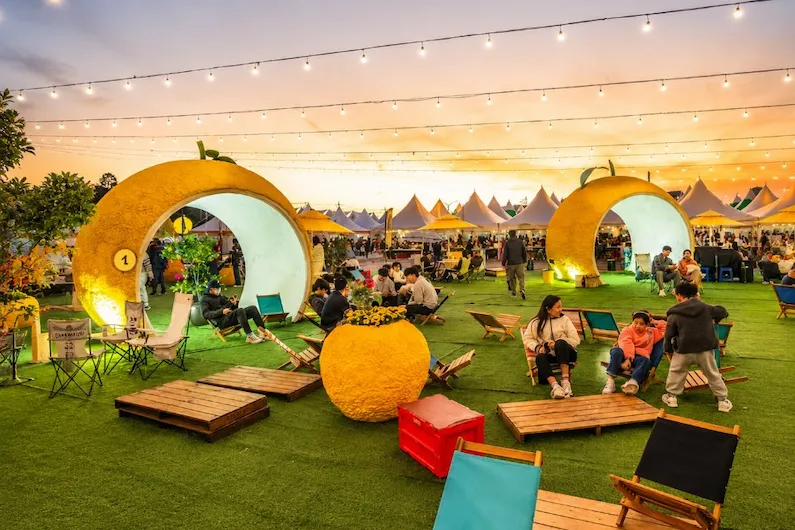
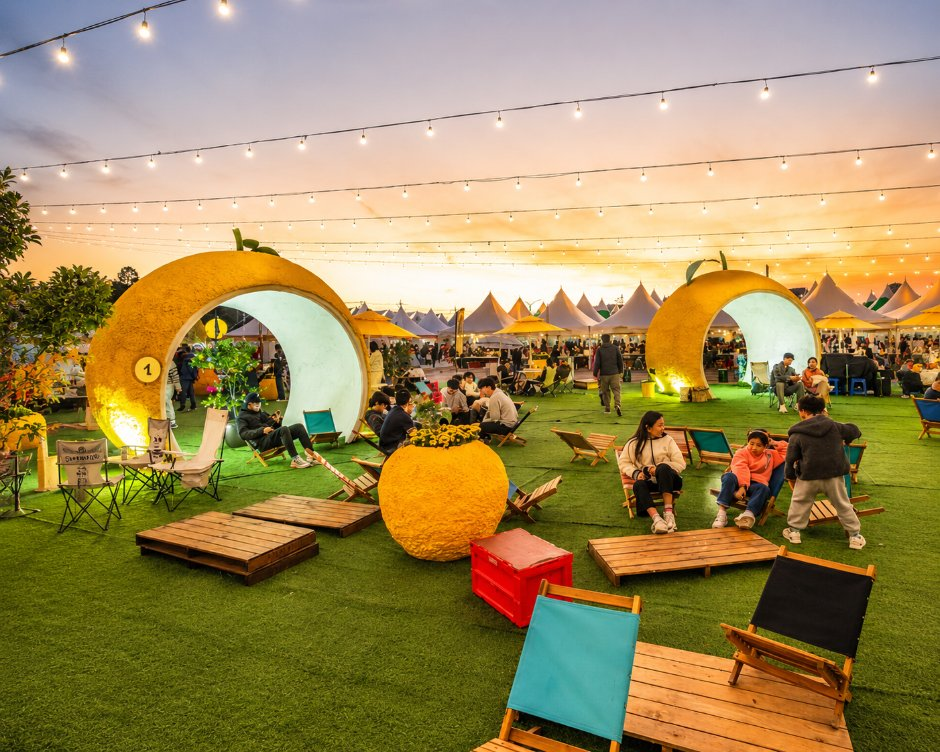
- Yuja Theme Park: A dedicated space with yuja-themed installations, games, and photo opportunities.
- Yuja Field Busking / Street Performances: Live acoustic music and impromptu performances scattered throughout the festival grounds.
- Yuja Field Night Light Garden: After sunset, the yuja fields are illuminated with landscape lighting, creating a nighttime walking experience distinct from the daytime view.
- Yuja Field Exploration Path / Yuja Observatory / Photo Zones: Designated spots for viewing the fields from above and capturing the scenery.
- Goheung Food Festival: A parallel food event showcasing broader local cuisine beyond yuja, giving visitors a fuller taste of Goheung’s culinary identity.
Participant Content
These programs require active participation or reservation:
- Yuja Village “Chon-kance” (Rural Vacation): An overnight stay program in the local farming village, offering a rural retreat experience.
- Yuja Art Photo Zones / Installation Art: Interactive art pieces placed throughout the festival for photography.
- Yuja Harvesting Experience: Pick your own yuja directly from the trees—the most direct way to engage with the region’s signature crop.
- Yuja Syrup & Yuja Utilization Experiences: Hands-on workshops where visitors make their own yuja syrup or craft other yuja-based products.
- Yuja Heaven National Drawing Contest: An art competition open to participants of all ages, themed around the yuja landscape.
- Yuja Observatory Photo Exhibition: A display of photographs taken at the observatory, showcasing the festival from visitors’ perspectives.
Other Details
- Fire Art Show ‘Epic of Fire’: An evening performance featuring fire artists from Thailand, Cuba, and Mongolia.
- Yuja Concert (4th): A scheduled music performance held on the fourth day of the festival.
- Yuja Field Busking & Yuja Theme Park Street Performances: Additional live entertainment running throughout the event.
📍 Address: Handong-ri, Pungyang-myeon, Goheung-gun, Jeonnam-Gwangju Integrated Special City
🛏️ Accommodation near the event
💰 Fee: Free (some programs are paid)
📞 Inquiry: 061-830-5442
🖥️ Website: https://www.goheungyuja.com/
What is yuja?
Yuja is a Korean citrus fruit known internationally as yuzu. It resembles a small, bumpy yellow-orange tangerine, but its appearance is not its main point of interest. The fruit has a thick, aromatic peel and a sour, intensely fragrant pulp containing bright, floral essential oils. In Korean cuisine, yuja is used in a number of ways: the peel is sliced thin and candied, or mixed with honey to make yuja-cheong, a preserve that serves as the base for warm yuja tea. The fruit also appears in dressings, marinades, and desserts, where its citrusy, slightly bitter-sweet flavor adds contrast rather than simple sweetness. Nutritionally, yuja provides vitamin C, antioxidants, and citric acid, and it is commonly used as a home remedy for sore throats and as a seasonal supplement during colder months. At the Goheung Yuja Festival, visitors can taste the fruit fresh from local groves—whether in a slice of yuja tart or a cup of tea overlooking the autumn coastline. For most people, that direct encounter is the clearest way to understand why the fruit has remained a staple of Korean kitchens for generations.
