Nighttime Heritage Tour for Seniors
Goryeong National Heritage Night Tour
🗓️ 2026.09.04 ~ 2026.09.06
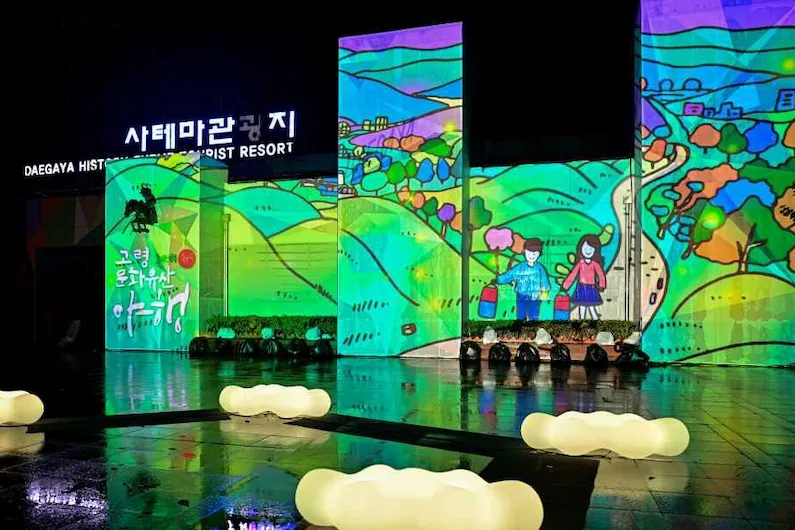
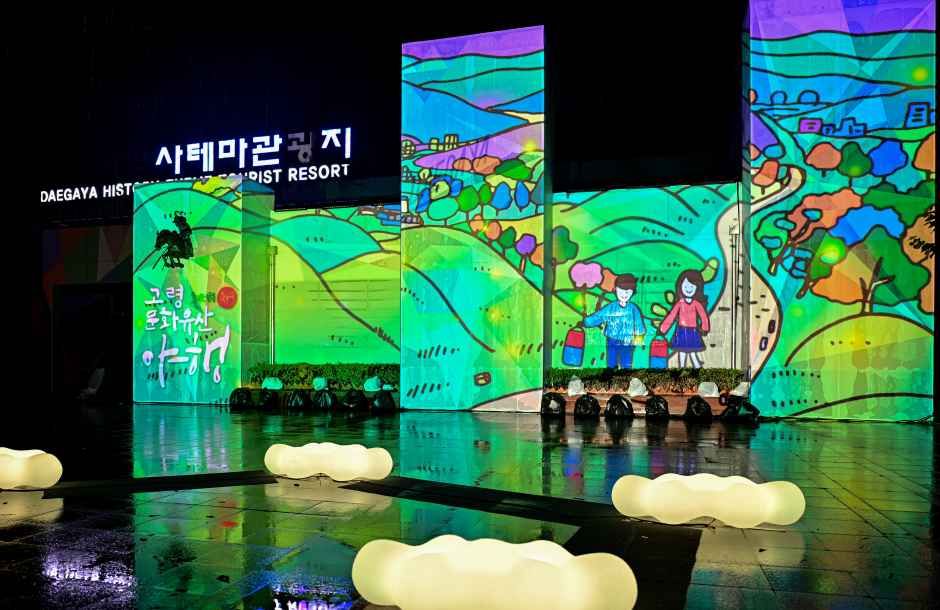
The 2026 Goryeong National Heritage Night Tour, where you can enjoy the nights of Goryeong together with national heritage, will be held from September 4 to 6, 2026, at the Daegaya History Theme Park. Held under the theme of Daegaya (大佳夜): Beautiful Night, this event distinguishes itself through its sophisticated integration of archaeological heritage with contemporary light artistry—a combination rarely attempted at ancient burial sites elsewhere in Korea. The program centers on fire and light installations that transform the nocturnal landscape without compromising historical integrity.
Starting with the Nakhwa-nori (hanging fireworks) held at Ureukji, the tour encompasses multisensory engagement with national heritage: fire-based performances, talk concerts with invited celebrities, and hands-on historical and cultural experiences. A consumption activation program provides souvenirs upon verification of same-day receipts spent within Goryeong-gun, extending the festival’s economic impact across the entire region rather than concentrating it at the event site alone.
Program Overview
| Program | Title | Details |
|---|---|---|
| Night View (夜景) | Gaya Garden | Nighttime opening of Goryeong landmarks; creation of nighttime landscapes at Jisan-dong Tumuli |
| Night History (夜史) | Gaya Romance | Daegaya Playground (Experience) |
| Night Story (夜說) | Gaya Exploration | Daega-ya Moonlight Conversation, Candlelight Gayageum Concert |
| Night Road (夜路) | Gaya Stroll | Moonlight Stamp Tour, Jisan-dong Tumuli Moonlight Walk, Daegaya Forest of Light Performance |
| Night Painting (夜畵) | Gaya Nakhwa | Daegaya Nakhwa-nori, Fire Goblin Performance |
| Night Market (夜市) | Gaya Market | Consumption receipt verification event, Daega-ya Night Market (Flea Market) |
| Night Snack (夜食) | Gaya Late-night Snack | Nighttime Food Yard (Food Trucks) |
| Night Stay (夜宿) | Gaya Life | Tonight, Time to Rest-ya |
Reservation Information
※ Partial advance reservations are required for two programs:
- Jisan-dong Tumuli Moonlight Walk Program
- Daegaya Playground — Daegaya Night Excavation Experience
Seniors interested in these walking-intensive or hands-on archaeological activities should secure reservations early, as capacity is limited.
Practical Information
📍 Address: 1216 Daegayaro, Daegaya-eup, Goryeong-gun, Gyeongsangbuk-do
🛏️ Accommodations near the event
💰 Fee: Free (Some paid programs)
📞 Inquiry: 054-955-0808
Notes for Senior Visitors
The event’s format—structured around eight thematic “night” programs—allows for flexible participation intensity. Those preferring lower-impact engagement can focus on the Candlelight Gayageum Concert, Gaya Market, and Nighttime Food Yard, while more active visitors might attempt the full Moonlight Stamp Tour or Jisan-dong Tumuli Moonlight Walk. The free admission structure (with select paid components) reduces financial risk for seniors who may wish to attend for only a portion of the evening. Goryeong-gun’s relatively compact geography means that receipt-verification souvenir collection across multiple venues remains feasible without extensive transportation.
What is Daegaya?
Daegaya was one of six kingdoms that made up the Gaya Confederacy, a group of allied city-states in the southern Korean Peninsula during the Three Kingdoms period (roughly 42–562 CE). Located in the river valleys of what is now Goryeong County, Gyeongsangbuk-do Province, Daegaya grew into the strongest of the Gaya polities. Historical records refer to it as the “central state” (중앙국) of the confederacy—a recognition of its political and cultural weight rather than any formal overlordship.
The kingdom’s economy rested on iron. Daegaya smiths produced weapons, farm tools, and trade goods that moved through networks linking the peninsula with Japan and China. Archaeological work at the Jisan-dong tomb complex, Daegaya’s principal burial ground, shows how this prosperity translated into social structure. The jisongmyo—earth-mound tombs built with stone-lined chambers—contain gilt-bronze crowns, horse armor, imported Chinese ceramics, and enough iron implements to stock a workshop. The scale of these burials and the range of their contents point to accumulated wealth, specialized craftsmanship, and the kind of status differentiation that accompanies sustained political organization.
Daegaya’s foreign relations required constant adjustment. The kingdom shifted between alliance and resistance with Silla to the east and Baekje to the west, neither of which welcomed a strong third party in the south. This balancing act failed in the long run. In 562 CE, Silla—then ascendant through its own military and diplomatic successes—absorbed Daegaya outright. The kingdom’s political structures disappeared, but its practical knowledge did not. Ironworking methods, musical forms, and ceramic techniques from Daegaya continued in use through the Unified Silla period and beyond, dispersed across a larger state but traceable to their source.
The Daegaya sites around modern Goryeong remain among the densest concentrations of Gaya-period material available for study. For historians, they offer a case study in how a mid-sized polity built and maintained influence in a crowded regional system. For visitors, they provide direct physical access to a society that operated across five centuries before the consolidation that produced the Korean states of later periods.
