Jinju National Heritage Night
🗓️ 2026.09.03 ~ 2026.09.06
The National Heritage Night is a night-time cultural heritage utilization festival designed to let people experience the historical and cultural value of national heritage through after-dark programs. The Jinju National Heritage Night takes place around Jinjuseong Fortress and the original downtown area, adopting the theme of the Amhaeng-eosa (Secret Royal Inspector)—the Joseon-era undercover officials who traveled incognito to root out corruption and injustice. Through this lens, visitors can engage with national heritage and local history in ways that go beyond the typical daytime sightseeing experience.
The festival is organized around the “Jinju 8 Nights (夜),” a set of eight themed program categories spanning scenery, performance, food, and even overnight accommodation. The result is an event designed so that visitors can safely and enjoyably explore national heritage after sunset, while also gaining a deeper appreciation for Jinju’s historicity and cultural identity. By linking the region’s representative national heritage sites with local cultural resources, the festival aims to offer citizens and tourists abundant opportunities for cultural enjoyment.
The Jinju 8 Nights (夜)
-
Night View (夜景) – Cultural heritage appreciation programs that make use of the landscape lighting of Jinjuseong Fortress and other national heritage sites, alongside the surrounding night scenery.
-
Night Road (夜路) – Historical and cultural tour programs that explore national heritage and the original downtown area, guided by cultural commentators who bring the stories of the streets to life.
-
Night History (夜史) – Historical and cultural content programs such as performances, exhibitions, and storytelling, all built around the theme of the Amhaeng-eosa.
-
Night Story (夜說) – Commentary and cultural lecture programs focused on the history of Jinju and its national heritage, offering a deeper intellectual layer to the festival.
-
Night Painting (夜畵) – Art and craft exhibitions and hands-on experience programs held in collaboration with local artists, giving visitors a creative way to engage with the heritage setting.
-
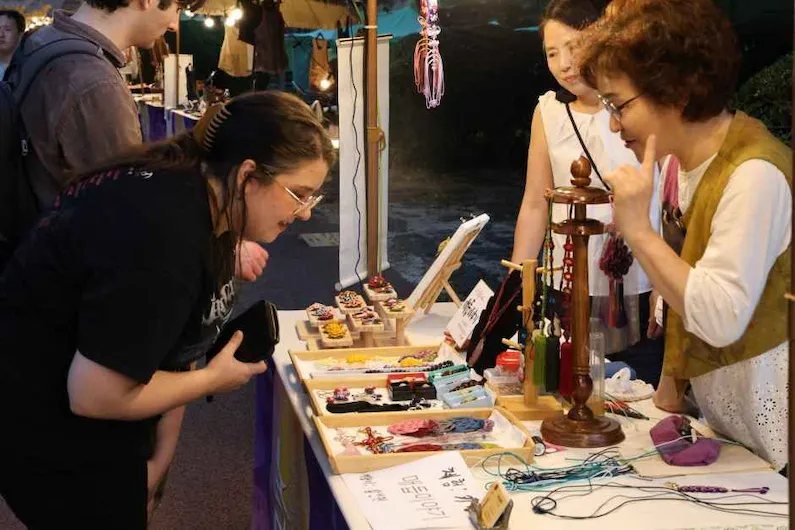
Night Market (夜市) – A night cultural market where visitors can browse and purchase local specialties, regional food, and cultural products.
-
Night Food (夜食) – Night food culture programs where visitors can sample representative local delicacies, making the festival a culinary journey as much as a historical one.
-
Night Stay (夜宿) – Accommodation and stay-type tourism programs linked with the nighttime cultural heritage experiences, for those who want to extend their visit and take in the atmosphere fully.
With programming that spans passive appreciation, active participation, intellectual engagement, and even an overnight stay, the festival offers multiple entry points depending on what kind of visitor you are—whether you’re a history enthusiast, a food traveler, a family with children, or someone simply looking for an unusual evening out.
📍 Address: 30 Manggyeongnam-gil, Jinju-si, Gyeongsangnam-do (Manggyeong-dong)
🛏️ Accommodations near the event
💰 Fee: Free
📞 Inquiry: 055-795-3200
What is Jinjuseong Fortress?
Jinjuseong Fortress is a stone-and-earth fortification on a hill overlooking the Namgang River in Jinju, South Korea. Its walls were first built in the late Goryeo period and expanded during the Joseon Dynasty. The site is associated with two major sieges during the Imjin War (1592–1598). In 1592, a force of several thousand Korean soldiers, monks, and civilian volunteers repelled a much larger Japanese army. A second Japanese offensive in 1593 proved more successful, and the fortress fell. Today the grounds include gates, pavilions, and reconstructed historical buildings, along with views over the river and the city.
In 2026, the fortress will host the Jinju National Heritage Night. The event centers on the Secret Royal Inspector, a Joseon-era official who traveled in disguise to review the conduct of local magistrates. Rather than recreating a specific historical episode, the program uses the walled grounds and lantern-lit courtyards as the backdrop for night tours and performances built around that premise.
