
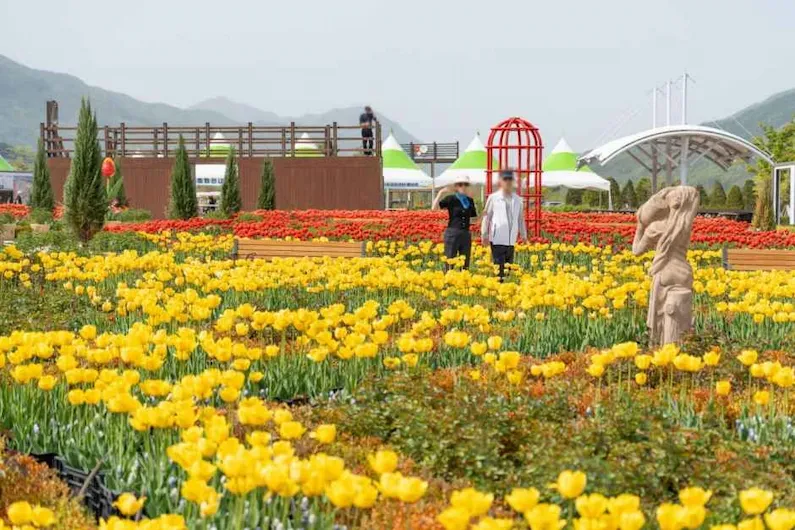
Pocheon Hantan River Garden Festa
🗓️ 2026.09.12 ~ 2026.11.01
The 2026 Pocheon Hantan River Garden Festa is a large-scale ecological and garden festival held at the Pocheon Hantan River Ecological Landscape Complex, themed around seasonal flowers and nature. Running from mid-September through early November, the festival offers visitors the vast natural scenery of the Hantan River area—listed as a UNESCO Global Geopark—along with the thrill of crossing a 410m-long Y-shaped suspension bridge.
The festival grounds hold a number of prepared attractions: photo zones with an autumn camping concept featuring the popular children’s characters Pororo and friends, a River Market where visitors can sample Pocheon’s representative agricultural and specialty products and assorted foods, themed gardens created with local artists, and electric bicycle experiences suited to families. Rest areas are set up throughout the site so visitors can pause and enjoy the autumn breeze over the Hantan River.
Main Programs
- Family Electric Bicycle Experience – an electric bicycle experience for families
- Seasonal Flower Garden – a garden arranged with autumn seasonal flowers
- River Market – Pocheon’s representative agricultural and specialty products, along with assorted foods
Side Programs
- Busking Program – classical performances held near the lake garden
Linked Festival
- Pocheon Hanwoo (Korean Beef) Festival – Saturday, September 12 to Sunday, September 13, taking place over the Garden Festa’s opening weekend
Admission Fees
| Category | Fee |
|---|---|
| Adults | Entrance fee 7,000 won / Voucher refund 4,000 won |
| Youth and Children | Entrance fee 5,000 won / Voucher refund 3,000 won |
| Exempt (Free) | Disabled persons (1 person for mild disability, 2 persons including guardian for severe disability), 6 years old or younger (excluding elementary students) |
| Discount (50%) | Senior citizens and residents of mutually partnered cities (Nowon-gu, Jung-gu, Gangdong-gu residents) |
| Free Admission (Free admission tickets distributed) | Pocheon citizens, disabled persons, persons of national merit, under 7 years old (preschoolers), etc. |
※ ID card is mandatory for those eligible for discounts and exemptions. General rates will apply if relevant supporting documents are not presented.
📍 Address: 832 Changdong-ro, Gwanin-myeon, Pocheon-si, Gyeonggi-do
🛏️ Accommodation near the event
💰 Fee: Paid
📞 Inquiry: 031-538-3030
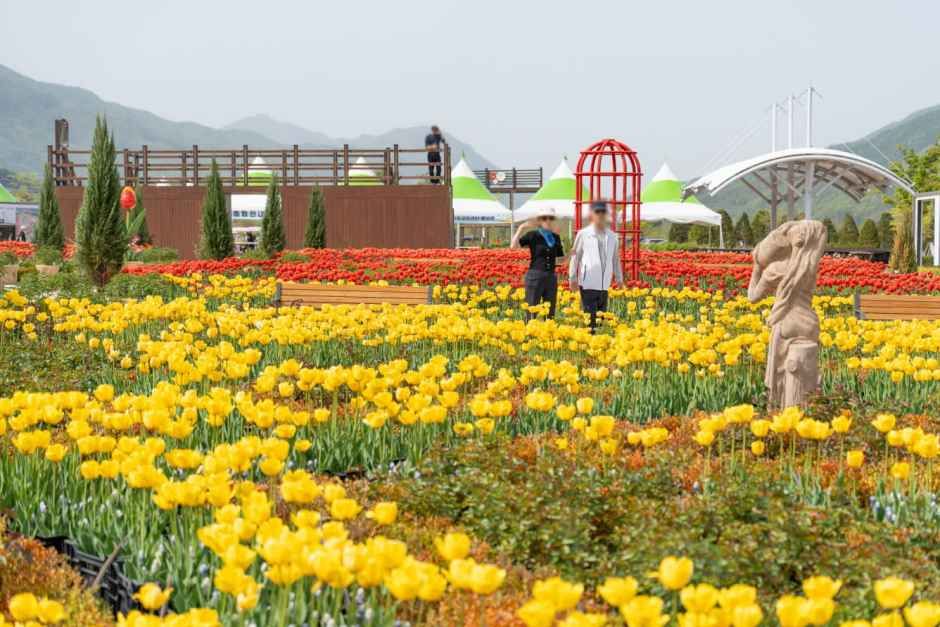
What is the Hantan River?
The Hantan River is a tributary of the Imjin River, flowing through the central-northern part of Gyeonggi Province and Cheorwon County in Gangwon Province, South Korea. Its course crosses terrain that was covered by lava in past volcanic periods. The river later cut into the basalt, forming a gorge with cliffs, columnar joints, flat shelves, and pools. In some stretches the channel widens and runs over bare rock; in others it narrows between walls of basalt and drops over ledges.
The riverbed’s composition has practical consequences. Because much of the channel is solid rock rather than sediment, the water stays cold and clear, and the aquatic environment is shaped by a hard, stable substrate. The gorge is sometimes called the Grand Canyon of Korea. The comparison is useful but inexact: the Hantan is smaller, and its formation involved a specific sequence of lava flows and river erosion rather than the processes that formed the American canyon.
The area was near the front line during the Korean War. Some bunkers and fortifications from that period remain on the bluffs. The river is now used mainly for recreation. Rafters and kayakers work the faster stretches, while hikers and cyclists use the riverside paths. Suspension bridges cross the gorge in a few places, providing views of the water without requiring access off the main trails. The busiest periods are spring, when snowmelt raises the river, and autumn, when the surrounding slopes change color.
The Pocheon Hantan River Garden Festa is organized along these existing trails and the river’s edge. The festival adds flower beds, lighting, and temporary stage structures to the landscape. The experience depends on the local terrain: paths follow the contours of the gorge, and events are spread across the floodplain rather than concentrated in a single venue. The visible contrast between the basalt cliffs and the planted beds is a result of that placement, not an idea imposed on the site.
