Visit Sukesuke Exhibition 2 at FUJI Nagoya Science Museum 2026: Discover the Hidden World of Nature and Mechanics

Visit Sukesuke Exhibition 2 at FUJI Nagoya Science Museum 2026: Discover the Hidden World of Nature and Mechanics

Special Exhibition “Sukesuke Exhibition 2: The World of Mechanisms Revealed Through Transparency”

Modern technology increasingly conceals its workings behind sleek, impenetrable exteriors, rendering the internal mechanisms that power our world invisible to casual observation. The Sukesuke Exhibition addresses this growing opacity through the Japanese concept of “sukeru”—becoming transparent—offering visitors a systematic examination of biological and mechanical interiors typically hidden from view. By deploying digital visualization technologies alongside meticulously crafted cross-sectional models and high-definition video content, the exhibition transforms opaque surfaces into windows, revealing the structural logic and intricate relationships between external form and internal function that remain inaccessible through surface inspection alone.

This methodology yields genuine discoveries that external observation cannot anticipate. Visitors encounter the unexpected complexity concealed within familiar objects and organisms, fostering renewed attention toward the engineering and anatomical architectures surrounding us daily. By illuminating the dialogue between exterior containment and interior mechanism, the exhibition stimulates intellectual curiosity across demographic boundaries, providing substantive engagement for children encountering these concepts for the first time while offering sufficient technical depth to satisfy adult inquiry.

Building upon its predecessor’s foundation, Sukesuke Exhibition 2 establishes two distinct thematic zones: “Nature Sukesuke” and “Invisible Sukesuke.” These additions expand the exhibition’s analytical scope, applying transparency methodologies to biological systems and phenomena imperceptible to the unaided eye. While the original iteration established the fundamental vocabulary of visual transparency through mechanical objects, this sequel extends those principles into natural history and invisible forces—suggesting an evolution in both conceptual breadth and technical implementation that should prove particularly illuminating for returning visitors.

🛏️ See hotels near the event

Exhibition Details

Dates:
Saturday, July 18, 2026 – Wednesday, September 23, 2026 (Public Holiday)

Closed:
Every Monday (exceptions: open July 20, August 10, and September 21)
Third Friday of each month (exception: open August 21)
Additionally closed: Tuesday, July 21; Tuesday, September 1; and Wednesday, September 2

Hours:
9:30 – 17:00 (Last admission at 16:30)

Venue:
FUJI Nagoya Science Museum
Science and Engineering Building B2F, FUJI Event Hall

Admission

Paid Admission (Same-day tickets):

  • General: 1,800 yen
  • University students: 1,000 yen
  • Elementary/Junior High/High School students: 500 yen

Advance tickets provide a 200 yen discount off each category.

Free Admission:

  • Preschool children

Ticket Purchase:

  • ● Purchase tickets here ●
  • Asoview!
  • Museum Ticket
  • Lawson Ticket (L-code: 43145)

Important Notes:

  • High school and university students must present valid student identification.
  • The above fees include access to the FUJI Nagoya Science Museum’s permanent exhibition rooms (planetarium excluded).
  • Visitors presenting physical disability certificates receive 50% off same-day admission (certificate required; applies to up to two accompanying persons).
  • Groups of 30 or more receive 100 yen off the same-day fee.
  • Presenting a “One-day Pass,” “Donichi Eco Kippu,” or “Subway All-line 24-hour Pass” issued by the Nagoya City Transportation Bureau on the day of visit entitles you to 100 yen off same-day admission.
  • Discounts cannot be combined.

Contact & Access

Contact:
FUJI Nagoya Science Museum
TEL: 052-201-4486
FAX: 052-203-0788
Homepage: https://sukesuketen.jp/

Access:

  • Subway: 5-minute walk south from exits 4 and 5 of “Fushimi” Station (Higashiyama and Tsurumai Lines)
  • City Bus: 5-minute walk south from “Hirokoji Fushimi” stop
  • Meitetsu Bus: 5-minute walk north from “Shirakawa Koen-mae” stop

Sukesuke (透け透け) is a Japanese term describing transparency so complete that light passes through to reveal what lies beneath. While it literally refers to physical translucency, the word also captures a particular approach to observation: removing barriers between viewer and internal structure to examine how components relate within a complete system.

In biological contexts, sukesuke describes preservation techniques that render organisms transparent while keeping tissues intact. By fixing specimens in organic solvents—often glycerol or benzyl alcohol/benzyl benzoate mixtures that match the refractive index of biological tissue—researchers create preparations where skin and muscle become virtually invisible. Staining agents like alizarin red for bone or Alcian blue for cartilage highlight specific structures against the cleared matrix. The result preserves three-dimensional relationships that dissection destroys; observers can trace how the ulnar nerve detours around the humerus, or how the vitelline artery branches across a chick embryo yolk sac, without the spatial distortion caused by cutting and pinning.

The same principle applies to engineering and architecture through transparent working models. Acrylic engine blocks, lucite gearboxes, and glass-enclosed hydraulic systems allow direct observation of mechanical function. During the design phase, transparent prototypes reveal manufacturing tolerances and stress concentrations that CAD models miss. In education, watching a valve train operate through a clear cylinder head makes cam timing immediately comprehensible in ways that diagrams cannot. Structural engineers use acrylic models to visualize load paths through trusses; watching stress patterns propagate through transparent resin helps validate finite element analysis against physical reality.

Whether examining a cleared fish specimen or a prototype pump housing, sukesuke prioritizes structural understanding over surface appearance. The technique recognizes that comprehension often requires seeing internal geometry—how parts fit, move, and bear load within the complete assembly. This visibility serves specific practical ends in medical training, quality control, and engineering design, where the spatial relationship between internal components determines function more than external form.

Toyota Automobile Museum 2026 Special Exhibition: Experience the Golden Age of ’80s and ’90s Japanese Cars and Motorcycles

Toyota Automobile Museum 2026 Special Exhibition: Experience the Golden Age of '80s and '90s Japanese Cars and Motorcycles

The second installment of the Toyota Automobile Museum’s special exhibition series on 1980s and 1990s Japanese vehicles shifts focus from the machines themselves to the individuals who envisioned them. This curated presentation examines the engineering minds behind Japan’s golden age of automotive performance—a period when domestic manufacturers produced machines that defined a generation.

The exhibition, running from Friday, April 10 to Sunday, July 12, 2026, brings together eight companies—both automobile and motorcycle manufacturers—to display authentic four-wheeled and two-wheeled icons simultaneously. This collaboration marks a rare opportunity to witness the full spectrum of Japan’s bubble-era mobility revolution under one roof, capturing the relentless passion that drove engineers to advance performance technology during this transformative period.

Exhibition Vehicles

The display features seventeen vehicles representing the pinnacle of 1980s and 1990s Japanese engineering, from rotary-powered sports cars to the genesis of hyper-sport motorcycles.

Four-Wheels

Vehicle Year
Mazda Savanna RX-7 1985
Eunos Cosmo 1990
Honda NSX 1991
Toyota Supra 1993
Mitsubishi GTO 1996
SUBARU Legacy Touring Wagon GT-B 1997
Nissan Skyline GT-R V·spec II 2000

Two-Wheels

Vehicle Year
Kawasaki GPZ900R (North American model name: Ninja) 1984
Kawasaki ZXR400R* 1989
Kawasaki ZZ-R1100 (North American model name: Ninja ZX-11) 1990
Suzuki GSX1100S KATANA 1984
Suzuki RG400Γ* 1985
Suzuki GSX1300R Hayabusa 1999
Honda VFR750R (RC30) 1987
Honda CBR900RR Fireblade 1992
Honda CBR1100XX Super Blackbird 1996
Yamaha RZV500R 1984
Yamaha VMAX 1990
Yamaha YZF-R1 1998

*Exhibited at Cultural Hall Entrance

*Exhibition vehicles are subject to change.

Special Events and Programs

2nd Classic Car Meeting ’80s-’90s Japanese Cars ~part 2~

This gathering features in-house parades, commemorative photo sessions, and ride-along test drives. Details are available here.

  • Date and Time: Saturday, May 16, 2026, 10:00–16:30
  • Location: P1 Parking Lot, etc.

Special Lecture “Director Sakakibara Listens!”

Director Sakakibara hosts intimate conversations with the engineers responsible for developing era-defining models.

First Session

  • Guest: Mr. Kozo Watanabe, former Development Manager for the R33/R34 Skyline at Nissan Motor Co., Ltd.
  • Date and Time: Saturday, May 16, 2026, 13:00–14:00
  • Location: Cultural Hall 1F

Second Session

  • Guest: Mr. Nobuhiro Yamamoto, former Development Manager for the ND Roadster at Mazda Motor Corporation
  • Date and Time: Saturday, June 6, 2026, 13:00–14:00
  • Location: Cultural Hall 1F

Concurrent Special Exhibitions

That Supra is coming

  • Date and Time: Thursday, April 23 – Sunday, May 24, 2026
  • Location: Cultural Hall 1F Entrance
  • Exhibited Vehicle: The Supra donated by Prime Minister Sanae Takaichi to Nara Toyota

Toyoda Model AA 90th Anniversary Exhibition

  • Date and Time: Tuesday, May 26 – Sunday, July 12, 2026
  • Location: Car Hall 1F Entrance
  • Exhibited Vehicles: Toyota AB Phaeton (1938), Toyota Model AC Passenger Car (1947)

Driving Demonstration

Witness pre-war Japanese automotive history in motion with the Toyoda Model AA Passenger Car (1936), Toyota AB Phaeton (1938), Datsun Model 16 Sedan (1937), and more.

  • Date and Time: Saturday, April 18, 2026, 11:00–11:30 / 14:00–14:30
  • Location: P1 Parking Lot
  • Note: Canceled in case of rain; vehicles are subject to change without notice.

Car Library Programs

I want to talk about car manga!
Join discussions spanning mainstream automotive manga to obscure titles featuring exquisite supporting vehicle roles.

  • Date and Time: Sunday, April 26, 2026, 15:00–16:00
  • Location: Cultural Hall 3F Car Library

I want to talk about car models!
Bring handmade models to share techniques and appreciation with Toyota Museum modelers.

  • Date and Time: Sunday, June 7, 2026, 15:00–16:00
  • Location: Cultural Hall 1F TINY STUDIO

“Engineers Who Create Enthusiasm — ’80s-’90s Japanese Cars and Motorcycles” Details Page

Visitor Information

Toyota Automobile Museum

The Car Hall chronicles automotive history from the dawn of gasoline-powered vehicles in the late 19th century to the present, displaying approximately 150 vehicles across historical eras. The Cultural Hall contains the “Car Culture Archive,” showcasing roughly 4,000 cultural materials including posters, toy cars, and mascots. The research library includes a “Vehicle Picture Book Library” for younger visitors.

View spot details

🛏️ View hotels near the event

Exhibition Dates: Friday, April 10 – Sunday, July 12, 2026

Closed: Mondays (or the following day if Monday is a public holiday)

  • Open on Monday, May 4, Tuesday, May 5, and Wednesday, May 6
  • Closed on Wednesday, May 7

Hours: 9:30–17:00 (Admission until 16:30)

Venue: Toyota Automobile Museum, Cultural Hall 2F Special Exhibition Room

Admission:

  • Adults: 1,200 yen
  • Seniors (65+): 700 yen
  • Junior/Senior High Students: 600 yen
  • Elementary Students: 400 yen

Group discounts available; some periods are excluded from discounts

Contact: Toyota Automobile Museum
TEL: 0561-63-5151
Homepage: https://toyota-automobile-museum.jp/

Access:

By Public Transport:
Disembark at “Geidai-dori” Station on the Linimo. Approximately 5 minutes walk from Exit 1.

By Car:
0.4km west from “Nagakute IC” on the Nagoya Seto Road (via Tomei Expressway Nisshin JCT)

Parking: Free

What is the Toyota Automobile Museum?

The Toyota Automobile Museum opened in Nagakute, Aichi Prefecture, in 1989. The collection includes more than 140 vehicles from Japan, Europe, and the United States, ranging from early twentieth-century European touring cars to the high-performance Japanese sports cars that emerged during the late 1980s and 1990s.

The museum occupies two distinct buildings. The Main Building displays the chronological development of automotive technology worldwide, showing how engineering solutions evolved from brass-era mechanics to electronic fuel injection and computer-controlled systems. The Cultural Gallery examines the societal impact of mass mobility through period artifacts, contemporary advertisements, and rotating exhibitions on specific themes or manufacturers.

Although Toyota operates the museum, the collection deliberately includes significant models from competitors such as Nissan, Honda, and Mazda alongside European and American landmarks. This approach places Japan’s automotive history within an international context rather than presenting a single corporate narrative. Visitors can walk among the actual vehicles, comparing how domestic manufacturers adapted existing technologies during the country’s period of rapid growth and how Japanese engineering developed its own distinct priorities regarding reliability and packaging.

The institution treats automobiles as cultural artifacts, presenting them as physical records of the economic conditions and manufacturing capabilities of their respective eras. The exhibits trace specific technical and aesthetic shifts that occurred during the 1980s and 1990s, documenting how Japan’s automotive industry moved from emulation to innovation within the span of a few decades.

Fullmetal Alchemist x Yomi no Tsugai Exhibition 2026 in Ginza: Guide to Tickets, Dates, and Venue Access

Fullmetal Alchemist x Yomi no Tsugai Exhibition 2026 in Ginza: Guide to Tickets, Dates, and Venue Access

Fullmetal Alchemist × Yomi no Tsugai Exhibition: A Dual Anniversary Celebration in Ginza

Marking a quarter-century since the debut of Fullmetal Alchemist and half a decade of Yomi no Tsugai, manga artist Hiromu Arakawa’s dual anniversary exhibition arrives at Matsuya Ginza this August. The show—officially titled “Fullmetal Alchemist x Yomi no Tsugai Exhibition”—offers a rare convergence of Arakawa’s most celebrated completed series alongside her current ongoing work, presenting an opportunity to examine the visual and narrative evolution of one of Japan’s most distinctive creative voices. Square Enix, publisher of both properties, has organized the event to allow visitors to immerse themselves in the distinct yet thematically linked worlds of militaristic alchemy and supernatural rural folklore.

While specific display contents will be revealed progressively through the official website and X account, the exhibition promises original artwork, production materials, and thematic installations spanning both series. The pairing underscores Arakawa’s range—the steampunk-infused European aesthetic of Fullmetal Alchemist contrasting with the contemporary Japanese mountain village setting of Yomi no Tsugai—while highlighting the consistent thematic concerns that have defined her career, including等价交换, familial bonds, and the relationship between humanity and natural (or supernatural) forces.

Practical Information

The exhibition occupies the Matsuya Ginza 8th Floor Event Square from Thursday, August 13 through Wednesday, September 2, 2026. Operating hours run from 11:00 to 20:00, though visitors should note several exceptions: the venue closes at 19:30 on August 16th, 23rd, and 30th (all Sundays), and concludes at 17:00 on the final day, September 2nd. Entry is permitted until thirty minutes prior to closing, though operational hours remain subject to potential alteration.

Ticketing Structure

Admission operates on a date-and-time-specified basis for all ticket categories during the entire run.

Advance sales offer the most economical access:

  • General admission: ¥1,800
  • High school students: ¥1,000
  • Elementary and junior high school students: ¥600

Premium bundled options include:

  • Ticket with goods and pamphlet: ¥5,450
  • Ticket with goods only: ¥3,450
  • Ticket with pamphlet only: ¥3,800

Same-day purchases (subject to availability) cost slightly more:

  • General: ¥2,000
  • High school students: ¥1,200
  • Elementary and junior high school students: ¥800

Several demographics enter without charge: preschool-aged children, holders of disability certificates (plus one accompanying assistant), and various Matsuya cardholders (excluding point cards). Note that elementary school-aged visitors and younger must be accompanied by a ticket-holding guardian aged eighteen or older. The goods corner requires exhibition admission for entry; browsing merchandise without a valid ticket is not permitted.

Access and Location

Matsuya Ginza sits at 3-6-1 Ginza, Chuo-ku, Tokyo (〒104-8130), with the exhibition occupying the 8th Floor Event Square. Multiple transit options provide convenient access: Ginza Station (one-minute walk), Ginza-itchome Station (three-minute walk), Higashi-ginza Station (three-minute walk), and Yurakucho Station (eight-minute walk). A MAP is available for precise navigation.

Tickets may be purchased in advance through Purchase tickets here. Details of the event are scheduled to be updated from time to time on the official website and official X account.

The posted content may have changed. Please check the official website of the venue or organizer for the latest information.

🛏️ View hotels near Tokyo

Fullmetal Alchemist x Yomi no Tsugai Exhibition_1 Fullmetal Alchemist x Yomi no Tsugai Exhibition_2 Fullmetal Alchemist x Yomi no Tsugai Exhibition_3 Let's visit seasonal spots! TTR Digital Stamp Rally in progress

Yomi no Tsugai (黄泉のツガイ) began serialization in Monthly Shonen Gangan in December 2021, marking Hiromu Arakawa’s first major project since completing Silver Spoon (Gin no Saji) in 2019. The series represents her return to action-oriented fantasy after years of agricultural slice-of-life storytelling.

The narrative operates within a martial arts framework drawn from East Asian folklore. Yuru grows up in the hidden village of Kagemori, trained in combat techniques designed to control spiritual energy. His twin sister Asa, separated from him as an infant and raised by the Momo no Sei (Peach Sprites), works as an assassin. Their reunion occurs through violence: when outsiders attack Kagemori, Yuru learns he is one half of a “Tsugai”—a bonded pair whose combined abilities allow them to traverse the threshold between the living world and Yomi, the realm of the dead.

Arakawa approaches the material with the same technical precision visible in her earlier work. Fight scenes prioritize clarity of movement over spectacle, with the mechanical logic of the combat system—how spiritual energy manifests, the specific limitations of paired fighters—established through demonstration rather than exposition. Character motivations remain grounded even as the supernatural elements escalate; Yuru and Asa’s negotiations of their estranged relationship carry equal weight to the mythology concerning the boundary between life and death.

The comparison with Fullmetal Alchemist proves instructive given Arakawa’s continued interest in sibling dynamics and institutional corruption. Where the earlier work examined brotherhood through shared trauma and mutual protection, Yomi no Tsugai considers the stranger dynamic of twins separated at birth, asking what obligation exists between people linked by biology but not history. For an exhibition pairing these two works, the manga offers a clear view of how Arakawa’s concerns have shifted in the decade between projects—from the industrial revolution and bodily integrity to questions of inheritance and whether predetermined roles can be refused.

Soran PERFECT DAY 12 2026: Tickets, Dates, Seating Guide & Everything You Need to Know for the Seoul Concert

Soran PERFECT DAY 12 2026: Tickets, Dates, Seating Guide & Everything You Need to Know for the Seoul Concert

Soran PERFECT DAY 12

Poster

Event Information

Schedule

July 3 (Fri) ~ 5 (Sun), July 10 (Fri) ~ 12 (Sun), 2026 | Fri 8PM / Sat 6PM / Sun 4PM

Lineup

  • Soran (소란)

Ticket Price

  • All Seats (General): 110,000 KRW

What to Expect

This is the twelfth installment of Soran’s “PERFECT DAY” concert series, a sustained run that has established itself as a signature event for the indie rock band. The 2026 edition extends across two extended weekends in July, offering ten total performances at Prugio Art Hall in central Seoul. Previous iterations have developed a reputation for intimate, meticulously arranged setlists that balance the group’s established catalog with live-specific arrangements and occasional unreleased material.

The venue’s configuration merits attention for prospective attendees. Prugio Art Hall operates with a split seating design: rows A through K maintain a flat, zigzag arrangement intended to minimize sightline obstruction between patrons, while rows L through R incorporate elevation changes. Ticket holders select specific seats during booking rather than receiving general admission assignments.

Booking and Attendance Notes

※ This performance applies the Safe Booking service. Please refer to this when booking.

※ Prior to booking tickets, please be sure to check the cancellation and refund clauses as well as the detailed information of the ticket booking agency.

※ Booking a ticket means that you have checked and agreed to the guidance and regulations of the organizer and the ticket booking agency.

※ Responsibility for damages resulting from a lack of familiarity with the viewing guidelines lies with the viewer, and changes/refunds of booked tickets are not possible, so please be especially mindful.

  • This performance is a fully assigned seating event, and you can select your desired seat when booking.
  • At Prugio Art Hall, seats in sections Row A to Row K are arranged in a zigzag pattern without elevation changes, designed to relatively reduce visual obstruction. Sections Row L to Row R are operated as seats with elevation changes, so please refer to this when booking.
  • Viewing is only possible from the booked seat, and moving to a seat other than the assigned seat is not permitted.
  • Up to 4 tickets per person can be booked for this performance.
  • For one week after the ticket opening, bank transfer cannot be selected as a payment method. Bank transfer selection is only available from midnight on May 29 (Fri) to midnight on June 29 (Mon), so please take note.
  • Proxy receipt or transfer of tickets to anyone other than immediate family members is not permitted. Please make sure to book using an ID in the name of the person who will actually watch the performance.
  • In the case of booking under the name of an immediate family member, identity verification and ticket receipt are possible if you bring all of the following: family relationship verification documents (health insurance card, resident registration abstract, family relationship certificate, etc.) / the booker’s physical ID / the viewer’s physical ID.
  • To avoid congestion on the day of the performance, tickets booked during the early stages of ticket opening will be delivered in bulk.
  • Bulk delivery date: June 15 (Mon) ~ 16 (Tue), for 2 days
  • Regardless of the reason, entry to the venue and re-issuance of tickets are not possible in case of damage, loss, theft, or failure to possess the ticket on-site, so please be careful with ticket storage.
  • Friday and Saturday performances can be booked until 5 PM the day before the performance; Sunday performances can be booked until 11 AM the day before the performance. Cancellations and refunds are not possible after the booking deadline.
  • Any arbitrary transaction of tickets other than the official purchase procedure through the booking site is an illegal act. If an illegal transaction is discovered, it will be handled through a legal explanation process. Please be informed that any damages arising from this are entirely the responsibility of the parties involved in the transaction, and the performance organizer, host, and partner companies bear no responsibility.

Seating ChartVenue Layout

A bit about Soran (소란)

Soran is a South Korean indie pop band that has charmed listeners with their warm, witty, and heartfelt music since their debut in 2010. The four-member group—consisting of vocalist Go Young-bae, guitarist Lee Tae-wook, bassist Seo Myeon-ho, and drummer Pyeon Yu-il—originally formed through their university music club and quickly rose to prominence in the indie scene. Their name, which means “a disturbance” or “a small commotion” in Korean, perfectly captures their playful and energetic spirit. Soran is beloved for their relatable, story-driven lyrics that capture the small, tender moments of everyday life, delivered through Go Young-bae’s distinctively sweet and clear vocals. Their breakout hit, “Timing,” from their second album became a viral sensation, resonating deeply for its comforting message about the right moment for love arriving without warning. With a discography that spans energetic, band-driven pop anthems and soft, acoustic ballads, Soran continues to be a source of solace and joy, masterfully blending clever wordplay with melodies that feel like a conversation with a close friend.

이 포스팅은 쿠팡 파트너스 활동의 일환으로, 이에 따른 일정액의 수수료를 제공받습니다.

Lemon Afternoon Tea at Kichijoji Excel Hotel Tokyu: Summer 2026 Dates, Menu, and How to Reserve

Lemon Afternoon Tea at Kichijoji Excel Hotel Tokyu: Summer 2026 Dates, Menu, and How to Reserve

Lemon Afternoon Tea at Kichijoji Excel Hotel Tokyu

An afternoon wrapped in refreshing acidity during summer in Kichijoji. “Lemon Afternoon Tea” is being held, featuring tea leaves from a local Kichijoji specialty tea shop.

As summer heat intensifies, Kichijoji Excel Hotel Tokyu offers a seasonally limited afternoon tea built around the aroma and sharpness of lemon. The menu delivers exactly what the season demands: visually cooling sweets and light-tasting savories that satisfy without weighing you down in humid weather.

What Sets This Apart

Most hotel afternoon teas in Tokyo follow a predictable formula—heavy on cream, chocolate, and richness. This summer iteration deliberately inverts that approach. The partnership with Tea Market Giclef Kichijoji Main Store, a respected local specialty shop operating in the neighborhood, gives guests access to carefully sourced leaves that change character with temperature and steeping time. The atrium space on the hotel’s second floor provides natural light and vertical breathing room rarely found in central Tokyo hotel lounges.

The Menu

Sweets are arranged to move through different expressions of citrus:

  • Verrine: Layered mango passion fruit jelly, panna cotta, and lemon jelly with aloe—textural contrast in a glass
  • Citron Tart: Sharp acidity as the dominant note
  • Lemon Opera-style cake: Lemon buttercream meeting chocolate’s depth
  • Lemon Vanilla Mousse: Gentle sweetness with a mellow finish
  • Lemon Cream Cookie Sandwich: Light, handheld, approachable

Savories are calibrated for summer appetite:

  • Chickpea hummus with fragrant spices and prosciutto
  • Chilled corn soup (served separately)
  • Smoked salmon and avocado tart
  • Cold beef canapé with remoulade sauce
  • Egg sandwich

The welcome drink—sparkling lemon tea with active carbonation—cleans the palate before the tiered service begins.

Scones arrive with clotted cream and mixed berry jam: plain and tea varieties.

Beverages pull from Tea Market Giclef’s selection: Darjeeling, Assam, Jasmine, Earl Grey, Classic Chai, Darjeeling Earl Grey Blend, Rooibos Classic, Lemon Garden, plus Organic Forest Coffee, Café Latte, and Espresso. Unlimited refills and exchanges are permitted.

Service Details

Venue Kichijoji Excel Hotel Tokyu, Lounge & Dining “SORAE” (2nd Floor)
Nearest Station Kichijoji Station, 8-minute walk
Address 〒180-0004, 2-4-14 Kichijoji Honcho, Musashino-shi, Tokyo [MAP]
Period June 1 – August 31, 2026
Time 14:30–17:30 (L.O. 17:00), 2-hour seating
Capacity Weekdays: 15 servings / Weekends & holidays: 20 servings
Evening Session 17:30–21:00 (L.O. 20:30), weekdays only, except Wednesdays, 6 servings
Price ¥6,000 per person (includes 12% service charge and 10% consumption tax)
Reservations Required

Official Website

Photos are for illustrative purposes. Menu subject to change based on ingredient availability. Guests with food allergies should inform staff in advance. Alcohol service declined to drivers and those under 20, per legal requirements.


🛏️ View hotels near Tokyo

Lemon Afternoon Tea [Kichijoji Excel Hotel Tokyu]_1 Lemon Afternoon Tea [Kichijoji Excel Hotel Tokyu]_2 Lemon Afternoon Tea [Kichijoji Excel Hotel Tokyu]_3 Lemon Afternoon Tea [Kichijoji Excel Hotel Tokyu]_4 Lemon Afternoon Tea [Kichijoji Excel Hotel Tokyu]_5 Lemon Afternoon Tea [Kichijoji Excel Hotel Tokyu]_6 Lemon Afternoon Tea [Kichijoji Excel Hotel Tokyu]_7 Lemon Afternoon Tea [Kichijoji Excel Hotel Tokyu]_8 Lemon Afternoon Tea [Kichijoji Excel Hotel Tokyu]_9 Lemon Afternoon Tea [Kichijoji Excel Hotel Tokyu]_10

The posted content may have changed. Please check the official website of the venue or organizer for the latest information.

What is Kichichijoji?

Kichijoji sits in western Tokyo, about fifteen minutes from Shinjuku on the JR Chuo Line. It has become something of a benchmark for livability in the city—frequently topping resident surveys while remaining relatively low-key compared to its eastern counterparts.

The neighborhood organizes itself around Inokashira Park, a substantial green space built around a pond that serves multiple purposes depending on the season. In early April, the cherry Blossom trees draw substantial crowds for hanami, while the rest of the year sees a steadier stream of joggers, musicians, and families. The Ghibli Museum sits within the park grounds, designed specifically to house the studio’s work without the conventional layout of a traditional animation museum—no fixed route, no photography, an admission system that requires advance tickets purchased through specific convenience store chains.

The retail and food landscape in Kichijoji operates on several registers simultaneously. Sun Road provides the covered arcade experience common to Japanese suburbs, functional and unpretentious. Harmonica Yokocho, by contrast, retains the physical footprint of its postwar black market origins—narrow passages between compressed structures now housing roughly sixty bars and restaurants, most with fewer than ten seats. The concentration of vinyl record dealers, small publishers, and independent clothiers in the surrounding blocks is not accidental; several date to the 1960s and 1970s, predating the current wave of interest in such businesses.

What distinguishes Kichijoji from comparable neighborhoods is not any single amenity but the persistence of its irregular built environment. Height restrictions have prevented the tower development visible in Shibuya or Ikebukuro, and the street grid retains enough inconsistency to accommodate unexpected structures. This has attracted a particular demographic mix—families who have owned property for decades, students from the nearby university district, and more recent arrivals working in creative fields or remote arrangements. The resulting atmosphere has been durable enough to function as a recognizable setting in film and television, typically shorthand for a certain manageable pace of urban life.

AFTERNOON TEA with “SIROCCO” “Peach” 2026 at The Royal Park Hotel Iconic Tokyo Shiodome: Menu, Prices & How to Book

AFTERNOON TEA with "SIROCCO" "Peach" 2026 at The Royal Park Hotel Iconic Tokyo Shiodome: Menu, Prices & How to Book

AFTERNOON TEA with “SIROCCO” “Peach” [The Royal Park Hotel Iconic Tokyo Shiodome]

A summer afternoon tea featuring a parfait crowned with a whole white peach.

The Royal Park Hotel Iconic Tokyo Shiodome welcomes back its celebrated AFTERNOON TEA with “SIROCCO” “Peach”—an event that proved so popular in its previous iteration that it returns with thoughtful refinements rather than radical reinvention. The centerpiece remains unchanged in its visual ambition: a white peach parfait topped with an entire white peach, prepared through a labor-intensive process where the pastry chef hand-peels each fruit in hot water before slow-simmering it into a delicate compote. What distinguishes this year’s offering is the addition of jasmine and almond jelly (annin), introducing aromatic complexity that complements the peach’s natural sweetness without overwhelming it.

The menu extends beyond this signature creation. Peach appears throughout the savory selections—most notably in a chilled peach and tomato potage that balances the fruit’s sugars against the tomato’s acidity, and in an ensemble pairing peach with prosciutto and Camembert atop pancake. Weekday visitors receive an additional benefit: a welcome iced tea prepared with SIROCCO TEA.


AFTERNOON TEA with “SIROCCO” “Peach” Menu

WELCOME TEA

Luxury Swiss SIROCCO TEA (black tea) served in the “Butterfly Bloom” series of tea ware by Wedgwood.

SAVORY

  • Chilled peach and tomato potage
  • Ensemble of peach and prosciutto with rich Camembert on a pancake
  • Steamed chicken and watermelon “cool” salad
  • Corn and soy milk royale-style with scallops and consommé gelée
  • Spicy ratatouille sandwich using summer vegetables

SWEETS

  • White peach and almond jelly parfait with a scent of jasmine
  • White peach pudding
  • White peach roll cake
  • Peach mousse
  • Peach cheese pie

DRINK

Two service tiers are available:

“Cafe Free” — Unlimited coffee and black tea

“Cafe & SIROCCO TEA Free” — Unlimited coffee, black tea, plus a selection of SIROCCO teas, green tea, herb teas, and fruit teas


Weekday Only Welcome Tea “Summer Jewelry”

The weekday experience includes a theatrical preparation: a two-layered separate tea created tableside by pouring a mixture of SIROCCO TEA’s “Lemon Beach” and “Pigna Moringa” into blue syrup containing silver dragees. Rosemary garnish adds aromatic dimension. The visual effect—cool blues and silvers—functions as a straightforward seasonal marker.

Please check the official website for detailed contents.


Basic Information

Location The Royal Park Hotel Iconic Tokyo Shiodome1-6-3 Higashi-Shinbashi, Minato-ku, Tokyo 〒105-8333
Nearest Stations Shiodome Station / Shimbashi Station
Venue 24F Bar Lounge “THE BAR” and All-Day Dining “Harmony”
Period Wednesday, July 1, 2026 — Monday, August 31, 2026
Hours “THE BAR”: 13:00–15:00 daily<br>”Harmony”: Weekdays 13:00–14:00; Sat/Sun/Holidays 14:00–14:30
Capacity Weekdays: Limited to 15 servings per day<br>Sat/Sun/Holidays: Limited to 30 servings per day
Pricing Cafe Free: ¥8,500<br>Cafe & SIROCCO TEA Free: ¥12,700<br><br>Each seating limited to 120 minutes<br>Online booking reduces “Cafe & SIROCCO TEA Free” to ¥7,000
Official Website https://www.royalparkhotels.co.jp/ic/tokyoshiodome/news/0p1jfwdzu6/

The listed content may have changed. Please check the official website of the venue or organizer for the latest information.

🛏️ See hotels near Tokyo

What is “SIROCCO”?

SIROCCO is the restaurant and lounge at The Royal Park Hotel Iconic Tokyo Shiodome, on the 24th floor with views of Tokyo Bay and the city skyline. The name references the warm wind that blows from the Sahara across the Mediterranean. The space makes deliberate use of this idea—large windows, natural light, and a layout that shifts easily between day and evening use.

The afternoon tea program has become a particular focus. Pastry chefs work with seasonal ingredients, treating them with techniques and presentations that reflect both international and Japanese approaches. The “Peach” 2026 edition follows this pattern: a single ingredient, in this case stone fruit at its summer peak, explored across multiple courses and preparations.

France Exhibition 2026 at Isetan Shinjuku: Your Guide to 80+ Stores of Authentic French Food, Wine & Lifestyle

France Exhibition 2026 at Isetan Shinjuku: Your Guide to 80+ Stores of Authentic French Food, Wine & Lifestyle

France Exhibition 2026

Approximately 80 Stores Featuring Food, Wine, and Miscellaneous Goods Line Up! Enjoy Gourmet Delicacies at a Venue Filled with the Aroma of Freshly Made Treats.

From Thursday, April 23 to Wednesday, April 29 (public holiday), 2026, the “France Exhibition 2026” will transform the Event Space on the 6th floor of the Main Building at Isetan Shinjuku Store into a corner of Paris. This annual celebration of French culture brings together approximately 80 stores offering an immersive experience of contemporary French life—one that extends well beyond the expected culinary attractions.

What distinguishes this exhibition from other international food events in Tokyo is its deliberate curation of “now” in France: star pastry chefs and emerging popular brands selected specifically for their relevance to current French trends. Visitors will find desserts executed with technical precision, breads and baked goods still warm from the oven, and an extensive selection of cheeses, deli items, and charcuterie. The wine program, developed to satisfy knowledgeable collectors, runs parallel to expanded lifestyle offerings that include Parisian fashion, tableware, accessories, and carefully selected miscellaneous goods—collectively creating what organizers describe as a “Little France” within Shinjuku.


Practical Information

Location & Access

Isetan Shinjuku Store
Nearest stations: Shinjuku-sanchome Station (1 minute walk) / Shinjuku Station (5 minute walk)

Address: 〒160-0022, 3-14-1 Shinjuku, Shinjuku-ku, Tokyo
VIEW MAP

Venue: Isetan Shinjuku Store Main Building 6th Floor Event Space

Dates & Hours

Period Date
Special invitation day for MI Card members Wednesday, April 22, 2026
General admission Thursday, April 23 – Wednesday, April 29, 2026 (public holiday)
Service Hours
Main exhibition 10:00 AM – 8:00 PM (closes 6:00 PM on final day)
Eat-in area 10:30 AM – 8:00 PM (closes 6:00 PM on final day)
Food Hall 10:00 AM – 8:00 PM (closes 6:00 PM on final day)
Last order for all services: 30 minutes before closing

Official Website: https://www.mistore.jp/shopping/event/shinjuku_e/france_10


Important Notes

  • All prices include tax
  • A mix of standard tax rate (10%) and reduced tax rate (8%) applies
  • The event is subject to change without notice
  • Posted content may have changed; confirm latest information on the official website

Visual Preview

France Exhibition 2026_1
France Exhibition 2026_2
France Exhibition 2026_3
France Exhibition 2026_4
France Exhibition 2026_5
France Exhibition 2026_6
France Exhibition 2026_7
France Exhibition 2026_8
France Exhibition 2026_9
France Exhibition 2026_10
France Exhibition 2026_11
France Exhibition 2026_12
France Exhibition 2026_13
France Exhibition 2026_14
France Exhibition 2026_15
France Exhibition 2026_16


🛏️ View hotels near Tokyo

Find a drink that suits you♪ Sma-Dri × Tokyo Metro "First BAR Tour Stamp Rally" is being held!

What is Isetan Shinjuku?

Isetan Shinjuku is a department store in Tokyo’s Shinjuku district. The seven-story flagship opened in 1933 and has since become known for a particular retail approach: high-end merchandise selection combined with the kind of thematic, large-scale exhibitions that have become rarer in department stores elsewhere.

The depachika, or basement food hall, operates on a straightforward principle—limited products, conspicuous quality, queues. Wagyu, seasonal items, and regional specialties from across Japan fill the cases. The main floors rotate through collaborations and country-themed exhibitions that temporarily reconfigure retail space into something more like a museum or market. Previous exhibitions have focused on specific Japanese craft regions, European design movements, and full-scale recreations of foreign marketplaces.

For the 2026 France Exhibition, this matters for practical reasons. Isetan draws roughly 100,000 visitors daily, and its customer base has shown consistent willingness to pay premium prices for imported goods presented with narrative context. The store’s history of country-specific exhibitions means the infrastructure and audience expectations are already in place.

Zojoji Tanabata Festival 2026: Complete Guide to Tokyo’s Enchanting Tanabata Night at Zojoji Temple

Zojoji Tanabata Festival

The Zojoji Tanabata Festival offers visitors the opportunity to experience a fantastical Tanabata night, characterized by the visual splendor of colorful strips of paper—known as tanzaku—and the soft glow of washi paper candles. This celebration transforms the temple grounds into a space of reflection and traditional beauty.

Participating in the Traditions

From mid-June, a "Wish Writing Station" is established next to the plaza in front of the Main Hall, allowing visitors to participate in the tradition of writing their hopes and dreams. These wishes, inscribed on paper strips, are later prayed for during the "Tanabata-kai" ceremony, which takes place on July 7th starting at 17:30.

For those seeking specific success or victory, the Ankokuden hosts the "Tanabata Victory Luck Prayer Meeting." During this event, prayers for victory and success are offered to the Black Principal Image of Amida Nyorai, and visitors may obtain limited-edition Tanabata amulets.

Wish Writing Station

The "Tanabata-kai" ceremony occurs at the plaza in front of the Main Hall on July 7th from 17:30. The reception for writing wishes follows a staggered schedule:

  • June 13th – 30th: 9:00 – 17:00
  • July 1st – 5th: 9:00 – 20:00
  • July 6th and 7th: 9:00 – 21:00

A prayer fee of 200 yen per paper strip is required for participation.

Ankokuden Offerings

As part of the "Tanabata Victory Luck Prayer Meeting," the temple provides prayers for victory luck along with the distribution of goshuin (temple stamps) and amulets.

Reception Dates and Times:

  • July 6th (Mon): 19:00
  • July 7th (Tue): 18:00, 19:00, 20:00

The prayer fee is 3,000 yen, which includes a limited-edition Tanabata victory luck amulet. Please note that these are available in limited quantities and will be discontinued once supplies run out.

Limited Edition Tanabata Goshuin

Special Tanabata goshuin are available from July 1st to July 7th. These are offered in limited quantities and will be unavailable once the stock is exhausted.

Washi Candle Night 2026

Organized by the "I Love Japan Project," the "Washi Candle Night 2026" takes place on the grounds of Zojoji from 18:00 to 21:00 on July 6th (Mon) and July 7th (Tue). The highlight of this installation is a representation of the Milky Way, created using washi paper candles displayed across the stairs of the Main Hall. This specific event will proceed in light rain but will be cancelled in the event of stormy weather.

For the most current event details, please consult the official website.

Basic Information

Location / Nearest Stations
Zojoji
Accessible via Shibakoen Station, Onarimon Station, or Daimon (Tokyo) Station.

Address
〒105-0011
4-7-35 Shibakoen, Minato-ku, Tokyo
MAP

Period
2026/06/13 (Sat) ~ 2026/07/07 (Tue)
*Note: The specific period varies depending on the individual event activity.

Official Website
https://www.zojoji.or.jp/event/ev%5Ftanabata.html

*Published content may be subject to change; please verify the latest information via the official website of the venue or organizer.

🛏️ See hotels near Tokyo

Zojoji Tanabata Festival_1 Zojoji Tanabata Festival_2

What is the event?

On July 20, 1969, Neil Armstrong and Buzz Aldrin became the first humans to land on the Moon, touching down in the Lunar Module Eagle at the Sea of Tranquility. Michael Collins remained aboard the Command Module Columbia, maintaining orbit at approximately sixty nautical miles above the surface. The mission, designated Apollo 11, achieved the objective President John F. Kennedy established in 1961 to reach the Moon before the decade’s end.

The landing required unexpected manual navigation. Armstrong observed that the computer’s automated targeting system was directing the craft toward a hazardous boulder field. Assuming manual control while Aldrin called out altitude and velocity readings, Armstrong piloted the LM beyond the planned landing zone toward a clearer area. The spacecraft touched down with approximately 25 seconds of fuel remaining.

Six and a half hours after landing, Armstrong backed through the hatch and descended the nine-foot ladder. His boot depressed roughly one inch into the fine, powdery regolith. Aldrin joined him nineteen minutes later. During their 2 hours and 31 minutes of extravehicular activity, they deployed the Early Apollo Scientific Experiments Package, which included a laser ranging retroreflector and a seismometer for monitoring moonquakes and meteoroid impacts. They collected 47.5 pounds of lunar material using long-handled scoops, tongs, and صندوق containers, sealing each sample and documenting its location with a 70mm Hasselblad camera. An estimated 650 million viewers watched the transmissions, relayed through tracking stations at Goldstone, California; Honeysuckle Creek, Australia; and Madrid, Spain.

Experience the Magic: Gongju Princess Festival 2025 (May 3rd – December 6th)

Experience the Magic: Gongju Princess Festival 2025 (May 3rd - December 6th)

Gongju Festival

🗓️ Festival Period: 2025.05.03 ~ 2025.12.06

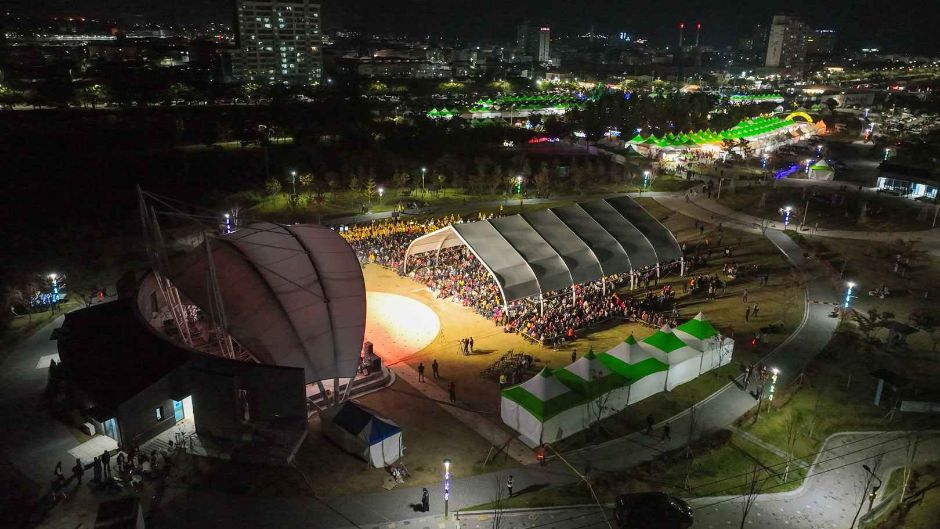
The Gongju Festival presents a unique nighttime tourism experience centered around an enchanting "Princess" concept, hosted in the historic city of Gongju. This recurring event transforms the Jeminchon Gamyeonggil area into a vibrant nocturnal spectacle on specific dates throughout the year. Attendees can anticipate a series of engaging activities, including a distinctive nighttime parade embodying the Princess theme, a bustling nighttime flea market offering various goods, and specially curated events designed for participants embracing the "Princess" identity. A key feature of the festival is its seasonal evolution; the themes of spring, summer, autumn, and winter will each bring a different atmosphere and aesthetic to the Jeminchon Gamyeonggil area, ensuring a fresh experience with each iteration.

Schedule

The festival takes place on the following specific dates within the overall period:

  • May 3, 2025
  • July 5, 2025
  • October 4, 2025
  • December 6, 2025

Program Highlights

The festival offers a structured program designed to immerse visitors in its unique concept:

  1. Main Program: The centerpiece of the event is the Nighttime Parade, meticulously organized around the central Princess concept.
  2. Side Programs: Complementing the parade are additional attractions, including a lively Flea Market operating during the event hours and various Events further developing the Princess theme.
  3. Consumer Participation Program: Visitors are encouraged to actively engage through offerings like the Princess Maker Package and participation in Various Events designed for direct involvement.

📍 Location

Address: 75 Bonghwang-ro, Gongju-si, Chungcheongnam-do (Banjuk-dong)

🛏️ Accommodation near the event

💰 Fee

Admission to the festival grounds and viewing the main events is free of charge.

📞 Inquiries

For further information, please contact the organizers directly at 041-852-8066.

🖥️ Official Information

Visit the official event website for the latest updates and details: Homepage

Gongju Festival

What is Gongju’s Royal History?

Gongju, once the capital of the Baekje Kingdom from 475 to 538 AD, played a significant role in Korea’s early history. During this time, Baekje was one of the Three Kingdoms of Korea, noted for its cultural and artistic contributions. Gongju was a center of political influence and cultural development, contributing to advancements in architecture, religion, and the arts.

A key site reflecting Gongju’s royal history is the Tomb of King Muryeong, a UNESCO World Heritage Site. Discovered in 1971, the tomb contained numerous artifacts, including gold crowns and jewelry, showcasing the craftsmanship of the Baekje period and its interactions with neighboring cultures.

Gongju’s historical significance is further highlighted by sites like the Gongsanseong Fortress and the Baekje Cultural Land, which continue to draw visitors interested in Korea’s ancient heritage. The Gongju Princess Festival also celebrates this history, offering a chance to explore the traditions and stories of Baekje royalty.

Kichijoji Excel Hotel Tokyu’s 2025 Black Tea Afternoon Tea: A New Menu of Sweet & Savory Delights

Kichijoji Excel Hotel Tokyu's 2025 Black Tea Afternoon Tea: A New Menu of Sweet & Savory Delights

Black Tea Afternoon Tea Returns to Kichijoji Excel Hotel Tokyu with a New Menu

The Kichijoji Excel Hotel Tokyu welcomes back its popular annual afternoon tea event, this year centering entirely on the nuanced flavors of black tea, presented through a completely refreshed menu. For enthusiasts of themed afternoon teas or those seeking a refined culinary experience in Kichijoji, this event offers a unique exploration of black tea incorporated into both sweet and savory preparations.

A Refreshed Menu Focused on Black Tea

Building on its annual popularity, the hotel introduces a novel selection designed to highlight different facets of black tea. A standout item is the "Earl Grey and Apple Verrine," a visually appealing dessert constructed in layers to offer evolving flavors with each spoonful; it combines a refreshing apple jelly base, a smooth milk mousse middle, and a fragrant Earl Grey jelly topping.

Beyond the verrine, the pastry chef has curated additional sweets that complement the theme. Guests can expect items such as a rich "Chocolate Terrine," offering a deep cocoa flavor, and a "Black Tea Madeleine," noted for its subtle fragrance derived from the tea infusion.

The savory offerings have also been thoughtfully designed to align with the black tea concept. Included is a "Ceylon Tea Flavored Chicken Salad," which features a dressing infused with Ceylon tea, lending an aromatic quality to the dish. Another notable savory item is the "Smoked Duck and Orange with Earl Grey Jelly," pairing moist, tender smoked duck with the distinctive citrus and bergamot notes of Earl Grey, presented in jelly form. This iteration distinguishes itself from previous years by presenting an entirely new menu, ensuring a fresh experience even for returning visitors.

Event Details

Here is the essential information for planning your visit:

  • Location / Nearest Station:
  • Address:
    • 〒180-0004 Tokyo, Musashino City, Kichijoji Honcho 2-4-14
    • View Map
  • Venue:
    • Lounge & Dining SORAE, located within the Kichijoji Excel Hotel Tokyu
  • Event Period:
    • March 1, 2025 (Saturday) – June 1, 2025 (Sunday)
  • Time:
    • A 2-hour seating limit applies.
    • Last order for drinks is taken 1 hour and 30 minutes after seating.
  • Price / Fee:
    • 6,000 yen per person (inclusive of tax and service charge)
  • Official Website:

Please note that published content is subject to change. It is advisable to check the official website of the venue or organizer for the most current information before visiting.

Image of the Black Tea Afternoon Tea set at Kichijoji Excel Hotel Tokyu
Close-up of sweets from the Black Tea Afternoon Tea set
Close-up of savory items from the Black Tea Afternoon Tea set
Another view of the afternoon tea sweets selection
Detailed view of a specific dessert from the afternoon tea set

What is Kichijoji?

Kichijoji is a neighborhood in the western part of Tokyo, Japan, known for its mix of urban life and natural surroundings. It attracts both locals and tourists with its variety of shops, cafes, and restaurants. Inokashira Park, a notable feature of the area, provides a peaceful retreat with opportunities for walking, picnicking, and viewing cherry blossoms. Kichijoji’s combination of lively streets and cultural sites makes it a worthwhile stop for visitors to Tokyo.

Analytics