
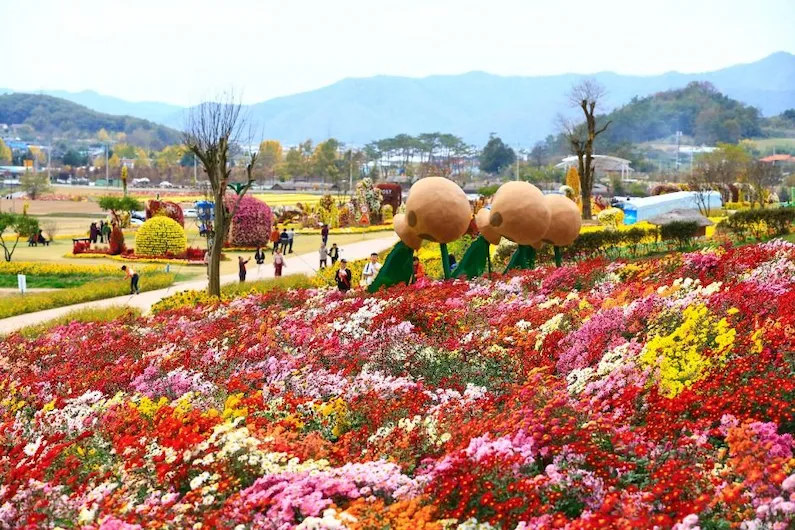
World Cultural Heritage Hwasun Dolmen Autumn Flower Festival
🗓️ 2026.10.16 ~ 2026.10.25
The World Heritage Hwasun Dolmen Autumn Flower Festival is Hwasun’s representative autumn festival. It began in 2013 as the “Chrysanthemum Feast in the City” held at Namsan Park, then moved to the Hwasun Dolmen Sites and was developed into its current form. Under a new theme each year, the festival pairs the World Heritage dolmens with diverse autumn flowers to create a beautiful autumn landscape. Visitors can take in a wealth of sights and activities, including family-participation experience programs that interestingly unravel the history and culture of the dolmens and the Bronze Age, as well as various exhibitions and performances. In particular, the “DM Concert”—Hwasun’s signature performance, with “DM” taken from “DolMen”—adds to the festival and presents a special opportunity to experience the value of the World Heritage together with the beauty of autumn flowers.
Main Program
- 2026 DM Concert: A special stage at the Hwasun Dolmen Site grass plaza.
Side Programs
- Main stage performances
- Exhibitions: Theme gardens (Entrance photo garden, Chrysanthemum main garden, Family-friendly garden, Butterfly garden, Animal garden), Chrysanthemum bonsai exhibition, Chunsik’s History Road, Chunsik’s Village, Jjangdol’s Village
- Experiences: Hwasun Dolmen Naming Center, Prehistoric & Bronze Age Costume Shop, Jjangdol’s Snack Factory, Dolmen Accessory Workshop, Bronze Age play and hunting experience, Mobile phone photo printing service, Chunsik’s Time Postcards, Chunyang Children’s Playground
Consumer Participation Programs
- Chunsik’s Adventure
- Get Stamps and Stay Healthy
- Bronze Age Experience Master
- Tour of Dolmen Sites
- Stop by Hwasun Cinema and have a drink!
Other Details
- Sales: Hwasun signature desserts (Coal mine/Briquette ash ice cream, Chrysanthemum bread), Local food (8 locations), Single-dish food (8 locations), Food trucks (6 locations), Agricultural and special product sales
- Hwasun Writers Association Poetry and Painting Exhibition: Around Chunsik’s Village at the Dolmen Site grass plaza
- 3rd Dogok Agricultural and Special Products Grand Festival: Dogok-myeon Prehistoric Experience Center grass plaza
- Prehistoric life reenactment performances and autumn cultural performances: Chunyang outdoor special stage
- Experience of prehistoric people’s lifestyle: Prehistoric Experience Center
- Gwangdeok Culture Plaza DM Trot Singer Fan Signing Event & Gwangdeok Play Field: Gwangdeok Culture Plaza, Hwasun-eup
Practical Information
📍 Address: 180 Goindol 1-ro, Dogok-myeon, Hwasun-gun, Jeonnam-Gwangju Integrated Special City
🛏️ Accommodation near the event
💰 Fee:
- Paid: 5,000 KRW (5,000 KRW refunded in Hwasun Love Gift Certificates)
- Free: Hwasun residents, preschool children, disabled persons, persons of national merit, independence activists, 5·18 democratization merit recipients, war veterans (upon presentation of supporting documents)
📞 Inquiry: 061-379-3575
⭐️ Instagram: https://www.instagram.com/goingdolmen
🖥️ Homepage: https://www.hwasun.go.kr/festival/index.do?S=S11
What is a dolmen?
A dolmen is a type of megalithic tomb made of large upright stones supporting a flat capstone. It dates from the Neolithic and Bronze Age and appears in many regions, including Europe, Asia, and North Africa. The basic form resembles a stone table, but dolmens were originally burial chambers, normally covered by a mound of earth or smaller stones.
The dolmens at Hwasun in South Korea are notable for their density and state of preservation. They are part of a larger group on the Korean peninsula, where more than 30,000 dolmens have been identified. The Hwasun site alone contains several hundred, including some with capstones weighing more than 100 tons. These stones were quarried from nearby mountains and moved over distances of up to several kilometres, using labour and techniques that are still not fully understood.
The builders used the monuments for burying important members of their communities, but dolmens also served as landmarks. They marked territory and expressed the social identity of the groups that made them. The Hwasun dolmens, together with the nearby sites in Gochang and Ganghwa, were added to the UNESCO World Heritage List in 2000 under the category “Dolmen Sites.” The listing recognises the archaeological value of the monuments and the evidence they preserve about prehistoric technology, social organisation, and land use.
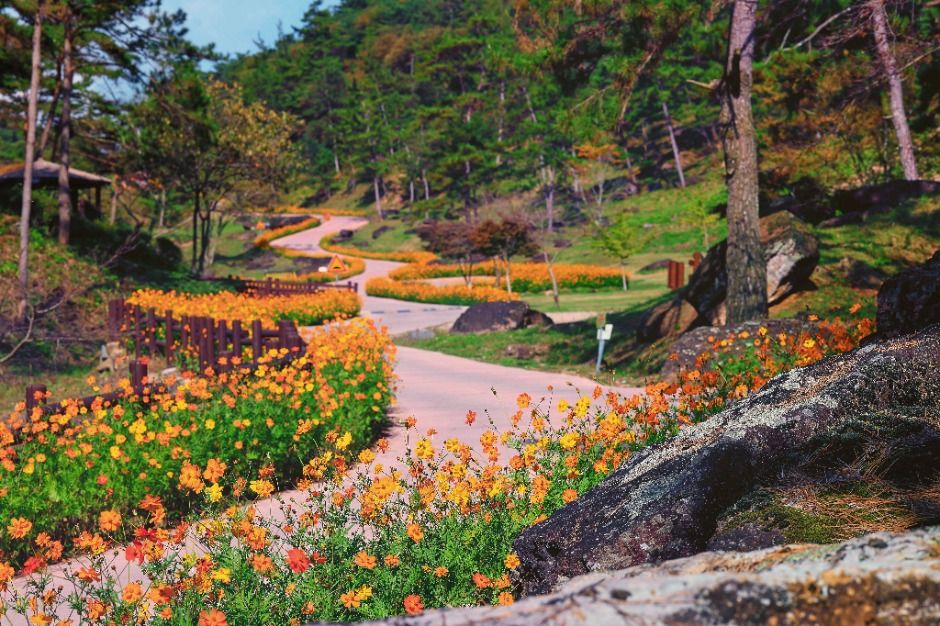
The Hwasun Dolmen Autumn Flower Festival is held in the area around the stones each year. Visitors can walk through the site while seasonal flowers are in bloom and examine the structures at close range. Because the festival takes place at an active archaeological landscape, it also offers a chance to see how the monuments relate to their surrounding terrain, rather than treating them as isolated objects.
