
World Heritage Joseon Royal Tombs Festival
🗓️ 2026.10.17 ~ 2026.10.25
The World Heritage Joseon Royal Tombs Festival is a curated cultural event designed to convey the historical significance and inherent dignity of the UNESCO World Heritage Joseon Royal Tombs. By bridging the gap between tradition and modernity, the festival allows visitors to experience these sacred sites more closely through a diverse array of performances, tours, exhibitions, and immersive experiences.
Since its inception in 2020, the festival has grown into a cornerstone of regional cultural heritage, marking its 7th anniversary this year. The [2026 World Heritage Joseon Royal Tombs Festival] will commence with an opening ceremony on 10.16.(Fri) and conclude on 10.25.(Sun). What distinguishes this year’s iteration is the introduction of newly organized programs based on the unique narratives and specific historical values associated with each individual royal tomb. Visitors are invited to engage their five senses—walking through various sites and following the specific stories of the tombs—to encounter the beauty and historical depth preserved within these landscapes.
1. Main Event
The festival’s programming is divided into several thematic categories to ensure a comprehensive exploration of Joseon dynasty heritage.
Opening Ceremony
The festivities begin on 10.16.(Fri) at Yunggeonneung.
Performance Programs
These events translate history into art, featuring:
- Royal Tomb Musical ‘Peach Blossoms, Thinking of You Makes Me Sad’ (hosted at Yunggeonneung)
- Royal Stage
- Royal Tomb Humanities School
- Royal Tomb Stories Told by the Neung-chambong (Tomb Official)
- Creative Pansori ‘Longing and Longing’
Tour Programs
Guided explorations offer a deeper dive into the architecture and mystery of the sites:
- ‘Dream of the Tomb Keeper’
- Joseon Great Detective: Royal Tomb Historian’s Records
- Special Opening of Tomb Chambers – Encountering the Royal Tombs Deeply
Experience Programs
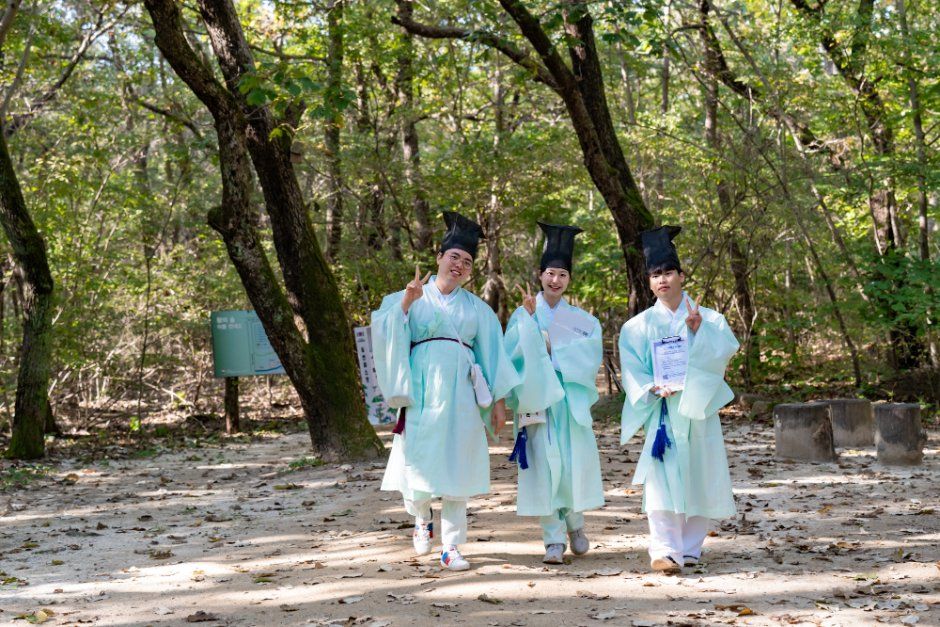
Interactive segments allow visitors to step into the roles of Joseon era figures:
- Royal Tomb Culture Lounge
- Royal Tomb Book Yard
- Joseon Royal Tomb Ancestral Rite Experience
Exhibition Programs
Visual and auditory galleries showcase the artistry of the era:
- Royal Tomb Sound Gallery ‘Sounds of Nature, Resonance of Ancestral Rites’
- Royal Tomb Ancestral Rite Exhibition Hall
- King’s Garden
Academic Program
For those seeking a scholarly perspective, the Yongjusa Academic Seminar will explore the relationship between ‘Joseon Royal Tombs and Wonchal (Royal Temples)’.
2. Pre-event Programs
To build anticipation and extend the reach of the festival, two preliminary programs are available:
- Royal Tomb Sound Gallery ‘Sounds of Nature, Resonance of Ancestral Rites’: Available from 9.30.(Wed) to 10.25.(Sun).
- Joseon Royal Tombs Mobile Stamp Tour: Running from 9.26.(Sat) to 10.25.(Sun).
Visitor Information
📍 Address: 21, Hyohaeng-ro 481beon-gil, Byeongjeom-gu, Hwaseong-si, Gyeonggi-do (Annyeong-dong)
🛏️ Accommodations near the event
💰 Fee: Admission fee applies (Note that some performance and experience programs are paid)
📞 Inquiry: 1522-2295
⭐️ Instagram: https://www.instagram.com/royaltombs_festival/
🖥️ Homepage: https://www.jrtf.or.kr/
The Joseon Royal Tombs are a group of 40 burial sites for kings and queens of the Joseon dynasty, which ruled the Korean Peninsula from 1392 to 1910. The tombs were created over the course of the dynasty, and they remain in their original form to an unusual degree. In 2009, UNESCO listed them as a World Heritage Site, recognizing the group as one of the most complete royal burial ensembles from the premodern era.
The tombs are spread across 18 sites, mostly in South Korea and clustered around Seoul and Gyeonggi Province. In selecting each location, court officials applied pungsu, the Korean system of geomancy derived from Chinese principles. The configuration of mountains, watercourses, and solar orientation was assessed in order to find a place that would be in harmony with the surroundings. A favorable site was expected to protect the spirit of the deceased and to secure the continued well-being of the royal lineage and the country.
A royal tomb is not a lone mound but a planned complex. It is approached by a long road that is now often bordered by trees, leading to a T-shaped wooden shrine called a jeongjagak. Behind the shrine stands a stone table that was used for offerings. The burial mound itself sits on a raised platform and is framed by stone statues of civil and military officials, along with images of tigers and sheep. The shape of the mound is rounded, in some cases resembling a half-moon, and was meant to represent the endurance of the dynasty. The surrounding forests were set aside and protected, so the grounds have kept a quiet, wooded character even in urban settings.
The complex was designed to serve a ritual function. The entrance path, the court in front of the shrine, and the raised area of the mound outlined a clear sequence from the ordinary world to a restricted sacred zone. Court ritual dictated the times and forms of memorial services, and descendants of the royal family still conduct offerings at several sites today. The tombs therefore retain both their physical structure and the ceremonial practices associated with them, providing a continuous link to the institution they were built to commemorate.
