The Light of Cheonggyecheon
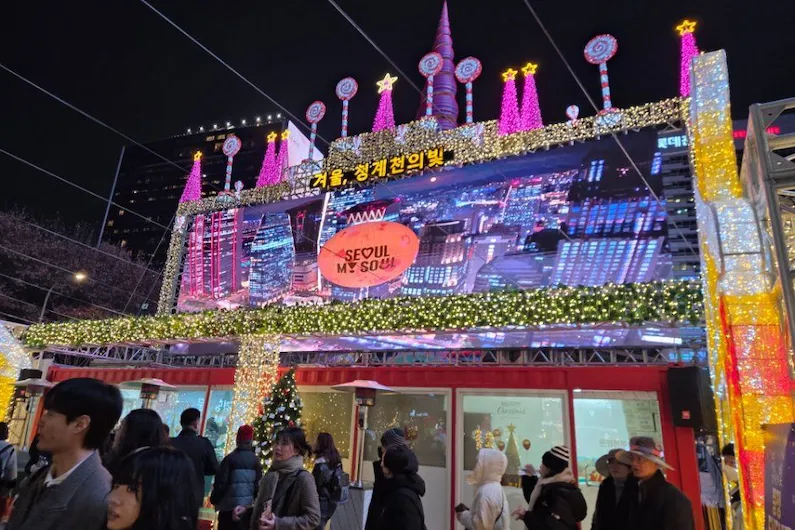
Since its inception in 2015, the ‘Lights of Cheonggyecheon’ has served as a cornerstone of Seoul’s winter landscape. Marking its twelfth winter, the event returns to Cheonggye Plaza for a 21-day residency from December 11 to December 31, 2026 🗓️.
This year’s iteration is centered around the theme ‘Light Up Tomorrow,’ transitioning the event into a storytelling festival designed to articulate the dreams and aspirations of citizens through the medium of light. While the festival retains the beloved staples of previous years—such as the illuminated trees, dedicated photo zones, and the Dreamlight Train mini train experience—it introduces a significant new element: a large electronic display screen. This installation will serve as a digital gallery, showcasing dream paintings created by children artists with developmental disabilities and broadcasting video messages containing the hopes and dreams submitted by the public.
The festivities illuminate Cheonggye Plaza daily from 6 PM to 10 PM, providing an accessible experience as admission is free for all visitors.
Event Highlights
- The First Glow: The official lighting ceremony will take place on December 12, 2026.
- Dreamlight Square: An exhibition featuring a large central tree, LED sculptures, and various photo zones.
- Dreamlight Train: A program offering visitors a mini train riding experience.
- Shining Dreams: A dedicated screening of messages that capture the dreams and wishes of citizens.
- Dream Canvas: A visual exhibition screening artworks centered on the themes of ‘Dreams’ and ‘Light,’ produced by children artists with developmental disabilities.
Visitor Information
📍 Address: 1 Taepyeongro 1-ga, Jung-gu, Seoul
🛏️ Accommodations near the event
💰 Fee: Free
📞 Inquiry: 02-904-1159
⭐️ Instagram: https://www.instagram.com/seoul_cl
🖥️ Homepage: http://www.seoulcl.kr/main/index.html
What is Cheonggyecheon?
Cheonggyecheon is a stream in central Seoul, about 10.9 kilometers long, flowing from the Gwanghwamun area east to the Jungnangcheon stream. Its current form is the result of a large urban project, not a return to some earlier natural condition. In the mid-20th century, during the city’s rapid industrialization, the stream was covered and an elevated highway was built above it. By the early 2000s, that highway was dismantled, the stream channel was rebuilt, and the surrounding area was landscaped with paths, bridges, and public space. The stream was opened to the public in 2005.
The stream’s flow is partly maintained by pumping and treating water from the Han River, so it keeps running through dry periods. The project also changed the microclimate: summer temperatures in the corridor are lower, and the number of plant and animal species in the area has increased. There were objections at the time, largely about the expense and the artificiality of the water supply. But the restored stream has become a functioning public space. People walk along it, sit by it, and use it as a route through the city center below street level.
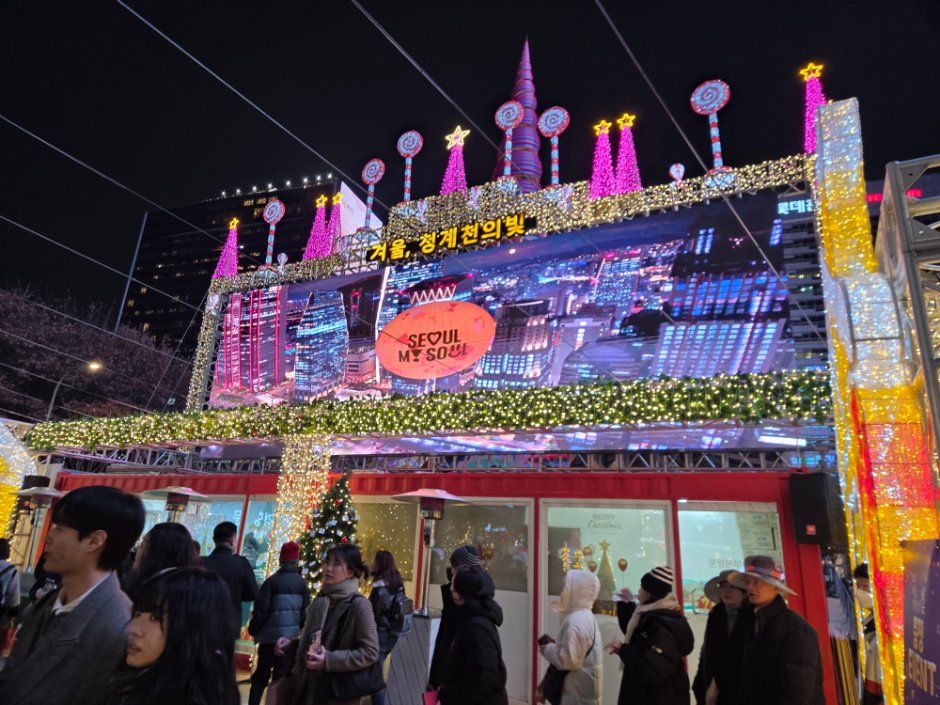
In winter, the Seoul Lights festival presents installations above the water and along the banks, and the more than 20 bridges along the route provide elevated views of the displays. The festival brings many visitors, but it is not the only way the space is used. On most days, Cheonggyecheon is simply a public amenity—engineered in part, heavily used, and integrated into the daily life of the city.
