
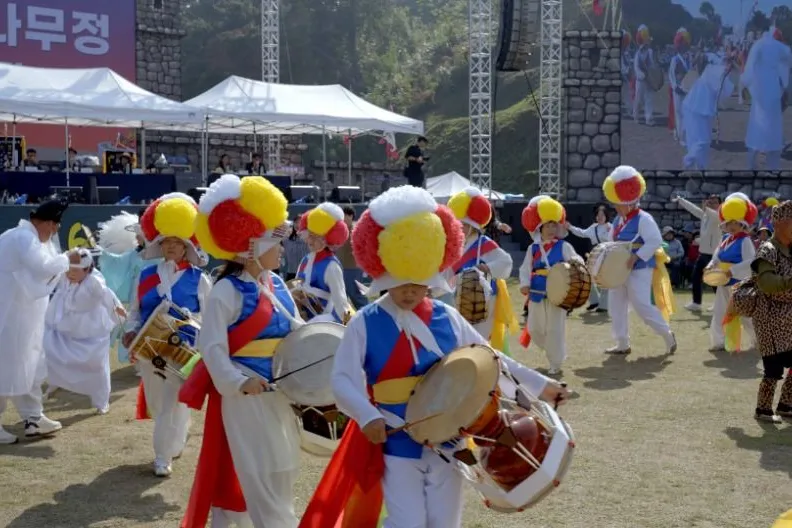
Gochang Moyang Fortress Festival
🗓️ 2026.10.15 ~ 2026.10.19
The Gochang Moyangseong Festival is a historical and cultural event built around Moyangseong Fortress, widely regarded as the best-preserved original fortress in Korea. Held in Gochang-eup, Jeonbuk State, the five-day festival centers on Dap Seong Nori, an experiential walk along the fortress walls. The program is based on the local legend that one circuit cures leg ailments, two circuits bring a long and healthy life, and three circuits lead to ascension to paradise.
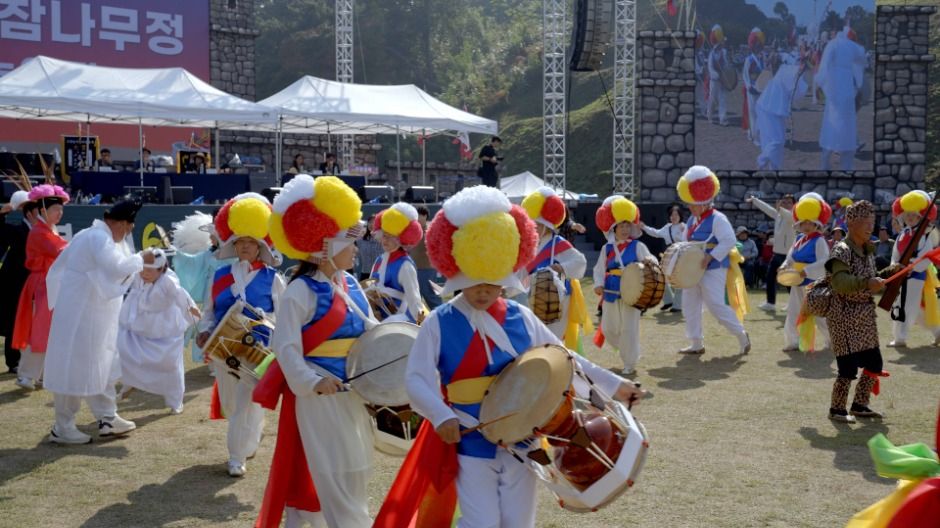
The festival’s main lineup includes Dap Seong Nori, Night Dap Seong Nori, Ganggangsullae DalBAM, a street parade, and Returns 1453. In Night Dap Seong Ganggangsullae Moonlight, residents and visitors come together for a nighttime combination of Dap Seong Nori and the traditional Korean circle dance Ganggangsullae. The street parade involves roughly 1,000 residents and expresses the past, present, and future of the region. Returns 1453 shifts the focus to Gochang Eupseong, allowing visitors to explore the interior of the old walled town under the theme of a journey to the past. Food stalls featuring local specialties of the Gochang region and direct sales markets round out the main offerings.
Main Programs
- Dap Seong Nori, Night Dap Seong Nori, Ganggangsullae DalBAM, Street Parade, Returns 1453
Side Programs
- Flea Market, Drone Show, Family Zone, Food Booths, Direct Sales Market, Tavern (Jumak)
Consumer Participation Programs
- Children’s Carrot Market, Traditional Game Experiences, Experiential Programs
📍 Address: 11 Moyangseong-ro, Gochang-eup, Gochang-gun, Jeonbuk State
🛏️ Accommodations near the event
💰 Fee: Free
📞 Inquiry: 063-560-2949
🖥️ Website: https://www.모양성제.com/
What is Dap Seong Nori?
Dap Seong Nori is a traditional Korean folk play associated with the Gochang Moyang Fortress Festival. Its name means “stepping on the fortress” or “treading the castle wall.” The practice is a walk along the stone ramparts of Gochangeupseong, a historic walled fortress in Gochang County. The fortress, also called Moyangseong, was built in the mid-fifteenth century as an administrative and defensive town wall. Its perimeter still encircles the older part of Gochang.
The custom grew from a local belief about the walls. A full circuit of the ramparts was thought to transfer worry, illness, and bad luck to the stones underfoot. The higher the wall, the stronger the effect, and completing the route was said to crush sickness with each step. For this reason, Dap Seong Nori was especially common on the first full moon of the lunar year. Families and neighbors climbed the walls in groups, singing and talking as they walked. It was a holiday outing that combined sociability with a shared purpose.
At the festival today, Dap Seong Nori is presented without turning it into a staged performance. There is no script, and no one is only a spectator. Participants, many in simple hanbok or comfortable walking clothes, form a line along the wall. The route follows the fortress perimeter and opens onto views of the surrounding fields and the old town below. Local performers lead the group, and traditional music accompanies the walk. The mood is relaxed and sociable, more like a communal stroll than a ceremony.
The activity works on two levels. It offers a physical walk with a clear view of the area, and it connects those who take part to a practice continued on the same walls for centuries. The older belief in transferred misfortune is not required for the experience to make sense. The walk itself is the event: a shared route through a historic place, taken in company and at a steady pace.
