Gongju National Heritage Night Tour
🗓️ 2026.09.04 ~ 2026.09.06
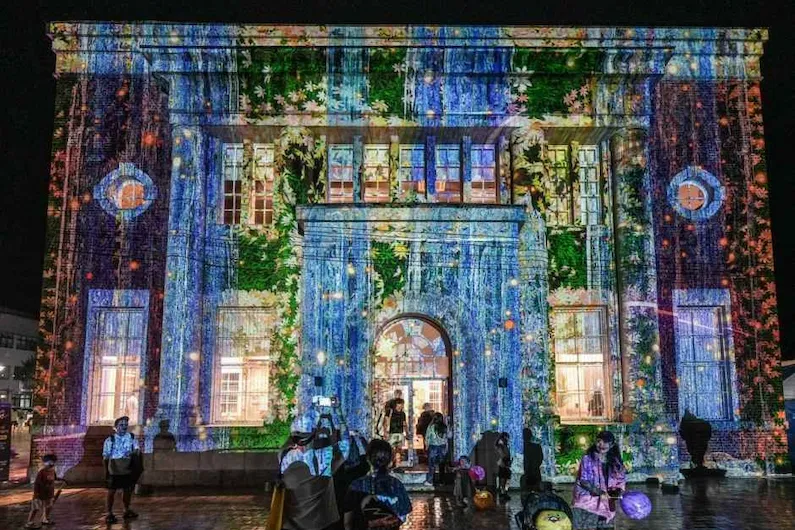
National Heritage Night is a night-specialized program that combines viewing, hands-on experiences, performances, and exhibitions, linking national heritage with the unique historical and cultural resources of a region. These events typically concentrate in areas dense with national heritage sites. Gongju National Heritage Night distinguishes itself by focusing on modern national heritage—specifically the former Gongju-eup Office, Gongju Jeil Church, and other structures—within the royal downtown area of Gongju, and by organizing its offerings around eight distinct night themes.
This year marks two significant milestones: the tenth consecutive year of the event and the centennial of the Gongju City Map, first published in 1926. To honor both anniversaries, the program adopts the subtitle “1926 Gongju Romantic Banquet,” inviting visitors to engage with the modern history of Gongju as it existed a century ago.
Program Categories
| Category | Programs |
|---|---|
| Main Programs | National Heritage Media Facade, Gate of Time Gongju 1926, and others |
| Side Programs | In Search of the 1926 Gongju City Map; 1926 Gongju History Detective’s Secret Letter; Modern Life Photo Studio; various experience programs |
| Consumer Participation | 147 Night Market and more |
The Main Programs anchor the evening with large-scale visual productions like the media facade, which projects historical imagery onto architectural surfaces, and Gate of Time Gongju 1926, which appears to use immersive or theatrical techniques to transport visitors to the interwar period. The Side Programs layer in interactivity: cartography enthusiasts can hunt for details in the 1926 city map, puzzle-solvers can decode the History Detective’s Secret Letter, and those drawn to material culture can pose in period attire at the Modern Life Photo Studio. The 147 Night Market rounds out the experience with food, crafts, and local goods available for purchase.
Practical Information
| 📍 Address | 8 Ucheguk-gil, Gongju-si, Chungcheongnam-do |
| 💰 Admission | Free of charge (select programs carry separate fees) |
| 📞 Inquiries | 041-852-8063 |
| https://www.instagram.com/gjcf_2020/ | |
| 🖥️ Homepage | https://gongju-culturenight.com/ |
🛏️ Accommodations near the event
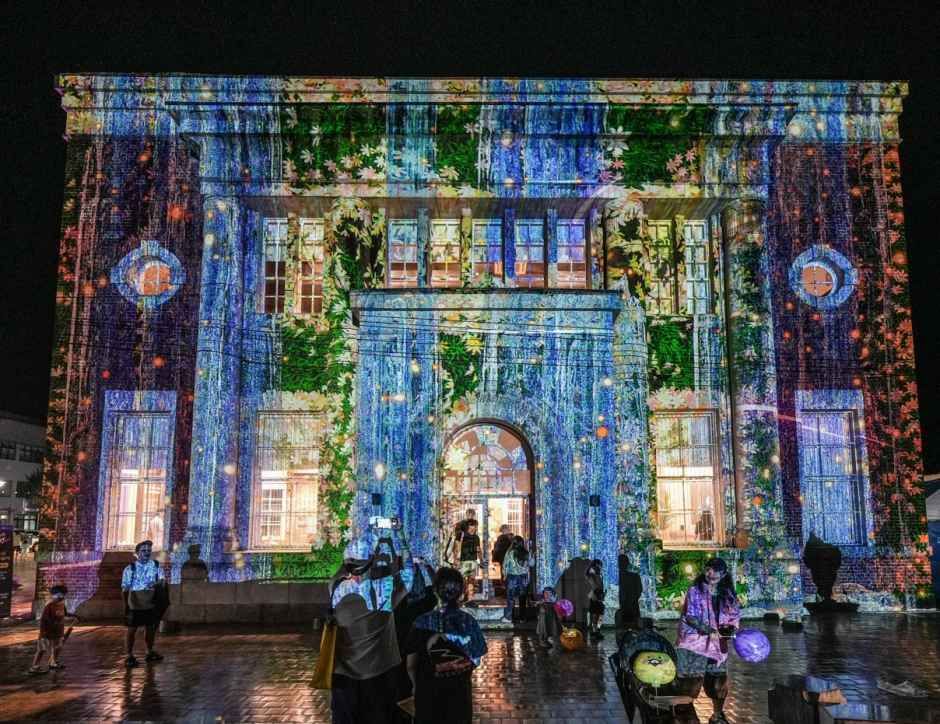
Image: Gongju National Heritage Night
What Sets This Event Apart
Most heritage night tours in Korea spotlight ancient or dynastic landmarks. Gongju’s program deliberately pivots toward the modern era—the Japanese colonial period and the early decades of the twentieth century—examining how urban space, architecture, and daily life were documented, regulated, and aestheticized in 1926. The city map itself becomes both artifact and lens: visitors are not merely observing preserved buildings but interrogating how the city saw itself and was seen by others at a specific historical moment. The eight night themes presumably rotate or differentiate programming across the three evenings, encouraging repeat attendance or at least strategic planning for visitors with specific interests.
For travelers who find daytime heritage sites overcrowded or aesthetically flat, the after-dark format offers dramatic lighting, projection mapping, and curated nocturnal atmosphere that stone walls and wooden beams rarely achieve under midday sun. The free base admission lowers the barrier for casual visitors, while the fee-based programs allow deeper engagement for those willing to invest.
Last updated: 2026
What is Gongju?
Gongju is a city in South Chungcheong Province, South Korea, that served as capital of the Baekje Kingdom from 475 to 538 AD. The kingdom moved there from Hanseong (modern Seoul) to escape Goguryeo’s military advance. During its sixty-three years as capital, Gongju functioned as the kingdom’s administrative and religious center, a period that coincided with Baekje’s development of distinctive Buddhist art and architecture.
The city retains substantial physical evidence from this era. The Tomb of King Muryeong, discovered in 1971, contained over 4,600 artifacts including gold crowns and bronze mirrors; its inscribed stone epitaphs provided rare written documentation from the period, and the site is now a UNESCO World Heritage designation. The Gongsanseong Fortress, which served as the royal palace compound during the Baekje capital period and was later rebuilt in the Joseon Dynasty, remains a prominent feature of the city’s landscape.
Gongju’s historical significance extends beyond the Baekje period. During the Japanese colonial era, the city housed administrative facilities, and several structures from the 1920s still stand. In 1950–1951, it served as South Korea’s provisional capital during the Korean War before government operations relocated to Busan. This sequence—ancient kingdom, colonial administration, wartime refuge—gives the city an unusual concentration of historical phases within a relatively compact area, which has informed its current approach to heritage preservation and tourism.
