2026 Chuseok Sharing Market in Seoul: Your Complete Guide to Holiday Shopping and Traditional Cultural Experiences

2026 Chuseok Sharing Market in Seoul: Your Complete Guide to Holiday Shopping and Traditional Cultural Experiences

Chuseok Sharing Market

πŸ—“οΈ 2026.09.15 ~ 2026.09.17

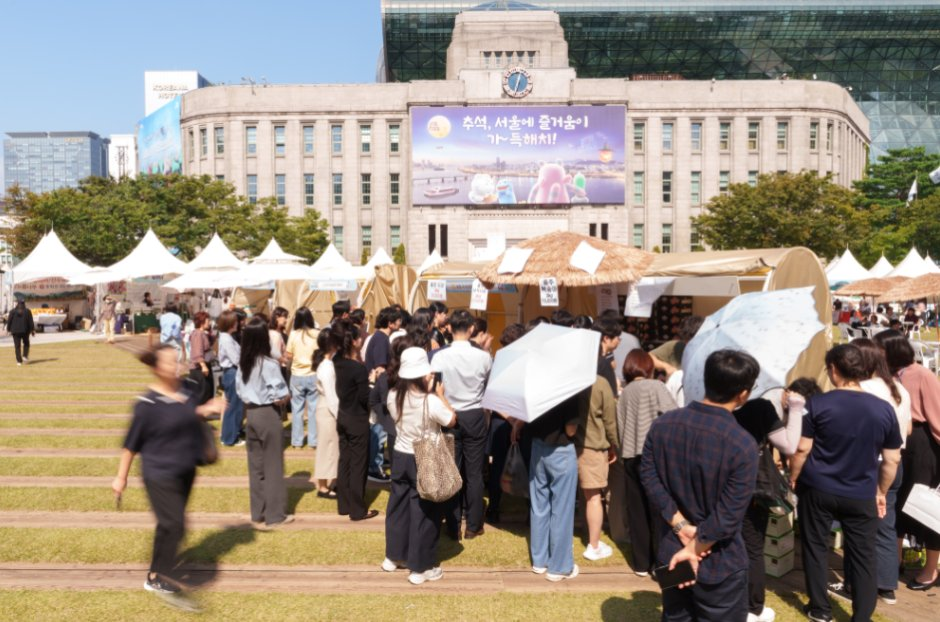
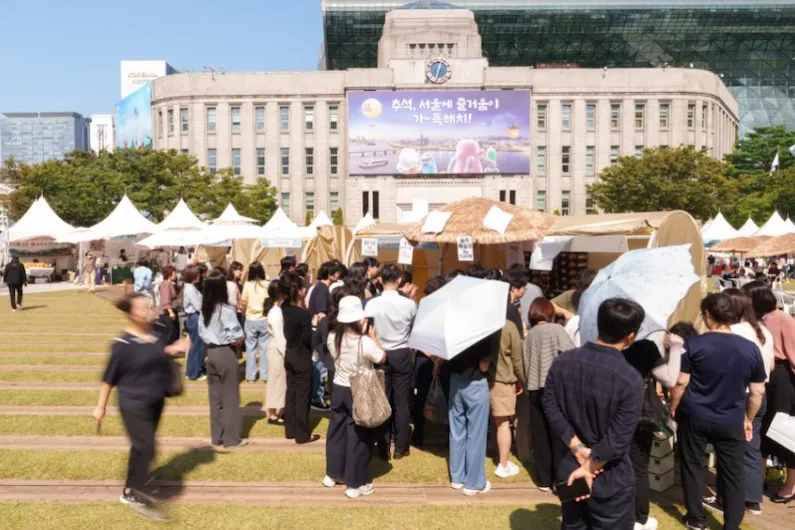
The 2026 Chuseok Seoro Market, also referred to as the Chuseok Sharing Market, is a city-rural coexistence direct trading market held around Seoul Plaza. It brings together excellent agricultural and marine specialty products from various regions across the country for Chuseok, one of Korea’s most significant traditional holidays. More than a simple marketplace, the event serves as a space where local farmers and citizens can communicate directly with one another.

The market is organized around a practical premise: the various regional agricultural specialties needed for Chuseok shopping should be findable in one place. For citizens, this means the convenience of completing a large portion of holiday preparations in a single visit to Seoul Plaza. For producers, it means access to a concentrated urban audience and an opportunity to expand sales channels without going through intermediaries. This mutual benefit is the essence of the city-rural coexistence concept that defines the event.

In addition to selling agricultural and marine specialties, the market operates a range of experience and cultural programs where participants can engage with traditional culture and the atmosphere of Chuseok. The main programs consist of activities that citizens can directly participate in and enjoy, including the ‘Chuseok Table for 100’ with masters, a mill experience that introduces traditional mill culture, a moonlight photo zone utilizing Hanbok and the full moon, traditional game experiences, and the Hangawi Persimmon Tree Capsule event. These activities give visitors a way to connect with the seasonal customs of the holiday, from preparing festive foods to taking in the imagery of the full harvest moon.

A courier service within the venue further supports the convenience of the market. Visitors can have purchased goods delivered rather than carrying them around, and the service makes it easier for participating farms to sell their products in larger quantities. The result is an environment where excellent products from across the country can be purchased with ease, and where holiday shopping becomes a more relaxed experience.

Main Programs

  1. Agricultural and marine specialty direct trading market β€” The centerpiece of the event, where regional farms sell their products directly to consumers.
  2. Opening ceremony β€” The official start of the three-day market.
  3. Pre-performances and Seoul street performances β€” Live performances held alongside the market.
  4. Chuseok Table for 100 β€” A shared holiday table experience led by masters.
  5. On-site reports β€” Reports and coverage from the event venue.
  6. Songpyeon making β€” A hands-on opportunity to make songpyeon, the half-moon-shaped rice cakes traditionally enjoyed during Chuseok.

Side Programs

  1. Moonlight photo zone β€” A photo zone combining Hanbok and the full moon.
  2. Persimmon tree play yard β€” A play yard themed around the persimmon tree.
  3. Mill experience β€” An encounter with traditional mill culture.

Consumer Participation Programs

  1. Making pollack catchers β€” Crafting traditional implements used to catch pollack.
  2. Making wish bracelets β€” Crafting bracelets meant to carry a wish.
  3. Chopstick random grain moving game β€” A dexterity game played with chopsticks and grains.
  4. Guessing crop weight β€” A guessing game based on the weight of crops.
  5. Lucky pouch tactile quiz β€” A quiz where participants identify items by touch.
  6. Songpyeon delivery challenge β€” A challenge themed around delivering songpyeon.

These programs add a participatory layer to the market, making it an engaging outing for families and groups of friends. As a representative city-rural coexistence event for Chuseok, the 2026 Chuseok Seoro Market simultaneously supports the expansion of sales channels for local farms and the convenience of Chuseok shopping for citizens, while allowing everyone to experience regional food and traditional culture together.

Practical Information

The market takes place over three days in mid-September, and admission is free. A courier service is available at the venue for convenient delivery of purchases. Visitors traveling from outside Seoul can find nearby accommodation through the link below.

πŸ“ Address: 12 Eulji-ro, Jung-gu, Seoul

πŸ›οΈ Accommodation near the event

πŸ’° Fee: Free

πŸ“ž Inquiry: 02-6358-7774

πŸ–₯️ Website: https://2026μΆ”μ„λ§žμ΄μ„œλ‘œμž₯ν„°.kr/

Chuseok Seoro Market

What is Chuseok?

Chuseok, often called Korean Thanksgiving, is one of South Korea’s major traditional holidays. It marks the autumn harvest and includes ceremonies of thanks to ancestors. The holiday falls on the 15th day of the 8th month of the lunar calendar, which usually places it in late September or early October.

In the days before Chuseok, roads and train stations fill with people traveling to their hometowns. Families gather for charye, a memorial rite in which food and drink are arranged on a table as offerings to ancestors. The preparation is communal, and the meal afterward is shared by the family. A signature dish is songpyeon, half-moon-shaped rice cakes stuffed with sesame seeds, red beans, or chestnuts. Other customs vary by region, but two well-known ones are ganggangsullae, a circle dance performed under the full moon, and ssireum, traditional wrestling.

Chuseok is, above all, a time for family and for marking the harvest season. For those not traveling to a relative’s home, the Chuseok Sharing Market in Seoul offers a practical way to observe the holiday’s foods and customs, with seasonal produce, traditional games, and performances on display.
2026 Yangju National Heritage Night Walk: Experience the Magic of Joseon Dynasty Culture and History

2026 Yangju National Heritage Night Walk: Experience the Magic of Joseon Dynasty Culture and History

Yangju National Heritage Night Walk

πŸ—“οΈ 2026.09.12 ~ 2026.09.20

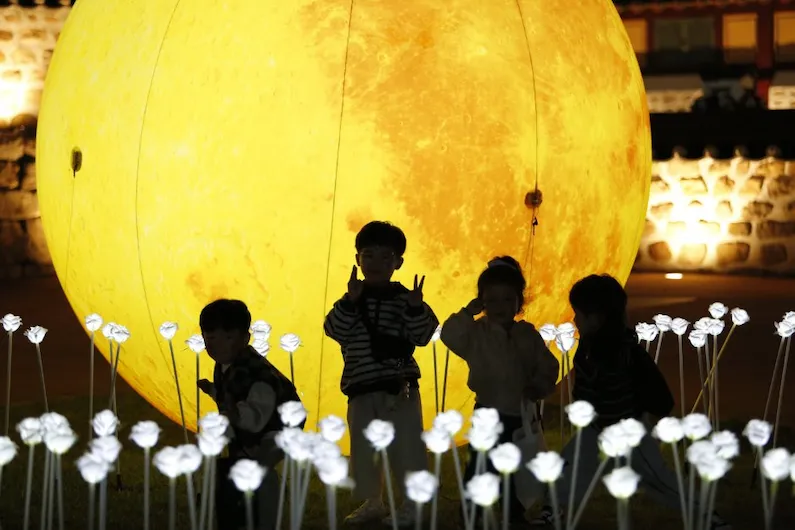
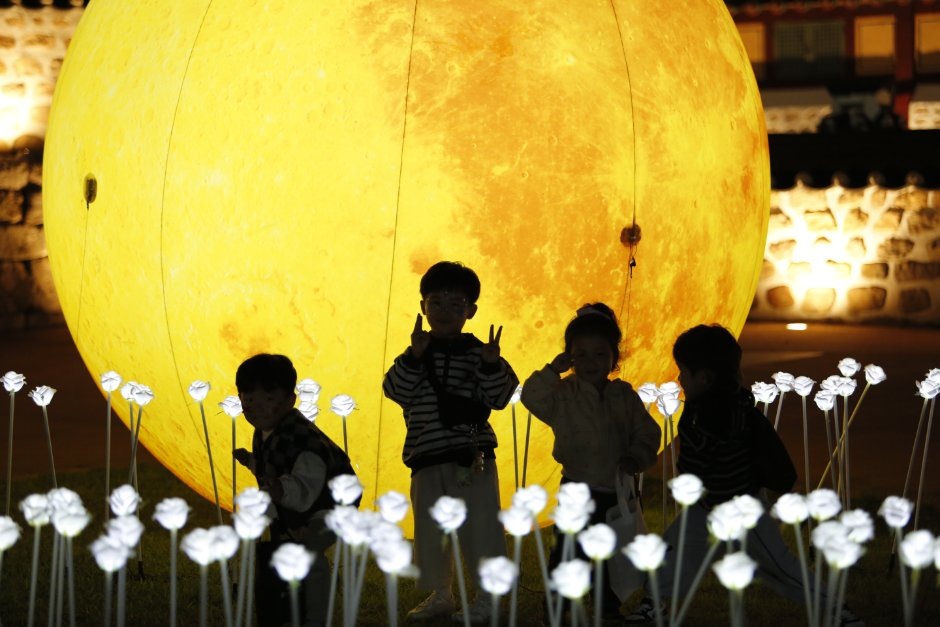
The 2026 Yangju National Heritage Night is a nighttime national heritage festival held around the Yangju Government Office site under the theme “Again, Guanmin Dongrak” (Joy Shared by Officials and People). Set against the backdrop of Yangju-mok during the Joseon Dynasty, the festival revives the spirit of “Guanmin Dongrak,” where the people and officials mingled and enjoyed themselves together, and connects the history and national heritage preserved in Yangju through performances, experiences, exhibitions, and nightscapes.

The festival consists of diverse content, including performances and experiences where Yangju’s representative intangible heritagesβ€”such as Yangju Byeolsandae Nori, Yangju So-nori Gut, Yangju Deul-norae, and Yangju Sangyeo-wa Hoedaji-soriβ€”can be encountered in one place, as well as historical programs based on King Jeongjo and Yangju-mok, civil service exam experiences, traditional culture experiences, nighttime tours, media exhibitions, traditional teahouses, and a marketplace.

A key feature is that visitors do not simply view the national heritage of Yangju, but instead become characters in the stories themselves, experiencing and participating to collectively complete the meaning of “Guanmin Dongrak.” Walking through the night of Yangju-mok along the “8 Nights” programsβ€”Night View, Night Path, Night Story, Night History, Night Flower, Night Meal, Night Stay, and Night Marketβ€”the history, people, and traditional culture of Yangju connect as a single story within the beautiful night scenery. It is a festival where one can fully enjoy the unique national heritage and elegance of Yangju on a special night where the past and present meet.

The 8 Nights of Yangju-mok

The “8 Nights” structure is the organizing principle of the festival. Each theme corresponds to a different way of experiencing the nightβ€”scenery, walking routes, storytelling, history, flowers, meals, rest, and market culture. Visitors can follow a single thread or move between themes, letting the evening unfold at their own pace.

Program Highlights

1. Main Program: Yangju’s Heritage, Captured in One Frame

The main program gives the festival its centerpiece, presenting Yangju’s heritage as a unified display rather than a collection of separate acts. The city’s intangible cultural assets, the legacy of Yangju-mok, and the theme of “Guanmin Dongrak” converge in a single frameβ€”an experience designed for both first-time visitors and those already familiar with Yangju’s history.

2. Side Programs

The side programs approach the night from multiple angles, keeping the festival in motion after dark. Each one invites visitors to participate rather than simply spectate, in keeping with the spirit of “Guanmin Dongrak.” The five side programs are:

  • Officials and People, Light Up the Night
  • Let’s Play with Excitement
  • Enjoying the Elegance of Guanmin Dongrak
  • People of Yangju-mok
  • Walking Through the Time of Yangju-mok

3. Consumer Participation Programs

The consumer participation programs form the interactive core of the festival, where the line between audience and performer disappears. Visitors answer questions, follow historical narratives, and take part in a stay experience at the Yangju-mok Government Office. The programs are:

  • Yangju-mok Quiz
  • Into History
  • Five-Senses Satisfaction Yangju-mok
  • Yangju-mok: Climate Change and the Wise Heritage of Ancestors
  • Yangju-mok Academy
  • Yangju-mok Government Office Stay Experience

4. Food and Drink

Two spaces anchor the festival’s food and drink offerings. The Willow Teahouse offers a traditional teahouse experience, while the Marketplace Plaza gathers food and drink options in a market settingβ€”a fitting counterpart to the communal spirit of “Guanmin Dongrak.”

Yangju National Heritage Night

Visitor Information

πŸ“ Address: 15 Buheung-ro 1399beon-gil, Yangju-si, Gyeonggi-do (Yuyang-dong)

πŸ›οΈ Accommodation Near the Event

πŸ’° Fee: Free (Some experience booths have a fee)

πŸ“ž Inquiry: 031-8082-5673

⭐️ Instagram: https://www.instagram.com/yangju_light/

What is the Joseon Dynasty?

The Joseon Dynasty ruled the Korean peninsula from 1392 to 1897. It was founded by General Yi Seong-gye, who moved the capital from Gaegyeong (modern Gaeseong) to Hanyang, now Seoul. Joseon replaced the Goryeo Dynasty and established a Confucian state that lasted more than five centuries.

Under Joseon, the Korean state adopted Neo-Confucian principles as the basis for governance, law, and social order. The civil service examination system selected officials on merit, and scholarship was highly valued. The dynasty also produced significant scientific and cultural works. King Sejong the Great, who reigned from 1418 to 1450, commissioned scholars to develop Hangul, the Korean alphabet, to improve literacy among commoners who found Classical Chinese difficult to learn. The period also saw the construction of major palaces, fortresses, royal tombs, and shrines in and around Seoul; many of these survive as designated heritage sites.

Joseon customs and institutions continued to shape Korean society long after the dynasty ended. Court music, ceremonial dress, Confucian rituals, and seasonal traditions remain central to South Korea’s cultural heritage. The Yangju National Heritage Night Walk uses this historical material directly: its performances, lantern displays, and processions are based on documented Joseon court and folk practices. For attendees, the event offers a way to see how Joseon-era spaces were designed to be used, rather than simply a setting for entertainment.

2026 Pocheon Hantan River Garden Festa: Complete Guide to Dates, Programs, Tickets, and Family Attractions

2026 Pocheon Hantan River Garden Festa: Complete Guide to Dates, Programs, Tickets, and Family Attractions

Pocheon Hantan River Garden Festa

πŸ—“οΈ 2026.09.12 ~ 2026.11.01

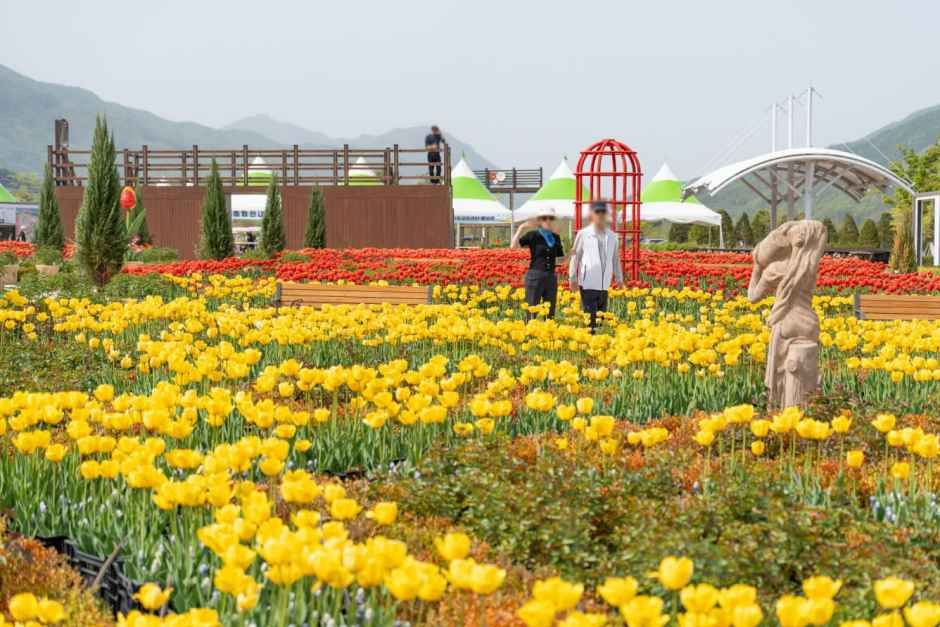
The 2026 Pocheon Hantan River Garden Festa is a large-scale ecological and garden festival held at the Pocheon Hantan River Ecological Landscape Complex, themed around seasonal flowers and nature. Running from mid-September through early November, the festival offers visitors the vast natural scenery of the Hantan River areaβ€”listed as a UNESCO Global Geoparkβ€”along with the thrill of crossing a 410m-long Y-shaped suspension bridge.

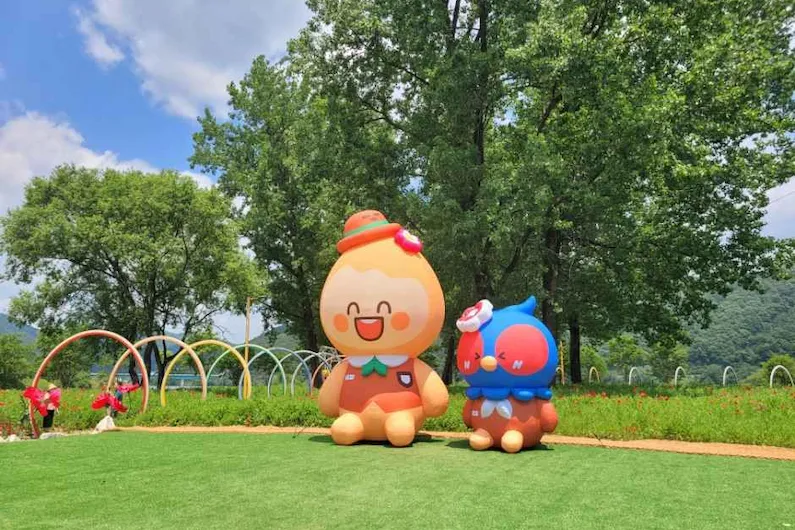
The festival grounds hold a number of prepared attractions: photo zones with an autumn camping concept featuring the popular children’s characters Pororo and friends, a River Market where visitors can sample Pocheon’s representative agricultural and specialty products and assorted foods, themed gardens created with local artists, and electric bicycle experiences suited to families. Rest areas are set up throughout the site so visitors can pause and enjoy the autumn breeze over the Hantan River.

Main Programs

  • Family Electric Bicycle Experience – an electric bicycle experience for families
  • Seasonal Flower Garden – a garden arranged with autumn seasonal flowers
  • River Market – Pocheon’s representative agricultural and specialty products, along with assorted foods

Side Programs

  • Busking Program – classical performances held near the lake garden

Linked Festival

  • Pocheon Hanwoo (Korean Beef) Festival – Saturday, September 12 to Sunday, September 13, taking place over the Garden Festa’s opening weekend

Admission Fees

Category Fee
Adults Entrance fee 7,000 won / Voucher refund 4,000 won
Youth and Children Entrance fee 5,000 won / Voucher refund 3,000 won
Exempt (Free) Disabled persons (1 person for mild disability, 2 persons including guardian for severe disability), 6 years old or younger (excluding elementary students)
Discount (50%) Senior citizens and residents of mutually partnered cities (Nowon-gu, Jung-gu, Gangdong-gu residents)
Free Admission (Free admission tickets distributed) Pocheon citizens, disabled persons, persons of national merit, under 7 years old (preschoolers), etc.

β€» ID card is mandatory for those eligible for discounts and exemptions. General rates will apply if relevant supporting documents are not presented.

πŸ“ Address: 832 Changdong-ro, Gwanin-myeon, Pocheon-si, Gyeonggi-do

πŸ›οΈ Accommodation near the event

πŸ’° Fee: Paid

πŸ“ž Inquiry: 031-538-3030

Pocheon Hantan River Garden Festa

What is the Hantan River?

The Hantan River is a tributary of the Imjin River, flowing through the central-northern part of Gyeonggi Province and Cheorwon County in Gangwon Province, South Korea. Its course crosses terrain that was covered by lava in past volcanic periods. The river later cut into the basalt, forming a gorge with cliffs, columnar joints, flat shelves, and pools. In some stretches the channel widens and runs over bare rock; in others it narrows between walls of basalt and drops over ledges.

The riverbed’s composition has practical consequences. Because much of the channel is solid rock rather than sediment, the water stays cold and clear, and the aquatic environment is shaped by a hard, stable substrate. The gorge is sometimes called the Grand Canyon of Korea. The comparison is useful but inexact: the Hantan is smaller, and its formation involved a specific sequence of lava flows and river erosion rather than the processes that formed the American canyon.

The area was near the front line during the Korean War. Some bunkers and fortifications from that period remain on the bluffs. The river is now used mainly for recreation. Rafters and kayakers work the faster stretches, while hikers and cyclists use the riverside paths. Suspension bridges cross the gorge in a few places, providing views of the water without requiring access off the main trails. The busiest periods are spring, when snowmelt raises the river, and autumn, when the surrounding slopes change color.

The Pocheon Hantan River Garden Festa is organized along these existing trails and the river’s edge. The festival adds flower beds, lighting, and temporary stage structures to the landscape. The experience depends on the local terrain: paths follow the contours of the gorge, and events are spread across the floodplain rather than concentrated in a single venue. The visible contrast between the basalt cliffs and the planted beds is a result of that placement, not an idea imposed on the site.

Jarasum Flower Festival 2026 in Gapyeong: Dates, Admission, and Festival Program Guide

Jarasum Flower Festival 2026 in Gapyeong: Dates, Admission, and Festival Program Guide

Colorful Garden: Jarasum Flower Festival

The Colorful Garden Jarasum Flower Festa takes place at Jarasum, a riverside islet in Gapyeong, Gyeonggi-do, from September 12 to October 5, 2026. Visitors can walk through autumn flower gardens while enjoying performances from local artists, weekend busking, and seasonal market stalls. Admission is 7,000 won, with 5,000 won refunded in local currency as local love gift certificatesβ€”usable at booths inside the festival as well as at restaurants and cafes within the jurisdiction. Gapyeong County residents are admitted free.

Festival Programs

  1. Main Program: Flower Garden Healing Course
  2. Side Programs: Su-wa-jin’s Busking Trip, busking and band performances by local artists, and booths selling local agricultural specialty products and snack foods
  3. Consumer Participation Programs: Hands-on experiences such as balloon art that can be enjoyed with children
  4. Other Details: Beverages and bakery stalls

Performances and busking run on weekends and public holidays, making those the liveliest days to visit. The balloon art and other experience programs give younger visitors a hands-on activity between flower walks, while the agricultural product booths bring local produce and specialties to the venue.

River and Venue Experiences

Boat operations along the Bukhangang River offer a chance to see the riverside scenery from the water. Inside the venue, electric vehicles provide a more convenient and special viewing experience for those who prefer not to walk the entire grounds. Visitors holding a Flower Festa admission ticket also receive discount benefits at major tourist attractions and businesses in the area.

Usage Fee

  • πŸ’° Admission: 7,000 won (5,000 won refunded as local love gift certificates)
  • Free admission for Gapyeong County residents

Event Information

πŸ›οΈ Accommodations near the event

Colorful Garden Jarasum Flower Festa

What is Jarasum?

Jarasum is a river island in Gapyeong County, Gyeonggi Province, South Korea. It lies in the Bukhan River and is connected to the mainland by bridges. The name comes from the Korean word jara, meaning softshell turtle; the island’s outline is often compared to a turtle resting on the water.

The island is small but has several types of open space: lawns, pine groves, and riverside paths. These make it suitable for picnics, cycling, and short walks. Most of the year it is relatively quiet. In spring, the Jarasum Flower Festival brings large numbers of visitors. Flower beds are planted across the lawns and along the riverbanks, and the event is one of the larger spring flower festivals in the region.

The festival also makes use of the island’s position. From the displays, visitors can see the Bukhan River and the mountains around Gapyeong. Jarasum’s function is not limited to hosting the festival; it is also a public park and a stop on the local bicycle route. For those who want a day trip from Seoul, it can be reached by train to Gapyeong Station and then by bus or taxi to the island.

Sinchon Global University Culture Festival 2026 in Seoul: Free Global Food, Performances, and Youth Events at Yonsei-ro

Sinchon Global University Culture Festival 2026 in Seoul: Free Global Food, Performances, and Youth Events at Yonsei-ro

Sinchon Global University Culture Festival

πŸ—“οΈ 2026.09.11 ~ 2026.09.13

The Shinchon Global University Culture Festival is a representative festival of Seodaemun-gu that establishes the global city brand image of Shinchon, the city of youth, and embodies Shinchon’s identity of “global” and “university culture” through a festival. Across the event, cultural and experiential programs unfold where youth and young people encounter cultures from around the world. Various global WAVEs are added to the program, allowing visitors to feel the special VIBE unique to Shinchon.

During the festival period, Shinchon Yonsei-ro is filled with programs directly planned and participated in by university students. These include global culture experience booths where visitors can encounter cultures from around the world, world food booths offering unique foods from various countries, and university culture booths operated directly by university students. The main stage features university student performances, participatory programs, global cultural performances, and various youth content, providing a time for citizens and domestic and international youth visiting the festival site to enjoy and communicate together.

Shinchon Global University Culture Festival

Program highlights

  • Booths: Global culture, university student, and world food booths
  • Performances: Cheerleading squads, clubs, invited singers, and more
  • Shinchon SWYFT Athletic Meet: Earth Big-Ballun Relay, Dance Stop Challenge, Shinchon Daebak Water Gun Performance
  • Global Village Culture Trip
  • International Student Song Festival

Visitor information

Sinchon is a university neighborhood in western Seoul, next to Yonsei University and Ewha Womans University. The area has long served the students and staff of both campuses, with a dense mix of cafΓ©s, inexpensive restaurants, clothing shops, bookstores, and small music venues. The main commercial streets and side alleys are closed to traffic in places and tend to be busy from late morning through the evening.

The district is also a venue for student activities and local events. Street festivals, live performances, and seasonal markets are held regularly, and the area is a short walk from Hongdae, which gives visitors access to a larger stretch of nightlife and independent culture. Sinchon is reachable by subway on Line 2 and by several bus routes. It offers a more everyday version of Seoul’s youth culture than the tourist-oriented districts further east.

Goyang Food & Beer Festival 2026: Dates, Highlights, and Free Entry Guide

Goyang Food & Beer Festival 2026: Dates, Highlights, and Free Entry Guide

Goyang Food & Beer Festival

The Goyang Food & Beer Festival returns for its 7th edition from September 11 to September 13, 2026, as Goyang City’s representative gastronomic culture festival. It is a participatory urban festival created alongside citizens and local commercial districts, combining food, craft beer, live performances, and hands-on experience programs. The festival aims to offer a restorative break from everyday life for Goyang residents and tourists alike, while also supporting the local economy through a win-win platform that connects commerce and tourism.

Alongside its food truck zone and beer zoneβ€”both positioned to appeal to the MZ generationβ€”the festival functions as a space where generations can meet and communicate. It also extends beyond the festival grounds through stay-over content linked to Goyang City’s broader cultural and tourism resources. With an eco-friendly operation model and a thorough safety management system, the event presents itself as a sustainable, urban-type festival crafted by Goyang City and open to everyone.

Goyang Food & Beer Festival

Main Programs

  • 1DAY β€” Korea Jayuro Song Festival
  • 2DAY β€” Midsummer Night’s Classical Concert
  • 3DAY β€” Citizen Healing Singing Contest
  • Random Dance Competition

Side Programs

  • Goyang Buskers Performances
  • Family Experiences
  • Goyang Night Market

Consumer Participation Events

  • SNS Certification Event
  • Treasure Hunt
  • MC Quiz
  • etc.

Other Food

  • Beer Sales Booth
  • 8 Food Booths (planned)

Practical Information

πŸ—“οΈ 2026.09.11 ~ 2026.09.13

πŸ“ Address: 1305-56 Jungang-ro, Ilsandong-gu, Goyang-si, Gyeonggi-do (Janghang-dong)

πŸ›οΈ Accommodation near the event

πŸ’° Fee: Free

πŸ“ž Inquiry: 031-927-9974

⭐️ Instagram: https://www.instagram.com/foodandbeer_official/

Goyang is a city immediately northwest of Seoul. It is best known for KINTEX, the largest convention and exhibition center in the area, which draws business visitors throughout the year. The city’s main recreational space is Ilsan Lake Park, a large park built around a lake, with cycling paths, seasonal flower displays, and open-air lawns used for performances. Every spring, the Goyang International Flower Festival takes place in the park and fills the grounds with large-scale floral arrangements. Around the lake and near KINTEX, restaurants, cafΓ©s, and breweries have opened in increasing number, giving the area a food-and-drink scene that did not exist in its current form a decade ago. Goyang’s appeal is therefore practical: it offers convention facilities, outdoor space, and enough eating and drinking options to make a visit worthwhile. The Food & Beer Festival is best understood in that context, as one more seasonal event centered in the city’s established public spaces.

2026 Daejeon Jung-gu National Heritage Night Walk: Experience the Magic of History and Light in Korea’s Original Downtown

2026 Daejeon Jung-gu National Heritage Night Walk: Experience the Magic of History and Light in Korea's Original Downtown

Daejeon Jung-gu National Heritage Night Walk

Daejeon Jung-gu National Heritage Night

πŸ—“οΈ 2026.09.11 ~ 2026.09.13

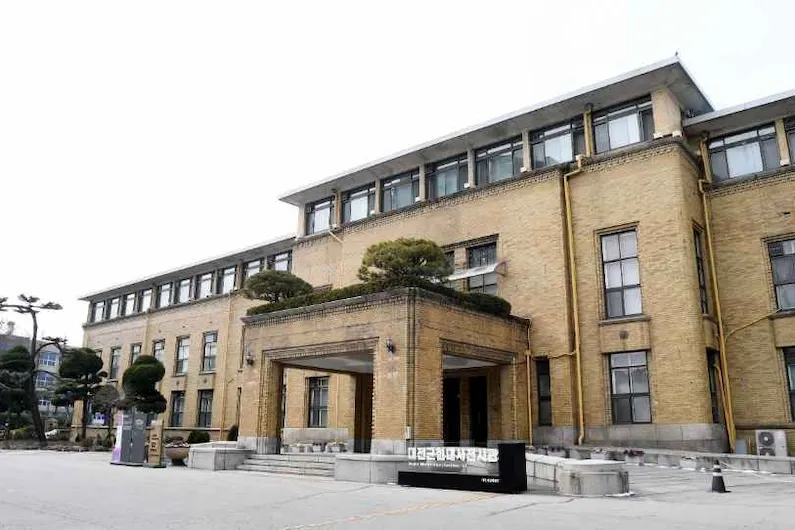
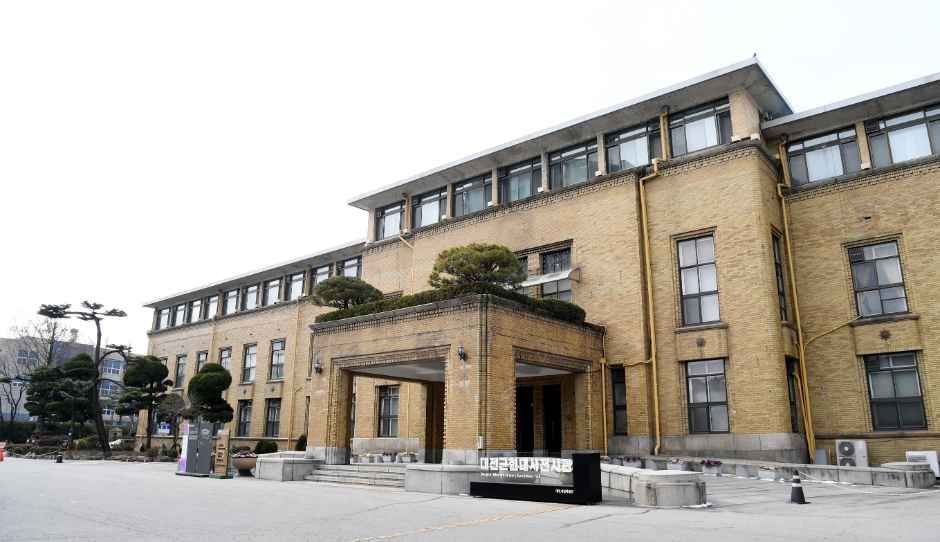
The Daejeon Jung-gu National Heritage Night is a specialized nighttime cultural festival designed to bridge the gap between modern cultural heritage and the intricate alleys of the city’s original downtown area. Centered around the former Chungcheongnam-do Provincial Government Office, the event transforms the region’s architectural history into an immersive evening experience. Rather than offering a static exhibition, the festival integrates light, storytelling, live performances, and curated markets against a backdrop of significant national heritage sitesβ€”specifically the main building of the former Chungcheongnam-do Provincial Government Office, the Daeheung-dong Cathedral, and the former Chungcheong Branch of the National Agricultural Products Quality Management Service.

The primary objective of the event is to shift the visitor’s role from a passive observer to an active participant. By walking, listening, and engaging with the provided content, guests can rediscover the specific charm of Jung-gu, Daejeon, where historical remnants and contemporary life coexist. This sustainable local cultural initiative seeks to expand the concept of national heritageβ€”moving it from a preserved relic to a living space for daily enjoymentβ€”while simultaneously revitalizing the original downtown by linking cultural spaces with nearby commercial districts.

The festival is organized into six distinct thematic categories to ensure a comprehensive exploration of the area:

  1. Night View: This segment features the “Street of Light of Memories,” including the “Listening Room to Hear Time” and a general showcase of the original downtown night view.
  2. Night Walk: Visitors can participate in the “Peace Road Theater Evening Primrose” or the “Click! Modern Procession.”
  3. Night Story: This focuses on narrative experiences such as the “Modern Music Salon,” the “Magician’s Secret Museum,” and the “Storyteller’s Street Tale.”
  4. Night History: This section offers historical engagement through the “Modern Play on a Moonlit Night” and “Time Travel with Tarot.”
  5. Night Flower: This category highlights the “Modern Romance” and the “National Heritage Exhibition for Children’s Innocence.”
  6. Night Market: A dedicated “Retro Emotional Market” provides a shopping experience aligned with the festival’s aesthetic.

Pricing and Usage Fees

While the general admission to the festival is free, certain specialized programs require a fee. To support the local economy, these fees are refunded to participants in the form of local gift certificates:

  • Peace Road Theater Evening Primrose: 10,000 won (Refunded in local gift certificates)
  • Magician’s Secret Museum: 10,000 won (Refunded in local gift certificates)
  • Modern Romance – Black and White Photo Studio of That Day: 5,000 won (Refunded in local gift certificates)

Visitor Information

πŸ“ Address: Jungang-ro 79beon-gil, Jung-gu, Daejeon Metropolitan City

πŸ’° Fee: Free (Some paid)

πŸ“ž Inquiry: 042-606-6281

πŸ›οΈ Accommodation near the event

⭐️ Instagram: https://www.instagram.com/djjunggunight

πŸ–₯️ Homepage: https://djjunggunight.kr/

Daejeon’s original downtown is in Jung-gu, centered on Daejeon Station. The station opened in the early 20th century as a stop on the Gyeongbu Line, and its presence turned what had been a small rural town into a regional rail hub. The streets around the station soon developed into the city’s first commercial and administrative district, a role they kept for most of the twentieth century.

The area still contains a number of older buildings from that period, along with narrow alleys, mature trees, and small markets. These are not preserved in the style of a museum district; many are still in use. Together they offer a concrete sense of the city’s earlier scale and daily life: the station entrance, the former office buildings, and the market streets that served residents who lived and worked nearby.

When locals call this the β€œoriginal downtown,” they are drawing a contrast with the parts of Daejeon that developed laterβ€”the research and science districts, the government buildings, and the large residential areas built as the city expanded. The older center is not the biggest or busiest part of Daejeon, but it is where the city’s post-railway development began.

The National Heritage Night Walk uses this setting rather than replacing it. During the event, guided evening walks and heritage site visits draw attention to the area’s history. Visitors can see how the station, the surrounding streets, and the old commercial buildings relate to one another, and how they fit into the larger history of Daejeon’s growth.

2026 Gwangmyeong Madanggeuk Festival X Korea Madanggeuk Festival: Experience Traditional Korean Performing Arts for Free

2026 Gwangmyeong Madanggeuk Festival X Korea Madanggeuk Festival: Experience Traditional Korean Performing Arts for Free

Gwangmyeong Madanggeuk Festival X Korea Madanggeuk Festival

πŸ—“οΈ 2026.09.11 ~ 2026.09.13

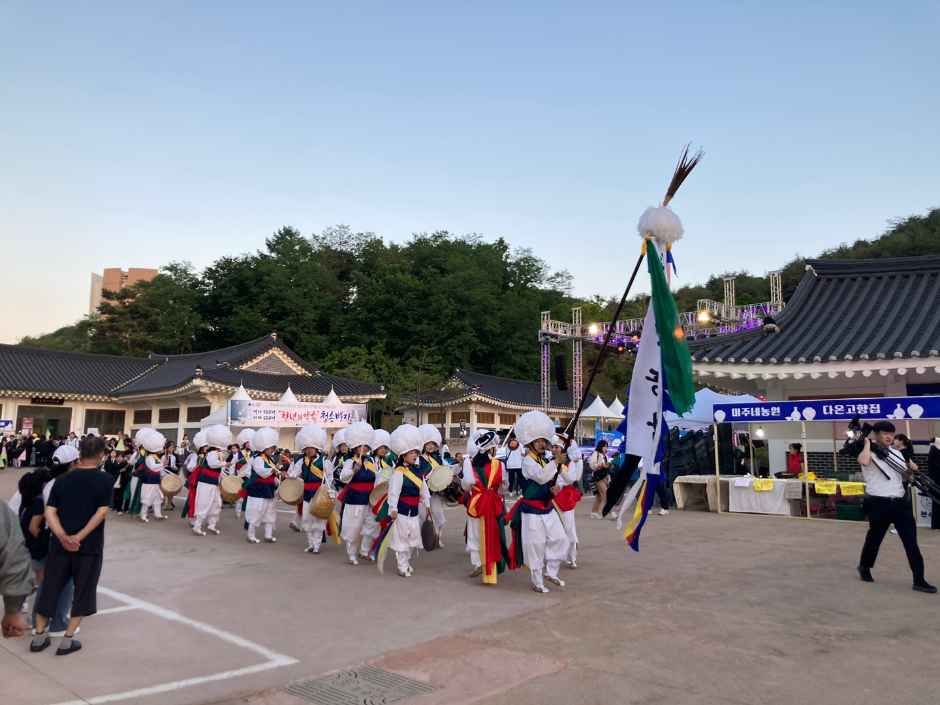
The Gwangmyeong Madanggeuk Festival is a performing arts festival built around Madanggeukβ€”a traditional Korean outdoor theater form known for its satire, humor, and lively spiritβ€”reinterpreted with a contemporary sensibility. Since its debut in 2024, the festival has grown with the support of Gwangmyeong citizens and now enters its third year in 2026. This edition, presented as the Gwangmyeong Madanggeuk Festival X Korea Madanggeuk Festival, brings together high-quality works and experienced performing groups for a program that spans Madanggeuk, fusion gugak (traditional Korean music), circus, and street performances.

What makes this festival stand out is the format itself. Madanggeuk breaks down the barrier between stage and audience: performers and spectators share the same open space, and the energy flows both ways. By turning the area around Gwangmyeong City Stadium into one large open venue, the festival has established itself as Gwangmyeong’s representative performing arts eventβ€”where citizens and artists laugh, enjoy, and communicate together. The program is also designed for all ages, with citizen participation activities woven throughout the event.

Main Programs

  • Performances of approximately 30 works in the domestic Madanggeuk and outdoor play genres, plus performances of overseas entries
  • 21 one-person plays
  • Gwangmyeong citizen Madanggeuk performances, with participation from 4 teams from the National Citizen Madanggeuk Festival
  • Opening play (Gilnori) and closing play (Dansimjul-nori, Daedong-nori)

Side Programs

  • Food market
  • Art market with Saenggi-ballal Culture House (flea market)
  • Forums and roundtables

Experience Programs

  • Traditional play experience
  • Art market with Saenggi-ballal Culture House (experience)

πŸ“ Address: 20 Sicheong-ro, Gwangmyeong-si, Gyeonggi-do (Cheolsan-dong)

πŸ›οΈ Accommodations near the event

πŸ’° Fee: Free

πŸ“ž Inquiry: 02-2621-8853

⭐️ Instagram: https://www.instagram.com/gmcf_festival/

πŸ–₯️ Website: www.gmcf.or.kr

Gwangmyeong Madanggeuk Festival X Korea Madanggeuk Festival

What is madanggeuk?

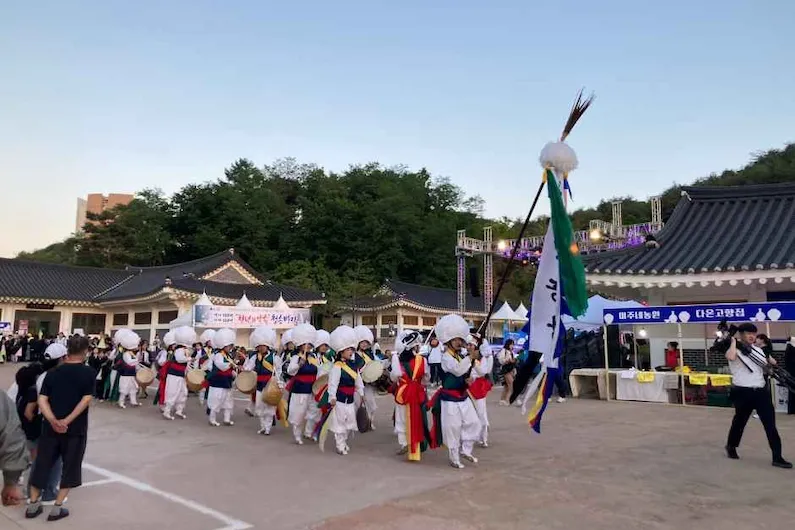
Madanggeuk is a Korean performing art whose name translates roughly as β€œyard drama.” The word comes from madang (an open courtyard or village square) and geuk (drama or play). As the name suggests, it is performed outdoors, usually in a public space where the audience surrounds the performance on all sides.

A madanggeuk performance combines several older traditions: storytelling, music, dance, acrobatics, and satire. Performers use drums such as the janggu, the small gong called kkwaenggwari, and deliberately exaggerated movements and vocal styles. The staging is not centered on a fixed stage or a seated auditorium. The actors work in the middle of the crowd, and the crowd’s reactions are part of the performance. Performers may pause for laughter, challenge individual spectators to respond, or bring someone into the action for a scene. This is not merely audience engagement; it is the basic arrangement of the form.

Madanggeuk draws from pansori and traditional mask dances, but it is distinct from those older forms in how directly it addresses its audience. Its recurring subjects include the daily lives of ordinary people, the absurdities of social hierarchy, and the misuse of power. These themes are treated with humor, but the humor is not decorative. It gives the performers a way to make a point without reducing the performance to a lecture.

At the 2026 Gwangmyeong Madanggeuk Festival, performances will be open to the public free of charge. Since the form depends on an active audience, the festival is best approached as an event to participate in rather than simply watch.

2026 Cheongsong White Porcelain Festival: Experience 500 Years of Korean Ceramic Art and Tradition

2026 Cheongsong White Porcelain Festival: Experience 500 Years of Korean Ceramic Art and Tradition

Cheongsong White Porcelain Festival

πŸ—“οΈ 2026.09.11 ~ 2026.09.13

Cheongsong White Porcelain is a precious cultural heritage that has been passed down for over 500 years through the soil, water, and fire of Cheongsong, and through the fingertips of artisans. The process of completing a pieceβ€”where an artisan’s sincerity and waiting are added to materials obtained from Cheongsong’s natureβ€”is a cultural asset containing the unique life and stories of Cheongsong.

The slogan “500 Years of History, 500 Years of Future, a Thousand-Year Promise” captures the festival’s intention to cherish the memories of the past 500 years and carry that value forward for the next 500 years. It is a promise to look at today’s Cheongsong White Porcelain anew, based on the tradition of the past, and to naturally pass on its beauty and meaning to the next generation.

The 2026 Cheongsong White Porcelain Festival offers a chance to look back at the time Cheongsong White Porcelain has walked, meet the current Cheongsong White Porcelain, and create new stories that will follow. A history of 500 years is not a time that stays in the past; it passes through today and leads to the future. The festival is designed as a time to remember the past 500 years, imagine the next 500 years together, and share a new promise that will eventually lead to a thousand years of history.

Visitors can encounter the beauty of Cheongsong White Porcelain up close through exhibitions, sales, experiences, and various cultural programs, and experience the special value of white porcelain born from soil, fire, and the fingertips of artisans.

Programs and Highlights

Performances

  • Opening and closing ceremony performances
  • Madang-geuk (traditional outdoor play)
  • Puppet shows
  • Samulnori
  • Street performances
  • Local resident performances

Exhibitions

  • Cheongsong White Porcelain photo staging exhibition
  • Artist collaboration exhibition
  • Cheongsong White Porcelain Research Society exhibition
  • Local resident exhibition

Experiences

  • Potter’s wheel experience
  • Hand-painting experience
  • Cheongsong White Porcelain play experience
  • Hanging wish wind chimes
  • Stamp experience

Sales & Food

  • Cheongsong White Porcelain sales zone
  • Craft market
  • Food trucks
  • Jumak (traditional tavern) operation

Festival Information

πŸ“ Address: 36 Cheongsongbaekja-ro, Juwangsan-myeon, Cheongsong-gun, Gyeongsangbuk-do

πŸ›οΈ Accommodation near the event

πŸ’° Fee: Free admission (some experience programs have a fee)

πŸ“ž Inquiry: 054-874-0101

⭐️ Instagram: https://www.instagram.com/cswp500/

πŸ–₯️ Homepage: https://www.cctf.or.kr/

Cheongsong White Porcelain Festival

Cheongsong white porcelain (Korean: Cheongsong baekja) is a white-glazed ceramic made in the Cheongsong area of North Gyeongsang Province, in the mountains of southeastern Korea. From roughly the sixteenth to the nineteenth century, local kilns produced a range of daily-use vessels that have been grouped together under this regional name. Unlike the white porcelain made for the royal court near Seoul, Cheongsong wares were not part of a centrally administered industry. They served a mostly local economy, and their reputation developed from the available materials and the skills of potters who settled in the area.

The color of the fired clay is the most noticeable property of Cheongsong baekja. The local clay contains less iron than many other Korean clays, so the body remains pale after firing. A thin glaze over the body produces a slightly milky surface. Depending on the kiln atmosphere and the exact composition of the clay, the resulting tone can have a faint blue cast or a warmer ivory tint. These differences are not treated as defects; they are used as clues for identifying where a piece was made.

The shapes are generally plain and practical. Large jars were used to store grain or fermented sauces; smaller jars held condiments and personal goods; bowls and bottles were made for everyday meals and drinks. Scholars could have used small brush rests or water droppers, but these too are modest in size and decoration. A line incised into the damp clay, a handle attached to a jar, or an iron-brown brushstroke are about as far as decoration usually goes. The surface itself carries the visual interest, and a piece changes appearance as the light moves across the glaze.

Modern visitors to the Cheongsong White Porcelain Festival can see the process in person: clay refinement, throwing, glazing, and firing. The festival also exhibits historical and contemporary pieces, with enough labels and demonstrations to clarify the differences between regional white porcelains. The tradition continues because the basic set of techniques is still practiced, not because the work is presented as an exceptional or mystical art form. It is a regional craft with a clear history, and its look follows from the materials and the uses it was designed for.

2026 Muchangpo Mysterious Sea Road Festival in Boryeong: Experience the Magic of the Parting Sea and LED Torch Walks

2026 Muchangpo Mysterious Sea Road Festival in Boryeong: Experience the Magic of the Parting Sea and LED Torch Walks

Muchangpo Mysterious Sea Road Festival

πŸ—“οΈ 2026.09.11 ~ 2026.09.13

Muchangpo Mysterious Sea Road Festival is Boryeong’s representative marine festival, built around a natural spectacle: when the sea parts, a roughly 1.5km path opens across the mudflats. Visitors can walk that exposed sea road while the water recedes on either side, and at night the festival’s highlightβ€”the Sea Road LED Torch Experienceβ€”turns the crossing into a trail of light over the dark sea. The result is a rare blend of nature and performance, with daytime and evening programs layered around it.

During the day, festival-goers can watch Madangnori (traditional outdoor play) performances, try bare-handed fish catching, and, on Saturday, join a free seafood cooking class. Evening programming includes live music, a multimedia drone light show, and the torch experience. With free general admission and a range of paid add-on experiences, the festival offers both family-friendly entertainment and a distinctive way to experience the coastline.

Day-by-Day Schedule

September 11 (Fri)

  • Madangnori ‘Muchangpo, Winning Bid for King Prawns~’ (Muchangpo Plaza)
  • Bare-handed Fish Catching Experience (King Prawns) (Beach Plaza) β€” Experience Fee: 10,000 won / On-site registration
  • Opening Ceremony (Muchangpo Plaza)
  • Sea Road Picnic Festa Performance β€” 3 busking teams and 1 singer (Muchangpo Plaza Special Stage)

September 12 (Sat)

  • Madangnori ‘Muchangpo, Winning Bid for King Prawns~’ (Muchangpo Plaza)
  • Bare-handed Fish Catching Experience (King Prawns) (Beach Plaza) β€” Experience Fee: 10,000 won / On-site registration
  • Seafood Cooking Class (Muchangpo Plaza Special Stage) β€” Experience Fee: Free / On-site registration
  • Sea Road Picnic Festa Performance β€” 3 singers (TBD) (Muchangpo Plaza Special Stage)
  • Sea Road Torch Experience guidance and LED torch distribution (Sea Road Experience Area)
  • Sea Road Multimedia Drone Light Show
  • Sea Road Torch Experience

September 13 (Sun)

  • Madangnori ‘Muchangpo, Winning Bid for King Prawns~’ (Muchangpo Plaza)
  • Bare-handed Fish Catching Experience (King Prawns) (Beach Plaza) β€” Experience Fee: 10,000 won / On-site registration

Ongoing Attractions

Throughout the festival, the following are available at Muchangpo Plaza:

  • Seafood Party Zone
  • Statue Performance
  • Clown Art Balloons
  • Making Shell Candles
  • Making Shell Flowerpots
  • Rewriting Marine Waste
  • Marine Ecology Playground (7 types)
  • Specialty Product Sales

Visitor Information

πŸ“ Address: Area of 805-4 Gwandang-ri, Ungcheon-eup, Boryeong-si, Chungnam

πŸ’° Fee: Free admission (Some programs are paid)

πŸ“ž Inquiry: 041-930-0891

⭐️ Instagram: boryeongfestival_official

πŸ–₯️ Homepage: mudfestival.or.kr/festival/event/list?level=2&menuNo=86

Muchangpo Mysterious Sea Road Festival

What is the Muchangpo Sea Road?

Muchangpo Sea Road is a tidal land connection that appears off Muchangpo Beach in Boryeong, South Korea. Twice a day, when the tide is low, the water level drops enough to expose a broad stretch of seabed between the shoreline and Seokdaeya Island, roughly 2.8 kilometers away. For one to two hours, visitors can walk across this exposed ground. When the tide rises, the path is submerged again and the island is once more cut off from the beach.

The pathway is not built or paved. It is the natural seabed, composed of sand and mud, shaped by tides and currents. Locals sometimes call it the β€œMoses Miracle,” and the nickname makes sense at a glance: the water appears to part. But the cause is straightforward physics. The gravitational pull of the moon and sun, combined with the shallow slope of the coast, produces an unusually wide tidal zone. Because the cycle operates on a regular schedule, the appearance of the road can be predicted well in advance.

The annual Muchangpo Mysterious Sea Road Festival uses these tide windows as its main program. Activities are timed around low tide, and visitors often walk out to the island in large groups. In the evening, participants carry LED lanterns, which help keep the group visible after dark. The route also offers a closer look at the local intertidal environment: exposed sandbars attract shorebirds, crabs, and small marine organisms that are usually hidden beneath the water.

Those planning to visit should check the tide tables for Boryeong rather than rely on general descriptions. The road is accessible only at specific times, and the schedule shifts by roughly an hour each day. Waterproof shoes are advisable, since the surface is uneven and wet in places. The festival adds food stalls and evening performances, but the road itself remains the central attraction.

Analytics