Myeongnyang Great Victory Festival 2026 in Jindo: Experience History Through Immersive Naval Battles and Cultural Events

Myeongnyang Great Victory Festival 2026 in Jindo: Experience History Through Immersive Naval Battles and Cultural Events

Myeongnyang Battle Festival
Myeongnyang Great Victory Festival

🗓️ 2026.09.11 ~ 2026.09.13

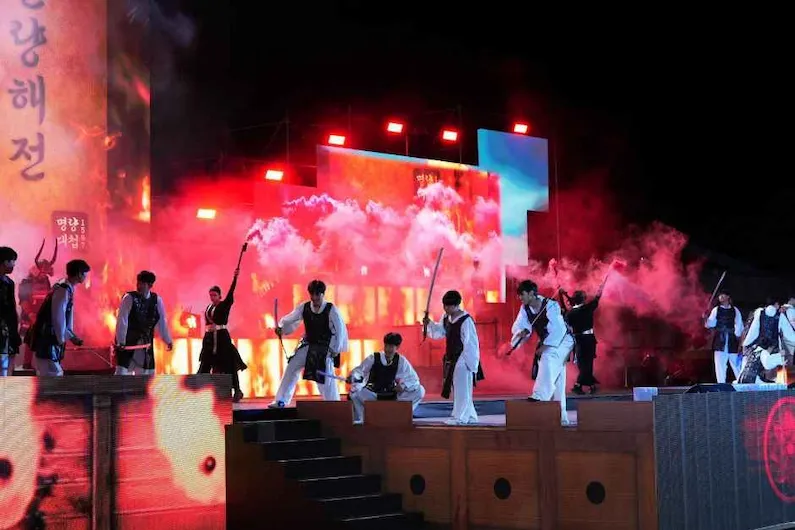
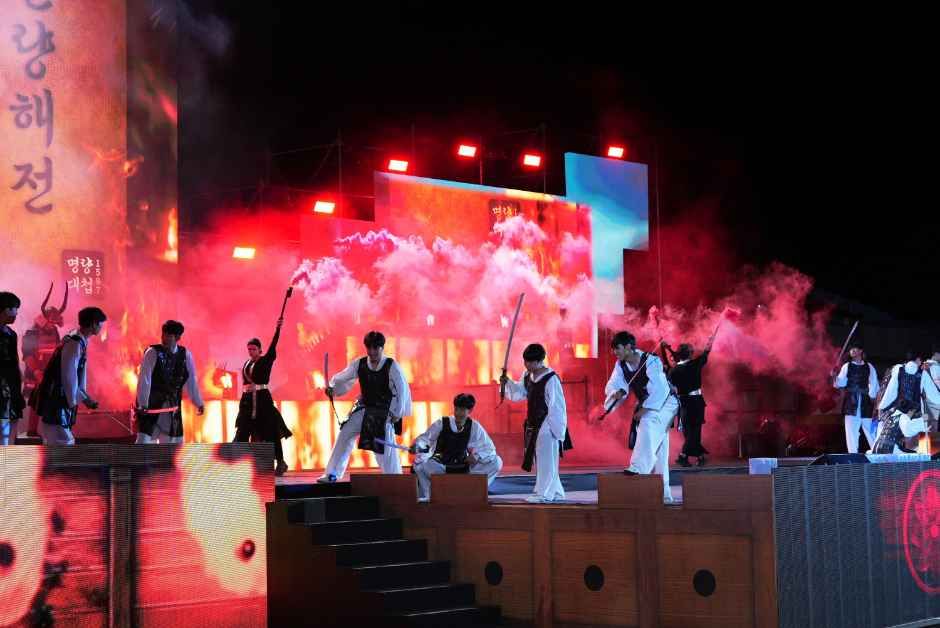
The Myeongnyang Great Victory Festival is a patriotic history and culture festival commemorating the Battle of Myeongnyang, an unprecedented event in world history. At Uldolmok on September 16, 1597, the Joseon Navy—led by General Yi Sun-sin, who was reappointed as Naval Commander of the Three Provinces—and the fishermen of Jeolla-do defeated the Japanese Navy. Held annually since 2008 by Jeollanam-do, Jindo-gun, and Haenam-gun, the festival is a representative local history and culture festival.

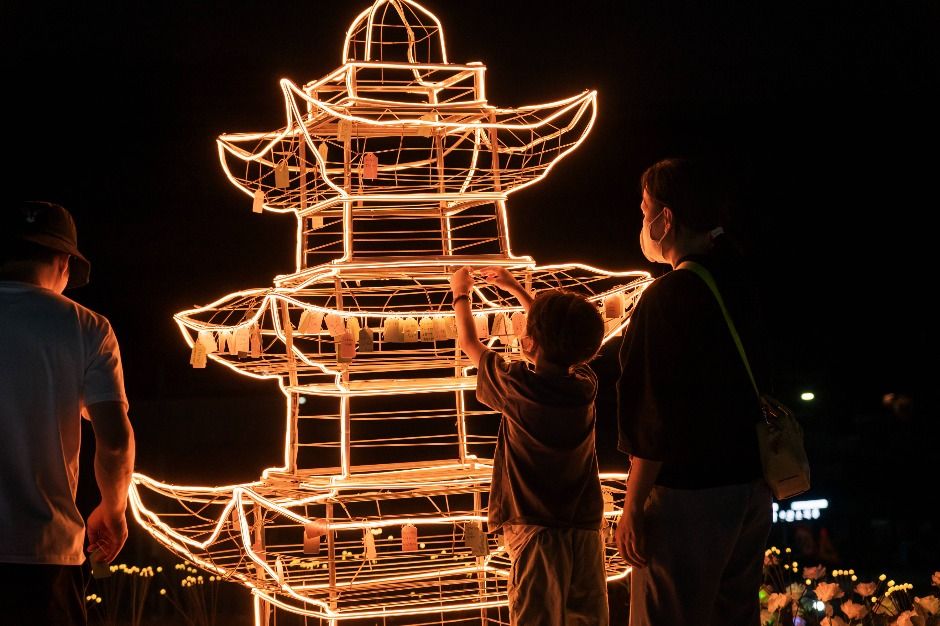
The festival is known for its distinctive mix of historical commemoration and modern technology. Its programs include an ICT convergence multimedia naval battle that recreates the Battle of Myeongnyang in a contemporary format, a maritime parade, a departure parade, and local performances. Landscape lighting is installed throughout the festival grounds, and history and culture programs give visitors the chance to directly experience the historical site of the Great Victory of Myeongnyang. Through this combination, the festival promotes the historical value and patriotic spirit of the battle while introducing the historical, cultural, and tourism resources of Jindo and Haenam.

Festival Programs

The festival is organized into four categories of programming.

Main Programs

  • Opening Ceremony
  • Digital Convergence Naval Battle
  • Departure Parade
  • Whirlwind Fireworks Show
  • Maritime Parade

Side Programs

  • Landscape Lighting of the Yi Sun-sin Statue
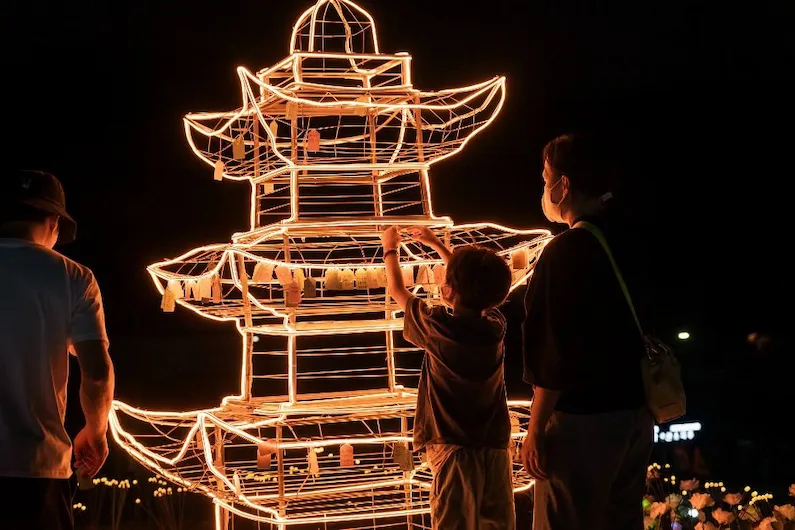
  • Joseon Navy Lantern Exhibition
  • Myeongnyang Great Victory Archive Exhibition
  • Myeongnyang Great Victory Stamp Rally
  • Myeongnyang Naval Battle AR/MR Experience

Consumer Participation Programs

  • General’s Uniform Experience
  • Navy Barracks Experience
  • Traditional Korean Musical Instrument Making Experience

Other Content

  • Arm Wrestling Competition
  • Youth Trot Song Festival
  • Youth Song & Dance Competition

Practical Information

📍 Address: 11 Myeongnyangdaecheop-ro, Gunnae-myeon, Jindo-gun, Jeonnam-Gwangju Integrated Special City

🛏️ Accommodations near the event

💰 Fee: Free

📞 Inquiry: 061-802-2192

🖥️ Website: https://www.mldc.kr/web/

The Battle of Myeongnyang was fought on October 26, 1597, in the narrow strait between the Korean mainland and Jindo Island, during the Imjin War (1592–1598). The Korean fleet was commanded by Admiral Yi Sun-sin. Earlier that year, most of Korea’s navy had been lost at Chilcheollyang, leaving Yi with a small number of ships. The surviving force at Myeongnyang is consistently given as thirteen warships. The Japanese fleet was far larger; estimates vary from roughly 130 warships to more than 300 vessels when support craft are counted.

Yi chose to meet the Japanese force in the strait rather than in open water. Myeongnyang was known for strong, fast-moving currents that shifted direction with the tide. In that confined channel, the Japanese fleet could not use its numerical advantage effectively. When the current turned, Japanese ships were pushed into disorder, and Korean cannon and archery fire inflicted heavy losses. Contemporary accounts report that several dozen Japanese vessels were sunk or disabled, while the Korean side lost none of its thirteen ships.

In strategic terms, the victory prevented a Japanese advance toward the capital and allowed the Korean navy to regroup and rebuild over the following months. It did not end the war, but it removed the immediate threat in that sector. The battle is often cited in military histories as a case study in the defensive use of currents and narrow waters against a larger force.
Wonju Samto Festival 2026: Experience Korea’s Rich Agricultural Culture and Local Flavors

Wonju Samto Festival 2026: Experience Korea's Rich Agricultural Culture and Local Flavors

Samto Festival

🗓️ 2026.09.11 ~ 2026.09.13

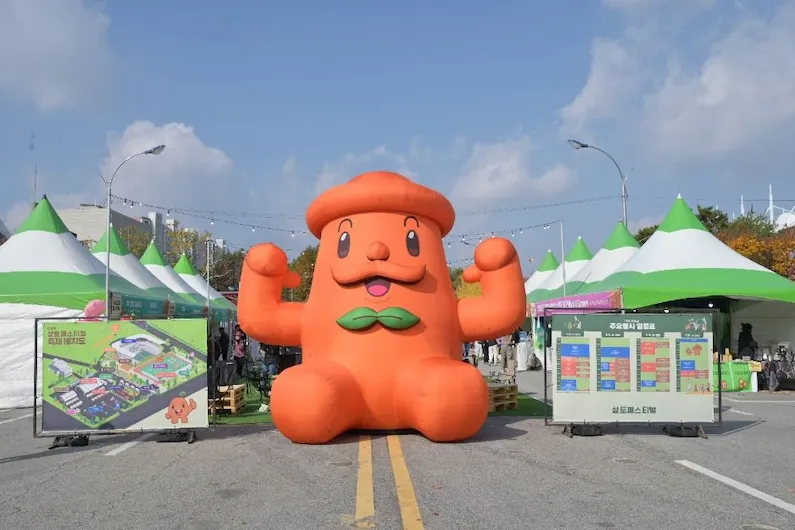
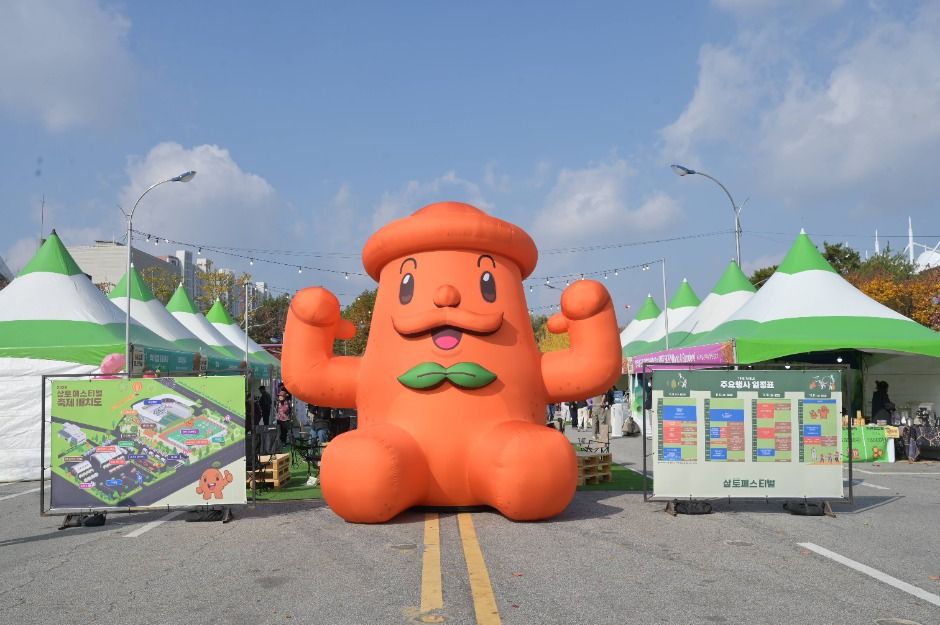
The Wonju Samto Festival stands as a representative regional celebration designed to foster a collective appreciation for Wonju’s agriculture and rural culture among both local citizens and visitors. By showcasing the high-quality agricultural products produced within the region, the festival aims to promote the intrinsic value of farming while providing an inclusive venue where people of all generations can engage through diverse performances and hands-on experiences.

Visitors can access a direct agricultural product market to purchase fresh, locally sourced food, while families are encouraged to participate in specialized rural experience programs. To complement the agricultural focus, the festival integrates stage events with regional art performances, ensuring a rich visual and auditory experience. Ultimately, the Samto Festival functions as a communal ground where farmers and citizens mingle—allowing for a cultural exchange that broadly promotes Wonju’s unique agricultural identity.

Event Programming

The festival is organized into several distinct categories to ensure a comprehensive experience:

1. Performance Events
Attendees can enjoy a variety of live entertainment, including the Samto Singing Contest, the Samto Concert, specifically invited agricultural culture performances, and spontaneous busking sessions.

2. Competition Events
The festival features a wide range of contests, from the National Samto Silver Model Contest and Life Club Competitions to more traditional activities such as the Scarecrow Competition, Mortar and Pestle Turning, and Toto-mi Seed Collecting.

3. Exhibition Events
The Samto Theme Hall serves as the educational hub of the event, displaying regional agricultural products, modern agricultural technology, processed goods, information on agricultural work safety, and exhibits on industrial insects.

4. Experience Events
Interactive opportunities allow guests to immerse themselves in rural life through agricultural culture and gardening experiences, animal feeding, natural dyeing, and agricultural product cooking classes. For those interested in modern technology, a VR agricultural experience is also available.

5. Sales Events
The festival facilitates the direct sale of regional agricultural products, allowing visitors to buy directly from the producers.

6. Sharing Events
Community-centric activities emphasize traditional Korean food culture, featuring Gamasot (cauldron) Bibimbap, Tteokme-chigi (rice cake pounding), the creation of Three-color Garaetteok, and the Himchan-i Agricultural Product Exchange.

7. Food
Diverse culinary options are available across the Local Food Hall, the Multicultural Food Hall, and the specialized Chiaksan Hanwoo Zone.

Visitor Information

📍 Address: 311 Seowon-daero, Wonju-si, Gangwon Special Self-Governing Province (Myeongnyun-dong)

🛏️ Accommodation near the event

💰 Fee: Free

📞 Inquiry: 033-737-4155

🖥️ Homepage: https://www.3to.kr/

Samto Festival

What is Samto?

Samto (삼토) means “three earths.” The name refers to the Wonju Samto Festival, and to three Korean terms that share the syllable to: 토양 (toyang) – soil, 토종 (tojong) – native seeds and breeds, and 토속 (tosok) – local customs and traditional ways of life.

The festival uses these three categories to show how agriculture in Wonju is shaped by the land and by the people who work it. Soil affects what can be grown and how it tastes. Native seeds and livestock have been selected over time to suit local conditions. Local customs include the ways farmers have passed down knowledge, recipes, and seasonal work routines.

For visitors, this means the festival is not only a market for farm products. It also offers a chance to see how those products are connected to a particular place. Programs are organized around the three themes: soil exhibitions and field experiences, displays of native breeds and seeds, and demonstrations or workshops on regional food and farming traditions. Together, they give a fuller picture of what makes the region’s agriculture distinct.

2026 Hoengseong Deodeok Festival: Enjoy Local Delicacies and Cultural Experiences in Gangwon Province

2026 Hoengseong Deodeok Festival: Enjoy Local Delicacies and Cultural Experiences in Gangwon Province

Hoengseong Deodeok Festival

The 13th Hoengseong Deodeok Festival will take place over three days from September 11 to 13, 2026, at the Nonggeori Festival Grounds in Cheongil-myeon, Hoengseong-gun, Gangwon Special Self-Governing Province. Under the theme “Delicious Deodeok, Joyful Festival, Exciting Cheongil,” the festival highlights Hoengseong deodeok and local agricultural products grown in the region’s clean natural environment.

Throughout the festival period, visitors can enjoy food experiences using deodeok, browse various food booths, and stop by exhibition and sales areas run directly by local farmers. The program also includes a Nonggeori Dance Competition and hands-on experience programs, giving visitors a chance to take part rather than simply watch. At its core, the event is a celebration of local culture and community, centered on deodeok, one of Hoengseong’s most representative agricultural products.

Festival Details

Main Programs

The festival’s main programs are designed around deodeok and encourage active participation:

  • Finding the Golden Deodeok
  • Deodeok Olympics
  • Deodeok Digging Experience
  • Deodeok Bibimbap Performance

Main Performances

  • Opening and Closing performances
  • Resident autonomy performances
  • Etc.

Special Event

  • Nonggeori Dance Competition

Food

  • Sales outlets for various agricultural products including deodeok
  • Various restaurants and food trucks
  • Tasting of deodeok and Hanwoo beef
  • Etc.

Hoengseong Deodeok Festival

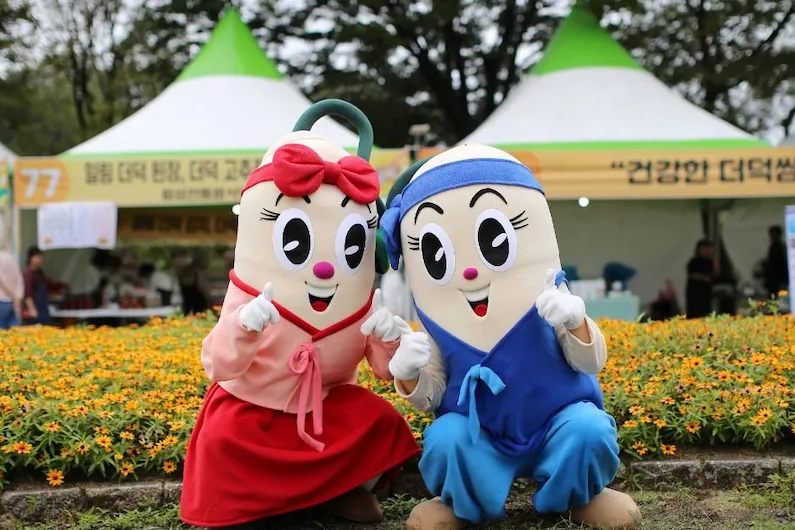
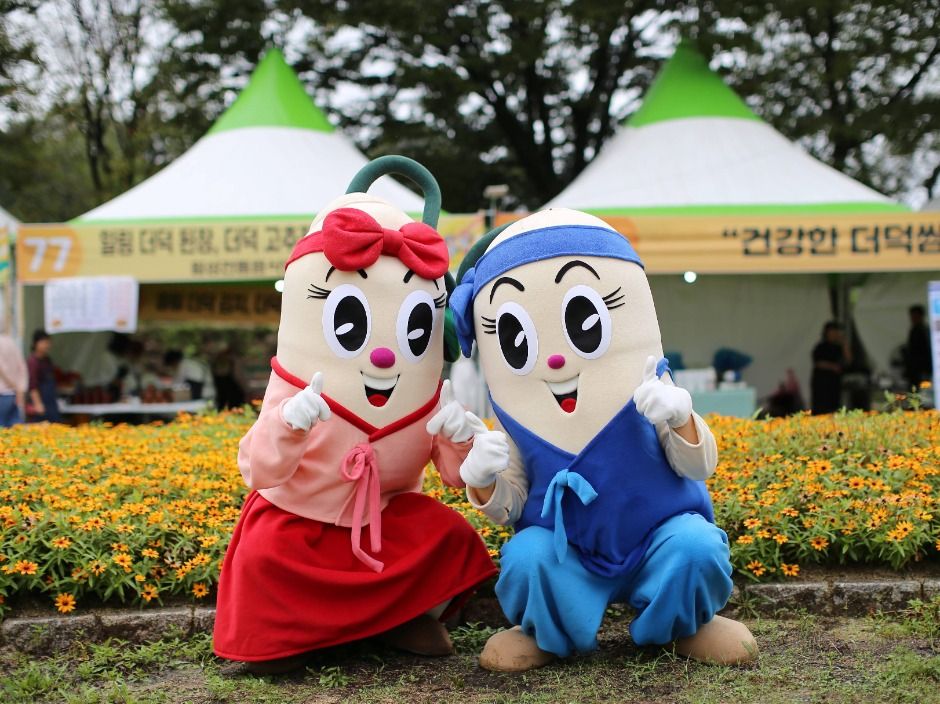
Deodeok (Codonopsis lanceolata) is a perennial root vegetable in the bellflower family, native to Korea and other parts of East Asia. It grows wild on rocky mountain slopes, but commercial cultivation now supplies most of the market. The root is long, white, and gnarled, with firm flesh that holds its shape during cooking. Its flavor is mildly sweet and nutty, and grilling brings out a deeper, more pronounced nuttiness.

A common preparation is deodeok gui: thick slices brushed with soy sauce, sesame oil, and garlic, then grilled until the surface is golden and the nutty aroma is clear. The cooked root is served as a side dish or alongside rice. Deodeok also appears in namul, a seasoned vegetable dish, where it is typically dressed with sesame oil, garlic, and scallions. It can be pickled, dipped in batter and pan-fried, or simmered in porridge. In traditional Korean medicine, the root has been used for respiratory and digestive complaints and is sometimes grouped with ginseng as a restorative herb.

The Hoengseong Deodeok Festival, held annually in Hoengseong County, is one place to sample a wide range of preparations. Vendors and local cooks serve the root grilled, battered, and seasoned; growers display fresh roots and answer questions about cultivation and storage. For anyone unfamiliar with deodeok, the festival offers a practical introduction to a vegetable that remains a standard ingredient in Korean kitchens.

2026 Geoje Beer Festival Guide: Enjoy Unlimited Draft Beer and Seaside Performances in Jangseungpo

2026 Geoje Beer Festival Guide: Enjoy Unlimited Draft Beer and Seaside Performances in Jangseungpo

Geoje Beer Festival

🗓️ 2026.09.11 ~ 2026.09.12

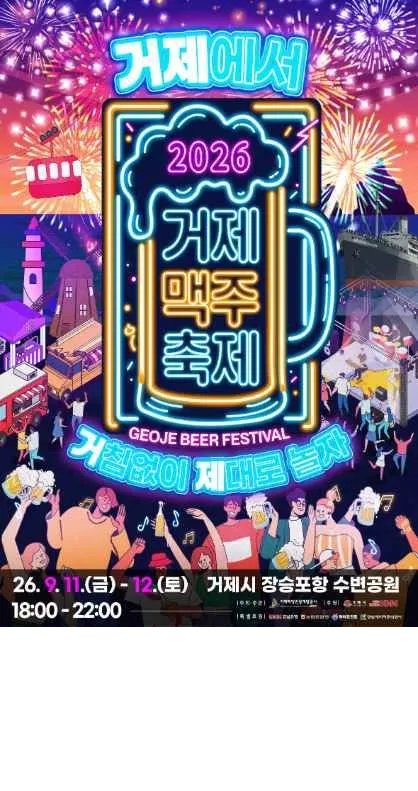
The 2026 Geoje Beer Festival is Geoje’s representative autumn festival where you can enjoy cool draft beer and various performances against the backdrop of the beautiful night sea of Jangseungpo. It offers a special time for people of all ages to enjoy, featuring a gastronomic space blending unlimited draft beer, local delicacies, and food trucks, as well as performances across various genres such as EDM, K-POP, and 7080, along with citizen participation events. Additionally, it is an eco-friendly and inclusive festival reflecting ESG values—featuring tourism promotion booths, photo zones, local makgeolli exhibition and tasting experiences, a barrier-free zone, and the use of reusable containers—presenting new night tourism content in Geoje that anyone can enjoy safely and comfortably.

What sets this festival apart from a standard beer gathering is its seaside setting and its deliberate effort to bring together multiple generations. The combination of EDM and K-POP for younger audiences alongside 7080 performances for older visitors creates a rare intergenerational atmosphere, while the unlimited draft beer and the local makgeolli tasting corner give attendees a chance to compare modern commercial brewing with the region’s traditional rice wine. The festival also functions as a showcase for Geoje itself: tourism promotion booths, local food vendors, and the participation of the Jangseungpo-dong Resident Autonomy Council all reinforce the event’s role as a community-driven introduction to the area.

What to Expect

1. Main Performances: Performances by local singers and professional teams (EDM, Dance, 7080, K-POP), citizen participation events

2. Beer Zone: Unlimited draft beer provided

3. Food Zone: Food trucks, Jangseungpo-dong Resident Autonomy Council food booths

4. Experience Programs: Local makgeolli exhibition, promotion, and tasting experiences, Geoje tourism promotion booths

5. Side Events: Photo zones, foreign language interpretation support booth, barrier-free zone, heat shelter, eco-friendly campaign

The barrier-free zone and foreign language interpretation support are particularly notable for an event of this scale, signaling that the organizers intend the festival to be accessible to international visitors and attendees with mobility needs alike. The heat shelter and eco-friendly campaign—which includes the use of reusable containers—are practical touches that make a long outdoor evening more comfortable and sustainable.

Tickets and Fees

  • 1st Early Bird Pre-reservation (8.7. ~ 8.23.): 12,000 won (20% discount)
  • 2nd Pre-reservation (8.24. ~ 9.10.): 13,500 won (10% discount)

The tiered pricing rewards early planning: those who reserve during the first window save an additional 1,500 won compared to the second window. Given that draft beer is unlimited once inside, the entry fee represents solid value for anyone planning to spend the evening sampling the offerings.

Location and Practical Information

📍 Address: 138 Jangseung-ro, Geoje-si, Gyeongsangnam-do (Jangseungpo-dong)

🛏️ Accommodation near the event

💰 Fee: Paid

📞 Inquiry: 055-639-8193

🖥️ Website: http://www.geojefesta.com/

거제맥주축제

For those traveling from outside Geoje, the festival’s location in Jangseungpo-dong places it within easy reach of the city’s coastal areas, and the overnight accommodation link above provides options for turning the event into a weekend trip. The two-day schedule (September 11–12) means visitors can choose an evening that suits their itinerary, or attend both nights to catch performances they might have missed the first time around.

Geoje is a city in South Gyeongsang Province, on the southern coast of South Korea. It occupies Geoje Island, the country’s second-largest island, along with a number of smaller adjacent islands. The island is connected to the mainland by bridges, and its coastline includes steep cliffs, sheltered coves, and long beaches. Inland, the terrain is hilly, with forested ridges and trails that fall within Hallyeohaesang National Park.

The island’s location has historically made it a useful naval and military post. During the Korean War, a large prisoner-of-war camp was established near the town of Gohyeon. That camp is now preserved as a museum and memorial, and the area also has a maritime museum documenting the shipbuilding industry that later transformed the local economy. Shipbuilding remains a major employer; large yards operate at Okpo and Jangseungpo.

Jangseungpo also serves as one of the city’s main harbors, with a working fish market and ferry connections to nearby islands. The population is concentrated in Gohyeon and Okpo, while the rest of the municipality is made up of coastal villages and farmland. Tourism is largely seasonal: summer visitors come for the beaches and water sports, while spring and autumn draw walkers and cyclists. The city hosts several festivals through the year, including a beer festival staged on the waterfront during the summer.

2026 Seocheon National Heritage Night Walk: Experience the Magic of Hansan-eupseong Fortress through Immersive Nightly Events

2026 Seocheon National Heritage Night Walk: Experience the Magic of Hansan-eupseong Fortress through Immersive Nightly Events

Seocheon National Heritage Night Walk

서천국가유산야행

The 2026 Seocheon National Heritage Night, centered on the theme “The Lord of Hansan, a Boisterous Secret Journey,” is scheduled to take place from Friday, September 11, to Saturday, September 12, 2026. This event transforms the Hansan-eupseong Fortress area into a vibrant cultural hub, utilizing the historical backdrop of the fortress and the broader cultural heritage of Hansan to host a series of nighttime programs. By integrating performances, interactive experiences, and curated exhibitions, the festival creates an environment where tradition and modernity harmonize—offering visitors a way to engage with Seocheon’s national heritage through all five senses.

This event distinguishes itself from standard historical tours by focusing specifically on the nocturnal atmosphere of the fortress, allowing both local residents and tourists to experience the deep charm of the region’s heritage in a unique, immersive setting.

The festival is organized into eight distinct categories to ensure a comprehensive cultural experience:

1. Night View (夜景)
Visitors can experience the visual splendor of the fortress by following the lanterns to Hansan-eupseong, featuring the “Lanterns protecting Hansan” installation.

2. Night Road (夜路)
These activities encourage exploration of the grounds, including the Seocheon National Heritage Capturing Stamp Tour, heritage stories recounted by the youth, and “Hansan-eupseong Plogging-enteering”—a combination of environmental cleanup and orienteering.

3. Night Event (夜事)
Interactive programs allow guests to step into historical roles through “A day in the life of the Hansan Magistrate,” the “Hansan-eupseong Guardians” activity, “People connecting Seocheon’s national heritage,” and a simulated scholar’s examination held at night within the fortress walls.

4. Night Art (夜畵)
Creative expression is encouraged through the Seocheon National Heritage Sketchbook and the “Tell it to the Hansan Guardian Tower” project.

5. Night Performance (夜設)
The event features a variety of traditional arts, beginning with the ceremony where Hansan-eupseong welcomes the Magistrate. The lineup includes performances by Joseon Pansori master Lee Dong-baek, a Madang-geuk (traditional outdoor play) titled “The Story of Hansan Peddlers,” and the “Pungryu echoing in Hansan-eupseong” musical segments.

6. Night Market (夜市)
The Hansan Starlight Market provides a space for commerce and community gathering under the night sky.

7. Night Food (夜食)
Culinary traditions are highlighted at the Hansan-eupseong midnight market.

8. Night Stay (夜宿)
For those seeking a more immersive overnight experience, the festival offers Starlight Camp in Seocheon.

Essential Information

🛏️ Accommodations near the event

Hansan-eupseong Fortress is a well-preserved walled town from the Joseon Dynasty in Seocheon County, South Chungcheong Province, South Korea. It is an example of a eupseong, a type of fortified administrative town. During the Joseon period (1392–1897), a eupseong served as the seat of local government and as a residential and defensive settlement. The fortress contained not only military facilities but also government offices, housing for officials and civilians, and public buildings. The local magistrate administered the surrounding area from this site.

The fortress walls were built from large, carefully stacked stones and run along the low hills, following the land’s natural contours. The elevated position gave the town a clear view over the coastal plains and river routes nearby. Officials could monitor movement through the region and prepare for attacks, especially during the Japanese invasions of the late 16th century.

Hansan-eupseong Fortress is now a cultural heritage site. Its surviving walls and building foundations show how a county town combined administration, defense, and ordinary life within a single enclosure.

2026 Boeun Hoein National Heritage Night Tour: Experience Korean History and Mystical Goblin Stories Under the Moonlight

2026 Boeun Hoein National Heritage Night Tour: Experience Korean History and Mystical Goblin Stories Under the Moonlight

Boeun Hoein National Heritage Night Tour

🗓️ 2026.09.11 ~ 2026.09.13

The 2026 Boeun Hoein National Heritage Night is a local cultural heritage event that opens the national heritage sites and village spaces of Hoein-myeon, Boeun-gun, Chungcheongbuk-do, to the public after dark. The festival takes its narrative from the Pibanryeong Goblin descending on Hoein Village to invite visitors to a mysterious playhouse. Around that storyline, the program is organized into night views (Yagyeong), night walks (Yaro), night stories (Yaseol), night history (Yasa), night flowers (Yahwa), and night markets and snacks (Yasi/Yashik), with night stays (Yasuk) also available.

Visitors follow the magistrate’s procession through historic spaces: Hoein Insan Gaeksa (guest house), Dongheon Naea (magistrate’s official residence), Sajikdan (altar to the gods of earth and grain), Hoein Hyanggyo (local Confucian school), and Pungrimjeongsa. Along the route, the event stages a Manggwollye (ritual to salute the king), professional storyteller performances, traditional games, calligraphy, natural dyeing, and intangible heritage demonstrations and experiences. The venue itself is transformed with night landscapes that use the national heritage as a backdrop, goblin character displays, a moonlight stamp tour, resident participation programs, family experience areas, food areas, flower gardens, and photo zones. It is a night-type cultural heritage festival where visitors can walk through Hoein’s history and living culture and share the value of national heritage and local stories with residents.

Main Programs

  • Magistrate’s Procession and Hoein Insan Gaeksa Manggwollye — A procession of the magistrate and a ritual to salute the king, set at the Hoein Insan Gaeksa guest house.
  • Pibanryeong Goblin Opening Performance — The opening event that introduces the goblin narrative and sets the tone for the evening.
  • Insan Gaeksa Night Performances and Traditional Culture Performances — Evening performances held at the guest house, featuring traditional culture.
  • Intangible Heritage Demonstrations and Performances — Opportunities to observe and experience living heritage practices.

Side Programs

  • Hoein National Heritage Night Landscapes — Night views of heritage buildings and village spaces.
  • Hoein Night Path Stories with a Professional Storyteller — Guided storytelling along the night paths.
  • Goblin Busking and Street Performances — Casual performances that animate the streets.
  • Hoein Moonlight Camp — A camping program under the moonlight.
  • Flower Gardens and Night Photo Zones — Designated areas for nighttime photography.
  • Hoein Moonlight Walls and Alley Landscapes — Illuminated walls and alleyways that add to the night atmosphere.

📍 Address: Jungang-ri, Hoein-myeon, Boeun-gun, Chungcheongbuk-do

🛏️ Accommodation near the event

💰 Fee: Free admission (Some experience programs require advance reservation)

📞 Inquiry: 043-540-3407

⭐️ Instagram: @boeunhoein_26

🖥️ Website: yahang.imweb.me

Boeun Hoein National Heritage Night

Hoein is a town in Boeun County, North Chungcheong Province, South Korea. During the Joseon period it functioned as a local administrative and cultural center. The name is commonly interpreted as “returning to benevolence,” and the town’s historic buildings and institutions reflect a community organized around Confucian education, ritual, and agriculture.

The main heritage district contains a row of traditional houses, stone boundary walls, and narrow lanes that have been maintained rather than rebuilt. The most important landmark is Hoein Hyanggyo, a Confucian academy where local students were prepared for the civil service exams and where seasonal rites were performed. The buildings are not large, but their proportions, placement, and simple detailing are typical of provincial academic architecture in the Joseon period.

The town also appears in local folklore, particularly stories about dokkaebi, the goblins of Korean mythology. These tales are tied to specific places in and around Hoein, and they are the basis of the Boeun Hoein National Heritage Night Tour. The tour leads visitors through the heritage district after dark, with stops for storytelling and performances at historic sites. The route makes use of the existing nighttime atmosphere of the district rather than relying on elaborate staging, and the result is a quiet kind of theater in which the town’s history and its myths are allowed to stand side by side.

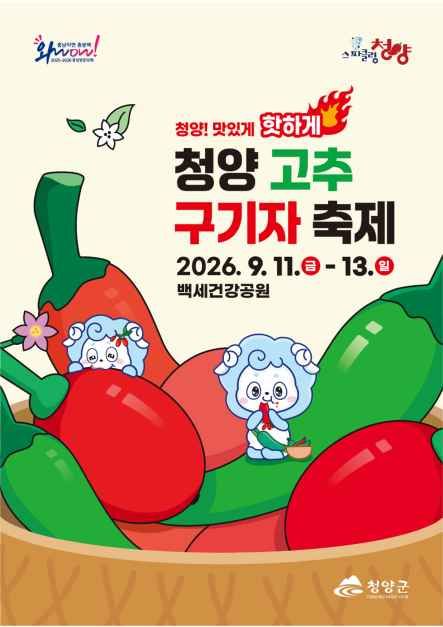
2026 Cheongyang Chili Pepper and Goji Berry Festival: Complete Guide to Korea’s Spiciest Autumn Celebration (Dates, Activities & Free Admission)

2026 Cheongyang Chili Pepper and Goji Berry Festival: Complete Guide to Korea's Spiciest Autumn Celebration (Dates, Activities & Free Admission)

<output>

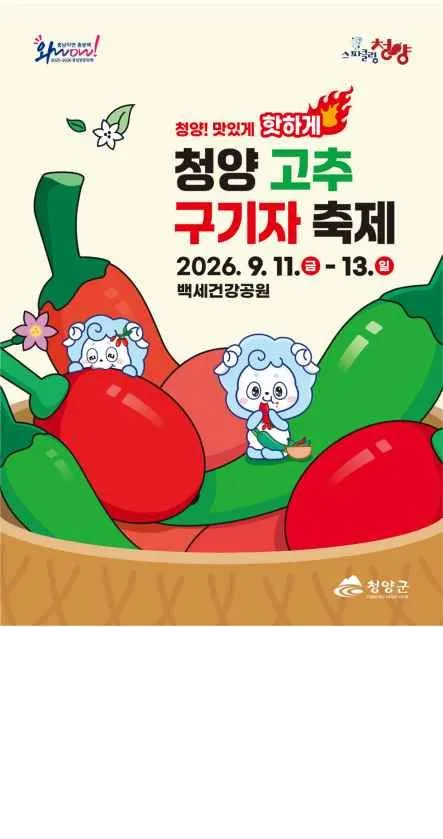
Cheongyang Chili Pepper and Goji Berry Festival

🗓️ 2026.09.11 ~ 2026.09.13

As autumn arrives in South Korea’s Chungcheongnam-do province, the Cheongyang Chili Pepper and Goji Berry Festival transforms this agricultural heartland into a celebration of two ingredients that define the region’s identity. What distinguishes this festival from countless other harvest celebrations across the country is its unwavering focus on participatory experiences—the organizers have designed nearly every element to engage visitors directly rather than keep them at arm’s length as spectators.

Cheongyang-gun has built its agricultural reputation on these two crops: the slender, vividly red cheongyang chili pepper (청양고추), among the spiciest varieties cultivated in Korea, and the antioxidant-rich goji berry (구기자), which thrives in the area’s continental climate with its sharp temperature swings between day and night. The festival leverages these specialties through what organizers describe as “five-sense satisfying” programs—experiences that engage sight, sound, smell, touch, and taste in equal measure.

What to Experience

The festival unfolds across five interconnected zones, each with a distinct focus:

Food Zone
The culinary offerings extend well beyond typical festival fare. A dedicated food court pavilion houses multiple vendors, while the specialized food experience village zone grants more intimate access to preparation techniques. The spicy liquor (酒) and spicy pride provincial college zone represents a particular curiosity—this appears to be a competitive or exhibition space where regional universities present their interpretations of how these ingredients intersect with alcohol. Food trucks provide additional flexibility for visitors with limited time.

Culture Zone
The World Chili Pepper and Goji Berry Welcome Center anchors this area, presumably offering historical and agricultural context for these crops. The Jicheon Stream photo zone and night landscape installations suggest the festival maintains its atmosphere after dark—a practical consideration given that September evenings remain pleasantly temperate.

Experience Zone
This zone concentrates the festival’s hands-on programming. The chili pepper and goji berry photo booth offers a predictable souvenir opportunity, but more substantively, children can engage with a wood experience booth and participate in making Cheongyang-i character snacks. Rice cake making, face painting, and “magic sponge” activities broaden the appeal for families with younger children.

Market Zone
Direct sales channels connect visitors with regional producers. Chili pepper and goji berry sales booths offer the raw ingredients, local agricultural specialty sales booths expand the selection to other regional products, and Cheongyang bread sales suggest that local bakeries have developed signature items incorporating these flavors.

Event Zone
The scheduled performances and competitions form the festival’s public face. Chef Yeo Kyung-rae’s cooking show provides professional culinary demonstration, while the national high school cooking survival competition—a format familiar from Korean television—offers amateur competitors a substantial platform. The Catch! Teenieping sing-along show addresses the preschool and early elementary demographic through a currently popular animated character. The King of Spicy Pride competition presumably tests participants’ tolerance for the chili pepper’s heat. More communally oriented activities include making giant geotjeori (fresh, unfermented kimchi) and assembling goji berry rice cake mosaics—both yielding tangible, shareable results.

Evening entertainment features invited singers including Song Ga-in (a prominent trot vocalist), Park Ji-hyun, Park Hyun-bin, and Solji (former member of the girl group EXID). The “Spread the Excitement of Cheongyang” and resident autonomy performances suggest additional programming drawn from local community groups.

For Families

The 2026 edition has specifically expanded its offerings for families with children. Beyond the aforementioned Catch! Teenieping performances and photo zones, the kids zone incorporates a wooden culture experience area and appearances by Cheongyang’s official mascots: Cheongyang-i, Cheong-chorong, and Cheong-hong-i. This represents a calculated effort to transform what might otherwise be a niche agricultural festival into multi-generational destination.

Practical Information

📍 Address: 16-6 Euncheondong-gil, Cheongyang-eup, Cheongyang-gun, Chungcheongnam-do

🛏️ Accommodations near the event

💰 Fee: Free

📞 Inquiry: 041-940-4852

🖥️ Homepage: https://칠갑마루.com/_festa

Cheongyang Chili Pepper and Goji Berry Festival

What are Cheongyang chili peppers?

Cheongyang chili peppers (청양고추) are a Korean chili variety developed in the 1980s and named after Cheongyang County in South Chungcheong Province. The peppers are slender, finger-sized, with pointed tips and skin that ranges from deep green to bright red depending on ripeness.

These peppers occupy a specific position on the heat spectrum. At 12,000 to 23,000 Scoville Heat Units, they exceed the mild heat of standard Korean green peppers without approaching the intensity of habaneros or ghost peppers. This range makes them useful for cooks who want noticeable spice without masking other flavors. The heat arrives quickly and lingers, followed by a mild sweetness that becomes more pronounced when the peppers are cooked or dried.

Several environmental factors in Cheongyang County contribute to the pepper’s character. The region’s mountainous elevation, significant temperature variation between day and night, and volcanic-derived soils with good drainage all promote higher capsaicin concentration. These conditions are not unique to Cheongyang, but local agricultural research and selective breeding have refined the variety over four decades.

Cheongyang now dominates domestic production of Korean hot peppers, accounting for roughly 70% of the national supply with annual shipments exceeding 200 billion won. This concentration has created a substantial processing economy. The fresh peppers appear in markets from late summer through autumn, but the harvest extends through year-round products: dried flakes (gochugaru), fermented pastes, oils, flavored snacks, and even capsaicin extracts for topical applications. The county hosts an annual pepper festival that draws visitors primarily from surrounding regions, where the crop serves as both agricultural product and local identifier.

In Korean cooking, “Cheongyang” functions as a shorthand for substantial heat. Restaurant menus often specify Cheongyang peppers to signal that a dish will be noticeably spicy rather than mildly seasoned. Home cooks use them fresh in stews and stir-fries, or dried and ground as a finishing spice. The commercial success of the variety has prompted some consideration of geographical indication protections, though the name has already entered general usage for similarly hot peppers grown elsewhere.

9th Jeonju Reading Festival 2026: Free 3-Day UNESCO Literary Event with Family Programs, Book Markets & Eco-Friendly Initiatives (Sept 11-13)

9th Jeonju Reading Festival 2026: Free 3-Day UNESCO Literary Event with Family Programs, Book Markets & Eco-Friendly Initiatives (Sept 11-13)

Jeonju Reading Festival

🗓️ 2026.09.11 ~ 2026.09.13

The 9th Jeonju Reading Festival returns as a representative cultural event of Jeonju City, a UNESCO City of Literature since 2019. Held under the dual banners of “Jeonju, a City that Reads Books and Writes Texts” and the spirited tagline “Run, Book,” this edition distinguishes itself through deliberate generational inclusivity and an operational commitment to sustainability that responds to the realities of climate change.

The festival unfolds across three days—Friday, September 11 through Sunday, September 13, 2026—concentrated around the Jeonju Hanbyeok Cultural Center and Wanpanbon Cultural Center in the Gyodong district. Rather than positioning itself as a niche literary gathering, the organizers have architected distinct programming tracks that accommodate children discovering books for the first time, multi-generational families, and serious readers seeking intellectual depth. The eco-friendly festival model manifests in practical choices about materials, energy use, and waste reduction—an acknowledgment that cultural events carry environmental footprints worth minimizing.

Main Programs

Hanbyeok Cultural Center Performance Hall

  • Opening ceremony, invited lectures, and fusion gugak (traditional Korean music) performances anchor the formal program

Exhibition Hall

  • “Family Reading Golden Bell,” a quiz competition format where participating families compete on literary knowledge

Outdoor Performance Stage

  • Children’s performances, Taekwondo demonstrations, and Madang Changgeuk—a traditional outdoor theatrical form combining music, narration, and drama

Hyanggyo Cultural Center Seminar Room

  • Lectures by local authors, moderated reading discussions, seminars, and hands-on reading-related workshops for attendees seeking concentrated engagement

Jeonju-cheon Dong-ro Area

  • A curated book market assembling independent bookstores and publishers alongside interactive experience booths

Outdoor Courtyard

  • Citizen participation exhibitions and festival-specific special exhibitions

What Sets This Edition Apart

Where previous iterations emphasized scale and spectacle, the 9th festival consolidates around participatory depth and environmental responsibility. The “Family Reading Golden Bell” competition exemplifies this shift—transforming passive attendance into active involvement—while the climate-conscious operational model, rare among Korean regional book festivals, may influence how similar events organize in coming years.

The location itself carries significance. Jeonju’s Gyodong district, adjacent to the Jeonju-cheon stream, provides a walkable concentration of venues that connects the traditional (the Hyanggyo, or Confucian academy) with contemporary cultural infrastructure.


📍 Address: 20 Jeonju-cheon Dong-ro, Wansan-gu, Jeonju-si, Jeonbuk Special Self-Governing Province (Gyodong)

🛏️ Accommodations near the event

💰 Fee: Free

📞 Inquiry: 063-230-1858

⭐️ Instagram: https://www.instagram.com/jjbook_kr

🖥️ Homepage: https://www.jjbook.kr/?mode=homepage

Jeonju Reading Festival

What is Jeonju famous for?

Jeonju has built its reputation on three distinct but connected foundations: a signature dish, an intact traditional district, and a concentration of literary institutions that together earned the city two UNESCO designations.

The city’s most widely recognized contribution is Jeonju bibimbap. While simplified versions appear internationally, the original preparation remains specific to this region. The dish incorporates local bean sprout broth, seasoned fernbrake, and sesame oil produced in the surrounding area, with traditional preparations using thirty or more distinct components. This specificity helps explain why the city, rather than the dish alone, became a UNESCO Creative City of Gastronomy in 2012.

Jeonju also contains the country’s most substantial collection of intact hanok buildings. The Jeonju Hanok Village includes roughly eight hundred of these structures, maintained as residences, guesthouses, and workshops. Visitors often rent hanbok to walk the cobblestone lanes, though the area functions as a residential neighborhood rather than a reconstructed heritage site.

The city’s third distinction arrived in 2019, when UNESCO City of Literature status recognized Jeonju’s infrastructure of small publishers, writer residencies, and annual literary events. The combination of both UNESCO designations—unusual for any single municipality—reflects how seriously the city takes cultivation of its food and written cultures. This matters practically: a visitor can attend a poetry reading in a hanok café, then eat a meal whose preparation follows documented local methods, within a few minutes’ walk. The reading festival operates within this existing context, not in spite of it.

2026 Jangsu Hanwoo and Apple Festival: Experience Korea’s Premier Red Food Celebration and Local Delicacies

2026 Jangsu Hanwoo and Apple Festival: Experience Korea's Premier Red Food Celebration and Local Delicacies

Jangsu Hanwoo and Apple Festival

🗓️ 2026.09.10 ~ 2026.09.13

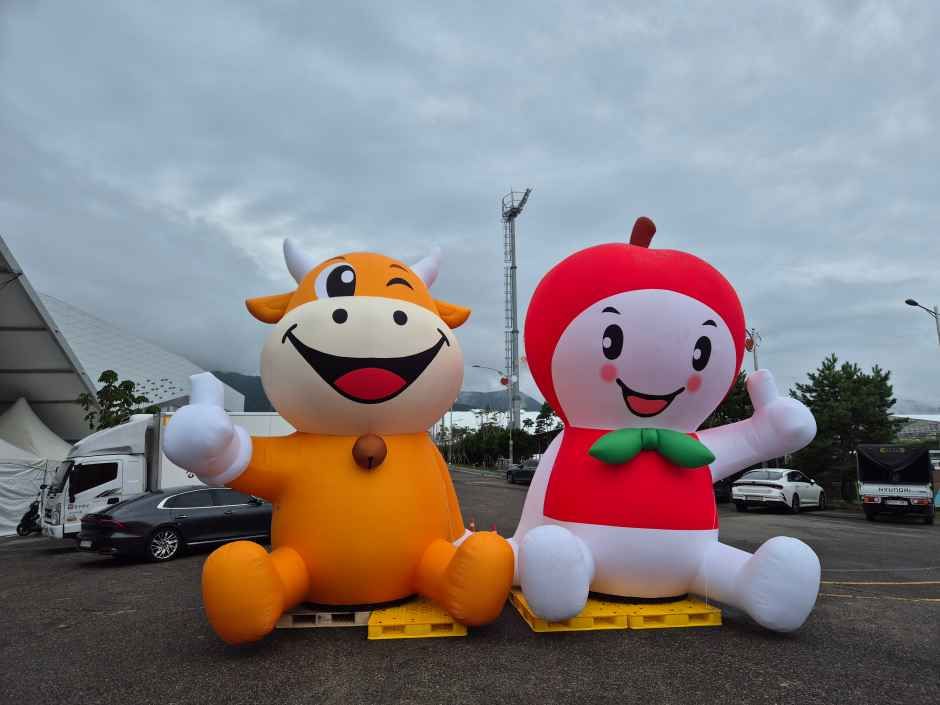
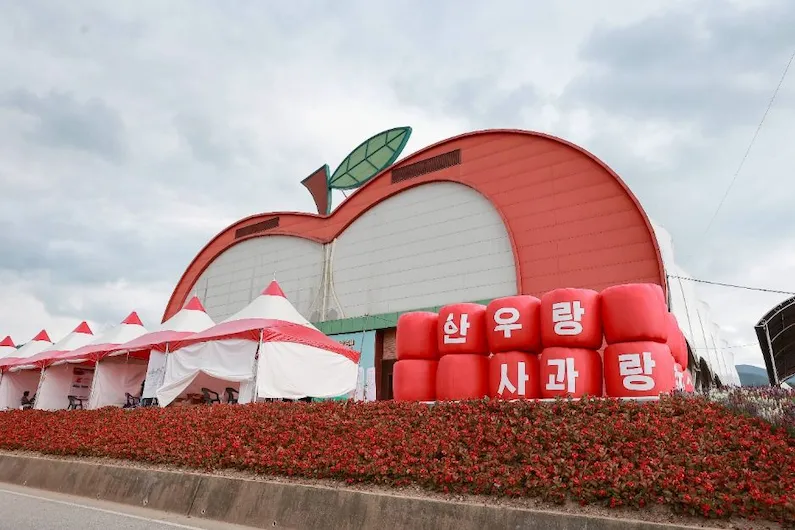
Jangsu-gun is the country’s leading production area for Hanwoo (Korean beef) and apples, and this festival is built around both. First held in 2007, the Jangsu Hanwoo and Apple Festival is Korea’s first red-color festival and reaches its 20th edition in 2026. In 2024, the festival expanded its scope beyond individual agricultural specialties to include Jangsu Red Food, a category covering Hanwoo, apples, omija, and tomatoes. That expansion also brought in processed products such as apple beer, apple soju, apple bread, and omija liquor. What began as Korea’s first red-color festival has since grown into Korea’s first red-food festival, and it is now positioned as a major cultural tourism festival in the country.

Main programs

  • Jangsu Hanwoo Yard and Apple Yard: the nation’s largest-scale display of the region’s two signature products, along with a Red Food Zone
  • Jangsu Red Food cooking with Hong Seok-cheon
  • Making Jangsu temple food

Side programs

  • National Hanwoo carcass carrying experience
  • Jangsu Cultural Center Gitjeol-nori
  • Jangsu Cultural Center Shining Orchestra

Consumer participation programs

Visitors can join hands-on activities throughout the festival, including making apple keyrings, making apple keycaps, apple golf, apple fishing, and apple and omija rice cake pounding.

Other content

  • 1,700kg Hanwoo seed bull experience

Visitor information

📍 Address: 378 Hannuri-ro, Jangsu-eup, Jangsu-gun, Jeonbuk Special Self-Governing Province

🛏️ Accommodation near the event

💰 Fee: Free

📞 Inquiry: 063-350-2356

🖥️ Homepage: Jangsu Hanwoo and Apple Festival

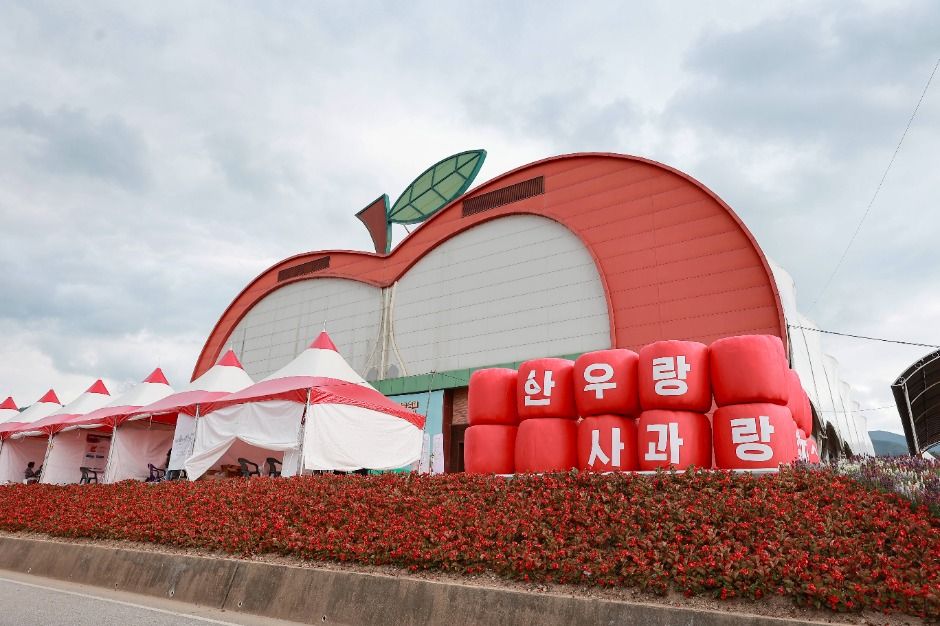
장수한우랑사과랑축제

What is Hanwoo?

Hanwoo is the native cattle breed of Korea, raised on the peninsula for more than two thousand years. It is used for beef and is known for heavy intramuscular fat, which appears as fine white marbling. The fat has a relatively low melting point, so it softens quickly during cooking and contributes to a tender texture. The flavor is mild, slightly sweet, and not overpowering, with a short finish rather than a lingering aftertaste.

Production is regulated in stages, from calf rearing through feeding and aging. Hanwoo cattle are typically raised longer than commodity beef cattle and are fed a diet that often includes locally grown grain and forage. Carcasses are graded on marbling, color, and maturity, with the top grades reserved for beef with the most even fat distribution. This system is one reason Hanwoo is more expensive than imported beef.

Jangsu County, in North Jeolla Province, is a major Hanwoo-producing area. Its inland location gives it cool nights and a wide temperature range, which farmers say helps cattle develop fat slowly. The county also has granite-based soil and clean water, both relevant to the feed and pasture used for the herds. Jangsu farmers maintain a regional certification system and market their beef under the Jangsu Hanwoo brand. The cattle are generally processed after two to three years, longer than typical beef production, and the resulting meat is sold through local co-ops, direct orders, and restaurants.

The annual Hanwoo and Apple Festival in Jangsu combines the region’s two main agricultural products. It offers tastings, cooking demonstrations, and direct sales from farms. For anyone interested in Korean beef, the festival is a convenient place to compare several producers in one setting. Hanwoo is also available in Korean barbecue restaurants in major cities, where it is usually grilled over charcoal and served with salt, ssamjang, or a light soy-based sauce.

Jangsu Hanwoo and Apple Festival 2026: Dates, Programs, and How to Experience Korea’s First Red Food Festival

Jangsu Hanwoo and Apple Festival 2026: Dates, Programs, and How to Experience Korea's First Red Food Festival

Jangsu Hanwoo and Apple Festival

🗓️ 2026.09.10 ~ 2026.09.13

*The following festival details are from the previous year’s (2025) festival; details for the 2026 festival are currently being updated.*

With Hanwoo (Korean beef) and apples as its central themes, this is Korea’s first “Red Color Festival”—a distinction it has held since its inception in 2007. The festival reached its 19th edition in 2025, making it one of the more established regional celebrations in Jeonbuk Province. What began as a straightforward agricultural showcase has undergone a notable transformation; starting in 2024, the festival moved beyond its two original pillars to encompass what organizers now term “Jangsu Red Food,” incorporating omija (Schisandra berry) and tomato alongside Hanwoo and apples.

This expansion into a broader culinary category has accompanied a push into value-added products. Visitors now encounter not merely raw ingredients but a range of processed goods: apple beer, apple soju, apple bread, and omija liquor among them. The festival’s evolution from Korea’s first Red Color Festival to what it bills as Korea’s first Red Food Festival reflects a deliberate effort to reposition itself within the competitive landscape of Korean cultural tourism events.

Programs and Activities

The festival divides its offerings into four categories, allowing visitors to calibrate their participation according to interest and energy level.

1. Main Programs

The core experience centers on three large-scale installations: the Jangsu Hanwoo Yard, which organizers describe as the nation’s largest; the Apple Yard; and the Red Food Zone. Beyond these exhibition and market spaces, the festival has incorporated interactive culinary programming, including a Jangsu Red Food cooking experience featuring chefs from Culinary Class Wars (the Netflix series known for its Black and White Chefs format). Additional main-stage activities include a Jangsu Red Food temple food making experience and a parent-child cooking program focused on tomato spaghetti preparation.

2. Side Programs

For those drawn to spectacle and physical competition, the festival offers the National Hanwoo carcass carrying experience—a test of strength involving the literal transport of beef carcasses—and the National Jangsu Hanwoo power arm-wrestling competition.

3. Consumer Participation Programs

Hands-on activities with lower barriers to entry include Jangsu apple bracelet making, Jangsu apple keyring crafting, apple golf, apple fishing, and apple rice cake pounding (a twist on the traditional tteok preparation ritual).

4. Other Content

Younger visitors or those seeking gentler interactions can access pony riding and horse feeding experiences.


📍 Address: 378 Hannuri-ro, Jangsu-eup, Jangsu-gun, Jeonbuk Special Self-Governing Province

🛏️ Accommodations near the event

💰 Fee: Free

📞 Inquiry: 063-350-2356

🖥️ Website: https://www.jangsufestival.com/index.php

Jangsu Hanwoo and Apple Festival

What is Hanwoo?

Hanwoo is Korea’s native cattle breed, Bos taurus coreanae. For centuries, these animals were bred on the Korean Peninsula primarily as draft animals for rice farming, with written records of their husbandry appearing as early as the second century BCE. Their transition to beef production occurred gradually through the twentieth century as mechanization reduced demand for agricultural labor and rising incomes created new markets for premium domestic meat. By the 1990s, Hanwoo had been repositioned as a luxury product, differentiated from imported beef through branding and quality controls that emphasized its Korean origin.

The breed’s physical characteristics reflect both its history and its current purpose. Hanwoo cattle are generally smaller and slower-maturing than European beef breeds, with a genetic disposition toward intramuscular fat deposition that differs from the more subcutaneous fat typical of Angus or Hereford. Their meat shows fine, web-like marbling rather than the larger fat seams common in heavily grain-finished American beef. The fat itself has a lower melting point and a higher proportion of oleic acid, which produces the clean, slightly sweet flavor that distinguishes Hanwoo from the richer, more complex taste of Japanese Wagyu. The muscle color tends toward bright cherry red, a visual marker that Korean consumers associate with freshness and quality.

Production standards are intensive and tightly controlled. The national grading system, administered by the Korean Ministry of Agriculture, assigns numerical scores for marbling distribution, meat color, fat color, and texture, with 1++ reserved for carcasses meeting the most stringent criteria across all categories. Most cattle enter feedlots at twelve to sixteen months and remain on grain-based finishing rations for an additional six to twelve months—substantially longer than the typical four-to-six-month finishing period for American beef. This extended feeding, combined with the breed’s slower growth rate, means Hanwoo cattle often reach market weight at twenty-four to thirty months of age. The result is higher feed costs and lower throughput, which producers recoup through premium pricing in a domestic market that has historically limited imported beef through tariffs and quotas.

Regional variations within Hanwoo production have developed their own reputations. Hoengseong in Gangwon Province, located in the mountainous interior where the 2018 Winter Olympics were held, established the benchmark for premium Hanwoo during the 1990s and early 2000s through coordinated marketing and consistent grading. More recently, Jangsu County in North Jeolla Province has built comparable recognition by emphasizing longer finishing periods—often pushing cattle past thirty months—and by documenting lineage through bloodline registries that appeal to consumers seeking assurance of genetic purity. The region’s producers cite local water quality and temperature differentials between day and night as factors contributing to cattle health and feed conversion, though the extent to which these variables meaningfully affect meat quality remains subject to the interpretive preferences of graders and consumers rather than controlled analysis.

The economics of Hanwoo production continue to evolve. Domestic consumption peaked in the mid-2000s as beef prices rose and pork, which Korea produces more efficiently, captured market share. Export efforts have been limited by production volume constraints and by the breed’s adaptation to a specific palate—Korean consumers generally prefer leaner, less marbled meat than Japanese or American markets. Recent research programs have attempted to reduce finishing times through selective breeding without sacrificing marbling scores, with mixed results. Meanwhile, the status associations of Hanwoo consumption persist: the meat remains a fixture of gift-giving, celebratory meals, and business entertainment, occasions where its price reinforces rather than constrains its appeal.

Analytics