Jeonju Reading Festival
🗓️ 2026.09.11 ~ 2026.09.13
The 9th Jeonju Reading Festival returns as a representative cultural event of Jeonju City, a UNESCO City of Literature since 2019. Held under the dual banners of “Jeonju, a City that Reads Books and Writes Texts” and the spirited tagline “Run, Book,” this edition distinguishes itself through deliberate generational inclusivity and an operational commitment to sustainability that responds to the realities of climate change.
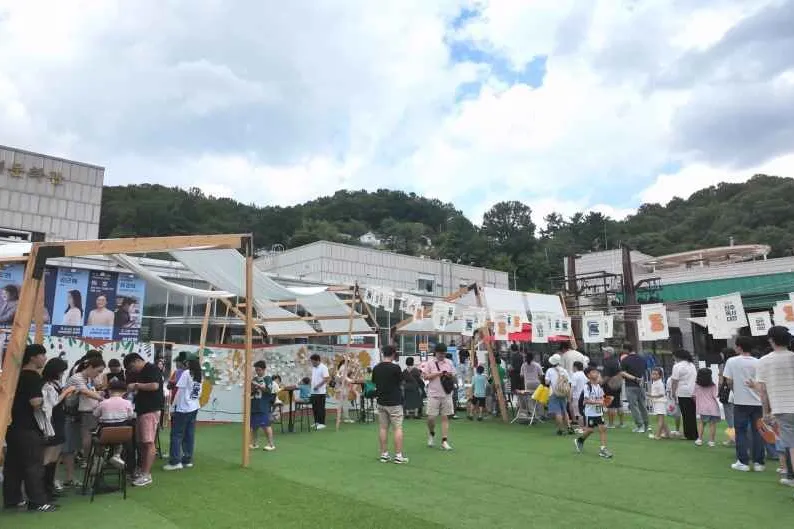
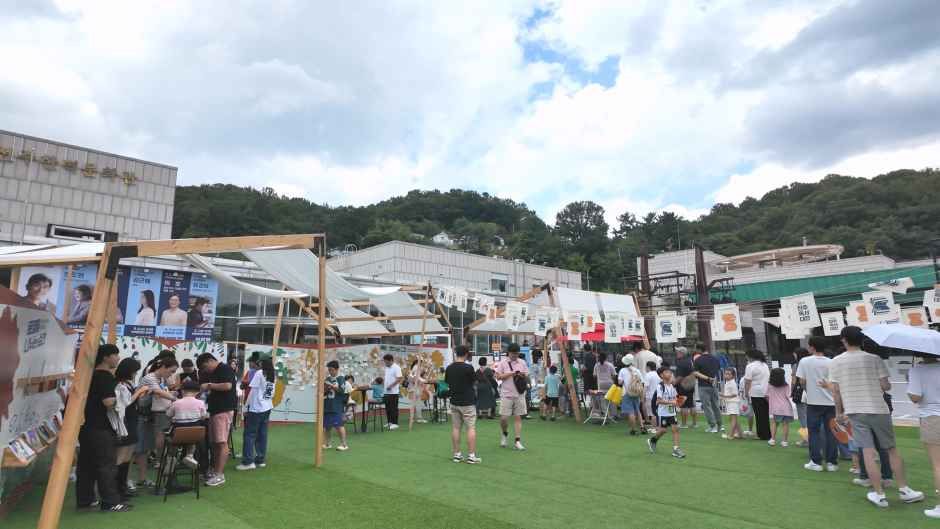
The festival unfolds across three days—Friday, September 11 through Sunday, September 13, 2026—concentrated around the Jeonju Hanbyeok Cultural Center and Wanpanbon Cultural Center in the Gyodong district. Rather than positioning itself as a niche literary gathering, the organizers have architected distinct programming tracks that accommodate children discovering books for the first time, multi-generational families, and serious readers seeking intellectual depth. The eco-friendly festival model manifests in practical choices about materials, energy use, and waste reduction—an acknowledgment that cultural events carry environmental footprints worth minimizing.
Main Programs
Hanbyeok Cultural Center Performance Hall
- Opening ceremony, invited lectures, and fusion gugak (traditional Korean music) performances anchor the formal program
Exhibition Hall
- “Family Reading Golden Bell,” a quiz competition format where participating families compete on literary knowledge
Outdoor Performance Stage
- Children’s performances, Taekwondo demonstrations, and Madang Changgeuk—a traditional outdoor theatrical form combining music, narration, and drama
Hyanggyo Cultural Center Seminar Room
- Lectures by local authors, moderated reading discussions, seminars, and hands-on reading-related workshops for attendees seeking concentrated engagement
Jeonju-cheon Dong-ro Area
- A curated book market assembling independent bookstores and publishers alongside interactive experience booths
Outdoor Courtyard
- Citizen participation exhibitions and festival-specific special exhibitions
What Sets This Edition Apart
Where previous iterations emphasized scale and spectacle, the 9th festival consolidates around participatory depth and environmental responsibility. The “Family Reading Golden Bell” competition exemplifies this shift—transforming passive attendance into active involvement—while the climate-conscious operational model, rare among Korean regional book festivals, may influence how similar events organize in coming years.
The location itself carries significance. Jeonju’s Gyodong district, adjacent to the Jeonju-cheon stream, provides a walkable concentration of venues that connects the traditional (the Hyanggyo, or Confucian academy) with contemporary cultural infrastructure.
📍 Address: 20 Jeonju-cheon Dong-ro, Wansan-gu, Jeonju-si, Jeonbuk Special Self-Governing Province (Gyodong)
🛏️ Accommodations near the event
💰 Fee: Free
📞 Inquiry: 063-230-1858
⭐️ Instagram: https://www.instagram.com/jjbook_kr
🖥️ Homepage: https://www.jjbook.kr/?mode=homepage
What is Jeonju famous for?
Jeonju has built its reputation on three distinct but connected foundations: a signature dish, an intact traditional district, and a concentration of literary institutions that together earned the city two UNESCO designations.
The city’s most widely recognized contribution is Jeonju bibimbap. While simplified versions appear internationally, the original preparation remains specific to this region. The dish incorporates local bean sprout broth, seasoned fernbrake, and sesame oil produced in the surrounding area, with traditional preparations using thirty or more distinct components. This specificity helps explain why the city, rather than the dish alone, became a UNESCO Creative City of Gastronomy in 2012.
Jeonju also contains the country’s most substantial collection of intact hanok buildings. The Jeonju Hanok Village includes roughly eight hundred of these structures, maintained as residences, guesthouses, and workshops. Visitors often rent hanbok to walk the cobblestone lanes, though the area functions as a residential neighborhood rather than a reconstructed heritage site.
The city’s third distinction arrived in 2019, when UNESCO City of Literature status recognized Jeonju’s infrastructure of small publishers, writer residencies, and annual literary events. The combination of both UNESCO designations—unusual for any single municipality—reflects how seriously the city takes cultivation of its food and written cultures. This matters practically: a visitor can attend a poetry reading in a hanok café, then eat a meal whose preparation follows documented local methods, within a few minutes’ walk. The reading festival operates within this existing context, not in spite of it.
