Conrad Tokyo Peachful Afternoon Tea 2026: Indulge in a Luxurious Summer Peach Experience at Twenty Eight

Conrad Tokyo Peachful Afternoon Tea 2026: Indulge in a Luxurious Summer Peach Experience at Twenty Eight

Peachful Afternoon Tea [Conrad Tokyo]

A moisturizing peach afternoon tea experience presented in the height of summer.

As the season enters the peak of summer, “Twenty Eight”—the sophisticated bar and lounge located within the Conrad Tokyo—introduces the “Peachful Afternoon Tea.” This curated experience invites guests to indulge in the juicy textures and gentle sweetness of peaches, presented through a palette of pale colors and delicate accents reminiscent of lace. The result is a moment of moisture and healing designed to provide a respite from the summer heat.

The “Peachful Afternoon Tea” begins with a refreshing welcome drink that blends fresh peach with oolong tea. The menu is a comprehensive exploration of the fruit, featuring five types of sweets and three types of savories, all centering on the peach. The selection is intentionally diverse; guests will encounter the fruit in various forms, from desserts that luxuriously utilize the fruit pulp to savory creations that pair peaches with meat and aromatic vegetables to enhance the natural appeal of the ingredients.

Scones, which have remained a staple of popularity since the hotel’s opening due to their unchanged recipe, are served in two varieties: plain and pineapple. These are accompanied by traditional clotted cream and orange jam. For those seeking a more elevated experience, the Deluxe Afternoon Tea provides a celebratory glass of champagne, a plate of fresh domestic peaches, and a specialized savory dish featuring the marriage of peach, foie gras, and chicken—items that are not included in the seven-item Standard Afternoon Tea.

For guests preferring an evening atmosphere, the “Peachful Night Tea” is available starting at 18:30. This version offers four types of savories and four types of sweets, paired with free-flow beverages including sparkling wine. Given that peaches have been revered since ancient times as lucky fruits, this event offers a refined opportunity to enjoy their charm during a peaceful tea time.

Menu Details

Sweets (5 types total / 4 types total for Deluxe Afternoon Tea)

  • Peach Jelly
  • Peach and Coconut Mousse
  • Peach Oolong Tea and Peach Panna Cotta Verrine
  • Chocolate and Grapefruit Tart with Peach Cream (Provided in Standard Afternoon Tea)
  • Peach and Strawberry Mousse

Savories (3 types total / 4 types total for Deluxe Afternoon Tea)

  • Scallop and Peach Tart with Myoga Accent
  • Peach Gazpacho-style with Prosciutto and Fresh Cheese
  • Peach and Pastrami Beef Sandwich
  • Foie Gras and Chicken Terrine with Peach Bonbon (Provided in Deluxe Afternoon Tea)

Scones

  • Plain Scone and Pineapple Scone, served with clotted cream and orange jam

Additional Offerings

  • Peach Plate (Provided in Deluxe Afternoon Tea)

Beverages

  • Fresh Peach Oolong Tea (Welcome drink)
  • Unlimited selection of approximately 20 drinks, including coffee and Ronnefeldt tea.

“Peachful Night Tea” Overview

For those visiting in the evening, the Night Tea offers a distinct experience with a focused selection of treats and a more liberal beverage program.

  • Period: Saturday, August 1, 2026 – Wednesday, September 30, 2026
  • Time: 18:30 – 21:30 (Last entry at 19:30) — Subject to a 2-hour limit
  • Location: 28th Floor Bar & Lounge “Twenty Eight”
  • Price:
    • With Sparkling Wine Free-flow: 11,000 yen per person
    • With Champagne Free-flow: 15,000 yen per person
    • Both plans include a Conrad Bear.
  • Contents:
    • Sweets (4 types): Peach Jelly, Peach and Coconut Mousse, Peach Oolong Tea and Peach Panna Cotta Verrine, and Peach and Strawberry Mousse.
    • Savories (4 types): Scallop and Peach Tart with Myoga Accent, Peach Gazpacho-style with Prosciutto and Fresh Cheese, Peach and Pastrami Beef Sandwich, and Foie Gras and Chicken Terrine with Peach Bonbon.
    • Free-flow Drinks: Beer, sparkling wine, red/white wine, various coffees/teas, and soft drinks.

Please refer to the official website for further detailed contents.


Basic Information

Venue/Nearest Station
Conrad Tokyo

  • Shiodome Station (1 min walk)
  • Shinbashi Station (7 min walk)

Address
〒105-7337
1-9-1 Higashi-Shinbashi, Minato-ku, Tokyo
MAP

Venue
28th Floor Bar & Lounge “Twenty Eight”

Event Period
2026/08/01 (Sat) ~ 2026/09/30 (Wed)

Time
Start 11:00 / End 16:30 (2-hour limit)

Application
Advance reservation system; please ensure reservations are made by 9:00 AM on the day of the visit.

Price/Fees

  • Standard Afternoon Tea: Served on a stylish flat glass plate with unlimited access to approximately 20 drinks.
    • Weekdays: 7,900 yen per person
    • Weekends/Holidays: 8,500 yen per person
  • Standard Afternoon Tea with Conrad Bear: 9,400 yen per person
  • Deluxe Afternoon Tea with Toasting Champagne: Served on an elegant tea stand. This plan includes a Conrad Bear, a glass of champagne for a toast, a menu exclusive to the Deluxe tier, and unlimited access to approximately 20 drinks.
    • 12,500 yen per person

Inquiry
Direct Restaurant Reservations: 03-6388-8745

Official Website
Official Website

The published content may be subject to change. For the latest information, please check the official website of the venue/organizer.

🛏️ See hotels near Tokyo

Peachful Afternoon Tea [Conrad Tokyo]_1 Peachful Afternoon Tea [Conrad Tokyo]_2 Peachful Afternoon Tea [Conrad Tokyo]_3 Peachful Afternoon Tea [Conrad Tokyo]_4 Peachful Afternoon Tea [Conrad Tokyo]_5 Peachful Afternoon Tea [Conrad Tokyo]_6 Peachful Afternoon Tea [Conrad Tokyo]_7 Peachful Afternoon Tea [Conrad Tokyo]_8 Peachful Afternoon Tea [Conrad Tokyo]_9 Peachful Afternoon Tea [Conrad Tokyo]_10 Peachful Afternoon Tea [Conrad Tokyo]_11 Peachful Afternoon Tea [Conrad Tokyo]_12 Peachful Afternoon Tea [Conrad Tokyo]_13

Twenty Eight sits on the 28th floor of the Conrad Tokyo, with windows facing Tokyo Bay, the Rainbow Bridge, and the Hamarikyu Gardens. The design avoids the cold aesthetics common to high-rise hotel bars. Here the materials serve practical purposes: banquettes in fabric that doesn’t squeak, marble tables at a comfortable height, lighting bright enough for reading but soft enough to preserve the view outside. The palette stays neutral—creams, grays, pale gold—keeping attention on the harbor rather than the walls.

Morning and afternoon belong to tea service. Staff move between tables with three-tiered stands, serving a menu that changes quarterly. Summer brings white peaches from Yamanashi; winter offers chestnut mont blanc and warabi mochi alongside scones and sandwiches. After five, the lights drop, the music shifts from classical to jazz, and the central island bar takes over. But the room is designed for daylight, when the glass walls frame the harbor traffic and weather moving across the water.

A terrace runs the perimeter, open when weather permits. Salt air mixes with bergamot from the tea and whatever fruit is in season. The service follows the Japanese preference for unobtrusive attention: pots refill silently, plates disappear without gesture. From this height, the traffic noise of the expressways below vanishes, replaced by porcelain tapping against saucers and wind moving through the garden treetops.

Tokyo Flea Market Summer Festival 2026 at Giants Town Stadium: Your Guide to Vintage Finds, Night Movies, and Summer Treats

Tokyo Flea Market Summer Festival 2026 at Giants Town Stadium: Your Guide to Vintage Finds, Night Movies, and Summer Treats

Tokyo Flea Market Summer Festival

“Tokyo Flea Market Summer Festival” to be held at Giants Town Stadium!

The Tokyo Flea Market Summer Festival arrives at Giants Town Stadium this August, marking a significant evolution for an event that has steadily built a following since its inception in 2012. Born from a desire to transplant the European tradition of flea markets—where objects with history change hands and sustainable consumption meets social gathering— into a Japanese context, the Tokyo Flea Market has grown from a niche experiment into a recurring fixture. This 27th iteration (including the special “Midsummer Tokyo Flea Market” held in 2017) breaks new ground as the first to adopt a formal “Summer Festival” concept, shifting the temporal focus to evening hours and incorporating atmospheric elements previously absent from the standard format.

While the event retains its reputation for meticulously curated exhibitors dealing in antique tools and artisanal food, the summer festival framework introduces infrastructure designed specifically for thermal comfort and seasonal ambiance. New ice cream and carbonated beverage stands address the physiological demands of August in Tokyo, while a dedicated festival stall (ennichi) area introduces interactive elements that move beyond the traditional vendor-customer dynamic. A centrally located live stage constructed in the yagura (festival tower) style provides the acoustic and visual anchor for the proceedings. The combination creates a hybrid experience: the treasure-hunting satisfaction of a European-style brocante merged with the environmental immersion of a Japanese summer festival.

Two Areas to Liven Up the Summer Festival

Ice & Carbonated Drink Stand

Temperature regulation becomes a practical necessity during Tokyo’s summer, and this dedicated zone addresses it through variety rather than mere volume. Vendors from across Japan congregate to offer specialized cooling menus that extend well beyond standard commercial offerings. The frozen category spans cup ice cream, popsicles, shaved ice, and gelato, while carbonated options include craft cola, ginger ale, sodas featuring homemade syrups, and spicy tea sodas—flavor profiles rarely encountered in conventional retail. The density of options creates a natural pause in the shopping circuit, allowing visitors to sample regional variations on cold beverages while planning their next route through the stalls.

Festival Stalls (Ennichi)

The ennichi section reinterprets the neighborhood temple festival through a flea market lens, aggregating experiential workshops, traditional games, and fortune-telling services. Notably, artisans and creators typically associated with the Tokyo Flea Market or Kami-Haku (Paper Expo) have adapted their practices specifically for this event, operating stalls that emphasize participation over passive consumption. The activities accommodate developmental ranges from childhood through middle age without resorting to patronizing simplification; the workshops challenge manual dexterity regardless of the participant’s years, while the game mechanics reward skill rather than merely distributing participation prizes.

Special Entertainment Only at Tokyo Flea Market Summer Festival

Live Stage

The architectural focal point—a yagura stage erected in the stadium’s center—determines the sightlines and acoustic reach for the venue. Unlike conventional concert setups that create separation between performer and audience, the tower configuration encourages participatory dynamics; the programming specifically incorporates call-and-response patterns and dance-along segments suited to the festival atmosphere. The repertoire remains exclusive to this two-day event, with performers announced closer to the date.

Movie Screening

As daylight transitions to evening, the stadium grass transforms into an open-air cinema. Screenings commence after sunset, utilizing the natural cooling of the evening air and the absence of urban light pollution in the Inagi location. Visitors bring blankets or use the turf directly, creating a relaxed viewing environment distinct from both commercial theaters and home streaming. The film selection—like the musical lineup—will be disclosed via the official website in advance of the event.

Basic Info

Location / Nearest Station
Tokyo Giants Town
Keio Yomiuriland Station / Inagi Station / Minami-Tama Station

Address
〒206-0812
Yanokuchi, Inagi City, Tokyo
MAP

Venue
Giants Town Stadium

Period
2026/08/01 (Sat) ~ 2026/08/02 (Sun)

Time
August 1 (Sat) 15:00–21:00
August 2 (Sun) 14:00–20:00

Fees/Cost
[Admission Fee]
Advance tickets (online sales): 1,500 yen
Same-day tickets (venue sales): 2,000 yen
*Advance tickets are scheduled to go on sale in early July via “eplus.”

Official Website
https://tokyonominoichi.com/2026_summer/

*The posted content may be subject to change. Please check the official website of the venue or organizer for the latest information.

🛏️ View hotels near Tokyo

Tokyo Flea Market Summer Festival_1 Tokyo Flea Market Summer Festival_2 Tokyo Flea Market Summer Festival_3 Tokyo Flea Market Summer Festival_4 Tokyo Flea Market Summer Festival_5 Tokyo Flea Market Summer Festival_6 Tokyo Flea Market Summer Festival_7 Tokyo Flea Market Summer Festival_8 Tokyo Flea Market Summer Festival_9 Tokyo Flea Market Summer Festival_10 Tokyo Flea Market Summer Festival_11 Tokyo Flea Market Summer Festival_12 Tokyo Flea Market Summer Festival_13 Tokyo Flea Market Summer Festival_14 Tokyo Flea Market Summer Festival_15 Tokyo Flea Market Summer Festival_16 Tokyo Flea Market Summer Festival_17 Tokyo Flea Market Summer Festival_18 Tokyo Flea Market Summer Festival_19

What is Giants Town Stadium?

Giants Town Stadium sits in Tokyo’s Bunkyo Ward, opened in 2015 as a community extension of the Yomiuri Giants baseball franchise. The 15,000-capacity outdoor venue differs from the team’s enclosed home dome: its open-air amphitheater design incorporates a retractable canopy and tiered grass terraces that descend toward a central plaza. The canopy operates on a track system that allows partial or full coverage depending on weather conditions, while the grass terraces provide informal seating during non-sporting events. This configuration accommodates seasonal festivals and cultural gatherings that require flexible outdoor space, though the venue maintains baseline sporting infrastructure including practice mounds and batting cages along the perimeter.

During the week, the stadium serves as a training facility for the Giants’ farm team and hosts local sports tournaments. On summer weekends, the space converts to a marketplace. A 360-degree colonnade walkway rings the venue, where vendors operate under permanent awnings; this design eliminates the need for temporary tent infrastructure and provides consistent weather protection. For these events, workers remove the artificial turf from the central field and install modular wooden decking, creating space for approximately 200 antique dealers and vintage collectors. The stadium stores the decking panels and vendor equipment in an underground facility beneath the south terrace, allowing the conversion to complete within a single morning.

The Summer Festival uses existing infrastructure without requiring temporary installations. The jumbotron above the north terrace screens films after sunset, positioned to avoid light pollution in the surrounding residential blocks. Eight food courts integrated into the stadium structure—typically serving standard game fare—switch to local wagashi makers and summer street food vendors during the festival. The kitchen facilities remain operational, allowing vendors to prepare hot food on-site using the existing ventilation systems rather than outdoor grilling equipment.

The “Giants Town” name refers to the broader mixed-use development surrounding the stadium, which includes residential towers, office space, and retail podiums. During major events, the district closes to vehicle traffic, creating a pedestrian zone that extends beyond the stadium boundaries. Festival activities continue in adjacent plazas with beer gardens and live music stages operating until the last train. The development connects directly to the subway network, preventing the traffic congestion typical of stadium districts that rely primarily on automobile access.

LOUANGE TOKYO Le Musée Ginza Elegance Blue 2026: Experience a Refreshing and Sophisticated Summer Afternoon Tea

LOUANGE TOKYO Le Musée Ginza Elegance Blue 2026: Experience a Refreshing and Sophisticated Summer Afternoon Tea

Elegance Blue 2026 [LOUANGE TOKYO Le Musée]

Enjoy a refreshing blue tea time in Ginza. A Summer Afternoon Tea to color your summer has arrived.

For those seeking a sophisticated escape from the summer heat, LOUANGE TOKYO Le Musée in Ginza presents a seasonal experience designed to evoke transparency and serenity. As part of a popular annual color-themed series, the “Blue” afternoon tea returns for 2026, iterating on its previous success by introducing a summer-specific world-view that balances whimsical cuteness with a refined, adult atmosphere.

This event offers guests the opportunity to immerse themselves in a fantastical blue environment, utilizing a curated lineup of seasonal fruits and light, refreshing ingredients. Alongside the signature afternoon tea, the venue is debuting a standalone assiette dessert, “Elegance Peche Blue,” which serves as a focused study in summer flavors—specifically peach, lychee, and rose.

Afternoon Tea “Elegance Blue 2026”

The center-piece of this experience is the “Elegance Blue 2026” afternoon tea, which features “Noomy”—a pure white teddy bear lounging on a swim ring—to lend a playful summer aesthetic to the presentation. The experience begins with a non-alcoholic pineapple soda, chosen specifically for its ability to provide an immediate sense of summer exhilaration.

The sweets are distributed across two tiers, prioritizing freshness and light textures. The top tier features rice flour donuts designed to resemble swim rings, macarons with a bleu orange profile, bleu citrus pâte de fruit, and heart-shaped yogurt mousse paired with a honey lemon sauce. The middle tier expands the flavor palette with an Earl Grey scented Saint Honoré, a white peach panna cotta with jasmine sauce, and jelly crafted from fresh melon sourced from Shizuoka Prefecture. Additionally, a chocolate gift box containing petit sablés and boules de neige adds a touch of traditional confectionery.

To balance the sweetness, the bottom tier is dedicated to high-end savories that emphasize both flavor and visual contrast. Highlights include homemade roast beef crafted from A5 Japanese Black beef and topped with caviar, mini burgers featuring shrimp and scallop cutlets with homemade tartar sauce, and a mille-feuille arrangement of salmon tartare and avocado. The savory selection is rounded out with a summer chopped salad, a mint-scented celery root mousse quiche tart, and a stew-style vichyssoise.

Optional Enhancement:
Guests may opt for the “Add 2 teddy bears” plan for an additional ¥2,200 (tax and service charge separate).

Elegance Peche Blue

For those preferring a plated dessert over a full tea service, the “Elegance Peche Blue” assiette is available. This sophisticated dish is built upon a base of peach and lychee mousse, masking a hidden core of raspberry and rose-scented jelly. The composition is accented by jasmine-flavored crumble for textural variety and is served with a refreshing lemon yogurt sorbet to maintain a light, summer-appropriate profile. The presentation is completed with rose motifs and a miniature chocolate gift box, reflecting the venue’s commitment to elegance.

Price: ¥4,600 (Tax and service charge separate)
*Available exclusively at the Ginza store from 2026/6/18 to 2026/9/23.


Basic Information

  • Location / Nearest Station
    LOUANGE TOKYO Le Musee
    Ginza-itchome Station
  • Address
    〒104-0061
    1F 1-9-5 Ginza, Chuo-ku, Tokyo
    MAP
  • Event Period
    Thursday, 2026/06/18 ~ Tuesday (Holiday), 2026/09/22
  • Time
    Start 11:00 / End 21:00 (Last Order 20:00)
  • Price/Fee
    Weekdays: ¥9,800 (Tax and service charge separate)
    Weekends and Holidays: ¥10,500 (Tax and service charge separate)
  • Official Website
    https://x.gd/OWdye

*Please note that posted content may be subject to change; guests are encouraged to check the official website of the venue for the latest information.

🛏️ View hotels near Tokyo

Elegance Blue 2026【LOUANGE TOKYO Le Musée】_1 Elegance Blue 2026【LOUANGE TOKYO Le Musée】_2 Elegance Blue 2026【LOUANGE TOKYO Le Musée】_3 Elegance Blue 2026【LOUANGE TOKYO Le Musée】_4 Elegance Blue 2026【LOUANGE TOKYO Le Musée】_5 Elegance Blue 2026【LOUANGE TOKYO Le Musée】_6 Elegance Blue 2026【LOUANGE TOKYO Le Musée】_7 Elegance Blue 2026【LOUANGE TOKYO Le Musée】_8 Elegance Blue 2026【LOUANGE TOKYO Le Musée】_9 Visit the trendy spots! TTR Digital Stamp Rally in progress

LOUANGE TOKYO Le Musée is a pastry shop and afternoon tea salon in Tokyo’s Ginza district that treats dessert as displayed object. Rather than plating sweets for immediate consumption, the kitchen constructs vertical compositions—layered ice creams, confitures, and génoise built in tall glasses—that hold their structure long enough to be examined before they are eaten. The space borrows from museum context: neutral walls, precise lighting angles, and table settings that frame each course as an isolated piece.

The signature Parfait Glace series demonstrates this approach most clearly. Unlike conventional parfaits designed for spoons to mix textures immediately, these are architecturally stable arrangements where components remain distinct. The desserts arrive as temporary constructions that persist only until the first bite breaks the structure.

Afternoon tea service changes seasonally, offering savory canapés paired with dessert collections that rotate based on ingredient availability. The dining room maintains the quiet and spatial order of a small private gallery—minimal clutter, controlled sightlines, distance between tables—directing attention toward the food rather than the interior design.

In Tokyo’s crowded café market, where themes often overshadow execution, LOUANGE TOKYO occupies a specific niche. It assumes that patrons will value technical precision in pastry work and the patience required to present it properly. The result is not a revolutionary reimagining of dessert but a rigorous application of gallery standards to edible craft.

THE NATIONAL GALLERY LONDON AFTERNOON TEA 2026: Monet & Van Gogh-Themed Menu in Tokyo – Dates, Prices, and How to Reserve

THE NATIONAL GALLERY LONDON AFTERNOON TEA 2026: Monet & Van Gogh-Themed Menu in Tokyo – Dates, Prices, and How to Reserve

THE NATIONAL GALLERY LONDON AFTERNOON TEA ~ Inspired by Monet & Van Gogh~

When Two Artistic Visions Converge on Your Plate

Claude Monet and Vincent van Gogh—two masters whose works rarely share the same physical space—find unexpected harmony in an afternoon tea experience that translates their paintings into edible form. Drawing from the collection of the National Gallery, London, this limited collaboration reimagines Water Lilies Pond and Sunflowers as a multi-course menu served across two distinctive Tokyo venues.

What distinguishes this event from conventional art-themed dining is its narrative foundation: both artists harbored a documented fascination with Japan. Monet constructed his Giverny garden with deliberate Japanese aesthetic influences, while Van Gogh collected Japanese prints and studied their compositional techniques. The tea service constructs a bridge between their European masterpieces and the “ideal place they hoped to visit someday”—realized here through Japanese ingredients and culinary interpretation.

The Experience: Two Artistic Sessions

The menu operates on a seasonal rotation tied to the artists’ respective palettes.

Monet Session (July 1–31, 2026): “Harmony of the Water Surface”

The July service translates Monet’s preoccupation with light on water into transparent and layered constructions. The Muscat and White Wine Jelly captures shifting luminosity through suspended clarity, while Pistachio and Raspberry Mousse and Matcha Tapas render the greenery of Giverny’s pond edge. The cumulative effect suggests standing at the water’s perimeter—an impression that accumulates across successive bites rather than arriving all at once.

Van Gogh Session (August 1–September 13, 2026): “Yellow Palette”

The August-September transition shifts to the saturated warmth of Arles. A Mango and Coconut Verrine delivers concentrated fruit intensity, while a soup course evokes the Provençal sun that Van Gogh chased during his most productive period. The menu favors bold, unmodulated color over subtle gradation—appropriate to an artist who wrote that he wanted to express “hope” through yellow.

The Full Menu

Desserts

  • Pistachio and Raspberry Mousse with Spinach Biscuit
  • Mango and Coconut Verrine
  • National Gallery Chocolate Plate
  • Grape and White Wine Jelly
  • Lime and Milk Chocolate Tart
  • Mango Passion Baked Cheesecake
  • Orange Passion Cream Puff

Savories

  • Domestic Pork Rillettes Japonisme Style
  • Salmon and Dill Pickle Tartlet with Shiso Aroma
  • Shrimp and Turnip Mousse with Peruño-flavored Jelly

Scones & Condiments

  • Scones (Milk / Tea varieties)
  • Condiments (Confiture / Clotted Cream)

Beverage Service

Standard Plan
One cup of Mariage Frères tea (the established French house founded 1854) plus unlimited access to tea selections, coffee, and soft drinks.

Tea Selection Plan
Expanded Mariage Frères selection plus unlimited access to the Standard Plan’s beverage range.

Prices below include 15% consumption tax and service charge.

Plan Weekdays Sat/Sun/Holidays
Standard ¥5,800 ¥6,300
Tea Selection ¥6,300 ¥6,800

Optional Additions

Item Price Availability
Special Drink (¥1,300)
“Monet Blue ~White Grape and Water Lily Style~” July 1–31, 2026
“Passionate Sunflower ~Mango & Roasted Coconut~” August 1–September 13, 2026
Special Dessert (¥1,800)
“Water Lilies and Water Surface Grape Parfait” July 1–31, 2026
“Sunflowers and Sunlight Mango Parfait” August 1–September 13, 2026
Lunch (¥2,000)
“Wind of Giverny: Colorful Summer Vegetable Genovese” July 1–31, 2026
“Colors of Southern France: Pork Fillet Confit” August 1–September 13, 2026

Venues & Schedule

Aoyama St. Grace Cathedral — “St.GRACE Lounge & Dining”

Location details

  • Access: 2-minute walk from Omotesando Station
  • Dates: July 1, 2, 3, 6, 8, 9, 10, 13, 15, 16, 17, 22, 23, 24, 27, 29, 30, 31 / August 3, 5, 6, 7, 10, 12, 13, 14, 17, 19, 20, 21, 24, 26, 27, 28, 31 / September 2, 3, 4, 7, 9, 10, 11, 13, 2026
  • Hours: Weekdays Part 1: 12:00–14:00, Part 2: 14:30–16:30

Shirokane Geihinkan Art Grace Club

Location details

  • Access: Near Meguro Station
  • Dates: July 4, 5, 9, 10, 17, 20 (Monday/Holiday), 23, 24, 26, 30 / August 2, 6, 7, 23, 27, 28 / September 2, 3, 4, 10, 11, 13, 2026
  • Hours: 12:00–14:00 (single seating)

Note: Shirokane operates on July 20 (holiday) with two seatings: Part 1: 12:00–14:00, Part 2: 15:00–17:00.

Practical Information

  • Overall Period: July 1 – September 13, 2026
  • Closed: Mondays and Tuesdays at both venues (except holidays), plus designated company holidays

Reservations & Inquiries

Official Website: https://www.bestbridal.co.jp/guestparty/event%5Ftheme/2026event%5Ftheme-9/

Posted content subject to change. Confirm current details through official venue channels.


🛏️ See hotels near Tokyo

THE NATIONAL GALLERY LONDON AFTERNOON TEA ~ Inspired by Monet & Van Gogh~_1 THE NATIONAL GALLERY LONDON AFTERNOON TEA ~ Inspired by Monet & Van Gogh~_2 THE NATIONAL GALLERY LONDON AFTERNOON TEA ~ Inspired by Monet & Van Gogh~_3 THE NATIONAL GALLERY LONDON AFTERNOON TEA ~ Inspired by Monet & Van Gogh~_4 THE NATIONAL GALLERY LONDON AFTERNOON TEA ~ Inspired by Monet & Van Gogh~_5 THE NATIONAL GALLERY LONDON AFTERNOON TEA ~ Inspired by Monet & Van Gogh~_6 THE NATIONAL GALLERY LONDON AFTERNOON TEA ~ Inspired by Monet & Van Gogh~_7 THE NATIONAL GALLERY LONDON AFTERNOON TEA ~ Inspired by Monet & Van Gogh~_8 THE NATIONAL GALLERY LONDON AFTERNOON TEA ~ Inspired by Monet & Van Gogh~_9 THE NATIONAL GALLERY LONDON AFTERNOON TEA ~ Inspired by Monet & Van Gogh~_10 THE NATIONAL GALLERY LONDON AFTERNOON TEA ~ Inspired by Monet & Van Gogh~_11 THE NATIONAL GALLERY LONDON AFTERNOON TEA ~ Inspired by Monet & Van Gogh~_12

What is the National Gallery London?

The National Gallery London holds a collection of over 2,300 paintings dating from the mid-13th century to 1900. It sits at the north side of Trafalgar Square, where it has occupied its current building since 1838, though the institution itself was founded in 1824.

The collection covers the major European schools, with particular depth in Italian Renaissance, Dutch Golden Age, and French Impressionist work. Leonardo, Michelangelo, Raphael, Rembrandt, Vermeer, Velázquez, Turner, and Constable are all represented here. The gallery also holds the two artists featured in this Tokyo exhibition: Van Gogh’s Sunflowers (1888) and several of Monet’s water lily paintings, including The Water-Lily Pond (1899).

The National Gallery differs from many European museums in that it was not assembled from a royal collection. It was created by Parliament specifically for public access, with free admission written into its founding principles. That policy continues today. The building, designed by William Wilkins and expanded several times since, houses the collection in a sequence of galleries that allow visitors to move chronologically through Western painting.

The gallery’s educational role has been substantial. Its early directors established conservation practices and scholarly standards that influenced museums elsewhere. Its collection has remained relatively stable compared to institutions that sell and acquire aggressively, which means the works on view have shaped several generations of public understanding about what painting can do.

Mori no Beer Garden 2026: Jingu Gaien’s New Weber BBQ Plan, All-You-Can-Drink & Magic Mugs for Chilled Summer Nights

Mori no Beer Garden 2026: Jingu Gaien's New Weber BBQ Plan, All-You-Can-Drink & Magic Mugs for Chilled Summer Nights

Mori no Beer Garden / Jingu Gaien

Enjoy BBQ at Jingu Gaien! Look forward to magic mugs that keep drinks cold and a plan debuting for the first time in 2026.

“Mori no Beer Garden” will open again this year within Jingu Gaien Nikoniko Park. In 2026, a new area will debut where you can experience BBQ with authentic Weber grills from the Weber company—an American brand renowned for its charcoal kettle grills since 1952. With the “Weber BBQ Plan with All-You-Can-Drink (6,980 yen),” you can fully enjoy US sirloin, domestic pork belly, and more. Additionally, as a standard plan, a barbecue menu featuring a welcome plate, three types of meat, and vegetables is available. With reasonable pricing for children, it is also perfect for families! A welcome point is the availability of beer servers and sour servers connected directly to refrigerators, as well as magic mugs that maintain coldness—ensuring your beverage stays chilled even during humid Tokyo evenings. Heat countermeasures have also been implemented, such as the installation of “Cool Mist Line (R)” cooling devices within the venue.

■ Heat Countermeasures
Mist showers, large fans

■ BBQ Style
Hands-free BBQ (Empty-handed BBQ)

■ Beer Handled
Kirin

■ Craft Beer Handled
4 types

■ Reservations
Web reservations available, no reservation OK (same-day seats available)

■ Number of Seats
900 seats (900 outdoor seats)
*Maximum capacity per group: 900 people
*600 seats under tents
13 tables of New Hands-free Weber BBQ seats under tarp tents

■ Rainy Weather Response
Outdoor but has a roof and can be conducted; conducted outdoors using tarps, parasols, etc.

■ Accepted Payment Methods
Credit card, QR code, electronic money, cash

Basic Information

Venue / Nearest Station Meiji Jingu Gaien<br>Shinanomachi Station (5 min walk) / Kokuritsu-Kyogijo Station (5 min walk) / Gaienmae Station (8 min walk) / Aoyama-itchome Station (10 min walk)
Location 〒160-0013<br>1-1 Kasumigaokamachi, Shinjuku-ku, Tokyo<br>MAP
Venue Mori no Beer Garden / Jingu Gaien
Event Period 2026/04/22 (Wed) ~ 2026/09/30 (Wed)
Hours Regular:<br>Start: Weekdays 16:30~, Sat/Sun/Holidays 12:00~<br>End: Weekdays, Sat/Sun/Holidays all until 22:00<br>*Last order: Food and drinks 30 minutes before closing<br><br>【Summer Time】July 18, 2026 (Sat) ~ August 31, 2026 (Mon):<br>Weekdays 14:00〜22:30 (L.O. 21:30) / Sat/Sun/Holidays 12:00〜22:30 (L.O. 21:30)
Inquiries 03-5411-3715<br>https://www.royal-holdings.co.jp/contact/<br>*Phone reception hours 11:00~20:00
Official Site https://www.morinobeergarden.com/Click here for reservations

*Listed content may be subject to change. Please check the official website of the facility or store for the latest information.

🛏️ View hotels near Tokyo

Mori no Beer Garden/Jingu Gaien_1 Mori no Beer Garden/Jingu Gaien_2 Mori no Beer Garden/Jingu Gaien_3 Mori no Beer Garden/Jingu Gaien_4 Mori no Beer Garden/Jingu Gaien_5

What is Jingu Gaien?

Jingu Gaien is a 330,000-square-meter park in central Tokyo, running from Shinanomachi through Aoyama to Gaienmae. Established in 1926 as an outer garden to Meiji Shrine, it functions as one of the city’s substantial green spaces, positioned among areas better known for commerce than for trees.

The park’s most recognizable feature is Icho Namiki, an avenue of ginkgo trees that turn yellow in autumn. The area also includes the Meiji Memorial Picture Gallery, sports facilities such as Meiji Jingu Stadium, and lawns used for recreation and occasional events.

Jingu Gaien sits at a particular intersection: it is more open to the surrounding city than Meiji Shrine proper, yet still buffered enough to function as parkland. The terrain varies slightly, the tree canopy is mature, and the built environment retains elements from its early decades. These characteristics allow it to accommodate seasonal programming without requiring extensive temporary infrastructure.

The park’s value to residents is largely a matter of logistics. It offers unprogrammed space—room for unscheduled picnics, walks, or gatherings—within reach of Shinjuku, Shibuya, and Roppongi. This proximity has made it a practical venue for evening events during warmer months, where the transition from daytime park use to nighttime activity happens without much friction. The ginkgo avenue, lit after dark, becomes a corridor between the daytime and evening functions of the space.

What distinguishes Jingu Gaien is not its transcendence of urban conditions but its negotiation with them. It remains visibly part of Tokyo rather than apart from it, which limits its capacity for retreat but expands its utility. For a city where truly undeveloped land is scarce, this compromise—accessibility traded against seclusion—represents a recognizable kind of value.

2026 G2A at KINTEX: Tickets, Lineup, and Complete Event Guide for October 9

2026 G2A at KINTEX: Tickets, Lineup, and Complete Event Guide for October 9

〈2026 G2A〉 at KINTEX

Poster

Event Overview

〈2026 G2A〉 is a single-day Christian worship gathering taking place at KINTEX in Goyang, combining live performances from multiple worship collectives with a communal atmosphere open to attendees of all ages. The event centers on contemporary worship music, with seven distinct teams scheduled to perform across the afternoon.

Event Information

  • 🗓️ Date: 2026-10-09 (Friday)
  • 📍 Venue: KINTEX Exhibition Center 1, Halls 2 & 3
  • 🛏️ Accommodation near the concert
  • 💡 Lightstick
  • Address: Exhibition Center 1, Halls 2 & 3, 217-60 Kintex-ro, Ilsanseo-gu, Goyang-si, Gyeonggi-do (Daehwa-dong)
  • Age Limit: All ages admitted

Schedule

Date Time
October 9th (Fri) 12:00 PM

Lineup

The 2026 edition features seven worship teams, each bringing distinct approaches to contemporary Christian music:

  • J-US
  • THIS 19 OUR GOD
  • THIS IS OUR
  • ISAIAH6TYONE
  • TEAM LUKE WORSHIP
  • YWAM WORSHIP KOREA
  • FEASTFAMILY

Ticket Information

Ticket Type Price
General Seat (Early Bird) 50,000 KRW

Early Bird Sales Period

Thursday, May 28, 2026, 18:00 (KST) ~ Tuesday, June 30, 23:59 (KST)

Reservation Guidelines

  • Ticket limit: 9 tickets per person
  • Group discount: 10% reduction available for group reservations (application required via separate link)

Wheelchair Seat Reservations

Wheelchair seating is available exclusively through telephone reservation via the NOL Ticket Customer Center (1544-1555), beginning June 1st at 9:00 AM (KST). Customer Center hours are 9:00 AM to 6:00 PM.

On the event day, reservees must present both a disabled registration card (or welfare card) and matching physical ID to receive entry bands for themselves and one accompanying person. Failure to produce these documents will result in denial of entry. Wheelchair seat tickets must be collected on-site by the purchaser personally; proxy pickup and ticket transfers are prohibited.

Mobile Entry

This gathering operates on a mobile-only ticket system. Physical tickets are not issued, and neither delivery nor on-site pickup services are provided.

Official Channels

Event image 1
Event image 2
Event image 3

A bit about 예수전도단 화요모임 YWAM WORSHIP KOREA

Emerging from the heart of a global missions movement, YWAM WORSHIP KOREA (예수전도단 화요모임) is not just a musical act, but the creative expression of a community. Formally known as the Tuesday Gathering of Youth With A Mission Korea, this collective has been a foundational pillar in the landscape of modern Korean worship music since the 1990s. Their sound, deeply characterized by passionate intercession and a prophetic spirit, played a crucial role in shaping the “Korean-style” worship that swept through Asia and the global missions field. With an extensive discography that includes influential live-recorded albums like Lord of All Nations, they are revered for their raw, prayer-saturated anthems that often transcend musical performance, functioning instead as an engine for spiritual revival and a soundtrack for a generation devoted to the Great Commission.

이 포스팅은 쿠팡 파트너스 활동의 일환으로, 이에 따른 일정액의 수수료를 제공받습니다.

Asakusa Ekimise Yatai Village 2026: Tokyo’s Rooftop Festival BBQ Beer Garden with Skytree Views

Asakusa Ekimise Yatai Village 2026: Tokyo's Rooftop Festival BBQ Beer Garden with Skytree Views

Festival BBQ Beer Garden Asakusa Ekimise Yatai Village

Directly connected to Asakusa Station on the Tobu Skytree Line, an experiential “Festival x BBQ” space is born on a rooftop in the center of the city!

The concept of this facility is “Enjoy the atmosphere of a festival & BBQ in an outdoor space in the city center!” “Festival memories,” such as the sky dyed by the sunset, drifting savory aromas, and lively laughter heard from all around, have been reproduced in the modern urban space.

While gazing at the Tokyo Skytree® from the open rooftop, you can enjoy an experiential beer garden that can only be tasted here, where the fun of authentic BBQ and festival stalls intersect. Why not visit and experience a festival-like space that can be enjoyed in the heart of the city?

A rooftop festival space that is “nostalgic yet new”

Spread across the rooftop is a festival scene that somehow tickles the heart. Freshly grilled meat sizzles, and the scent of takoyaki and karaage wafts through the air.

Fries, yakisoba, ice sherbet—stalls with gourmet food that you can’t help but reach for line up, and time flows in a way that makes you realize you’ve returned to your childhood.

Furthermore, we have prepared festival contents that adults also get absorbed in, such as shooting galleries, ring toss, and smart ball.

The moments spent eating, playing, and laughing will eventually turn into special memories.

An extraordinary experience where you can “go without bringing anything”

At this facility, there is no need to prepare ingredients or equipment. The appeal is the casualness of being able to visit empty-handed and enjoy a BBQ right away.

With carefully selected ingredients and a wide variety of all-you-can-drink beverages, you can spend a relaxing time with friends, family, and loved ones.

In addition to the outstanding access being directly connected to Asakusa Station on the Tobu Skytree Line, it is an all-weather rooftop space equipped with tents, so you can enjoy the “festival mood” comfortably without worrying about the weather, even on days with strong sunlight or sudden rain.

(*In the event of strong winds or stormy weather, operations may be cancelled for safety reasons.)

Course Overview

All courses include all-you-can-eat stall menus and are limited to 2 hours.

Course Alcohol & Soft Drinks Soft Drinks Only Notes
Standard BBQ and All-You-Can-Eat Stall Course 6,270 yen (tax included) 5,720 yen (tax included) BBQ is not all-you-can-eat
Deluxe BBQ and All-You-Can-Eat Stall Course 7,920 yen (tax included) 7,370 yen (tax included) BBQ is not all-you-can-eat
Casual All-You-Can-Eat Stall Course 5,500 yen (tax included) 4,950 yen (tax included) Stall food only
Kids Course (All-You-Can-Eat Stall Menu) 2,200 yen (tax included) Soft drinks only

*Please check the official website for detailed contents.


Basic Information

Location EKIMISE Asakusa Station
Address 〒111-0033 1-4-1 Hanakawado, Taito-ku, Tokyo MAP
Venue Asakusa Ekimise Rooftop
Period 2026/05/27 (Wed) ~ 2026/10/18 (Sun)
Hours Weekdays: 12:00–22:00 (Last entry 20:00)<br>Weekends/Holidays: 11:00–22:00 (Last entry 20:00)
Official Website https://bbq.urban-earth.jp/asakusa/

*The listed content may have changed. Please check the official website of the venue or organizer for the latest information.

🛏️ View hotels near Tokyo

What is Ekimise?

The Japanese term ekimise combines eki (station) and mise (shop), describing a department store or commercial facility built directly into or above a major train station. This architectural form emerged from practical necessity: in dense Japanese cities, valuable real estate around transit hubs made horizontal expansion difficult, while vertical construction allowed stations to serve multiple functions without consuming additional street-level space.

Tokko’s examples illustrate the concept’s range. Matsuya Ginza, adjacent to Ginza Station, represents the traditional department store model with its 1920s facade and luxury retail. Shinjuku and Shibuya stations demonstrate the sprawling, multi-building complexes where several ekimise structures cluster around major interchanges, creating self-contained commercial districts. The Asakusa Ekimise, opened in 2012 above Tobu Asakusa Station, occupies a middle position—modern construction replacing older facilities, with ten floors combining transit functions, retail, restaurants, and a rooftop terrace engineered for significant public use.

The format addresses specific constraints in historic neighborhoods like Asakusa, where narrow streets and protected building stock limit new development. By concentrating commercial activity vertically, ekimise preserves street-level character while meeting contemporary needs. The Asakusa building’s rooftop exemplifies this efficiency: infrastructure designed for capacity crowds supports programming—such as the seasonal Yatai Village—that extends the building’s utility well beyond standard retail hours, drawing evening visitors to a space that would otherwise sit dormant.

This integration of transit and commerce is not unique to Japan, but the ekimise’s scale and institutionalization distinguish it. Where Western stations often treat retail as ancillary, Japanese operators and department store chains developed formal partnerships to maximize both foot traffic and revenue. The result shapes daily behavior: travelers pass through commercial space as a matter of course, and locals treat the station building as a destination in itself rather than merely a point of departure.

Odor Exhibition at Space Travelium TeNQ 2026: Complete Guide to Tokyo Dome City’s Space-Themed Smell Experience

Odor Exhibition at Space Travelium TeNQ 2026: Complete Guide to Tokyo Dome City's Space-Themed Smell Experience

Odor Exhibition in Space Travelium TeNQ

The "Odor Exhibition in Space Travelium TeNQ" is set to arrive at the special exhibition area of Space Travelium TeNQ, a dedicated space experience facility located on the 6th floor of the Yellow Building in Tokyo Dome City. This event marks the first appearance of the traveling "Odor Exhibition" at this specific venue—an event that has already generated significant conversation across the country by challenging visitors to experience a spectrum of scents ranging from the exquisitely beautiful to the profoundly repulsive.

While the touring exhibition is known for its eclectic olfactory variety, this iteration is unique due to its integration with the space-themed environment. To bridge the gap between Earth and the cosmos, the organizers have developed two original scents imagining the smells of "Aliens" and "Planets," allowing guests to engage with the concept of deep space through a sensory medium rarely utilized in scientific exhibits. Beyond these cosmic additions, visitors can explore a curated selection of scents, including the infamous "extreme stench" corner featuring Surströmming, widely regarded as the world’s smelliest food. To complement the experience, the venue plans to offer original Space Travelium TeNQ merchandise and a themed cafe menu throughout the event period.

Main Exhibition Contents

The exhibition is organized into three distinct areas, each designed to evoke different emotional and physical responses through scent.

Area 1: Standard scents of the "Odor Exhibition"
This section presents a diverse world of aromas, beginning with a chronological progression of flower scents spanning twelve months. The curation extends to the biological world with the smells of various insects and animals, and even delves into the historical realm with "scents related to great figures," such as Sakamoto Ryoma and Oda Nobunaga. Furthermore, a specialized corner reproduces the "life of an insignificant man," offering an exhibit where the odor serves as a primary tool to convey the atmosphere of a specific living space.

Area 2: 4 types of extreme stenches
For those seeking a more intense experience, this area features four of the most potent odors known to man, each housed within dedicated boxes to contain the scent. These include:

  • Surströmming: The Swedish canned fish cited as the smelliest food globally.
  • Stinky Tofu: A fragrance so pungent it has historically caused foul-odor commotions that resulted in the halting of trains.
  • Foot odor: A familiar, yet extreme, example of human scent.
  • Kusaya: A specialty product of the Izu Islands renowned for its unique and powerful aroma.

Area 3: Scents related to space
This area blends the permanent offerings of Space Travelium TeNQ with exclusive event additions. Visitors can experience the "Scent of the Moon’s Surface" and the "Scent of Space(R)" (a registered trademark of Promo Tool Co., Ltd.), alongside the two aforementioned exclusive scents imagining "Aliens" and "Planets."

Related Exhibition: Daily Necessities of Space Life

Adjacent to the main olfactory displays is an exhibition focused on the practicalities of maintaining hygiene and comfort in the void of space. This section features product exhibitions—rather than interactive trials—provided by Lion Corporation, IRiS Tokyo Co., Ltd., and Sansei Pharmaceutical Co., Ltd.

Notable exhibits include:

  • Lion Corporation "relaXspace A": A skin-application stick designed to mitigate concerning odors or provide a pleasant fragrance. The specific scents proposed for astronauts were developed using an AI diagnosis algorithm that analyzed over 900 combinations to determine preferred fragrances.
  • IRiS Tokyo Co., Ltd. / Sansei Pharmaceutical Co., Ltd. "Eye mask incorporating scented capsules": An eye mask engineered for the unique environment of space. This technology was launched to the International Space Station (ISS) on August 24, 2025, for use by astronauts.

Interactive Corner

To engage visitors of all ages, the venue will host an interactive quiz. Participants are tasked with identifying a "mysterious odor" placed at the venue by searching for the matching scent among the various displays within the special exhibition area. This activity encourages guests to rely on their own olfactory perception while touring the exhibits.

For further details regarding the specific content of the quiz and exhibitions, visitors are encouraged to check the official website.

Basic Information

Location / Nearest Station
Space Travelium TeNQ

  • Suidobashi Station (3 min walk)
  • Korakuen Station (7 min walk)

Address
〒112-0004
6F Yellow Building, 1-3-61 Koraku, Bunkyo-ku, Tokyo
MAP

Venue
Special Exhibition Area within Space Travelium TeNQ

Period
2026/04/22 (Wed) ~ 2026/07/14 (Tue)

Fee / Cost
Included in the facility admission fee

Inquiry
Tokyo Dome City Waku-Waku Dial
03-5800-9999 (Reception hours: 10:00~17:00)

Official Website
https://www.tokyo-dome.co.jp/tenq/event/exhibition-stt-6.html

Note: Posted content may be subject to change. Please verify the latest information via the official website of the venue or organizer.

🛏️ See hotels near Tokyo

Space Travelium TeNQ opened in July 2014 on the upper floors of Tokyo Dome City’s Yellow Building. It is operated under the concept of “Museum × Entertainment,” which here means pairing educational content with interactive media and theatrical presentation rather than conventional glass-case display. The name TeNQ derives from the Japanese word for sky, ten, combined with “Question” and “Queue”—suggesting both the upward gaze and the sequence of inquiry that astronomy tends to generate.

The building is organized around Theater 23-5. The auditorium contains an 11-meter domed screen and 145 reclined seats, with programming that cycles through high-resolution satellite imagery, rover telemetry, and full-dome visualizations of stellar fields. Because the screen occupies the ceiling and the seats face upward, the theater is designed to remove the framing devices of ordinary cinema; the image simply occupies the viewer’s peripheral vision.

Beyond the theater, the museum maintains several exhibition zones. The Science Area, developed with JAXA, presents flight hardware, material samples, and structural components from actual satellite missions. The Imagination Area, in contrast, invites artists and designers to respond to space exploration through installation work, sound, and non-literal cartography. Across roughly 1,800 square meters on two floors, the institution has historically relied on visual and auditory means to convey its material.

The 2026 Odor Exhibition introduces scent as a further channel of information. Working with chemists, the museum developed olfactory profiles tied to specific environments: the sharp metallic and ozone residue of a spacecraft airlock, the sulfur compounds detected in Venusian atmospheric data, and the cold hydrocarbon haze associated with Titan. Each station presents the scent alongside its chemical context, treating smell as another measurable property of places most visitors will never enter directly.

Utagawa Kuniyoshi Exhibition in Osaka (2024-2025): Explore 400+ Ukiyo-e Masterpieces at The Nakanoshima Museum of Art

Utagawa Kuniyoshi Exhibition in Osaka (2024-2025): Explore 400+ Ukiyo-e Masterpieces at The Nakanoshima Museum of Art

Unleash Your Inner Edo: Utagawa Kuniyoshi’s Eccentric Art Comes Alive in Osaka!

(December 21, 2024 – February 24, 2025 at The Nakanoshima Museum of Art, Osaka)

Exhibition Poster

Prepare to be captivated by the vibrant world of Utagawa Kuniyoshi! After 13 years, Osaka welcomes back this iconic ukiyo-e artist with a comprehensive solo exhibition showcasing approximately 400 works. This isn’t just another exhibition; it’s a deep dive into Kuniyoshi’s genius, featuring not only his renowned woodblock prints of warriors, caricatures, and a wide array of subjects, but also rare and precious hand-painted pieces.

From Samurai Swagger to Whiskered Wonders: Explore Kuniyoshi’s Diverse World

Epic Heroes and Dramatic Battles:

Sotoma no Kourairi

Kuniyoshi, a master of the late Edo period, revolutionized the ukiyo-e genre. In his early 30s, his depictions of "Water Margin" heroes catapulted warrior pictures to the forefront of popular art, rivaling the then-dominant themes of beautiful women and actors. Experience his dynamic compositions, often spanning large, three-panel screens, capturing the most thrilling moments of these legendary tales. From his early breakthrough, the "Tsuzoku Suikoden Goketsu Hyakuhachinin no Hitori (One Person)" series, to his later masterpiece, the six-panel "Battle of Shijo Nawate" (displayed during the first exhibition period only), this exhibition gathers some of Kuniyoshi’s most iconic warrior prints.

The Purrfect Companion: Kuniyoshi’s Feline Fascination:

Fashionable Cat Transformations

A devoted cat lover, Kuniyoshi often incorporated his furry companions into his art. These weren’t just passive figures; Kuniyoshi’s cats took on human roles, mimicking popular actors or even becoming patrons of brothels, adding a touch of whimsy to his caricatures, actor portraits, and even pictures of beautiful women. Don’t miss the newly discovered work, "Ryuko Neko no Henka" (displayed throughout the entire exhibition period), a testament to Kuniyoshi’s unique observation and affection for his feline muses.

Delve Deeper: Special Events

Expand your understanding of Kuniyoshi’s artistry with these free lectures:

  • January 11, 2025 (Saturday): "The Individuality and Charm of Kuniyoshi" with Hidetake Asano (Director of Abeno Harukas Art Museum and Yamato Bunkakan).
  • January 26, 2025 (Sunday): "The Whimsical Ideas of Hokusai, Hiroshige, and Kuniyoshi" with Toshinobu Yasumura (Director of Seikado Bunko Art Museum).

Both lectures start at 2:00 PM (doors open at 1:30 PM) in the Osaka Nakanoshima Museum of Art’s 1st Floor Hall. Seating is limited to 150 people on a first-come, first-served basis (no prior application needed). Don’t forget your exhibition ticket (used stubs are acceptable).


Plan Your Visit

  • Exhibition Dates: December 21, 2024 – February 24, 2025
  • Closed: Mondays (except January 13 and February 24), December 31, January 1, and January 14. Note: Exhibits will be rotated during the exhibition period.
  • Hours: 10:00 AM – 5:00 PM (last entry 4:30 PM)
  • Location: Osaka Nakanoshima Museum of Art, 4th Floor Exhibition Room (4-3-1 Nakanoshima, Kita-ku, Osaka City)
  • Admission:
    • General: ¥1,800 (¥1,600 in advance)
    • University/High School Students: ¥1,500 (¥1,300 in advance)
    • Elementary/Junior High School Students: ¥500 (¥300 in advance)
    • Advance tickets and group rates (20+ people) are available until 11:59 PM on December 20.
  • Contact: 06-4301-7285 (Osaka City General Call Center, 24/7, 8:00 AM – 9:00 PM)
  • Website: https://kuniyoshi2024.jp

🛏️ Find hotels near the museum

Who was Utagawa Kuniyoshi?

Utagawa Kuniyoshi was a renowned Japanese ukiyo-e artist, active during the late Edo period. Born in 1797 in Edo (modern-day Tokyo), he is celebrated for his dynamic and imaginative woodblock prints that encompass a wide range of themes, including historical tales, kabuki actors, landscapes, and mythical creatures. Kuniyoshi was a master of storytelling through art, and his work often showcased vivid color, intricate detail, and a unique ability to capture movement and emotion. He was part of the Utagawa school, one of the most influential schools of ukiyo-e, and is considered one of its most versatile and innovative members. Kuniyoshi’s legacy continues to influence artists worldwide, and his prints are treasured both for their technical skill and their insight into Japan’s cultural history during a transformative era.

Busan International Performing Arts Festival (BIPAF) 2024: Experience Global Street Art in Korea

Busan International Performing Arts Festival (BIPAF) 2024: Experience Global Street Art in Korea

Busan International Performing Arts Festival: A Global Celebration of Street Art

Dates: September 28th – 29th, 2024

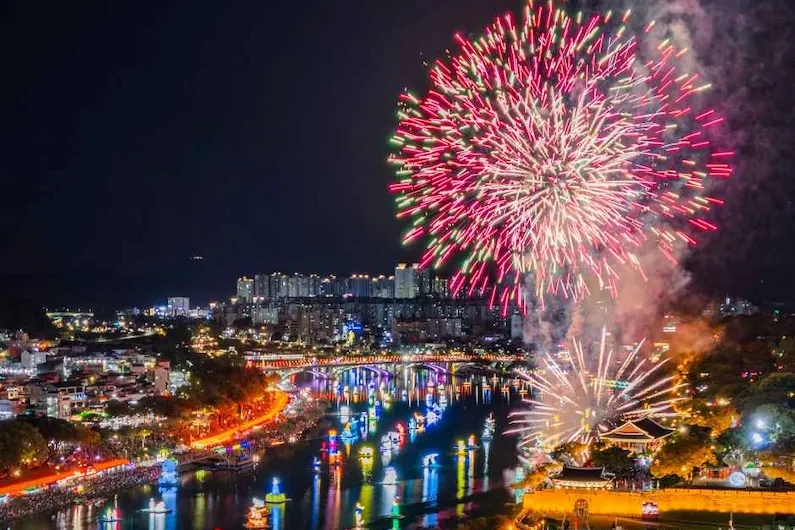
The Busan International Performing Arts Festival (BIPAF) returns this September, transforming the scenic Oncheoncheon Stream in Geumjeong-gu, Busan, into a vibrant hub of international street art. Under the theme "Together, Moving Forward," the 2024 festival explores the power of art to connect people from diverse backgrounds and propel us towards a shared future. BIPAF emphasizes not only unity but also progress, recognizing that while the world may sometimes feel divided, art transcends boundaries, reminding us of our interconnectedness.

This year’s festival promises a captivating program featuring 17 exceptional street art performances from nine countries across Europe, South America, and Asia. Audiences can enjoy a diverse range of genres, including circus acts, dynamic performances, and captivating musical theatre, all set against the beautiful backdrop of Oncheoncheon Stream and Busan National University Street.

Program Highlights

The festival is divided into core performances and enriching additional programs:

1. Performance Program:

  • International Exchange Program: Showcasing nine diverse and innovative works from across the globe.
  • Domestic Officially Invited Performances: Featuring two exceptional performances from leading Korean artists.
  • Domestic Participating Performances: Six captivating performances selected from a competitive pool of national talent.

2. Additional Programs:

  • Dancing Generation (Opening Performance): A vibrant and energetic opening act that sets the tone for the festival.
  • Geumjeong Art Market: Discover unique handcrafted goods and artistic creations from local vendors.
  • A&T (Art&Tech) Exhibition Program: Explore the exciting intersection of art and technology through interactive exhibits.

Festival Details

Busan International Performing Arts Festival

Analytics