2026 Dalseong Water Splash Youth Festival in Daegu: Enjoy Free K-Pop Concerts and Local Youth Markets

2026 Dalseong Water Splash Youth Festival in Daegu: Enjoy Free K-Pop Concerts and Local Youth Markets

The Dalseong Water Splash Youth Festival returns on July 18, 2026, for its second iteration following a successful 2025 debut that established it as the first government-initiated water festival in the Daegu metropolitan area. While municipal festivals often prioritize broad demographic appeal, this event targets youth participation specifically—not merely as attendees but as economic stakeholders and cultural producers.

What distinguishes this festival from conventional summer music events is its structural integration of commerce and performance. Rather than outsourcing vendor operations to established chains, the festival reserves its Youth Market and food truck allocations exclusively for local young entrepreneurs and small business owners. These vendors sell handmade props, accessories, clothing, and aromatherapy products alongside coffee and snacks—categories selected to highlight craft-based and culinary startups rather than standardized festival fare.

The performance programming balances commercial appeal with regional representation. Headliners Chungha, Haon, Zion.T, Nucksal, and DJ Subin—spanning genres from K-pop and R&B to hip-hop and electronic music—perform alongside local youth teams. This dual-tier approach provides professional production values while maintaining visibility for emerging regional talent, a combination rarely available in free municipal events.

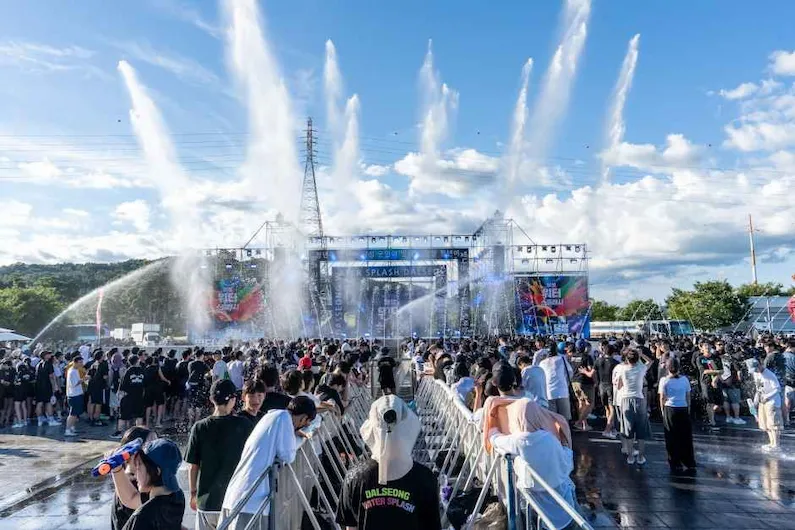
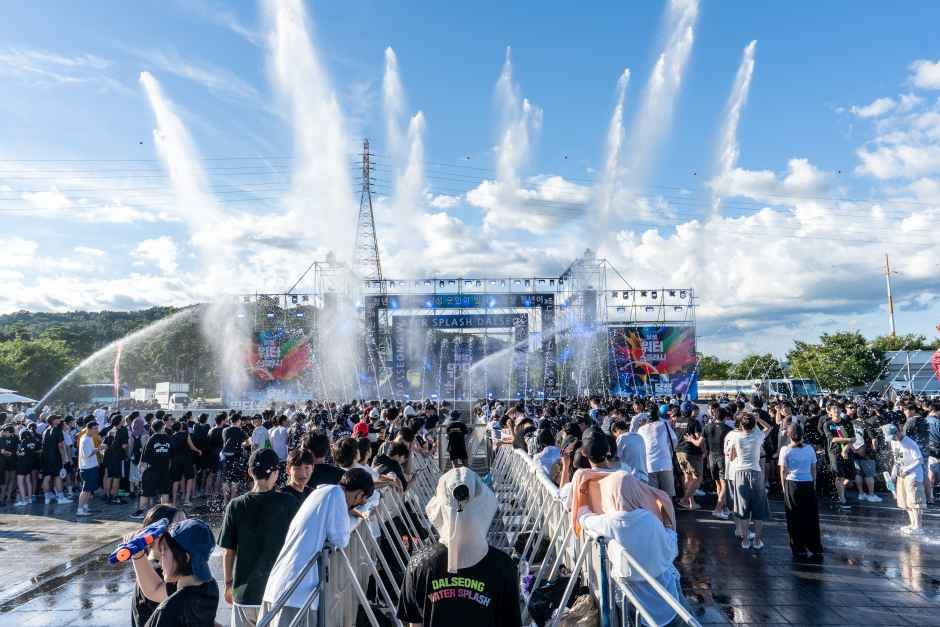
Practical design choices differentiate the experience from typical open-air concerts. The signature Water Splash Time operates simultaneously with DJ sets and live performances, allowing attendees to cool off within the main festival grounds rather than retreating to distant water stations. This integration addresses the physical reality of July heat in Daegu—where temperatures regularly exceed 30°C—without disrupting engagement with the stage.

Side programs extend beyond passive consumption. Youth Experience Programs include face painting and temporary tattoo stations (specific activities subject to final confirmation), alongside informational booths for the Dalseong Youth Innovation Center. These elements provide interactive alternatives during set changes or for attendees seeking respite from the central crowd.

The festival’s operational model reflects a specific municipal strategy: establishing Dalseong-gun as a youth-cultural destination while providing infrastructure for the area’s entrepreneurial ecosystem. For attendees, this translates to free admission—a rarity for events featuring nationally recognized musical acts—supported by government funding rather than commercial ticket sales.

🗓️ 2026.07.18 ~ 2026.07.18

📍 Address: 57 Gangjeongbon-gil, Dasa-eup, Dalseong-gun, Daegu

🛏️ Accommodation near the event

💰 Fee: Free

📞 Inquiry: 053-668-4267

⭐️ Instagram: https://www.instagram.com/dalseong_culture/

🖥️ Website: https://www.dsart.or.kr/
Youth Festival Dalseong Water Splash

What is Dalseong?

Dalseong, formally Dalseong-gun, occupies the southern periphery of Daegu Metropolitan City. It stretches across the flat alluvial plain of the Nakdong River, a landscape defined by rice paddies, vegetable fields, and the wide, slow-moving waterway that forms its western boundary. While central Daegu compresses itself into vertical towers and narrow streets, Dalseong spreads horizontally. The district contains the city’s largest continuous tracts of undeveloped land, making it an inevitable choice when the city needs to accommodate crowds, stages, or temporary infrastructure that would overwhelm the urban core.

For centuries, this area supplied produce to Daegu’s markets. The soil here grows watermelons, peppers, and tomatoes in rotation with rice, and the agricultural patterns remain visible even as the city has expanded around them.

This practical geography has determined its modern function. When Daegu hosts summer music festivals, youth markets, or water-based recreation events, they usually happen here. The flat terrain allows for the installation of temporary stages and vendor stalls without extensive preparation, while the riverbank provides natural access for swimming, boating, or beach events that would be impossible downtown. Dalseong does not function as a tourist destination in the traditional sense; it serves as the city’s overflow space, the place where large gatherings can occur without disrupting the normal rhythm of urban life. It offers room—the simple, physical luxury of distance and sky that the crowded center cannot provide.
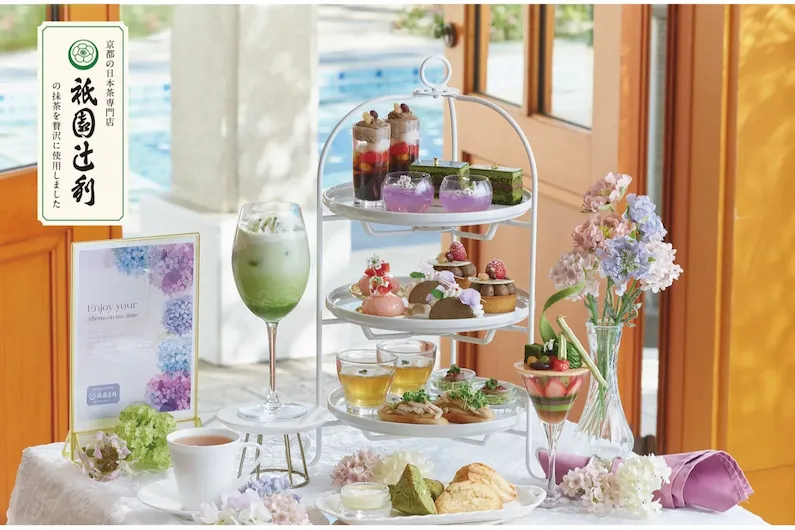
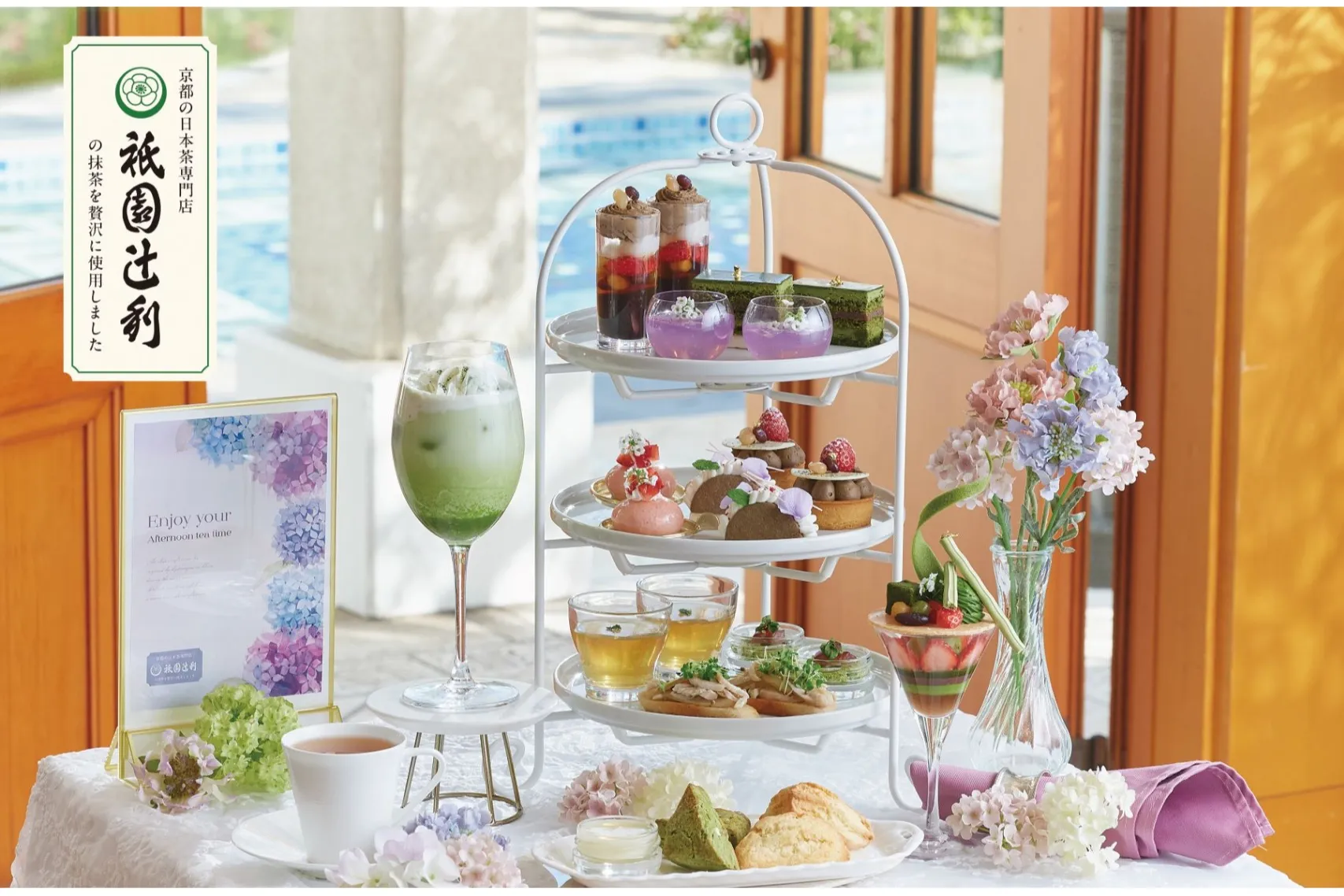
Gion Tsujiri Matcha and Hydrangea Afternoon Tea 2026: Menu, Locations, and Reservations for Tokyo, Yokohama, and Saitama

Gion Tsujiri Matcha and Hydrangea Afternoon Tea 2026: Menu, Locations, and Reservations for Tokyo, Yokohama, and Saitama

Matcha and Hydrangea Afternoon Tea with Gion Tsujiri

A refreshing early summer moment enjoying Gion Tsujiri’s matcha in the season when hydrangeas bloom beautifully, glistening with raindrops.

Each spring, the afternoon tea series at select venues draws consistent attention for its rotating seasonal themes and meticulous execution by an exclusive pastry chef. This year’s early summer installment centers on Gion Tsujiri’s matcha—renowned for its depth of aroma and umami—set against the visual motif of hydrangeas in peak bloom, their petals heavy with raindrops.

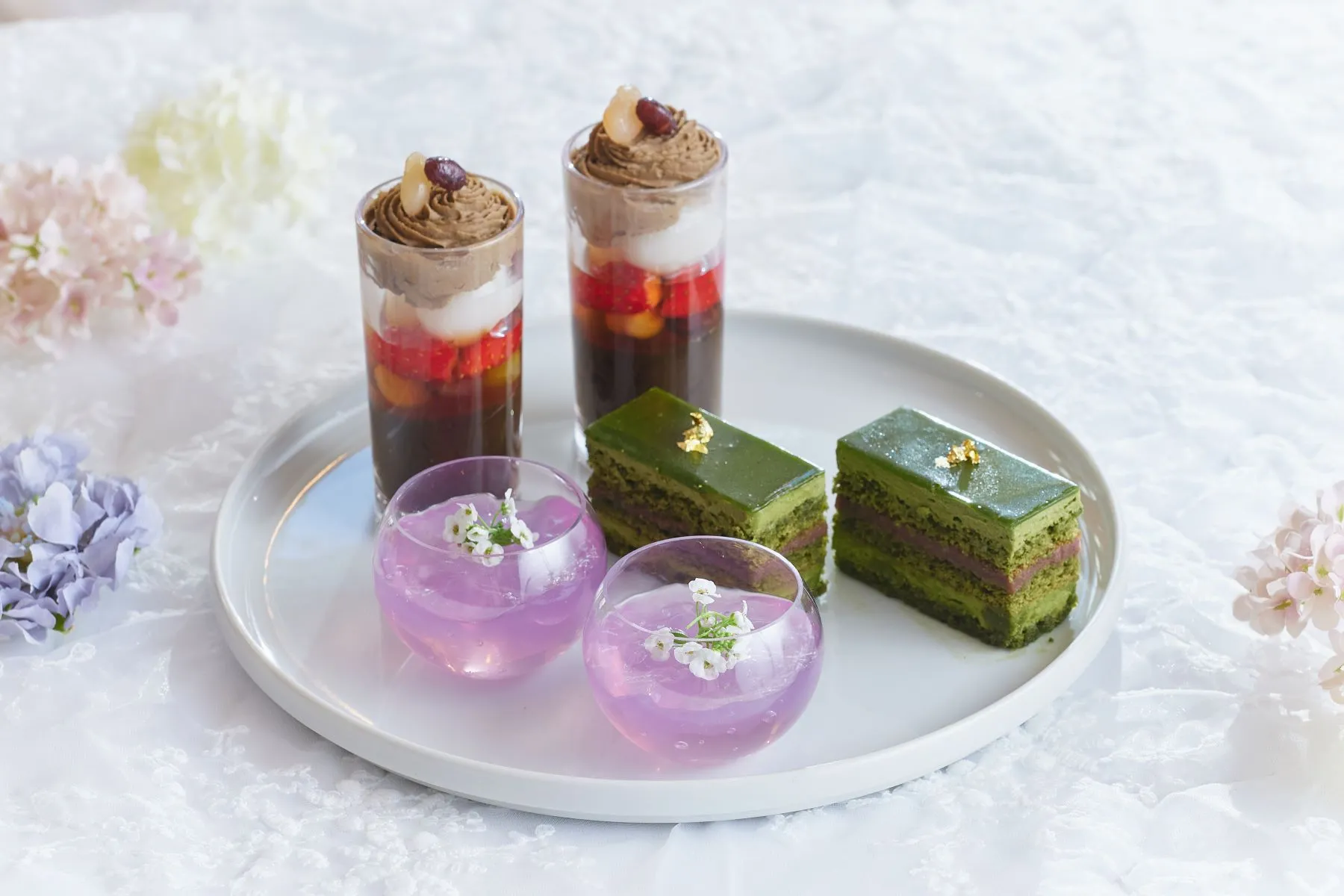
The first tier presents a study in contrasts: a Japanese-Western fusion Hojicha Verrine layered with seasonal fruits and shiratama dango; a Matcha Opera built from multiple strata of traditional matcha; and a translucent jelly whose appearance evokes the specific phenomenon of hydrangeas glistening after rainfall.

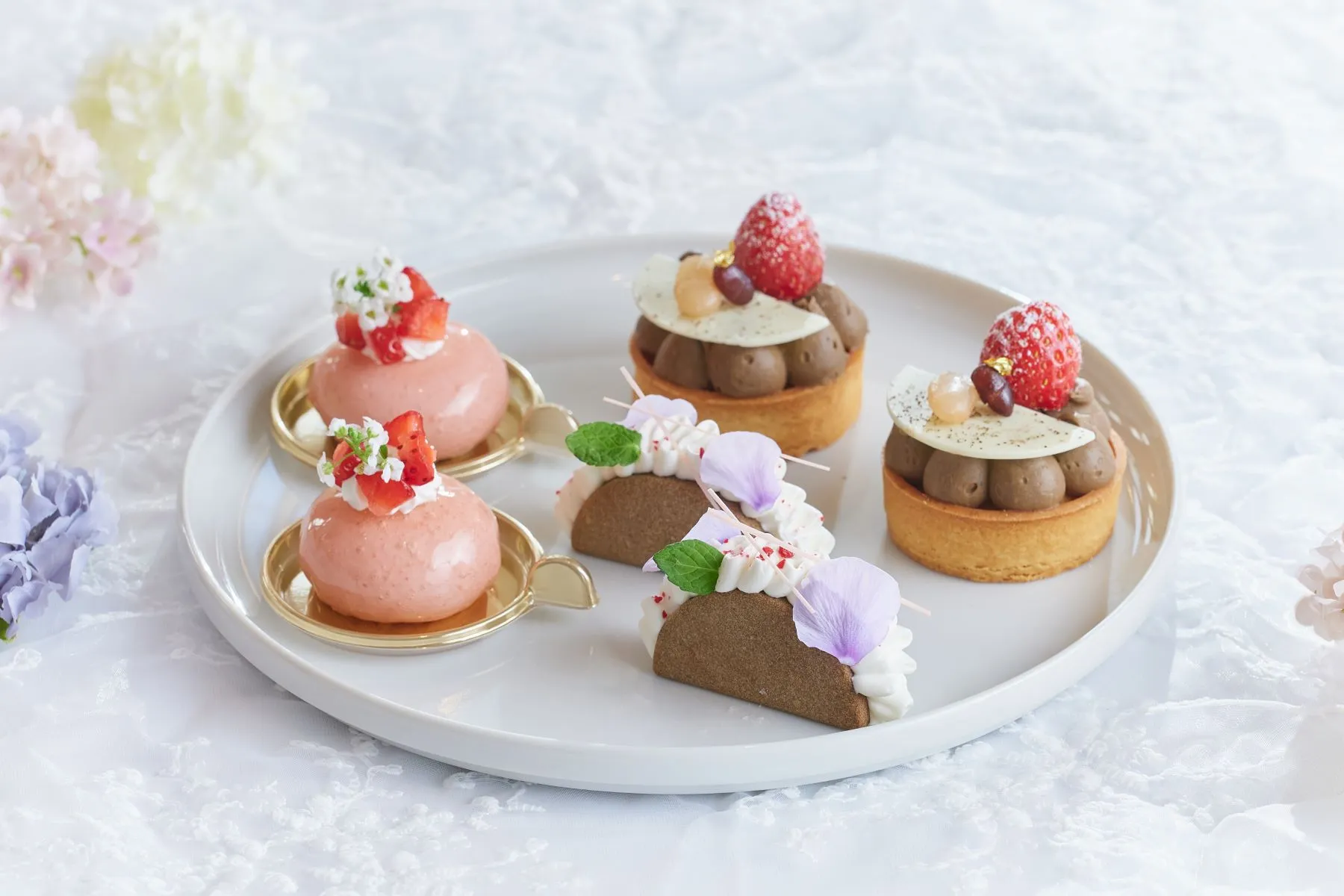
The second tier comprises six distinct preparations where the pastry chef deploys Gion Tsujiri’s matcha and hojicha in concentrated form. Notable compositions include a mousse calibrated so the slight bitterness of matcha meets the sweet-tart edge of strawberries; hojicha cookie butter sandwiches finished with edible flowers; and a hojicha tart where the textural interplay between crisp pastry shell and rich cream receives deliberate emphasis.

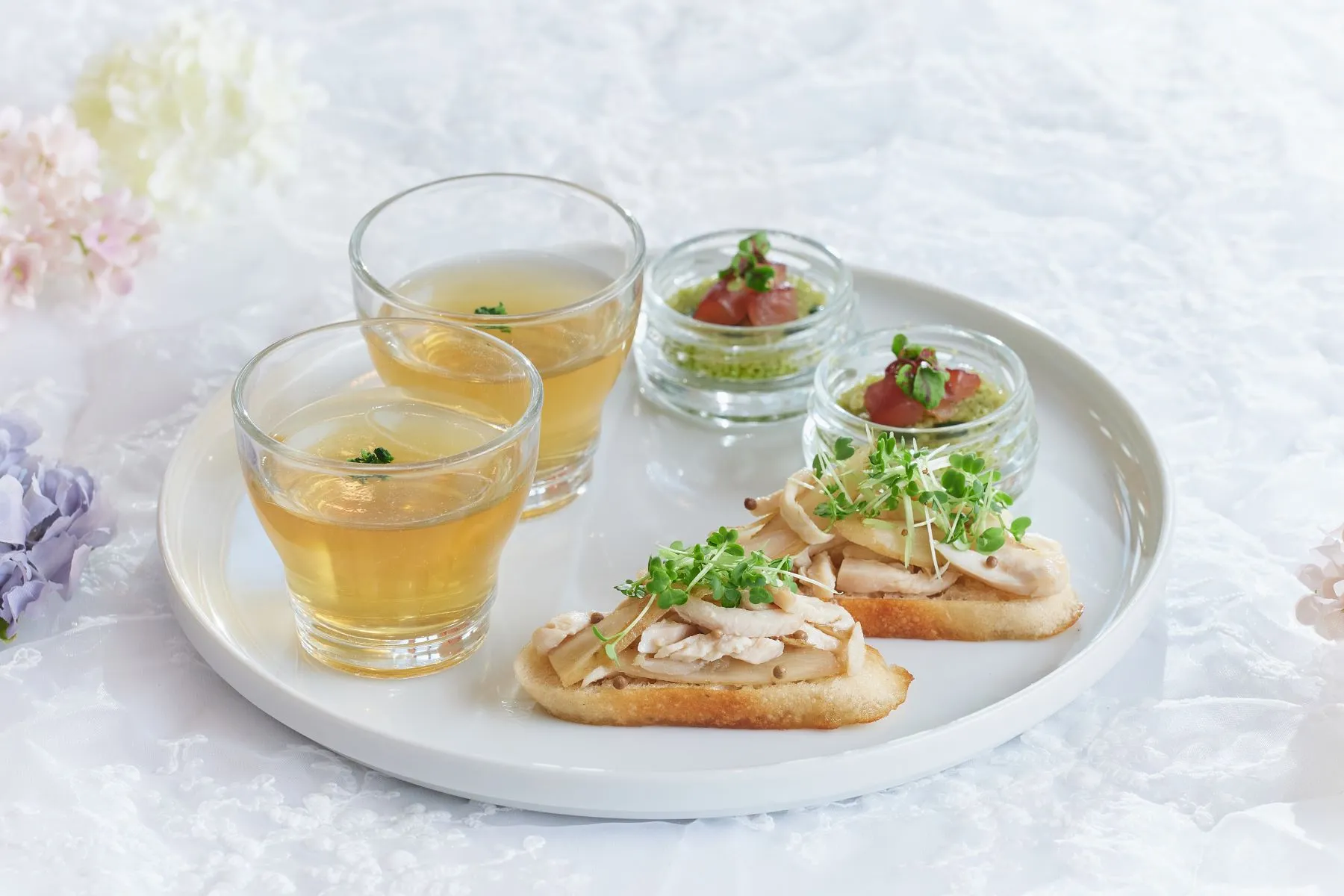
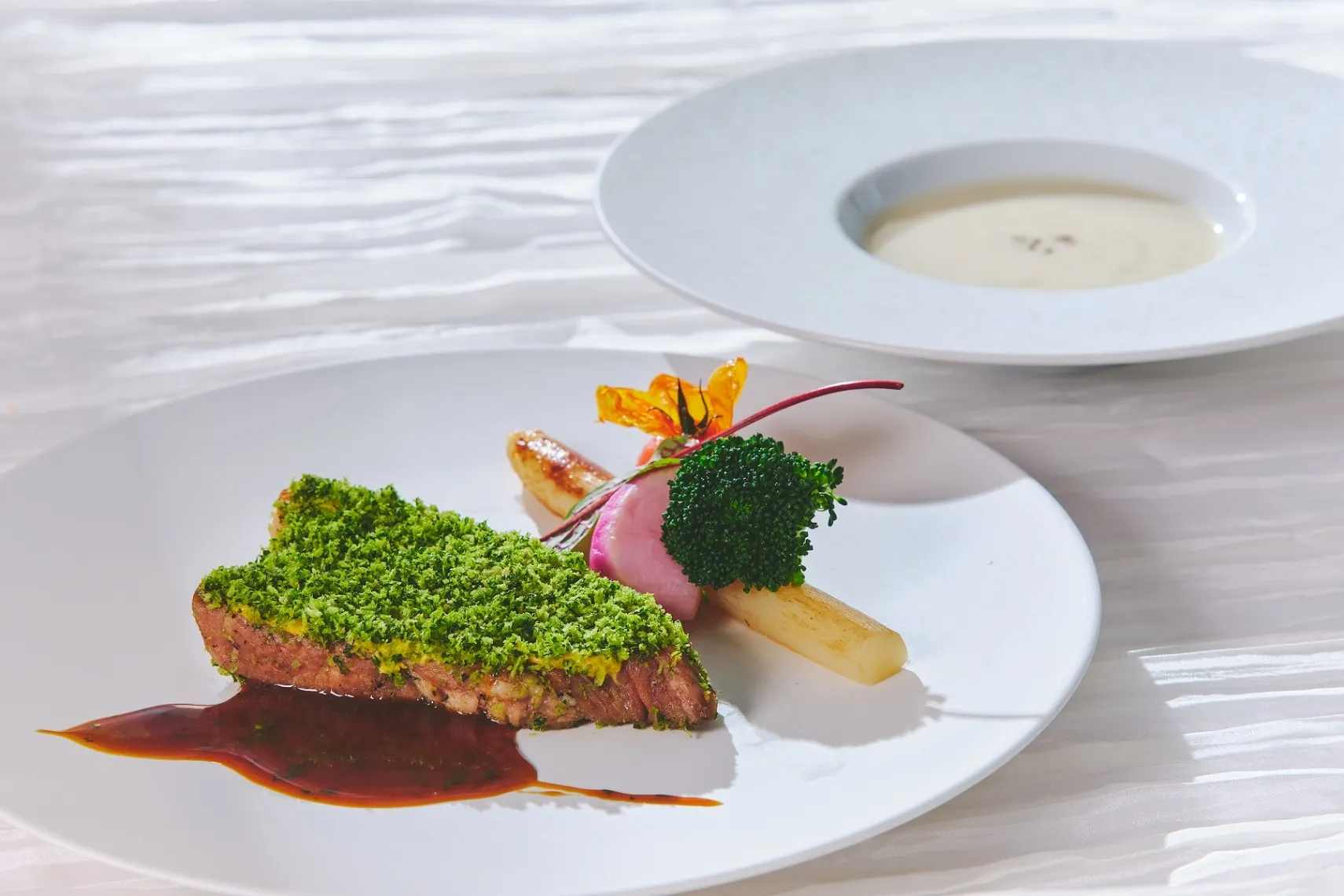
The third tier balances the preceding sweetness with three savory items: a bonito consommé whose aroma derives from carefully extracted dashi; a chicken ham open sandwich accented by the crunch of lightly pickled burdock; and a matcha couscous tabbouleh with marinated tuna that extends the tea theme into the savory realm.

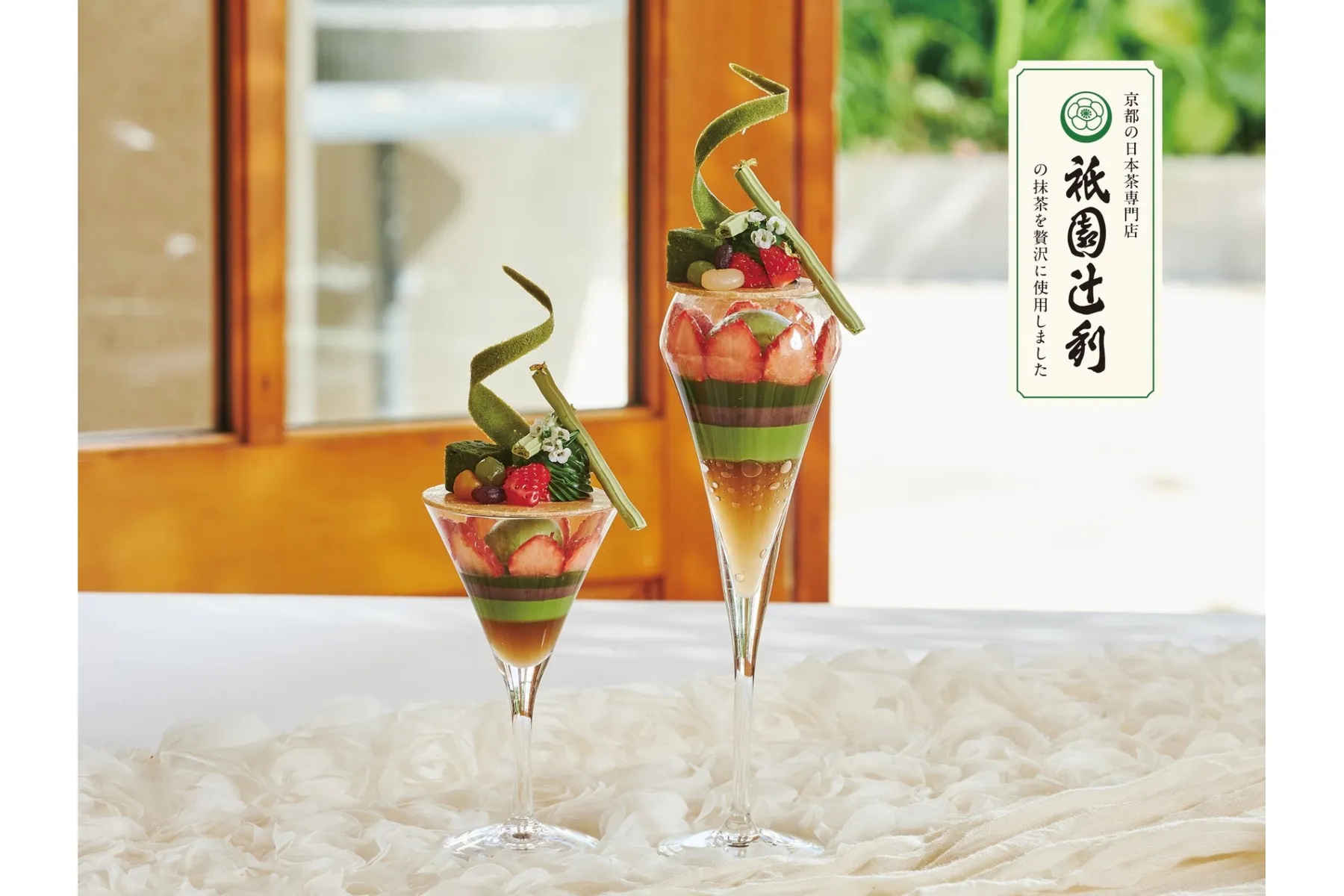
Those seeking amplification of the core experience may add the Uji Matcha and Strawberry Parfait with Gion Tsujiri (from 2,990 yen including cafe charge), engineered to deliver both matcha and hojicha simultaneously through tiered ingredients that preserve each tea’s distinct character.


Menu Details

Sweets

  • Hojicha Verrine
  • Butterfly Pea Jelly
  • Matcha Opera
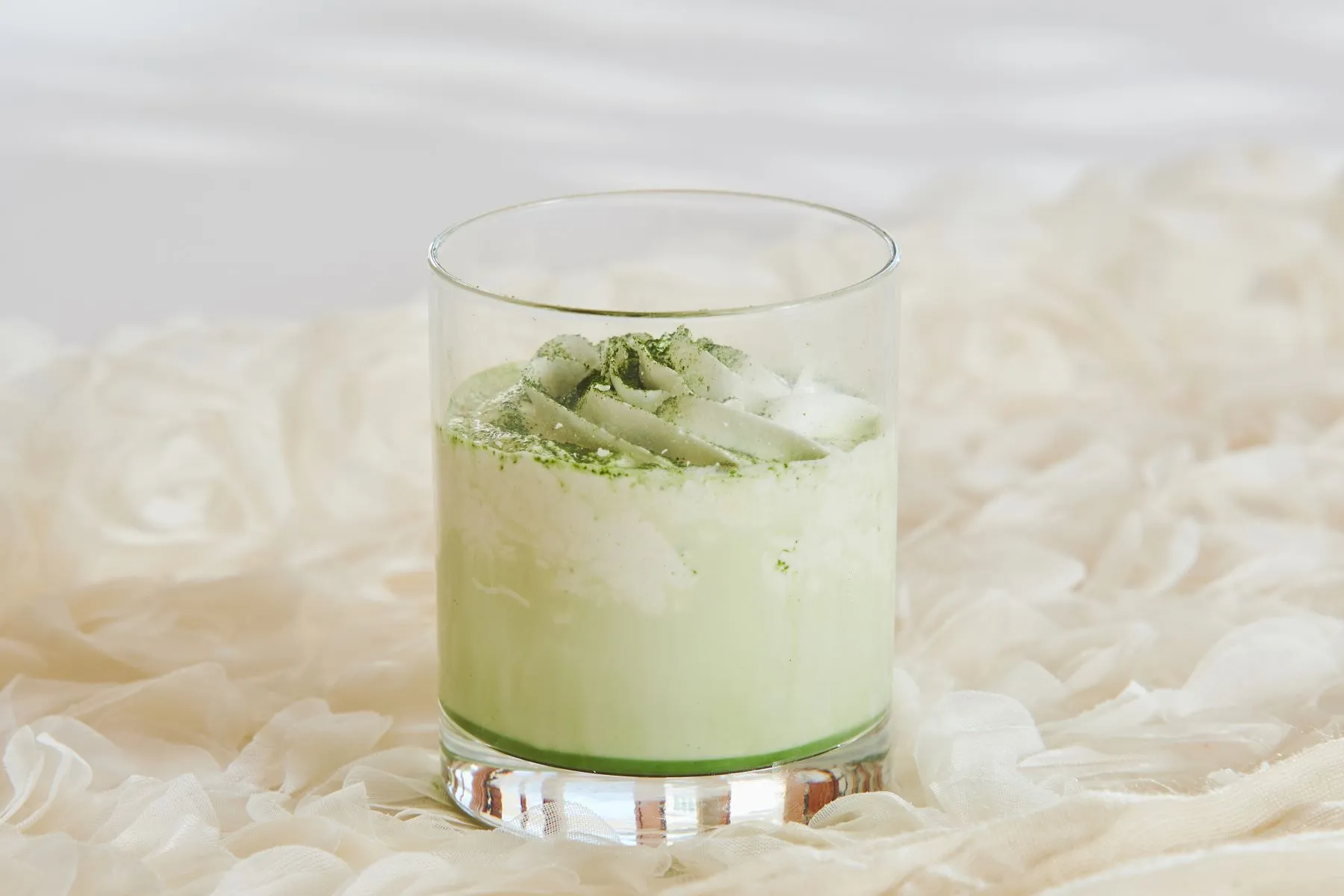
  • Strawberry and Matcha Mousse
  • Hojicha Cookie Butter Sandwich
  • Hojicha Tart

Savories

  • Bonito Consommé Soup
  • Lightly Pickled Burdock and Chicken Ham Open Sandwich
  • Matcha and Couscous Tabbouleh Salad with Marinated Tuna

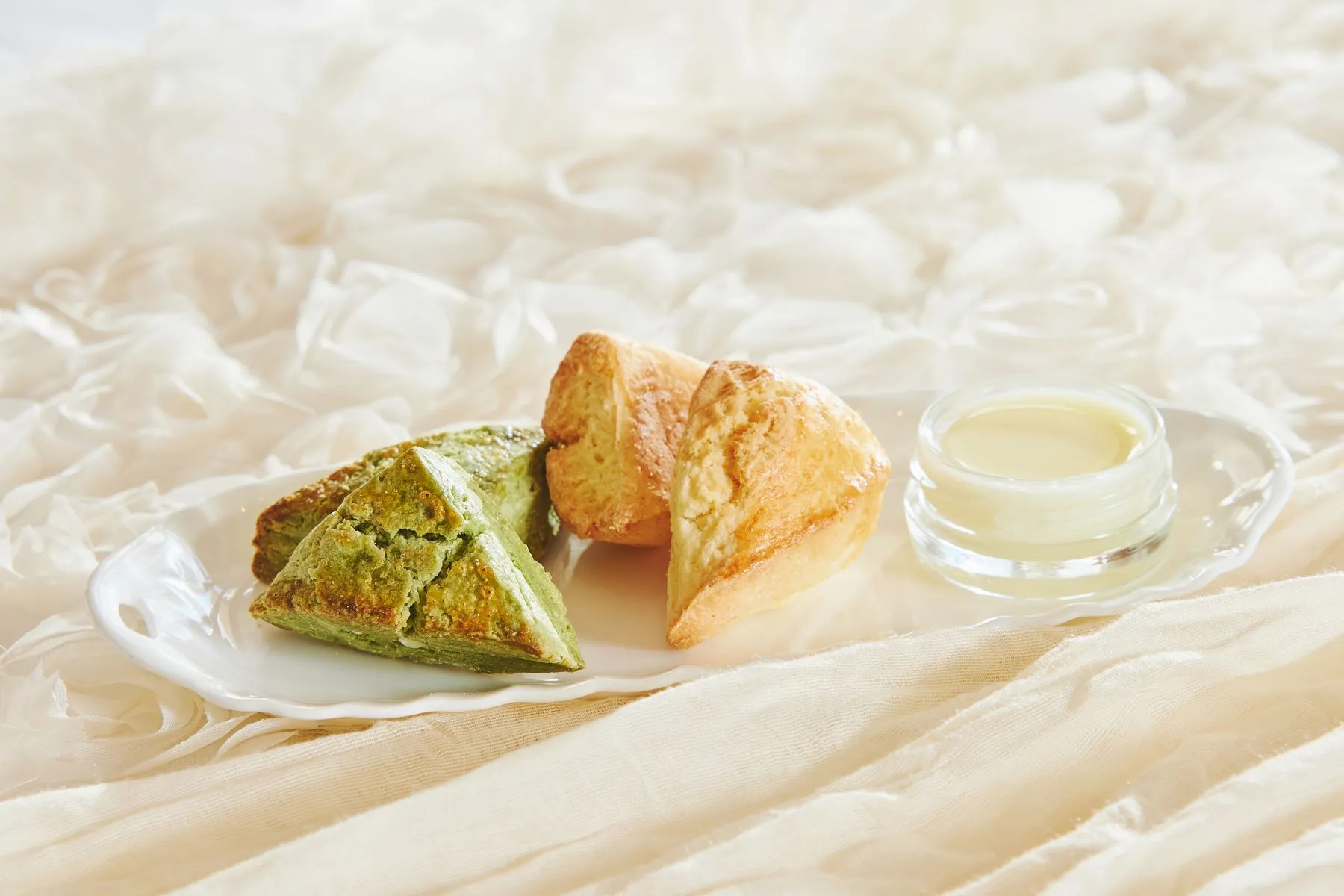
Scone Stand

  • Matcha and White Chocolate
  • Plain (served with condensed milk)

Drinks

Yokohama and Omiya Stores: All-you-can-drink tea (Mariage Frères), coffee, etc. (last order at 90 minutes)

Tokyo Shirokane Store:

Plan Inclusions
Standard 1 cup of Mariage Frères tea + all-you-can-drink tea, coffee, soft drinks
Tea Selection Mariage Frères tea selection + all drinks from Standard Plan

Options

  • Parfait (from 2,990 yen including cafe charge)
  • Mini Parfait
  • French Fries
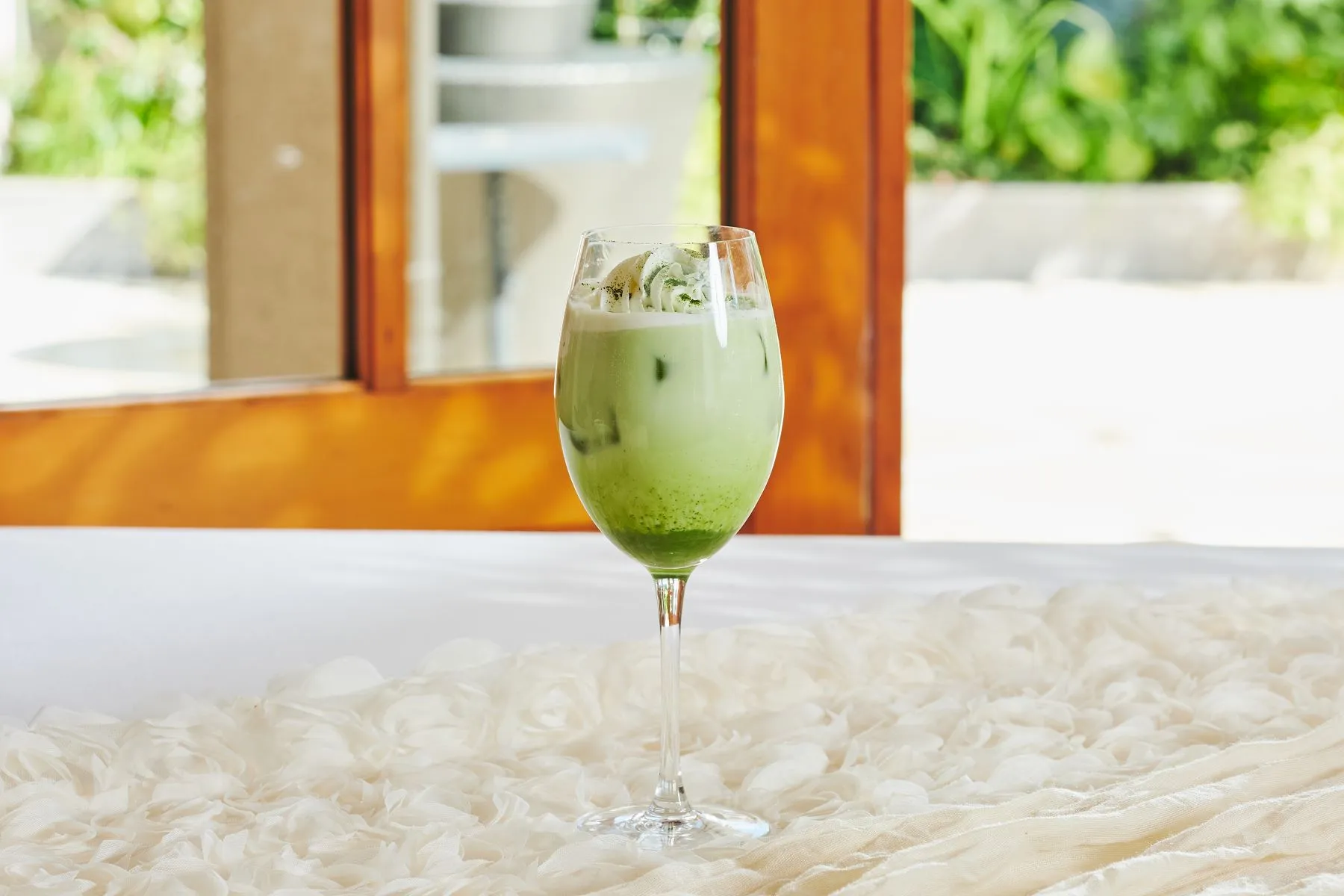
  • Matcha Drink (Hot & Ice)

Items other than the parfait may be ordered as a set with the afternoon tea. The Tokyo Shirokane store offers only mini parfaits and matcha drinks (hot & ice).


Practical Information

Venues & Access

Venue Location Nearest Station
Ristorante Mangiare Iseyama Yokohama Sakuragicho Station
Omiya Riku Cafe & Restaurant Shikiteni Saitama Toro Station / Kamomiya Station
Shirokane Geihinkan Art Grace Club Tokyo Meguro Station

Event Period

  • Ristorante Mangiare Iseyama: Wednesday, May 13 – Monday, June 29, 2026 | Closed Tuesdays
  • Omiya Riku Cafe & Restaurant Shikiteni: Wednesday, May 13 – Monday, June 29, 2026 | Closed Tuesdays
  • Shirokane Geihinkan Art Grace Club: Thursday, May 14, 28; Friday, May 29; Thursday, June 4; Friday, June 19 | Closed Mondays, Tuesdays (except holidays), and company-designated days

Hours

Venue Hours Last Entry
Ristorante Mangiare Iseyama Weekdays 12:00–17:00; Weekends/Holidays 14:00–16:30 15:00
Omiya Riku Cafe & Restaurant 11:00–16:30 15:00
Shirokane Geihinkan Art Grace Club 12:00–14:00 Reception closes 15 minutes prior; L.O. 30 minutes prior

Pricing

Venue Weekdays Weekends/Holidays
Ristorante Mangiare Iseyama from 5,500 yen from 6,000 yen
Omiya Riku Cafe & Restaurant from 4,580 yen from 4,800 yen
Shirokane Geihinkan Art Grace Club from 5,500 yen (flat rate) —

All prices include consumption tax and a 15% service charge.

Reservations & Inquiries

Venue Phone
Ristorante Mangiare Iseyama 045-260-8845
Omiya Riku Cafe & Restaurant Shikiteni 048-662-5551
Shirokane Geihinkan Art Grace Club 03-5475-3388

Official Sites

Listed content may be subject to change. Please confirm current details through the official venue or organizer website.


🛏️ See hotels near Tokyo

Matcha and Hydrangea Afternoon Tea with Gion Tsujiri_1
Matcha and Hydrangea Afternoon Tea with Gion Tsujiri_2
Matcha and Hydrangea Afternoon Tea with Gion Tsujiri_3
Matcha and Hydrangea Afternoon Tea with Gion Tsujiri_4
Matcha and Hydrangea Afternoon Tea with Gion Tsujiri_5
Matcha and Hydrangea Afternoon Tea with Gion Tsujiri_6
Matcha and Hydrangea Afternoon Tea with Gion Tsujiri_7
Matcha and Hydrangea Afternoon Tea with Gion Tsujiri_8
Matcha and Hydrangea Afternoon Tea with Gion Tsujiri_9
Matcha and Hydrangea Afternoon Tea with Gion Tsujiri_10
Matcha and Hydrangea Afternoon Tea with Gion Tsujiri_11
Matcha and Hydrangea Afternoon Tea with Gion Tsujiri_12
Matcha and Hydrangea Afternoon Tea with Gion Tsujiri_13
Matcha and Hydrangea Afternoon Tea with Gion Tsujiri_14
Matcha and Hydrangea Afternoon Tea with Gion Tsujiri_15
Matcha and Hydrangea Afternoon Tea with Gion Tsujiri_16

What is Tsujiri?

Tsujiri is a Japanese tea company founded in 1860 in Kyoto’s Gion district by Tsuji Riemon, a tea merchant who concentrated on developing methods for matcha cultivation and production. The original shop still operates in the same location.

Riemon’s work centered on refining tea processing techniques and establishing quality standards. His methods attracted enough attention that he received recognition from the imperial court—a formal acknowledgment of his contribution to tea production rather than a narrative of revolutionary transformation.

The company has since expanded into cafés and confectionery shops across Japan. These locations serve matcha drinks, desserts, and seasonal items, with the Tsujiri brand associated specifically with Uji matcha, a variety grown in the Uji region near Kyoto.

The Gion Tsujiri name refers to the original flagship operation, maintaining the connection to the company’s founding location while operating as a modern business.

TOKYO TOWER CITY LIGHT FANTASIA 2026 Summer: Experience Indoor Fireworks and Firefly Magic at 150 Meters Above Tokyo

TOKYO TOWER CITY LIGHT FANTASIA 2026 Summer: Experience Indoor Fireworks and Firefly Magic at 150 Meters Above Tokyo

TOKYO TOWER CITY LIGHT FANTASIA 2026 Summer

A mapping fireworks display you can enjoy every day at a cool observation deck!

This event represents “urban entertainment” that fuses projection mapping and light effects against the backdrop of Tokyo’s beautiful night view. In the summer version, fantastical light effects themed around “fireworks” and “fireflies” are deployed, allowing you to experience the atmosphere of summer while remaining in the heart of the city.

What distinguishes the 2026 summer edition from previous iterations is the introduction of new light effects specifically designed to heighten immersion. Delicate yellow lights that evoke fireflies—created using particle laser technology—float through the space, establishing a genuinely fantastical atmosphere. Meanwhile, floor gobo lights (a new addition for this summer version) project colorful fireworks patterns that spread beneath your feet, transforming the entire observation deck into something resembling a summer festival. By overlapping these projected images with the real Tokyo night view visible through the large window surfaces of the Main Deck, the event achieves a “fireworks viewing experience that can only be had here.”

This summer also introduces a symbolic spatial element following the spring cherry blossom candle effects: candle structures utilizing bamboo and driftwood that evoke traditional Japanese summer aesthetics. These will be installed in the center of the mapping area from Friday, June 19 to Sunday, September 6, expressing a new light display concept of “Japanese style × Summer.”

The practical advantage of this event is its complete indoor setting—meaning you can enjoy spectacular summer-themed visuals without enduring the season’s notorious humidity and heat. This makes it suitable for various occasions: night dates, outings with friends, or tourists seeking a distinctive Tokyo experience. It functions as a “new summer staple spot” where Tokyo’s night view and fireworks-like light effects coexist simultaneously.

*Please check the official website for detailed contents.


Basic Information

Location / Nearest Station Tokyo Tower<br>Kamiyacho Station / Onarimon Station / Akabanebashi Station / Hamamatsucho Station / Daimon (Tokyo) Station
Address 〒105-0011<br>4-2-8 Shibakoen, Minato-ku, Tokyo<br>MAP
Venue Tokyo Tower Main Deck (Height 150m), 2nd Floor North Side
Event Period 2026/05/11 (Mon) ~ 2026/09/06 (Sun)
Hours • 5/11 (Mon) ~ 6/7 (Sun): 19:00 ~ 22:50<br>• 6/8 (Mon) ~ 7/12 (Sun): 19:30 ~ 22:50<br>• 7/13 (Mon) ~ 8/16 (Sun): 19:00 ~ 22:50<br>• 8/17 (Mon) ~ 9/6 (Sun): 18:30 ~ 22:50<br>*The display repeats during these times
Fees Can be enjoyed with only the observation fee to the Main Deck
Official Website https://www.tokyotower.co.jp/event/summerlandscape2026/

*The posted content may have changed. Please check the official website of the venue or organizer for the latest information.

🛏️ See hotels near Tokyo

TOKYO TOWER CITY LIGHT FANTASIA 2026 Summer_1 TOKYO TOWER CITY LIGHT FANTASIA 2026 Summer_2

What is Tokyo Tower?

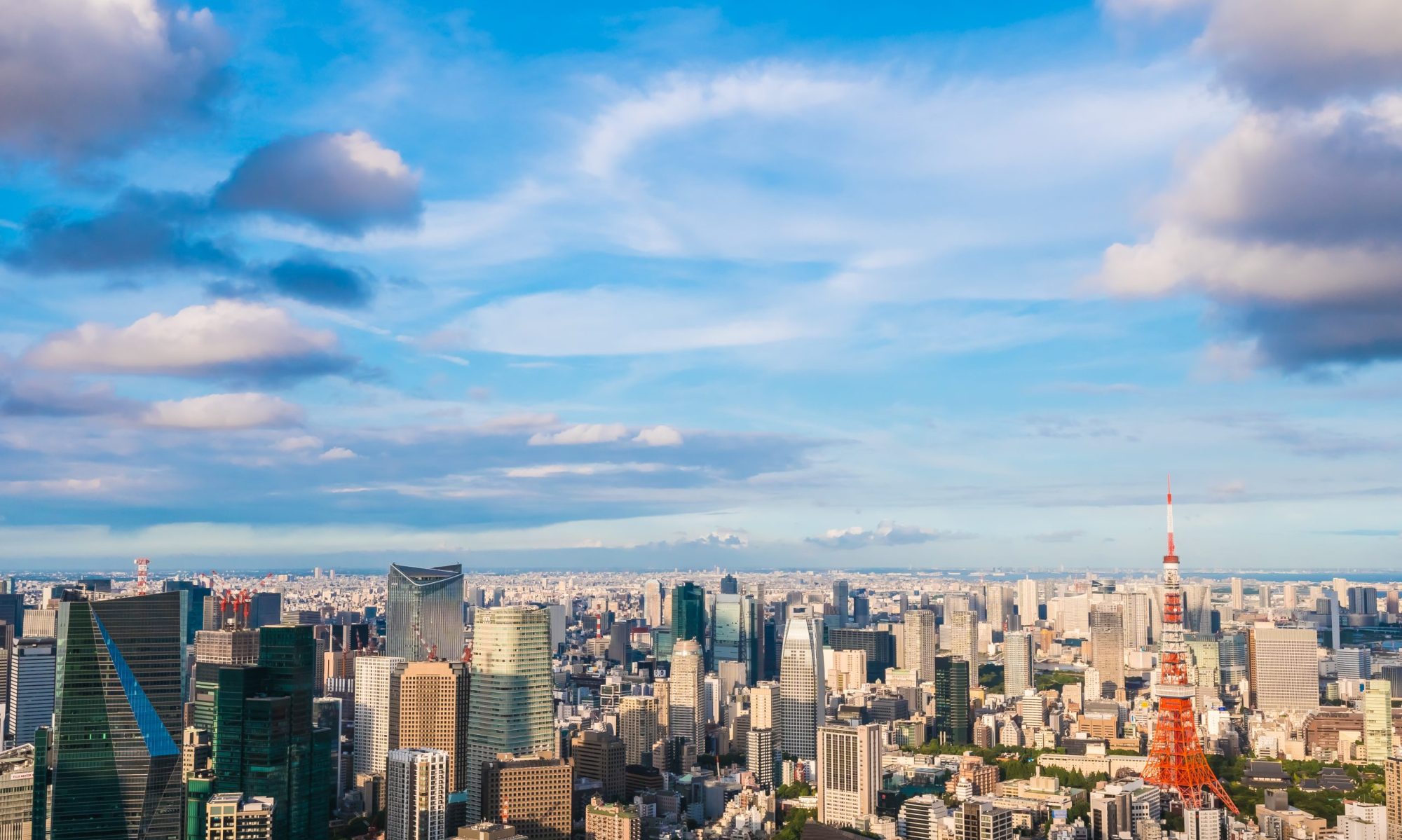
Tokyo Tower stands 333 meters in Minato ward, completed in 1958 as a broadcasting structure inspired by the Eiffel Tower’s lattice design. It’s painted international orange and white for aviation safety, a color scheme that has become inseparable from its identity. While the Tokyo Skytree assumed most broadcasting duties in 2012, the tower continues to transmit some signals and serves as a backup facility.

The tower operates two observation decks at 150 and 250 meters. On clear days, visitors can see Mount Fuji; after dark, the view encompasses the city’s illuminated grid. These vantage points remain popular despite competing attractions, partly because of the tower’s central location and lower admission costs compared to newer alternatives.

Its structural history reflects postwar Japan’s reconstruction period. The steel was drawn from American tanks damaged in the Korean War, melted down and repurposed. This detail is often omitted from promotional materials but shapes how some visitors experience the site.

The surrounding commercial complex includes aquariums, wax museums, and retail spaces that generate revenue independent of the observation decks. The tower’s illuminated exterior changes seasonally—standard lighting, special holiday configurations, and occasional corporate sponsorship displays that have drawn criticism from preservation advocates.

Practical visitor information: the main deck accommodates wheelchairs and strollers; the upper deck requires navigating stairs. Lines form predictably before sunset on weekends. Tickets can be purchased in advance through the official website, though weekday mornings rarely require reservations.

Utsukushikunaru Beer Garden 2026: Matsuya Ginza Rooftop Mexican BBQ with All-You-Can-Drink – Reservations, Menu & Hours Guide

Utsukushikunaru Beer Garden 2026: Matsuya Ginza Rooftop Mexican BBQ with All-You-Can-Drink – Reservations, Menu & Hours Guide

Utsukushikunaru Beer Garden / Matsuya Ginza

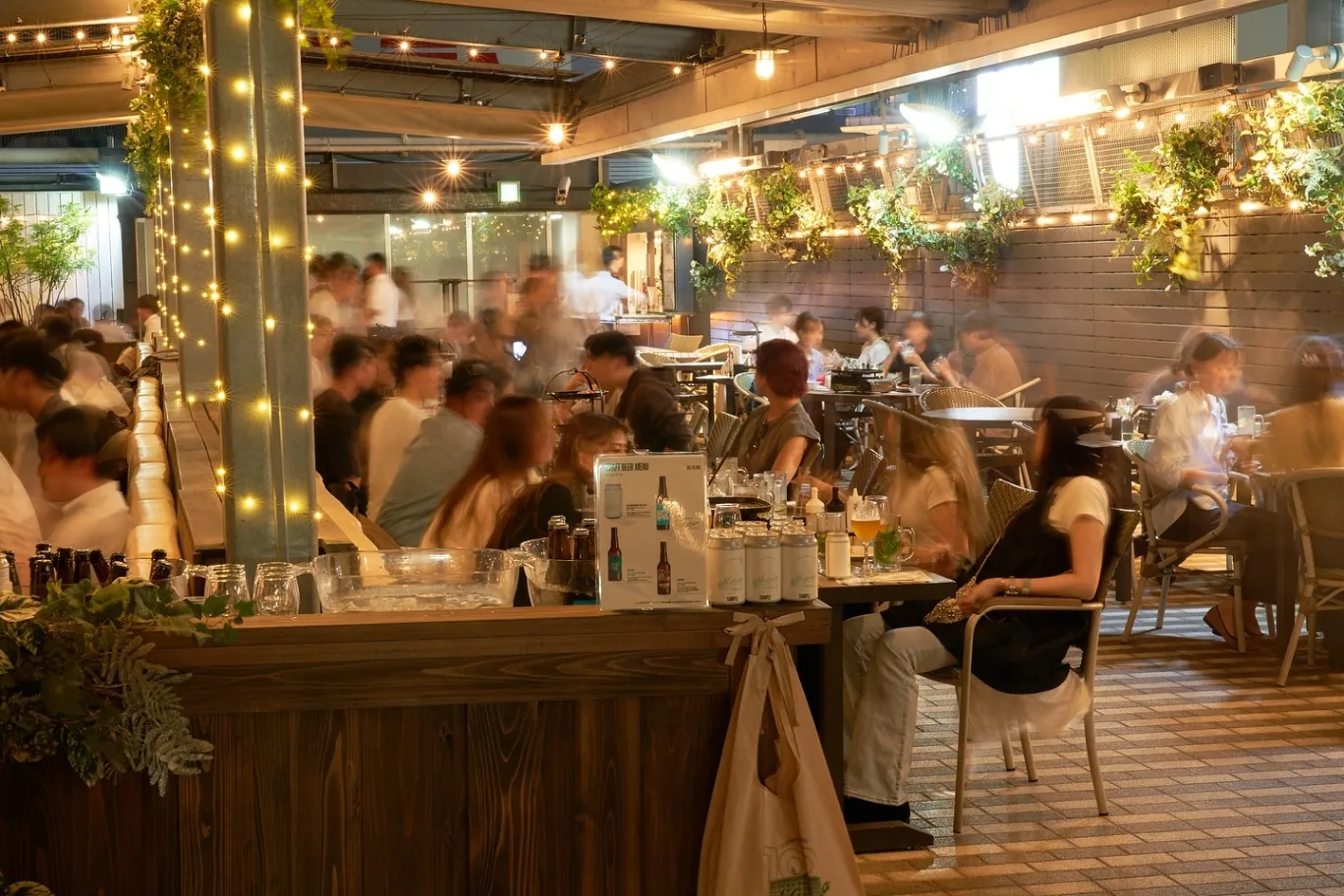
The beer garden returns to the rooftop of Matsuya Ginza this year! You can enjoy a menu incorporating Mexican essences in a space full of a sense of openness.

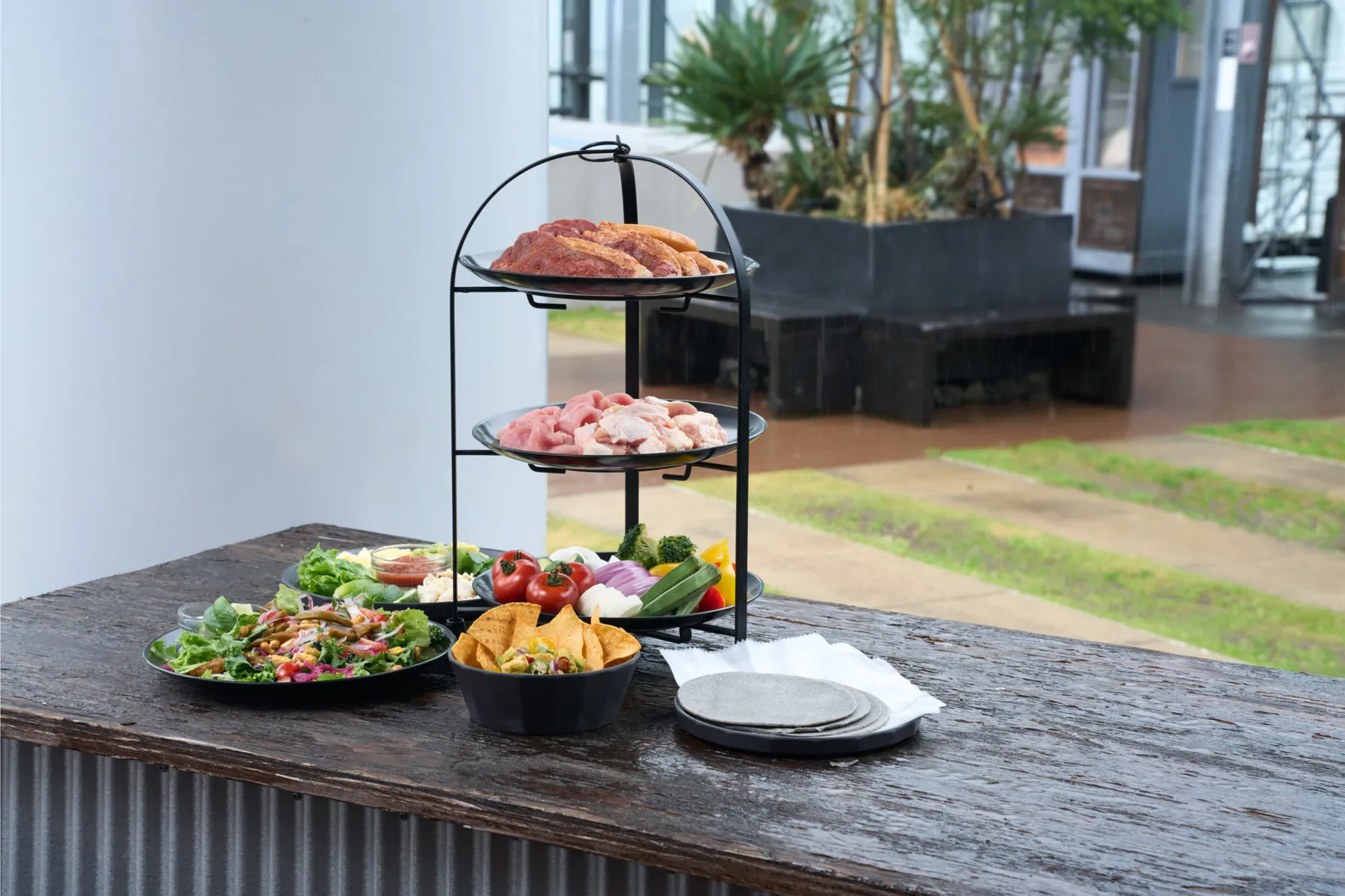
This year’s theme, “A Touch of Mexican Spirit: Beautifully, Freely, Cheerfully,” marks a notable evolution from previous iterations. Where earlier seasons centered on grilled dishes alone, the 2026 program expands into full Mexican territory—tacos, fresh salsa, and tequila cocktails now share equal billing with the fire-kissed proteins. The result is an atmosphere that channels the cheerful spontaneity of Mexican food culture rather than merely borrowing its flavors.

The rooftop setting remains the draw. Under open sky with breeze threading through, sofa seating and terrace arrangements designed for photographs create distinct zones. Latin music and saturated color accents complete the environmental shift without overstatement.


Featured Menu

Standard Plan (7,700 yen per person)
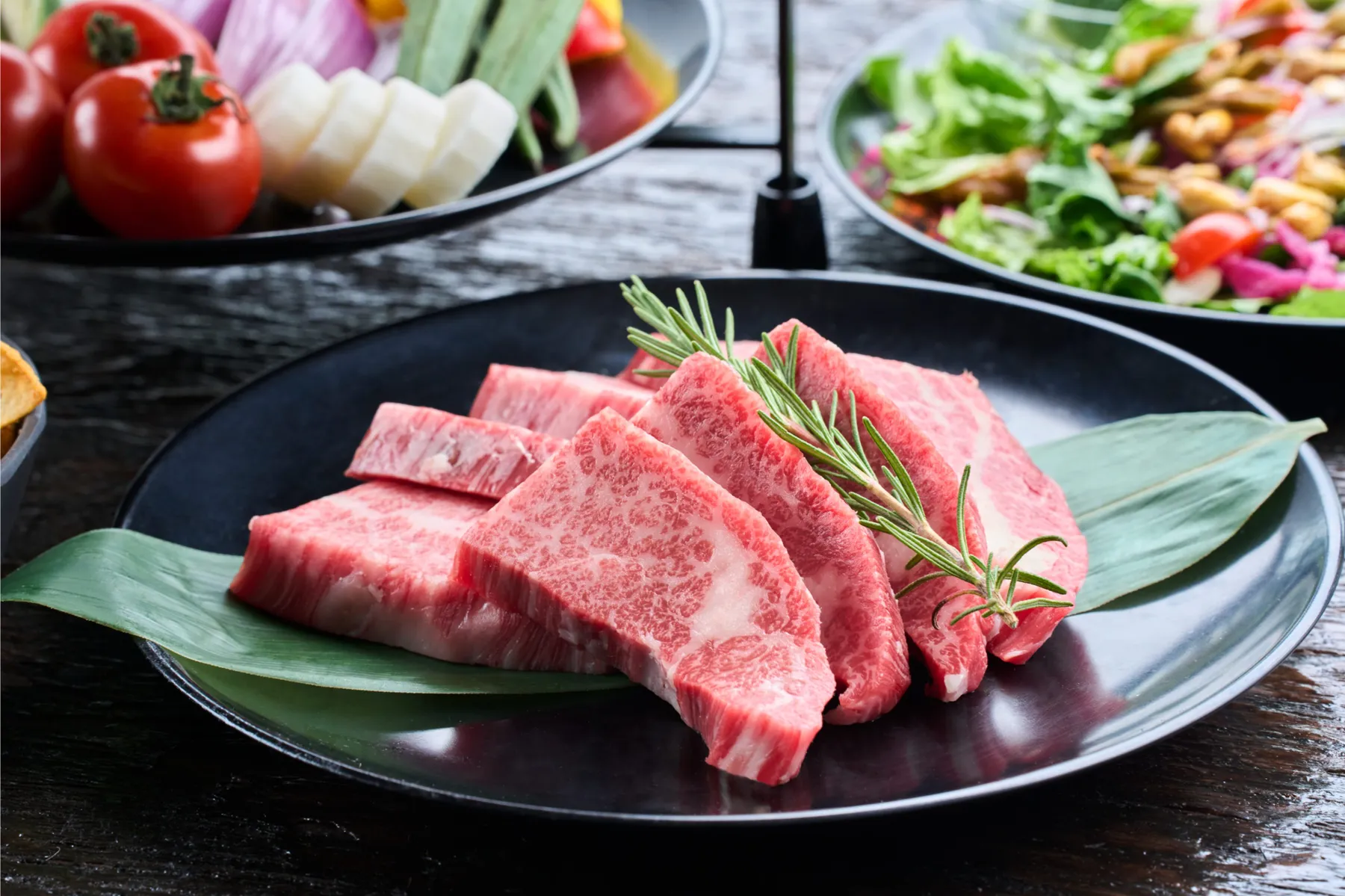
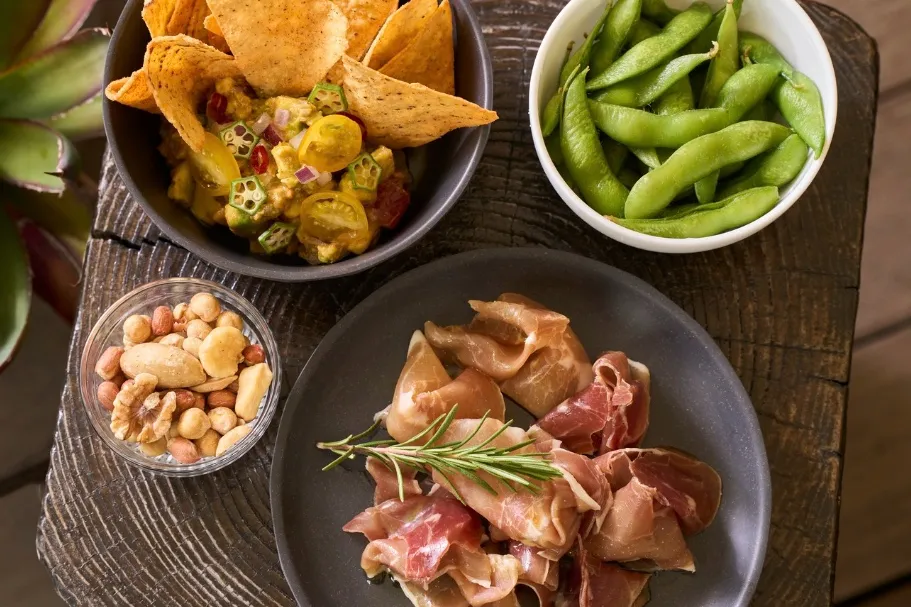
The foundational option centers on beef sirloin, domestic pork from Nihonbashi Hiyama, young chicken from Ginza Gyukura, coarse-ground wiener, and chorizo from Rohmaya. Accompaniments include guacamole, salad, and tacos to close. Two-hour seating with all-you-can-drink included.

Note: Four total plans accommodate different group sizes and preferences—the Standard Plan suits straightforward gatherings, while upgraded tiers (inquire directly) layer in additional courses or premium proteins.


Beverage Program

Category Selection
Draft Beer Asahi
Craft Beer 6 varieties, including Modelo Especial
Beer Cocktails 4 types
Non-Alcoholic Cocktails 3 types
Non-Alcoholic Beer 1 type

The inclusion of Modelo Especial—a Mexican import rarely found at Tokyo beer gardens—signals the thematic commitment more clearly than any decoration could.


Practical Considerations

Heat Countermeasures: Paper fans (uchiwa) distributed; ice water available

Barbecue Format: Hands-free—staff manage the grilling

Seating: 250 outdoor seats maximum; groups up to 250 people accommodated

Weather: Roofed structure permits operation in rain; wind may introduce precipitation into seating areas. Severe weather triggers cancellation.

Reservations: Web booking available; walk-ins accepted with same-day seats often accessible

Payment: Credit card, QR code, electronic money, cash


Access & Hours

Location: Matsuya Ginza Rooftop
Address: 3-6-1 Ginza, Chuo-ku, Tokyo 104-8130
MAP

Nearest Stations:

  • Ginza Station: 1 minute walk
  • Ginza-itchome Station: 3 minutes
  • Higashi-ginza Station: 3 minutes
  • Yurakucho Station: 8 minutes

Event Period: May 20 – September 30, 2026

Day Hours Final Entry
Weekdays 17:00–22:00 20:00
Saturdays/Holidays 12:00–22:00 20:00
Sundays/Last day of consecutive holidays 12:00–21:30 19:30
  • Last food order: 1 hour before closing
  • Last drink order: 30 minutes before closing
  • Hands-free BBQ final start: 20:00

Contact & Information

Inquiry: 050-3623-3937
Staff available 12:00–21:00; 24-hour automated guidance

Official Site: https://utsukushikunaru-beergarden.com/

Instagram: https://www.instagram.com/utsukushikunaru_beergarden/

The published content may have changed. Please check the venue or organizer’s official website for the latest information.

🛏️ See hotels near Tokyo


美しくなるビアガーデン/松屋銀座_1 美しくなるビアガーデン/松屋銀座_2 美しくなるビアガーデン/松屋銀座_3 美しくなるビアガーデン/松屋銀座_4 美しくなるビアガーデン/松屋銀座_5 美しくなるビアガーデン/松屋銀座_6 美しくなるビアガーデン/松屋銀座_7 美しくなるビアガーデン/松屋銀座_8 美しくなるビアガーデン/松屋銀座_9 旬のスポットを巡ろう!TTRデジタルスタンプラリー開催中

What is Matsuya Ginza?

Matsuya Ginza is a historic department store in Tokyo’s Ginza district, founded in 1869 and operating from its current building since 1923. It stands among Japan’s oldest surviving department stores, occupying a prominent position on the central Ginza thoroughfare.

The store serves a clientele drawn to high-end fashion, cosmetics, traditional crafts, and gourmet food. Its multiple floors maintain a restrained atmosphere that owes as much to the surrounding neighborhood’s character as to any deliberate preservation effort. The result is a shopping environment that feels distinct from the explicit luxury branding common in newer retail developments.

On the rooftop, a seasonal beer garden operates during warmer months. The space offers open-air seating with views across the Ginza skyline—an unobtrusive addition that draws steady visitors without aggressive promotion. The concept is straightforward: quality drinks, adequate service, and temporary relief from the street-level density below. In a district where many establishments compete for distinction through novelty or spectacle, this relative modesty is itself notable.

The store’s longevity suggests that certain approaches to retail—consistency over reinvention, understatement over announcement—retain their effectiveness. Whether this constitutes a deliberate strategy or simply institutional inertia is difficult to determine from outside. Either interpretation is compatible with what visitors actually encounter.
Akigawa Valley Hydrangea Festival 2026: Complete Guide to Two Hydrangea Mountains, Hot Springs & Limited Tours in Early Summer Tokyo

Akigawa Valley Hydrangea Festival 2026: Complete Guide to Two Hydrangea Mountains, Hot Springs & Limited Tours in Early Summer Tokyo

Akigawa Valley Hydrangea Festival 2026

A miraculous floral landscape in early summer Tokyo. The “Akigawa Valley Hydrangea Festival 2026” will be held.

During the blooming season, in addition to the “Instagram Photo Contest #AkigawaHydrangea2026” and the sale of “hydrangea-limited gourmet food & goods,” there are advantageous set plans to enjoy flower sightseeing and BBQ nearby, as well as advantageous set tickets for the skin-beautifying hot spring “Akigawa Valley Sene-no-Yu,” which has previously won 1st place in the “Smooth Skin Category” of the National Hot Spring Election. Furthermore, for the first time this year, a two-day limited “Hydrangea Special Tour” will be implemented. Additionally, coupon pamphlets providing discounts at restaurants and for the purchase of local specialties within Akiruno City will be distributed at the reception of the two hydrangea spots, so why not fully enjoy the Akigawa Valley in early summer?

What distinguishes this festival from other floral events in the Tokyo region is the scale and personal history behind its two signature mountains—one cultivated by a single individual’s 50-year devotion, the other offering rare white hydrangea varieties across a vast 30,000-square-meter landscape. Visitors can combine flower viewing with hot spring bathing, local cuisine, and hands-on workshops rather than confining themselves to a single activity.


■ Flower Mountain One: A hydrangea paradise where 50 years of passion bloom, “Minamisawa Hydrangea Mountain”

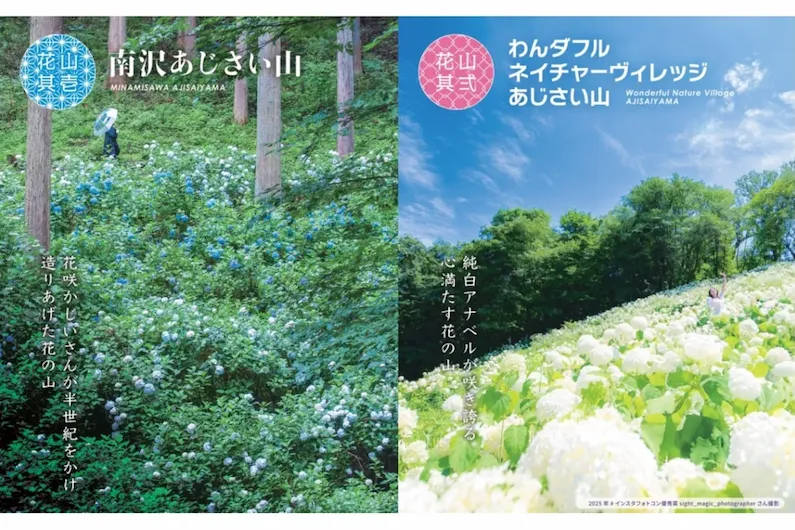
This is a mountain where Mr. Chuichi Minamisawa, who lived in this area, continued to plant hydrangeas with the wish to “fill the path to his parents’ graves with hydrangeas.” Because he wanted to see everyone’s happy faces, he continued planting hydrangeas for 50 years, and now the number of hydrangeas blooming on the mountain exceeds 15,000 plants. There are over 50 types of hydrangeas, including rare varieties that are seldom seen in Japan. Surrounded by tall trees, for about one month from June, vivid hydrangeas in blue, purple, and white bloom in profusion, creating a fantastical atmosphere.

The mountain’s origin as a personal tribute that gradually transformed into a public garden lends it an emotional texture absent from commercially developed attractions. The dense canopy of surrounding trees filters sunlight into dappled patterns across the blooms, producing photographic conditions that change perceptibly across the day.

Admission Adults (Junior high school students and older) 600 yen / Children (Elementary school students) 400 yen
* Preschoolers are free
* All displayed prices include tax
Inquiries 090-5540-9100 (Person in charge: Takamizu)

Access: Please come to the mountain from JR Musashi-Itsukaichi Station by foot, taxi, or the limited-time paid shuttle bus.

Note: Since there is no parking available, if you come by car, please use the coin parking lots around “Musashi-Itsukaichi Station.”


■ Flower Mountain Two: Pure white Annabelles that enchant visitors, “Wan-derful Nature Village Hydrangea Mountain”

The hydrangea mountain is located within the Wan-derful Nature Village, adjacent to Tokyo Summerland. In the hydrangea area of approximately 30,000 square meters, you can enjoy the performance of approximately 60 species and 15,000 hydrangea plants, such as the “Annabelle Snowy Mountain” where pure white Annabelle hydrangeas grow in clusters. At the entrance of the hydrangea area, white and pink Annabelles blooming at the foot of the mountain gently welcome visitors. As you proceed along the hiking course surrounded by colorful hydrangeas, the “Annabelle Snowy Mountain,” which dyes the entire slope in pure white, spreads out before your eyes. Furthermore, from the mountaintop, a magnificent view spreads out, overlooking the grand mountain range of Okutama and the clear stream of the Akigawa River.

The progression from colored varieties at lower elevation to the dramatic monochromatic display higher up creates a structured narrative experience for visitors walking the course. The mountaintop vantage point—unusual for a hydrangea garden—adds topographical variety that justifies the physical effort of ascent.

Admission Adults (Junior high school students and older) 850 yen / Elementary school students and younger are free
Parking fee Standard cars 700 yen / Motorcycles 300 yen / Buses 2,000 yen
* All displayed prices include tax
Inquiries 042-558-5861

Access:

  • By car: Please use the Wan-derful Nature Village parking lot.
  • By train: Please take a taxi or local bus from JR Akigawa Station to Tokyo Summerland; from Tokyo Summerland to Wan-derful Nature Village, please use the free shuttle bus.

■ Limited to 2 days! “Savoring Flowers and the Breeze” A luxurious one-day trip to two hydrangea mountains and the satoyama countryside

A special day visiting two hydrangea mountains in the Akigawa Valley in early summer, guided by local staff. Staff who manage the mountains will introduce stories that can only be heard here, such as the behind-the-scenes of pruning and care to make the flowers bloom beautifully. Furthermore, you can experience the “Hydrangea Flower Temari Making” workshop, limited to this tour, making it a program where you can feel the charm of hydrangeas more deeply. Please enjoy a heart-filling healing time along with a satoyama lunch using local ingredients and a hot spring.

This tour addresses a practical challenge many visitors face: the two mountains, while both in the Akigawa Valley, require separate transit arrangements on ordinary days. The guided format eliminates navigation concerns while adding narrative context that solitary visitors would miss. The workshop component—dried flower temari creation—produces a keepsake with longer utility than standard tourist photographs.

Event Overview
Dates Saturday, June 20th and Sunday, June 21st
Time 8:45 AM – 3:30 PM
Capacity 20 people per day
Minimum participants 10 people for each day
Participation fee 16,500 yen per person (tax included)

Itinerary:

Time Activity
8:45 JR Musashi-Itsukaichi Station (Gathering)
9:00–10:15 Visit to Wan-derful Nature Village Hydrangea Mountain (with local guide)
* Limited workshop “Dried Flower Making”
10:45–12:00 Visit to Minamisawa Hydrangea Mountain (with local guide)
12:30–13:30 Private room lunch / Exquisite gourmet using local specialties at Ishifune dining
13:30–15:00 Akigawa Valley Sene-no-Yu “Shopping / Hot spring bath (Free entry for each individual *separate fee)”
15:30 JR Musashi-Itsukaichi Station (Dismissal)

All photos are for illustrative purposes only.


Additional Program Information

  • Instagram Photo Contest “#AkigawaHydrangea2026”
  • Sale of hydrangea-limited gourmet food & goods
  • Minamisawa Hydrangea Mountain × Shizenjin Village BBQ
  • Wan-derful Nature Village Hydrangea Mountain & BBQ

Please check the official website for detailed information.


Basic Information

Location / Nearest Station Minamisawa Hydrangea Mountain: Musashi-Itsukaichi Station
Tokyo Summerland Wan-derful Nature Village: Akigawa Station
Period 2026/06/06 (Sat) ~ 2026/07/05 (Sun)
Time Start 9:00 / End 17:00
Official Website https://tokyomountain-tours.jp/ajisaimatsuri/ja/index.html

The published content may have changed. Please check the official website of the venue or organizer for the latest information.

🛏️ View hotels near Tokyo

What is Akigawa Valley?

Akigawa Valley is a gorge in western Tokyo, about 90 minutes from Shinjuku by train. The Akigawa River carved it over millennia, leaving a 20-kilometer stretch of terrain that now sits within Chichibu-Tama-Kai National Park. It is one of the easier natural escapes from the capital.

The valley sits lower than the surrounding hills, which traps cool air and moisture. Hydrangeas grow well here. Limestone cliffs rise on both sides of the river, and the slopes are covered with cedar and broadleaf forest—maples and beeches among them—that redden in autumn. Hiking trails run through the hills, connecting villages, old railway tunnels, and occasional shrines.

The area industrialized briefly during the Meiji era. Limestone mining and silk production brought workers and infrastructure; when those industries faded, the railways were abandoned and the mines closed. What remains—overgrown tracks, stone walls, restored wooden buildings—now forms part of the landscape. The term “satoyama” describes this kind of place, where settlement and forest have coexisted long enough to feel interdependent.

In early summer, when Tokyo’s eastern wards grow humid and stagnant, the valley stays three or four degrees cooler. The river and the elevation keep the air moist. Hydrangeas bloom longer here than in most of the region, and two mountains in particular—Mt. Hinokiboramaru and the western approach to Mt. Takao—draw visitors from the city for the flowers.

Andong International Mask Dance Festival 2026: Complete Guide to Korea’s Ancient Mask Dance Heritage, Event Dates, and What to See

Andong International Mask Dance Festival

Overview

The Andong International Mask Dance Festival is an annual celebration of traditional Korean mask dance held every October in Andong-si, Gyeongsangbuk-do. The festival takes its artistic and spiritual foundation from the Byeolsingut ritual of Hahoe Village, a tradition spanning more than eight centuries. What began in 1997 as a ten-day event has evolved into one of Korea’s most significant showcases of intangible cultural heritage.

The festival’s core distinction lies in its direct connection to living history. Unlike festival experiences that recreate traditions superficially, this event sublimates the authentic Byeolsingut ceremony of Hahoe Village—a ritual performed by villagers for generations to drive away evil spirits and ensure communal prosperity. The mask dances performed here are not reconstructions but continuations of lineages passed down through families, with performers often representing the third or fourth generation of their craft.

Historical Significance and Recognition

The festival emerged from a deliberate cultural initiative: inspiring pride through the transmission and reproduction of traditional Korean culture. This mission has earned it substantial institutional recognition. It stands as one of Gyeongsangbuk-do’s five major festivals, sharing this designation with events celebrating Korea’s liquor, rice cakes and feasts, the Yeongju Punggi Ginseng Festival, the Bonghwa Pine Mushroom Festival, and the Cheongdo Bullfighting Festival.

The Ministry of Culture and Tourism acknowledged its quality early, ranking it 2nd among national second-half festivals in its 1999 evaluation and including it in the top 10 festivals of 1998. The selection as a special event for Visit Korea Year 2001 further cemented its status as a representative festival of both Andong-si and the broader Gyeongsangbuk-do region—a landmark that defines the city’s cultural identity.

Scale and Impact

Attendance figures demonstrate the festival’s draw. The 2019 edition attracted 1.02 million visitors source, substantial numbers for a festival rooted in classical performance traditions rather than mainstream entertainment. This figure suggests the event succeeds in making centuries-old ritual dance accessible to contemporary audiences without sacrificing authenticity.

What Distinguishes This Festival

Four characteristics separate this from other cultural festivals:

Continuity with village ritual: Most mask festivals present theatrical entertainment. Andong’s event preserves the ritual function of Byeolsingut—the communal spiritual cleansing that originally motivated these performances.

International scope: The “International” designation reflects genuine exchange. Practitioners of mask traditions from other cultures participate, creating dialogue between Korean talchum and comparable forms worldwide.
Regional specificity: The festival cannot be relocated or replicated. Its meaning depends on Hahoe Village’s UNESCO World Heritage status and the particular mask designs created there during the Goryeo dynasty.

Duration and depth: Ten days allows for programming that moves beyond headline performances to include workshops, academic seminars, and opportunities for visitors to learn basic movements from master practitioners.

Practical Information

  • When: 10 days in October (annual)
  • Where: Andong-si, Gyeongsangbuk-do, with events centered on Hahoe Village and surrounding venues
  • Founded: 1997
  • Attendance: 1.02 million (2019 edition)

For visitors, the festival offers something increasingly rare: direct engagement with a performance tradition that has persisted since before standardized written records of Korean history. The masks themselves—carved from alder wood and painted with mineral pigments according to methods unchanged for centuries—remain in the possession of village families, brought out for ritual and festival alike.
[[Category:Andong-si]][[Category:Festivals of Gyeongsangbuk-do]][[Category:Traditional Korean Culture]][[Category:Namuwiki Daegyeong Region Project]]

What is Andong’s mask dance heritage?

Andong’s mask dance tradition centers on talchum, a theatrical form in which performers wear wooden masks to act out satirical dramas. Under the rigid social hierarchy of the Joseon era, these performances gave commoners a rare public voice—masked anonymity allowed criticism of the ruling class that would otherwise have been dangerous.

The Hahoe Byeolsingut Talnori anchors this heritage. The village of Hahoe has performed this ritual since the Goryeo dynasty in the 12th century, honoring local spirits and praying for communal prosperity. Where other Korean mask dance traditions eventually developed professional troupes, Andong’s remained bound to village life—performed by Hahoe residents themselves as a dongje, a collective rite of obligation rather than entertainment. The masks reflect this purpose: carved from alder wood with exaggerated, asymmetrical features that catch light differently as performers move, so a single mask can suggest sorrow from one angle and mockery from another.

Andong’s significance also stems from its position within a larger regional network. The surrounding area nurtured distinct yeonhui traditions—Bongsan, Gangnyeong, Suyeong—while the Nakdong River brought traders and traveling performers through the city. These encounters created a more varied mask dance culture than existed in isolated regions. When Japanese colonial authorities suppressed Korean folk performance in the early 20th century, and when rapid modernization threatened to erase it afterward, Andong’s geographic isolation and the Hahoe clan’s record-keeping preserved an unusually complete transmission.

Today the tradition persists in annual byeolsingut performances that follow documented ancestral protocols. Scholars attend to study movement sequences; tourists come to witness what is often described as Korea’s oldest surviving theater. The performances have also shifted in practical ways—electrical lighting now replaces torchlight, and some younger performers learned the dances in university arts programs rather than from village elders. These changes raise questions that the community continues to negotiate: at what point does adaptation become departure, and who decides? What remains clear is that Andong offers one of the few places where mask dance operates simultaneously as historical documentation, religious practice, and living art.

Zojoji Tanabata Festival 2026: Complete Guide to Tokyo’s Enchanting Tanabata Night at Zojoji Temple

Zojoji Tanabata Festival

The Zojoji Tanabata Festival offers visitors the opportunity to experience a fantastical Tanabata night, characterized by the visual splendor of colorful strips of paper—known as tanzaku—and the soft glow of washi paper candles. This celebration transforms the temple grounds into a space of reflection and traditional beauty.

Participating in the Traditions

From mid-June, a "Wish Writing Station" is established next to the plaza in front of the Main Hall, allowing visitors to participate in the tradition of writing their hopes and dreams. These wishes, inscribed on paper strips, are later prayed for during the "Tanabata-kai" ceremony, which takes place on July 7th starting at 17:30.

For those seeking specific success or victory, the Ankokuden hosts the "Tanabata Victory Luck Prayer Meeting." During this event, prayers for victory and success are offered to the Black Principal Image of Amida Nyorai, and visitors may obtain limited-edition Tanabata amulets.

Wish Writing Station

The "Tanabata-kai" ceremony occurs at the plaza in front of the Main Hall on July 7th from 17:30. The reception for writing wishes follows a staggered schedule:

  • June 13th – 30th: 9:00 – 17:00
  • July 1st – 5th: 9:00 – 20:00
  • July 6th and 7th: 9:00 – 21:00

A prayer fee of 200 yen per paper strip is required for participation.

Ankokuden Offerings

As part of the "Tanabata Victory Luck Prayer Meeting," the temple provides prayers for victory luck along with the distribution of goshuin (temple stamps) and amulets.

Reception Dates and Times:

  • July 6th (Mon): 19:00
  • July 7th (Tue): 18:00, 19:00, 20:00

The prayer fee is 3,000 yen, which includes a limited-edition Tanabata victory luck amulet. Please note that these are available in limited quantities and will be discontinued once supplies run out.

Limited Edition Tanabata Goshuin

Special Tanabata goshuin are available from July 1st to July 7th. These are offered in limited quantities and will be unavailable once the stock is exhausted.

Washi Candle Night 2026

Organized by the "I Love Japan Project," the "Washi Candle Night 2026" takes place on the grounds of Zojoji from 18:00 to 21:00 on July 6th (Mon) and July 7th (Tue). The highlight of this installation is a representation of the Milky Way, created using washi paper candles displayed across the stairs of the Main Hall. This specific event will proceed in light rain but will be cancelled in the event of stormy weather.

For the most current event details, please consult the official website.

Basic Information

Location / Nearest Stations
Zojoji
Accessible via Shibakoen Station, Onarimon Station, or Daimon (Tokyo) Station.

Address
〒105-0011
4-7-35 Shibakoen, Minato-ku, Tokyo
MAP

Period
2026/06/13 (Sat) ~ 2026/07/07 (Tue)
*Note: The specific period varies depending on the individual event activity.

Official Website
https://www.zojoji.or.jp/event/ev%5Ftanabata.html

*Published content may be subject to change; please verify the latest information via the official website of the venue or organizer.

🛏️ See hotels near Tokyo

Zojoji Tanabata Festival_1 Zojoji Tanabata Festival_2

What is the event?

On July 20, 1969, Neil Armstrong and Buzz Aldrin became the first humans to land on the Moon, touching down in the Lunar Module Eagle at the Sea of Tranquility. Michael Collins remained aboard the Command Module Columbia, maintaining orbit at approximately sixty nautical miles above the surface. The mission, designated Apollo 11, achieved the objective President John F. Kennedy established in 1961 to reach the Moon before the decade’s end.

The landing required unexpected manual navigation. Armstrong observed that the computer’s automated targeting system was directing the craft toward a hazardous boulder field. Assuming manual control while Aldrin called out altitude and velocity readings, Armstrong piloted the LM beyond the planned landing zone toward a clearer area. The spacecraft touched down with approximately 25 seconds of fuel remaining.

Six and a half hours after landing, Armstrong backed through the hatch and descended the nine-foot ladder. His boot depressed roughly one inch into the fine, powdery regolith. Aldrin joined him nineteen minutes later. During their 2 hours and 31 minutes of extravehicular activity, they deployed the Early Apollo Scientific Experiments Package, which included a laser ranging retroreflector and a seismometer for monitoring moonquakes and meteoroid impacts. They collected 47.5 pounds of lunar material using long-handled scoops, tongs, and صندوق containers, sealing each sample and documenting its location with a 70mm Hasselblad camera. An estimated 650 million viewers watched the transmissions, relayed through tracking stations at Goldstone, California; Honeysuckle Creek, Australia; and Madrid, Spain.

Odor Exhibition at Space Travelium TeNQ 2026: Complete Guide to Tokyo Dome City’s Space-Themed Smell Experience

Odor Exhibition at Space Travelium TeNQ 2026: Complete Guide to Tokyo Dome City's Space-Themed Smell Experience

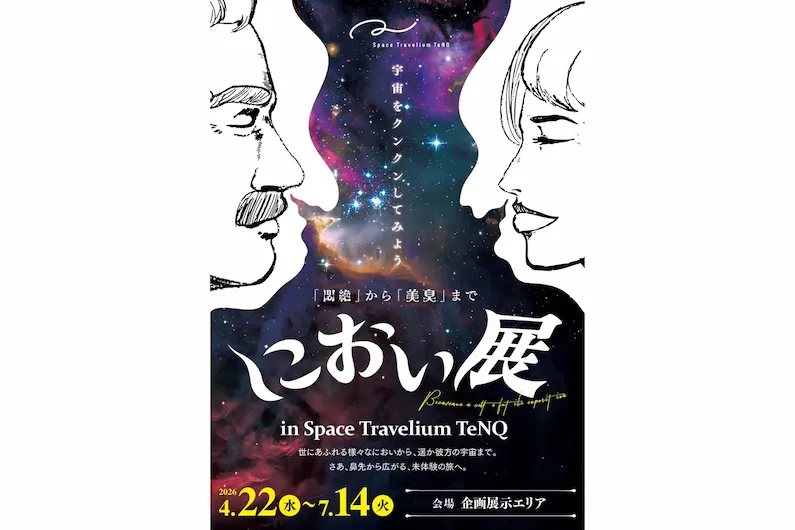
Odor Exhibition in Space Travelium TeNQ

The "Odor Exhibition in Space Travelium TeNQ" is set to arrive at the special exhibition area of Space Travelium TeNQ, a dedicated space experience facility located on the 6th floor of the Yellow Building in Tokyo Dome City. This event marks the first appearance of the traveling "Odor Exhibition" at this specific venue—an event that has already generated significant conversation across the country by challenging visitors to experience a spectrum of scents ranging from the exquisitely beautiful to the profoundly repulsive.

While the touring exhibition is known for its eclectic olfactory variety, this iteration is unique due to its integration with the space-themed environment. To bridge the gap between Earth and the cosmos, the organizers have developed two original scents imagining the smells of "Aliens" and "Planets," allowing guests to engage with the concept of deep space through a sensory medium rarely utilized in scientific exhibits. Beyond these cosmic additions, visitors can explore a curated selection of scents, including the infamous "extreme stench" corner featuring Surströmming, widely regarded as the world’s smelliest food. To complement the experience, the venue plans to offer original Space Travelium TeNQ merchandise and a themed cafe menu throughout the event period.

Main Exhibition Contents

The exhibition is organized into three distinct areas, each designed to evoke different emotional and physical responses through scent.

Area 1: Standard scents of the "Odor Exhibition"
This section presents a diverse world of aromas, beginning with a chronological progression of flower scents spanning twelve months. The curation extends to the biological world with the smells of various insects and animals, and even delves into the historical realm with "scents related to great figures," such as Sakamoto Ryoma and Oda Nobunaga. Furthermore, a specialized corner reproduces the "life of an insignificant man," offering an exhibit where the odor serves as a primary tool to convey the atmosphere of a specific living space.

Area 2: 4 types of extreme stenches
For those seeking a more intense experience, this area features four of the most potent odors known to man, each housed within dedicated boxes to contain the scent. These include:

  • Surströmming: The Swedish canned fish cited as the smelliest food globally.
  • Stinky Tofu: A fragrance so pungent it has historically caused foul-odor commotions that resulted in the halting of trains.
  • Foot odor: A familiar, yet extreme, example of human scent.
  • Kusaya: A specialty product of the Izu Islands renowned for its unique and powerful aroma.

Area 3: Scents related to space
This area blends the permanent offerings of Space Travelium TeNQ with exclusive event additions. Visitors can experience the "Scent of the Moon’s Surface" and the "Scent of Space(R)" (a registered trademark of Promo Tool Co., Ltd.), alongside the two aforementioned exclusive scents imagining "Aliens" and "Planets."

Related Exhibition: Daily Necessities of Space Life

Adjacent to the main olfactory displays is an exhibition focused on the practicalities of maintaining hygiene and comfort in the void of space. This section features product exhibitions—rather than interactive trials—provided by Lion Corporation, IRiS Tokyo Co., Ltd., and Sansei Pharmaceutical Co., Ltd.

Notable exhibits include:

  • Lion Corporation "relaXspace A": A skin-application stick designed to mitigate concerning odors or provide a pleasant fragrance. The specific scents proposed for astronauts were developed using an AI diagnosis algorithm that analyzed over 900 combinations to determine preferred fragrances.
  • IRiS Tokyo Co., Ltd. / Sansei Pharmaceutical Co., Ltd. "Eye mask incorporating scented capsules": An eye mask engineered for the unique environment of space. This technology was launched to the International Space Station (ISS) on August 24, 2025, for use by astronauts.

Interactive Corner

To engage visitors of all ages, the venue will host an interactive quiz. Participants are tasked with identifying a "mysterious odor" placed at the venue by searching for the matching scent among the various displays within the special exhibition area. This activity encourages guests to rely on their own olfactory perception while touring the exhibits.

For further details regarding the specific content of the quiz and exhibitions, visitors are encouraged to check the official website.

Basic Information

Location / Nearest Station
Space Travelium TeNQ

  • Suidobashi Station (3 min walk)
  • Korakuen Station (7 min walk)

Address
〒112-0004
6F Yellow Building, 1-3-61 Koraku, Bunkyo-ku, Tokyo
MAP

Venue
Special Exhibition Area within Space Travelium TeNQ

Period
2026/04/22 (Wed) ~ 2026/07/14 (Tue)

Fee / Cost
Included in the facility admission fee

Inquiry
Tokyo Dome City Waku-Waku Dial
03-5800-9999 (Reception hours: 10:00~17:00)

Official Website
https://www.tokyo-dome.co.jp/tenq/event/exhibition-stt-6.html

Note: Posted content may be subject to change. Please verify the latest information via the official website of the venue or organizer.

🛏️ See hotels near Tokyo

Space Travelium TeNQ opened in July 2014 on the upper floors of Tokyo Dome City’s Yellow Building. It is operated under the concept of “Museum × Entertainment,” which here means pairing educational content with interactive media and theatrical presentation rather than conventional glass-case display. The name TeNQ derives from the Japanese word for sky, ten, combined with “Question” and “Queue”—suggesting both the upward gaze and the sequence of inquiry that astronomy tends to generate.

The building is organized around Theater 23-5. The auditorium contains an 11-meter domed screen and 145 reclined seats, with programming that cycles through high-resolution satellite imagery, rover telemetry, and full-dome visualizations of stellar fields. Because the screen occupies the ceiling and the seats face upward, the theater is designed to remove the framing devices of ordinary cinema; the image simply occupies the viewer’s peripheral vision.

Beyond the theater, the museum maintains several exhibition zones. The Science Area, developed with JAXA, presents flight hardware, material samples, and structural components from actual satellite missions. The Imagination Area, in contrast, invites artists and designers to respond to space exploration through installation work, sound, and non-literal cartography. Across roughly 1,800 square meters on two floors, the institution has historically relied on visual and auditory means to convey its material.

The 2026 Odor Exhibition introduces scent as a further channel of information. Working with chemists, the museum developed olfactory profiles tied to specific environments: the sharp metallic and ozone residue of a spacecraft airlock, the sulfur compounds detected in Venusian atmospheric data, and the cold hydrocarbon haze associated with Titan. Each station presents the scent alongside its chemical context, treating smell as another measurable property of places most visitors will never enter directly.

Experience the Magic: Gongju Princess Festival 2025 (May 3rd – December 6th)

Experience the Magic: Gongju Princess Festival 2025 (May 3rd - December 6th)

Gongju Festival

🗓️ Festival Period: 2025.05.03 ~ 2025.12.06

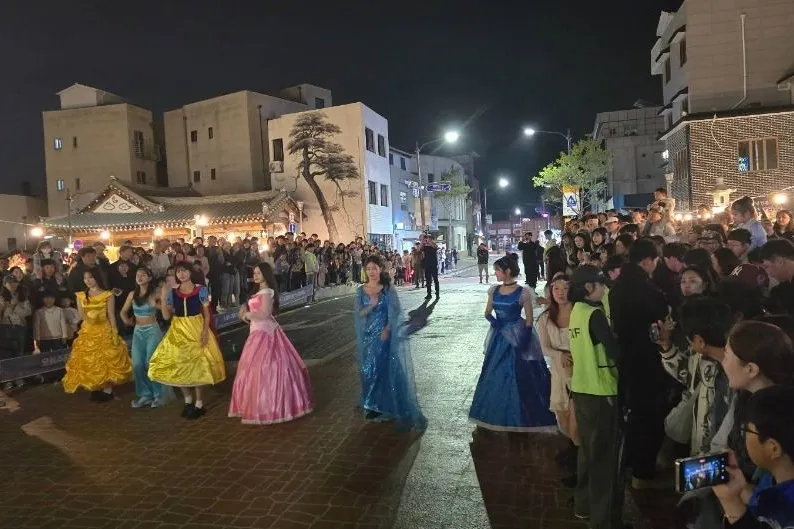
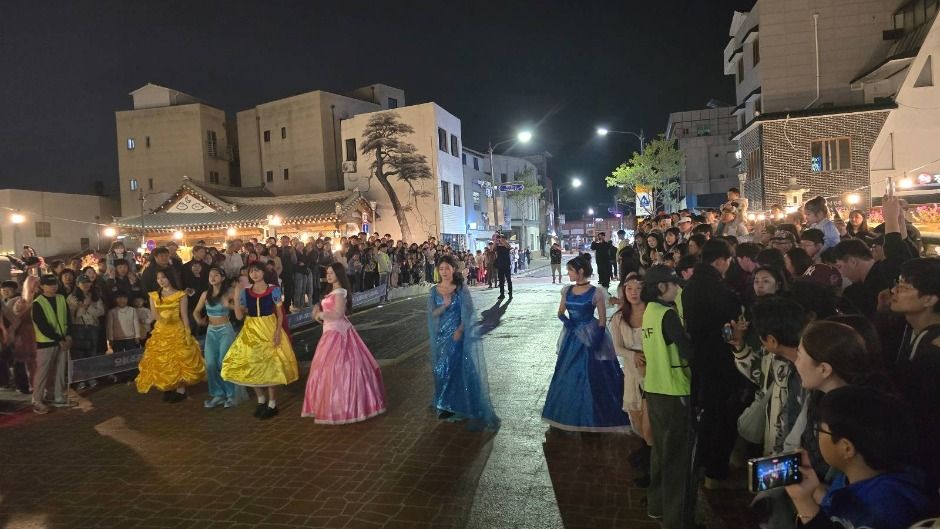
The Gongju Festival presents a unique nighttime tourism experience centered around an enchanting "Princess" concept, hosted in the historic city of Gongju. This recurring event transforms the Jeminchon Gamyeonggil area into a vibrant nocturnal spectacle on specific dates throughout the year. Attendees can anticipate a series of engaging activities, including a distinctive nighttime parade embodying the Princess theme, a bustling nighttime flea market offering various goods, and specially curated events designed for participants embracing the "Princess" identity. A key feature of the festival is its seasonal evolution; the themes of spring, summer, autumn, and winter will each bring a different atmosphere and aesthetic to the Jeminchon Gamyeonggil area, ensuring a fresh experience with each iteration.

Schedule

The festival takes place on the following specific dates within the overall period:

  • May 3, 2025
  • July 5, 2025
  • October 4, 2025
  • December 6, 2025

Program Highlights

The festival offers a structured program designed to immerse visitors in its unique concept:

  1. Main Program: The centerpiece of the event is the Nighttime Parade, meticulously organized around the central Princess concept.
  2. Side Programs: Complementing the parade are additional attractions, including a lively Flea Market operating during the event hours and various Events further developing the Princess theme.
  3. Consumer Participation Program: Visitors are encouraged to actively engage through offerings like the Princess Maker Package and participation in Various Events designed for direct involvement.

📍 Location

Address: 75 Bonghwang-ro, Gongju-si, Chungcheongnam-do (Banjuk-dong)

🛏️ Accommodation near the event

💰 Fee

Admission to the festival grounds and viewing the main events is free of charge.

📞 Inquiries

For further information, please contact the organizers directly at 041-852-8066.

🖥️ Official Information

Visit the official event website for the latest updates and details: Homepage

Gongju Festival

What is Gongju’s Royal History?

Gongju, once the capital of the Baekje Kingdom from 475 to 538 AD, played a significant role in Korea’s early history. During this time, Baekje was one of the Three Kingdoms of Korea, noted for its cultural and artistic contributions. Gongju was a center of political influence and cultural development, contributing to advancements in architecture, religion, and the arts.

A key site reflecting Gongju’s royal history is the Tomb of King Muryeong, a UNESCO World Heritage Site. Discovered in 1971, the tomb contained numerous artifacts, including gold crowns and jewelry, showcasing the craftsmanship of the Baekje period and its interactions with neighboring cultures.

Gongju’s historical significance is further highlighted by sites like the Gongsanseong Fortress and the Baekje Cultural Land, which continue to draw visitors interested in Korea’s ancient heritage. The Gongju Princess Festival also celebrates this history, offering a chance to explore the traditions and stories of Baekje royalty.

Kichijoji Excel Hotel Tokyu’s 2025 Black Tea Afternoon Tea: A New Menu of Sweet & Savory Delights

Kichijoji Excel Hotel Tokyu's 2025 Black Tea Afternoon Tea: A New Menu of Sweet & Savory Delights

Black Tea Afternoon Tea Returns to Kichijoji Excel Hotel Tokyu with a New Menu

The Kichijoji Excel Hotel Tokyu welcomes back its popular annual afternoon tea event, this year centering entirely on the nuanced flavors of black tea, presented through a completely refreshed menu. For enthusiasts of themed afternoon teas or those seeking a refined culinary experience in Kichijoji, this event offers a unique exploration of black tea incorporated into both sweet and savory preparations.

A Refreshed Menu Focused on Black Tea

Building on its annual popularity, the hotel introduces a novel selection designed to highlight different facets of black tea. A standout item is the "Earl Grey and Apple Verrine," a visually appealing dessert constructed in layers to offer evolving flavors with each spoonful; it combines a refreshing apple jelly base, a smooth milk mousse middle, and a fragrant Earl Grey jelly topping.

Beyond the verrine, the pastry chef has curated additional sweets that complement the theme. Guests can expect items such as a rich "Chocolate Terrine," offering a deep cocoa flavor, and a "Black Tea Madeleine," noted for its subtle fragrance derived from the tea infusion.

The savory offerings have also been thoughtfully designed to align with the black tea concept. Included is a "Ceylon Tea Flavored Chicken Salad," which features a dressing infused with Ceylon tea, lending an aromatic quality to the dish. Another notable savory item is the "Smoked Duck and Orange with Earl Grey Jelly," pairing moist, tender smoked duck with the distinctive citrus and bergamot notes of Earl Grey, presented in jelly form. This iteration distinguishes itself from previous years by presenting an entirely new menu, ensuring a fresh experience even for returning visitors.

Event Details

Here is the essential information for planning your visit:

  • Location / Nearest Station:
  • Address:
    • 〒180-0004 Tokyo, Musashino City, Kichijoji Honcho 2-4-14
    • View Map
  • Venue:
    • Lounge & Dining SORAE, located within the Kichijoji Excel Hotel Tokyu
  • Event Period:
    • March 1, 2025 (Saturday) – June 1, 2025 (Sunday)
  • Time:
    • A 2-hour seating limit applies.
    • Last order for drinks is taken 1 hour and 30 minutes after seating.
  • Price / Fee:
    • 6,000 yen per person (inclusive of tax and service charge)
  • Official Website:

Please note that published content is subject to change. It is advisable to check the official website of the venue or organizer for the most current information before visiting.

Image of the Black Tea Afternoon Tea set at Kichijoji Excel Hotel Tokyu
Close-up of sweets from the Black Tea Afternoon Tea set
Close-up of savory items from the Black Tea Afternoon Tea set
Another view of the afternoon tea sweets selection
Detailed view of a specific dessert from the afternoon tea set

What is Kichijoji?

Kichijoji is a neighborhood in the western part of Tokyo, Japan, known for its mix of urban life and natural surroundings. It attracts both locals and tourists with its variety of shops, cafes, and restaurants. Inokashira Park, a notable feature of the area, provides a peaceful retreat with opportunities for walking, picnicking, and viewing cherry blossoms. Kichijoji’s combination of lively streets and cultural sites makes it a worthwhile stop for visitors to Tokyo.

Analytics