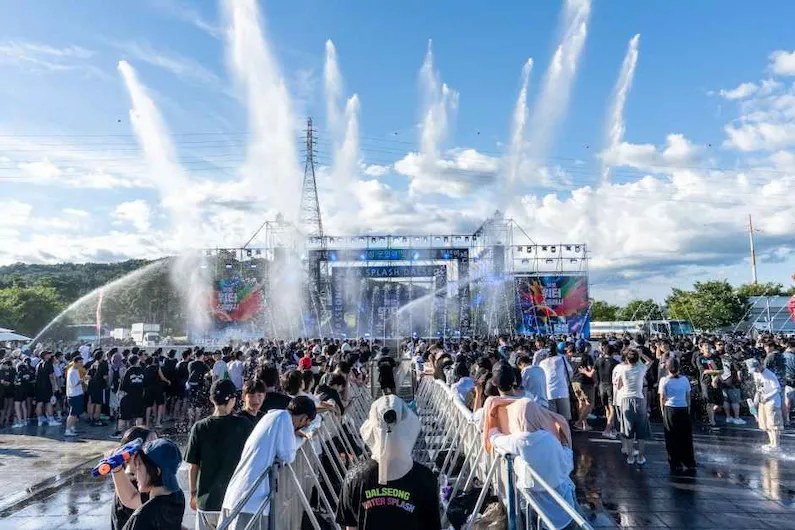
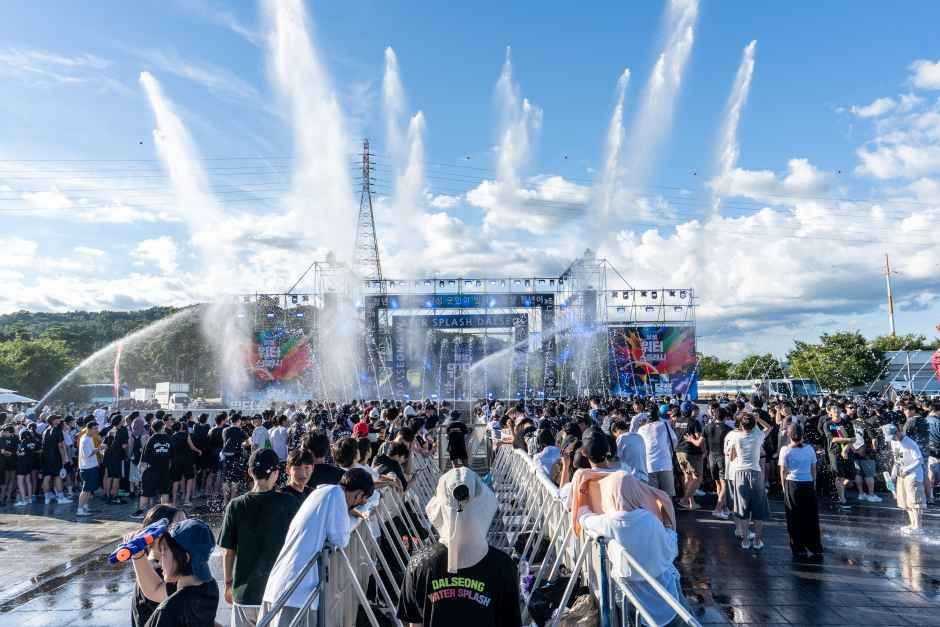
The Dalseong Water Splash Youth Festival returns on July 18, 2026, for its second iteration following a successful 2025 debut that established it as the first government-initiated water festival in the Daegu metropolitan area. While municipal festivals often prioritize broad demographic appeal, this event targets youth participation specifically—not merely as attendees but as economic stakeholders and cultural producers.
What distinguishes this festival from conventional summer music events is its structural integration of commerce and performance. Rather than outsourcing vendor operations to established chains, the festival reserves its Youth Market and food truck allocations exclusively for local young entrepreneurs and small business owners. These vendors sell handmade props, accessories, clothing, and aromatherapy products alongside coffee and snacks—categories selected to highlight craft-based and culinary startups rather than standardized festival fare.
The performance programming balances commercial appeal with regional representation. Headliners Chungha, Haon, Zion.T, Nucksal, and DJ Subin—spanning genres from K-pop and R&B to hip-hop and electronic music—perform alongside local youth teams. This dual-tier approach provides professional production values while maintaining visibility for emerging regional talent, a combination rarely available in free municipal events.
Practical design choices differentiate the experience from typical open-air concerts. The signature Water Splash Time operates simultaneously with DJ sets and live performances, allowing attendees to cool off within the main festival grounds rather than retreating to distant water stations. This integration addresses the physical reality of July heat in Daegu—where temperatures regularly exceed 30°C—without disrupting engagement with the stage.
Side programs extend beyond passive consumption. Youth Experience Programs include face painting and temporary tattoo stations (specific activities subject to final confirmation), alongside informational booths for the Dalseong Youth Innovation Center. These elements provide interactive alternatives during set changes or for attendees seeking respite from the central crowd.
The festival’s operational model reflects a specific municipal strategy: establishing Dalseong-gun as a youth-cultural destination while providing infrastructure for the area’s entrepreneurial ecosystem. For attendees, this translates to free admission—a rarity for events featuring nationally recognized musical acts—supported by government funding rather than commercial ticket sales.
🗓️ 2026.07.18 ~ 2026.07.18
📍 Address: 57 Gangjeongbon-gil, Dasa-eup, Dalseong-gun, Daegu
🛏️ Accommodation near the event
💰 Fee: Free
📞 Inquiry: 053-668-4267
⭐️ Instagram: https://www.instagram.com/dalseong_culture/
🖥️ Website: https://www.dsart.or.kr/
What is Dalseong?
Dalseong, formally Dalseong-gun, occupies the southern periphery of Daegu Metropolitan City. It stretches across the flat alluvial plain of the Nakdong River, a landscape defined by rice paddies, vegetable fields, and the wide, slow-moving waterway that forms its western boundary. While central Daegu compresses itself into vertical towers and narrow streets, Dalseong spreads horizontally. The district contains the city’s largest continuous tracts of undeveloped land, making it an inevitable choice when the city needs to accommodate crowds, stages, or temporary infrastructure that would overwhelm the urban core.
For centuries, this area supplied produce to Daegu’s markets. The soil here grows watermelons, peppers, and tomatoes in rotation with rice, and the agricultural patterns remain visible even as the city has expanded around them.
This practical geography has determined its modern function. When Daegu hosts summer music festivals, youth markets, or water-based recreation events, they usually happen here. The flat terrain allows for the installation of temporary stages and vendor stalls without extensive preparation, while the riverbank provides natural access for swimming, boating, or beach events that would be impossible downtown. Dalseong does not function as a tourist destination in the traditional sense; it serves as the city’s overflow space, the place where large gatherings can occur without disrupting the normal rhythm of urban life. It offers room—the simple, physical luxury of distance and sky that the crowded center cannot provide.
