Grand Nikko Tokyo Daiba Peach Afternoon Tea 2026: Experience a Luxurious Summer Escape at The Lobby Cafe

Grand Nikko Tokyo Daiba Peach Afternoon Tea 2026: Experience a Luxurious Summer Escape at The Lobby Cafe

The Lobby Cafe “Peach Afternoon Tea ~Peach-Colored Happiness~” [Grand Nikko Tokyo Daiba]

A summer reward time enveloped in pale pink. Savor the rich fragrance of seasonal peaches.

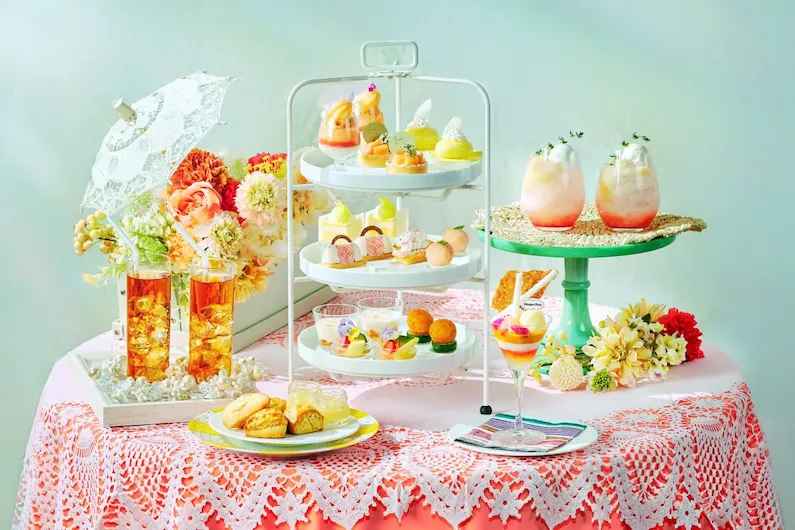
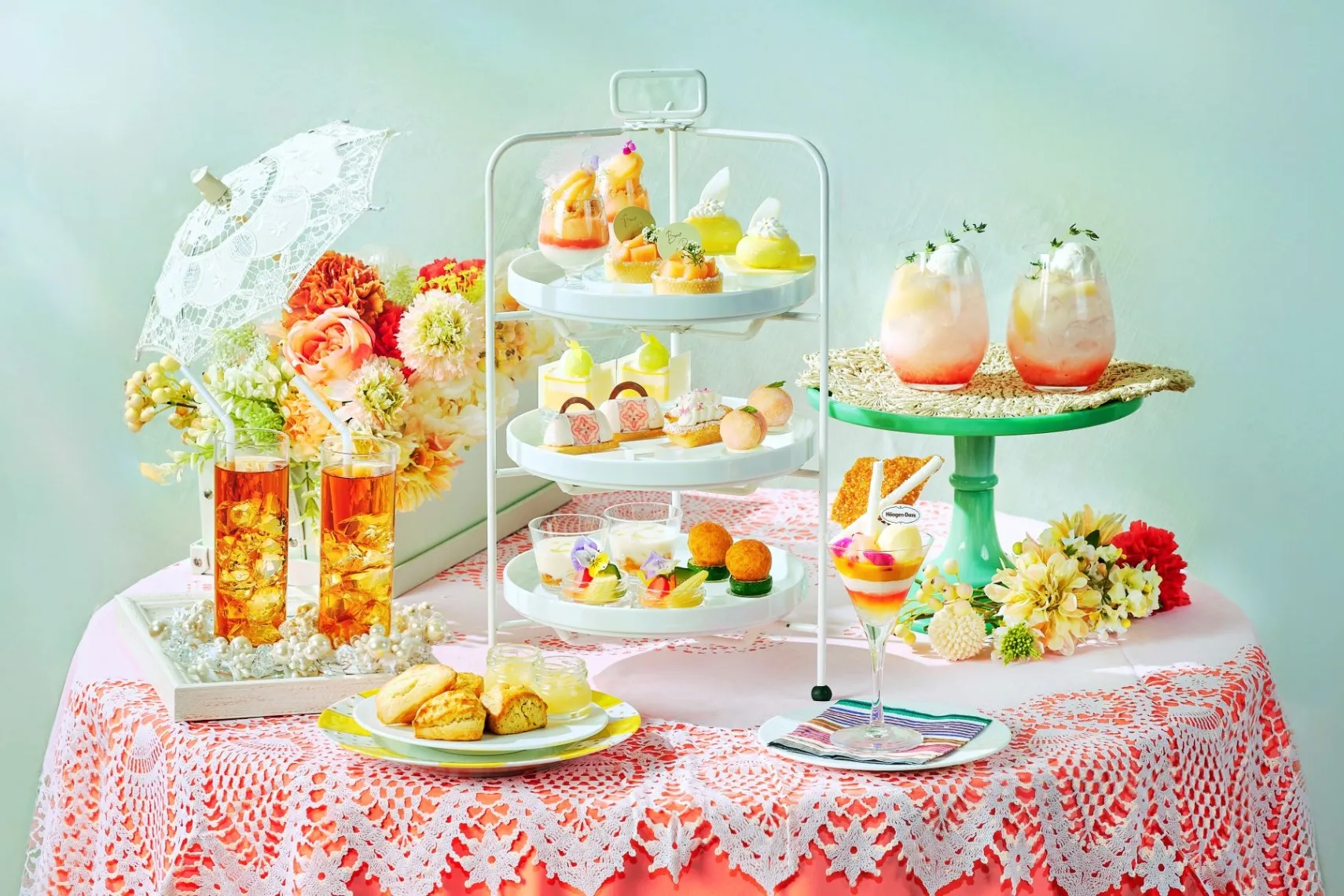
For those seeking a refined escape from the summer heat, The Lobby Cafe presents an afternoon tea experience centered on the delicate sweetness and aromatic profile of seasonal peaches. Throughout July and August 2026, guests can enjoy a curated selection of sweets and savories designed to celebrate the peak of peach season.

What distinguishes this offering is the commitment to quality over origin; rather than sourcing from a single region, the hotel carefully selects the most delicious domestic peaches available during the season to ensure optimal ripeness and flavor. This approach allows the menu to showcase the fruit in various forms, ranging from juicy, fruit-forward desserts to sophisticated savories where the peach’s natural sugar is balanced by the saltiness of prosciutto, smoked salmon, and fresh herbs.

The Menu Composition

The afternoon tea is presented in a three-tiered arrangement, offering a progression of flavors and textures.

Top Tier: Elegant Patisserie
The top tier focuses on lightness and floral notes, featuring:

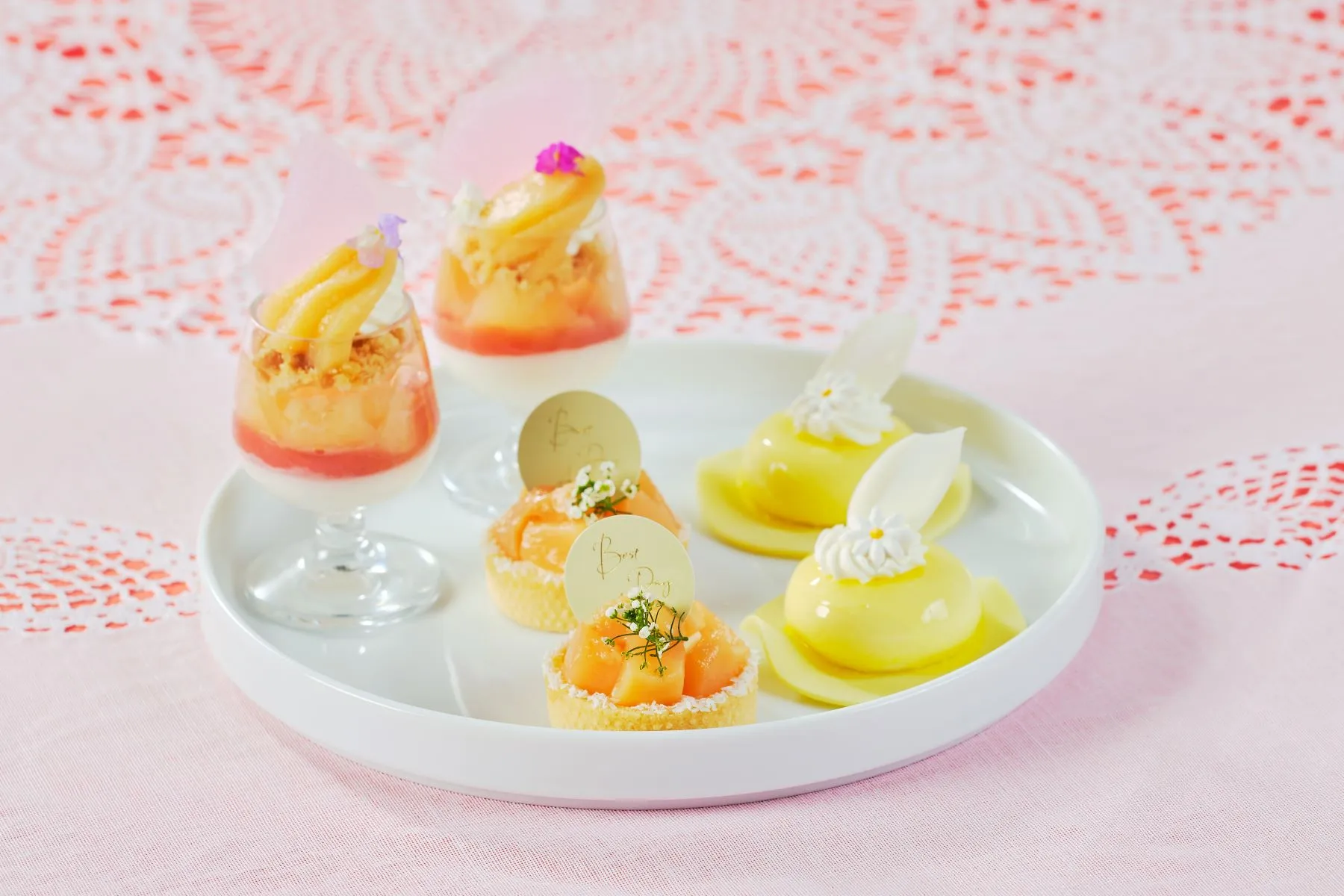
  • Lychee Panna Cotta with Peach Compote: A glass dessert that pairs the gorgeous fragrance of lychee with the concentrated sweetness of peach compote.
  • Mousse Peche: A meltingly smooth mousse that highlights the fruit’s creamy side.
  • Gateau Peche: A cake finished with an elegant, refined taste.

Middle Tier: Texture and Variety
The middle tier explores diverse confectionery styles to provide a comprehensive taste of the season:

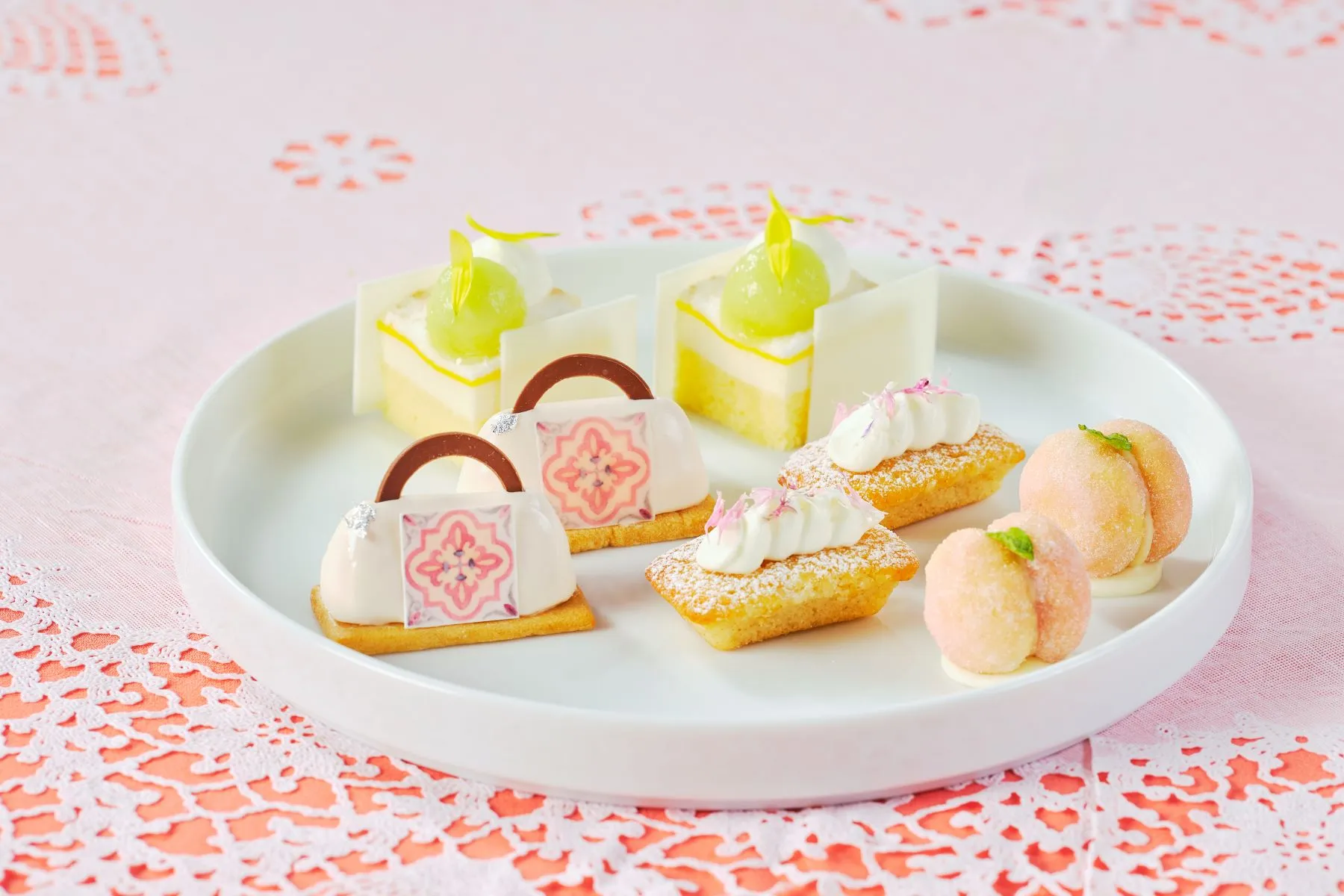
  • Peach Cream Puff: Filled with a rich, peach-infused cream.
  • Peach Macaron: An offering where elegant sweetness spreads across the palate.
  • Peach Tart: A combination of juicy fresh fruit and a fragrant, crisp tart crust.
  • Peach Fromage: A dessert where a slight acidity harmonizes with the fruit’s sweetness.
  • Peach Bavarois: A smooth, melt-in-the-mouth classic.

Bottom Tier: Sophisticated Savories
To balance the sugar of the desserts, the bottom tier introduces a variety of savory items that emphasize freshness:

  • Peach, Prosciutto, and Burrata Caprese: A trio that uses the richness of the cheese and cured meat to enhance the fruit’s juiciness.
  • Peach and Yogurt Cold Soup: Infused with mint and cardamom, this dish serves as a cooling palate cleanser.
  • Hokkaido Scallop Flakes with Mint and Cardamom Scent: A refined seafood addition.
  • Peach Focaccia and Smoked Salmon Tartare with Avocado Dip: A complex combination of savory textures.
  • Peach and Earl Grey Scones: Served with clotted cream and white peach jam.

Beverage Selection

To accompany the meal, guests may enjoy a free-flow selection of ten different beverages, including premium Ronnefeldt teas served in pots.

  • Seasonal Recommended Flavor Tea: “White Peach”—a limited-edition fruit tea that blends the sweet scent of white peach with the delicate acidity and refreshing aroma of lemon myrtle.
  • Herb Teas: Chamomile, Refresh Mint, Sweet Berries, and Jasmine.
  • Black Teas: Earl Grey, Assam, Darjeeling, and English Breakfast.
  • Coffee: Available both iced and hot.

*Please check the official website for details on the contents.

Basic Information

  • Location / Nearest Station
    Grand Nikko Tokyo Daiba
    Daiba Station
  • Address
    〒135-8701
    2-6-1 Daiba, Minato-ku, Tokyo
    MAP
  • Venue
    Grand Nikko Tokyo Daiba 2nd Floor “The Lobby Cafe”
  • Period
    2026/07/01 (Wed) ~ 2026/08/31 (Mon)
  • Time
    Start 13:00 / End 17:00 (Last Order 16:30)
  • Price/Cost
    \7,000 (including consumption tax and service charge)
  • Inquiry
    Restaurant General Information
    03-5500-4550
    Remarks: 10:00–18:00
  • Official Website
    https://www.tokyo.grandnikko.com/events/2658/

*The posted content may be subject to change. Please check the official website of the venue/organizer for the latest information.
🛏️ View hotels near Tokyo

The Lobby Cafe "Peach Afternoon Tea ~Pink Happiness~" [Grand Nikko Tokyo Daiba]_1 The Lobby Cafe "Peach Afternoon Tea ~Pink Happiness~" [Grand Nikko Tokyo Daiba]_2 The Lobby Cafe "Peach Afternoon Tea ~Pink Happiness~" [Grand Nikko Tokyo Daiba]_3 The Lobby Cafe "Peach Afternoon Tea ~Pink Happiness~" [Grand Nikko Tokyo Daiba]_4 The Lobby Cafe "Peach Afternoon Tea ~Pink Happiness~" [Grand Nikko Tokyo Daiba]_5

Daiba—formally Odaiba—is a chain of artificial islands in Tokyo Bay, connected to the city center by the Rainbow Bridge. Built in the 1850s as coastal fortifications during the final years of the Tokugawa shogunate, the islands served a military purpose for less than two decades before falling into disuse. They remained largely vacant until the 1980s, when redevelopment transformed the area into a commercial district characterized by horizontal space rather than vertical compression. Unlike the dense wards of central Tokyo, Daiba operates at a different scale: wide arterial roads, surface parking, and low-rise complexes that spread across reclaimed land.

This spatial arrangement creates a specific relationship with the bay. The water defines the district’s perimeter, and the buildings—mostly 1990s-era hotels and retail centers—sit directly against pedestrian promenades that follow the coastline. The absence of high-density residential blocks means the area empties significantly after business hours, and the wind patterns differ markedly from the inland city. Without the heat island effect of dense asphalt and with unobstructed exposure to the water, temperatures drop faster after sunset, and the air carries consistent movement from the bay.

Grand Nikko Tokyo Daiba occupies a waterfront position within this topography. The hotel’s architecture reflects the district’s horizontal emphasis—a sprawling structure that maximizes room views across the water rather than competing for height with nearby landmarks. Practically, this means guests have immediate pedestrian access to the bay’s edge, and the hotel’s public spaces operate within the islands’ specific microclimate.

During summer, this physical setting alters the standard Tokyo hotel experience. The afternoon tea service functions as an occupation of the site’s actual conditions rather than a themed escape. The terraces remain usable through hot afternoons because of the ventilation from the water, and the view across the bay maintains a literal, measurable distance from the urban density of the mainland. You remain within metropolitan Tokyo while occupying a physical environment—temperature, airflow, horizon line—that follows different patterns than the city center twenty minutes away.

LOUANGE TOKYO Le Musée Ginza Elegance Blue 2026: Experience a Refreshing and Sophisticated Summer Afternoon Tea

LOUANGE TOKYO Le Musée Ginza Elegance Blue 2026: Experience a Refreshing and Sophisticated Summer Afternoon Tea

Elegance Blue 2026 [LOUANGE TOKYO Le Musée]

Enjoy a refreshing blue tea time in Ginza. A Summer Afternoon Tea to color your summer has arrived.

For those seeking a sophisticated escape from the summer heat, LOUANGE TOKYO Le Musée in Ginza presents a seasonal experience designed to evoke transparency and serenity. As part of a popular annual color-themed series, the “Blue” afternoon tea returns for 2026, iterating on its previous success by introducing a summer-specific world-view that balances whimsical cuteness with a refined, adult atmosphere.

This event offers guests the opportunity to immerse themselves in a fantastical blue environment, utilizing a curated lineup of seasonal fruits and light, refreshing ingredients. Alongside the signature afternoon tea, the venue is debuting a standalone assiette dessert, “Elegance Peche Blue,” which serves as a focused study in summer flavors—specifically peach, lychee, and rose.

Afternoon Tea “Elegance Blue 2026”

The center-piece of this experience is the “Elegance Blue 2026” afternoon tea, which features “Noomy”—a pure white teddy bear lounging on a swim ring—to lend a playful summer aesthetic to the presentation. The experience begins with a non-alcoholic pineapple soda, chosen specifically for its ability to provide an immediate sense of summer exhilaration.

The sweets are distributed across two tiers, prioritizing freshness and light textures. The top tier features rice flour donuts designed to resemble swim rings, macarons with a bleu orange profile, bleu citrus pâte de fruit, and heart-shaped yogurt mousse paired with a honey lemon sauce. The middle tier expands the flavor palette with an Earl Grey scented Saint Honoré, a white peach panna cotta with jasmine sauce, and jelly crafted from fresh melon sourced from Shizuoka Prefecture. Additionally, a chocolate gift box containing petit sablés and boules de neige adds a touch of traditional confectionery.

To balance the sweetness, the bottom tier is dedicated to high-end savories that emphasize both flavor and visual contrast. Highlights include homemade roast beef crafted from A5 Japanese Black beef and topped with caviar, mini burgers featuring shrimp and scallop cutlets with homemade tartar sauce, and a mille-feuille arrangement of salmon tartare and avocado. The savory selection is rounded out with a summer chopped salad, a mint-scented celery root mousse quiche tart, and a stew-style vichyssoise.

Optional Enhancement:
Guests may opt for the “Add 2 teddy bears” plan for an additional ¥2,200 (tax and service charge separate).

Elegance Peche Blue

For those preferring a plated dessert over a full tea service, the “Elegance Peche Blue” assiette is available. This sophisticated dish is built upon a base of peach and lychee mousse, masking a hidden core of raspberry and rose-scented jelly. The composition is accented by jasmine-flavored crumble for textural variety and is served with a refreshing lemon yogurt sorbet to maintain a light, summer-appropriate profile. The presentation is completed with rose motifs and a miniature chocolate gift box, reflecting the venue’s commitment to elegance.

Price: ¥4,600 (Tax and service charge separate)
*Available exclusively at the Ginza store from 2026/6/18 to 2026/9/23.


Basic Information

  • Location / Nearest Station
    LOUANGE TOKYO Le Musee
    Ginza-itchome Station
  • Address
    〒104-0061
    1F 1-9-5 Ginza, Chuo-ku, Tokyo
    MAP
  • Event Period
    Thursday, 2026/06/18 ~ Tuesday (Holiday), 2026/09/22
  • Time
    Start 11:00 / End 21:00 (Last Order 20:00)
  • Price/Fee
    Weekdays: ¥9,800 (Tax and service charge separate)
    Weekends and Holidays: ¥10,500 (Tax and service charge separate)
  • Official Website
    https://x.gd/OWdye

*Please note that posted content may be subject to change; guests are encouraged to check the official website of the venue for the latest information.

🛏️ View hotels near Tokyo

Elegance Blue 2026【LOUANGE TOKYO Le Musée】_1 Elegance Blue 2026【LOUANGE TOKYO Le Musée】_2 Elegance Blue 2026【LOUANGE TOKYO Le Musée】_3 Elegance Blue 2026【LOUANGE TOKYO Le Musée】_4 Elegance Blue 2026【LOUANGE TOKYO Le Musée】_5 Elegance Blue 2026【LOUANGE TOKYO Le Musée】_6 Elegance Blue 2026【LOUANGE TOKYO Le Musée】_7 Elegance Blue 2026【LOUANGE TOKYO Le Musée】_8 Elegance Blue 2026【LOUANGE TOKYO Le Musée】_9 Visit the trendy spots! TTR Digital Stamp Rally in progress

LOUANGE TOKYO Le Musée is a pastry shop and afternoon tea salon in Tokyo’s Ginza district that treats dessert as displayed object. Rather than plating sweets for immediate consumption, the kitchen constructs vertical compositions—layered ice creams, confitures, and génoise built in tall glasses—that hold their structure long enough to be examined before they are eaten. The space borrows from museum context: neutral walls, precise lighting angles, and table settings that frame each course as an isolated piece.

The signature Parfait Glace series demonstrates this approach most clearly. Unlike conventional parfaits designed for spoons to mix textures immediately, these are architecturally stable arrangements where components remain distinct. The desserts arrive as temporary constructions that persist only until the first bite breaks the structure.

Afternoon tea service changes seasonally, offering savory canapés paired with dessert collections that rotate based on ingredient availability. The dining room maintains the quiet and spatial order of a small private gallery—minimal clutter, controlled sightlines, distance between tables—directing attention toward the food rather than the interior design.

In Tokyo’s crowded café market, where themes often overshadow execution, LOUANGE TOKYO occupies a specific niche. It assumes that patrons will value technical precision in pastry work and the patience required to present it properly. The result is not a revolutionary reimagining of dessert but a rigorous application of gallery standards to edible craft.

Fullmetal Alchemist x Yomi no Tsugai Exhibition 2026 in Ginza: Guide to Tickets, Dates, and Venue Access

Fullmetal Alchemist x Yomi no Tsugai Exhibition 2026 in Ginza: Guide to Tickets, Dates, and Venue Access

Fullmetal Alchemist × Yomi no Tsugai Exhibition: A Dual Anniversary Celebration in Ginza

Marking a quarter-century since the debut of Fullmetal Alchemist and half a decade of Yomi no Tsugai, manga artist Hiromu Arakawa’s dual anniversary exhibition arrives at Matsuya Ginza this August. The show—officially titled “Fullmetal Alchemist x Yomi no Tsugai Exhibition”—offers a rare convergence of Arakawa’s most celebrated completed series alongside her current ongoing work, presenting an opportunity to examine the visual and narrative evolution of one of Japan’s most distinctive creative voices. Square Enix, publisher of both properties, has organized the event to allow visitors to immerse themselves in the distinct yet thematically linked worlds of militaristic alchemy and supernatural rural folklore.

While specific display contents will be revealed progressively through the official website and X account, the exhibition promises original artwork, production materials, and thematic installations spanning both series. The pairing underscores Arakawa’s range—the steampunk-infused European aesthetic of Fullmetal Alchemist contrasting with the contemporary Japanese mountain village setting of Yomi no Tsugai—while highlighting the consistent thematic concerns that have defined her career, including等价交换, familial bonds, and the relationship between humanity and natural (or supernatural) forces.

Practical Information

The exhibition occupies the Matsuya Ginza 8th Floor Event Square from Thursday, August 13 through Wednesday, September 2, 2026. Operating hours run from 11:00 to 20:00, though visitors should note several exceptions: the venue closes at 19:30 on August 16th, 23rd, and 30th (all Sundays), and concludes at 17:00 on the final day, September 2nd. Entry is permitted until thirty minutes prior to closing, though operational hours remain subject to potential alteration.

Ticketing Structure

Admission operates on a date-and-time-specified basis for all ticket categories during the entire run.

Advance sales offer the most economical access:

  • General admission: ¥1,800
  • High school students: ¥1,000
  • Elementary and junior high school students: ¥600

Premium bundled options include:

  • Ticket with goods and pamphlet: ¥5,450
  • Ticket with goods only: ¥3,450
  • Ticket with pamphlet only: ¥3,800

Same-day purchases (subject to availability) cost slightly more:

  • General: ¥2,000
  • High school students: ¥1,200
  • Elementary and junior high school students: ¥800

Several demographics enter without charge: preschool-aged children, holders of disability certificates (plus one accompanying assistant), and various Matsuya cardholders (excluding point cards). Note that elementary school-aged visitors and younger must be accompanied by a ticket-holding guardian aged eighteen or older. The goods corner requires exhibition admission for entry; browsing merchandise without a valid ticket is not permitted.

Access and Location

Matsuya Ginza sits at 3-6-1 Ginza, Chuo-ku, Tokyo (〒104-8130), with the exhibition occupying the 8th Floor Event Square. Multiple transit options provide convenient access: Ginza Station (one-minute walk), Ginza-itchome Station (three-minute walk), Higashi-ginza Station (three-minute walk), and Yurakucho Station (eight-minute walk). A MAP is available for precise navigation.

Tickets may be purchased in advance through Purchase tickets here. Details of the event are scheduled to be updated from time to time on the official website and official X account.

The posted content may have changed. Please check the official website of the venue or organizer for the latest information.

🛏️ View hotels near Tokyo

Fullmetal Alchemist x Yomi no Tsugai Exhibition_1 Fullmetal Alchemist x Yomi no Tsugai Exhibition_2 Fullmetal Alchemist x Yomi no Tsugai Exhibition_3 Let's visit seasonal spots! TTR Digital Stamp Rally in progress

Yomi no Tsugai (黄泉のツガイ) began serialization in Monthly Shonen Gangan in December 2021, marking Hiromu Arakawa’s first major project since completing Silver Spoon (Gin no Saji) in 2019. The series represents her return to action-oriented fantasy after years of agricultural slice-of-life storytelling.

The narrative operates within a martial arts framework drawn from East Asian folklore. Yuru grows up in the hidden village of Kagemori, trained in combat techniques designed to control spiritual energy. His twin sister Asa, separated from him as an infant and raised by the Momo no Sei (Peach Sprites), works as an assassin. Their reunion occurs through violence: when outsiders attack Kagemori, Yuru learns he is one half of a “Tsugai”—a bonded pair whose combined abilities allow them to traverse the threshold between the living world and Yomi, the realm of the dead.

Arakawa approaches the material with the same technical precision visible in her earlier work. Fight scenes prioritize clarity of movement over spectacle, with the mechanical logic of the combat system—how spiritual energy manifests, the specific limitations of paired fighters—established through demonstration rather than exposition. Character motivations remain grounded even as the supernatural elements escalate; Yuru and Asa’s negotiations of their estranged relationship carry equal weight to the mythology concerning the boundary between life and death.

The comparison with Fullmetal Alchemist proves instructive given Arakawa’s continued interest in sibling dynamics and institutional corruption. Where the earlier work examined brotherhood through shared trauma and mutual protection, Yomi no Tsugai considers the stranger dynamic of twins separated at birth, asking what obligation exists between people linked by biology but not history. For an exhibition pairing these two works, the manga offers a clear view of how Arakawa’s concerns have shifted in the decade between projects—from the industrial revolution and bodily integrity to questions of inheritance and whether predetermined roles can be refused.

KIHACHI Aoyama Main Store: Experience the 2026 Ibara King Melon Special Afternoon Tea

KIHACHI Aoyama Main Store: Experience the 2026 Ibara King Melon Special Afternoon Tea

KIHACHI Afternoon Tea: Ibara King Melon Special

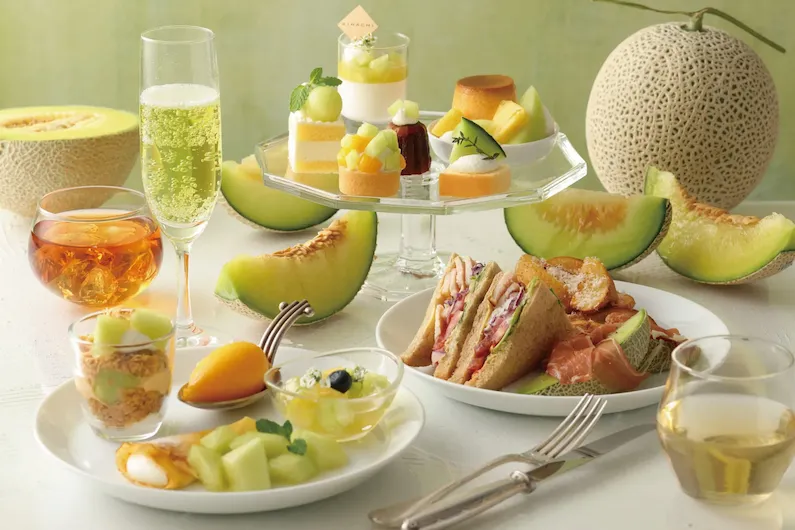
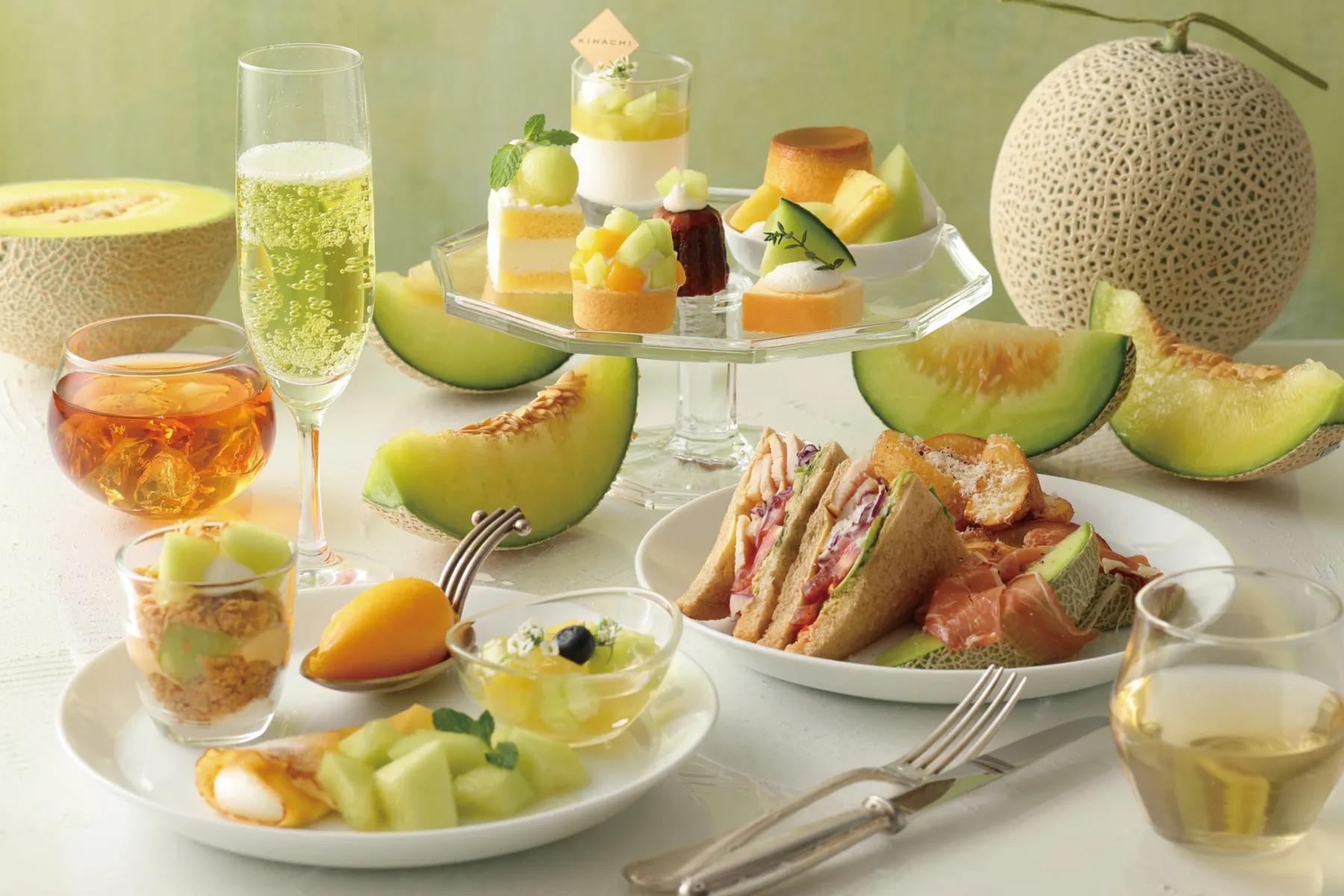
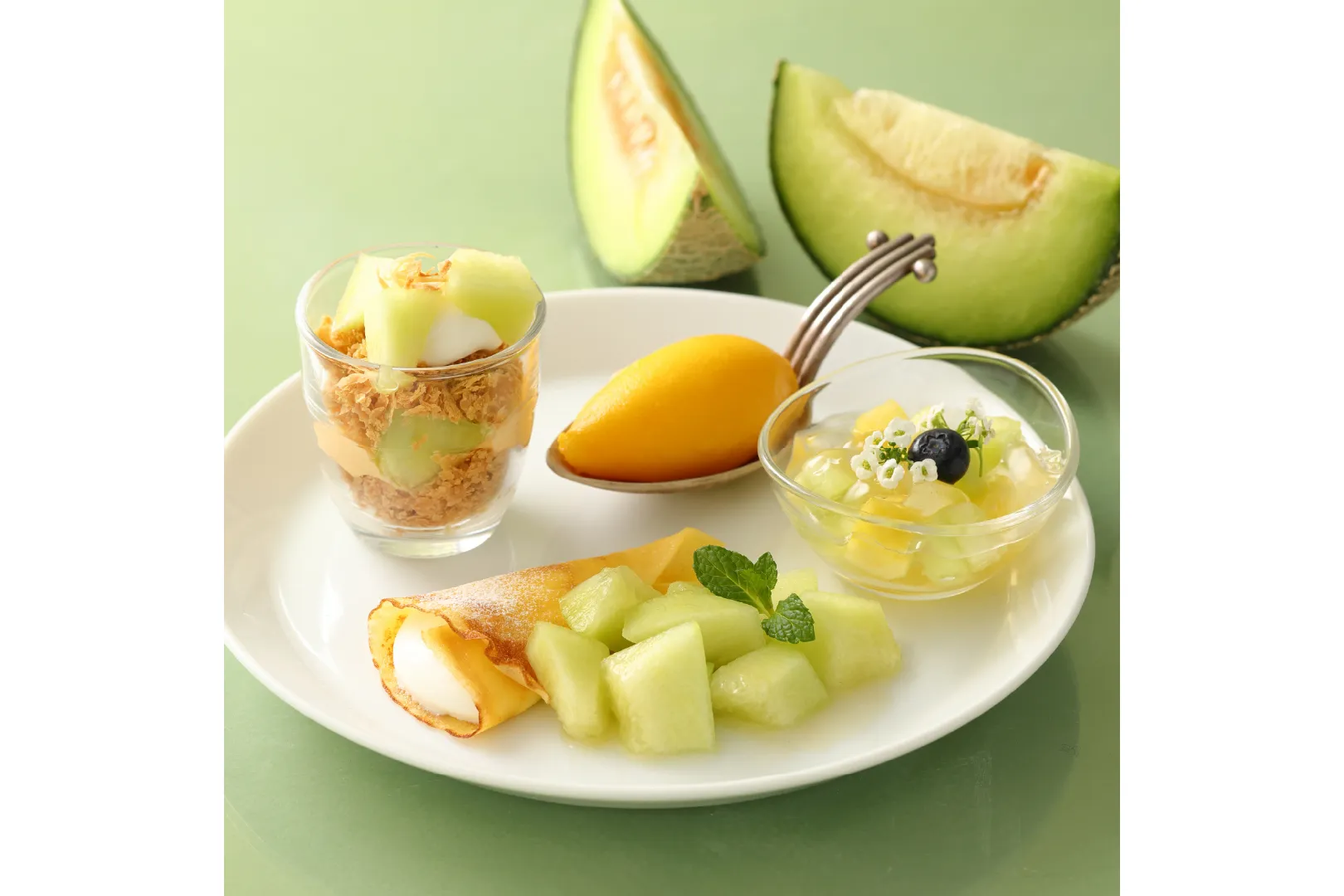
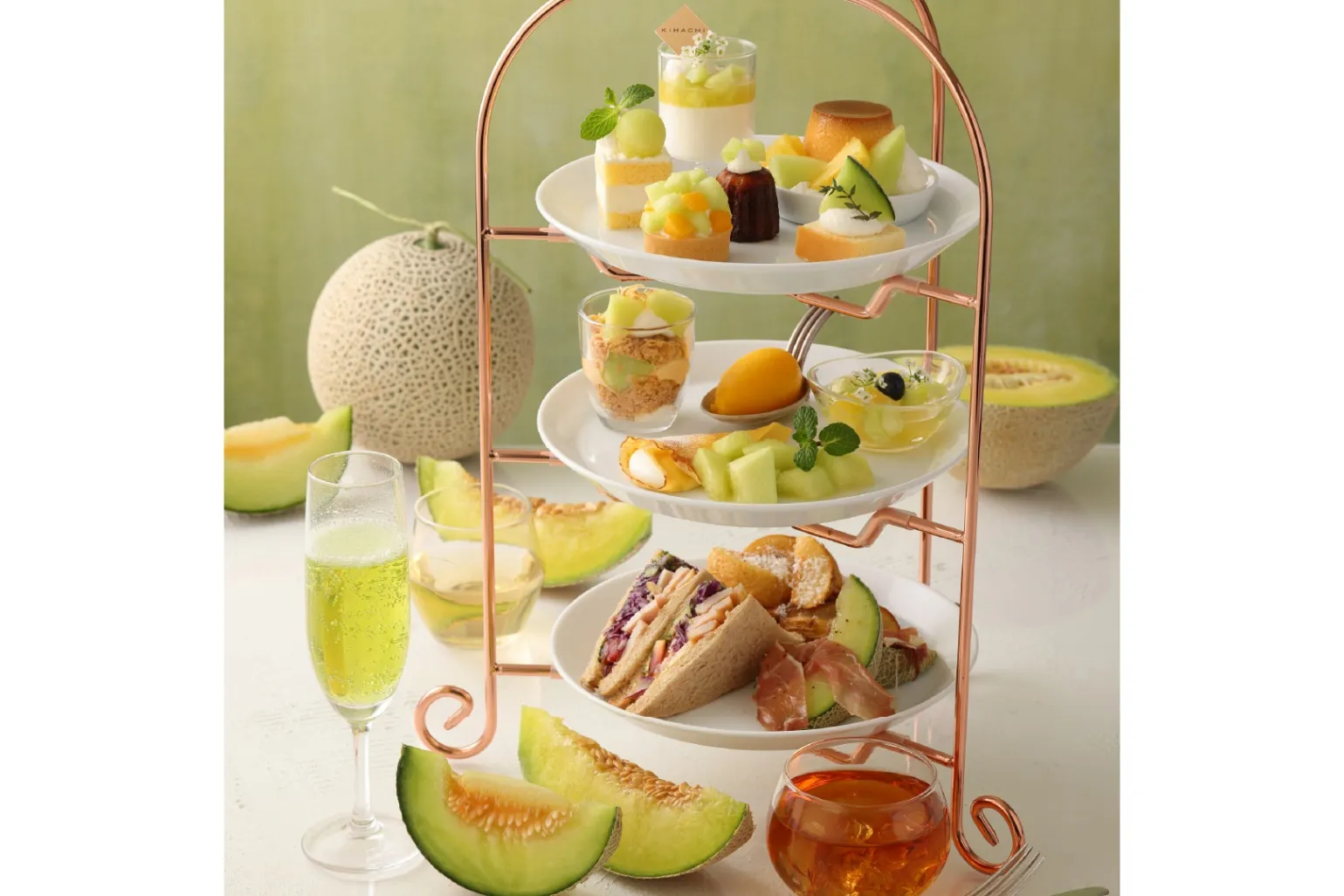
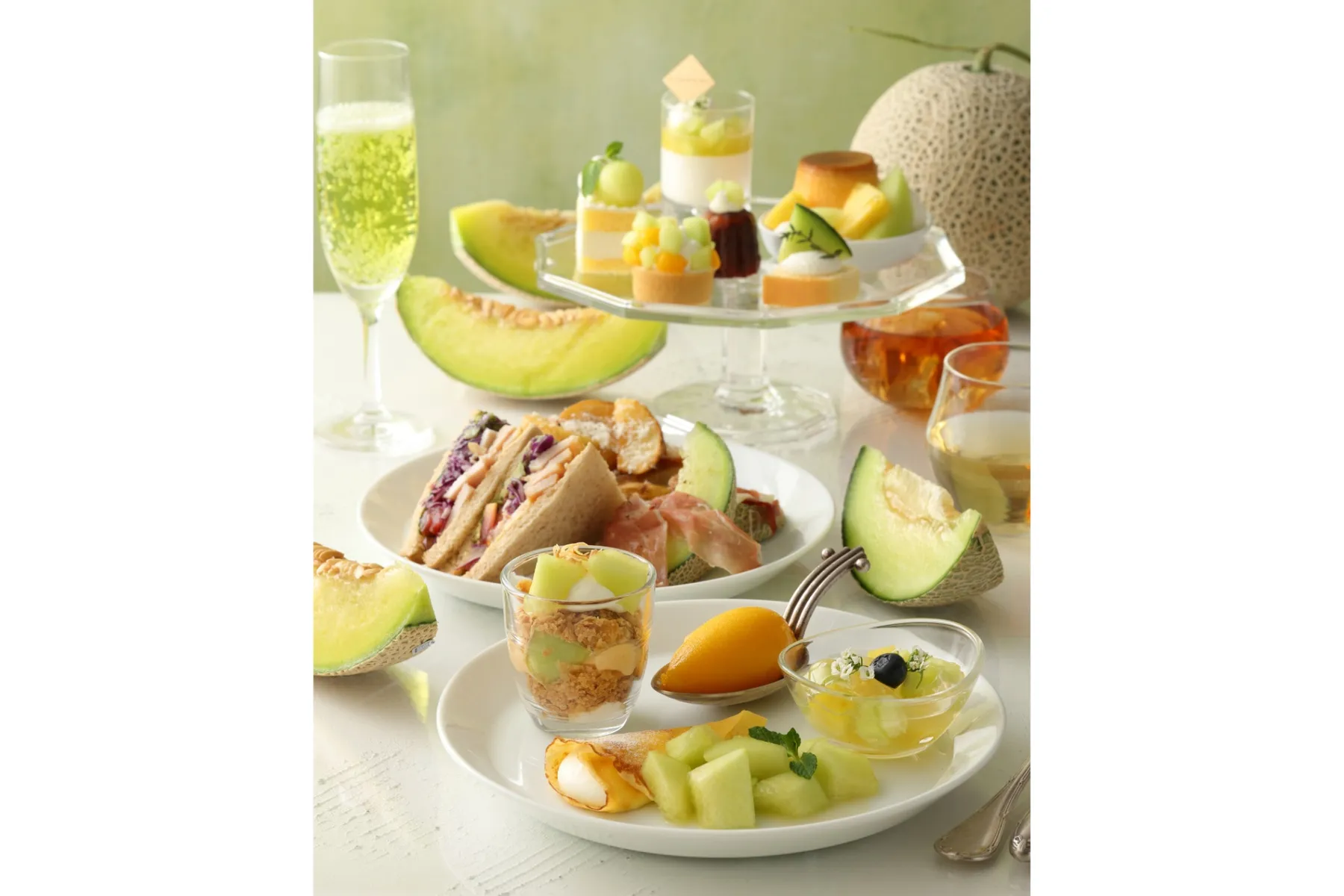
Experience a refined taste of early summer at the Kihachi Aoyama Main Store, where the seasonal “Ibara King Melon Special” afternoon tea is available for a limited time. This curated experience centers on the Ibara King melon—a variety specifically prized for its elegant aroma, high sugar content, and exceptionally juicy flesh—offering guests a sophisticated way to celebrate the peak of the melon season.

The menu is designed to evoke a refreshing early summer atmosphere, blending the primary sweetness of the melon with complementary fruit accents. To provide a balanced palate, the chefs have integrated notes of mango, pineapple, and blueberries into the selection. The experience begins with a dedicated welcome drink—available as either a melon-flavored sparkling wine or a non-alcoholic mocktail—before proceeding to a comprehensive array of sweets and savories.

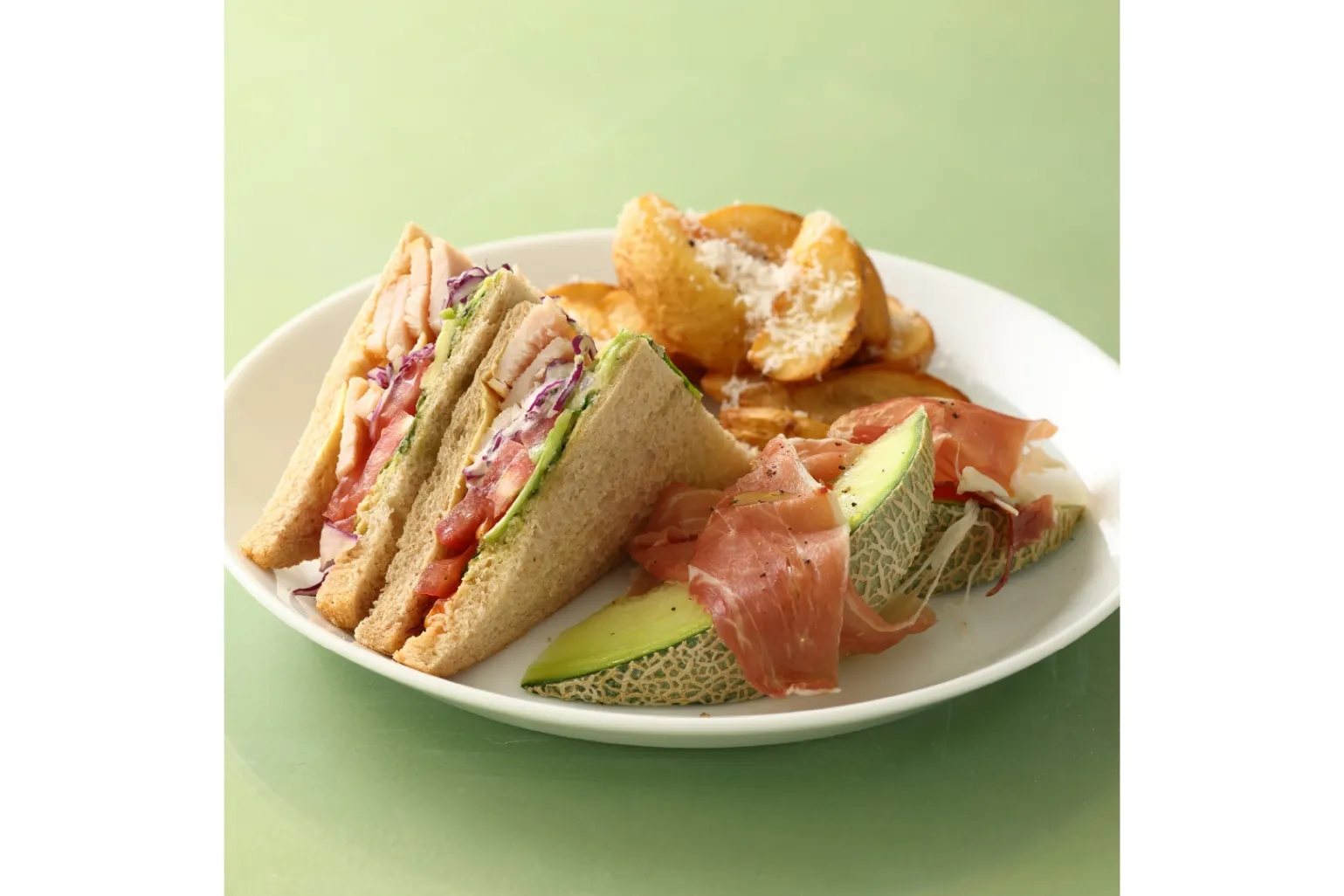
Among the highlights are the “Melon and Coconut Blancmange,” designed for a cooling visual and taste effect, and the “Melon and Pineapple Macédoine.” The transition from sweet to savory is bridged by items such as “Prosciutto and Melon,” combining the fruit’s sweetness with a salty cure.

Menu Selection

Welcome Drink

  • Melon-flavored sparkling wine or mocktail

Sweets & Savories

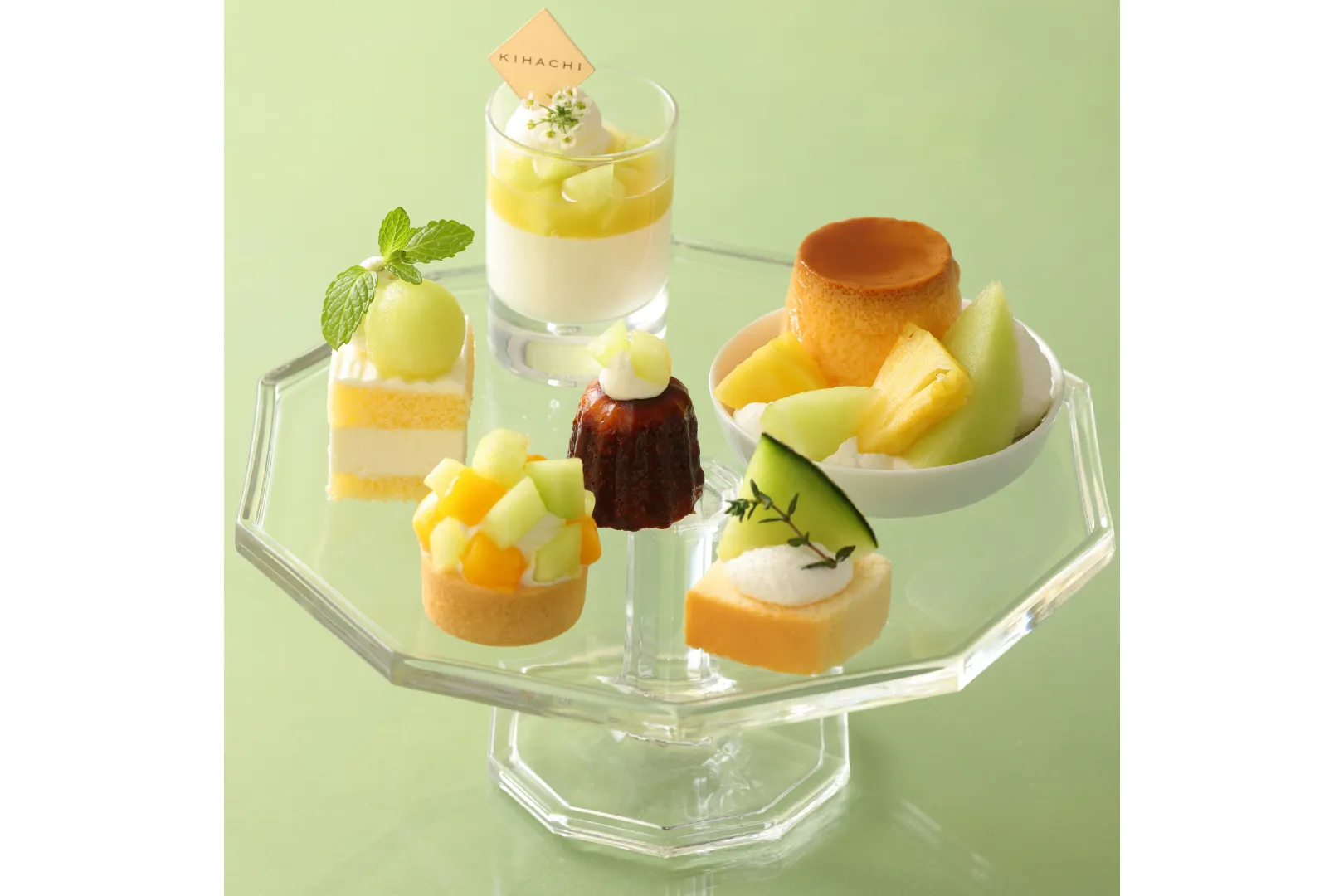
  • Melon and coconut blancmange
  • Melon shortcake
  • Melon and mango tart
  • Melon pudding à la mode
  • Cheesecake topped with melon
  • Cannelé
  • Melon and pineapple macédoine
  • Melon crepe
  • Melon crumble pie
  • Mango sorbet
  • Prosciutto and melon
  • Smoked Date-dori chicken and avocado sandwich
  • French fries with Parmigiano

Free-Flow Drinks (90-minute limit)
Guests may select from the following beverages to accompany their meal:

  • Red wine
  • White wine
  • Coffee
  • Tea
  • Herb tea

Essential Information

Venue and Access
The event takes place at the Kihachi Aoyama Main Store located on the 1F Cafe & Food Hall. The venue is conveniently accessible via Gaienmae Station or Aoyama-itchome Station.

  • Address: 〒107-0061 2-1-19 Kita-Aoyama, Minato-ku, Tokyo MAP

Schedule and Pricing

  • Period: Thursday, June 18, 2026 – Wednesday, July 22, 2026
  • Time Slots: Four sessions are available daily:
    1. 11:30~
    2. 14:00~
    3. 14:30~
    4. 15:00~
      Each session lasts 2 hours, with the last order for free-flow drinks taken 30 minutes before the session ends.
  • Price: 7,700 yen (tax included), which covers the welcome drink and the 90-minute free drink service.

Additional Details

  • All fresh melons utilized in the menu are of the “Ibara King” variety.
  • Reservations are available for parties of one or more guests.
  • Please be aware that ingredients, menu items, and implementation periods are subject to change based on procurement conditions and weather.
  • For the most current business hours and closing days, please visit the Official Website.

The posted content may have changed. Please check the official website of the venue or organizer for the latest information.

🛏️ View hotels near Tokyo

KIHACHIのアフタヌーンティー ~イバラキングメロンスペシャル~_1 KIHACHIのアフタヌーンティー ~イバラキングメロンスペシャル~_2 KIHACHIのアフタヌーンティー ~イバラキングメロンスペシャル~_3 KIHACHIのアフタヌーンティー ~イバラキングメロンスペシャル~_4 KIHACHIのアフタヌーンティー ~イバラキングメロンスペシャル~_5 KIHACHIのアフタヌーンティー ~イバラキングメロンスペシャル~_6

What is Ibara King Melon?

The Ibara King Melon is a premium muskmelon variety developed in Ibaraki Prefecture, where flat, well-draining soil and significant temperature variation between day and night create favorable conditions for sugar accumulation. The fruit typically weighs between 1.5 and 2 kilograms, with a spherical shape and a distinctive netted rind. The raised cracking of the netting forms patterns of pale cream against emerald green skin—features that develop under the controlled temperature and humidity of greenhouse cultivation, where farmers regulate conditions to within narrow parameters throughout the 100-day growing cycle.

Commercial production focuses on measurable sugar content and texture. Ibara King melons regularly test at 16 to 18 degrees Brix, higher than typical consumer melons that range between 10 and 12 Brix. The flesh is pale orange, softer in hue than the vivid green of standard cantaloupes, with a dense, smooth consistency. Achieving these characteristics requires specific interventions: farmers hand-pollinate flowers to control genetics, remove all but one fruit from each vine to direct the plant’s full nutrient capacity to a single melon, and massage the developing fruit daily to stimulate even ethylene production and prevent irregular netting. As the melon matures, workers suspend it in a sling to support its weight without stressing the stem, adjusting greenhouse shading to limit direct sun exposure and preserve the delicate flesh color.

Within Japanese food culture, high-grade melons serve as formal gifts, and the Ibara King occupies a recognized position in this category. Prime specimens sell at auction for prices that reflect the labor intensity of their production rather than scarcity alone. The harvest peaks in early summer, with controlled autumn cultivation extending availability; this schedule influences purchasing patterns at luxury hotels and patisseries, which acquire specific allocations for seasonal menus. In culinary applications, the melon’s dense flesh maintains structural stability when cut, making it suitable for tarts and molded desserts, while the high sugar content allows it to pair with dairy without additional sweetening. The flavor carries vanilla and honey notes that distinguish it from muskmelons grown in other regions, though these characteristics emerge primarily from the intensive cultivation methods rather than intrinsic varietal differences.

Experience “Karin” Japanese Afternoon Tea 2026 at The Prince Gallery Tokyo Kioicho: A Luxurious Summer Temari-Sushi Journey

Experience "Karin" Japanese Afternoon Tea 2026 at The Prince Gallery Tokyo Kioicho: A Luxurious Summer Temari-Sushi Journey

Japanese Afternoon Tea ~Karin~ [The Prince Gallery Tokyo Kioicho]

A temari-sushi style afternoon tea to leisurely enjoy summer flavors and Japanese elegance.

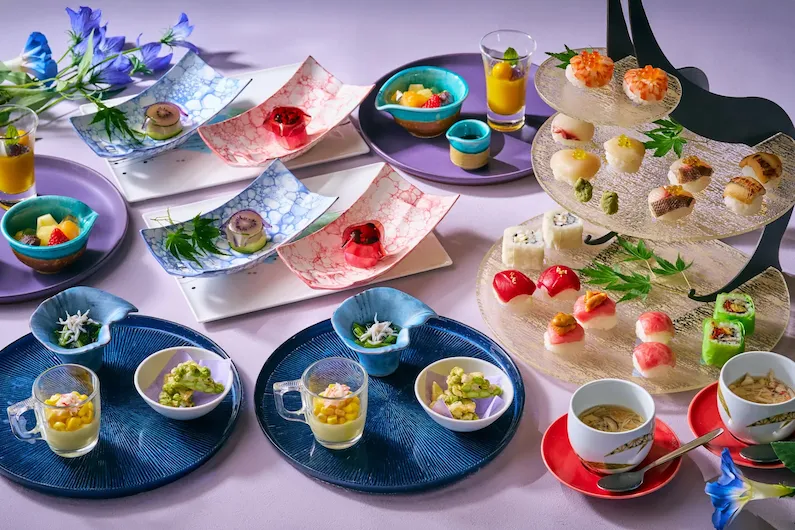
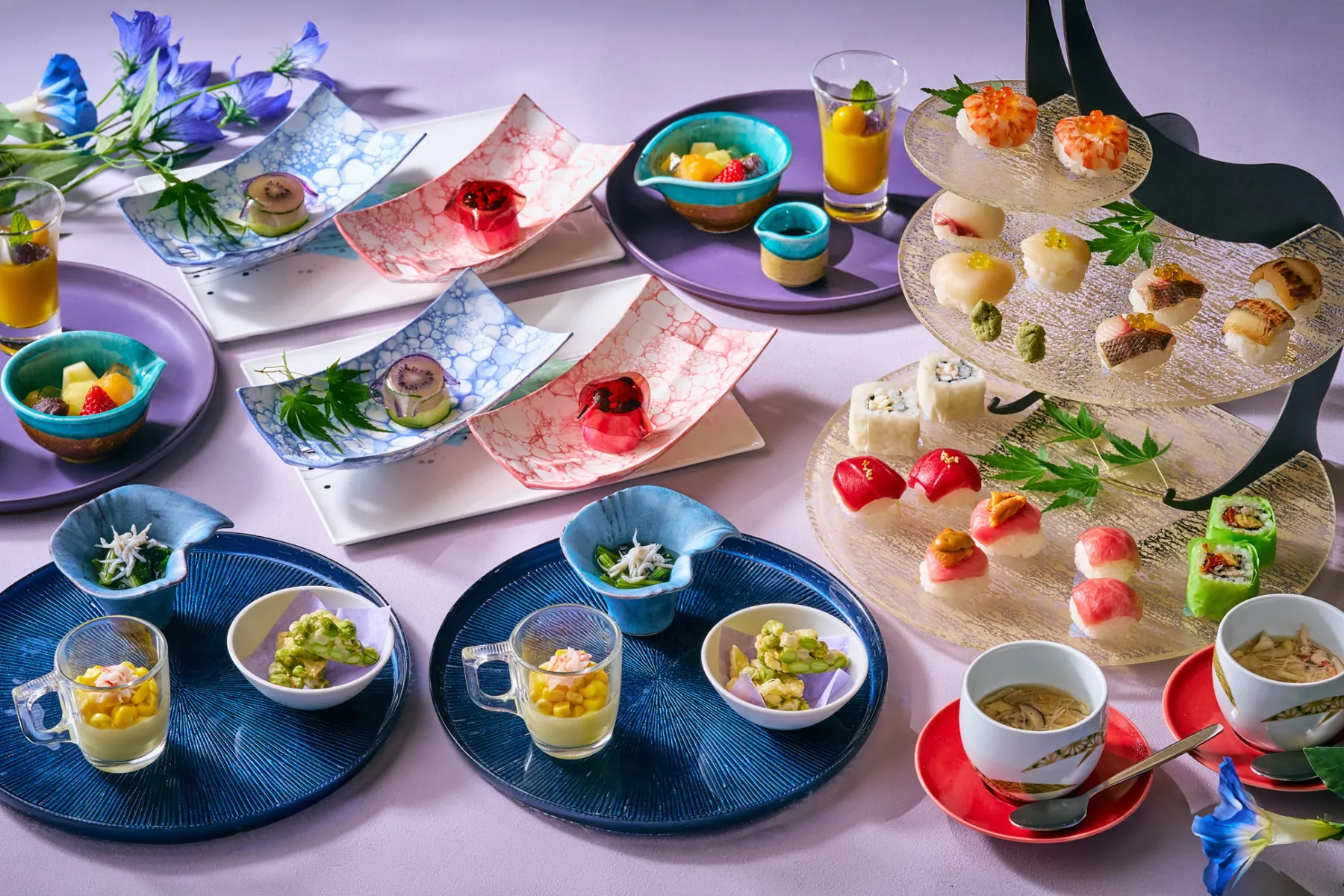
As the summer sunlight intensifies, the morning glory reaches its peak bloom—a seasonal transition that serves as the inspiration for the “Karin” Japanese-style afternoon tea. Themed “Morning Glories Blooming in a Summer Garden,” this curated experience at The Prince Gallery Tokyo Kioicho reimagines the traditional afternoon tea format by replacing sweets and scones with the meticulous artistry of temari-sushi and seasonal Japanese delicacies. By utilizing premium summer ingredients such as isaki (striped beakperch), kuruma prawns, corn, and edamame, the venue creates a sensory bridge between the cool aesthetics of a summer garden and the refined skills of professional sushi chefs.

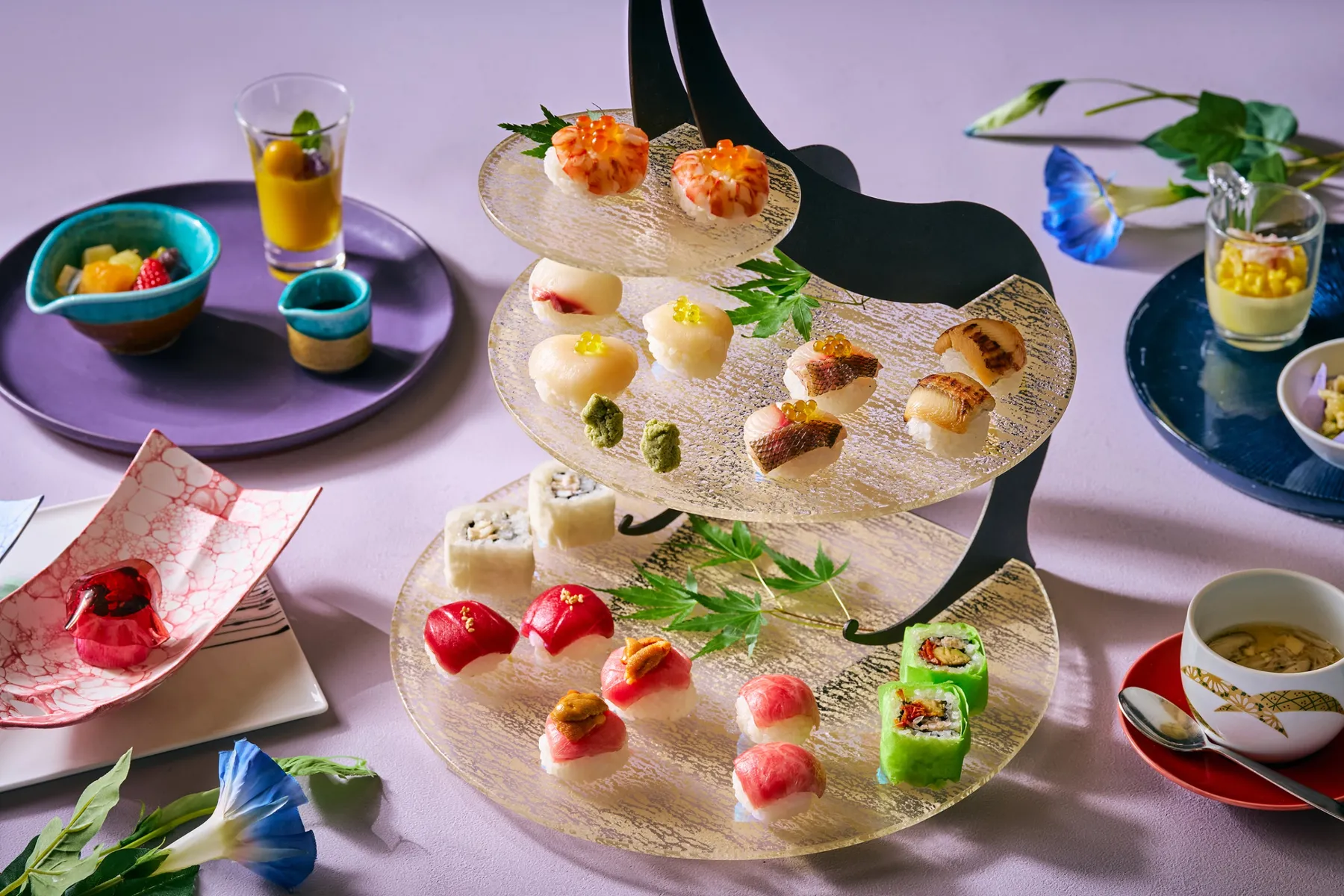
The experience is centered around a main stand that showcases a sophisticated array of temari-sushi. Guests can expect a luxurious selection of tuna, including otoro (fatty tuna), chutoro (medium fatty tuna) paired with sea urchin, and lean tuna accented with sesame. The seafood variety extends to isaki and scallops topped with caviar-roli, kuruma prawns paired with salmon roe, amadai (tilefish), and anago (conger eel). To complement these, two types of roll sushi are provided: an avocado and dried tomato combination, and a squid pairing with mentaiko (spicy cod roe) mixed with mayonnaise.

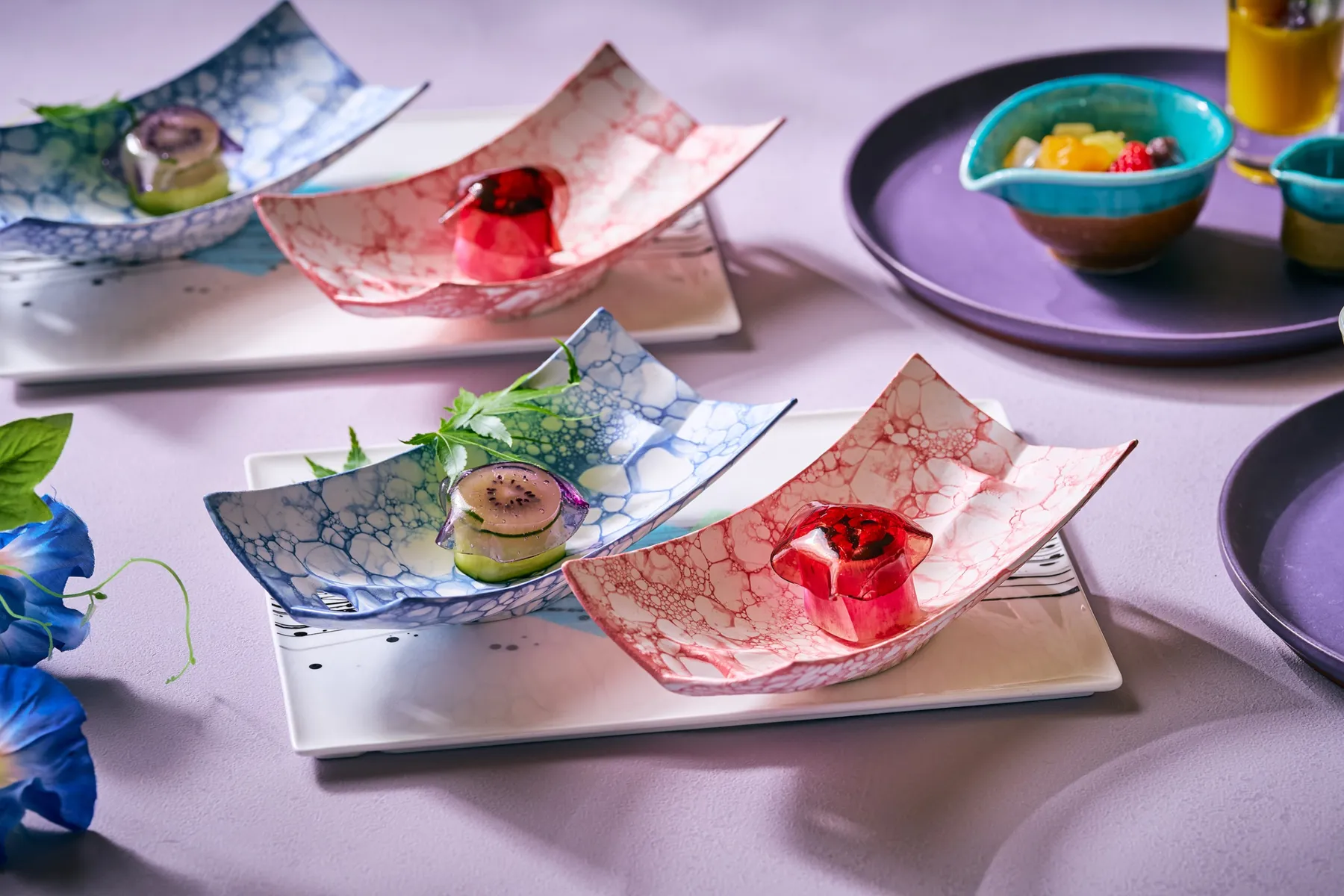
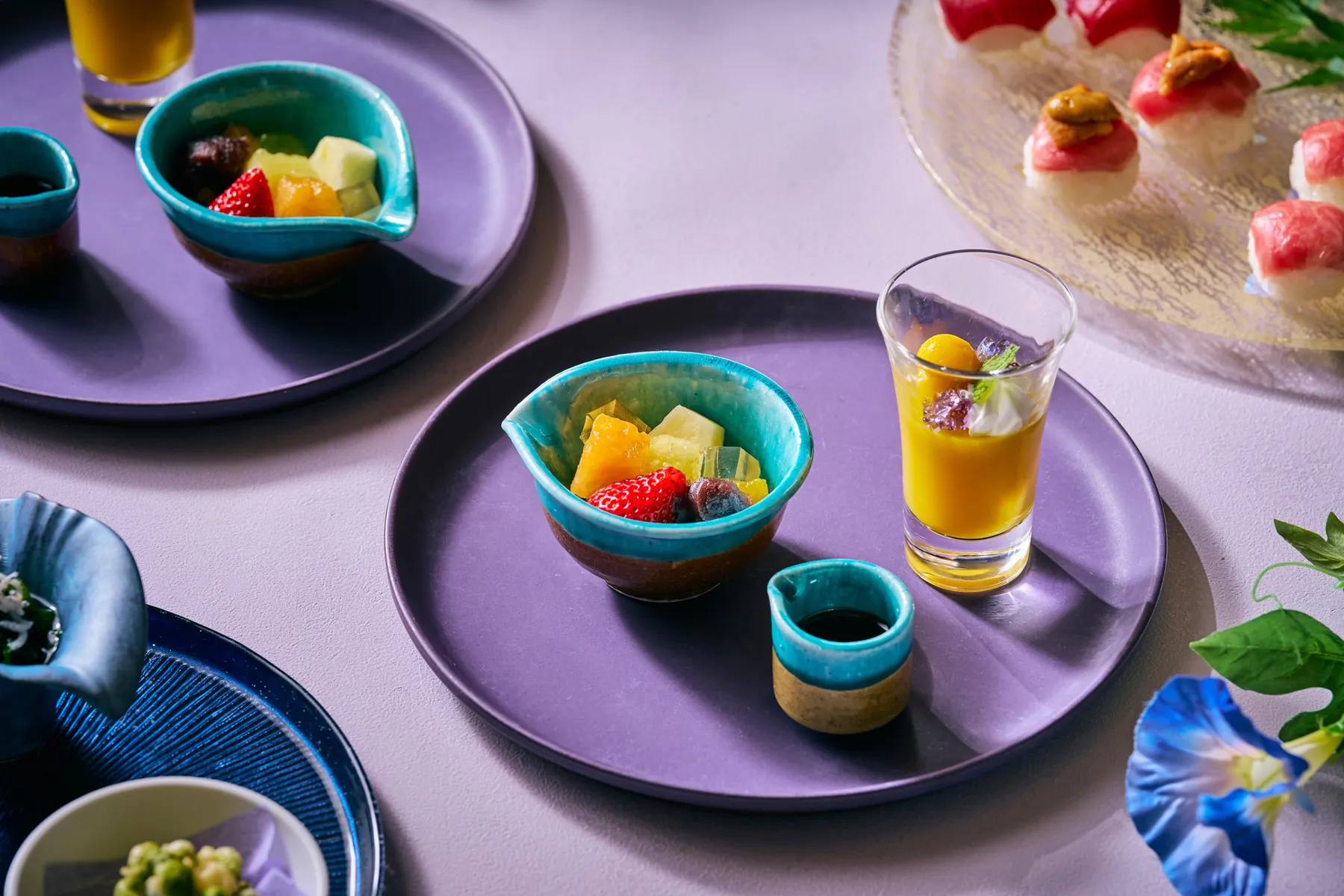
What truly distinguishes this offering from standard afternoon teas is the “Asagao Sushi”—two visually striking arrangements designed to mimic the colors of morning glories. The red version utilizes sushi wrapped in red radish, accented with blueberries, raspberries, and red wine agar, while the blue version employs cucumber wraps topped with kiwi fruit and butterfly pea agar to evoke a refreshing, summer-cool palette.

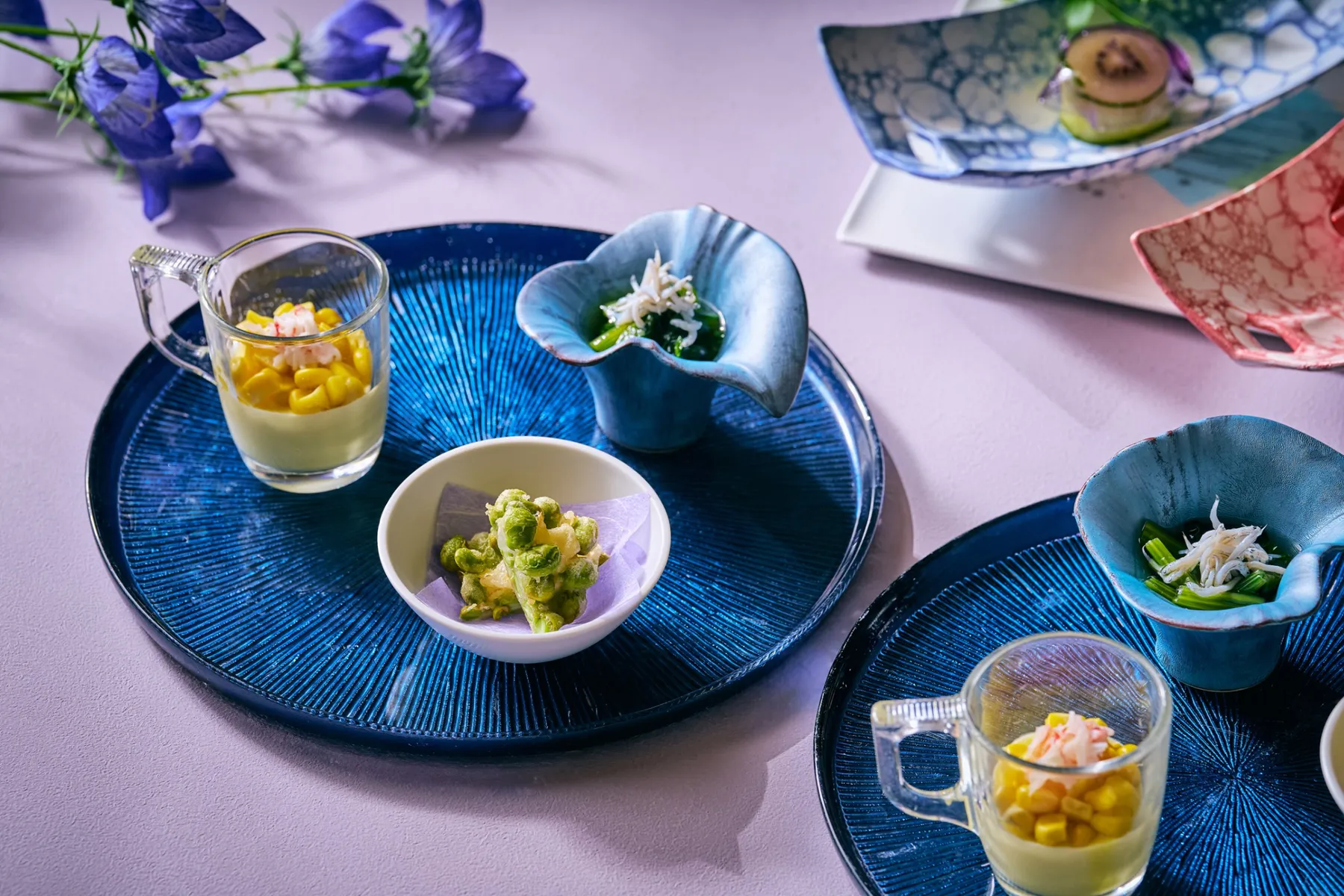
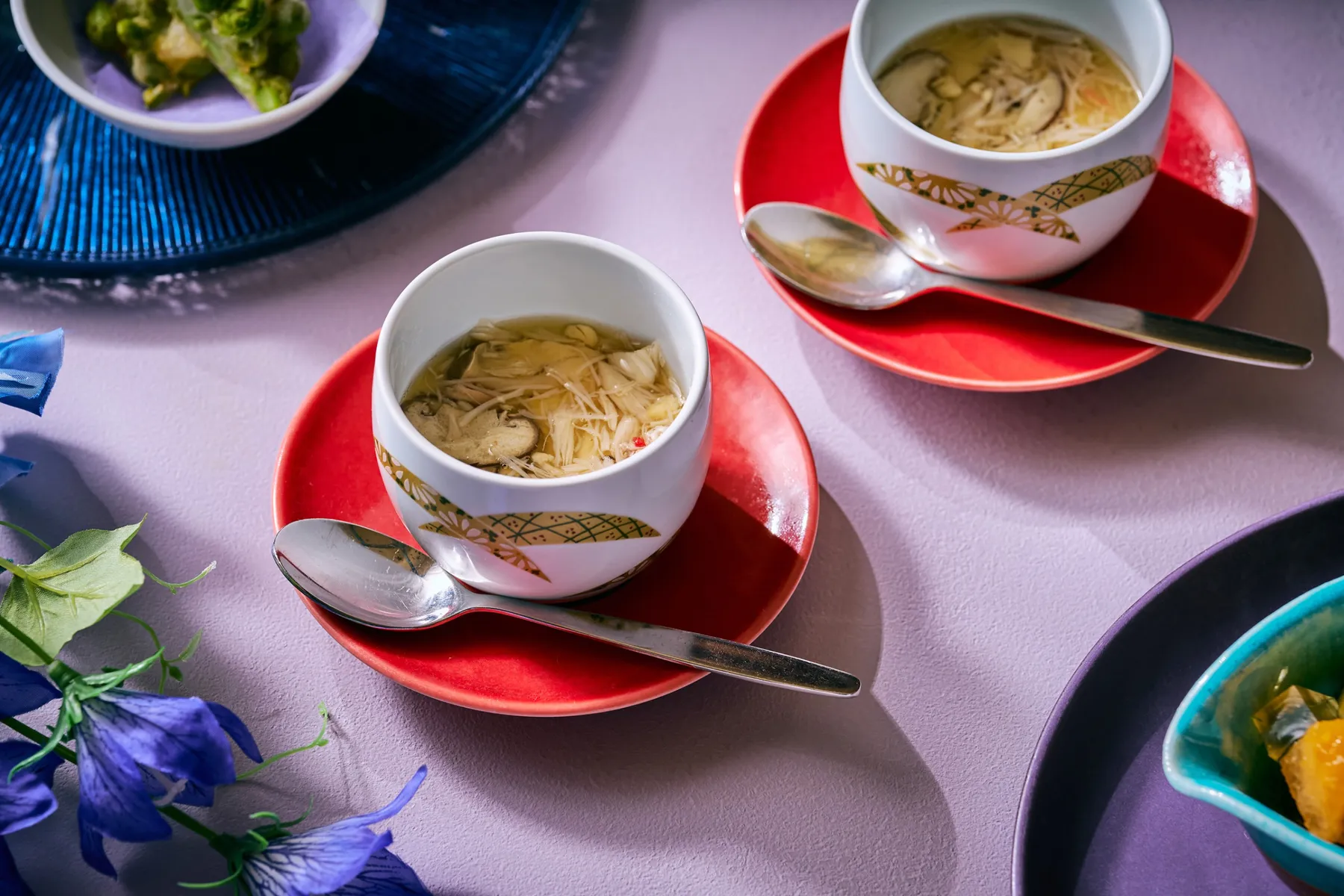
Beyond the sushi, the menu incorporates a progression of flavors designed to balance richness with freshness. Appetizers include seasonal ohitashi (blanched vegetables), a corn mousse with bacon and salted kelp sauce, and edamame kakiage (tempura fritters). This is followed by a savory chawanmushi that preserves the delicate flavor of snow crab. To conclude the experience, the dessert course provides a light contrast through refreshing anmitsu and mango pudding—sweets specifically chosen for their suitability during a humid summer afternoon.

Located high above the city, this event offers the opportunity to savor a fusion of culinary craftsmanship and scenic Tokyo views, making it an ideal destination for those seeking a sophisticated, Japanese-centric alternative to the classic tea service.

Menu Details

ASAGAO SUSHI

  • RED: Blueberry, Raspberry flakes, Red radish, Red wine agar
  • BLUE: Kiwi fruit, Cucumber, Butterfly pea agar

Main Stand

  • Otoro Temari
  • Chutoro Temari with Sea Urchin
  • Lean Tuna with Sesame
  • Isaki with Caviar-roli and Basil
  • Scallop Temari with Caviar-roli
  • Amadai (Tilefish) Kobu-jime
  • Anago (Conger Eel) with Reduced Sauce
  • Kuruma Prawn with Salmon Roe
  • Avocado and Dried Tomato Roll
  • Squid and Mentaiko Mayonnaise Roll

Appetizers

  • Seasonal Ohitashi
  • Corn Mousse with Bacon and Salted Kelp Sauce
  • Edamame Kakiage

Steamed Dish

  • Snow Crab Chawanmushi

Dessert

  • Assortment of Seasonal Fruits and Sweets

*Images are for illustrative purposes.
*Please check the official website for details on the content.

Basic Information

  • Location / Nearest Station
    The Prince Gallery Tokyo Kioicho
    Nagatacho Station / Akasaka-mitsuke Station
  • Address
    〒102-8585
    1-2 Kioicho, Chiyoda-ku, Tokyo
    MAP
  • Venue
    • WASHOKU 蒼天 SOUTEN (35F)
    • Sky Gallery Lounge Levita (35F)
  • Period
    Monday, 2026/06/01 ~ Monday, 2026/08/31
  • Time
    • WASHOKU 蒼天 SOUTEN (35F): 11:30 A.M. ~ 2:30 P.M.
    • Sky Gallery Lounge Levita (35F): Weekdays 2:00 P.M. ~ 4:00 P.M.
      *2-hour limit
  • Price/Cost
    From \8,000
    *Reservation required for 2 or more people
  • Inquiries
    03-3234-1136 (Notes: 10:00 A.M. ~ 7:00 P.M.)
  • Other URL
    The Prince Gallery Tokyo Kioicho

*Listed content may be subject to change. For the latest information, please check the official website of the venue/organizer.

🛏️ See hotels near Tokyo

Japanese Afternoon Tea~華凛~【ザ・プリンスギャラリー 東京紀尾井町】_1 Japanese Afternoon Tea~華凛~【ザ・プリンスギャラリー 東京紀尾井町】_2 Japanese Afternoon Tea~華凛~【ザ・プリンスギャラリー 東京紀尾井町】_3 Japanese Afternoon Tea~華凛~【ザ・プリンスギャラリー 東京紀尾井町】_4 Japanese Afternoon Tea~華凛~【ザ・プリンスギャラリー 東京紀尾井町】_5 Japanese Afternoon Tea~華凛~【ザ・プリンスギャラリー 東京紀尾井町】_6 Japanese Afternoon Tea~華凛~【ザ・プリンスギャラリー 東京紀尾井町】_7

What is temari-sushi?

Temari-sushi takes its name from the embroidered silk balls once used as toys in Japan. The sushi consists of small portions of vinegared rice shaped into round balls and topped with fish or other ingredients. Unlike nigiri, which chefs typically press into rectangles, temari-sushi is formed by hand into a sphere. This shape makes the rice and topping roughly equal in proportion. The presentation tends to highlight color and geometric arrangement rather than the elongated simplicity of traditional pressed sushi. Where nigiri emphasizes the fish slice draped over rice, temari treats the topping and rice as a combined unit, allowing for compositions that would be structurally unstable in other formats.

The form developed during the Edo period as a practical variation that could be eaten in a single bite. The small size allows diners to sample multiple toppings without committing to a large portion of any single type. Because the rice is lightly packed by hand rather than molded, the texture remains distinct from the denser bite of machine-pressed sushi. The round base accommodates toppings that might not balance on oblong nigiri: thin slices of fish gathered at the top, small clusters of roe, or thinly shaved vegetables pressed gently into the surface. This structural flexibility lets chefs pair the rice with ingredients that would slide off or deform the standard rectangular shape.

Today, temari-sushi appears in contexts where individual portions improve service. The format works well for catering, afternoon tea, or multi-course meals where guests try many small dishes rather than a full progression at a sushi counter. In warmer months, chefs often favor toppings that benefit from chilling or deteriorate quickly at room temperature—citrus-marinated fish, scallops, or salmon roe. The small rice base cools rapidly, and because each piece is consumed immediately after preparation, the format avoids the gradual warming and textural softening that affects larger platters left sitting.

Hokkaido Melon Afternoon Tea 2026 at The Prince Park Tower Tokyo: Experience Summer Luxury with Stunning Tower Views

Hokkaido Melon Afternoon Tea 2026 at The Prince Park Tower Tokyo: Experience Summer Luxury with Stunning Tower Views

Hokkaido Melon Afternoon Tea [The Prince Park Tower Tokyo]

A refreshing tea time limited to summer, enjoyed alongside a magnificent view of Tokyo.

Hokkaido’s melons—cultivated in a climate defined by dramatic temperature swings between day and night—develop an intensity of aroma and a melting sweetness that has made them the region’s signature summer commodity. The Prince Park Tower Tokyo harnesses this agricultural specificity within its Lobby Lounge from July 1 through August 31, 2026, presenting an afternoon tea program that juxtaposes these sweet offerings against savories featuring distinctly northern proteins.

The seasonal menu operates within a three-hour framework (last entry at 18:00), though a condensed Late Afternoon Tea option—guaranteeing tower-view seating in a two-hour format starting at either 17:00 or 18:00—provides an alternative for those prioritizing the vista over extended hours.

The Culinary Program

Pastry presentations center on the Vacherin “Shiny Melon,” where crisp meringue encases juicy green-flesh melon, creating a textural dialogue between shatter and yielding fruit. This anchors a sweet selection that includes a fraisier paired with fresh mint and a granité composed like a frozen cocktail suspended in chilled melon soup. The savory dimension incorporates Hokkaido’s terrestrial and marine resources: a mini-burger sandwiches Ezo deer pâté—one of the island’s representative game meats—within milk-enriched buns, while carpaccio of water octopus arrives dressed with vibrant vegetables. A welcome Sencha Soda opens the progression.

The Menu

◆ Welcome Drink: Sencha Soda

<Sweets>

  • Shiny Melon
  • Milky Melon
  • Melon Mint Cake
  • Galette Bretonne
  • Melon Mocktail
  • Scones (Haskap, Milk)

<Savory>

  • Ezo Deer Burger
  • Water Octopus Carpaccio
  • Vichyssoise
  • Salmon Gelee

Ingredients and menus may change depending on procurement conditions.
Photos are for illustrative purposes.
Please check the official website for detailed contents.

Practical Information

In a Tokyo summer where the meteorological designation “kokusho-bi” (extremely hot day) has become standard vocabulary, this afternoon tea offers a literal and figurative cooldown—providing respite from the heat while transporting the aesthetic of Hokkaido’s fields to the capital’s skyline.

Venue & Access

Location: The Prince Park Tower Tokyo
Venue: Lobby Lounge (1F)
Address: 〒105-8563, 4-8-1 Shibakoen, Minato-ku, Tokyo (MAP)
Nearest Stations: Shibakoen Station / Onarimon Station / Akabanebashi Station / Hamamatsucho Station / Daimon (Tokyo) Station

Dates & Hours

Period: Wednesday, July 1, 2026 – Monday, August 31, 2026
Standard Seating: 12:00 – 20:00 (Last entry 18:00) | 3-hour system
Late Afternoon Tea: 17:00 or 18:00 | Tower-view seat guaranteed | 2-hour system

Pricing

Standard Afternoon Tea:

  • Weekdays: ¥8,000 per person
  • Weekends/Holidays: ¥8,500 per person

Late Afternoon Tea:

  • Weekdays: ¥7,500 per person
  • Weekends/Holidays: ¥8,000 per person

Reservations

Phone: 03-5400-1170 (Available 10:00–18:00)
Official Website: Prince Hotels – Afternoon Tea 2026

The posted content may have changed. Please check the official website of the venue or organizer for the latest information.

🛏️ See hotels near Tokyo

What are Hokkaido melons?

Hokkaido melons, particularly the Yubari King and Earl’s varieties, are specialty muskmelons grown in Japan’s northernmost prefecture. Unlike standard cantaloupes, these cultivars are bred for extremely high sugar content and uniform appearance, thriving in Hokkaido’s volcanic soil and wide day-night temperature variations that slow sugar accumulation while preserving structural integrity.

The cultivation methods differ significantly from conventional farming. Growers prune each vine to produce a single melon, concentrating the plant’s nutrients into one fruit. Farmers adjust the melon’s position regularly to ensure even sun exposure and prevent ground contact, and some cover the developing fruit with paper caps to prevent sunburn and moderate temperature. The distinctive net-like pattern on the rind develops through careful humidity management, with some farmers wiping the surface to encourage uniform cracking as the fruit expands.

Quality standards are stringent and standardized. Premium specimens exhibit symmetrical roundness, dense orange flesh, and sugar levels exceeding 15%, compared to 10-12% for typical grocery store cantaloupes. Professional inspectors grade the stem end, netting pattern, and fragrance. The stem is cut to leave a T-shaped base, a visual marker of proper harvest technique. Grade labels range from “fuji” (highest) to “yuki” (standard), with perfect specimens selling at auction for thousands of dollars.

In Japanese consumer culture, these melons function as high-value gifts rather than everyday fruit. The gifting season peaks during summer chugen and year-end oseibo exchanges, when presentation carries particular social weight. Department stores sell them in wooden boxes with documentation of their origin farm and individual tracking numbers. The season runs June through August, with prices reflecting both the labor-intensive growing process—some farmers spend over 100 days managing a single fruit—and the market value placed on flawless agricultural products in gift-giving contexts.

Peach Vacation Afternoon Tea 2026: Summer Peach & Melon Experience at Tokyo Geihinkan, Omiya Riku & Yokohama – Menu, Prices & Reservations Guide

Peach Vacation Afternoon Tea 2026: Summer Peach & Melon Experience at Tokyo Geihinkan, Omiya Riku & Yokohama – Menu, Prices & Reservations Guide

Peach Vacation Afternoon Tea

A luxurious moment to fully enjoy the sparkle of summer, woven together by fragrant peaches and mellow melons.

This seasonal afternoon tea celebrates summer’s peak produce through careful craftsmanship rather than novelty for its own sake. The pastry team has constructed a menu around two primary fruits—peaches and melons—treating each with precision that respects their distinct characteristics.

The sweets selection layers technique with seasonal timing. The “Peach Verrine” demonstrates this through structure: sparkling wine jelly set over rich panna cotta, creating textural contrast that keeps the palate engaged. The peach tart uses fully ripened fruit, the kind that yields slightly under pressure and releases concentrated juice. For the “Melon Mousse,” white chocolate provides fat content that carries rather than competes with the melon’s subtle floral notes.

Seven varieties make up the pastry component, each with specific intent. The “Hat Mousse” references summer straw haberdashery; the “Bag-shaped Mousse” carries a Mallorca tile pattern that connects to Mediterranean vacation aesthetics. Financiers receive a saline element—unusual for the typically sweet format—to reset sweetness perception. The “Pesque Dolce,” a traditional French peach-shaped confection, anchors the menu in established technique.


■ Chef’s Special Savories

Three composed items balance the sweetness density of the pastry program:

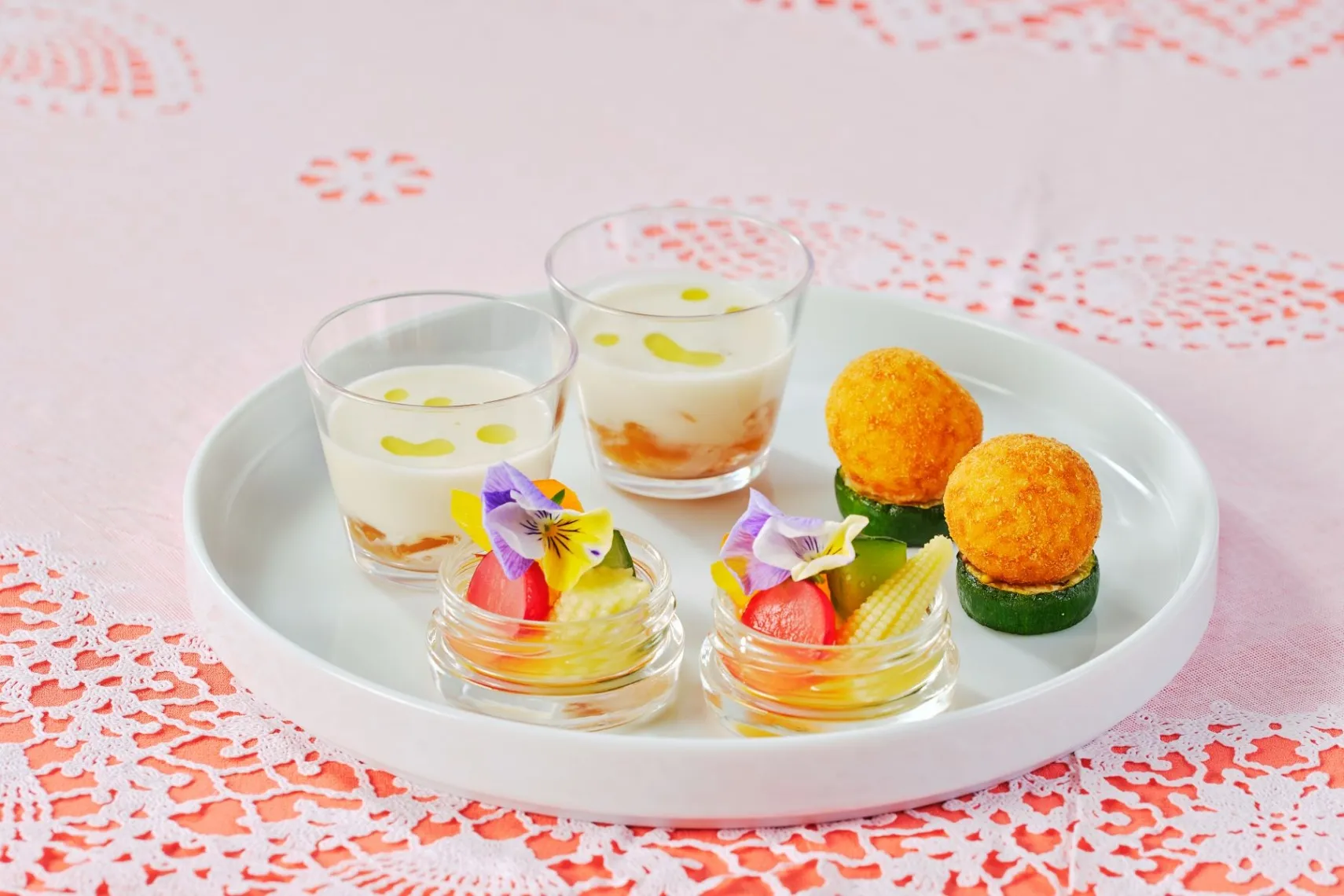
  • Peach soup: Gentle sweetness with refreshing acidity, served chilled
  • Summer vegetable pickles: Mirabelle plum provides sweet-sour brightness against raw and lightly processed vegetables
  • Risotto arancini: Bite-sized, with crisp exterior coating and concentrated umami from the rice base, set over grilled zucchini

■ Tea and Beverage Options

Plan Inclusions
Standard Plan All-you-can-drink tea, coffee, soft drinks
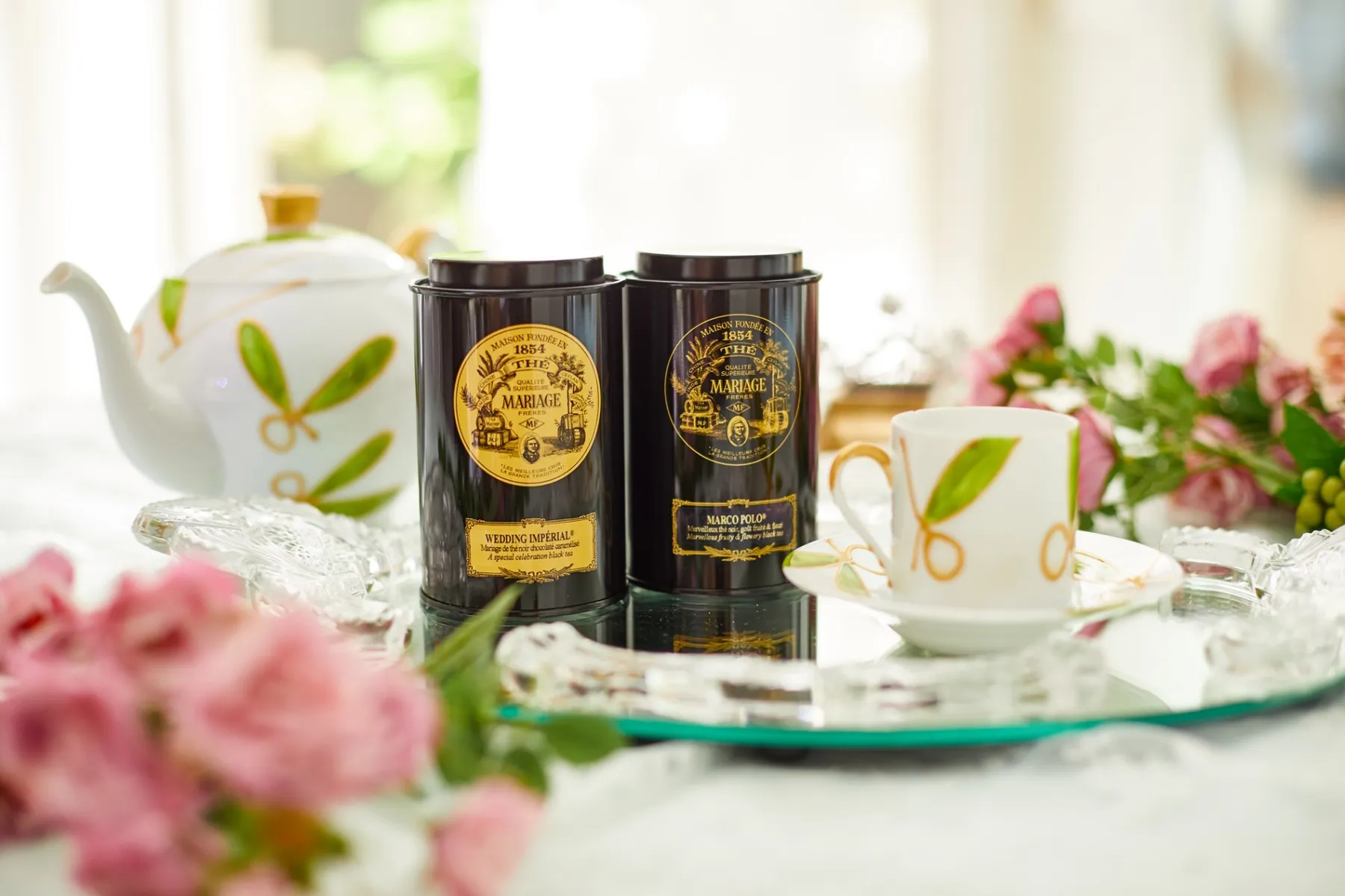
Tea Selection Plan Above plus Mariage Frères teas and flavored teas

The Mariage Frères integration—this is the distinguished French house founded in 1854—offers a measurable upgrade for those who track tea provenance.


■ Optional Additions

Item Price Notes
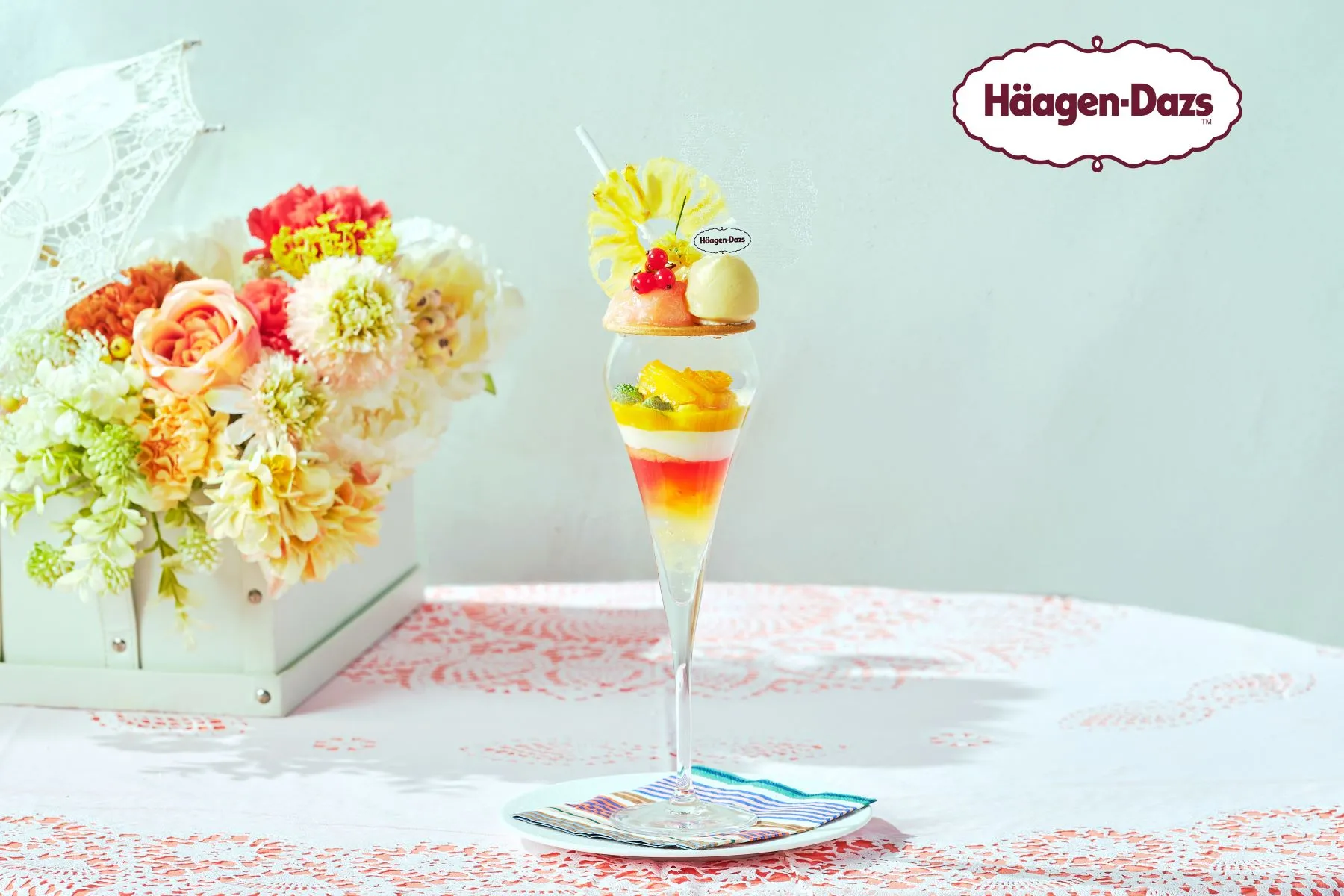
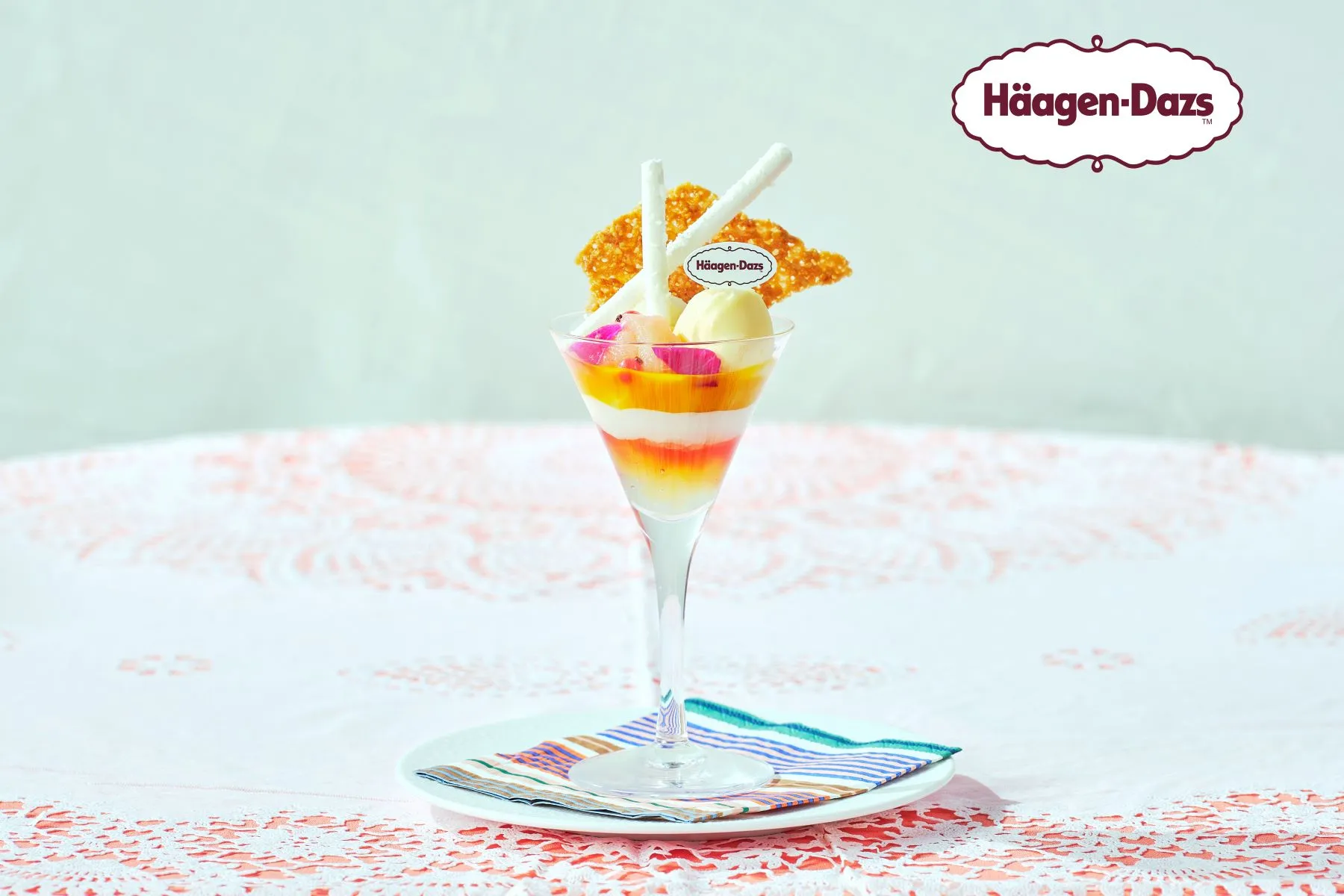
Tropical Sunset Parfait with Häagen-Dazs From 2,990 yen (with café) Yokohama and Omiya stores only; available for individual order
Tropical Sunset Mini Parfait with Häagen-Dazs 1,200 yen —
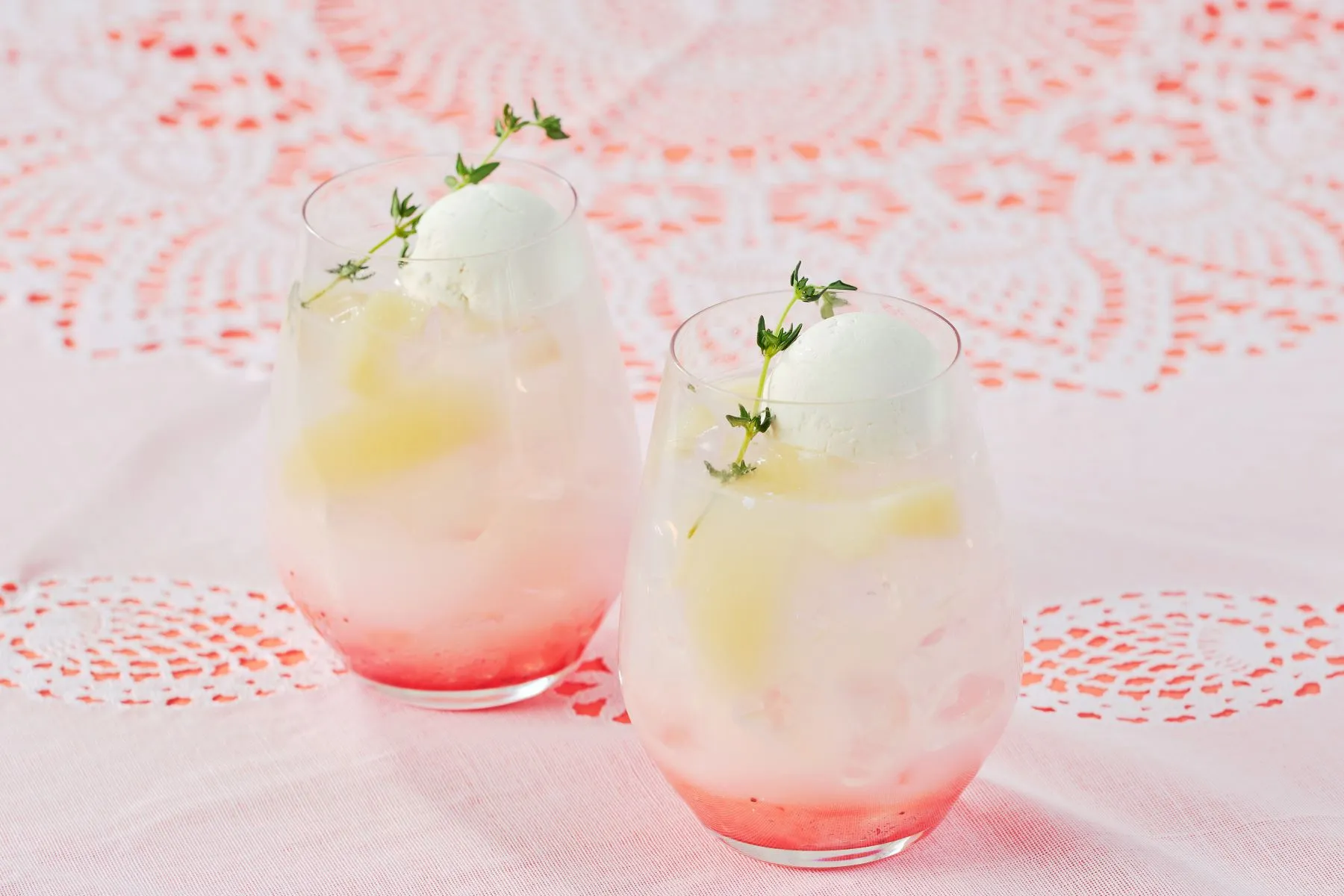
Special Drink “Peach Float” 1,200 yen —
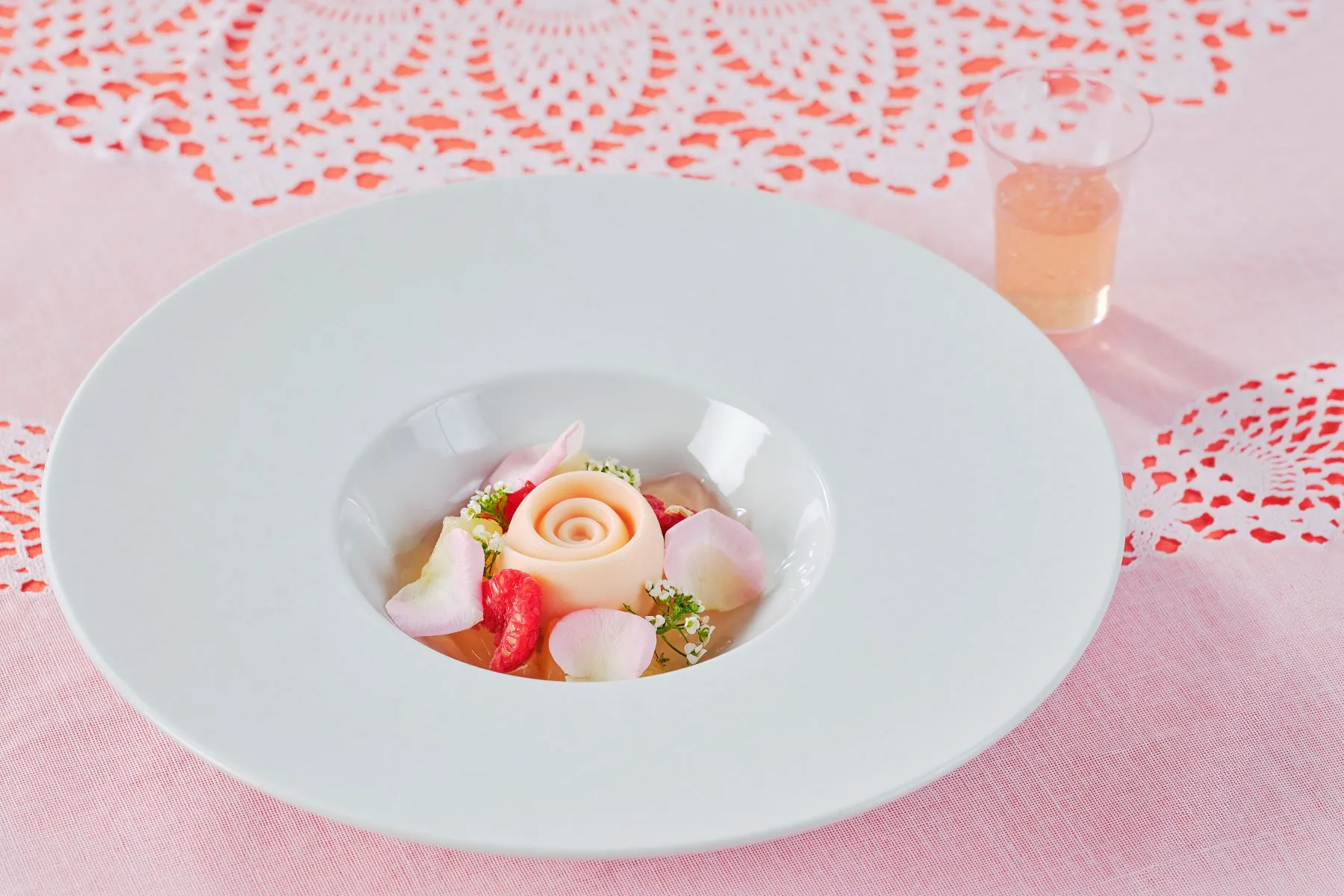
Red Peach and Lychee Rose-scented Semifreddo 1,500 yen Summer seasonal specialité
Tea Selection upgrade 500 yen —
Message Plate 500 yen —

The semifreddo merits particular attention: peach compote, rose-scented mousse, and lychee operate as a composed dessert rather than a simple parfait. The temperature gradient—frozen mousse against room-temperature compote—creates the “moment of elegant vacation” the menu describes.


■ Lunch Set Options

Afternoon tea without savories; suitable for lighter appetites

Set Price Contents
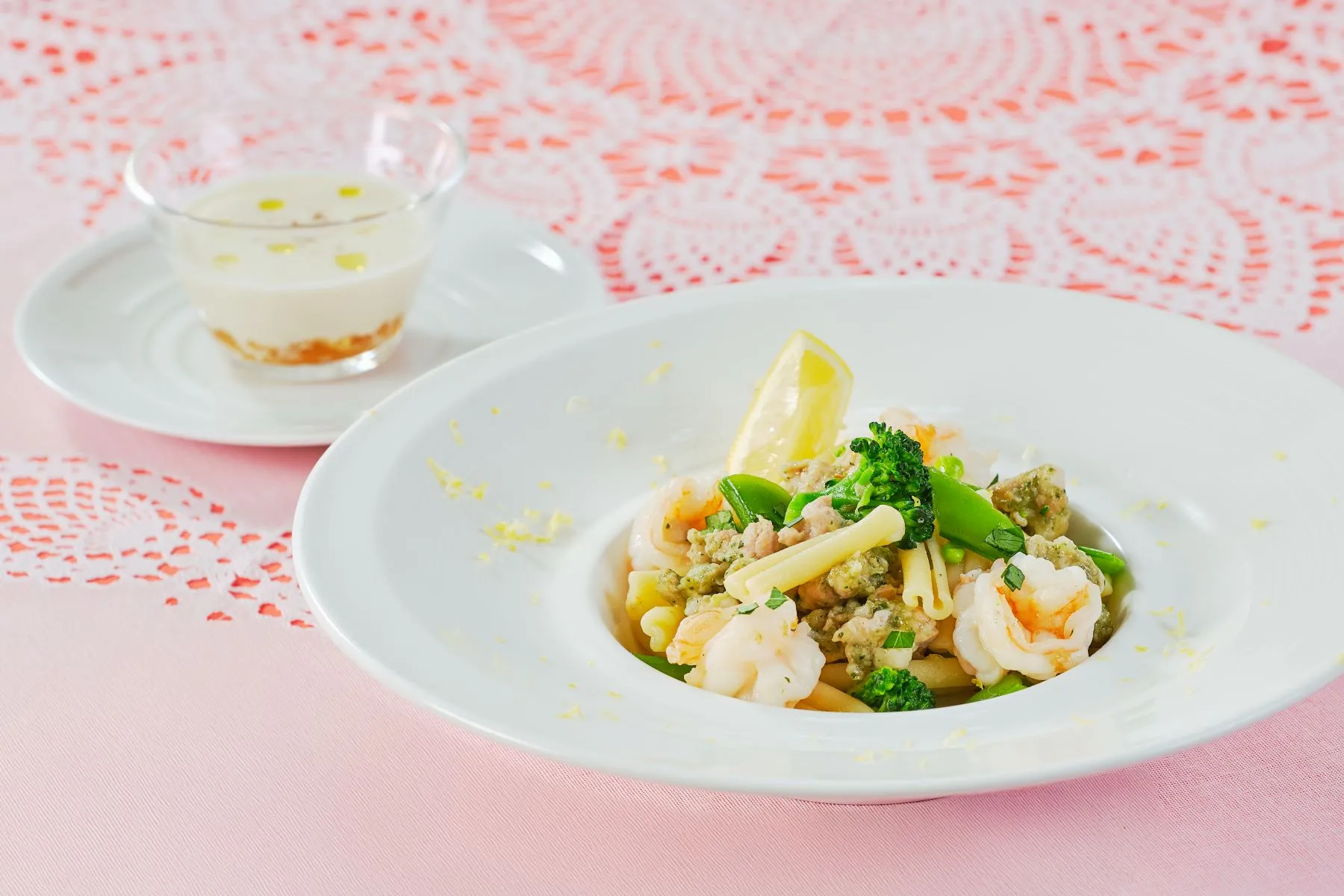
Pasta Lunch 1,500 yen Chilled cauliflower potage / Short pasta with small shrimp and salsiccia
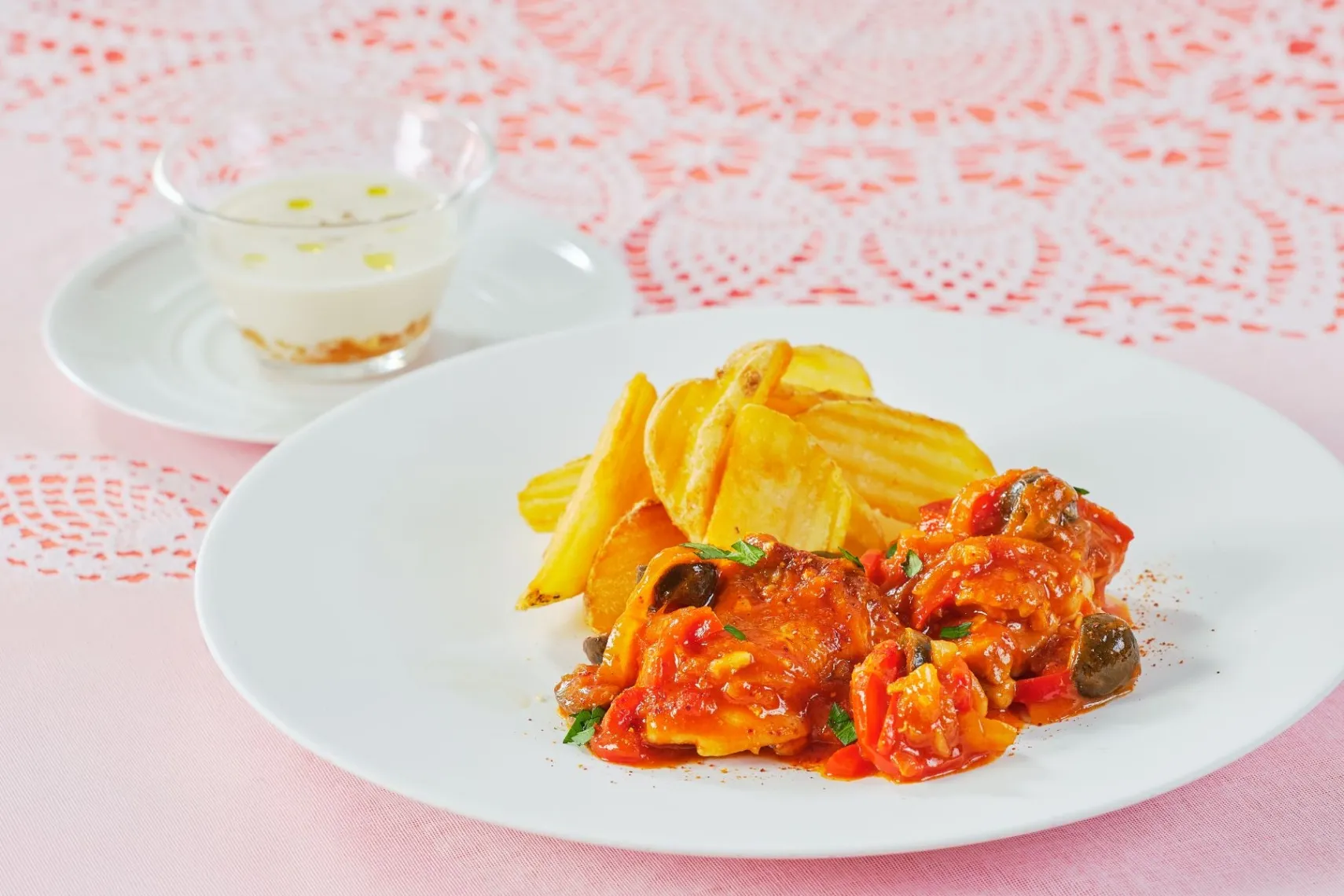
Chicken Lunch 1,500 yen Chilled cauliflower potage / Poule Basquaise: Basque-style tomato stew with selected chicken thigh

Complete Menu

【Sweets】

  • Peach Melba Verrine Style
  • Bergamot-scented Hat Mousse
  • Peach Tart
  • Peach Couture Mousse
  • Financier Fleur
  • Pesque Dolce
  • Melon and Citron Gateau

【Savories】

  • Risotto Arancini
  • Chilled Cauliflower Potage
  • Summer Vegetable Pickles with Mirabelle Flavor

【Scone Stand】

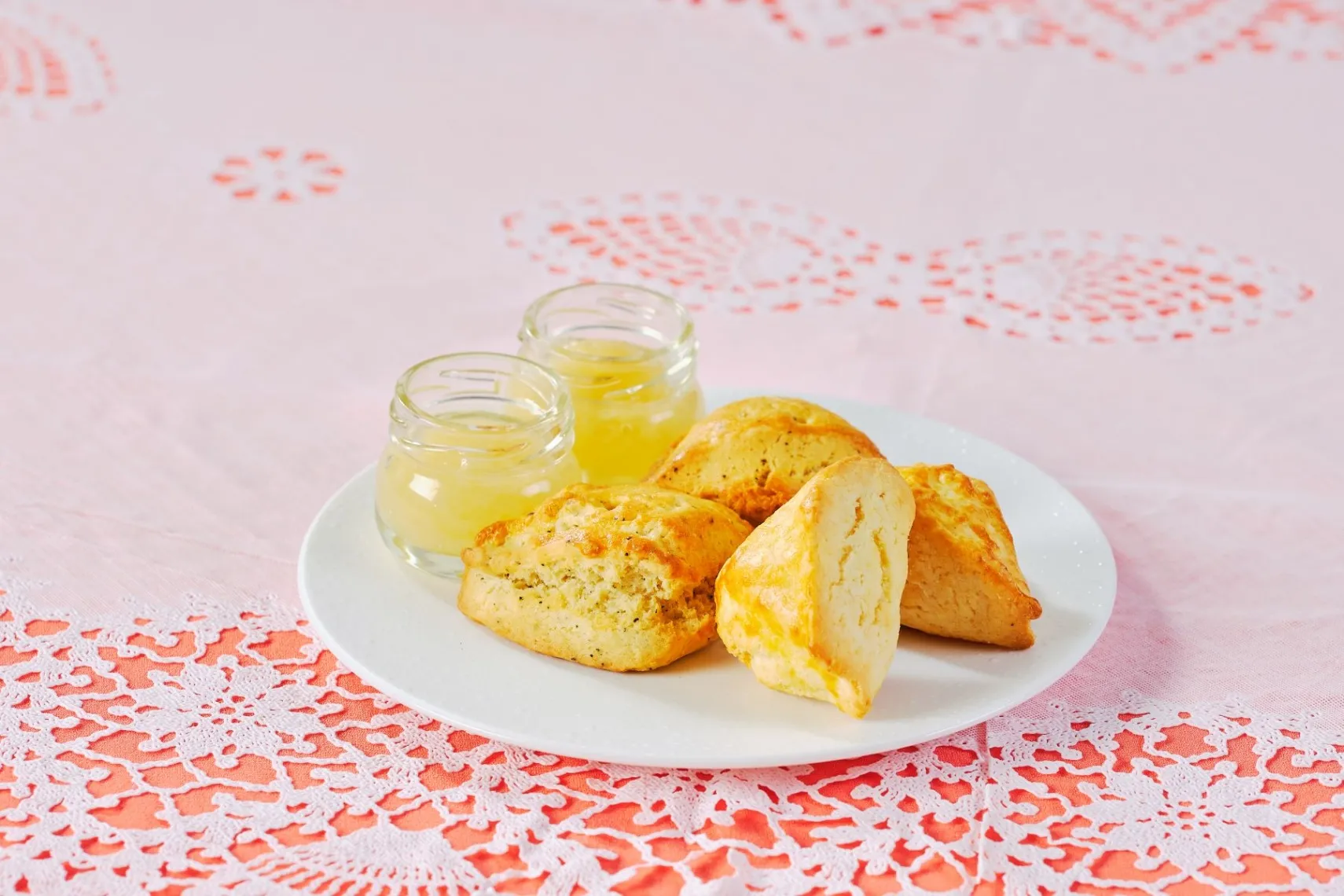
  • Tea / Plain (with White Peach Jam)

【Drinks】

See plan descriptions above; last order 90 minutes from seating


Venue-Specific Details

◆ Omiya Riku / Cafe & Restaurant Shikitei

Dates Wednesday, June 17, 2026 – Monday, August 31, 2026
Closed Tuesdays
Hours 11:00–16:30 (Last entry 15:00)
Pricing Weekdays from 4,580 yen / Weekends & Holidays from 4,800 yen
Note Consumption tax included; 15% service charge separate

Location details | Nearest stations: Toro Station, Kamomiya Station


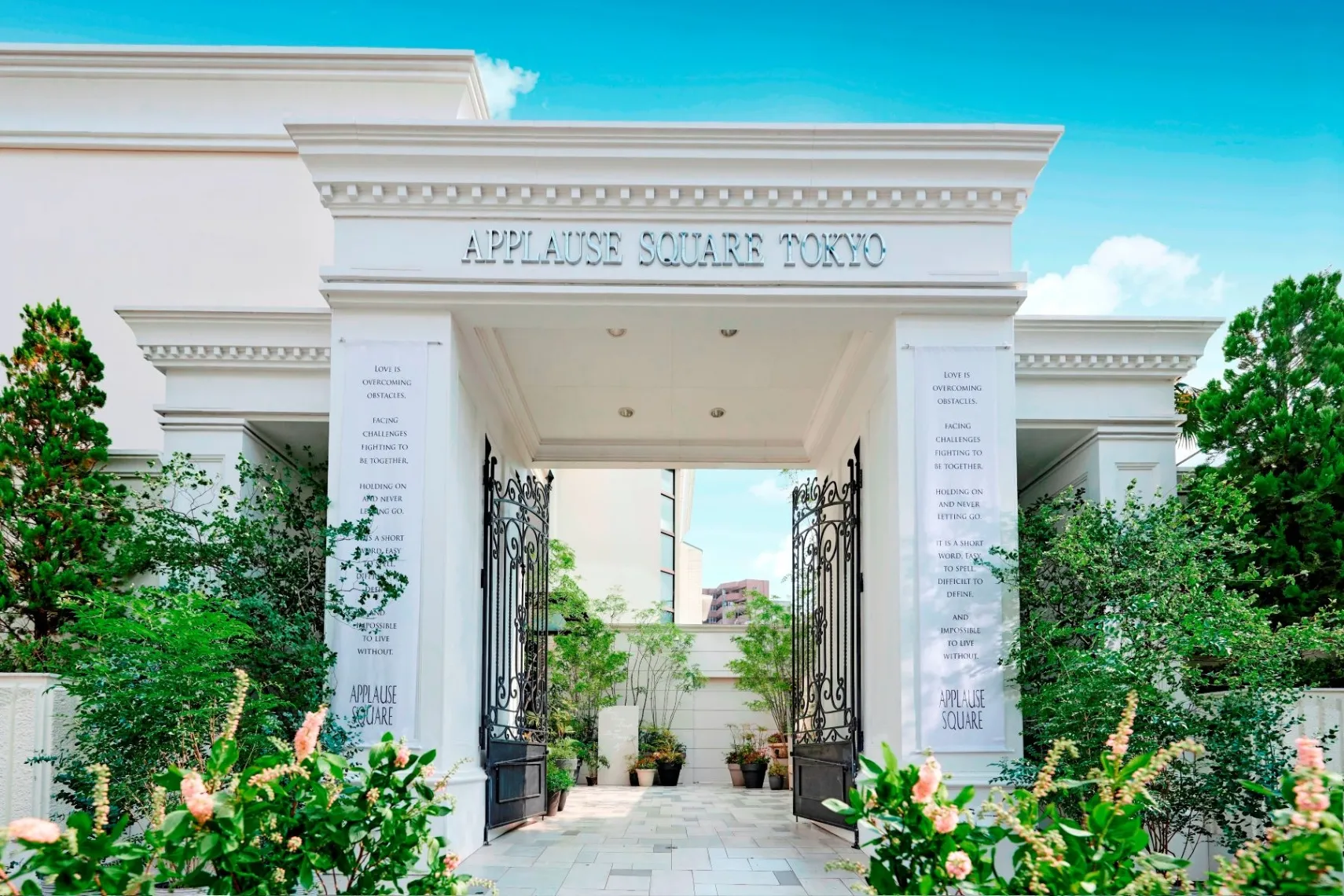
◆ Applause Square Tokyo Geihinkan

Dates Select dates June 19 – August 29, 2026 (see full schedule below)
Weekday hours 12:00–14:00
Weekend/Holiday hours 1st session 12:00–14:00 / 2nd session 16:15–18:15

Date key: ◎ Dogs allowed | ☆ 1st session only | ★ 2nd session only

June July August
19 ◎Fri 3 ◎Fri 1 ◎Sat
26 ◎Fri 5 ★Sun 2 ☆Sun
28 ◎Sun 10 ◎Fri 7 ◎Fri
12 ★Sun 8 ★Sat
17 Fri 9 Sun
20 ◎Mon (Holiday) 11 ☆Tue (Holiday)
24 Fri 14 ◎Fri
26 Sun 15 Sat
31 Fri 16 ☆Sun
28 Fri
29 ★Sat
Plan Weekdays Weekends/Holidays
Standard Plan 5,000 yen 5,500 yen
Tea Selection Plan 5,500 yen 6,000 yen
With Lunch Set from 6,500 yen from 7,000 yen

Location details | Nearest station: Akebonobashi Station

Inquiry: 03-5368-4700
Note: Closed every Monday and Tuesday (except holidays) and dates specified by the company


◆ Ristorante Mangiare Iseyama (Yokohama)

Dates Wednesday, June 17, 2026 – Monday, August 31, 2026
Closed Tuesdays
Weekday hours 12:00–17:00 (Last entry 15:00)
Weekend/Holiday hours 14:00–16:30 (Last entry 15:00)
Pricing Weekdays from 5,500 yen / Weekends & Holidays from 6,000 yen

Location details | Nearest station: Sakuragicho Station

Inquiry: 045-260-8845


◆ Contact Information

Venue Phone
Omiya Riku Cafe & Restaurant Shikitei 048-662-5551
Applause Square Tokyo Geihinkan 03-5368-4700
Ristorante Mangiare Iseyama 045-260-8845

Official Website

All prices include consumption tax and 15% service charge unless otherwise noted. Items other than the “Tropical Sunset Parfait with Häagen-Dazs” must be ordered as a set with the afternoon tea. Menu contents may change based on ingredient availability. Listed content may have changed; confirm current details with the venue or official website.

🛏️ See hotels near Tokyo

Peach Vacances Afternoon tea_1 Peach Vacances Afternoon tea_2 Peach Vacances Afternoon tea_3 Peach Vacances Afternoon tea_4 Peach Vacances Afternoon tea_5 Peach Vacances Afternoon tea_6 Peach Vacances Afternoon tea_7 Peach Vacances Afternoon tea_8 Peach Vacances Afternoon tea_9 Peach Vacances Afternoon tea_10 Peach Vacances Afternoon tea_11 Peach Vacances Afternoon tea_12 Peach Vacances Afternoon tea_13 Peach Vacances Afternoon tea_14 Peach Vacances Afternoon tea_15

What is Tokyo Geihinkan?

Tokyo Geihinkan, also known as the Tokyo State Guest House, occupies the former Akasaka Palace in Tokyo’s Minato ward. The building has served as one of Japan’s official state guest houses since 1947, when the Imperial household transferred it to government use.

The structure itself dates to 1909, when architect Katayama Tokuma completed it as a residence for the Crown Prince. Katayama worked in a Neo-Baroque idiom that looked toward European models—an approach shared by several prominent Meiji-era architects who had trained abroad. The result is a building that sits somewhat apart from the Japanese architectural mainstream of its period, though its construction involved Japanese craftsmen and materials throughout.

As a functioning guest house, the building receives foreign heads of state, monarchs, and diplomatic visitors. The Main Hall, with its ceiling chandeliers and parquet flooring, serves as the principal reception space. The Sairan Room contains woodwork by the Imperial Household carpenters, executed in traditional techniques that offset the building’s European envelope. The grounds follow formal garden conventions with some adaptation to the hillside site.

The Geihinkan opens to the public on designated days throughout the year, and has occasionally hosted seasonal dining events. These are ticketed affairs with limited seating, offering access to parts of the building not included in standard tours. The food and service follow the protocols developed for official hospitality. Whether the experience justifies the logistical effort and cost depends on one’s interest in the building itself—there is little else to warrant the trip, as the surrounding Akasaka district offers more convenient dining elsewhere.

For those who do visit, the value lies in observing how the space accommodates both its ceremonial functions and its occasional public role. The building was designed to impress, and it continues to do so. What has changed is the context: a residence built for an heir to an empire now serves a democratic state, and a space once entirely private now admits visitors who observe the machinery of diplomatic hospitality from a distance.

THE NATIONAL GALLERY LONDON AFTERNOON TEA 2026: Monet & Van Gogh-Themed Menu in Tokyo – Dates, Prices, and How to Reserve

THE NATIONAL GALLERY LONDON AFTERNOON TEA 2026: Monet & Van Gogh-Themed Menu in Tokyo – Dates, Prices, and How to Reserve

THE NATIONAL GALLERY LONDON AFTERNOON TEA ~ Inspired by Monet & Van Gogh~

When Two Artistic Visions Converge on Your Plate

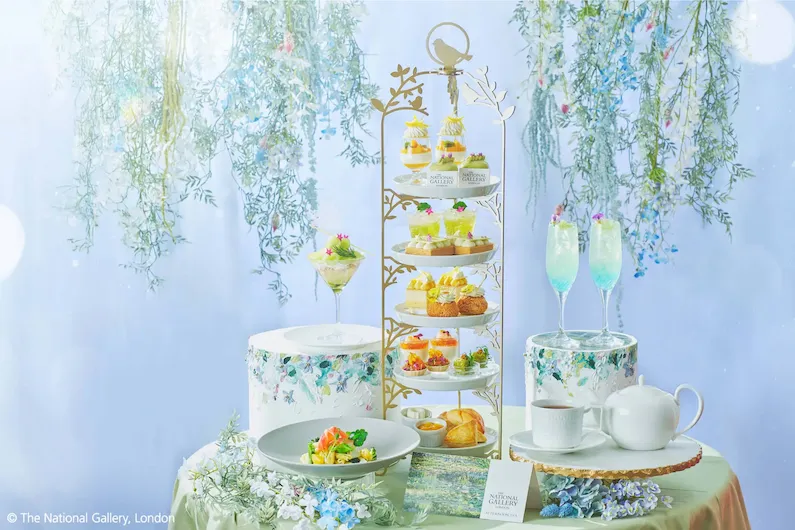
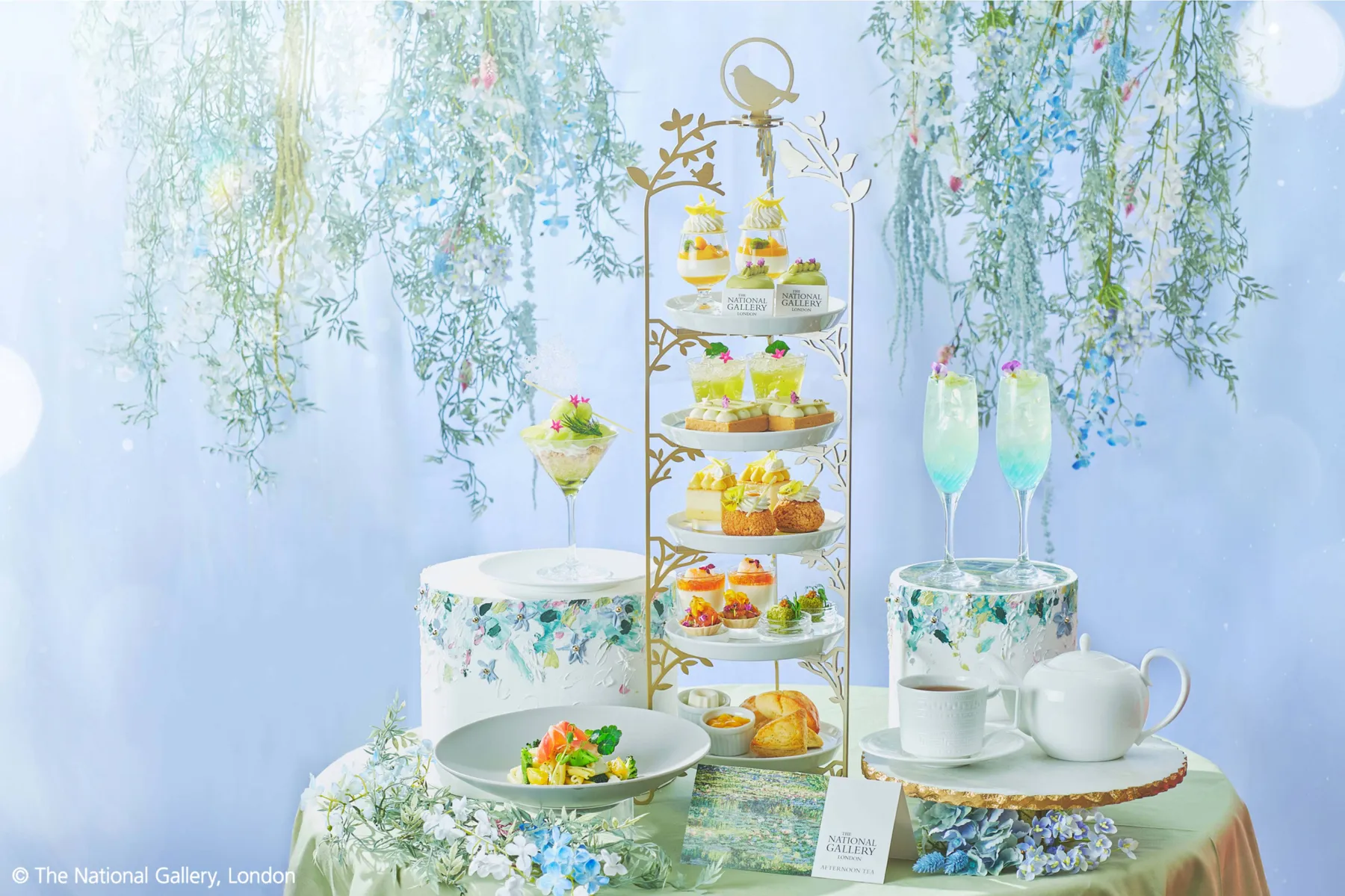
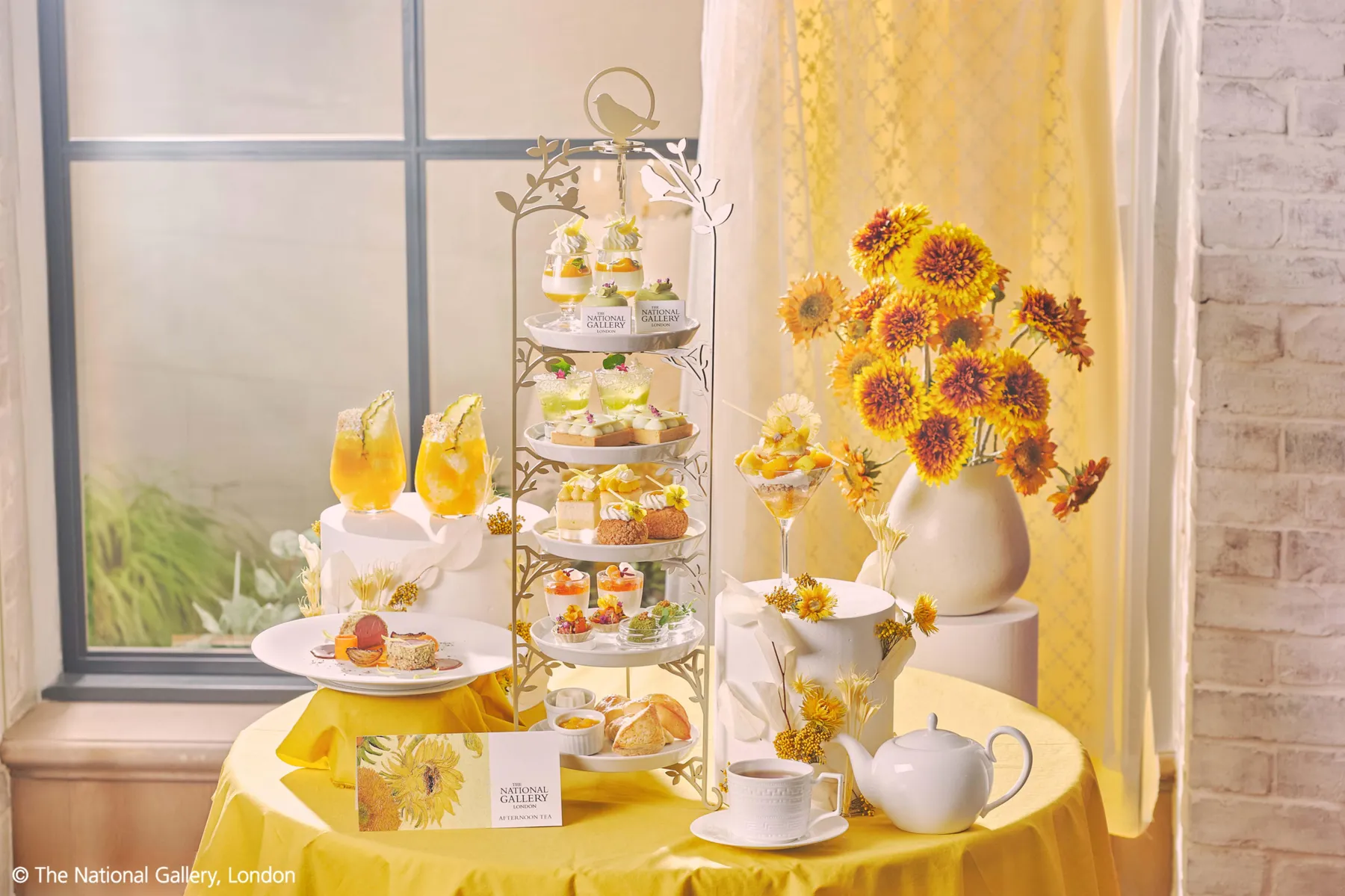
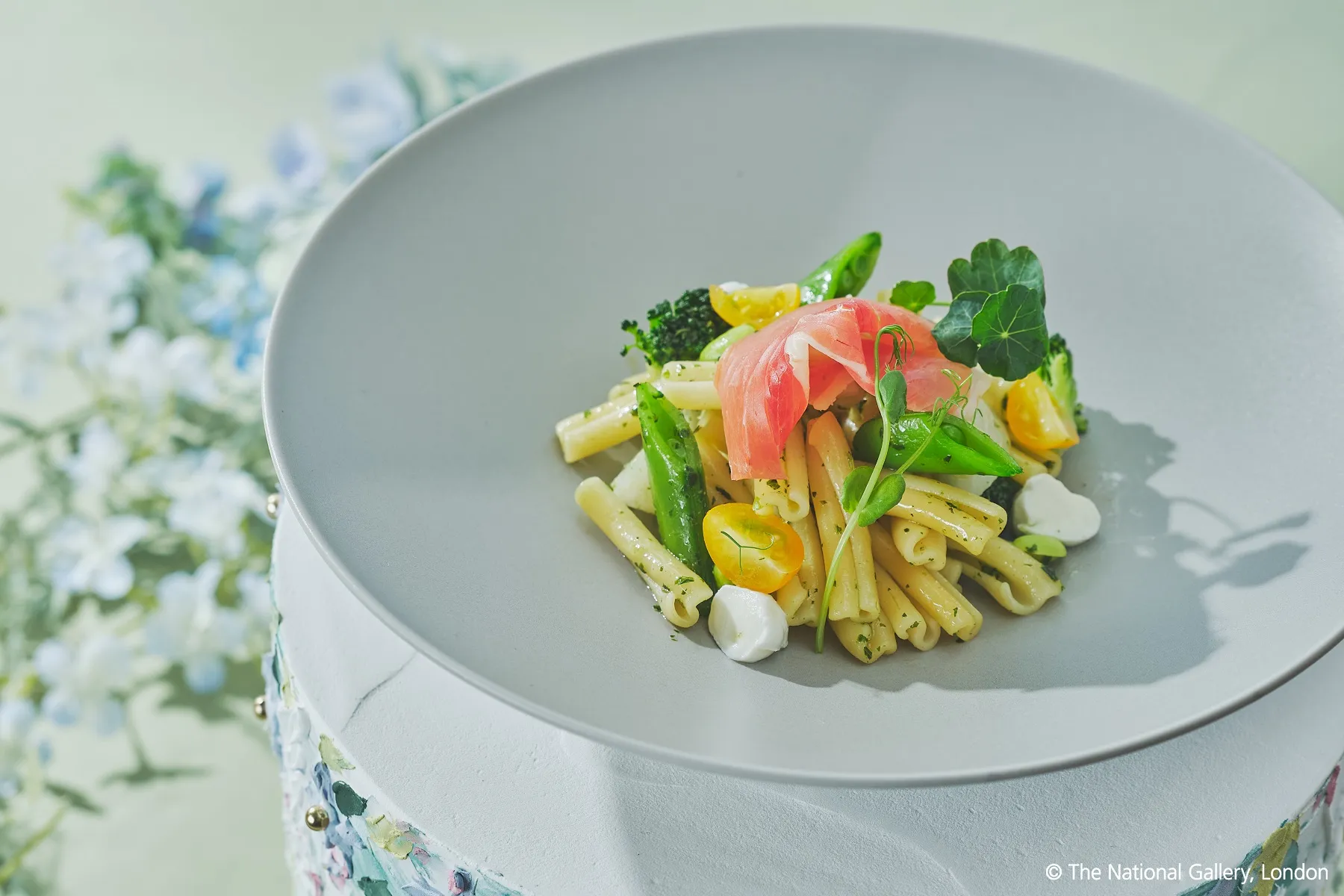
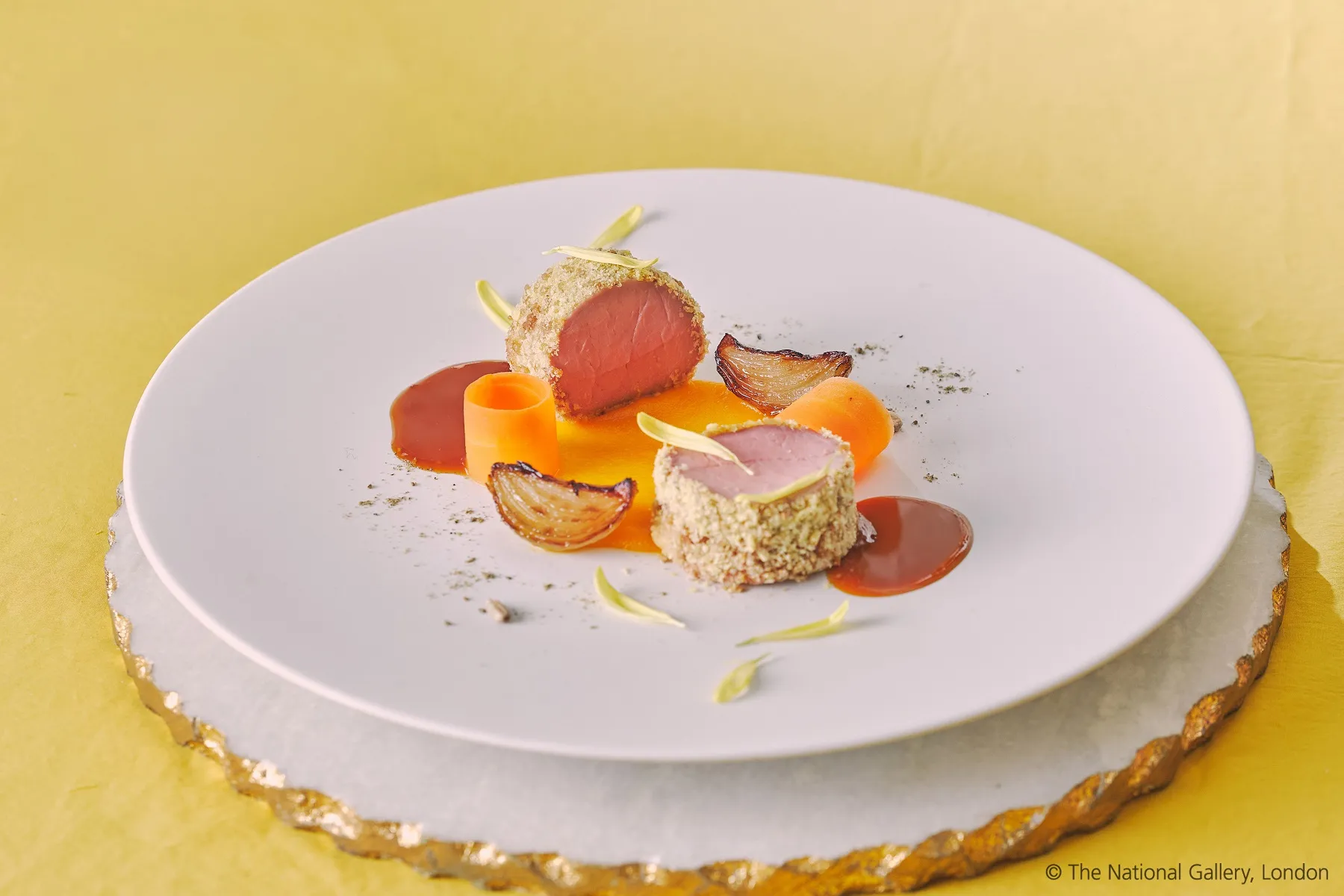
Claude Monet and Vincent van Gogh—two masters whose works rarely share the same physical space—find unexpected harmony in an afternoon tea experience that translates their paintings into edible form. Drawing from the collection of the National Gallery, London, this limited collaboration reimagines Water Lilies Pond and Sunflowers as a multi-course menu served across two distinctive Tokyo venues.

What distinguishes this event from conventional art-themed dining is its narrative foundation: both artists harbored a documented fascination with Japan. Monet constructed his Giverny garden with deliberate Japanese aesthetic influences, while Van Gogh collected Japanese prints and studied their compositional techniques. The tea service constructs a bridge between their European masterpieces and the “ideal place they hoped to visit someday”—realized here through Japanese ingredients and culinary interpretation.

The Experience: Two Artistic Sessions

The menu operates on a seasonal rotation tied to the artists’ respective palettes.

Monet Session (July 1–31, 2026): “Harmony of the Water Surface”

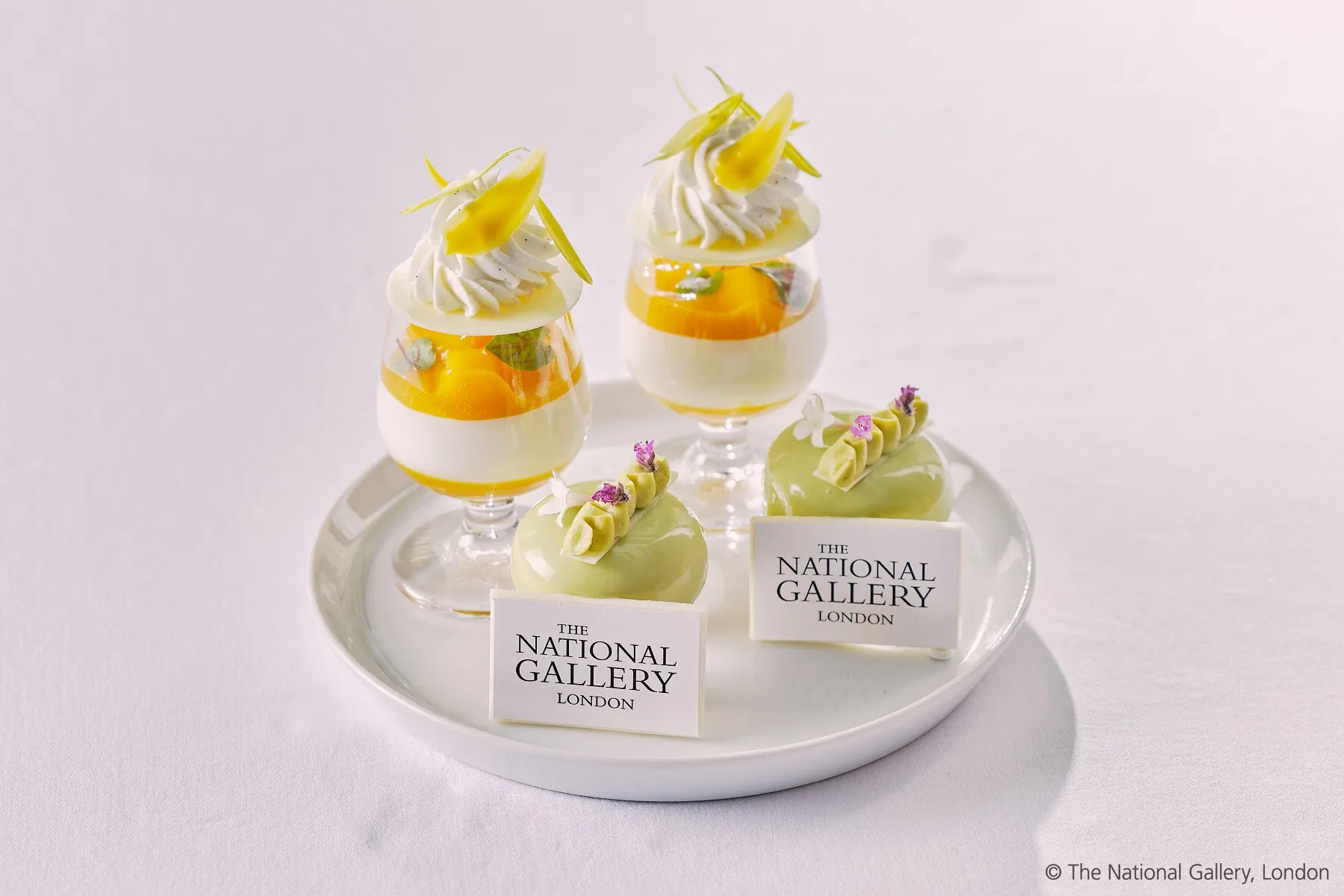
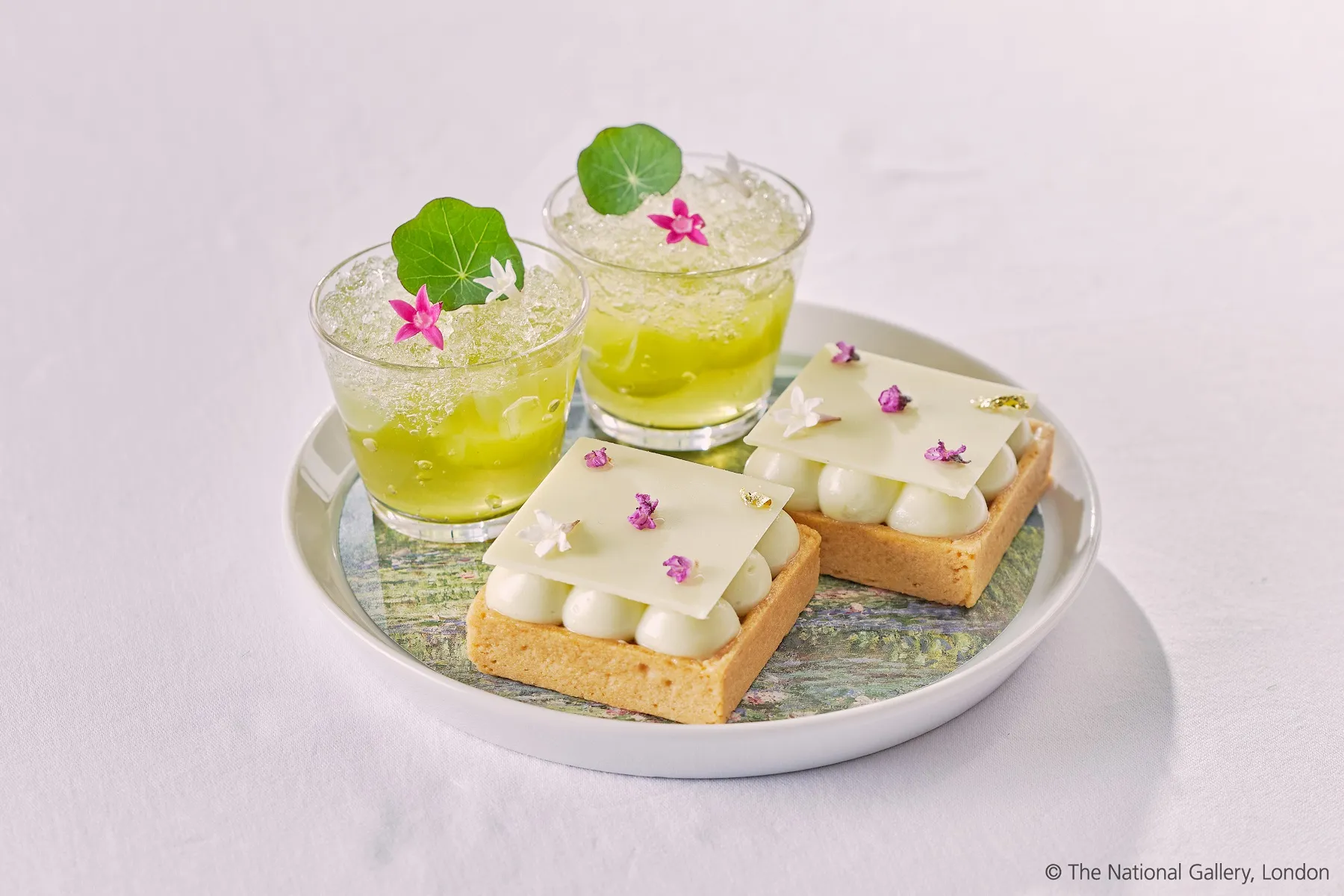
The July service translates Monet’s preoccupation with light on water into transparent and layered constructions. The Muscat and White Wine Jelly captures shifting luminosity through suspended clarity, while Pistachio and Raspberry Mousse and Matcha Tapas render the greenery of Giverny’s pond edge. The cumulative effect suggests standing at the water’s perimeter—an impression that accumulates across successive bites rather than arriving all at once.

Van Gogh Session (August 1–September 13, 2026): “Yellow Palette”

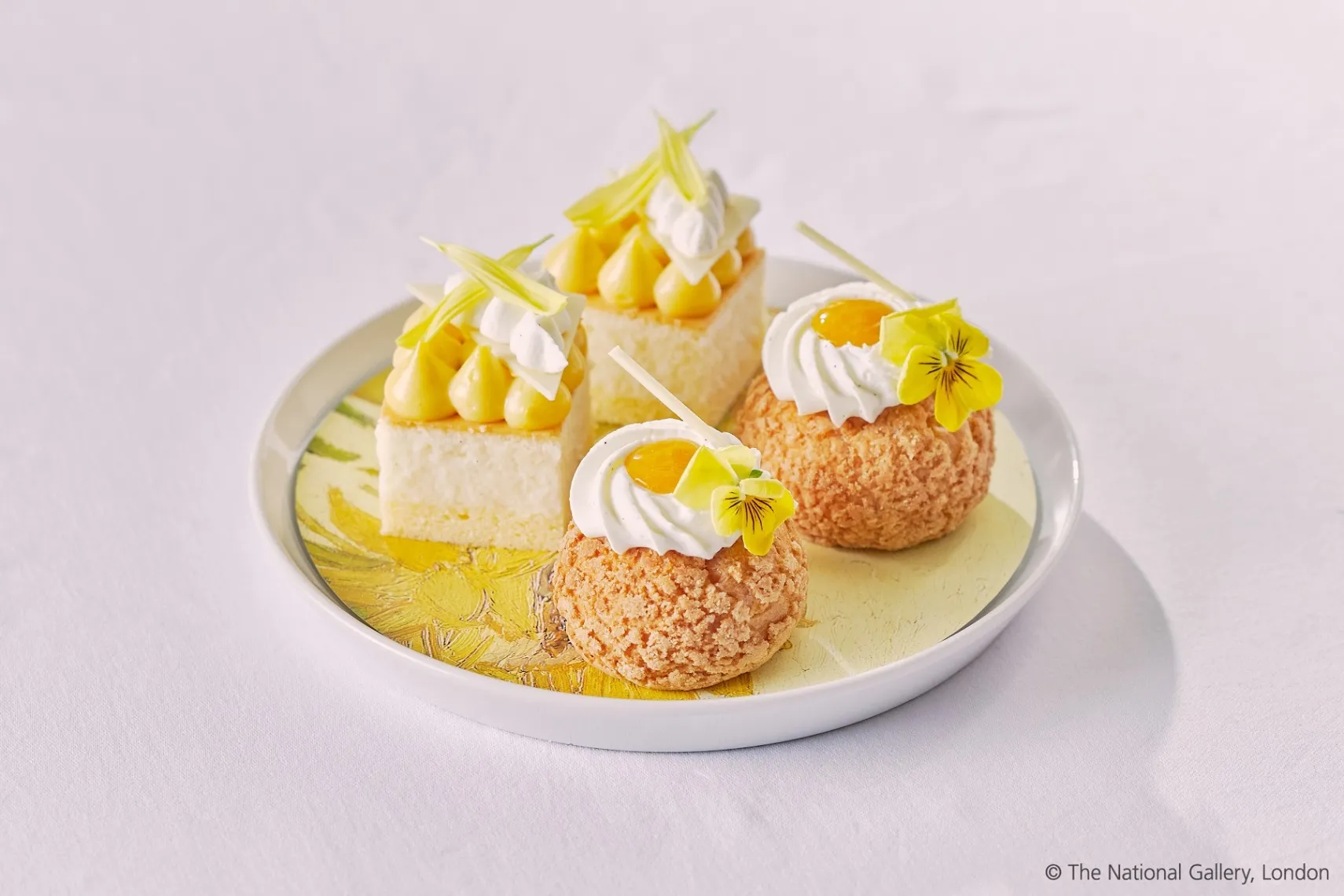
The August-September transition shifts to the saturated warmth of Arles. A Mango and Coconut Verrine delivers concentrated fruit intensity, while a soup course evokes the Provençal sun that Van Gogh chased during his most productive period. The menu favors bold, unmodulated color over subtle gradation—appropriate to an artist who wrote that he wanted to express “hope” through yellow.

The Full Menu

Desserts

  • Pistachio and Raspberry Mousse with Spinach Biscuit
  • Mango and Coconut Verrine
  • National Gallery Chocolate Plate
  • Grape and White Wine Jelly
  • Lime and Milk Chocolate Tart
  • Mango Passion Baked Cheesecake
  • Orange Passion Cream Puff

Savories

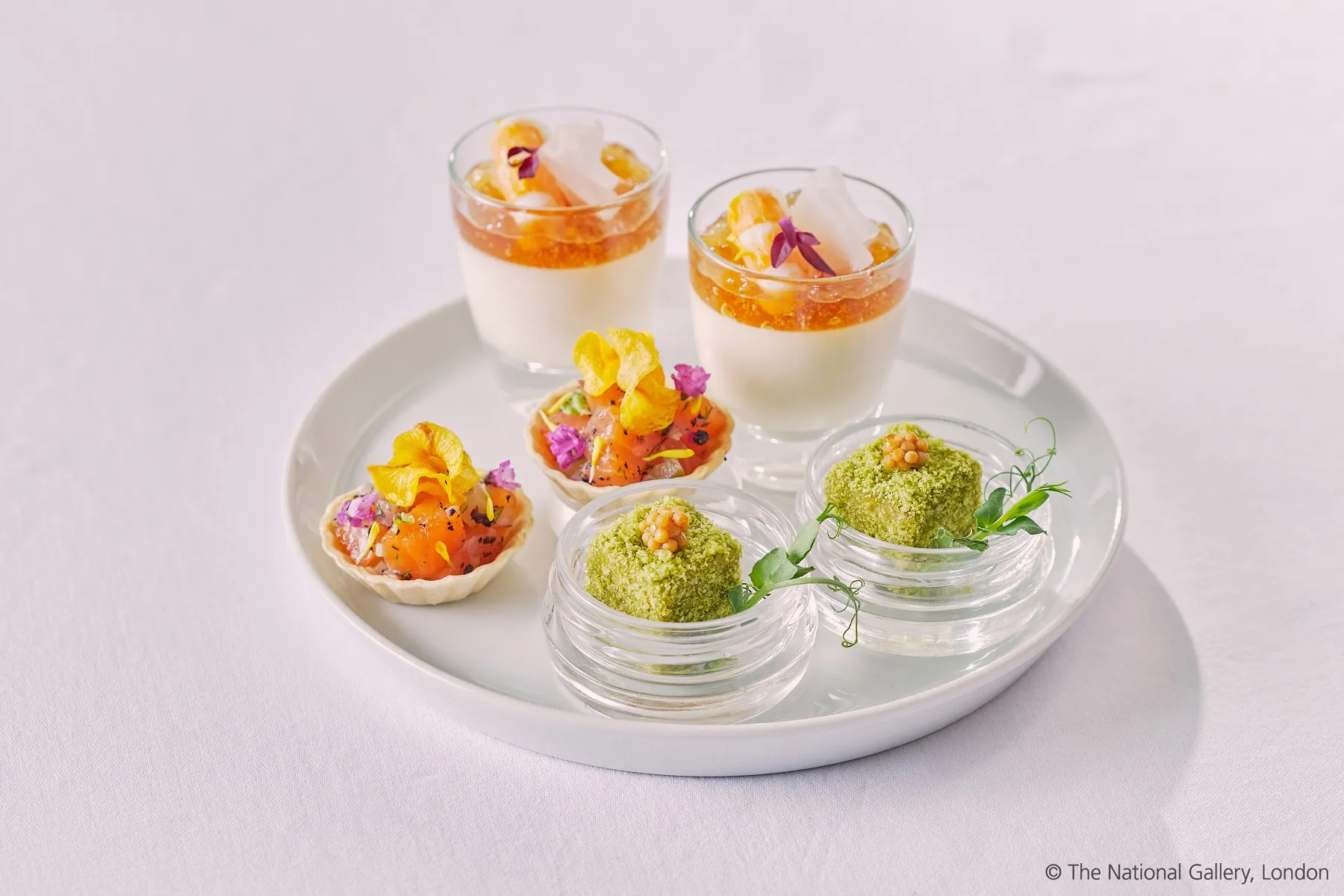
  • Domestic Pork Rillettes Japonisme Style
  • Salmon and Dill Pickle Tartlet with Shiso Aroma
  • Shrimp and Turnip Mousse with Peruño-flavored Jelly

Scones & Condiments

  • Scones (Milk / Tea varieties)
  • Condiments (Confiture / Clotted Cream)

Beverage Service

Standard Plan
One cup of Mariage Frères tea (the established French house founded 1854) plus unlimited access to tea selections, coffee, and soft drinks.

Tea Selection Plan
Expanded Mariage Frères selection plus unlimited access to the Standard Plan’s beverage range.

Prices below include 15% consumption tax and service charge.

Plan Weekdays Sat/Sun/Holidays
Standard ¥5,800 ¥6,300
Tea Selection ¥6,300 ¥6,800

Optional Additions

Item Price Availability
Special Drink (¥1,300)
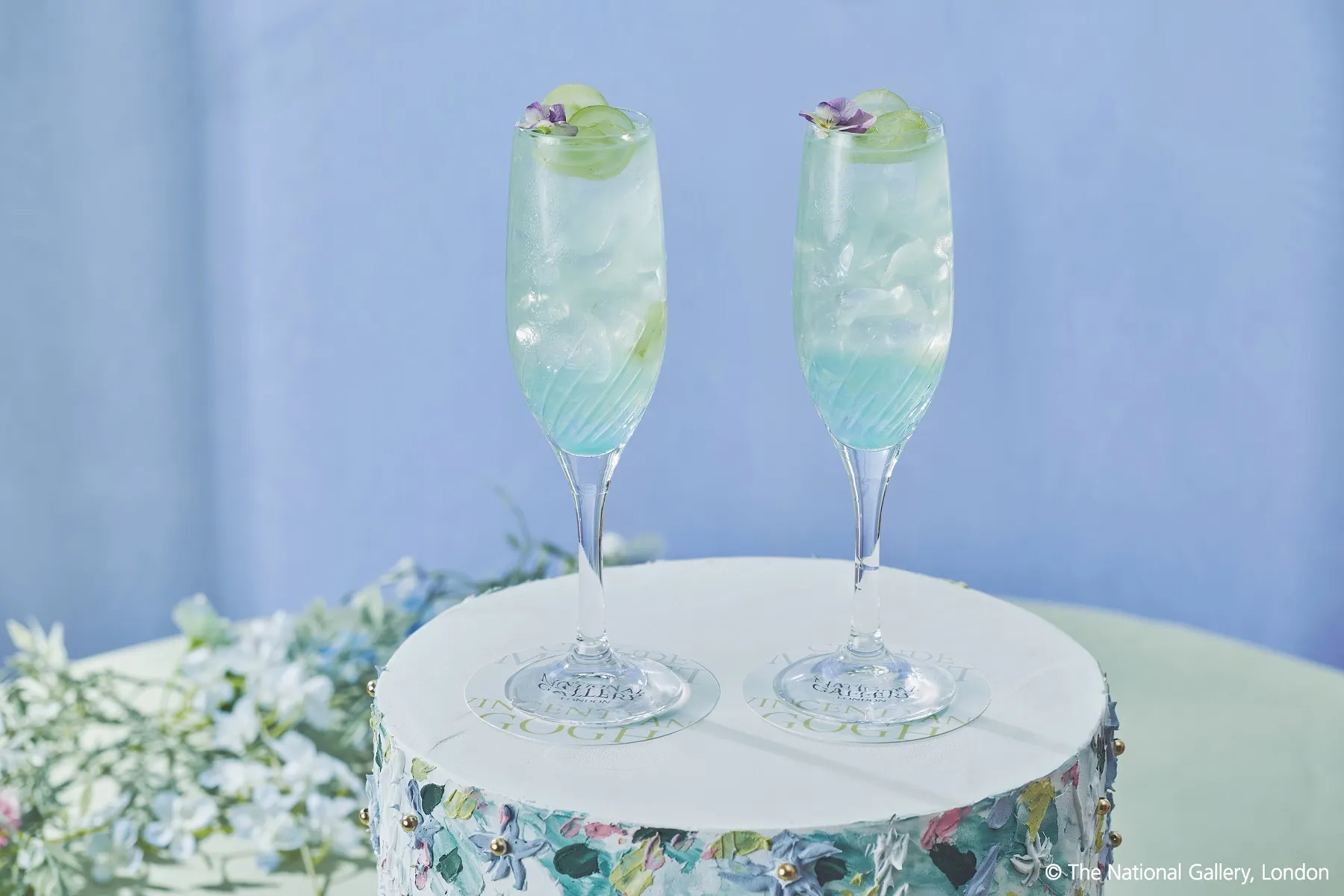
“Monet Blue ~White Grape and Water Lily Style~” July 1–31, 2026
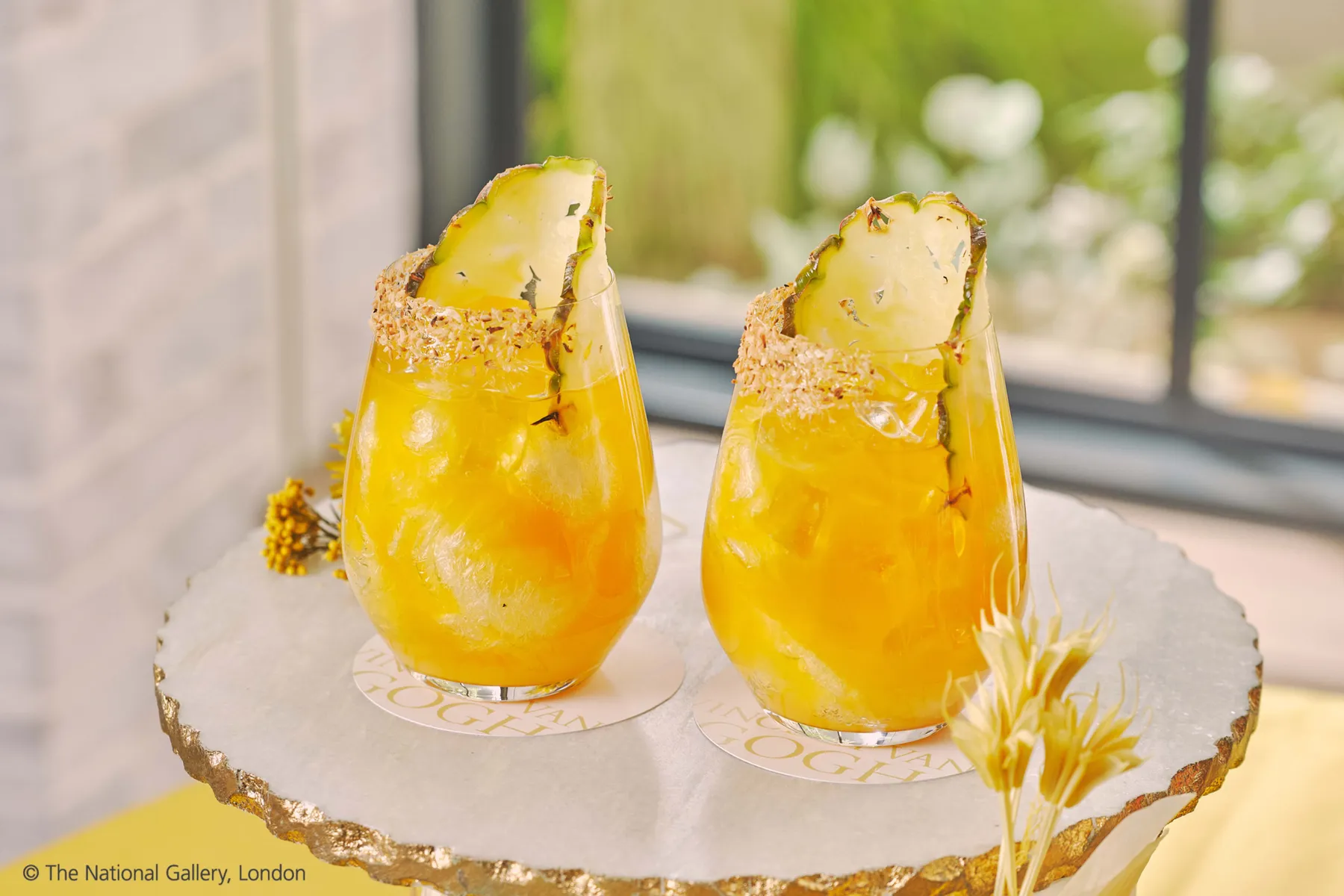
“Passionate Sunflower ~Mango & Roasted Coconut~” August 1–September 13, 2026
Special Dessert (¥1,800)
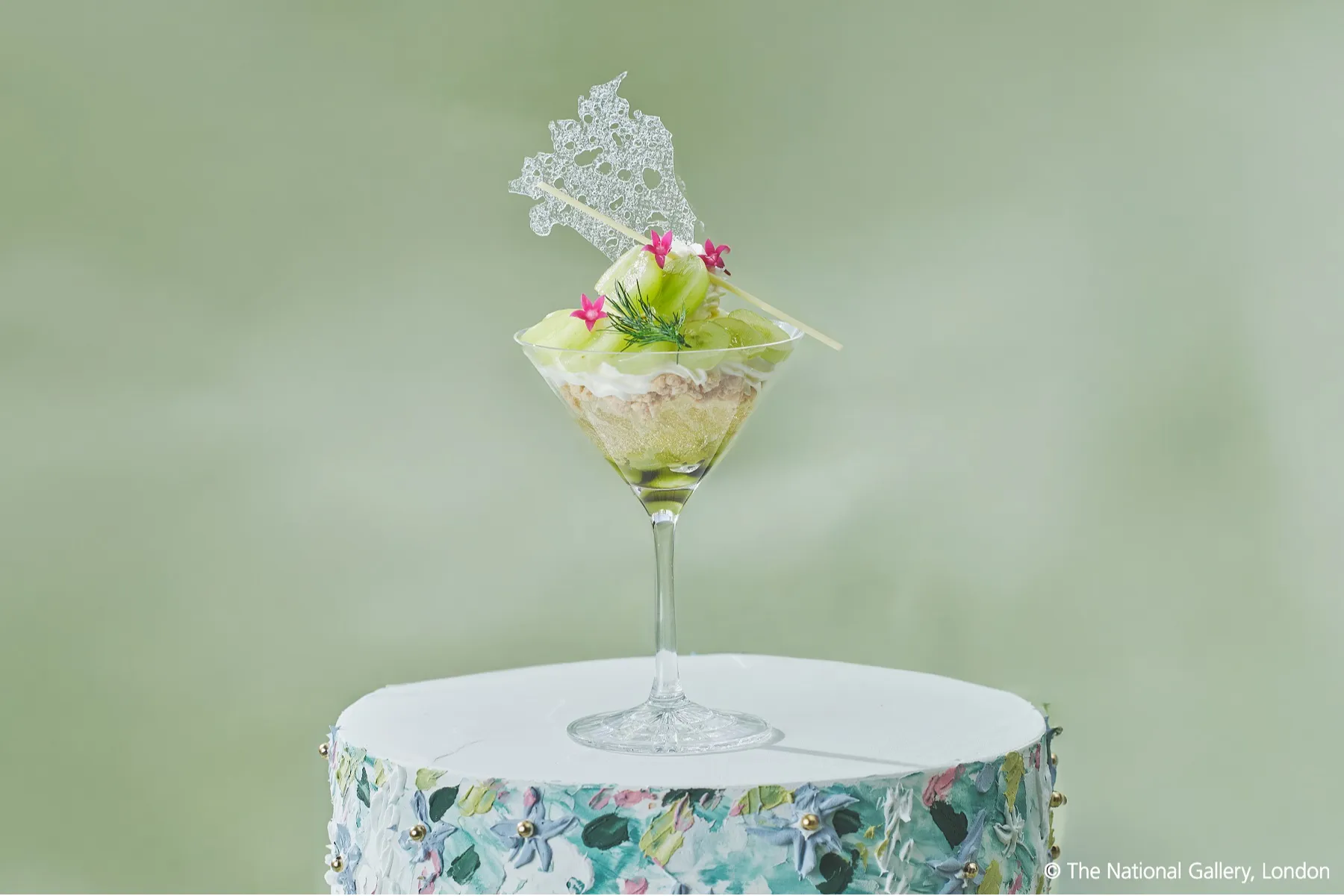
“Water Lilies and Water Surface Grape Parfait” July 1–31, 2026
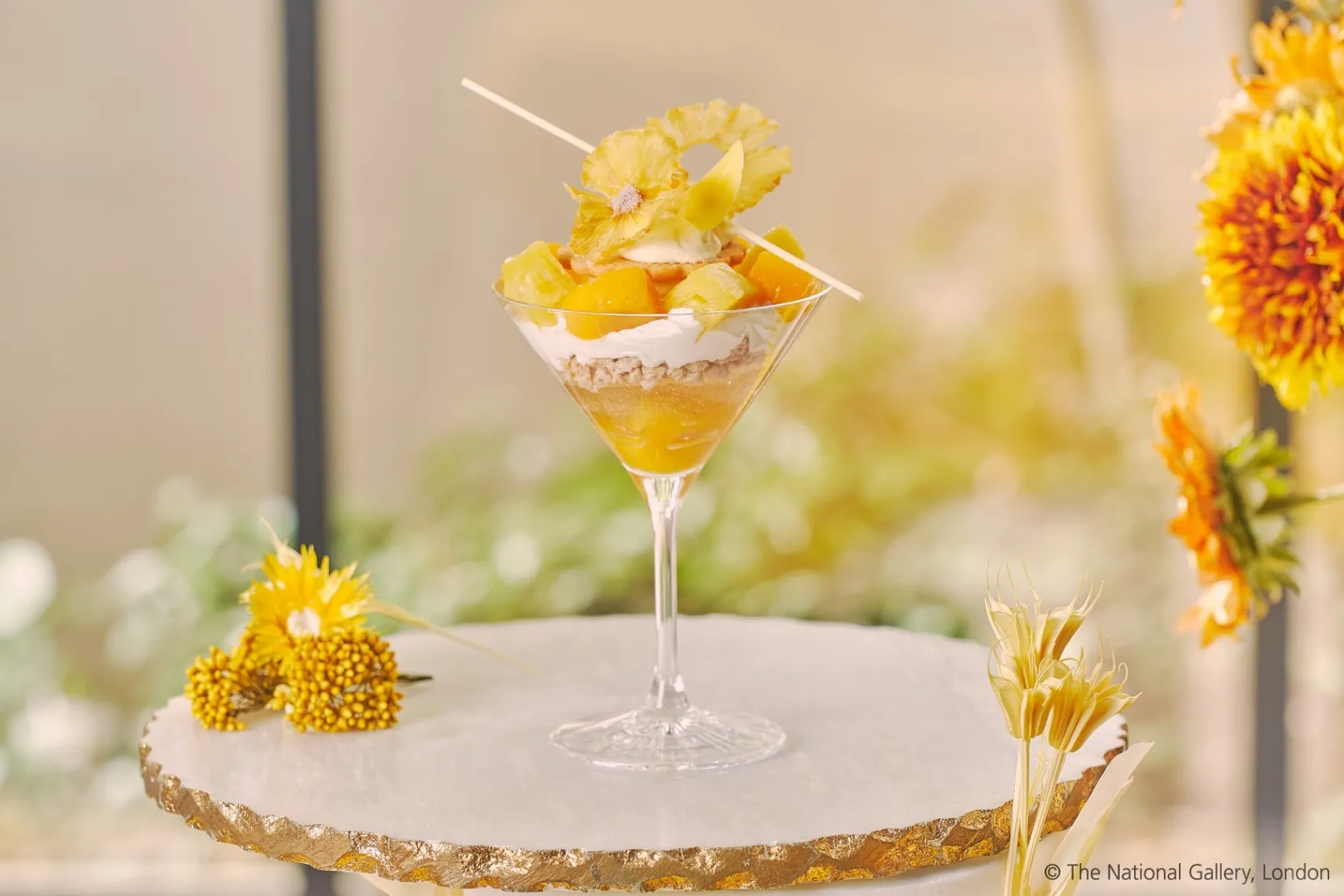
“Sunflowers and Sunlight Mango Parfait” August 1–September 13, 2026
Lunch (¥2,000)
“Wind of Giverny: Colorful Summer Vegetable Genovese” July 1–31, 2026
“Colors of Southern France: Pork Fillet Confit” August 1–September 13, 2026

Venues & Schedule

Aoyama St. Grace Cathedral — “St.GRACE Lounge & Dining”

Location details

  • Access: 2-minute walk from Omotesando Station
  • Dates: July 1, 2, 3, 6, 8, 9, 10, 13, 15, 16, 17, 22, 23, 24, 27, 29, 30, 31 / August 3, 5, 6, 7, 10, 12, 13, 14, 17, 19, 20, 21, 24, 26, 27, 28, 31 / September 2, 3, 4, 7, 9, 10, 11, 13, 2026
  • Hours: Weekdays Part 1: 12:00–14:00, Part 2: 14:30–16:30

Shirokane Geihinkan Art Grace Club

Location details

  • Access: Near Meguro Station
  • Dates: July 4, 5, 9, 10, 17, 20 (Monday/Holiday), 23, 24, 26, 30 / August 2, 6, 7, 23, 27, 28 / September 2, 3, 4, 10, 11, 13, 2026
  • Hours: 12:00–14:00 (single seating)

Note: Shirokane operates on July 20 (holiday) with two seatings: Part 1: 12:00–14:00, Part 2: 15:00–17:00.

Practical Information

  • Overall Period: July 1 – September 13, 2026
  • Closed: Mondays and Tuesdays at both venues (except holidays), plus designated company holidays

Reservations & Inquiries

Official Website: https://www.bestbridal.co.jp/guestparty/event%5Ftheme/2026event%5Ftheme-9/

Posted content subject to change. Confirm current details through official venue channels.


🛏️ See hotels near Tokyo

THE NATIONAL GALLERY LONDON AFTERNOON TEA ~ Inspired by Monet & Van Gogh~_1 THE NATIONAL GALLERY LONDON AFTERNOON TEA ~ Inspired by Monet & Van Gogh~_2 THE NATIONAL GALLERY LONDON AFTERNOON TEA ~ Inspired by Monet & Van Gogh~_3 THE NATIONAL GALLERY LONDON AFTERNOON TEA ~ Inspired by Monet & Van Gogh~_4 THE NATIONAL GALLERY LONDON AFTERNOON TEA ~ Inspired by Monet & Van Gogh~_5 THE NATIONAL GALLERY LONDON AFTERNOON TEA ~ Inspired by Monet & Van Gogh~_6 THE NATIONAL GALLERY LONDON AFTERNOON TEA ~ Inspired by Monet & Van Gogh~_7 THE NATIONAL GALLERY LONDON AFTERNOON TEA ~ Inspired by Monet & Van Gogh~_8 THE NATIONAL GALLERY LONDON AFTERNOON TEA ~ Inspired by Monet & Van Gogh~_9 THE NATIONAL GALLERY LONDON AFTERNOON TEA ~ Inspired by Monet & Van Gogh~_10 THE NATIONAL GALLERY LONDON AFTERNOON TEA ~ Inspired by Monet & Van Gogh~_11 THE NATIONAL GALLERY LONDON AFTERNOON TEA ~ Inspired by Monet & Van Gogh~_12

What is the National Gallery London?

The National Gallery London holds a collection of over 2,300 paintings dating from the mid-13th century to 1900. It sits at the north side of Trafalgar Square, where it has occupied its current building since 1838, though the institution itself was founded in 1824.

The collection covers the major European schools, with particular depth in Italian Renaissance, Dutch Golden Age, and French Impressionist work. Leonardo, Michelangelo, Raphael, Rembrandt, Vermeer, Velázquez, Turner, and Constable are all represented here. The gallery also holds the two artists featured in this Tokyo exhibition: Van Gogh’s Sunflowers (1888) and several of Monet’s water lily paintings, including The Water-Lily Pond (1899).

The National Gallery differs from many European museums in that it was not assembled from a royal collection. It was created by Parliament specifically for public access, with free admission written into its founding principles. That policy continues today. The building, designed by William Wilkins and expanded several times since, houses the collection in a sequence of galleries that allow visitors to move chronologically through Western painting.
The gallery’s educational role has been substantial. Its early directors established conservation practices and scholarly standards that influenced museums elsewhere. Its collection has remained relatively stable compared to institutions that sell and acquire aggressively, which means the works on view have shaped several generations of public understanding about what painting can do.

Summer Peach Afternoon Tea 2026 at Tokyo Marriott Hotel: Limited-Time Menu with Yamanashi’s Maruto Farm Peaches, Plus Yukata Experience Option

Summer Peach Afternoon Tea 2026 at Tokyo Marriott Hotel: Limited-Time Menu with Yamanashi's Maruto Farm Peaches, Plus Yukata Experience Option

Summer Peach Afternoon Tea【Tokyo Marriott Hotel】

Launching “Summer Peach Afternoon Tea,” a limited-time summer afternoon tea featuring peaches from “Maruto Farm” in Yamanashi Prefecture.

Afternoon tea at the Tokyo Marriott Hotel offers a rare opportunity to experience the progression of Japan’s four seasons within the verdant setting of Gotenyama—an enclave of nature that persists despite its urban location. For July and August, Pastry Chef Satoru Ishiwa has crafted a collection of sweets centered on peaches from Yamanashi Prefecture’s “Maruto Farm,” a grower whose produce seldom reaches general markets. The selection is deliberate: varieties are chosen to peak precisely during their serving window. The first half of the season features cultivars prized for their yielding, melting texture—”Hikawa Hakuhou” and “Hakuhou” among them—while the latter half transitions to firmer, intensely sweet varieties including “Asama Hakutou” and “Kawanakajima Hakutou.” Approximately ten cultivars will appear sequentially across the two-month period.

Eight sweets place peach at their center. The parfait layers tonka bean brulée with the fruit’s sweet, mellow aroma; a shortcake demonstrates how restraint can amplify flavor; and a rare cheese mousse assumes the rounded form of a peach itself. Four savory items—including lobster penne and a chilled peach soup—round out the menu. The setting matters: Gotenyama’s greenery and bright summer light provide the backdrop for an experience that arrives, appropriately, with the scent of ripe fruit.


<Upper Tier>

・Yamanashi Peach and Tonka Bean Brulée Parfait

Seasonal Yamanashi peaches and jelly layered with chantilly cream and black tea crumble, garnished with tonka bean brulée and peach.

・Peach Rare Cheese Mousse with Embedded Yamanashi Peaches

A piece that catches the eye with its large peach shape, featuring Yamanashi peach compote wrapped in a light, peach-flavored rare cheese mousse.

・Yamanashi Peach Shortcake

Finished with Yamanashi peach compote, sponge cake, and red peach and raspberry cream. Despite its simple composition, it is a masterpiece filled with the pastry chef’s commitment to flavor.

・Pink Poppin’ Chocolate Peach Ganache

Poppin’ chocolates filled with red peach confiture and white peach ganache.


<Lower Tier>

・Yamanashi Peach Tarte Flan

A pie crust tart filled and baked with a rich, vanilla-scented custard flan, luxuriously topped with Yamanashi peach compote.

・Peach and Framboise Sablé Sandwich

Peach and framboise butter cream sandwiched between pink raspberry sablés, accented with framboise jam for a touch of flavor.

・Yamanashi Peach Compote and Jersey Milk Blancmange

Yamanashi peach compote and peach jelly layered over rich, creamy Jersey milk, finished with a refreshing taste.

・Peach Scone served with Kochi Prefecture Guava Confiture

Scones with dried peaches kneaded in, with a meticulous blend of ingredients to create a moist texture despite being egg-free. Please enjoy it with a slightly tart guava confiture from Kochi Prefecture.


<Savories>

・Octopus and Itaya Shell Marinade with a Lime Accent

Octopus and Itaya shell marinated in a refreshing lime dressing.

・Lobster and Penne Composition

An appetising dish combining the umami of lobster with basil-scented penne.

・Salami and Mascarpone Stick Sandwich

A simple sandwich of salami and mascarpone cheese. A hint of framboise flavor is tucked in as an accent.

・Chilled Red Peach Soup served with Prosciutto Bread

A chilled soup that brings out the gentle sweetness of red peaches, served with crispy prosciutto bread.


【Tea or Coffee】

Brand changes and refills are free

・”TWG Tea” 8 types of tea selection

・ 5 types of coffee variations


Recommended Plan: “Yukata de Afternoon Tea”

A special arrangement links summer attire with the afternoon tea experience. Guests select their preferred yukata for dressing and hair styling at the Aiko Yamano Beauty Salon within the hotel, then proceed to the open atrium of Lounge & Dining G—surrounded by Gotenyama’s greenery—for fruit-forward afternoon tea.

Period Wednesday, July 1, 2026 – Wednesday, September 30, 2026
Time 11:30~ / 14:00~
Location Aiko Yamano Beauty Salon (dressing/hair set); Lounge & Dining G (afternoon tea)
Price ¥27,300 per person

Includes yukata, obi, geta, dressing, hair set, and afternoon tea

Complete reservation system required up to 7 days before the date of use. Cancellations 3 days or less before incur a 100% cancellation fee.

From Tuesday, September 1, 2026, the afternoon tea menu content will change.

The above prices include consumption tax and service charges.

The described contents of the offer are subject to change.


Basic Information

Venue Tokyo Marriott Hotel
Nearest Stations Kita-Shinagawa Station / Shinagawa Station
Address 〒140-0001 4-7-36 Kita-Shinagawa, Shinagawa-ku, Tokyo [MAP]
Specific Venue Lounge & Dining G
Period Wednesday, July 1, 2026 – Monday, August 31, 2026
Time 13:00~ / 15:30~
Price ¥7,500 per person

Reservations: advance reservation system for 2 or more people, up to 2 days in advance.

The above prices include consumption tax and service charges.

The described contents of the offer are subject to change.

Official Site


The posted content may have changed. Please check the official website of the venue/organizer for the latest information.

🛏️ See hotels near Tokyo

Summer Peach Afternoon Tea【Tokyo Marriott Hotel】_1
Summer Peach Afternoon Tea【Tokyo Marriott Hotel】_2
Summer Peach Afternoon Tea【Tokyo Marriott Hotel】_3
Summer Peach Afternoon Tea【Tokyo Marriott Hotel】_4
Summer Peach Afternoon Tea【Tokyo Marriott Hotel】_5
Summer Peach Afternoon Tea【Tokyo Marriott Hotel】_6
Summer Peach Afternoon Tea【Tokyo Marriott Hotel】_7

What is Maruto Farm?

Maruto Farm sits in Yamanashi Prefecture, Japan’s most productive peach-growing region. The family operation has cultivated stone fruit since the mid-1960s, working without synthetic pesticides or the hormone treatments common in commercial orchards. Their hand-pollination method—brushing pollen from flower to flower with rabbit-hair brushes—dates to the farm’s founding and remains unchanged despite the labor intensity.
The farm’s reputation rests on two cultivars developed through decades of selective breeding: the Momoko, which balances acidity against concentrated sweetness, and the less common Yumeaki, prized for its near-white flesh and pronounced honey aroma. Yamanashi’s geography shapes these characteristics. The valley traps heat during the day while elevation allows rapid cooling at night. Volcanic soils from the surrounding Minami Alps range lend subtle mineral notes that persist in the finished fruit.
Harvesting runs from mid-July through August. Workers move through the orchards daily, testing individual peaches for sugar content using refractometers before clipping stems by hand. Rejected fruit—roughly sixty percent of the crop—goes to processors for jam or juice. The remainder enters a tiered grading system: approximately twenty-five percent qualifies for standard retail, fifteen percent for department store gift boxes, and the remaining ten percent for partnerships with hotels and inns that specify harvest-to-service intervals of forty-eight hours or less.

Tokyo Marriott Hotel’s pastry kitchen established contact with Maruto Farm in 2017, initially through a mutual supplier who handled logistics for both properties. After two seasons of sample testing and visits by the farm’s quality manager to the hotel’s Shinjuku location, the properties arranged direct procurement. The afternoon tea menu receives allocations from the top tier, with specific weight requirements (minimum 280 grams) and brix measurements (minimum 13 percent) written into the purchase agreement. The farm’s output of qualifying fruit varies annually with weather conditions; the 2023 harvest yielded 8,400 kilograms meeting Marriott specifications, against 11,200 in the previous year.

Mori no Beer Garden 2026: Jingu Gaien’s New Weber BBQ Plan, All-You-Can-Drink & Magic Mugs for Chilled Summer Nights

Mori no Beer Garden 2026: Jingu Gaien's New Weber BBQ Plan, All-You-Can-Drink & Magic Mugs for Chilled Summer Nights

Mori no Beer Garden / Jingu Gaien

Enjoy BBQ at Jingu Gaien! Look forward to magic mugs that keep drinks cold and a plan debuting for the first time in 2026.

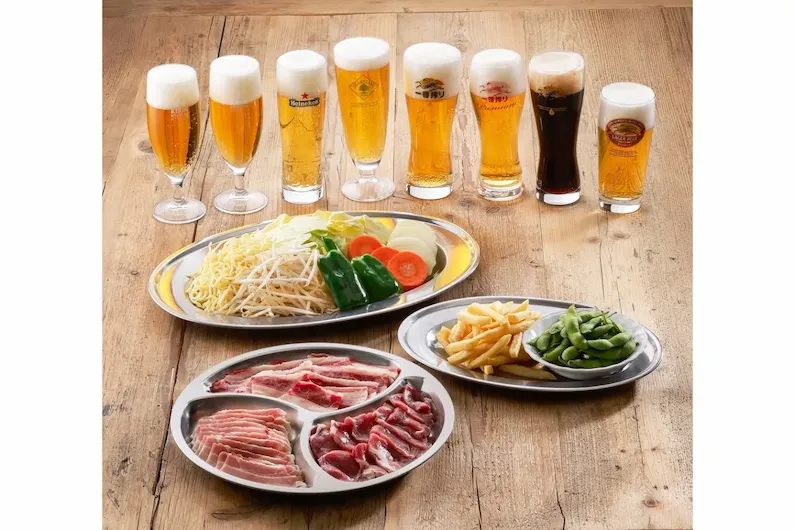
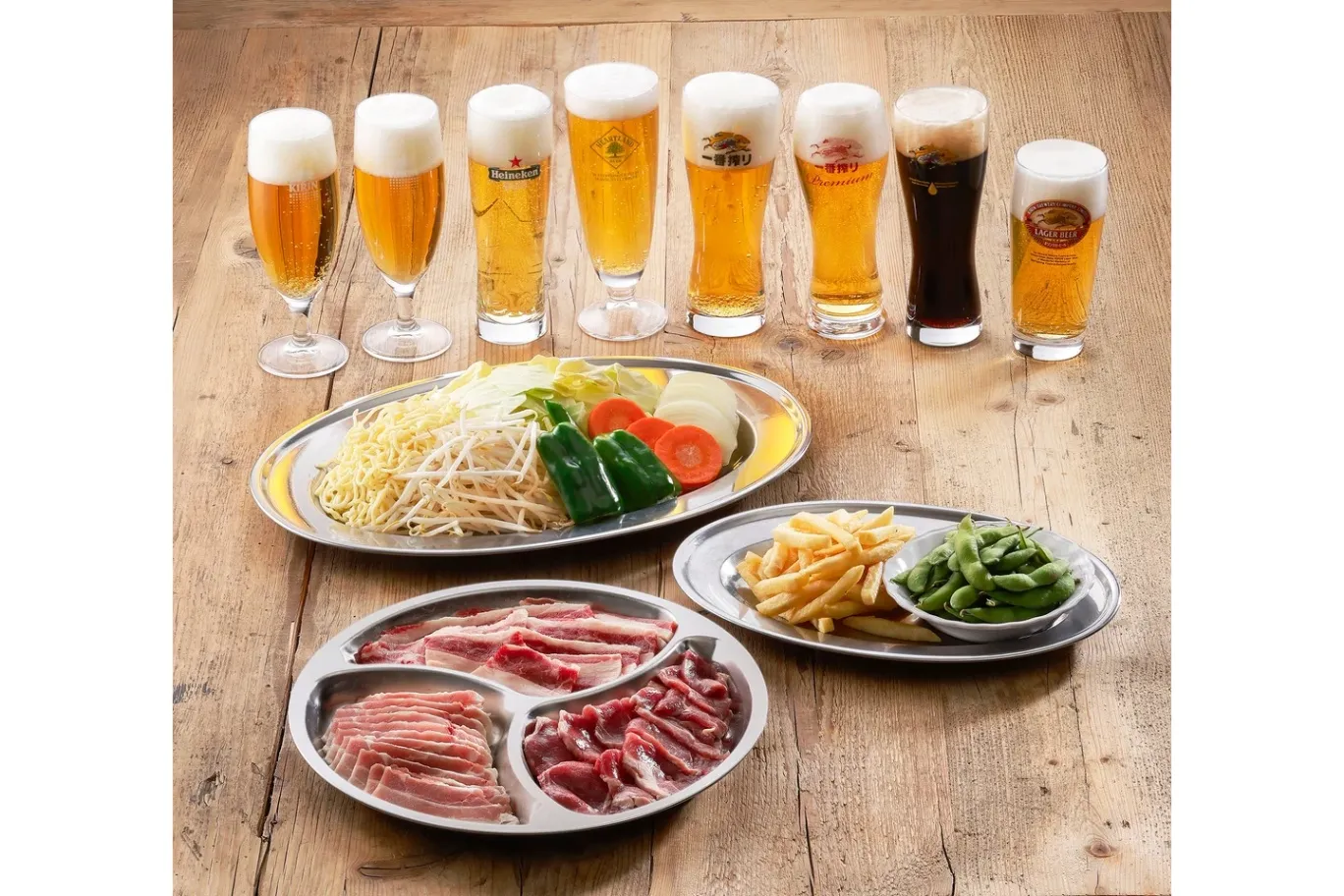
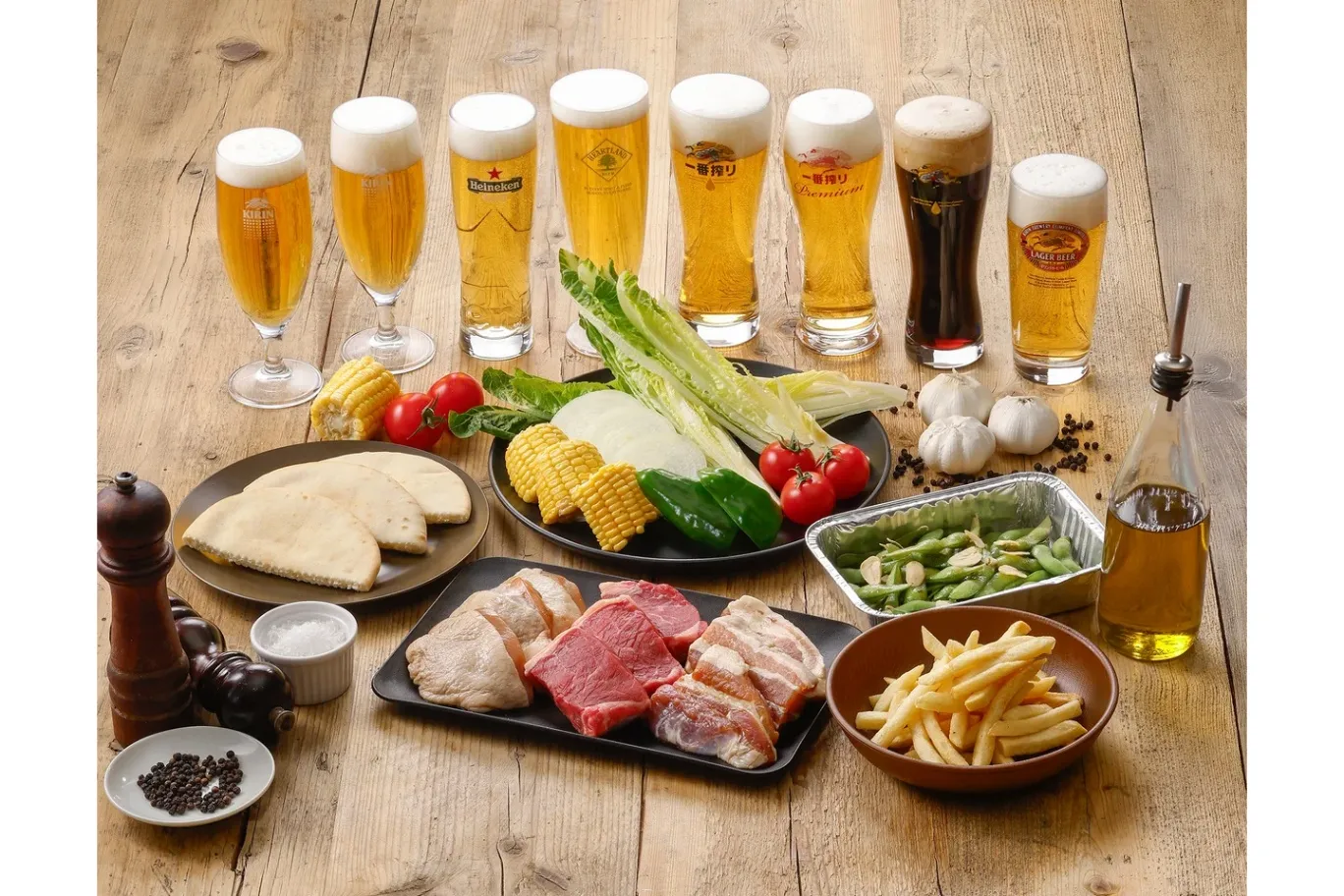
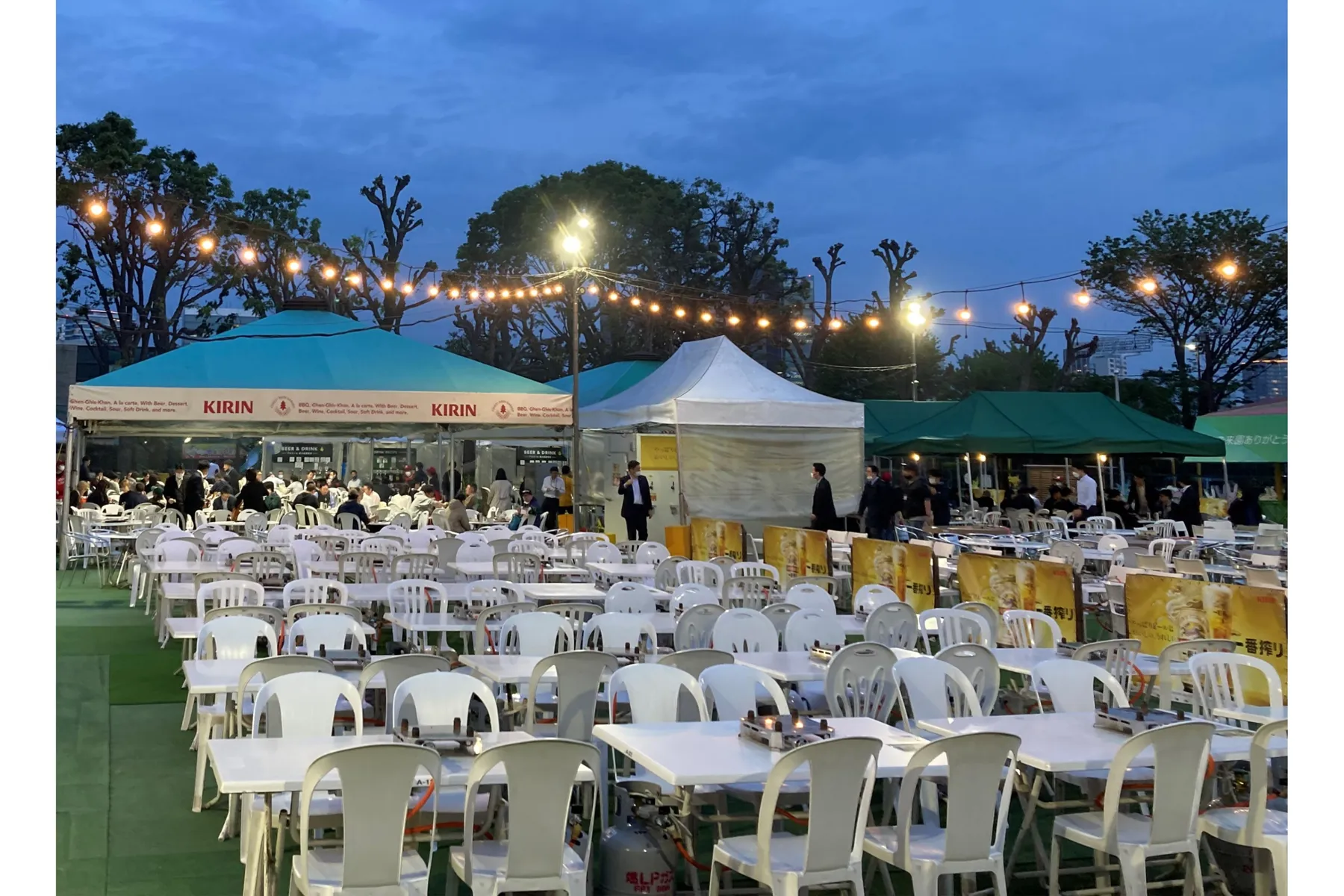
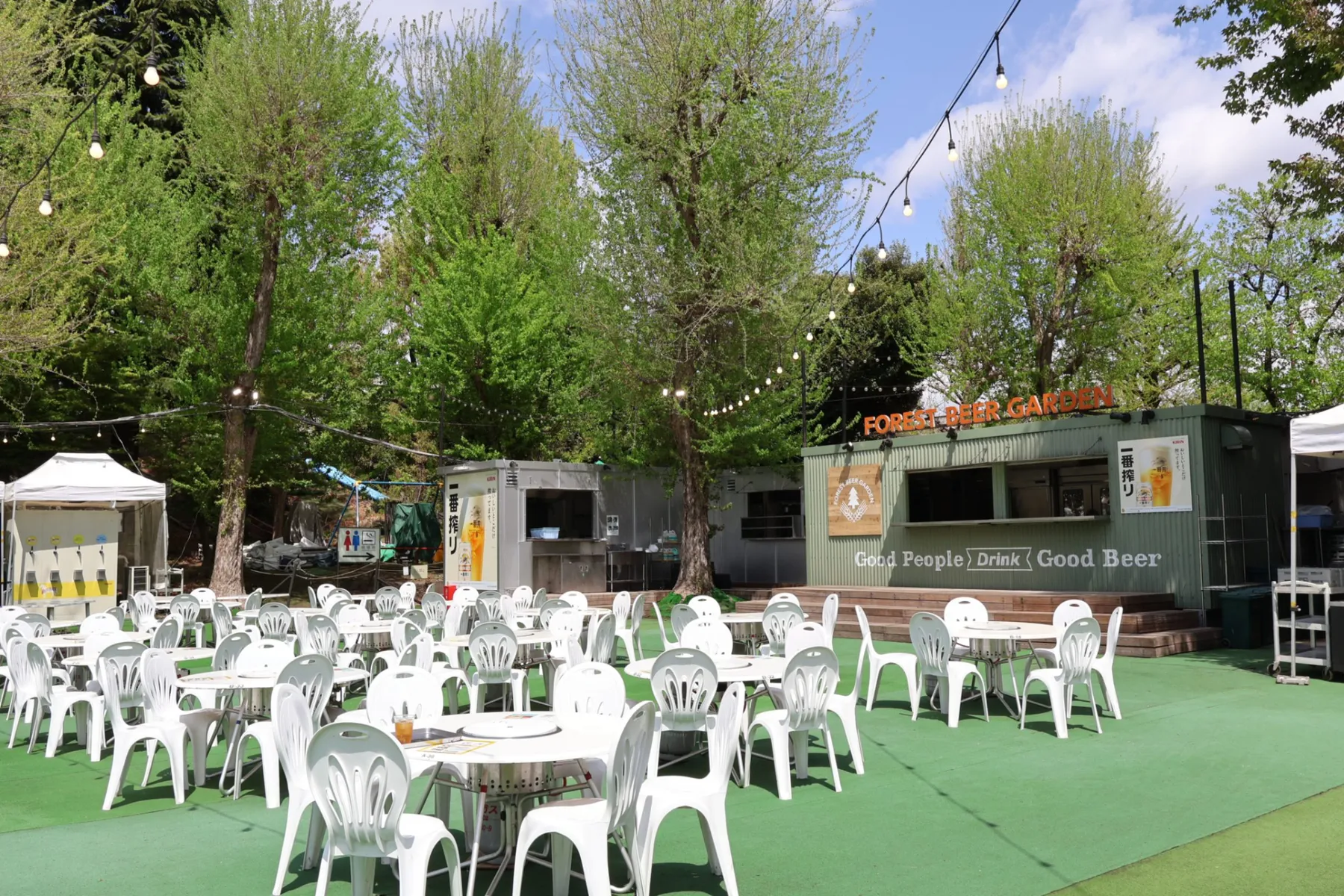
“Mori no Beer Garden” will open again this year within Jingu Gaien Nikoniko Park. In 2026, a new area will debut where you can experience BBQ with authentic Weber grills from the Weber company—an American brand renowned for its charcoal kettle grills since 1952. With the “Weber BBQ Plan with All-You-Can-Drink (6,980 yen),” you can fully enjoy US sirloin, domestic pork belly, and more. Additionally, as a standard plan, a barbecue menu featuring a welcome plate, three types of meat, and vegetables is available. With reasonable pricing for children, it is also perfect for families! A welcome point is the availability of beer servers and sour servers connected directly to refrigerators, as well as magic mugs that maintain coldness—ensuring your beverage stays chilled even during humid Tokyo evenings. Heat countermeasures have also been implemented, such as the installation of “Cool Mist Line (R)” cooling devices within the venue.

■ Heat Countermeasures
Mist showers, large fans

■ BBQ Style
Hands-free BBQ (Empty-handed BBQ)

■ Beer Handled
Kirin

■ Craft Beer Handled
4 types

■ Reservations
Web reservations available, no reservation OK (same-day seats available)

■ Number of Seats
900 seats (900 outdoor seats)
*Maximum capacity per group: 900 people
*600 seats under tents
13 tables of New Hands-free Weber BBQ seats under tarp tents

■ Rainy Weather Response
Outdoor but has a roof and can be conducted; conducted outdoors using tarps, parasols, etc.

■ Accepted Payment Methods
Credit card, QR code, electronic money, cash

Basic Information

Venue / Nearest Station Meiji Jingu Gaien<br>Shinanomachi Station (5 min walk) / Kokuritsu-Kyogijo Station (5 min walk) / Gaienmae Station (8 min walk) / Aoyama-itchome Station (10 min walk)
Location 〒160-0013<br>1-1 Kasumigaokamachi, Shinjuku-ku, Tokyo<br>MAP
Venue Mori no Beer Garden / Jingu Gaien
Event Period 2026/04/22 (Wed) ~ 2026/09/30 (Wed)
Hours Regular:<br>Start: Weekdays 16:30~, Sat/Sun/Holidays 12:00~<br>End: Weekdays, Sat/Sun/Holidays all until 22:00<br>*Last order: Food and drinks 30 minutes before closing<br><br>【Summer Time】July 18, 2026 (Sat) ~ August 31, 2026 (Mon):<br>Weekdays 14:00〜22:30 (L.O. 21:30) / Sat/Sun/Holidays 12:00〜22:30 (L.O. 21:30)
Inquiries 03-5411-3715<br>https://www.royal-holdings.co.jp/contact/<br>*Phone reception hours 11:00~20:00
Official Site https://www.morinobeergarden.com/ — Click here for reservations

*Listed content may be subject to change. Please check the official website of the facility or store for the latest information.

🛏️ View hotels near Tokyo

Mori no Beer Garden/Jingu Gaien_1 Mori no Beer Garden/Jingu Gaien_2 Mori no Beer Garden/Jingu Gaien_3 Mori no Beer Garden/Jingu Gaien_4 Mori no Beer Garden/Jingu Gaien_5

What is Jingu Gaien?

Jingu Gaien is a 330,000-square-meter park in central Tokyo, running from Shinanomachi through Aoyama to Gaienmae. Established in 1926 as an outer garden to Meiji Shrine, it functions as one of the city’s substantial green spaces, positioned among areas better known for commerce than for trees.

The park’s most recognizable feature is Icho Namiki, an avenue of ginkgo trees that turn yellow in autumn. The area also includes the Meiji Memorial Picture Gallery, sports facilities such as Meiji Jingu Stadium, and lawns used for recreation and occasional events.

Jingu Gaien sits at a particular intersection: it is more open to the surrounding city than Meiji Shrine proper, yet still buffered enough to function as parkland. The terrain varies slightly, the tree canopy is mature, and the built environment retains elements from its early decades. These characteristics allow it to accommodate seasonal programming without requiring extensive temporary infrastructure.

The park’s value to residents is largely a matter of logistics. It offers unprogrammed space—room for unscheduled picnics, walks, or gatherings—within reach of Shinjuku, Shibuya, and Roppongi. This proximity has made it a practical venue for evening events during warmer months, where the transition from daytime park use to nighttime activity happens without much friction. The ginkgo avenue, lit after dark, becomes a corridor between the daytime and evening functions of the space.

What distinguishes Jingu Gaien is not its transcendence of urban conditions but its negotiation with them. It remains visibly part of Tokyo rather than apart from it, which limits its capacity for retreat but expands its utility. For a city where truly undeveloped land is scarce, this compromise—accessibility traded against seclusion—represents a recognizable kind of value.

Analytics