Peach Vacation Afternoon Tea
A luxurious moment to fully enjoy the sparkle of summer, woven together by fragrant peaches and mellow melons.
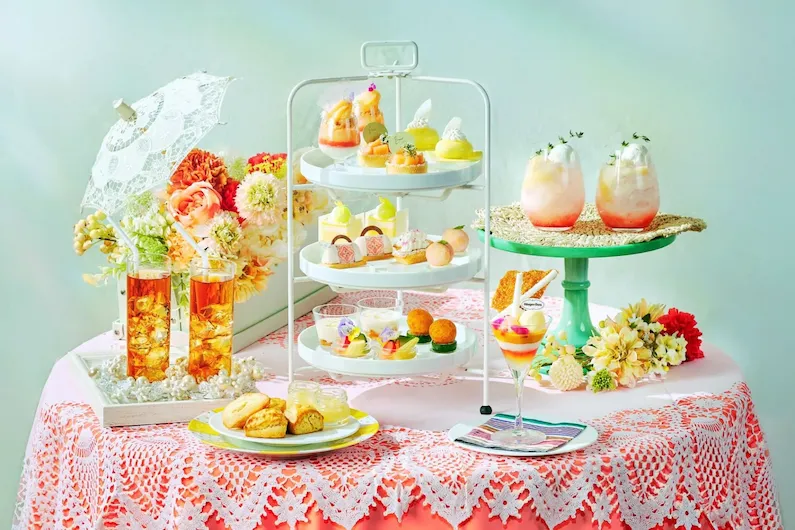
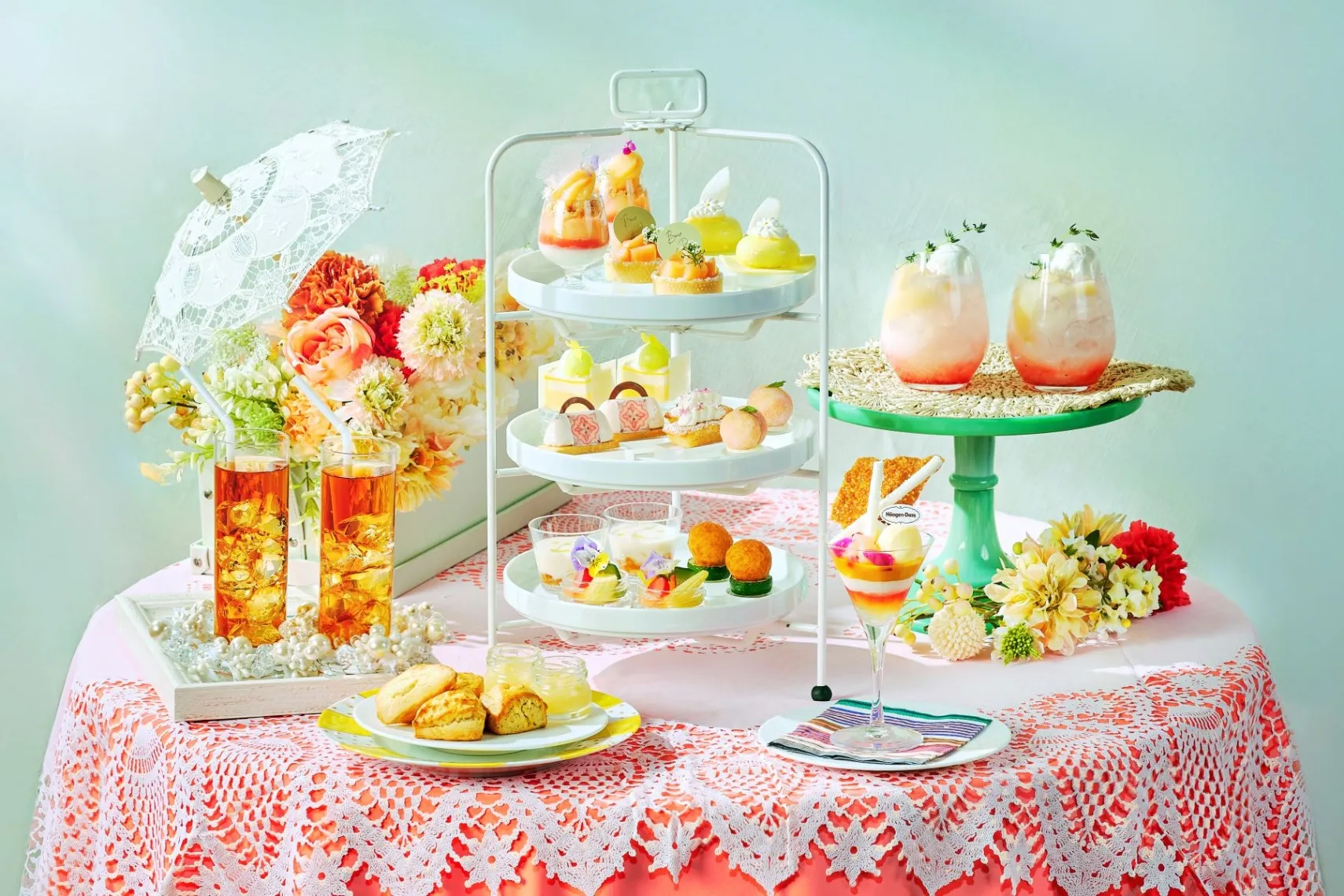
This seasonal afternoon tea celebrates summer’s peak produce through careful craftsmanship rather than novelty for its own sake. The pastry team has constructed a menu around two primary fruits—peaches and melons—treating each with precision that respects their distinct characteristics.
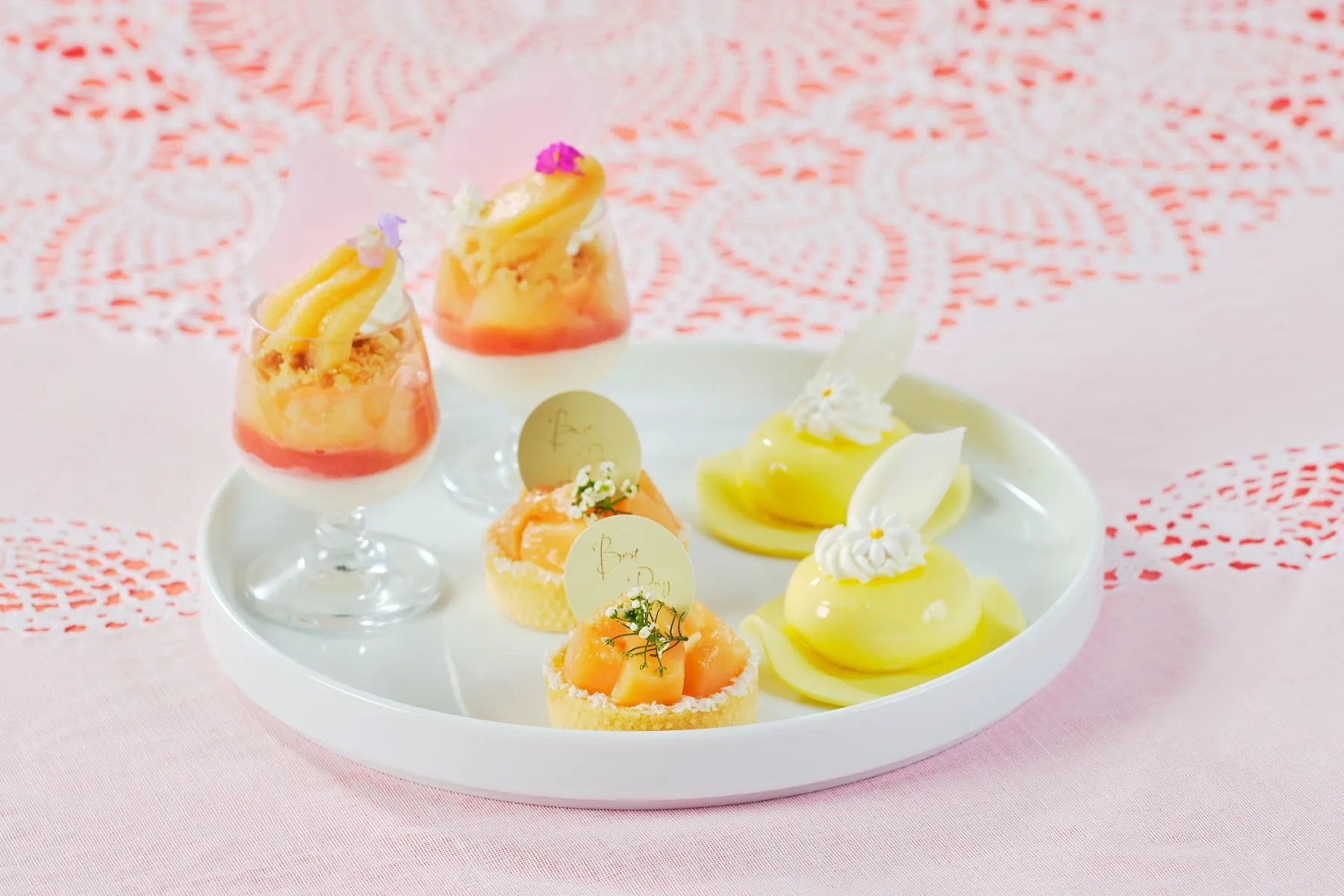
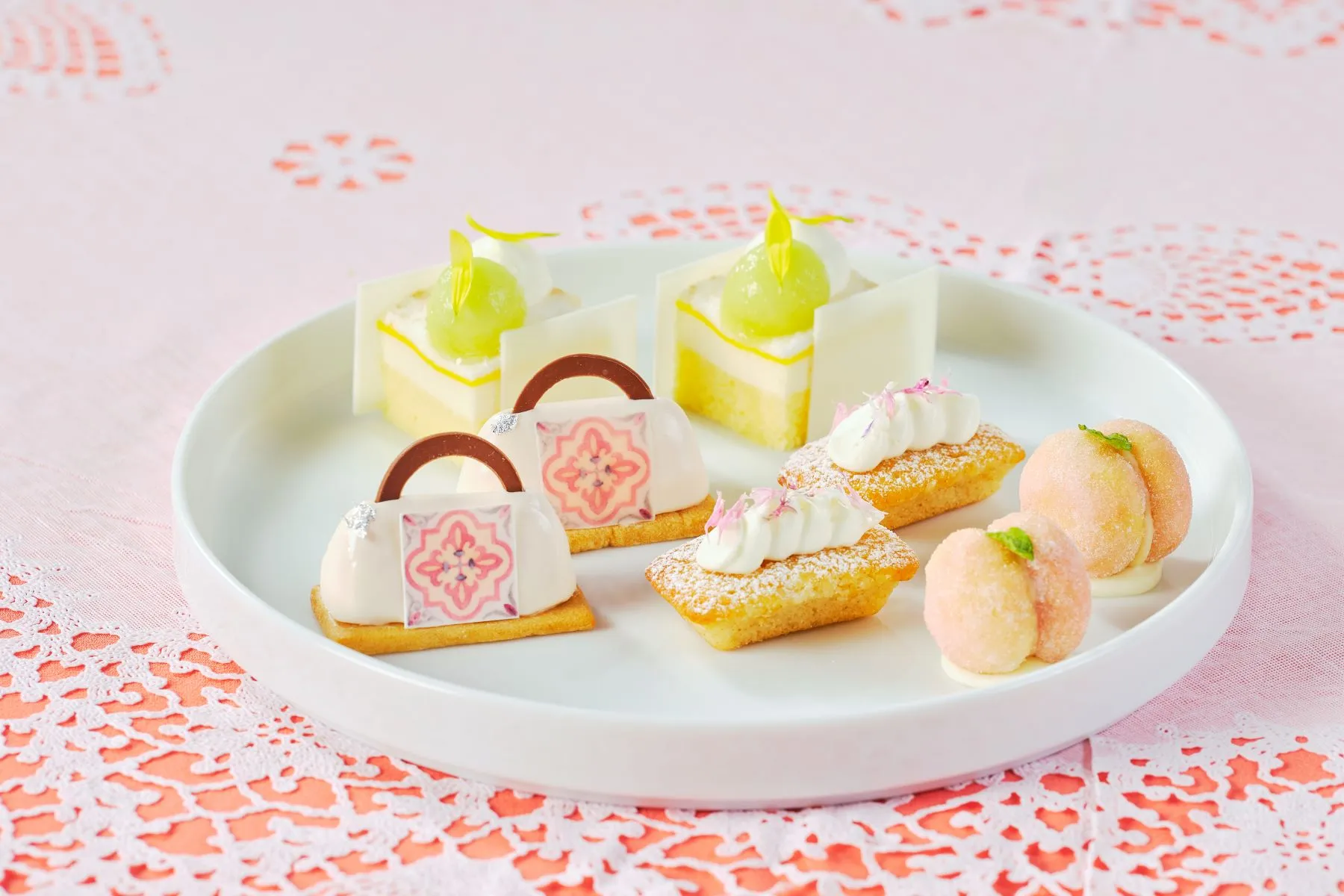
The sweets selection layers technique with seasonal timing. The “Peach Verrine” demonstrates this through structure: sparkling wine jelly set over rich panna cotta, creating textural contrast that keeps the palate engaged. The peach tart uses fully ripened fruit, the kind that yields slightly under pressure and releases concentrated juice. For the “Melon Mousse,” white chocolate provides fat content that carries rather than competes with the melon’s subtle floral notes.
Seven varieties make up the pastry component, each with specific intent. The “Hat Mousse” references summer straw haberdashery; the “Bag-shaped Mousse” carries a Mallorca tile pattern that connects to Mediterranean vacation aesthetics. Financiers receive a saline element—unusual for the typically sweet format—to reset sweetness perception. The “Pesque Dolce,” a traditional French peach-shaped confection, anchors the menu in established technique.
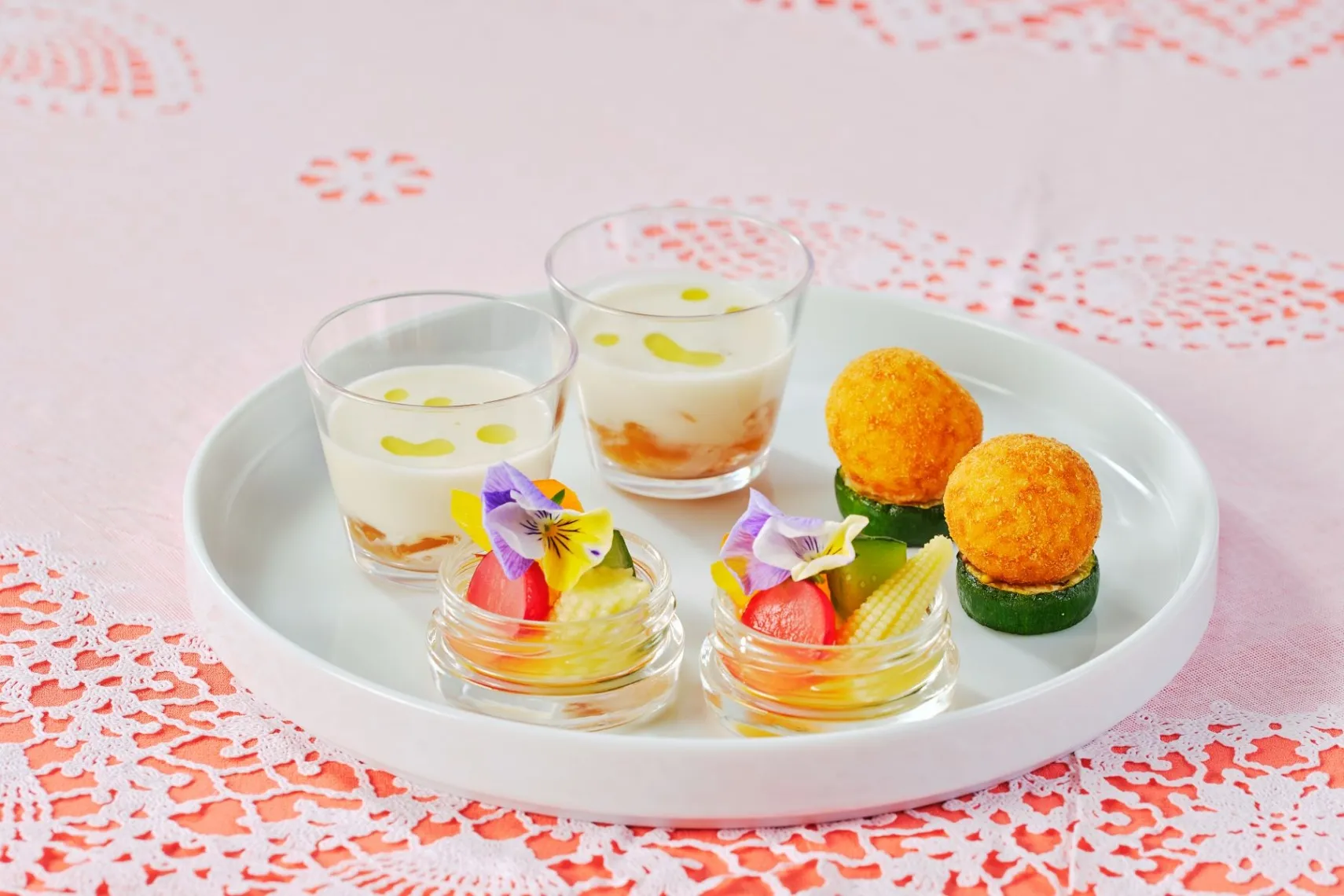
■ Chef’s Special Savories
Three composed items balance the sweetness density of the pastry program:
- Peach soup: Gentle sweetness with refreshing acidity, served chilled
- Summer vegetable pickles: Mirabelle plum provides sweet-sour brightness against raw and lightly processed vegetables
- Risotto arancini: Bite-sized, with crisp exterior coating and concentrated umami from the rice base, set over grilled zucchini
■ Tea and Beverage Options
| Plan | Inclusions |
|---|---|
| Standard Plan | All-you-can-drink tea, coffee, soft drinks |
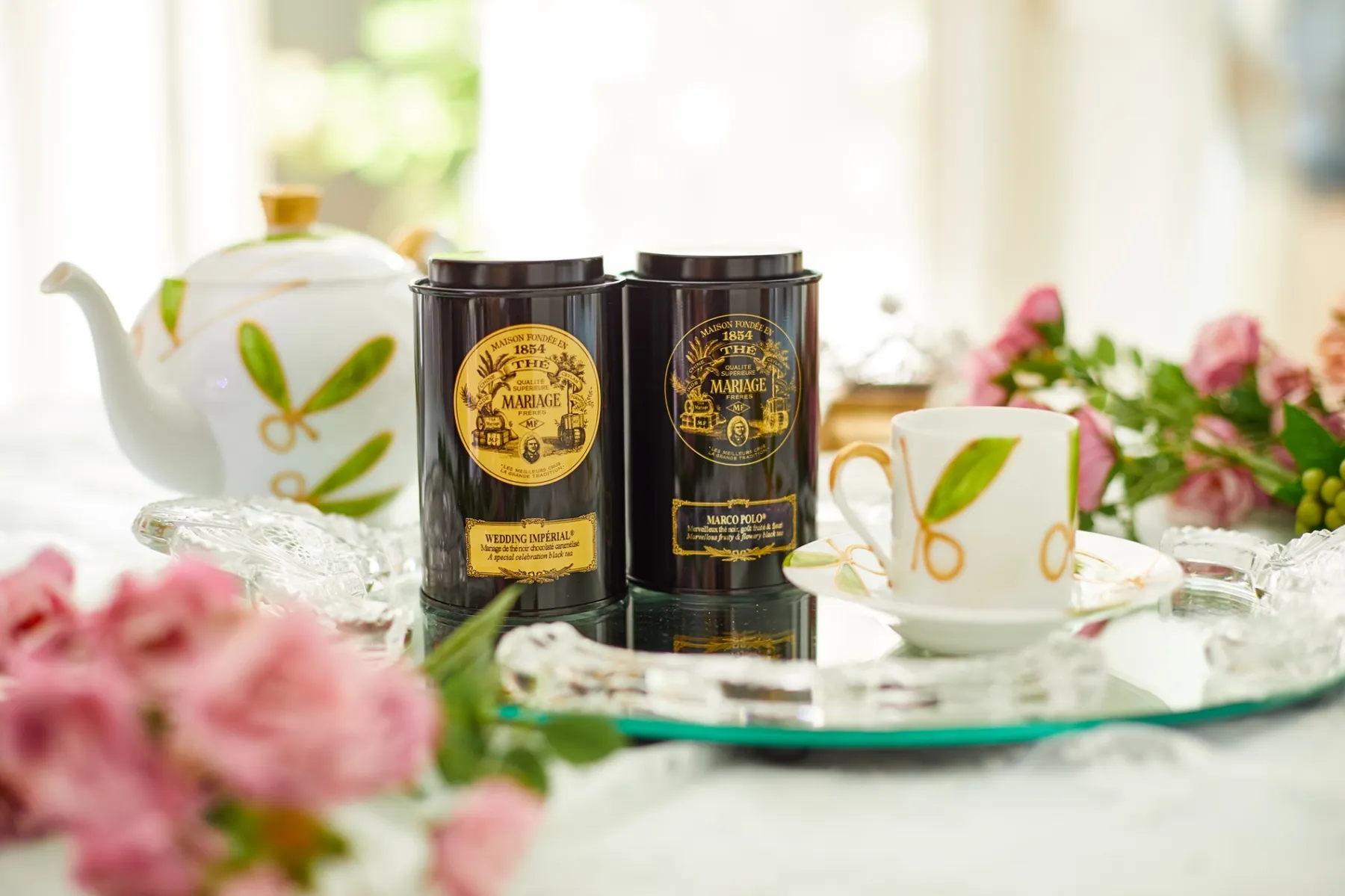
| Tea Selection Plan | Above plus Mariage Frères teas and flavored teas |
The Mariage Frères integration—this is the distinguished French house founded in 1854—offers a measurable upgrade for those who track tea provenance.
■ Optional Additions
| Item | Price | Notes |
|---|---|---|
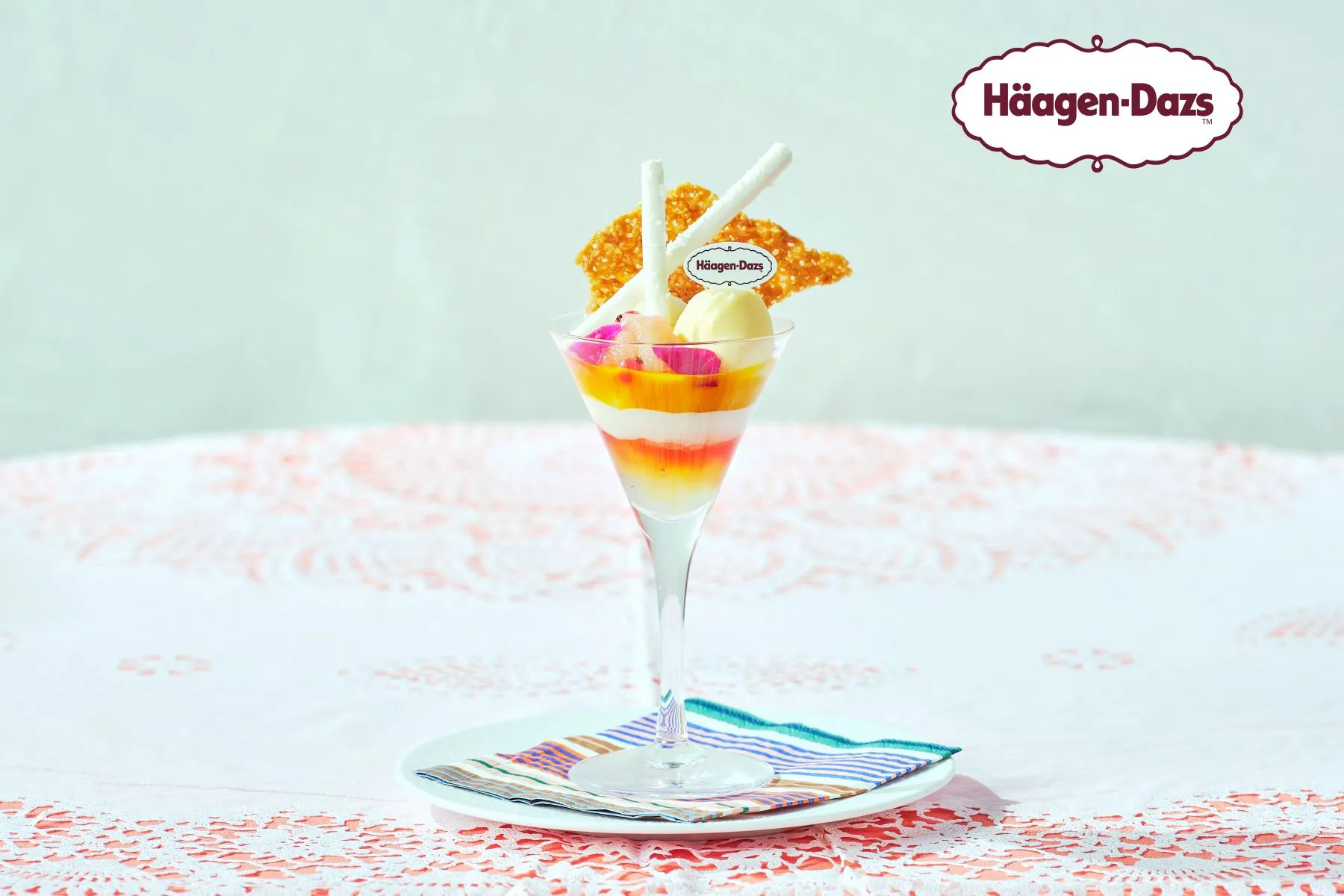
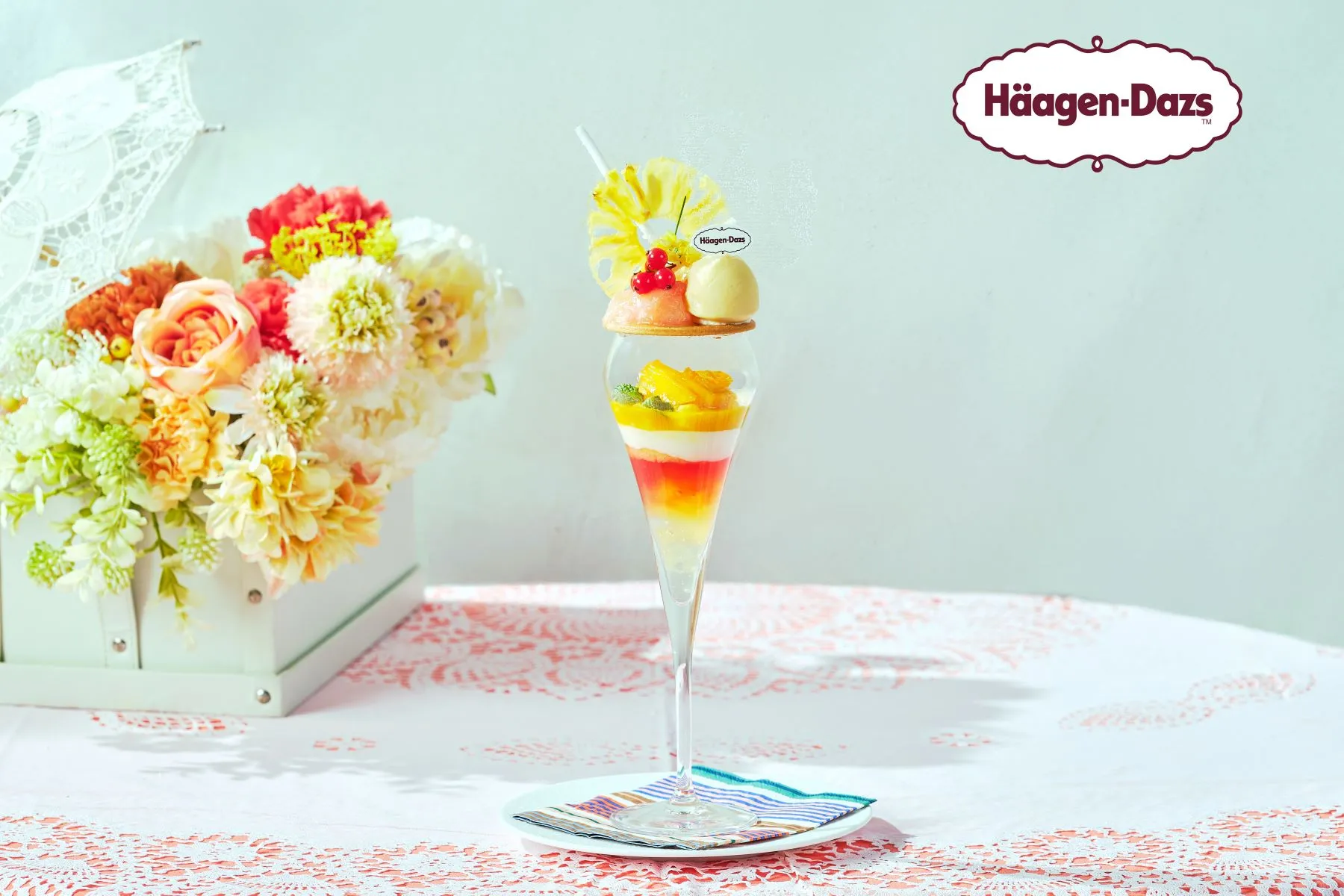
| Tropical Sunset Parfait with Häagen-Dazs | From 2,990 yen (with café) | Yokohama and Omiya stores only; available for individual order |
| Tropical Sunset Mini Parfait with Häagen-Dazs | 1,200 yen | — |
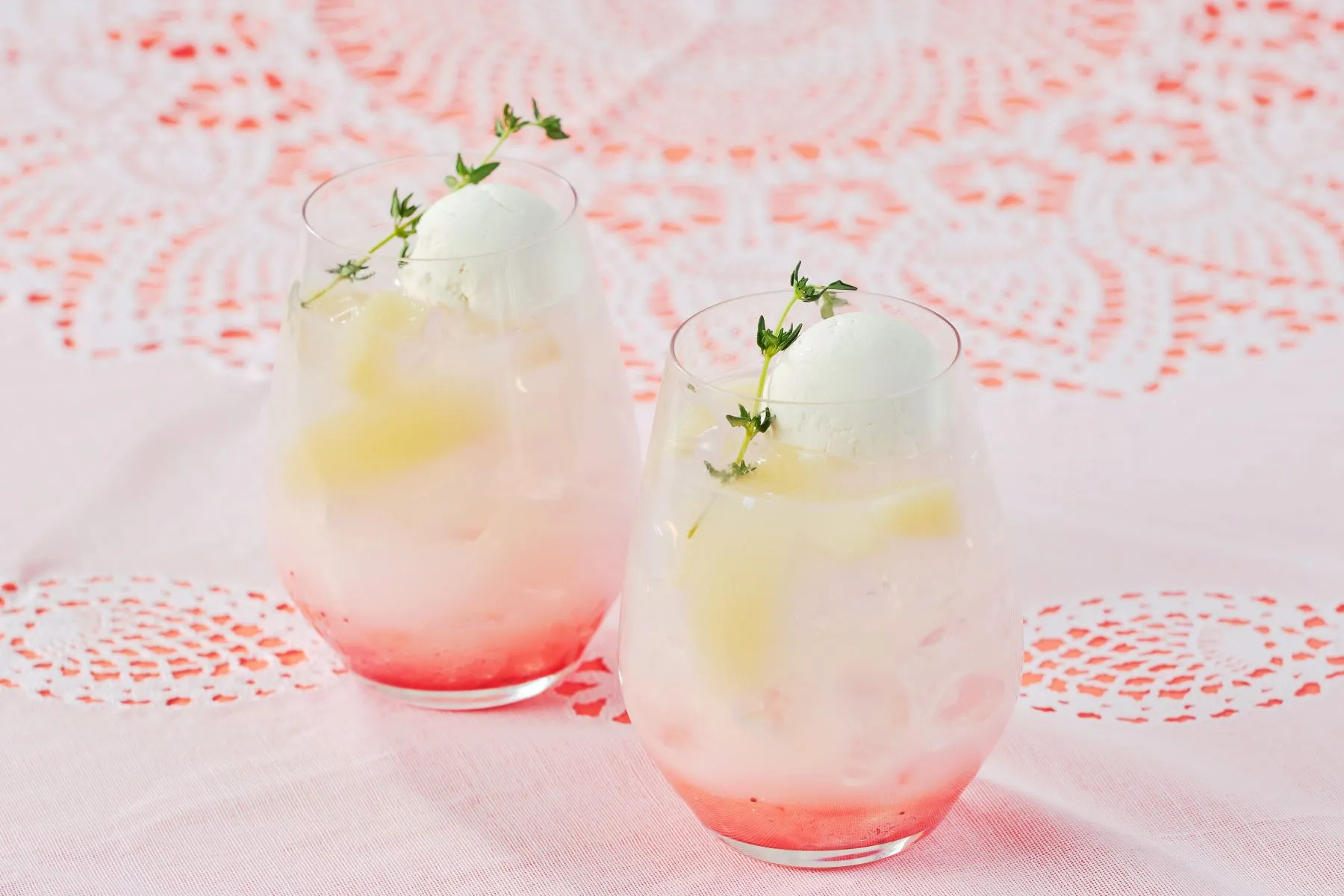
| Special Drink “Peach Float” | 1,200 yen | — |
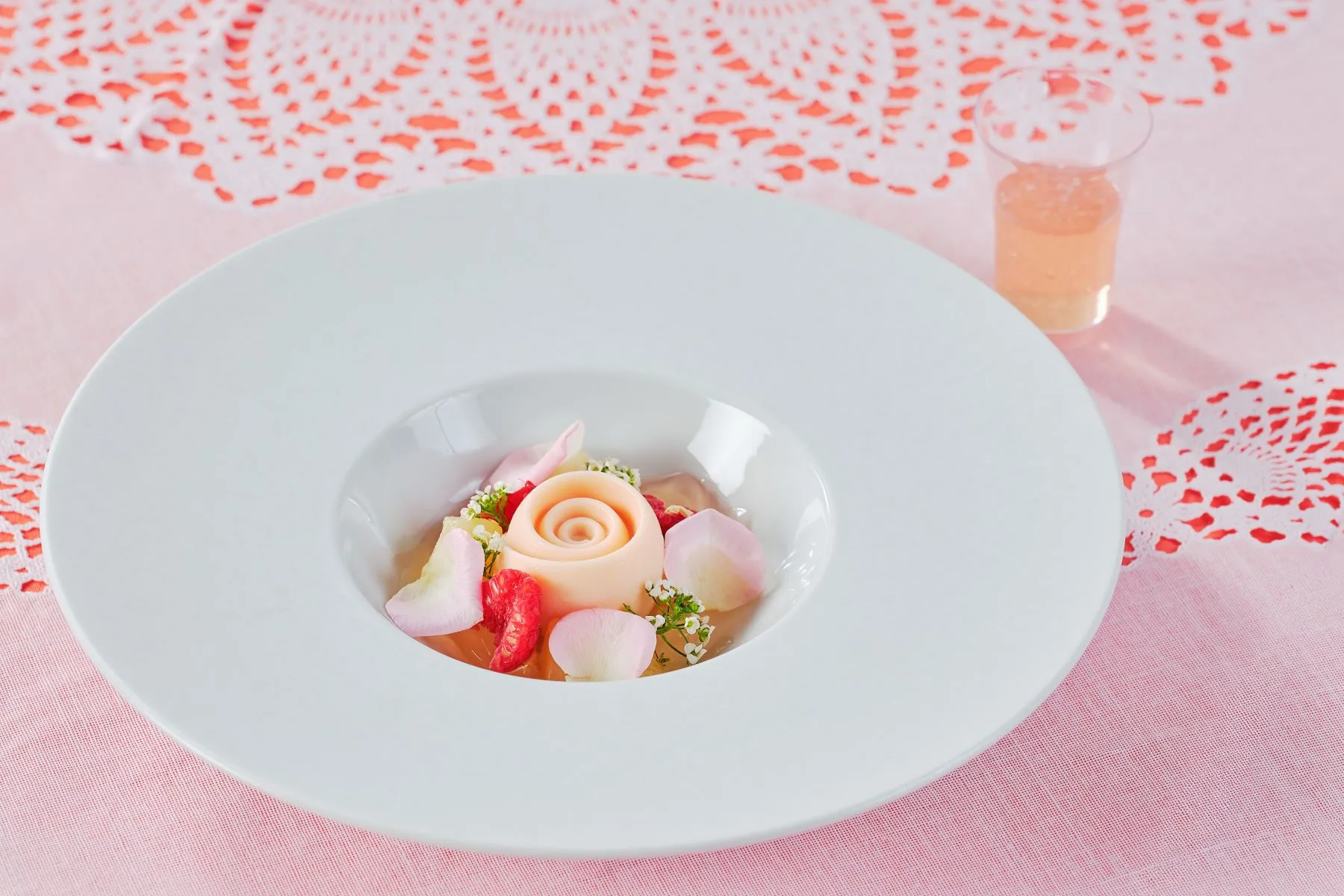
| Red Peach and Lychee Rose-scented Semifreddo | 1,500 yen | Summer seasonal specialité |
| Tea Selection upgrade | 500 yen | — |
| Message Plate | 500 yen | — |
The semifreddo merits particular attention: peach compote, rose-scented mousse, and lychee operate as a composed dessert rather than a simple parfait. The temperature gradient—frozen mousse against room-temperature compote—creates the “moment of elegant vacation” the menu describes.
■ Lunch Set Options
Afternoon tea without savories; suitable for lighter appetites
| Set | Price | Contents |
|---|---|---|
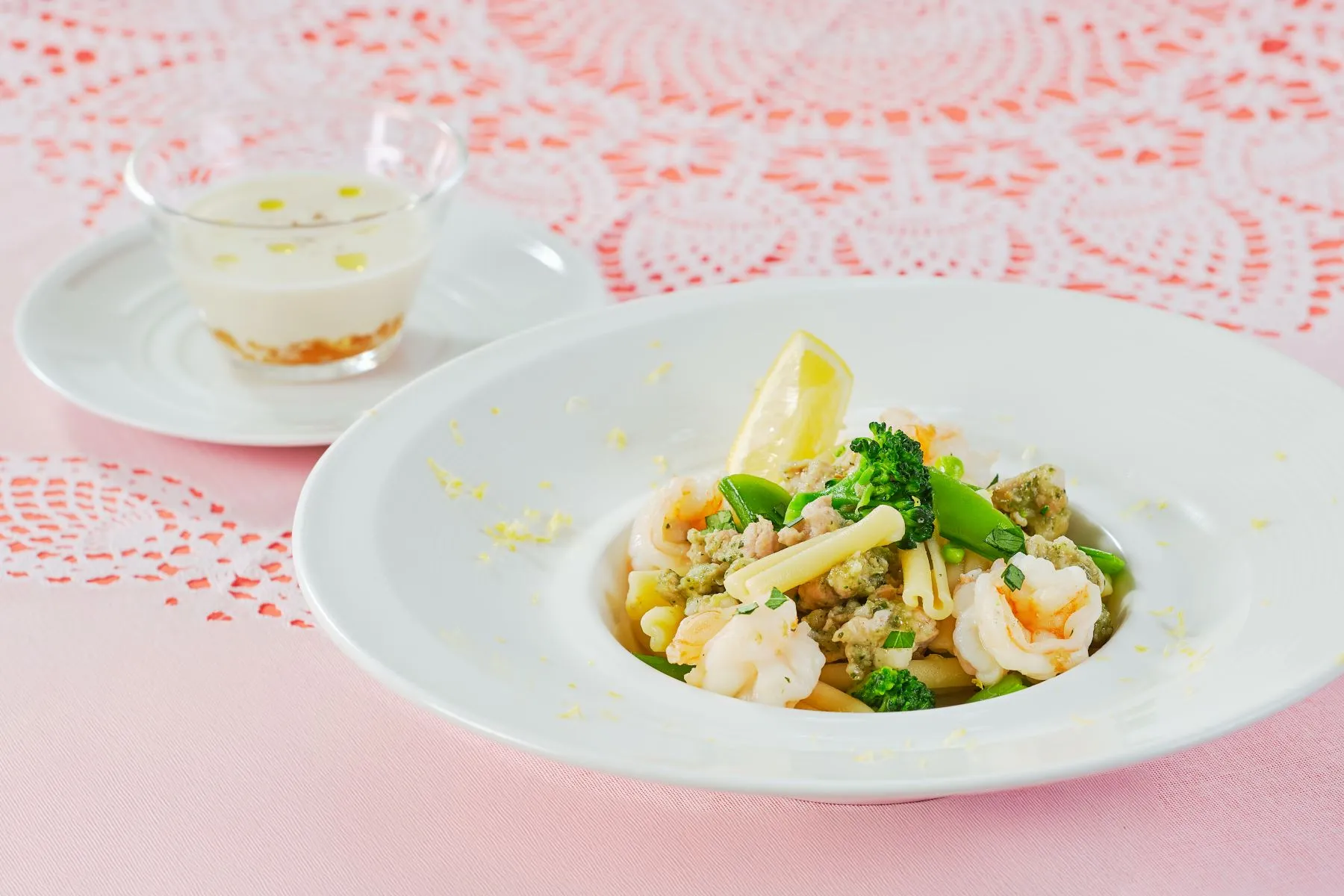
| Pasta Lunch | 1,500 yen | Chilled cauliflower potage / Short pasta with small shrimp and salsiccia |
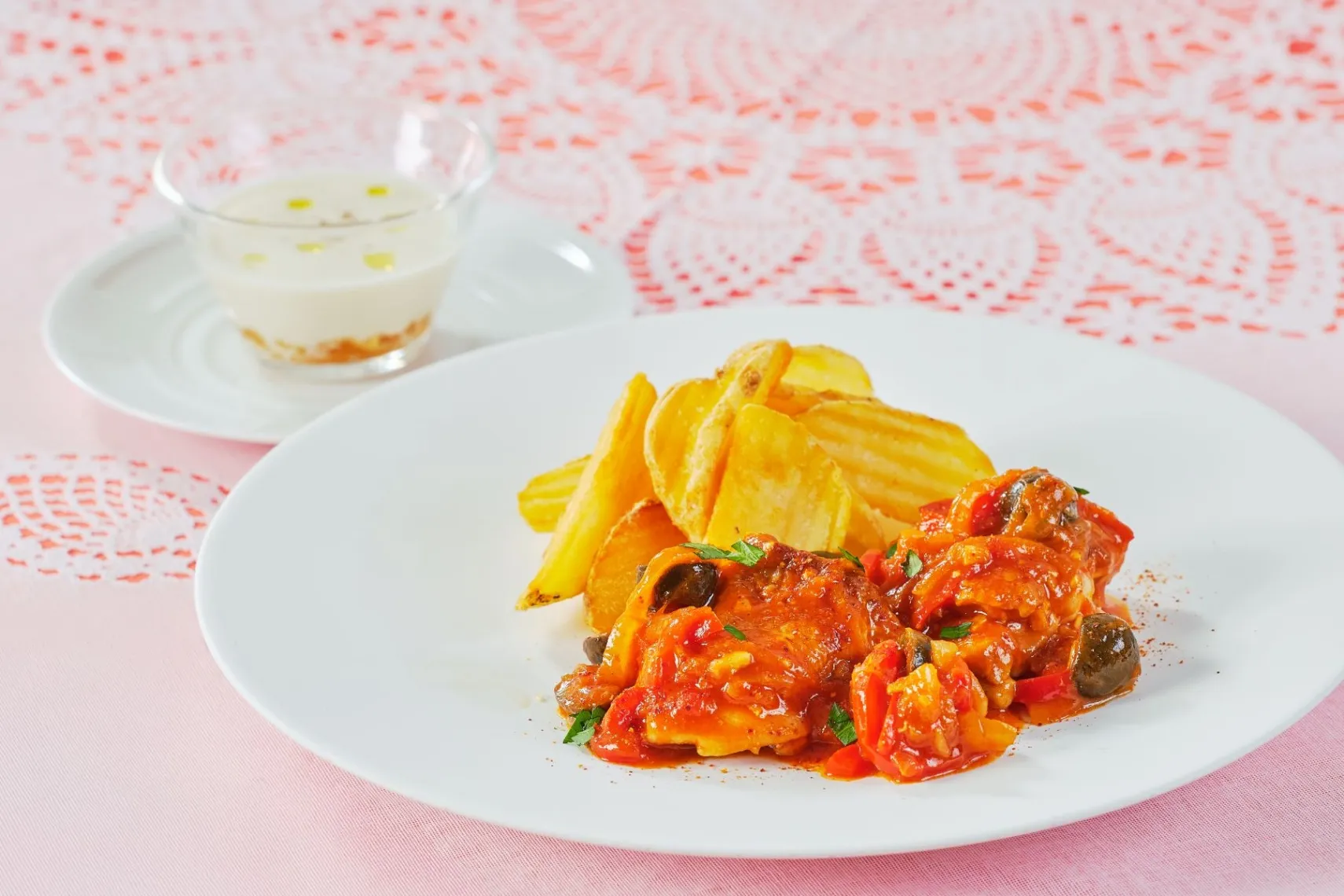
| Chicken Lunch | 1,500 yen | Chilled cauliflower potage / Poule Basquaise: Basque-style tomato stew with selected chicken thigh |
Complete Menu
【Sweets】
- Peach Melba Verrine Style
- Bergamot-scented Hat Mousse
- Peach Tart
- Peach Couture Mousse
- Financier Fleur
- Pesque Dolce
- Melon and Citron Gateau
【Savories】
- Risotto Arancini
- Chilled Cauliflower Potage
- Summer Vegetable Pickles with Mirabelle Flavor
【Scone Stand】
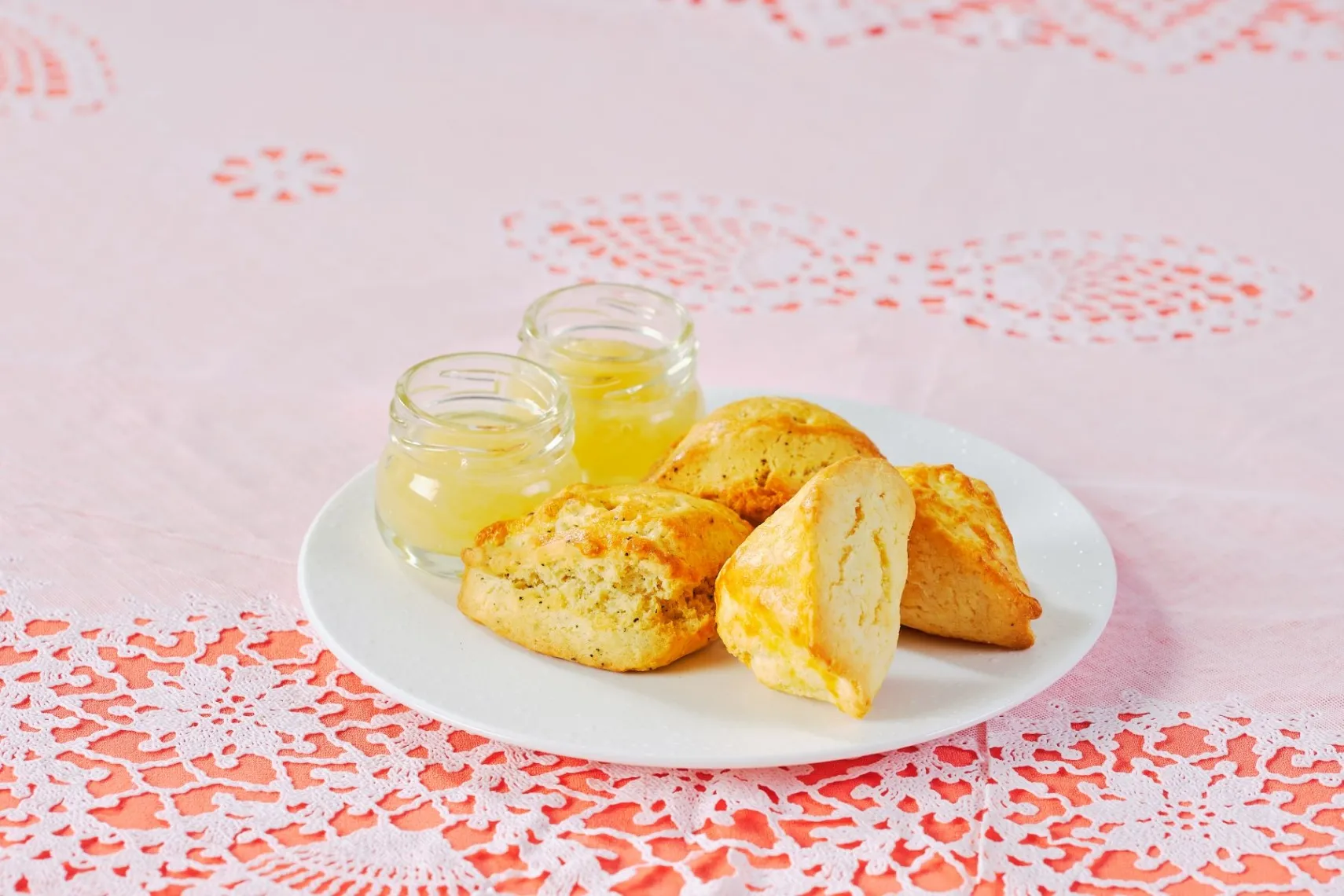
- Tea / Plain (with White Peach Jam)
【Drinks】
See plan descriptions above; last order 90 minutes from seating
Venue-Specific Details
◆ Omiya Riku / Cafe & Restaurant Shikitei
| Dates | Wednesday, June 17, 2026 – Monday, August 31, 2026 |
| Closed | Tuesdays |
| Hours | 11:00–16:30 (Last entry 15:00) |
| Pricing | Weekdays from 4,580 yen / Weekends & Holidays from 4,800 yen |
| Note | Consumption tax included; 15% service charge separate |
Location details | Nearest stations: Toro Station, Kamomiya Station
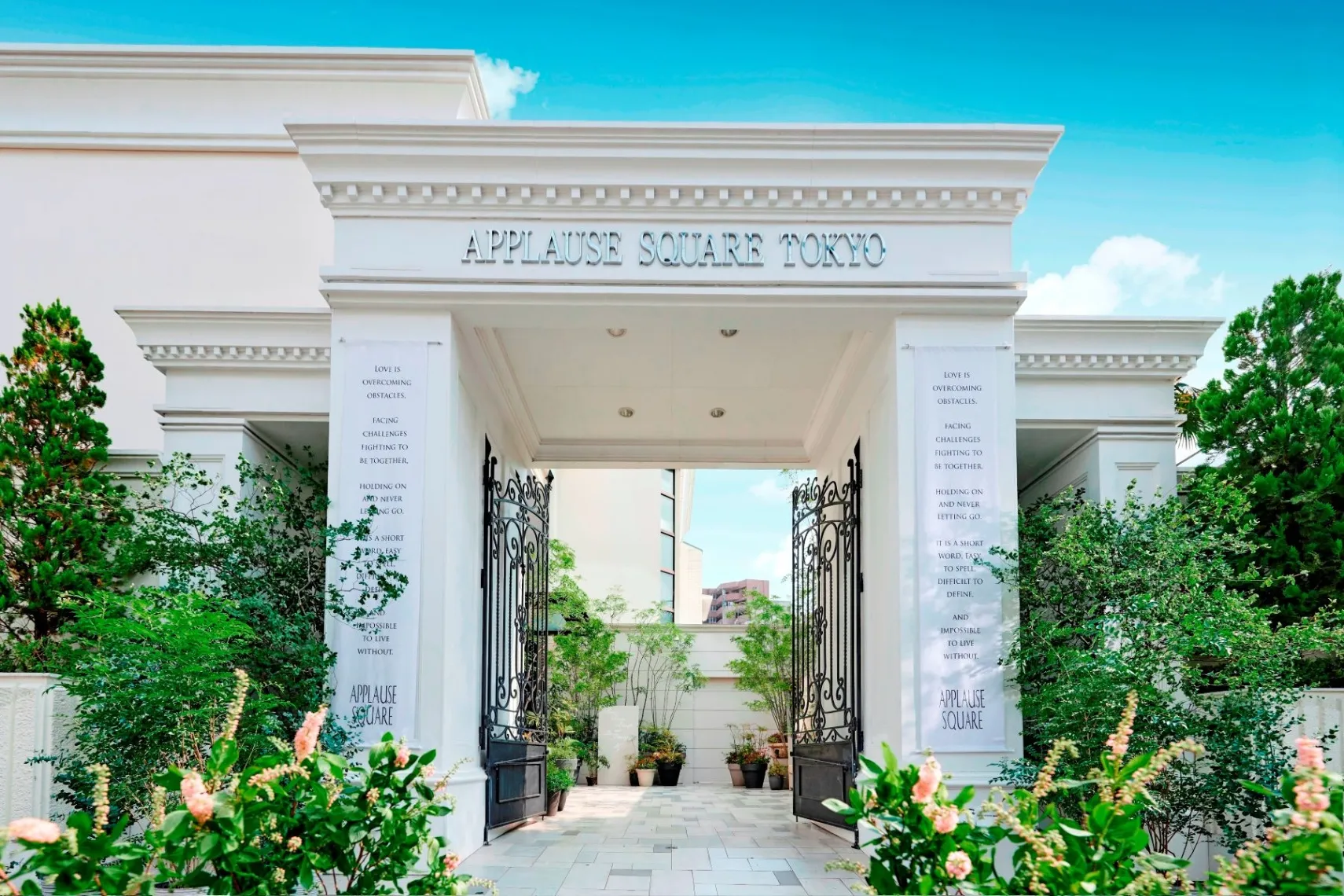
◆ Applause Square Tokyo Geihinkan
| Dates | Select dates June 19 – August 29, 2026 (see full schedule below) |
| Weekday hours | 12:00–14:00 |
| Weekend/Holiday hours | 1st session 12:00–14:00 / 2nd session 16:15–18:15 |
Date key: ◎ Dogs allowed | ☆ 1st session only | ★ 2nd session only
| June | July | August |
|---|---|---|
| 19 ◎Fri | 3 ◎Fri | 1 ◎Sat |
| 26 ◎Fri | 5 ★Sun | 2 ☆Sun |
| 28 ◎Sun | 10 ◎Fri | 7 ◎Fri |
| 12 ★Sun | 8 ★Sat | |
| 17 Fri | 9 Sun | |
| 20 ◎Mon (Holiday) | 11 ☆Tue (Holiday) | |
| 24 Fri | 14 ◎Fri | |
| 26 Sun | 15 Sat | |
| 31 Fri | 16 ☆Sun | |
| 28 Fri | ||
| 29 ★Sat |
| Plan | Weekdays | Weekends/Holidays |
|---|---|---|
| Standard Plan | 5,000 yen | 5,500 yen |
| Tea Selection Plan | 5,500 yen | 6,000 yen |
| With Lunch Set | from 6,500 yen | from 7,000 yen |
Location details | Nearest station: Akebonobashi Station
Inquiry: 03-5368-4700
Note: Closed every Monday and Tuesday (except holidays) and dates specified by the company
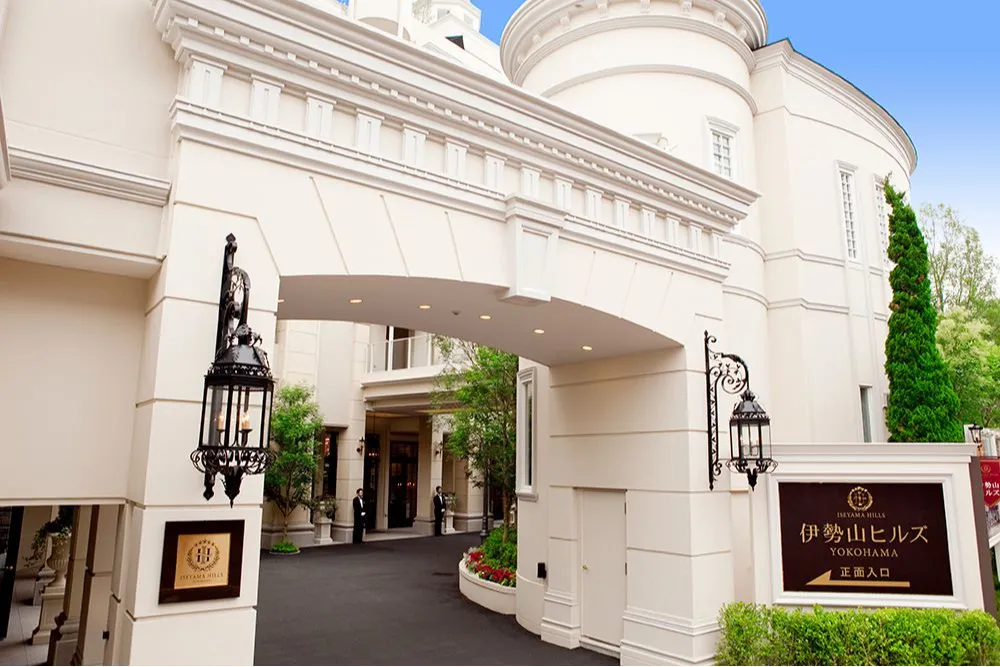
◆ Ristorante Mangiare Iseyama (Yokohama)
| Dates | Wednesday, June 17, 2026 – Monday, August 31, 2026 |
| Closed | Tuesdays |
| Weekday hours | 12:00–17:00 (Last entry 15:00) |
| Weekend/Holiday hours | 14:00–16:30 (Last entry 15:00) |
| Pricing | Weekdays from 5,500 yen / Weekends & Holidays from 6,000 yen |
Location details | Nearest station: Sakuragicho Station
Inquiry: 045-260-8845
◆ Contact Information
| Venue | Phone |
|---|---|
| Omiya Riku Cafe & Restaurant Shikitei | 048-662-5551 |
| Applause Square Tokyo Geihinkan | 03-5368-4700 |
| Ristorante Mangiare Iseyama | 045-260-8845 |
All prices include consumption tax and 15% service charge unless otherwise noted. Items other than the “Tropical Sunset Parfait with Häagen-Dazs” must be ordered as a set with the afternoon tea. Menu contents may change based on ingredient availability. Listed content may have changed; confirm current details with the venue or official website.
What is Tokyo Geihinkan?
Tokyo Geihinkan, also known as the Tokyo State Guest House, occupies the former Akasaka Palace in Tokyo’s Minato ward. The building has served as one of Japan’s official state guest houses since 1947, when the Imperial household transferred it to government use.
The structure itself dates to 1909, when architect Katayama Tokuma completed it as a residence for the Crown Prince. Katayama worked in a Neo-Baroque idiom that looked toward European models—an approach shared by several prominent Meiji-era architects who had trained abroad. The result is a building that sits somewhat apart from the Japanese architectural mainstream of its period, though its construction involved Japanese craftsmen and materials throughout.
As a functioning guest house, the building receives foreign heads of state, monarchs, and diplomatic visitors. The Main Hall, with its ceiling chandeliers and parquet flooring, serves as the principal reception space. The Sairan Room contains woodwork by the Imperial Household carpenters, executed in traditional techniques that offset the building’s European envelope. The grounds follow formal garden conventions with some adaptation to the hillside site.
The Geihinkan opens to the public on designated days throughout the year, and has occasionally hosted seasonal dining events. These are ticketed affairs with limited seating, offering access to parts of the building not included in standard tours. The food and service follow the protocols developed for official hospitality. Whether the experience justifies the logistical effort and cost depends on one’s interest in the building itself—there is little else to warrant the trip, as the surrounding Akasaka district offers more convenient dining elsewhere.
For those who do visit, the value lies in observing how the space accommodates both its ceremonial functions and its occasional public role. The building was designed to impress, and it continues to do so. What has changed is the context: a residence built for an heir to an empire now serves a democratic state, and a space once entirely private now admits visitors who observe the machinery of diplomatic hospitality from a distance.
