Hwasun Unju Culture Festival
🗓️ 2026.11.07 ~ 2026.11.08
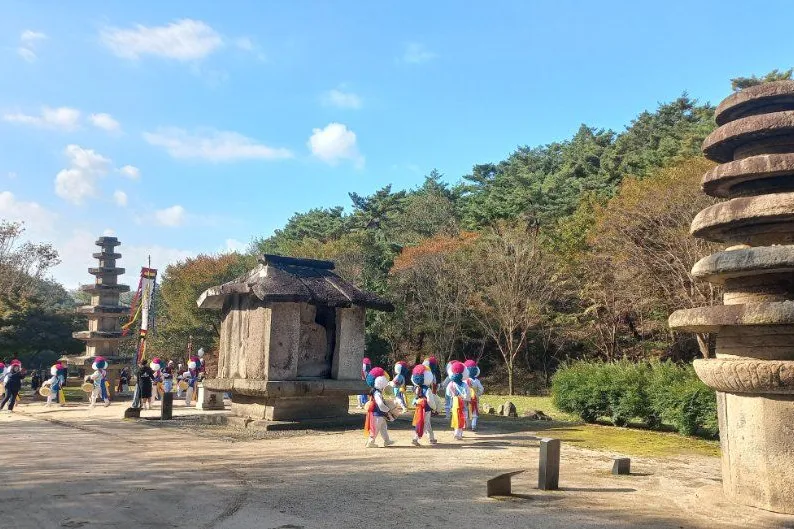
The Hwasun Unju Culture Festival is a representative cultural festival held at Hwasun Unjusa, a mysterious temple site where a thousand Buddhist statues and stone pagodas reside in every valley. In the tranquil temple grounds, where the legend of the Reclining Buddha—which has embraced a thousand years of time—harmonizes with numerous stone pagodas, various cultural and artistic programs unfold for people of all ages and genders. From heart-stirring traditional bell-ringing and Pungmulnori (folk percussion music) to music performances of various genres that enhance the excitement of the festival grounds, participatory missions to explore various parts of Unjusa and rich traditional and cultural experiences are provided. As the autumn deepens, visitors can take a journey through time and space into the mysterious legend of a thousand Buddhas and a thousand pagodas, creating warm rest and special memories.
Programs
1. Unjusa Bell-Ringing Event
The Unjusa Bell-Ringing Event opens the festival with the deep, resonant sound of the temple bell, offering a reflective start to the two-day celebration.
2. Admiring Market (Low and Less)
The Admiring Market (Low and Less) offers a calmer market experience, inviting visitors to slow down and appreciate the quieter details of the festival atmosphere.
3. Buddhist Statue Unveiling Ceremony
This ceremony provides a solemn and meaningful moment, highlighting the Buddhist heritage of Unjusa and its long history of stone statues and pagodas.
4. Experience Programs
- Temple food experience using vegetarian ingredients
- Photo printing SNS event
- Drawing and writing wishes on roof tiles: Displayed in the courtyard of Daeungjeon Hall
- Hwasun Wood Culture Experience Center: Woodcraft experience, making wooden houses, etc.
5. Resident Participation Programs
Dojang-ri field song demonstration, History and Culture Research and Preservation Society, Doam Women’s Association
6. Performance Programs
A variety of music performances will fill the festival grounds, adding rhythm and energy across different genres throughout the event.
Event Information
📍 Address: Daecho-ri, Doam-myeon, Hwasun-gun, Jeonnam-Gwangju Integrated Special City
🛏️ Accommodation near the event
💰 Fee: Free
📞 Inquiry: 061-373-5482
Unjusa
Unjusa is a Buddhist temple on the slopes of Cheonbulsan, or “Thousand Buddhas Mountain,” in Hwasun-gun, South Jeolla Province. The name means “Temple of the Cloud Jewel.” In Korean it is often called the “Mystery Temple,” a nickname that comes from the stone figures scattered across its grounds.
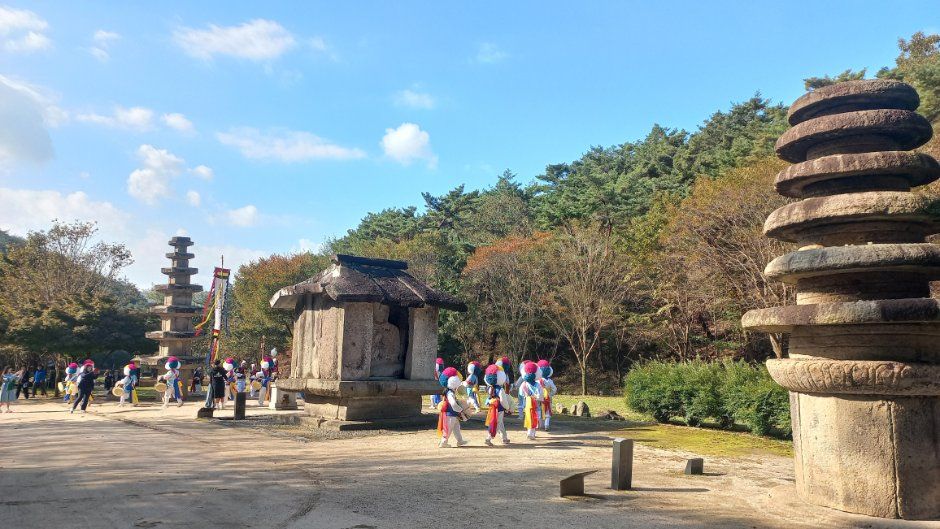
Most Korean temples follow a common layout: prayer halls, gates, and wooden pavilions arranged along a central axis. Unjusa does not follow that layout. Its most recognizable features are stone Buddhas and stone pagodas standing in open fields. More than one hundred of these figures are spread across the property, either alone or in small groups. Some are larger than life; some are no higher than a person’s waist. They are carved from local stone and placed without obvious symmetry. There is no central row, no clear beginning or end. The collection appears to have been built up over time, but not according to any plan that is visible today.
The temple is traditionally said to have been founded in the early Goryeo period by Doseon, a monk known for geomancy and for reading the spiritual qualities of mountains and water. The common account is that the temple was built to protect the young state and calm unsettling features in the landscape. That may explain why the site was chosen, but it does not explain the number or variety of statues. The reasons behind the stone figures are not recorded. Some historians suggest a royal vow to place a thousand Buddhas at the temple. Others have proposed a military purpose, or a display of state-sponsored Buddhist devotion. Local folklore tells a different story: monks made the stones walk to the site during the night.
Today the collection can be seen directly. Standing Buddhas, seated Buddhas, and Buddhas wearing thin stone hats stand alongside pagodas of plain, compact construction. The phrase “Thousand Buddhas” does not mean that one thousand statues were ever present. It refers to a devotional convention: by moving from stone to stone, offering a sincere bow at each one, a pilgrim may carry his or her wishes to the mountain.
Unjusa remains an open place rather than a tightly organized complex. The unresolved questions about the figures are part of its character, but the site does not depend on solving them. The Hwasun Unju Culture Festival uses the fields as a setting for performances and events, but the stone Buddhas are not an exhibit or an installation. They are simply there, in the grass, and they do not need an explanation to be worth looking at.
