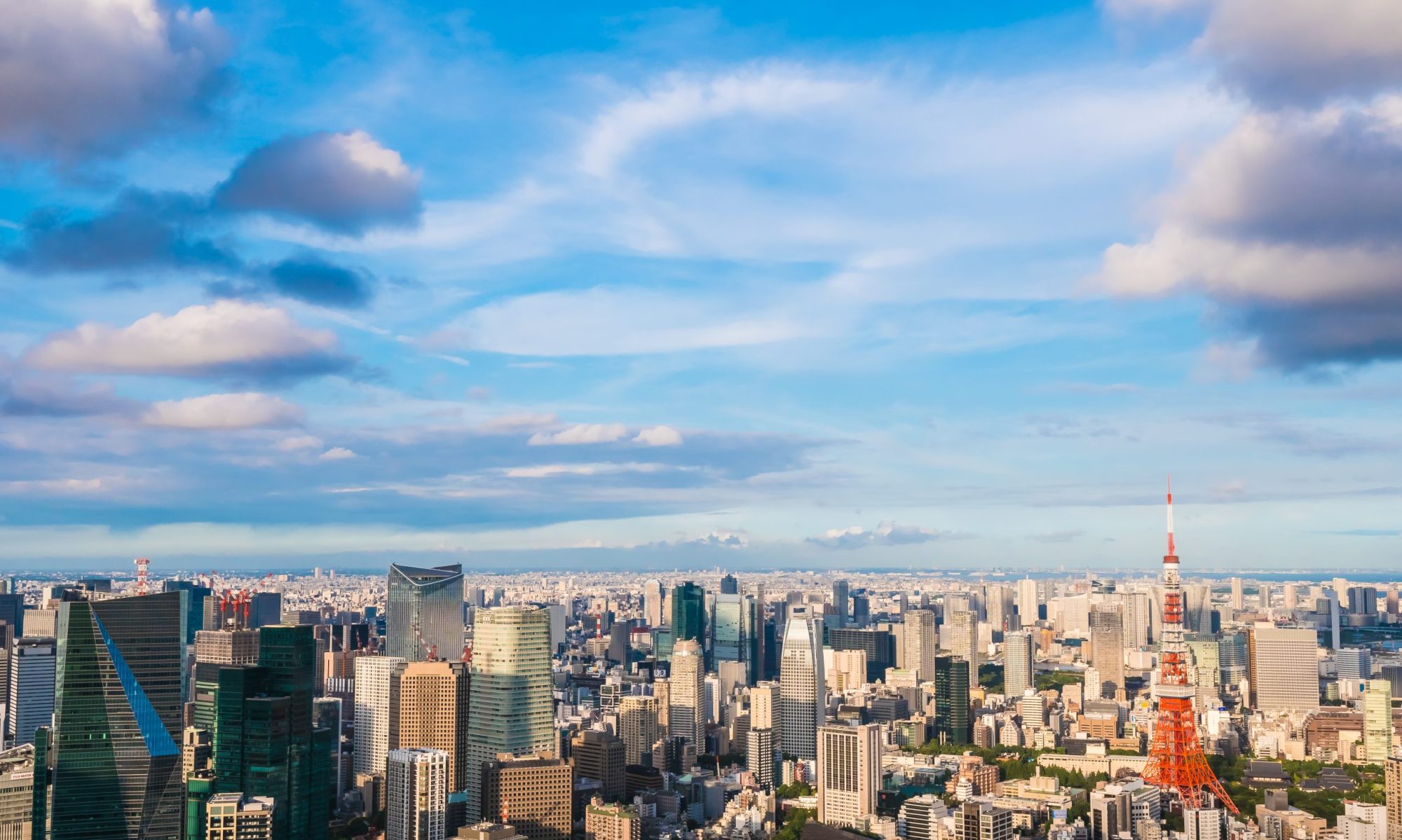
Muju Firefly Festival
🗓️ 2026.09.04 ~ 2026.09.12
*The following festival details are from the previous year’s (2025) festival, and the 2026 festival details are currently being updated.*
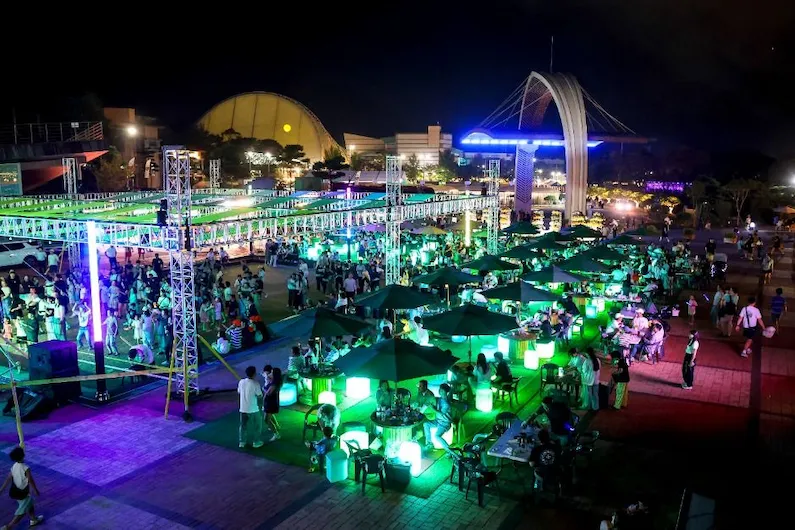
The Muju Firefly Festival stands as one of South Korea’s most distinctive environmental celebrations, centering on the luminous spectacle of fireflies in their pristine natural habitat. Held annually during the transitional period from late August to early September, this nine-day event in Muju County, Jeonbuk Province, offers visitors something increasingly rare in modern life: the opportunity to witness thousands of fireflies illuminating the night in an unspoiled mountain setting.
What distinguishes this festival from typical nature tourism is the direct, unmediated encounter it facilitates. Unlike urban light festivals or digital displays, the fireflies of Muju require genuine ecological preservation to thrive—clean water, minimal light pollution, and healthy forest ecosystems. When visitors participate in the festival’s signature Firefly Mystery Tour, they are witnessing a biological phenomenon that serves as a living indicator of environmental health. The experience carries weight precisely because it cannot be manufactured or relocated.
Program Structure
The festival organizes its offerings across three categories, allowing visitors to tailor their involvement based on interest and stamina.
Main Programs
The Firefly Mystery Tour remains the festival’s anchor experience—guided evening walks through designated firefly habitats where visitors observe the insects’ bioluminescent mating displays. The Firefly Theme Pavilion complements this with indoor exhibitions covering firefly ecology, lifecycle, and the broader conservation efforts that have made Muju a sanctuary for Luciola lateralis and related species.
Side Programs
-
Bandi Kids World: Educational activities designed for younger visitors, incorporating firefly crafts and simple ecology lessons
-
Bandi Star Picnic: Evening gatherings combining casual dining with stargazing and firefly observation
-
Namdaecheon Life Plus: Waterside programs along the Namdae Stream, including creek ecology walks
-
Cultural Arts Performances: Regional music and dance presentations reflecting Jeonbuk’s cultural heritage
Consumer Participation Programs
The Taekwondo Golden Bell integrates Muju’s status as a taekwondo training center with festival programming. The Taeryeoni Culture Festa invites visitor contributions to traditional craft and food preparation demonstrations.
Practical Information
📍 Address: 326-17 Hanpungru-ro, Muju-eup, Muju-gun, Jeonbuk Special Self-Governing Province
🛏️ Accommodations near the event
💰 Fee: Free admission (Some individual programs may require payment)
📞 Inquiry: 063-324-2440
🖥️ Homepage: https://www.firefly.or.kr
What to Expect
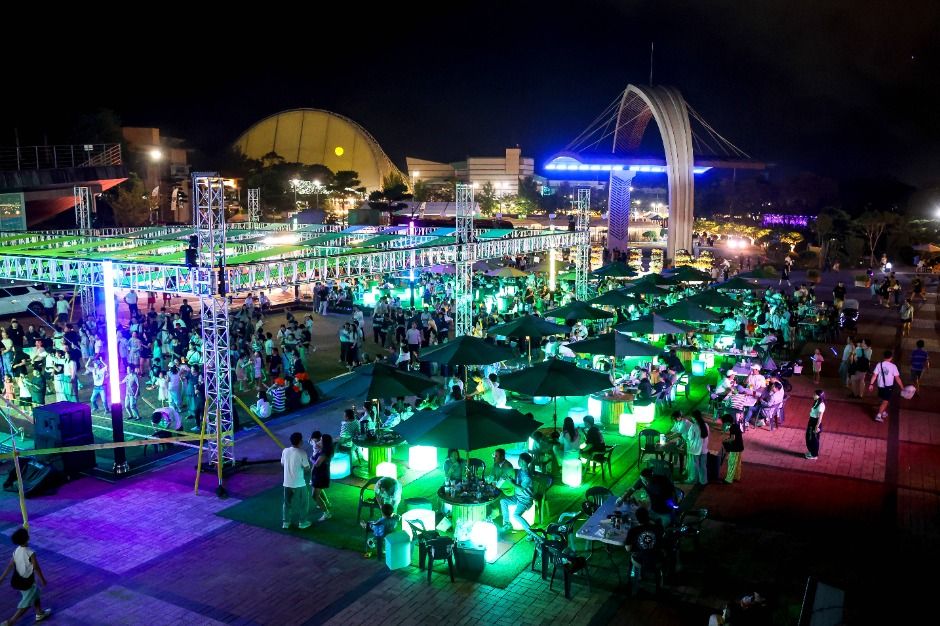
Visitors should prepare for uneven terrain and minimal artificial lighting during evening programs—flashlights are generally prohibited or must be covered with red film. The late summer timing means warm days and mild nights, with reasonable chance of light rain. Accommodation in Muju township fills quickly during the festival period; the Expedia link above provides options ranging from guesthouses to the region’s ski resort facilities, which operate their summer infrastructure for the event.
For those weighing this against Korea’s other environmental festivals, the Muju Firefly Festival occupies a specific niche: less commercially developed than the Jiraeul Firefly Festival in Boseong, and more ecologically focused than the larger Muju Taekwondowon events. The firefly population here has recovered substantially since the festival’s inception in 1997, making contemporary visitors beneficiaries of three decades of sustained conservation investment.
What is Muju?
Muju is a mountainous county in North Jeolla Province, southwestern South Korea, situated along the Baekdu-daegan mountain range that runs the length of the Korean Peninsula. The region covers roughly 716 square kilometers of rugged terrain, with elevations ranging from 200 to 1,500 meters above sea level. These conditions create cool, humid microclimates that support a modest but genuine distinction: one of Korea’s most significant remaining colonies of Luciola lateralis, the oriental firefly.
The area’s modern identity took shape in 1990 with the opening of Muju Resort—now Deogyusan Resort—which established the county as a ski destination and year-round outdoor recreation hub. The infrastructure brought accessibility and employment, though it also introduced the familiar tension between development and preservation. Muju has navigated this in somewhat unusual fashion. Rather than treating ecology and economy as opposing forces, the county has invested in their overlap. Beginning in the 1990s, officials pursued pesticide reduction in rice cultivation not primarily as environmental advocacy but as economic strategy, betting that certified organic produce and nature-based tourism would yield returns competitive with conventional agriculture.
The results have been mixed but instructive. Firefly populations, which require dark skies and clean running water, stabilized and in some watersheds increased. The organic transition succeeded in certain valleys and struggled in others, depending on soil conditions, market access, and the willingness of aging farming populations to adopt new methods. What emerged was neither pure conservation triumph nor greenwashing exercise, but a plausible working arrangement: a community whose livelihood depends in measurable degree on maintaining conditions that sustain a species most residents rarely thought about two generations ago.
For visitors, Muju offers the practical combination of developed amenities and accessible rural landscape. The resort provides accommodation and winter sports infrastructure; the county’s backroads reach terraced rice paddies, traditional thatched-roof houses, and stream valleys where firefly activity concentrates in August and September. The insects themselves behave differently from firefly species in warmer southern regions: rather than brief flash patterns, Luciola lateralis produces sustained bioluminescence, generating the rhythmic green-yellow pulses that have drawn observers since at least the Joseon Dynasty.
The Muju Firefly Festival, held annually since 1997, formalizes this observation into scheduled events. Nighttime viewing sessions follow daytime programs on firefly biology and local ecology. The festival’s scale has fluctuated with tourism trends and occasional population crashes when drought or flood disrupts the aquatic larval stage. Organizers have responded by adjusting dates, limiting ticket sales during low-population years, and in some seasons canceling the event entirely—decisions that have generated local controversy but have also prevented the festival from becoming spectacle divorced from the biological reality it claims to celebrate.
Understanding Muju requires holding these elements together: the resort and the rice paddies, the conservation science and the economic calculation, the festival’s promotional materials and its occasional cancellations. The county is not an untouched ecological sanctuary, nor is it a case study in sustainable development achieved. It is a specific place where particular people, working within constraints they did not choose, have maintained conditions sufficient for a particular species to persist—at least for now. The fireflies, indifferent to human narrative, continue their annual cycle in watersheds where stream quality and light pollution remain tolerable. Whether this arrangement proves stable over decades remains an open question, answerable only through continued attention to the actual conditions of the place rather than the stories told about it.
