
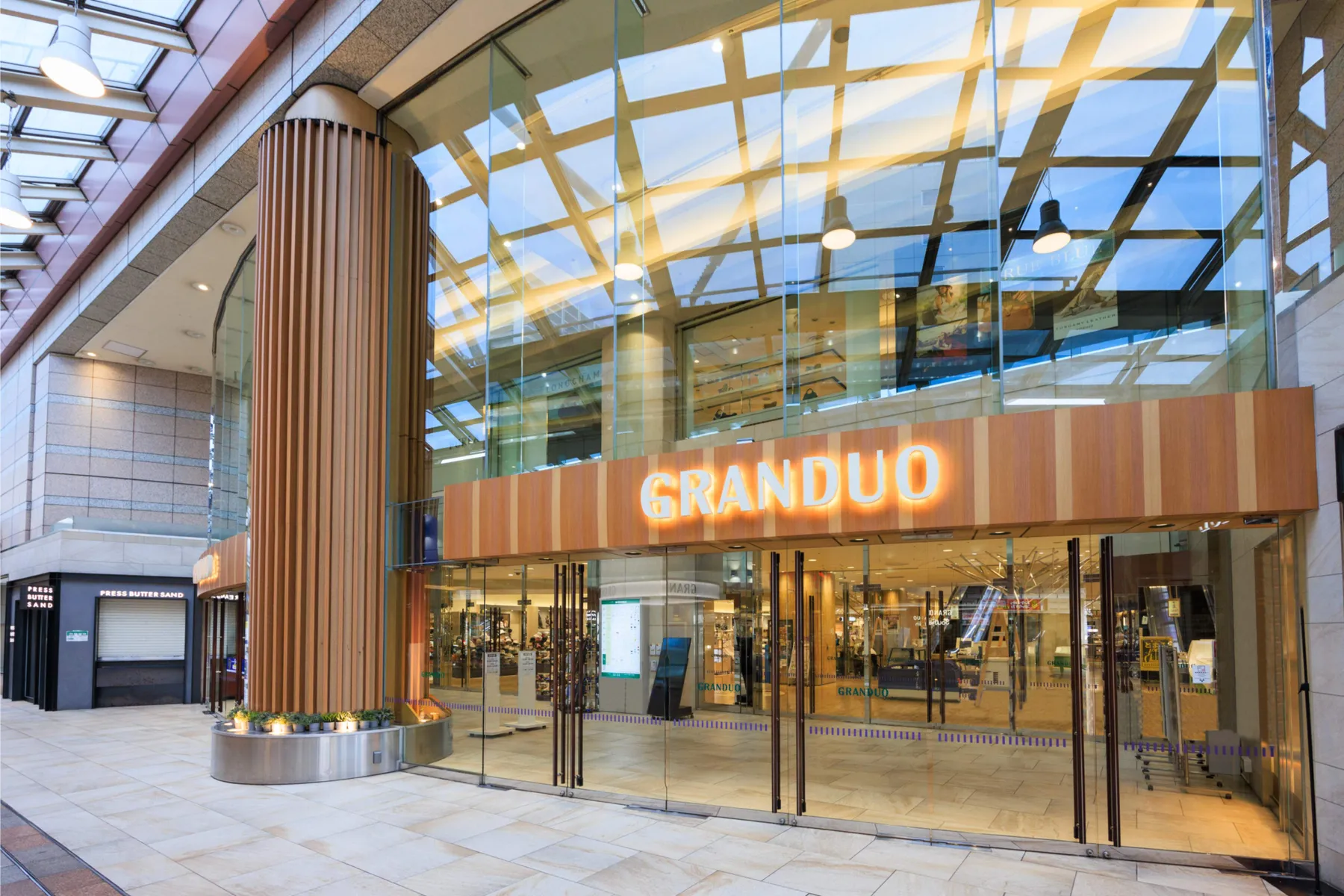
The Valentine Collection returns to Granduo Tachikawa, assembling an international array of confections alongside curated local discoveries from the Tama region. Centered on the theme—”Various deliciousnesses, the joy of choosing. A heart-fluttering sweet encounter”—the event distinguishes itself through a dual emphasis on globally renowned chocolatiers and hyper-local recommendations from “Tama no Kensaku-chan,” a regional influencer who documents the area’s culinary landscape. Whether you prioritize single-origin cacao, wine-infused ganache, or butter-forward baked goods, the selection offers distinct pathways through Valentine’s Day gifting that extend beyond standard commercial offerings.
◆ Import Chocolate ~Encounters with chocolates from around the world.~
Granduo Tachikawa Limited
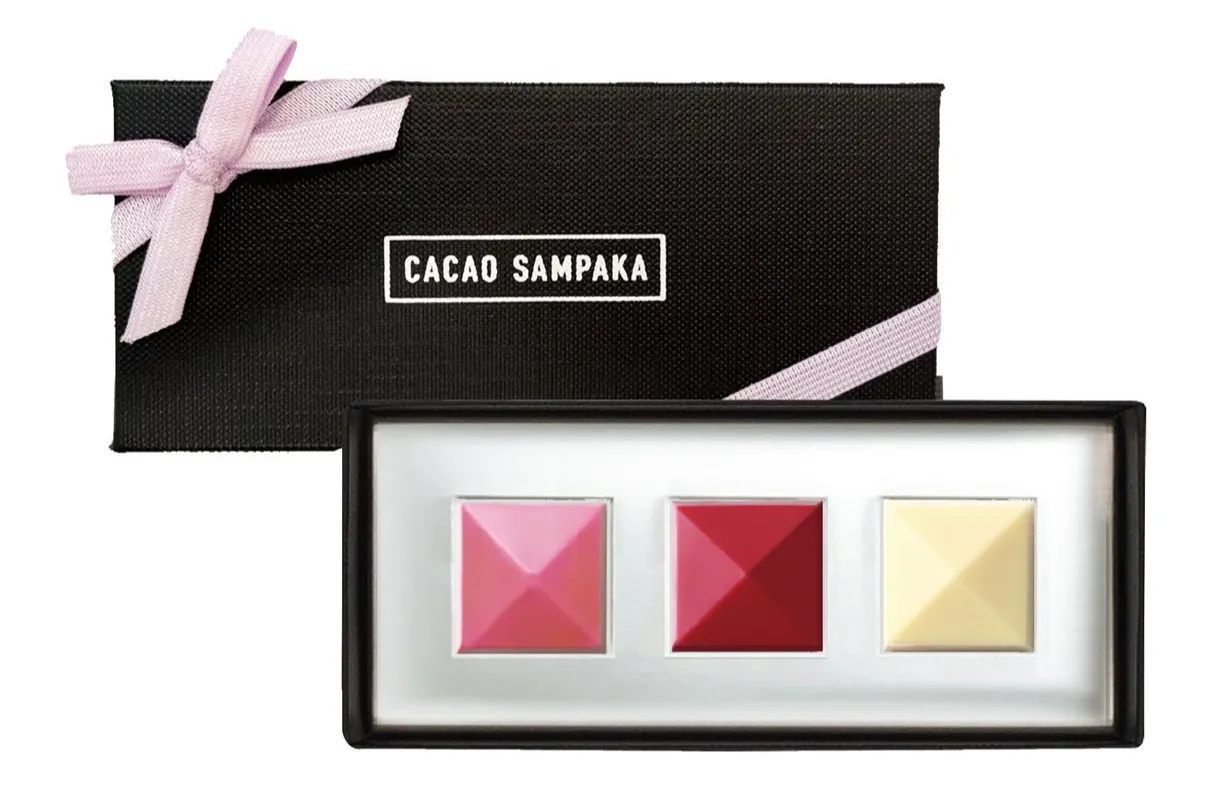
<Spain> Cacao Sampaka | Lorenza Selection (3 pieces / 3 types) 1,890 yen
An exclusive assortment featuring jewel-toned bonbons—Pistacho Petaseta, Raspberry, and Lychee Rosa—that balance nutty depth with bright fruit acidity. The jewel-like forms and vivid colors distinguish this as a Granduo Tachikawa-only offering.
Period: January 23 (Fri) – February 14 (Sat)
Location: 1F First Venue
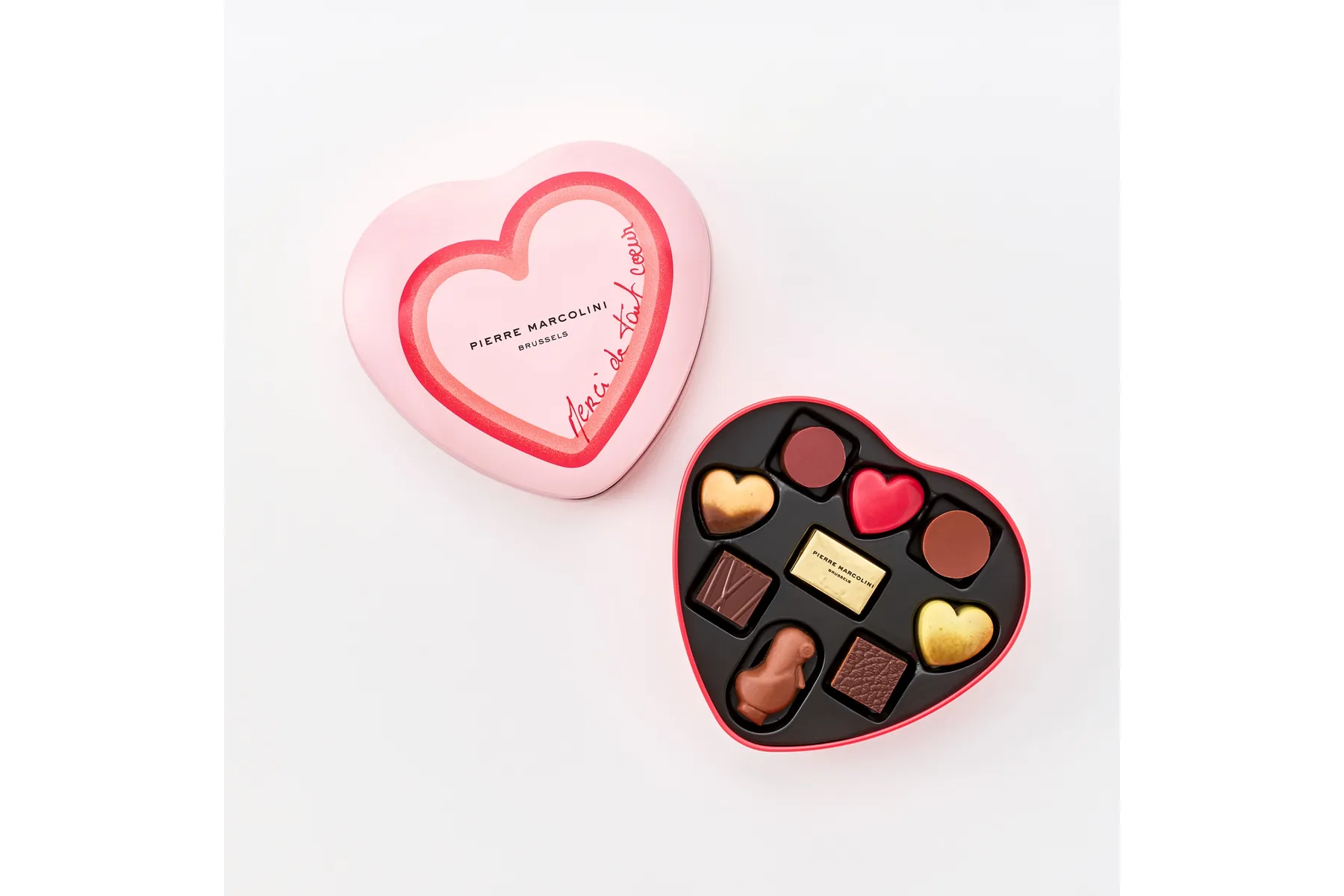
<Belgium> Pierre Marcolini | Coffret Coeur (9 pieces) 4,779 yen
Presented in a heart-shaped package, this collection introduces “Coeur Kokoro Agrume Caramel,” a new flavor incorporating Japanese citrus, alongside the texturally complex “Praline Series” and the established “Petit Bisous.” The nine-piece variety allows for comparative tasting across Marcolini’s range.
Period: January 23 (Fri) – February 14 (Sat)
Location: 1F First Venue
◆ Japanese Chocolate ~The luxury of chocolate with a Japanese feel.~
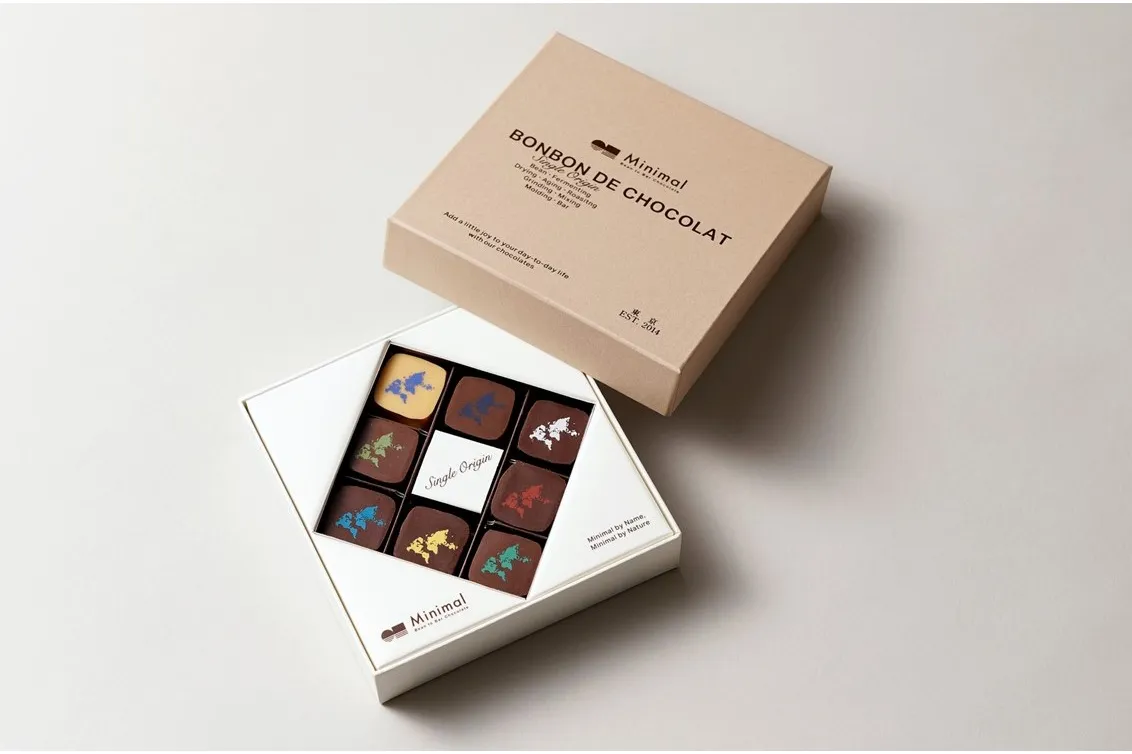
Minimal | The Single Origin (8 pieces) 3,981 yen
Returning after a successful debut last year with three additional varieties, these bonbons demonstrate Minimal’s bean-to-bar approach—distinguishable through clear terroir expression from specific cacao origins. The eight-piece set facilitates direct comparison across different growing regions, highlighting how bean selection influences final flavor profiles.
Period: January 23 (Fri) – February 14 (Sat)
Location: 1F First Venue
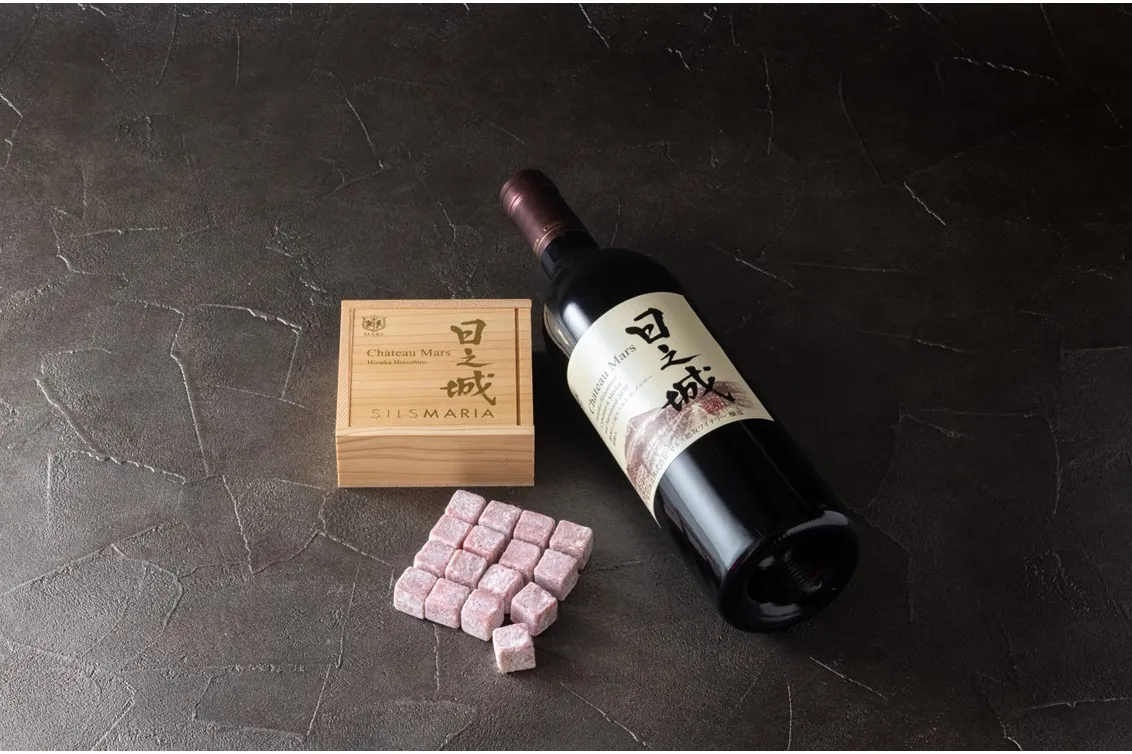
Silsmaria | Hinoshiro Nama Chocolate (16 pieces) 3,132 yen
This nama chocolate incorporates “Hosaka Hinoshiro Cabernet & Merlot Late Harvest,” a barrel-aged wine from Mars Hosaka Winery in Yamanashi Prefecture. Late-harvest grapes from the estate’s own farm contribute concentrated fruit characteristics—blackberry and cassis notes—that intersect with white and ruby chocolate, creating a layered, vinous depth uncommon in standard nama preparations.
Period: January 23 (Fri) – February 14 (Sat)
Location: 1F First Venue
◆ CHOCOLATE & BAKE GALLERY ~Fill your heart with enchanting baked goods smelling of butter.~
NEW
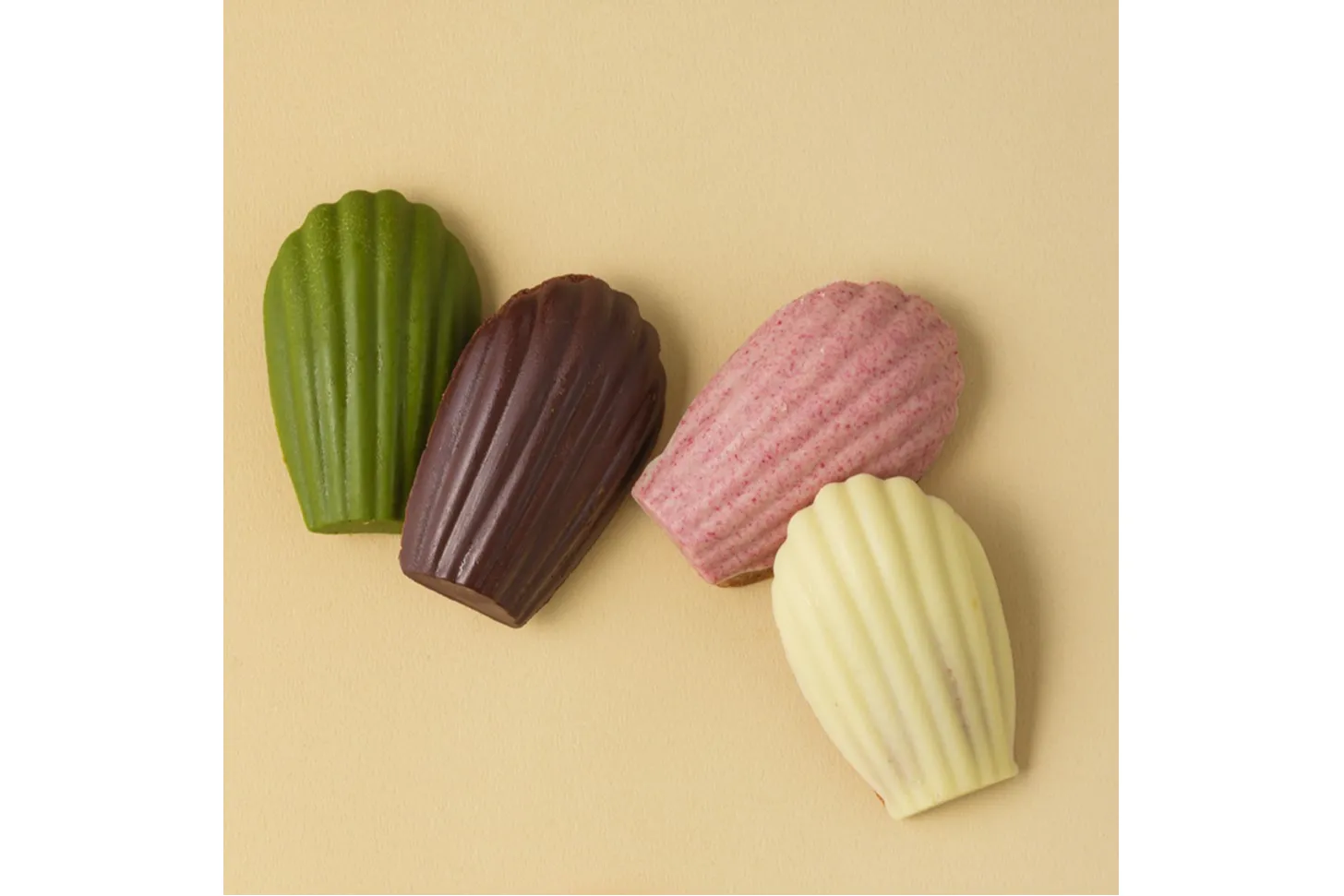
shodai bio nature | Madeleine Gradation Assortment (4 pieces) 2,950 yen
Available for a limited window during Part 1, these madeleines emphasize textural contrast between dough and coating, utilizing ingredients selected for both flavor and visual gradation.
Period: January 23 (Fri) – January 31 (Sat)
Location: 2F Second Venue
NEW
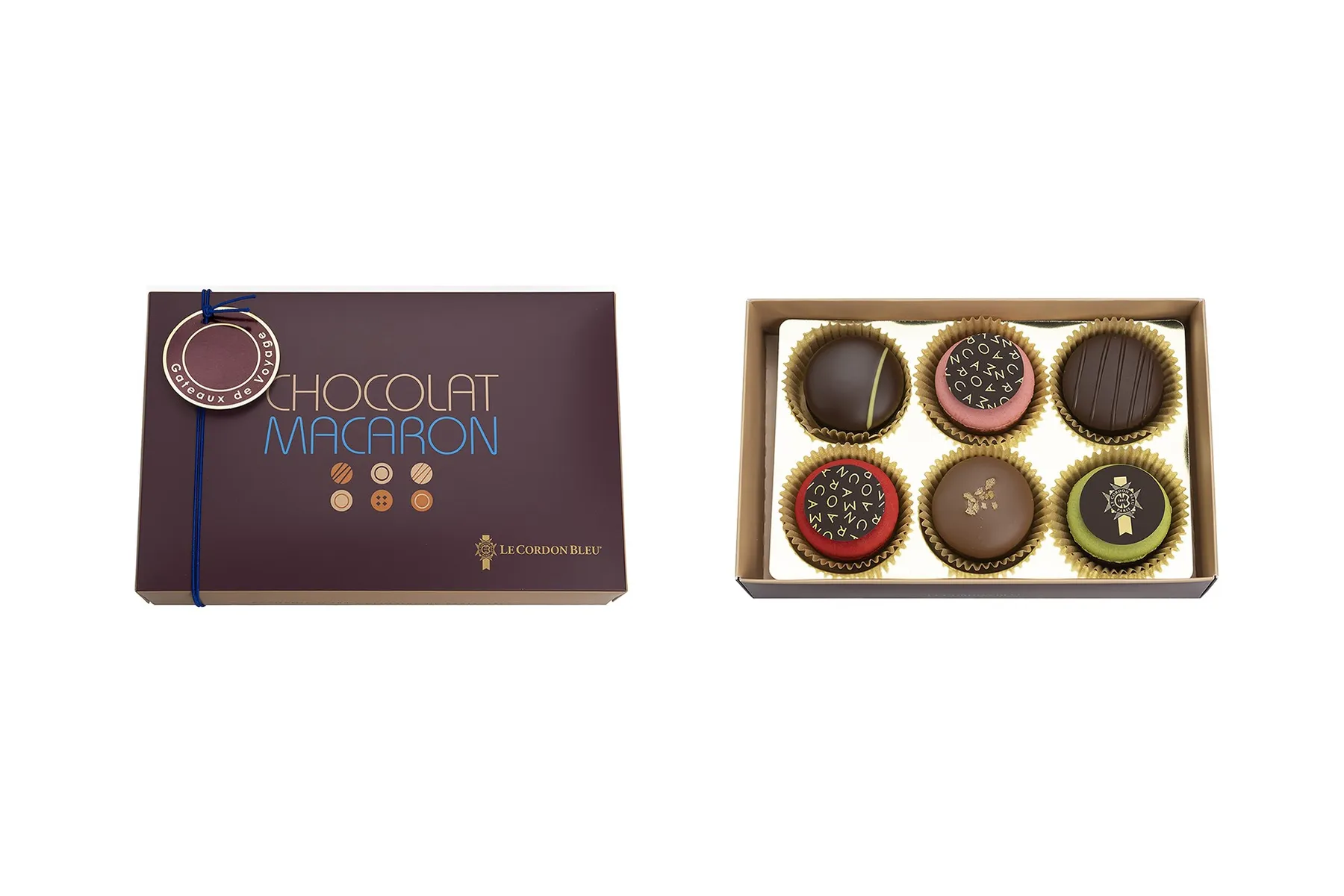
Le Cordon Bleu | Chocolat Macaron (6 pieces) 2,268 yen
Six distinct chocolate creams—caramel banana, strawberry (Amaou), chocolat, café, almond & hazelnut, and pistache—are sandwiched in macaron shells and enrobed in flavor-matched chocolate coatings.
Period: January 23 (Fri) – February 14 (Sat)
Location: 2F Second Venue
◆ VARIETY SWEETS ~Variety sweets where originality and individuality shine!~
NEW
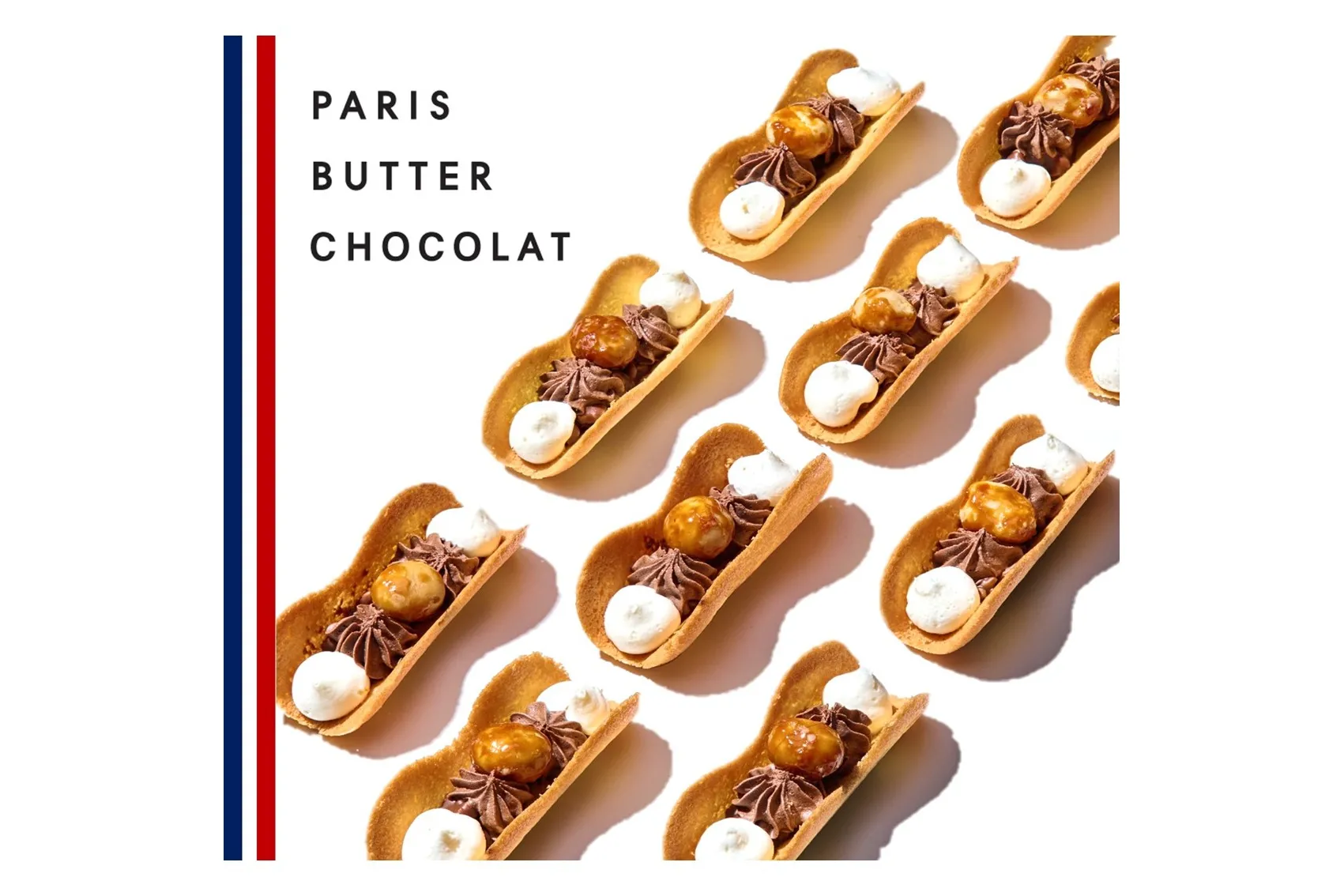
Paris Butter Chocolat | Paris Butter Chocolat (8 pieces) 1,383 yen
Langue de chat cookies made with French fermented butter are layered with dark chocolate and caramelized macadamia nuts, creating a textural interplay between crisp cookie and rich filling.
Period: January 23 (Fri) – February 14 (Sat)
Location: 1F In front of Main Entrance
NEW
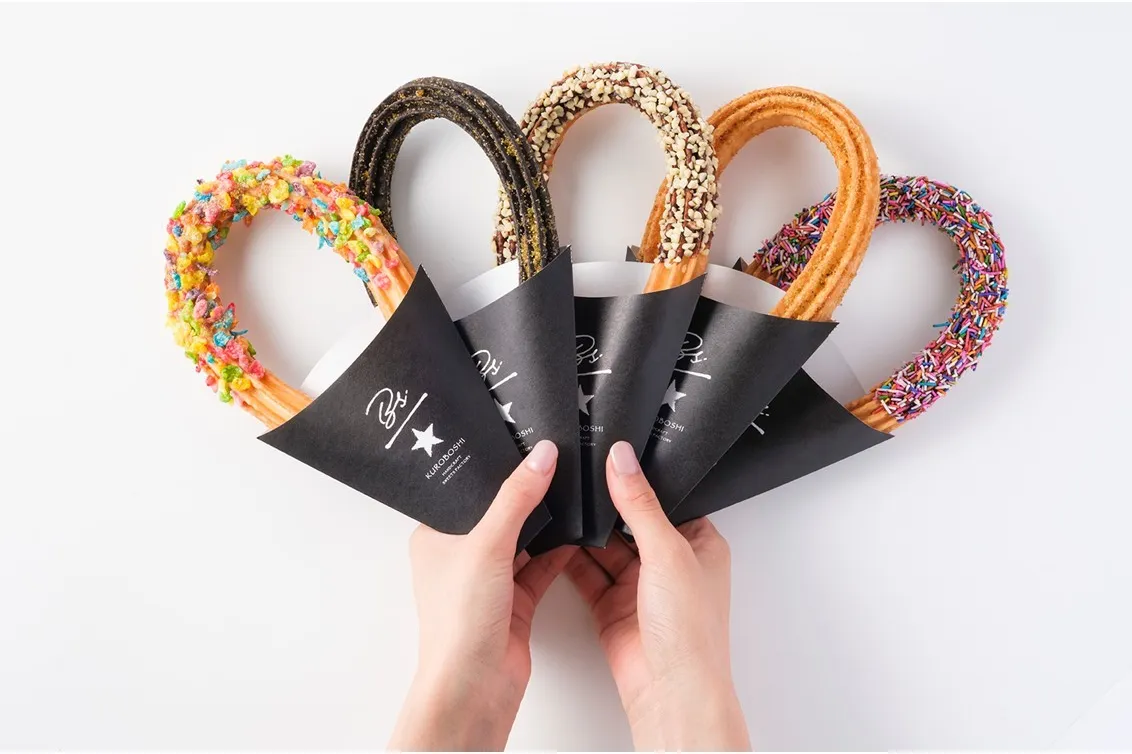
Kuroboshi | Churros (1 piece each) 700 yen
Colored churros offering a chewy texture distinct from standard preparations, available only during Part 1.
Period: January 23 (Fri) – January 31 (Sat)
Location: 1F First Venue
◆ Tama no Kensaku-chan in Granduo Tachikawa
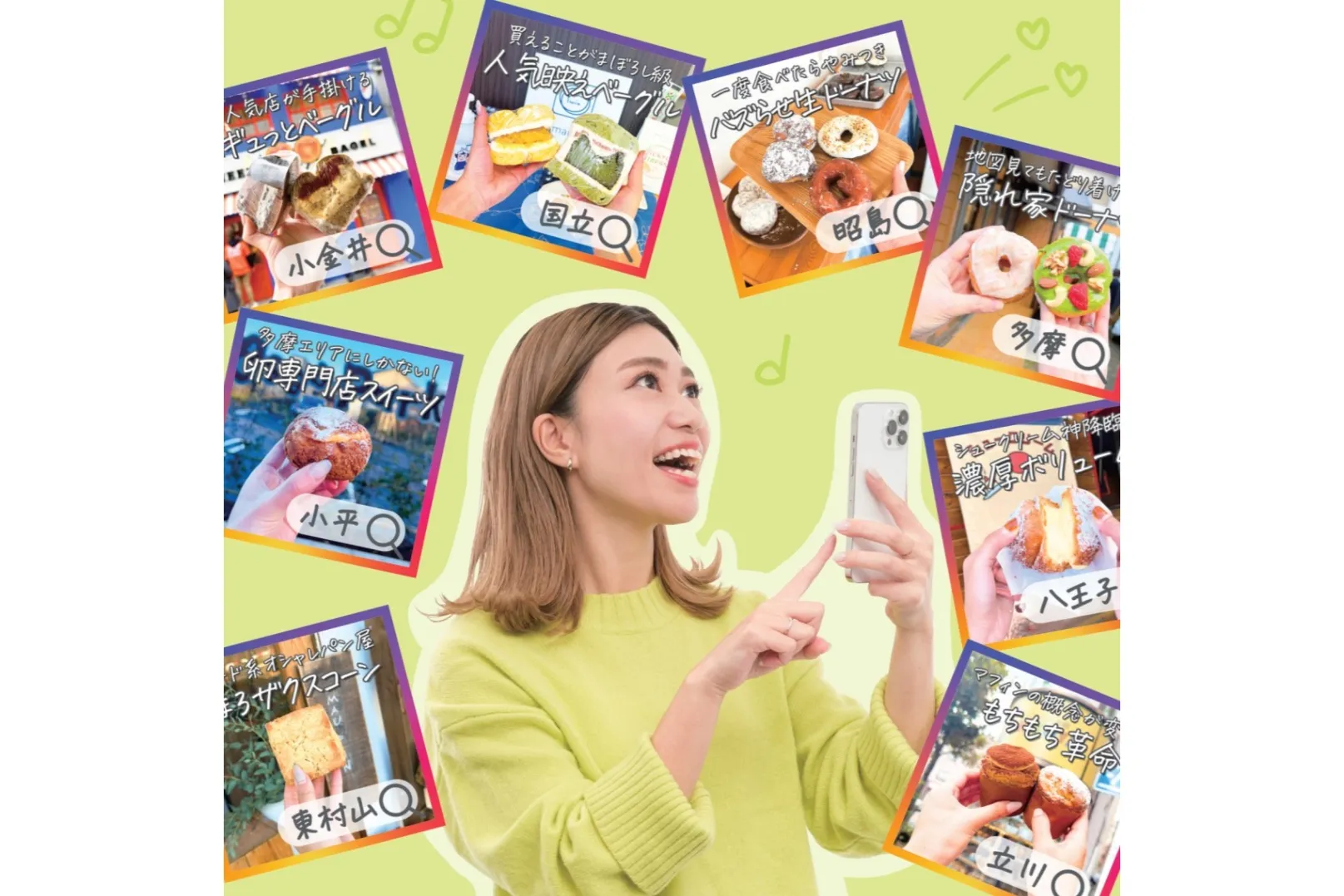
This special collaboration brings rotating vendors recommended by “Tama no Kensaku-chan,” whose coverage of the Tama region’s food scene has established her as a definitive local voice. The four-day cycles allow visitors to access multiple specialty shops—trending bageleries, donut specialists, and cream puff artisans—without traveling across the region.
NEW
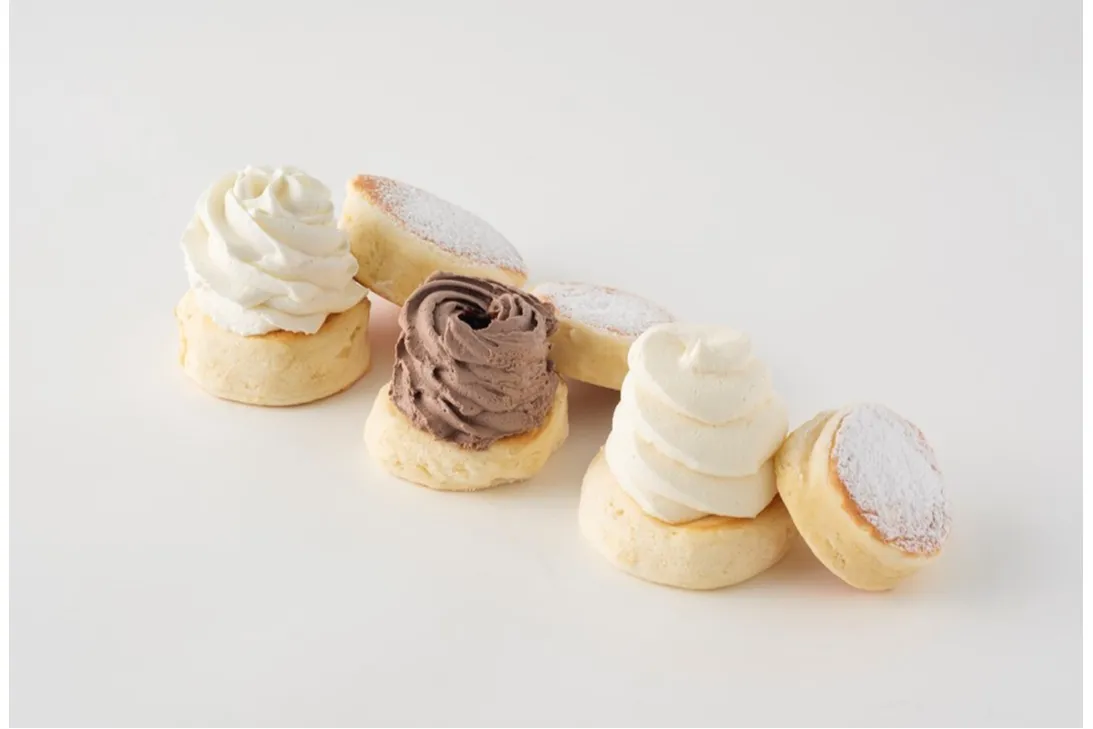
eggg Park | Pancake Sandwich (40g) 350 yen each
Miniature sandwiches featuring flavored creams between small-baked pancakes.
Period: January 23 (Fri) – January 25 (Sun)
Location: 1F In front of Daily Parts
NEW
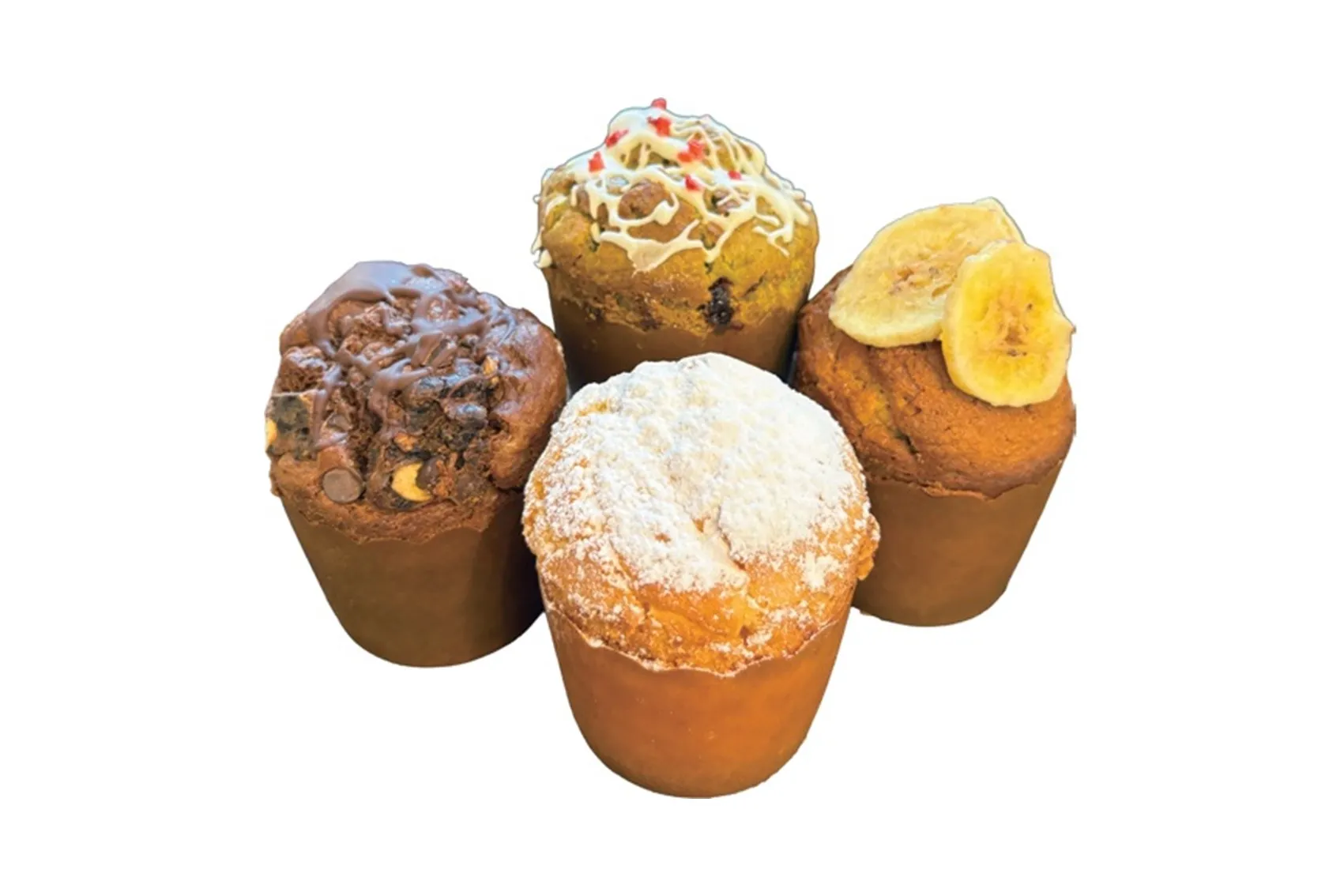
Muffin Shop MOTOYA | Muffin
- Sugar Muffin (1 piece) 400 yen — The shop’s signature item, characterized by restrained sweetness and a chewy crumb.
- Chocolate Crumble Muffin (1 piece) 520 yen
- Matcha Berry White Chocolat (1 piece) 520 yen
- Burnt Caramel Banane (1 piece) 450 yen
Period: January 26 (Mon) – January 27 (Tue)
Location: 1F In front of Daily Parts
NEW
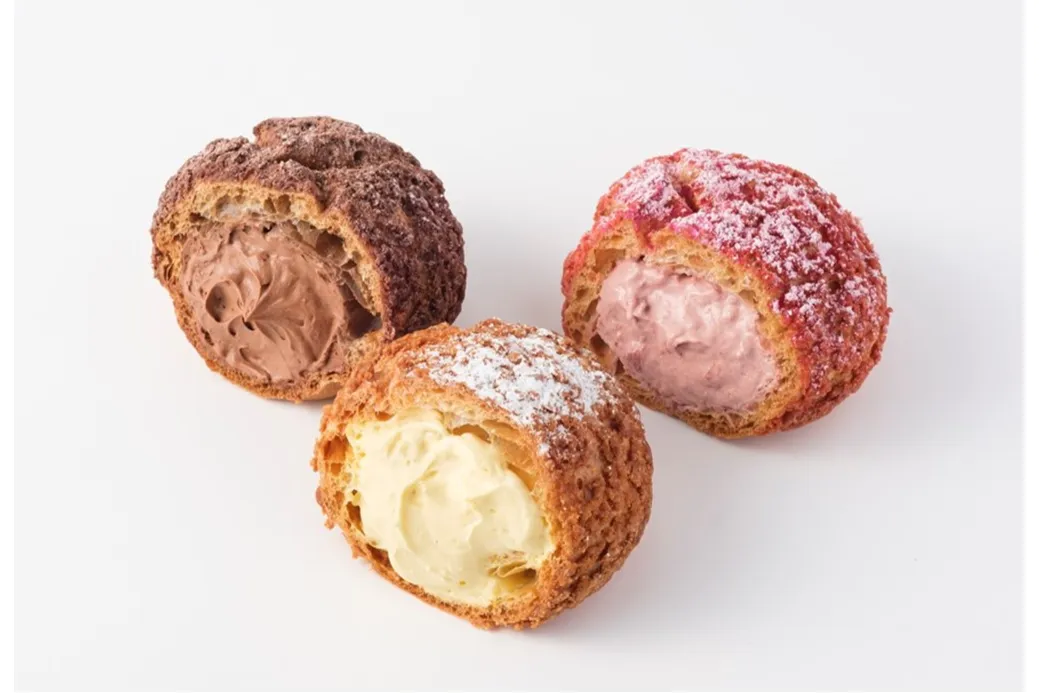
Cream Puff Specialty Store HAND SHAKE | Cream Puff
- Vanilla Custard (1 piece) 300 yen — Vanilla bean-flecked custard whip.
- Chocolate (1 piece) 450 yen — Ganache-style cream with high cacao content.
- Mixed Berry (1 piece) 480 yen — Quad-berry blend with pronounced acidity.
Period: January 28 (Wed) – January 29 (Thu)
Location: 1F In front of Daily Parts
NEW
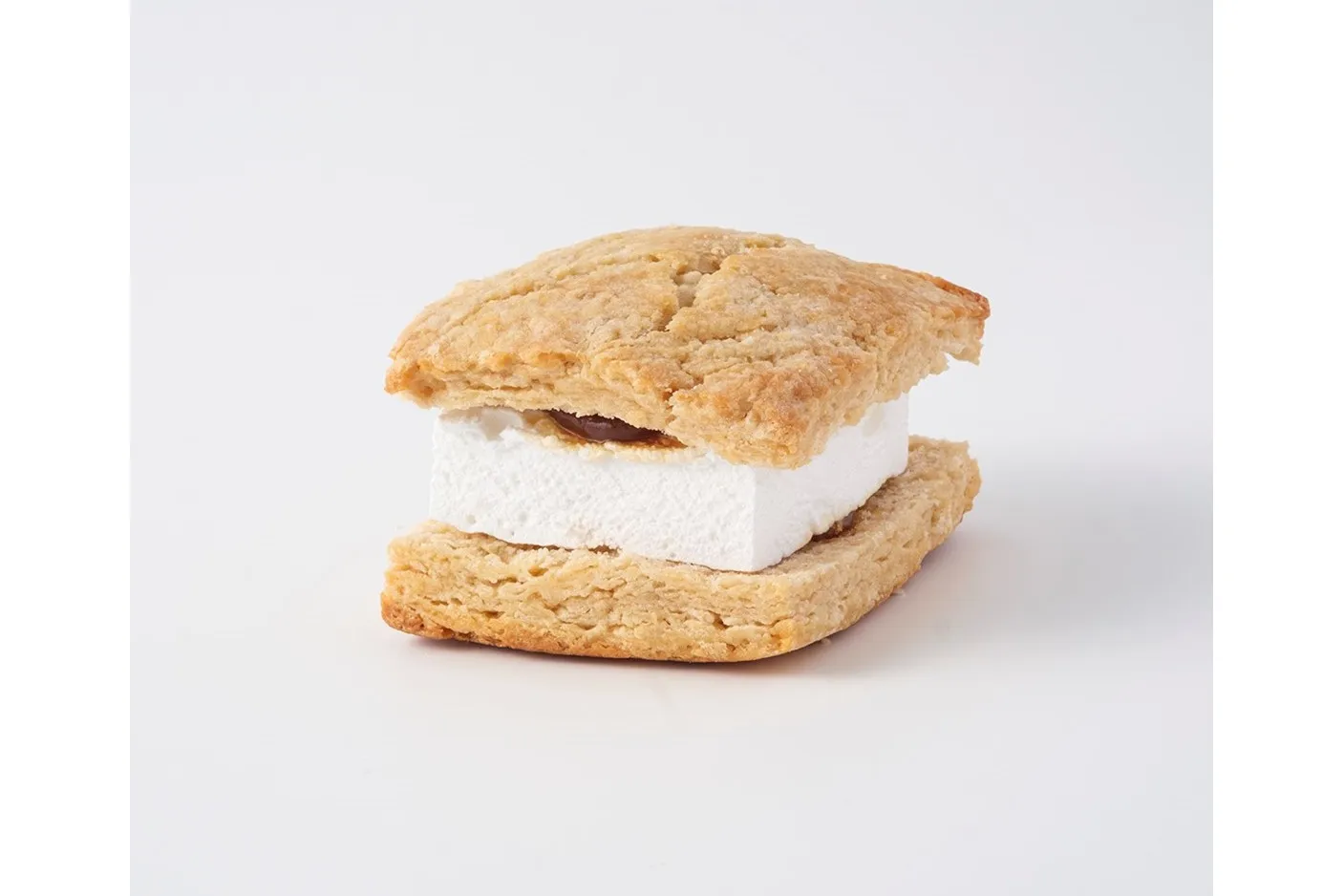
MAU PAN | Caramel Marshmallow Sandwich (1 piece) 540 yen
A scone-based sandwich featuring house-made caramel and marshmallow.
Period: January 30 (Fri) – January 31 (Sat)
Location: 1F In front of Daily Parts
Basic Info
Venue / Nearest Station
Granduo Tachikawa
Tachikawa Station
Address
〒190-8554
3-2-1 Shibasakicho, Tachikawa-shi, Tokyo
MAP
Event Period
Part.1: January 23 (Fri) – January 31 (Sat)
Part.2: February 1 (Sun) – February 14 (Sat)
Official Website
https://www.granduo.jp/tachikawa/valentine/
*Please check the official website for detailed contents.
*The listed content may be subject to change. Please check the official website of the venue or organizer for the latest information.

What is the Tama region?
The Tama region (多摩地域) comprises the western sector of Tokyo Prefecture, covering the area beyond the 23 central wards across the Tama Hills. The terrain encompasses 26 cities, three towns, and one village situated in the river valleys of the Tama, Sagami, and Tsurumi systems. Unlike the dense urban core, this area remains predominantly mountainous, with forests, clear water sources, and farmland occupying the valley floors. It functions as Tokyo’s primary agricultural zone, supplying vegetables, dairy, and fruit to the metropolitan consumer base less than an hour away by train.
The region developed during the post-war period as a residential commuter belt for central Tokyo, with railway infrastructure enabling daily travel to the center while preserving land use patterns that limited heavy industrial development. This proximity to a massive market encouraged specialized agriculture rather than commodity crops. Dairy farming took hold in the hilly terrain unsuited to paddy cultivation, while the specific climate and water quality supported wasanbon sugar refinement and fruit orchards.
Contemporary food production in Tama operates on short supply chains. Dairy processors in the hills produce milk, cheese, and butter, with flavor profiles varying according to the specific grasslands and feed crops used. Apiaries maintain hives in the mountain forests, producing honey from wildflowers and citrus blossoms. Several small distilleries in Akiruno and surrounding areas use local spring water and botanicals—yuzu, sanshō pepper, cedar—to make gin and other spirits.
Granduo Tachikawa, the shopping complex in Tachikawa City, serves as the primary retail hub for western Tokyo. For Valentine’s Day, confectioners there produce seasonal chocolates using these regional ingredients. The collections incorporate Hachioji yuzu, Kunitachi figs, Tama Hills dairy, and Akiruno craft spirits—materials sourced within a thirty-kilometer radius of the shop floor. This approach treats the agricultural base of western Tokyo as the actual production infrastructure for the confectionery, not merely a narrative backdrop.
