Pyeongchang Hyoseok Cultural Festival
🗓️ 2026.09.04 ~ 2026.09.13
*The following festival details are from the previous year (2025); the details for the 2026 festival are currently being updated.*
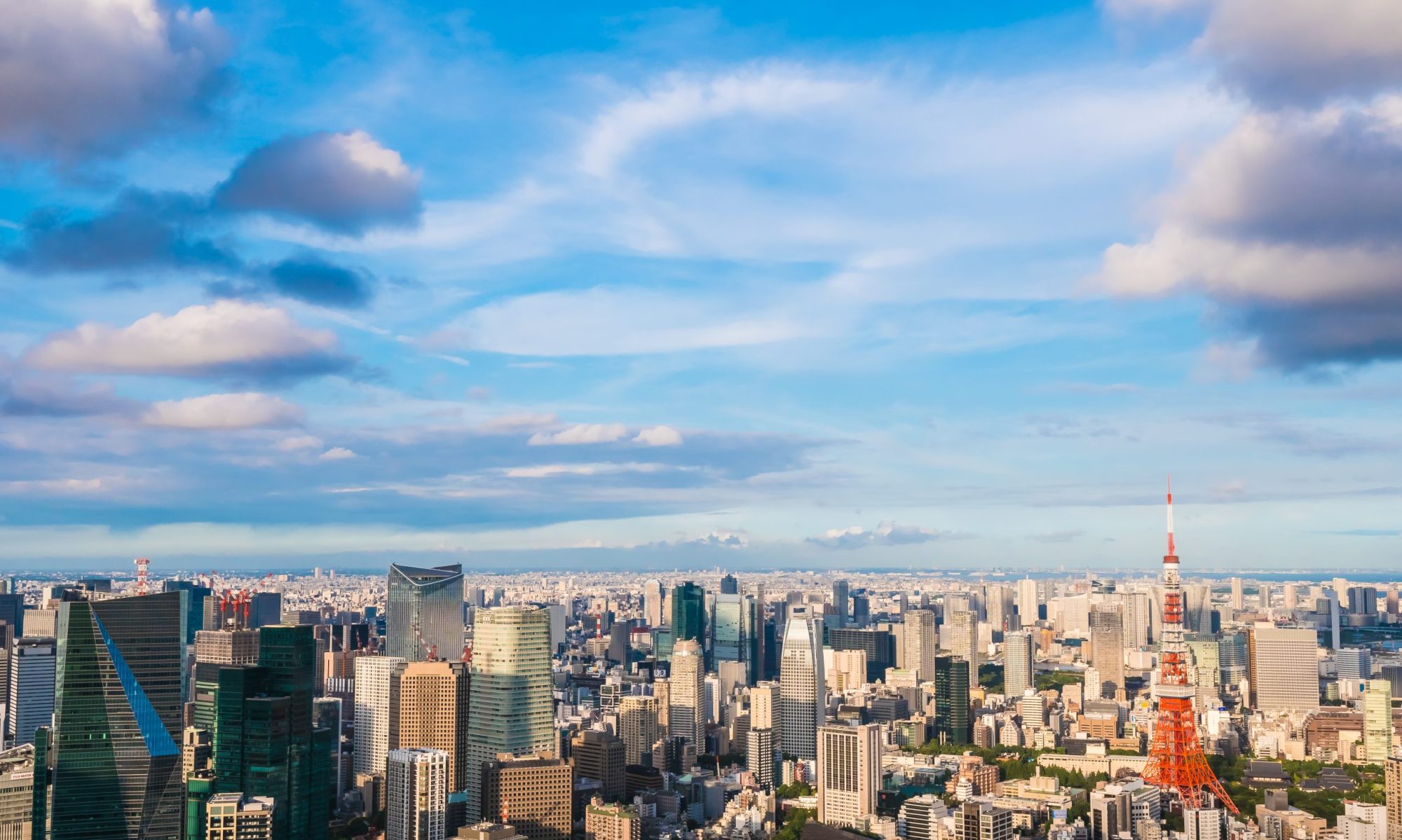
The Pyeongchang Hyoseok Cultural Festival transforms Bongpyeong Market—the very setting of “When Buckwheat Flowers Bloom,” Lee Hyo-seok’s masterpiece and one of Korean literature’s most celebrated short stories—into a living canvas where literature meets landscape. Visitors arrive as white buckwheat flowers blanket the surrounding countryside in a spectacle that resembles salt scattered across the fields.
The festival operates on two distinct rhythms. The cultural arts courtyard occupies the market itself, offering temporary escape from daily exhaustion through performances, rustic market fare, and the unhurried atmosphere of rural commerce. Here, the visual texture matters as much as the programming: weathered storefronts, the generous cadence of elderly vendors negotiating in thick Gangwon dialect, the satisfying weight of utilitarian goods changing hands. The Heungjeongcheon relaxation area provides the second rhythm—a quieter space for visitors to set down accumulated fatigue and sketch provisional hopes for days ahead.
Main Programs
Madanggeuk (Traditional Outdoor Play) Performance
A theatrical adaptation of “When Buckwheat Flowers Bloom” performed in the open-air tradition, allowing the story to breathe in the same air where its narrative unfolds.
46th National Hyoseok Writing Contest
Nearly half a century of continuity anchors this literary competition, drawing participants from across Korea to engage with Lee Hyo-seok’s stylistic legacy.
3rd Pyeongchang Buckwheat Flower Song Festival
A relatively young addition that sets original lyrics against the festival’s signature visual motif.
Lee Hyo-seok Literary Forum
Scholarly and public discourse examining the author’s continued relevance in contemporary Korean letters.
Lee Hyo-seok Literary Award Ceremony
Recognition of contemporary writers working in the lyrical realist tradition.
Open Radio Broadcast
Live programming from festival grounds, extending the event’s reach beyond physical attendance.
Side Programs
Local performance groups contribute programmed entertainment throughout the festival run.
Four competition programs distribute prize money across distinct skills:
| Competition | Discipline |
|---|---|
| Poetry Writing Contest | Verse composition |
| Acrostic Poem Contest | Constrained-form poetry |
| Handwriting Contest | Penmanship |
| Photography Contest | Visual documentation |
Consumer Participation Programs
The festival emphasizes tactile, embodied engagement with both the literary source material and the agricultural landscape that shaped it.
Into the Novel on the Literary Train~
A curated transit experience connecting transportation to narrative immersion.
Enjoying the Festival with a Stamp Book
Structured exploration through collectible confirmation of program attendance.
Musical Journey with DJ Choi Yong-jin
Request-based programming where visitors submit personal stories for musical interpretation.
Find the Golden Buckwheat!
A search activity with substantial stakes—the first-place recipient earns a pure gold award plaque.
Fire-Gazing Experience
Complimentary participation in the traditional Korean practice of musang (fire viewing), a contemplative evening activity.
Wish Ball Experience
Visitors inscribe aspirations on buoyant spheres for release onto water.
Small Zoo Experience and Viewing
Agricultural-animal encounter programming scaled for accessibility.
Donkey and Horse Riding Experience and Viewing
Equestrian activities including both mounted participation and observation.
Practical Information
📍 Address: 157 Leehyoseok-gil, Bongpyeong-myeon, Pyeongchang-gun, Gangwon-do
🛏️ Accommodation near the event
💰 Admission: Free
📞 Inquiry: 033-335-2323
🖥️ Website: https://www.hyoseok.com/
Free shuttle bus operates from Pyeongchang Station to the festival grounds throughout the event period—recommended given limited parking in the historic market district.
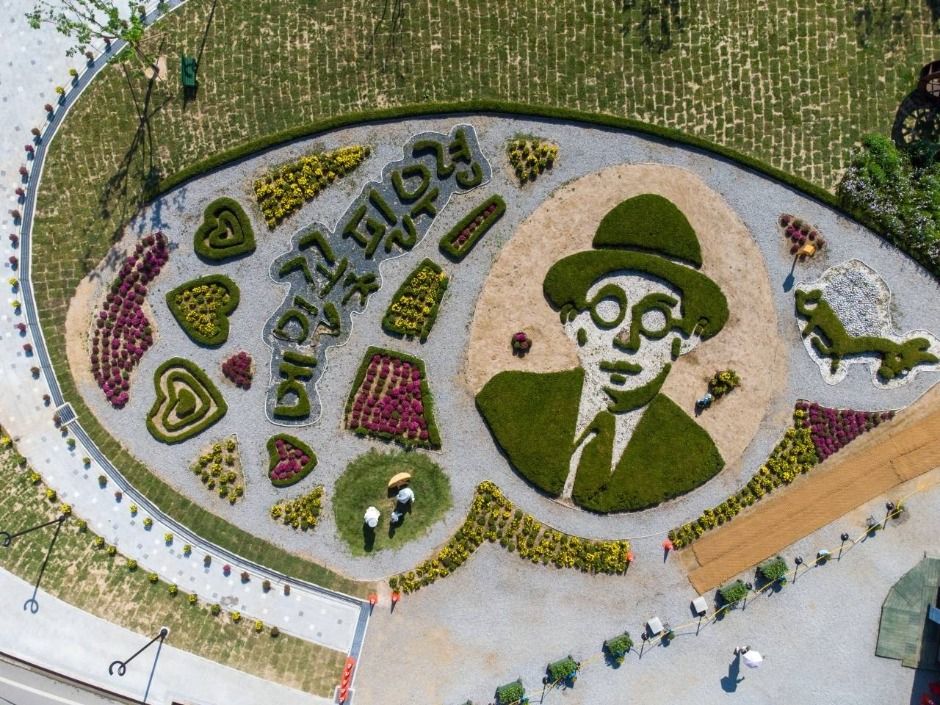
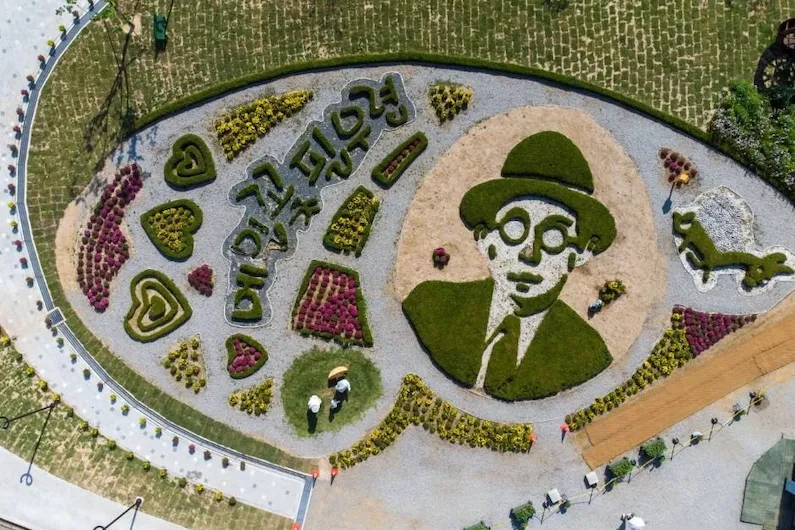
Lee Hyoseok
Lee Hyoseok (1907–1942) was a Korean modernist writer whose short life yielded concentrated work of unusual lyrical precision. Born in Bongpyeong, a village in Gangwon Province’s mountain valleys, he drew subjects and settings from the rural landscape he knew intimately.
Writing through the 1930s, Lee produced fiction distinguished by close attention to sensory experience—particularly his evocation of nature—and by his direct treatment of poverty among peasants and struggling intellectuals during the Japanese colonial period. He was associated with the Groupe of Nine, a Seoul-based collective of modernist writers, and published regularly in the period’s major literary journals.
His 1936 story When the Buckwheat Blooms (Memilkkot pil muryeop) remains his most widely read work. The narrative follows a traveling peddler who meets a woman in a buckwheat field at dusk, then moves through an extended reflection on memory and impermanence. Its opening description of moonlit buckwheat flowers as “piles of snow” established a durable association between the flower and Lee’s particular sensibility.
Other significant works include The Ocean (Hae, 1933), about coastal village life, and A Morning at P’och’on (P’och’on-ui achim, 1939), written near the end of his life. His prose combined rhythmic structures from traditional Korean poetry with techniques for rendering psychological interiority; this hybrid approach influenced later Korean fiction.
The Bongpyeong valley retains tangible connections to his writing. Since his death, the annual blooming of buckwheat there has drawn readers who approach the landscape as something between documentation and continuation of his work—seasonal proof that his descriptions still correspond to observable phenomena.
