2026 Naju Yeongsan River Festival: Experience the Best of Najuโ€™s Autumn Culture, Drone Shows, and Riverside Magic

2026 Naju Yeongsan River Festival: Experience the Best of Najuโ€™s Autumn Culture, Drone Shows, and Riverside Magic

Naju Yeongsan River Festival

๐Ÿ—“๏ธ 2026.10.07 ~ 2026.10.11

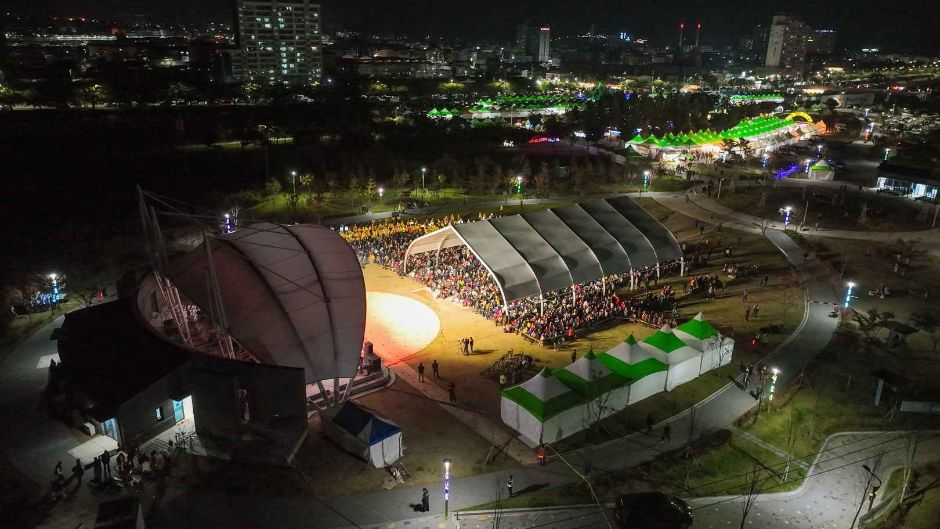
The 2026 Naju Yeongsan River Festival is Naju’s representative autumn festival, held for five days from October 7th to 11th in the Yeongsan River Garden area. Set against the vast Yeongsan River and its surrounding gardens, it forms a single venue where Naju’s history, culture, and tourism resources meet. The program includes spectacular performances, citizen participation programs, family-oriented experiential events, and food stalls that carry the flavors of Naju. It is also a stay-over festival: during the day, visitors can enjoy the autumn garden and daytime activities; at night, they can take in the illuminated riverside views and performances. As a cultural tourism festival, it gives citizens and tourists a chance to gather while promoting the ecological value of the Yeongsan River and the distinct charm of Naju.

Main Programs

  • Opening Ceremony
  • Drone Light Show & Fireworks Show
  • Opening Celebration Performance
  • Musical Dramatic Show
  • Yeongsan River River Wave Water Show
  • Moonlight Symphony
  • Closing Ceremony & Fireworks Show

Side Programs

  • Yeongsan River Theme Pavilion
  • Board Game Outing
  • KidZania in Naju
  • Yeongsan River Gourmet Pavilion
  • Naju Agriculture Festa
  • Yeongsan River Family Garden Festival

Consumer Participation Programs

Lucky Lottery Event, etc.

Other Contents

Teenieping Sing-along Show, Pinkfong Sing-along Show, Food Orchestra with Master Ahn Yu-seong, Moksa Procession with Citizens, Natural Dyeing Fashion Show with Supermodel Park Dul-seon, etc.

Visitor Information

๐Ÿ“ Address: Yeongsan-dong, Naju-si, Jeonnam-Gwangju Integrated Special City

๐Ÿ›๏ธ Accommodations near the event

๐Ÿ’ฐ Fee: Free

๐Ÿ“ž Inquiry: 061-339-8594

๐Ÿ–ฅ๏ธ Website: https://www.naju.go.kr/tour/festival/river

๋‚˜์ฃผ์˜์‚ฐ๊ฐ•์ถ•์ œ

The Yeongsan River is one of the major rivers of South Korea. It rises in the mountains of Damyang and Jangseong, flows through Hwasun, Naju, and other parts of South Jeolla Province, and empties into the Yellow Sea near Mokpo. Its length is about 129 kilometers. The river and its tributaries drain much of the southwestern part of the province, and the surrounding plains have supported rice farming and other agriculture for centuries.

The river has also shaped the settlement of the region. Towns developed along its banks, and its water served both irrigation and daily needs. In the mid-twentieth century, population growth and industrial development increased pressure on the river, leading to a series of flood control and water management projects along its course. In recent decades, attention has shifted toward restoration and public access. Several cities along the river have built parks, walking trails, and waterfront spaces, making the river a more visible part of everyday life.

In autumn, these public spaces are used for seasonal events, including festivals in Naju. The events use the river as a setting rather than as a backdrop for spectacle. Visitors can walk along the banks, watch migratory birds, and see the surrounding hills change color. The Yeongsan River is not unusual in its geography or hydrology, but its combination of agricultural history, settlement, and recent urban renewal gives it a steady place in the regionโ€™s identity.

Gwangju Nostalgic Chungjang Festival 2026: Experience Korea’s Premier Memory-Themed Celebration and Cultural Parades

Gwangju Nostalgic Chungjang Festival 2026: Experience Korea's Premier Memory-Themed Celebration and Cultural Parades

Gwangju’s Nostalgic Chungjang Festival

๐Ÿ—“๏ธ 2026.10.07 ~ 2026.10.11

The food information for the festival venue below is based on the previous year’s (2025) festival content, and the 2026 festival content is currently being updated.

Gwangju Recollection Chungjang Festival

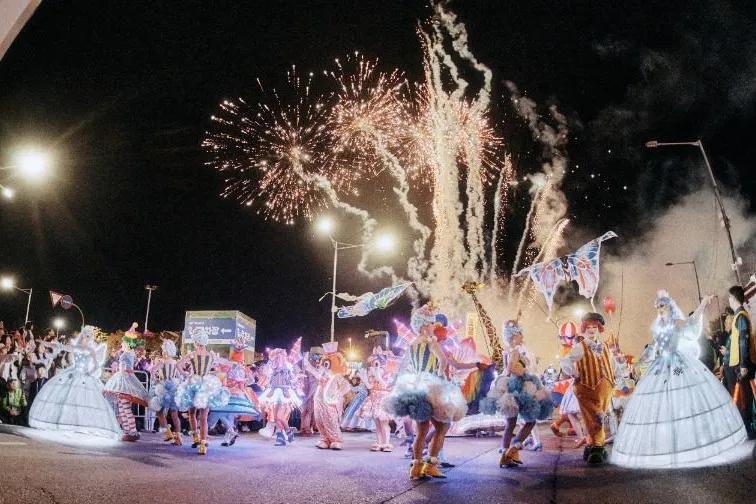
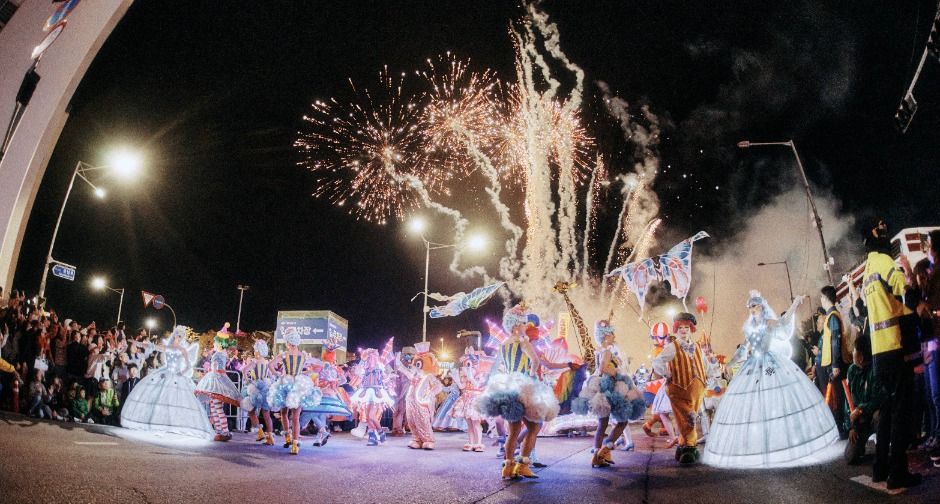
The Gwangju Recollection Chungjang Festival is the largest representative festival in Gwangju, held in and around Chungjang-ro in Dong-gu, Gwangju Integrated Metropolitan City, South Jeolla Province โ€” the region’s top commercial district. It carries the distinction of being Korea’s first memory-themed festival, built around the universal subject of recollection and designed to reach across generations and classes. The premise is that everyone holds precious memories, and the festival gives those memories a public stage. By sharing them, visitors take part in what the festival frames as the production of memories: people of different ages and backgrounds come together, and new memories are created in the process.

The setting adds a deeper layer of meaning. Because the festival unfolds around Geumnam-ro and May 18th Democracy Square, spaces with a significant place in the global history of democracy, it embodies historical and cultural value that goes beyond a simple local festival. Held in the sanctuary of democratization, it carries a symbolic dimension, showing the will of citizens to overcome the pain of the past and move toward a hopeful future.

External recognition has followed. The Ministry of Culture, Sports and Tourism first designated the festival an Honorary Cultural Tourism Festival in 2024 and re-selected it for 2026โ€“2027, maintaining the honor for four consecutive years (2024โ€“2027). At the 2026 Korea Festival Contents Awards, the festival won the Grand Prize in the Global Luxury Category, achieving a Grand Prize for the tenth consecutive year and proving its status as a global luxury festival representing Korea.

The festival’s ambition now extends beyond the local region. Through cooperation with the Asia Culture Center, it aims to develop into an international festival that encompasses the culture and memories of all of Asia. In doing so, it provides a venue for communication and harmony through culture while enhancing Gwangju’s status as the Asian Cultural Hub City.

2026 Festival Programs

Daily Geumnam-ro Main Programs

Each day of the main program on Geumnam-ro features a different lineup:

  • Day 1: Opening Show
  • Day 2: Chungjang Dream Tree Festival, Youth March, Chungjang Glowing Night
  • Day 3: K-Beauty & Hanbok Show, Asia Culture Show, Chungjang W(world) Parade
  • Day 4: Gwangju Jumeokbap (Rice Ball) Contest, Chungjang K(korea) Parade, Chungjang O(original) Parade
  • Day 5: Resident Autonomy Festival Finals, Chungjang Golden Parade, Closing Performance

The World, Korea, and Original parades on Days 3 through 5 each bring a different theme to the street, while the Gwangju Jumeokbap (Rice Ball) Contest on Day 4 adds a culinary element to the program.

Geumnam-ro Side Programs

The side programs on Geumnam-ro include food trucks and healing shelters, an exhibition of administrative district parade symbols, a boxing competition, and the participatory dance program Let’s GO! Just Dance!, among others.

Sinseoseok-ro Programs

On Sinseoseok-ro, the Memory Song Theme Street and the Memory Wandering Troupe bring songs and street performances tied to the festival’s recollective theme.

Chungjang-ro and Street of Art Programs

Along Chungjang-ro and the Street of Art, Pan-Pan-Pan (Dance Pan, Play Pan, Song Pan) and Life’s Greatest Boulevard extend the festival into the surrounding arts district.

Collaborative Events

The 5th Gwangju Busking World Cup is the main collaborative event, turning the festival streets into stages for busking performances in a competition format. Additional collaborative events round out the program.

Practical Information

๐Ÿ“ Address: Geumnam-ro 3-ga, Dong-gu, Gwangju Integrated Metropolitan City, South Jeolla Province

๐Ÿ›๏ธ Accommodations near the event

๐Ÿ’ฐ Fee: Free

๐Ÿ“ž Inquiry: 062-608-4672

โญ๏ธ Instagram: https://www.instagram.com/recollectionkr/

๐Ÿ–ฅ๏ธ Website: http://recollection.kr/index.php

Chungjang-ro is the main thoroughfare in downtown Gwangju. It has long served as a commercial center, and its sidewalks and buildings have hosted the everyday routines and occasional public events that make up the cityโ€™s recent history. The street is named for an ideal of loyalty and integrity, but its appearance is defined by older structures: theaters, market stalls, restaurants, and small shops that have survived several decades of redevelopment.

During the annual Chungjang Festival, organizers use this setting to stage a return to the 1980s. Retro arcades, period performances, and reconstructed classrooms occupy the street, inviting visitors to engage with recent local culture as something tangible rather than abstract. The festival depends on Chungjang-roโ€™s physical continuity: the street supplies the context, and the programming supplies the period detail. This arrangement lets visitors experience a version of the cityโ€™s past on its actual ground, without turning the avenue into a monument or a theme park.

Seoul 2026 Royal Culture Festival: Experience the Magic of Korea’s Five Grand Palaces and Traditional Arts

Seoul 2026 Royal Culture Festival: Experience the Magic of Korea's Five Grand Palaces and Traditional Arts

Royal Palace Culture Festival

Royal Culture Festival

๐Ÿ—“๏ธ 2026.10.07 ~ 2026.10.11

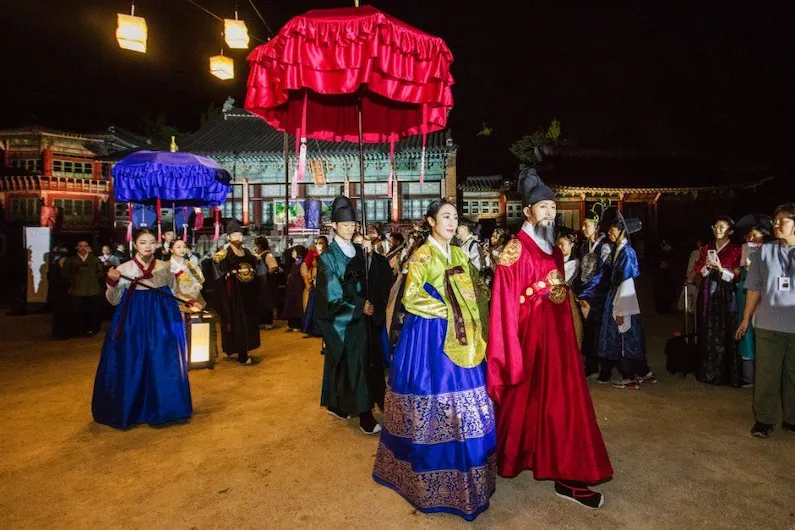
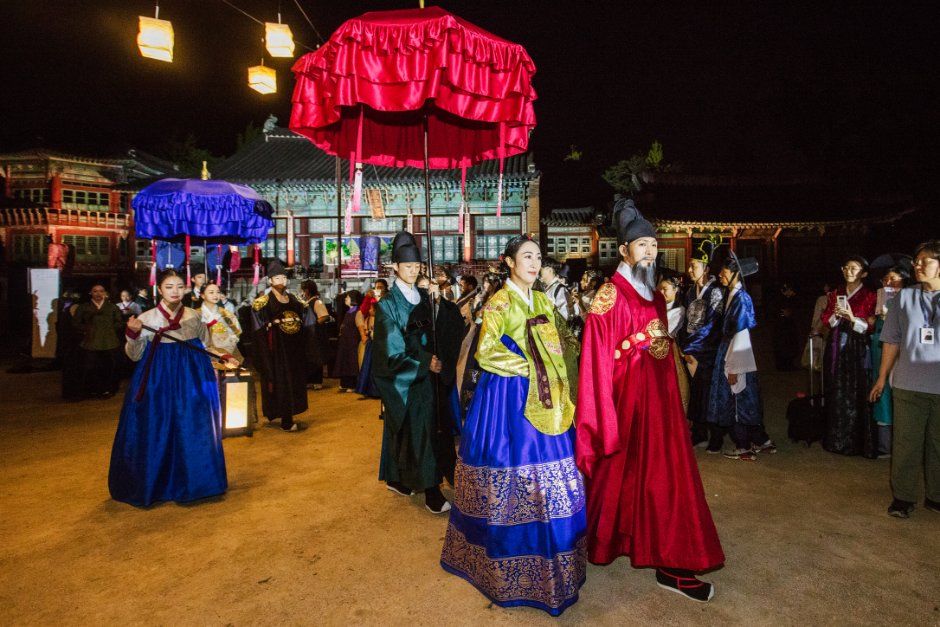
The Royal Culture Festival stands as Korea’s largest national heritage event, occurring biannually every spring and autumn. The festival transforms the five grand palaces of Seoulโ€”Gyeongbokgung, Changdeokgung, Deoksugung, Changgyeonggung, and Gyeonghuigungโ€”along with the Jongmyo Shrine, into expansive stages for the celebration of traditional Korean culture. Through a curated selection of performances, exhibitions, hands-on experiences, and ritual reenactments, the event allows visitors to engage with the historical depth of the Joseon dynasty.

Now celebrating its 12th anniversary, the festival is hosted by the National Heritage Administration and organized by the Korea Heritage Service. The theme for this year is โ€˜Palaces, Awakening the Arts,โ€™ a vision that seeks to redefine these historic sitesโ€”shifting them from static spaces for viewing heritage into dynamic cultural and artistic stages where the foundational roots of K-culture are actively experienced.

The scale of the event continues to grow, as evidenced by the spring festival of 2026, which recorded a historic high of approximately 725,000 attendees. While the spring and autumn iterations share a commitment to heritage, the autumn festival distinguishes itself by leveraging the specific seasonal characteristics of the palaces. Daytime programming focuses on the architectural spaces and historical narratives through exhibitions and tourism tours, while the nighttime hours are dedicated to expanded performance and experience programs set against the dramatic backdrop of palace halls and autumn landscapes.

To mark the commencement of the autumn festivities, a special performance of the KBS2 โ€˜Immortal Songs – 2026 Royal Culture Festival Specialโ€™ will take place on October 6 (Tuesday) at 5 PM at Gyeongbokgung Palace’s Heungryemun Square. Aligned with the theme โ€˜Palaces, Awakening the Arts,โ€™ this event is designed for multi-generational appeal, featuring a musical spectrum that ranges from traditional Gugak to contemporary K-pop. Admission to this specific event is free, and interested attendees may apply via the official KBS [Immortal Songs] website.

Event Programming

The festival offers a diverse array of activities, some requiring advanced reservations and others available for walk-in participation.

1. Special Event

  • KBS2 โ€˜Immortal Songs: 2026 Royal Culture Festival Specialโ€™ Special Performance (Oct. 6)

2. Reservation Programs for Koreans

  • Gyeongbokgung Hanbok Banquet
  • Palace Pass (Goods)
  • Awakening the Morning Palace
  • Kyujanggak Chogye Munsin Workshop with Hyang-achi
  • Junmyeongdang Children’s School
  • Donggwol Jangwonseo
  • Jongmyo Architecture Expedition
  • Royal Culture Festival Academic Seminar
  • Changgyeonggung Mulbit Yeonhwa

3. Reservation Programs for Foreigners

  • Gyeongbokgung Hanbok Banquet
  • Awakening the Morning Palace

4. On-site Programs

  • Joseon Spatial Aesthetics: Order of White (็™ฝ)
  • Changgyeonggung Time Travel
  • Royal Playroom
  • Royal Culture Festival Street Parade
  • Royal Culture Festival Stamp Tour
  • From Gwangmu to Yunghee

Essential Visitor Information

๐Ÿ“ Address: 161 Sajik-ro, Jongno-gu, Seoul

๐Ÿ›๏ธ Accommodations near the event

๐Ÿ’ฐ Fee: Paid (Entrance fees vary by palace)

๐Ÿ“ž Inquiry: 1522-2295

โญ๏ธ Instagram: https://www.instagram.com/royalculturefestival_official/

๐Ÿ–ฅ๏ธ Website: https://www.kh.or.kr/fest

What are Seoul’s Five Grand Palaces?

The Five Grand Palaces are the surviving royal complexes built by the Joseon Dynasty (1392โ€“1897). They were constructed as residences for the king and his court and as working centers of government. Each now functions as a museum and public park, and all five are used as venues for the Seoul 2026 Royal Culture Festival.

  • Gyeongbokgung โ€” Built in 1395 as the principal palace, Gyeongbokgung is the largest of the five. The name means โ€œPalace Greatly Blessed by Heaven.โ€ Its layout once contained the main throne hall and government offices, and the complex sits at the northern end of central Seoul.

  • Changdeokgung โ€” A UNESCO World Heritage Site. It was built in 1405 and became the main residence for several kings after Gyeongbokgung was damaged. Its rear garden is a planned landscape that follows the natural shape of the land, which distinguishes it from the symmetrical layouts of the other palaces.

  • Changgyeonggung โ€” Located next to Changdeokgung, this palace was built to house the royal women and was also used for court functions. It is smaller in scale and connected to its neighbor by a gateway, making the two easy to visit together.

  • Deoksugung โ€” The palace has both traditional Korean buildings and early 20th-century Western-style stone structures. King Gojong stayed here after the founding of the Korean Empire in 1897, and the site documents the palaceโ€™s later period more than the others do.

  • Gyeonghuigung โ€” Built as a secondary palace, Gyeonghuigung was once large enough to compare with Gyeongbokgung. Most of it was destroyed during the Japanese occupation; the present site includes the main gate and a few restored halls, and it now houses the Seoul Museum of History on its grounds.

The Royal Culture Festivalโ€™s programs in 2026 include nighttime lighting, traditional music and dance, reenactments of court ceremonies, and craft workshops. Because each palace has a different history and layout, visiting all five means seeing different examples of Joseon architecture, from the formal central courts of Gyeongbokgung to the smaller residential buildings of Changgyeonggung.

2026 Suwon Hwaseong Cultural Festival: Experience Korea’s Largest Royal Procession and Joseon History

2026 Suwon Hwaseong Cultural Festival: Experience Korea's Largest Royal Procession and Joseon History

Suwon Hwaseong Cultural Festival

๐Ÿ—“๏ธ 2026.10.04 ~ 2026.10.11

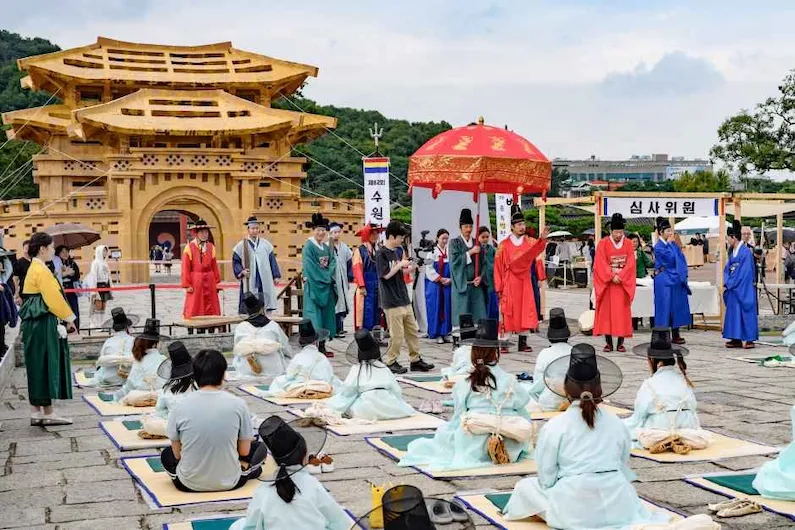
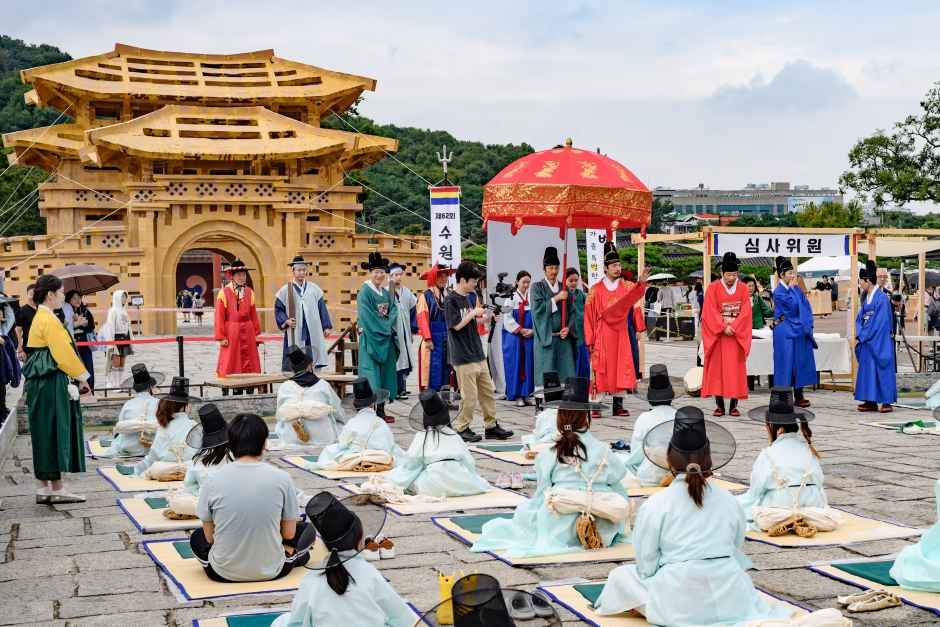
The Suwon Hwaseong Cultural Festival is Suwon’s representative comprehensive cultural arts festival, reinterpreting King Jeongjo’s 8-day royal procession to Hwaseong in 1795 through a modern lens. The historical moments recorded in the Wonhaeng Eulmyo Jeongri Uigwe are brought back to life across performances, parades, hands-on experiences, and citizen participation programs, all set around the UNESCO World Heritage site Suwon Hwaseong Fortress and Hwaseong Haenggung Palace.

The festival’s signature program, King Jeongjo’s Royal Procession, is the largest royal parade in Korea and is enjoyed by citizens and tourists alike, capturing the full grandeur of the Joseon-era pageantry. During the day, visitors can immerse themselves in traditional culture experiences and participatory programs. After nightfall, the festival shifts into a different mode, pairing high-quality performances with the beautifully illuminated scenery of Suwon Hwaseong. The result is a multi-layered festival experience designed for both domestic and international visitors.

King Jeongjo’s Royal Procession

2026. 10. 4. (Sun)

Also called the Eulmyo-year Hwaseong Expedition, this parade recreates the grand royal journey that King Jeongjo conducted for a total of 8 days, from the 9th to the 16th of the leap second month in the Eulmyo year (1795), to celebrate the 60th birthday of his mother, Lady Hyegyeong. The recreation is based on the documentary heritage Wonhaeng Eulmyo Jeongri Uigwe, which recorded the original procession in remarkable detail. Adapted for modern times, the parade re-emerges as the largest royal procession in Korea, forming the centerpiece of the festival and offering citizens and visitors the chance to witness โ€” and participate in โ€” a spectacular piece of living history.

Main Programs

  1. Theme Performance โ€” Suwon Fantasy – Yajo
  2. Water Performance โ€” Seonyumong
  3. *Time Travel_That Day: Haenggung Night Story
  4. Citizens’ Great Architecture โ€” Hwahong

Experience & Participation Programs

  • Citizen’s Dohwaseo
  • Byeolsinal
  • Yangroyon (Banquet for the Elderly)
  • Suwon Palanquin Race
  • New Nakseongyeon [Masquerade Ball]
  • Fortress Construction Playground

Global Village

The festival also runs a Global Village featuring a lounge exclusively for foreign visitors, along with traditional games and refreshments โ€” an accessible entry point into the atmosphere of a Joseon-era celebration.

Visitor Information

As there are no food booths within the festival grounds, please use restaurants in the nearby area.

๐Ÿ›๏ธ Accommodations near the event

Suwon Hwaseong Cultural Festival

What is Suwon Hwaseong?

Suwon Hwaseong is an 18th-century fortress and walled city complex in Suwon, Gyeonggi-do, South Korea. It was built between 1794 and 1796 under King Jeongjo of the Joseon dynasty. Jeongjo had moved the remains of his father, Crown Prince Sado, to the nearby tomb of Yungneung, and the fortress served both to guard that burial site and to establish a royal presence outside the factional disputes of Hanyang, now Seoul.

The fortress is notable for adapting its defenses to the local terrain. Its walls run roughly 5.7 kilometers and include gates, bastions, command posts, observation pavilions, and floodgates. The design makes use of angled walls and concealed firing positions, so defenders could target attackers along the curtain walls instead of firing only straight ahead. Jeongjo planned the works with the scholar-official Jeong Yak-yong, and the entire undertaking was documented in the Hwaseong Seongyeok Uigwe, a detailed official record of materials, labor, and construction methods. That documentation has made Hwaseong one of the best-understood large-scale projects of its period in Korea.

The fortress has been a UNESCO World Heritage Site since 1997. It is open year-round, and walking the wall circuit remains the most direct way to see how the structure relates to the surrounding landscape. The site will also host the 2026 Suwon Hwaseong Cultural Festival, including reenactments of King Jeongjo’s royal processions to the fortress. These events use the historical route and buildings as their setting, and the architecture itself continues to be the central reason for visiting.

2026 Jinju Namgang Yudeung Festival Guide: Experience the Magic of Floating Lanterns and Korean Tradition

2026 Jinju Namgang Yudeung Festival Guide: Experience the Magic of Floating Lanterns and Korean Tradition

Jinju Nam River Floating Lantern Festival

Also known as the Jinju Namgang Yudeung Festival.

๐Ÿ—“๏ธ 2026.10.03 ~ 2026.10.18

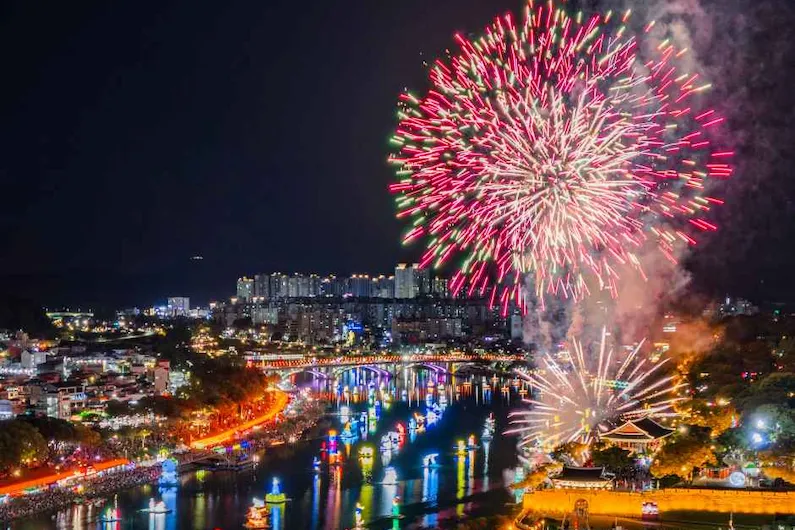
Yudeung (floating lanterns) originated during the Battle of Jinju Castle, one of the three major victories of the Imjin War. Lanterns were floated on the Namgang River as military signals to communicate with righteous army soldiers outside the fortress and as a means of communication for family members to send greetings during the battle. Jinju citizens carried this tradition through the Yudeung Contest, a program of the Gaecheon Arts Festival, which has been held since 1949 and is the pioneer of Korea’s local comprehensive arts festivals. Since 2000, the event has been held independently as the Jinju Namgang Yudeung Festival.

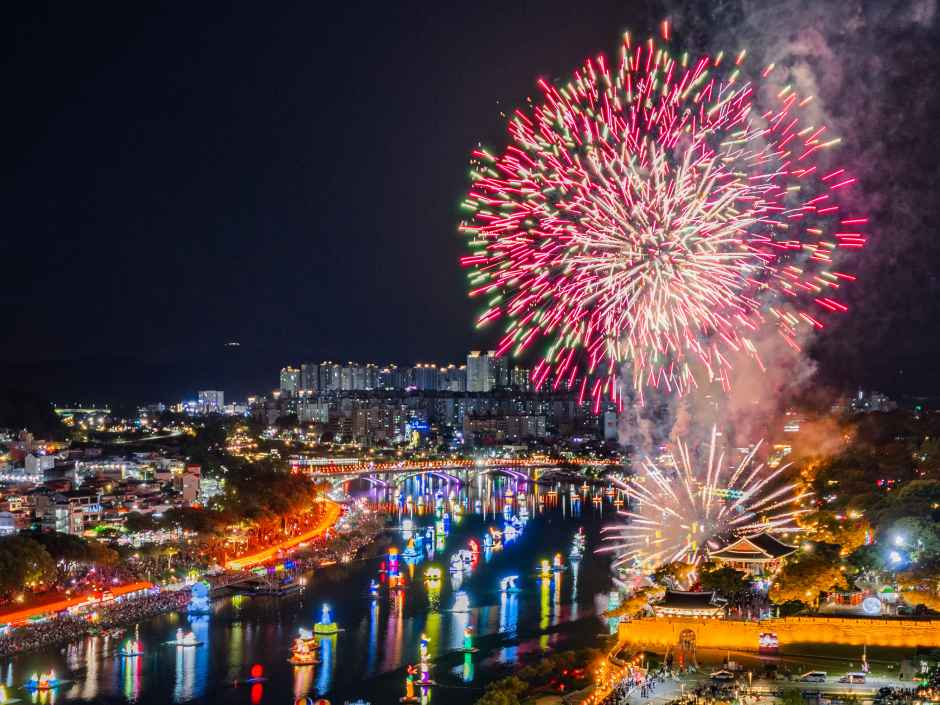
Yudeung has been sublimated into a festival wishing for peace, love, happiness, and the fulfillment of desires. It has grown into a global festival that shares the value of peace with people around the world. Every autumn in Jinju, the City of Light and Peace, the Namgang River and the Jinju Fortress area become the setting for a landscape of floating lanterns, where visitors can reflect on the historical meaning embedded in the scenery.

Main Programs

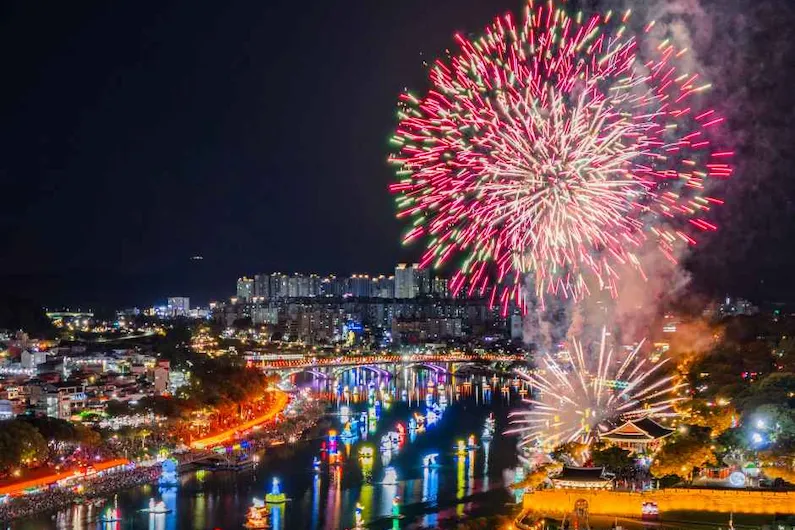
  • Floating lantern exhibition โ€“ The core display, covering the Namgang River with floating lanterns.
  • Land lantern exhibition โ€“ Lantern installations throughout the Jinju Fortress area.
  • Drone light show โ€“ A coordinated drone display above the festival.
  • Water fireworks display โ€“ Fireworks staged over the water.

Side Programs

  • Night parade โ€“ A parade held after dark through the festival area.
  • Gaecheon Arts Festival โ€“ Accompanying festival running 10.9.โ€“10.18.
  • Korea Drama Festival โ€“ Accompanying festival running 10.9.โ€“10.18.

Consumer Participation Programs

  • Hanging wish lanterns โ€“ Write wishes and hang lanterns as part of the display.
  • Floating lanterns โ€“ Send your own lantern onto the Namgang River.
  • Crossing the floating bridge โ€“ Walk across the floating bridge for a closer view of the river lanterns.

Other Details

  • Cruise ship experience โ€“ View the illuminated river from a cruise ship.

Practical Information

๐Ÿ“ Address: 626 Namgang-ro, Jinju-si, Gyeongsangnam-do (Bonseong-dong)

๐Ÿ›๏ธ Accommodation near the event

๐Ÿ’ฐ Fee: Free

๐Ÿ“ž Inquiry: 055-761-9111, 055-755-9111

โญ๏ธ Instagram: https://www.instagram.com/yudeung_festival/

๐Ÿ–ฅ๏ธ Website: https://yudeung.com/

Jinju Namgang Yudeung Festival

The association between floating lanterns and Jinjuโ€™s Namgang River begins with the Imjin War (1592โ€“1598). In 1592, during the first Siege of Jinju, the fortress commander General Kim Si-min ordered lanterns to be launched on the river as a defensive measure. The Namgang ran along the southern side of the fortress and was the most likely approach for a night attack. Hundreds of lit lanterns were placed on the water, making the river visible and exposing anyone trying to cross. The lights also served as a signaling system. Different arrangements and movements of lanterns allowed units stationed along the river and inside the fortress to communicate without sending runners or raising an alarm.

The tactic worked well enough that it became one of the memorable features of the battle. After the war, the military use of lanterns developed into a commemorative custom. The people of Jinju released lanterns on the Namgang to honor the defenders who had died in the siege, and the practice later came to include expressions of personal hope or remembrance. It was not an unbroken ritual from 1592, but the memory of the wartime origin is what gave the later custom its meaning.

The Jinju Namgang Yudeung Festival is the modern continuation of that history. Held each autumn, it reconstructs the scene of lanterns drifting on the river. Visitors are invited to launch their own lanterns, and the festivalโ€™s main program is designed around this act. What links the contemporary event to the original is not sentimentality but the continuity of a practical technique: a method of lighting a river at night, first used as defense, later becoming a way of marking what was lost and what was hoped for.

2026 Yeongju Punggi Ginseng Festival: Experience Korean Heritage and Boost Your Health with Premium Ginseng

2026 Yeongju Punggi Ginseng Festival: Experience Korean Heritage and Boost Your Health with Premium Ginseng

Yeongju Punggi Ginseng Festival

๐Ÿ—“๏ธ 2026.10.03 ~ 2026.10.11

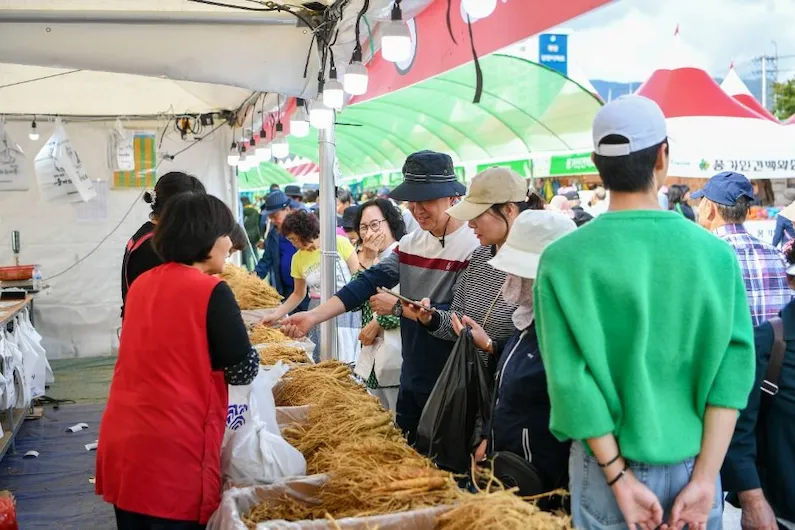
Ginseng has long been one of Korea’s most recognized health foods, valued for restoring energy and supporting immunity. Every year in early October, as the root’s nutrients reach their seasonal peak, Yeongju โ€” one of the country’s leading ginseng production areas โ€” hosts the Punggi Ginseng Festival for nine days. The event is structured around ginseng as a symbol of health, with exhibitions and experiences designed for visitors of all ages.

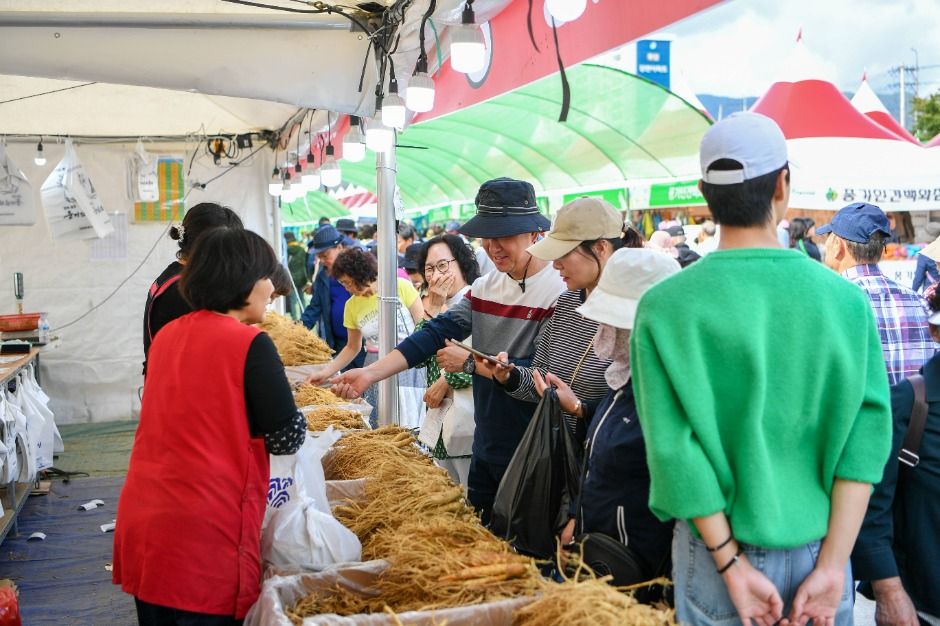
What sets this festival apart from a conventional harvest market is its emphasis on local heritage. The program includes the Gaesamteo Goyuje, a ritual performed at the site where ginseng was first discovered in the region, along with a reenactment of Governor Ju Se-bung’s procession and the Ginseng Grand Festival. Beyond the ceremonies, attendees can taste dishes made with nutritious Punggi ginseng, take part in hands-on activities such as ginseng peeling, and purchase fresh ginseng, red ginseng, and processed ginseng products harvested by local farmers at affordable prices.

Main Programs

  • Gaesamteo Goyuje โ€” a ritual held at the site where ginseng was first discovered.
  • Ginseng Grand Festival โ€” the festival’s centerpiece celebration.
  • Reenactment of Governor Ju Se-bung’s procession โ€” a historical pageant tied to the region’s past.
  • Superior Ginseng Selection Contest and exhibition โ€” a competition for the season’s finest ginseng, with selected entries on display.

Side Programs

The supporting lineup includes opening and closing ceremonies with congratulatory performances, youth cultural performances, an environmental singing contest, the Denden-eomi Hwajeon-nori traditional play, the Sobaeksan Punggi Ginseng Song Festival, and the One-Heart Athletic Meet. Together, these events round out the festival with music, community activity, and local tradition.

Consumer Participation Programs

For those who prefer to get involved directly, the festival runs a ginseng peeling contest and a ginseng injeolmi (rice cake) pounding session. Both activities offer a practical look at how Punggi ginseng is prepared and used.

Other Contents

A regional coexistence market sales center operates on-site, providing local vendors with an additional outlet for their goods during the festival period.

Visitor Information

๐Ÿ“ Address: Seongnae-ri, Punggi-eup, Yeongju-si, Gyeongsangbuk-do

๐Ÿ›๏ธ Accommodations near the event

๐Ÿ’ฐ Fee: Free (Some experience programs require a fee)

๐Ÿ“ž Inquiry: 054-630-8706

โญ๏ธ Instagram: https://www.instagram.com/yctf0518/

๐Ÿ–ฅ๏ธ Homepage: https://yctf.or.kr/punggiginseng/

Yeongju Punggi Ginseng Festival

Punggi ginseng

Punggi ginseng is a type of Korean ginseng (Panax ginseng) grown in the Punggi area of Yeongju, North Gyeongsang Province. It has been used in Korean herbal medicine for centuries. The local conditionsโ€”cool mountain air, mineral-rich soil, and sloping fields with good drainageโ€”slow the growth of the roots, resulting in a firm texture and higher concentrations of ginsenosides, the compounds commonly associated with ginsengโ€™s effects. Its flavor is earthy, with a mild sweetness.

Farming practices in the region are labor-intensive and follow a set schedule. Fields are rotated to preserve soil quality, and the roots are left in the ground for four to six years before harvest. Ginseng roots gain active compounds as they age, so older roots are generally preferred. In local usage, the root has been taken to support stamina, immunity, and circulation, though as with any herbal remedy, results vary and it is not a substitute for medical treatment.

The Yeongju Punggi Ginseng Festival, scheduled for 2026, gives visitors a chance to examine the root at different stages of processing: fresh, dried, powdered, brewed, or cooked into dishes. For anyone interested in Korean herbal traditions, the festival is a straightforward way to see how the crop is grown, prepared, and sold.

Samrangseong History & Culture Festival 2026 on Ganghwa Island: A Free Journey Through 5,000 Years of Korean History

Samrangseong History & Culture Festival 2026 on Ganghwa Island: A Free Journey Through 5,000 Years of Korean History

Samrangseong History & Culture Festival

๐Ÿ—“๏ธ 2026.10.03 ~ 2026.10.11

Samrangseong is a fortress that surrounds Jeondeungsa Temple on Ganghwa Island. According to legend, the three sons of Dangun built it to block foreign invasions. It went on to play a role in some of the most significant chapters of Korean history: during the Goryeo Dynasty, after the capital moved to Ganghwa-do to escape the Mongol invasion, it became a center of resistance, and the Daebul Jeong-O-Seol-Do-Ryang, a Buddhist prayer ritual, was conducted there for 120 days. Later, the Annals of the Joseon Dynasty were preserved at Samrangseong for 250 years. The fortress was also the site of victory in the Byeongin Yangyo, when the French army was repelled, and the righteous army won battles there during a week of resistance against the Japanese in the late Korean Empire period. For 5,000 years, the site has remained connected to the events that shaped Korean identity. The Samrangseong History & Culture Festival, now in its 26th year, has been held annually since the first Saturday of October to make that history accessible to the public.

Festival Programs

Main Program

  • Opening Ceremony and Autumn Concert

Side Programs

  • Academic Seminars
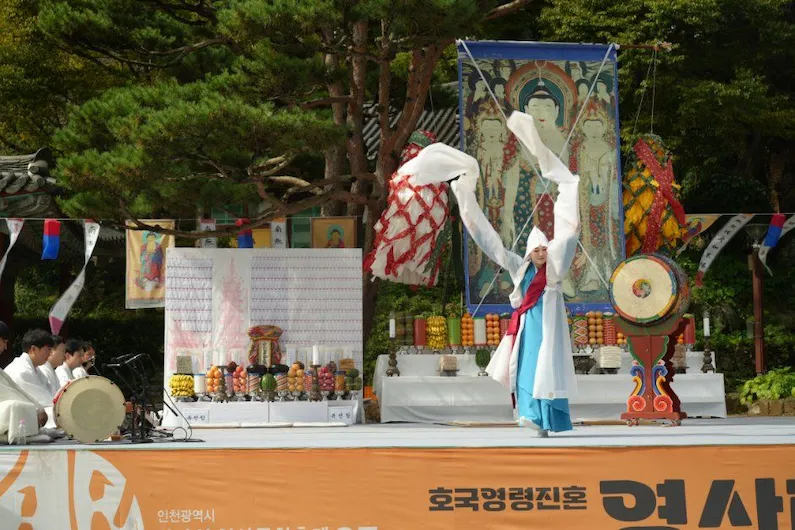
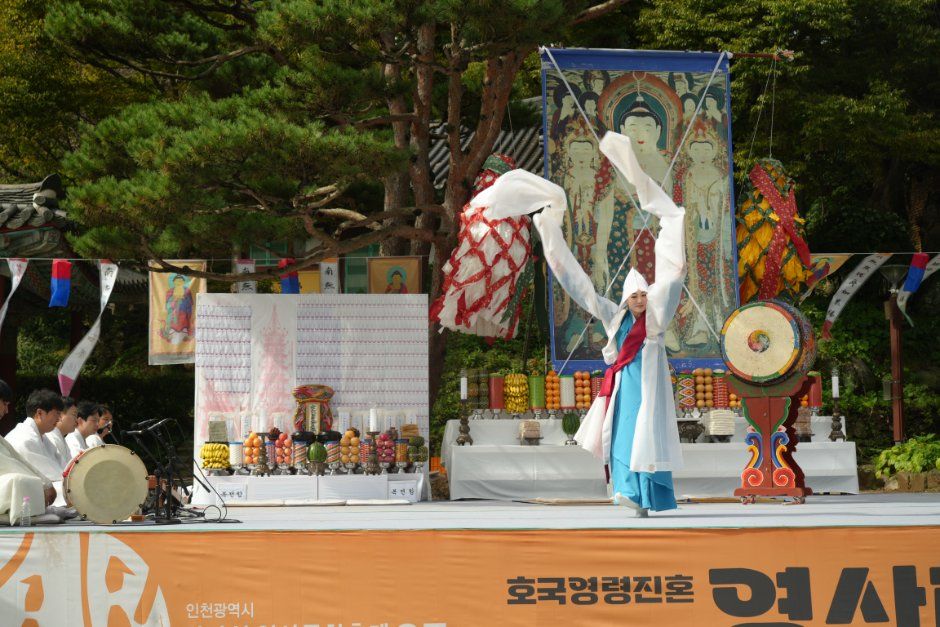
  • Yeongsan Daejae (Buddhist ritual)
  • Tightrope Walking Reenactment
  • Madang-geuk (Traditional Outdoor Play)

Consumer Participation Programs

  • Samrangseong Flea Market
  • Food Market
  • Various Experience Booths

The side programs combine historical reflection with traditional performance, while the participation programs offer a livelier way to spend time on the festival grounds. Admission to all of it is free, which makes it easy to explore the fortress, watch the performances, and still have enough left for the food market.

Visiting Information

๐Ÿ“ Address: 37-41 Jeondeungsa-ro, Gilsang-myeon, Ganghwa-gun, Incheon

๐Ÿ›๏ธ Accommodation near the event

๐Ÿ’ฐ Fee: Admission Free (Parking: General 4,000 won, Large Bus 8,000 won)

๐Ÿ“ž Inquiry: 032-937-0125

๐Ÿ–ฅ๏ธ Website: https://samrangseong.org/

Samrangseong History & Culture Festival

Samrangseong is a hilltop fortress on Ganghwa Island, near the mouth of the Han River. The name, usually translated as โ€œThree Princesโ€™ Fortress,โ€ refers to the three sons of Dangun, the mythical founder of the Korean people. According to the legend, the brothers built the fortress to guard the island and to preserve their fatherโ€™s legacy. The story has long associated the site with Koreaโ€™s founding myth, and that association remains central to how it is presented and understood.

The fortress stands on the ridge of a mountain overlooking the Han River estuary. Its walls, made of packed earth and stone, follow the line of the summit. The original structure was an earthwork, later rebuilt in stone, and the surviving traces belong to that later phase. The site is designated as a historic monument. Within the walls is Jeokseoksa, a temple that has occupied the same mountain for centuries and continues to operate as a place of worship.

As a military installation, Samrangseong is not especially large or elaborate. Its importance comes from the tradition attached to it and from the way that tradition is tied to a specific landscape. Visitors can walk along the walls and look over Ganghwa Island and the waters beyond, but the site itself directs attention to the story behind it. That combinationโ€”legend, topography, and an active templeโ€”explains why the fortress is the main venue for the festival and the starting point for its account of Korean history.

Jinju Namgang Lantern Festival 2026: Experience the Magic of Korea’s City of Light and Peace

Jinju Namgang Lantern Festival 2026: Experience the Magic of Korea's City of Light and Peace

Jinju Namgang Lantern Festival

Jinju Namgang Yudeung Festival

๐Ÿ—“๏ธ 2026.10.03 ~ 2026.10.18

The Jinju Namgang Yudeung Festival is a profound cultural experience that blends historical commemoration with modern artistic expression. To understand the event, one must look to its origins during the Battle of Jinju Fortressโ€”one of the three major victories of the Imjin Warโ€”where floating lamps, or yudeung, were utilized on the Namgang River as critical military signals to communicate with righteous armies stationed outside the fortress walls and as a poignant method for family members to convey greetings to one another.

This tradition was preserved by the citizens of Jinju through the ‘Yudeung Contest,’ a component of the ‘Gaecheon Arts Festival’ that began in 1949 and served as the precursor to the comprehensive regional arts festivals now seen across Korea. While it functioned as a subset of a larger event for decades, the celebration has been held independently as the ‘Jinju Namgang Yudeung Festival’ since 2000. Today, the act of floating lanterns has been sublimated into a global pursuit of peace, love, and happiness, allowing visitors from across the world to share in the fulfillment of collective wishes. Every autumn, the “City of Light and Peace” transforms the Namgang River and the Jinju Fortress area into a luminous spectacle that invites visitors to reflect on the historical gravity contained within the scenery.

Event Programming

The festival is structured to offer a variety of visual and interactive experiences, ranging from large-scale installations to individual participation.

1. Main Programs
The core of the festival consists of massive visual displays, including both floating lantern exhibitions on the river and land lantern exhibitions throughout the grounds. The experience is further enhanced by modern technology and pyrotechnics via the drone light show and water fireworks.

2. Side Programs
Visitors can witness the night parade, which brings the lanterns to life through movement. Additionally, from October 9th to October 18th, the event coincides with the Gaecheon Arts Festival and the Korea Drama Festival, providing a dense concentration of cultural activity.

3. Consumer Participation Programs
The festival encourages active engagement rather than passive observation. Guests may participate by hanging wish lanterns, releasing their own floating lanterns onto the water, or experiencing the unique sensation of crossing the floating bridge.

4. Other Content
For those seeking a different perspective of the illuminated landscape, cruise ship experiences are available.


*The following festival food information is from the previous year’s (2025) festival; food information for the 2026 festival is currently being updated.*

Visitor Information

๐Ÿ“ Address: 626 Namgang-ro, Jinju-si, Gyeongsangnam-do (Bonseong-dong)

๐Ÿ’ฐ Fee: Free

๐Ÿ“ž Inquiry: 055-761-9111, 055-755-9111

๐Ÿ›๏ธ Accommodation near the event

โญ๏ธ Instagram: https://www.instagram.com/yudeung_festival/

๐Ÿ–ฅ๏ธ Homepage: https://yudeung.com/

The Namgang River runs through Jinju, a city in South Koreaโ€™s South Gyeongsang Province. It is part of the Nakdong River system and flows between the old city center and low hills. On its eastern bank stands Uiam Rock, a granite cliff that overlooks a narrow bend in the river. The site was used as a defensive position during the Joseon period, and it remains one of Jinjuโ€™s best-known landmarks.

The river is closely tied to the cityโ€™s history. During the Imjin War (1592โ€“1598), battles for Jinju Fortress took place along these waters. At night, lanterns were floated downstream to relay signals between military units. This practice is the basis for the annual Jinju Namgang Lantern Festival, held each October. During the festival, hundreds of lanterns are set on the river, ranging from traditional dragons and boats to modern designs. The event also includes ceremonies for those who died in the cityโ€™s wars.

For most of the year, the Namgang is an ordinary urban river. Walking and cycling paths run alongside it, and the area around Uiam Rock and Chokseongnu Pavilion is a popular destination. The river is also managed for flood control, with levees and bridges determining much of its course through the city. Its significance comes less from scenery than from the way daily life, history, and infrastructure meet at the waterโ€™s edge.

2026 Yeongju Punggi Ginseng Festival: Boost Your Health and Experience Korean Tradition

2026 Yeongju Punggi Ginseng Festival: Boost Your Health and Experience Korean Tradition

Yeongju Punggi Ginseng Festival

๐Ÿ—“๏ธ 2026.10.03 ~ 2026.10.11

The following food content for the festival is from the previous year’s (2025) festival, and the food content for the 2026 festival is currently being updated.

Ginseng is a representative health food of Korea, valued for helping with recovery of energy and boosting immunity. October is the period when ginseng is most nutrient-rich, and it is also when the Punggi Ginseng Festival takes place in Yeongju, one of Korea’s leading ginseng production areas. The festival is built around ginseng as a symbol of health, so its core offerings are health-related exhibitions and experiences that people of all ages can enjoy.

What sets the festival apart is the way it mixes local history with the season’s harvest. Special programs include the Gaesamteo Goyuje ritual, the reenactment of Governor Ju Se-bung’s procession, and the Great Ginseng Ritual. These rituals tie the festival to Punggi’s history as a leading ginseng-producing area, while the excellent ginseng selection contest and exhibition highlights the quality of the local crop. Visitors can also taste ginseng dishes made with nutrient-packed Punggi ginseng and participate in hands-on experiences such as ginseng peeling. For shoppers, fresh ginseng, red ginseng, and processed ginseng products carefully harvested by local ginseng farmers are available at affordable prices.

Main Programs

  • Gaesamteo Goyuje ritual, Great Ginseng Ritual, reenactment of Governor Ju Se-bung’s procession, excellent ginseng selection contest and exhibition, etc.

Side Programs

  • Opening and closing ceremonies and celebratory performances, youth cultural performances, environmental singing contest, Dendong-eomi Hwajeon-nori courtyard play, Sobaeksan Punggi Ginseng Song Festival, One-Heart Athletic Meet, etc.

Consumer Participation Programs

  • Ginseng peeling contest, pounding ginseng injeolmi rice cake, etc.

Other Details

  • Operation of regional coexistence market sales centers, etc.

Practical Information

๐Ÿ“ Address: Seongnae-ri, Punggi-eup, Yeongju-si, Gyeongsangbuk-do

๐Ÿ›๏ธ Accommodation near the event

๐Ÿ’ฐ Fee: Free (Some experience programs have a fee)

๐Ÿ“ž Inquiry: 054-630-8706

โญ๏ธ Instagram: https://www.instagram.com/yctf0518/

๐Ÿ–ฅ๏ธ Website: https://yctf.or.kr/punggiginseng/

Yeongju Punggi Ginseng Festival

Punggi ginseng is a variety of Korean ginseng (Panax ginseng) grown in the Punggi area of Yeongju, North Gyeongsang Province. The town has been a recognized ginseng-producing region for more than 500 years. Its conditions suit the crop: cool mountain air, sandy loam soil with good drainage, and clear temperature differences between day and night.

The growing cycle is long. Farmers usually leave the roots in the ground for four to six years before harvest, and they rotate fields so the soil can recover between planting cycles. The harvested roots are dense and firm, with a high concentration of ginsenosides โ€” the active compounds thought to influence immunity, circulation, and energy.

Practitioners of Korean medicine have traditionally described Punggi ginseng as warmer and more potent than ginseng from other regions. It is consumed fresh (susam), steamed and dried into red ginseng (hongsam), or sliced and used in teas and broths. It is commonly recommended as a tonic for fatigue and stress, and as a way to support the bodyโ€™s defenses during seasonal changes.

The 2026 Yeongju Punggi Ginseng Festival will focus on this crop and its place in the local economy. The event is expected to cover how ginseng is grown and processed, how it is used in food and medicine, and the history behind the regionโ€™s long association with the plant. For visitors, it offers a straightforward look at a specialized agricultural tradition.

2026 Baekje Cultural Festival in Buyeo and Gongju: Your Complete Guide to History, Parades, and Night Spectacles

2026 Baekje Cultural Festival in Buyeo and Gongju: Your Complete Guide to History, Parades, and Night Spectacles

Baekje Cultural Festival

๐Ÿ—“๏ธ 2026.10.03 ~ 2026.10.11

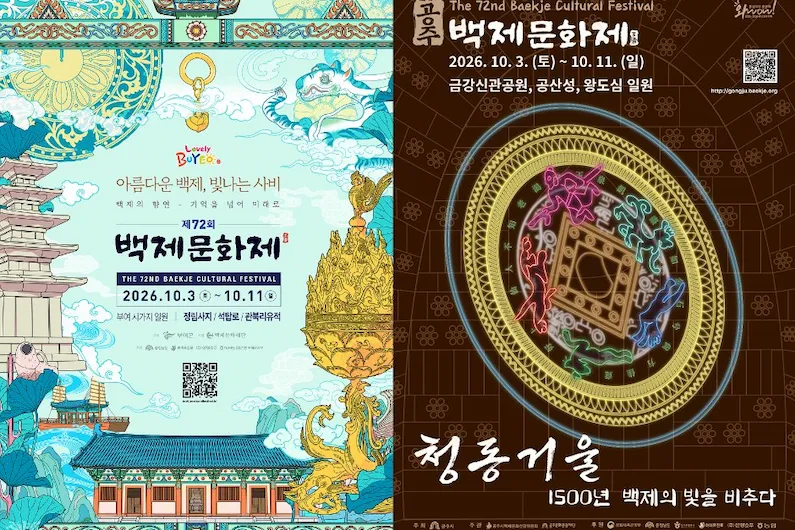
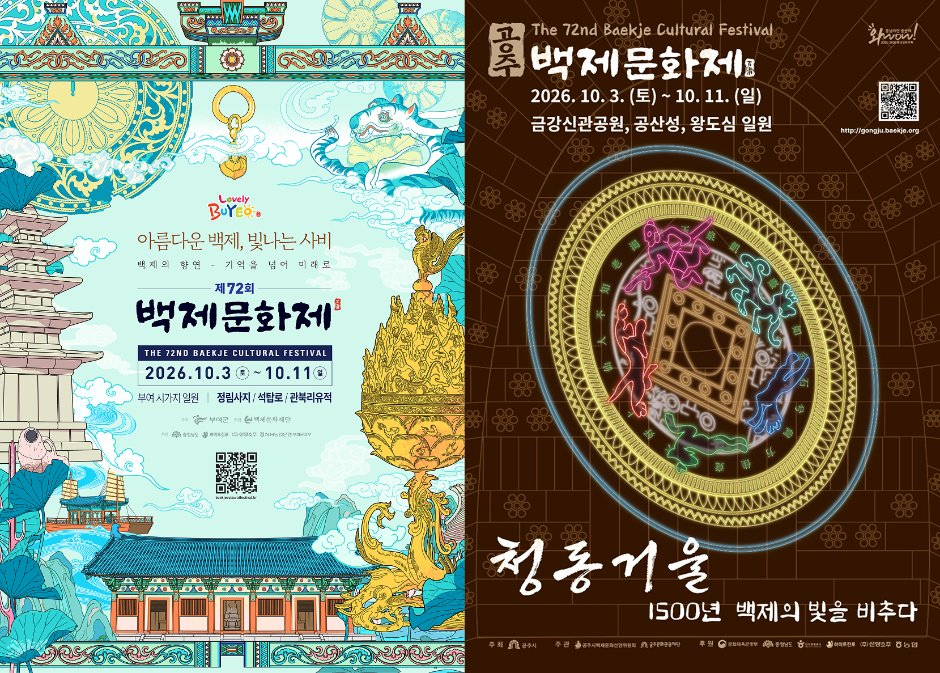
The Baekje Cultural Festival stands as a premier historical and cultural landmark in Korea, tracing its origins back to the inaugural event held in Buyeo-gun in 1955. Now celebrating its 72nd anniversary, this sprawling festival serves as a bridge between the ancient brilliance of the Baekje Kingdom and the modern era, aiming to modernize the cultural heritage of ancestors while fostering a deep sense of regional identity and pride.

For the 2026 iteration, the festival will span nine daysโ€”from Saturday, October 3, to Sunday, October 11โ€”and is divided into two distinct regional experiences: the Buyeo and Gongju festivals. Each location offers a unique lens through which to view the history of the kingdom, blending academic preservation with immersive, high-tech entertainment.
Baekje Cultural Festival

Buyeo Baekje Cultural Festival: “Beautiful Baekje, Shining Sabi”

The Buyeo leg of the festival focuses on the Sabi period, utilizing the city area as an open-air museum. By centering activities around the Gwanbuk-ri Ruins, the Stone Pagoda Road, and the Jeongrimsa Temple Site, the event harmonizes the daily lives of local residents and commercial districts with the grandeur of the past. Visitors can explore approximately 40 programs across seven different thematic fields.

Representative and Main Programs

The festival’s core is anchored by the Sabi Capital Transfer Declaration Ceremony, which features a large-scale procession and the Jeongdo Goyu ritual to justify the historical move to Sabi. The “Promise of the Baekje People” theme exhibition hall allows guests to metaphorically open a door through time to explore the kingdom’s journey.

For those seeking visual spectacle, the festival offers:

  • The Baekje Historical Cultural Parade and the Baekje Cultural Night Parade, providing a vivid urban procession.
  • Baekje Night Crafted with Light, utilizing media art to transform the Jeongrimsa Temple Site into a glowing nocturnal landscape.
  • Sabi Children’s Kingdom, a dedicated space where younger visitors can engage with history through themed playgrounds.

Specialized Activities

The Buyeo experience is further enriched by a variety of niche programs:

  • Rituals: The Gocheonje and ten other types of Buddhist services, including the Baekje Honbul Chaehwa.
  • Performances: A suite of eight cultural programs, highlighted by the Sabi Baekje Talk Concert.
  • Experiences: Nine interactive programs, such as Sabi Roblox and “One Round of Sabi.”
  • Landscapes: Atmospheric walks through the King’s Secret Garden and the Night of Sabi.
  • Linked Events: The Sabi Little Welcome Group, which connects various tourism resources within Buyeo to the main venue.

Gongju Baekje Cultural Festival: “Bronze Mirror, Reflecting the 1,500-Year Light of Baekje”

While Buyeo focuses on Sabi, the Gongju festival celebrates the era of Woongjin Baekje. The 2026 theme centers on the bronze mirror unearthed from the Tomb of King Muryeong, using it as a motif to reflect the historical value of the kingdom. The festivities are spread across the royal city center, Mireu Island, Gongsanseong Fortress, and Geumgang Singwan Park.

Immersive Performances and Spectacles

Gongju distinguishes itself through high-production convergence performances. The Woongjin Fantasia provides an immersive experience centered on the bronze mirror, while ๆŽฅ(Jeop)ยทGyeong: The Night the Queen Crossed utilizes the World Heritage Gongsanseong Fortress as a living stage for music, song, and dance.

Nighttime activities are particularly robust here, featuring:

  • The Woongjinseong Parade, a citizen-led procession.
  • The Woongjin Baekje Lantern Feast, where traditional sailing boats (Hwangpo-dotbae) and floating lanterns illuminate the water.
  • The Woongjin Baekje Starlight Garden and Gongsanseong Media Art, which translate historical narratives into light installations.

Rituals and Academic Engagement

The spiritual heart of the festival is found in the Baekje Honbul Chaehwa, the Woongjin Baekje Five Kings Memorial Service, and the Yeongsan Daejae, which honors the patriotic spirits of the era. For the intellectually curious, the Baekje Cultural Festival Academic Conference discusses the significance of artifacts like the Muryeong Tomb bronze mirror.

Interactive and Local Experiences

Visitors can engage with the community through various experiential and economic programs:

  • Education: The Baekje Village Gomachon offers permanent themed events, while the “Bronze Mirror Mission Tour” utilizes mobile devices for a digital stamp tour.
  • Games: “Let’s Play Baekje!” introduces traditional games accessible to all generations.
  • Commerce: The 22nd National Excellent Market Fair brings together approximately 130 markets from across the country.
  • Local Flavors: The “Woongjin-gol Gourmet” area features 13 restaurants and 10 food trucks, complemented by the Chestnut Beef Festival and chestnut processed food sales.

Event Logistics and Entertainment

The festival’s energy is sustained by a heavy lineup of music. The opening ceremonies feature Heo Gak, Yoyomi, and RESCENE, while the closing ceremonies include Kim Eui-young, Nerd Connection, and Haha & Skull, concluding with a fireworks show. Additionally, the Chungnam Symphony Orchestra and local artists at the Gomtap Stage provide a diverse soundtrack to the event.

๐Ÿ“ Address: 83 Jeongrim-ro, Buyeo-eup, Buyeo-gun, Chungcheongnam-do

๐Ÿ›๏ธ Accommodations near the event

๐Ÿ’ฐ Fee: Free

๐Ÿ“ž Inquiry: 041-837-2517

What is Baekje?

Baekje was one of the Three Kingdoms of ancient Korea, together with Goguryeo and Silla. Founded in 18 BCE, it began as a small chiefdom in the Han River basin and eventually came to control the southwestern part of the Korean Peninsula for more than six centuries.

The kingdom is often studied for its cultural and material achievements. Baekje’s rulers invested in agricultural infrastructure, including irrigation systems, and its ports supported active trade routes with China and Japan. Through those networks, Baekje played a central role in the spread of Buddhist practice, temple construction, and craft techniques to the Japanese archipelago, where Baekje artisans and scholars were invited to work.

The later capitals of Gongju and Buyeo remain closely associated with Baekje’s history. Gongju served as the seat of government during the Ungjin period (475โ€“538 CE). Buyeo, then known as Sabi, became the final capital in 538 CE and remained so until 660 CE. The Sabi period produced much of what is now regarded as the kingdom’s most significant surviving art, including stone sculptures, gilt-bronze objects, and royal tomb furnishings. These pieces are held in museums and heritage sites across the region.

Baekje’s political power ended in 660 CE, when an allied force from Silla and Tang China invaded. The kingdom was gone, but its cultural influence did not vanish. In modern South Korea, Baekje is remembered as an era of notable artistic output, diplomatic exchange, and religious life, and its presence is still visible in the historic sites of Gongju and Buyeo. That heritage is the focus of the Baekje Cultural Festival.
Analytics