Suwon Hwaseong Cultural Festival
🗓️ 2026.10.04 ~ 2026.10.11
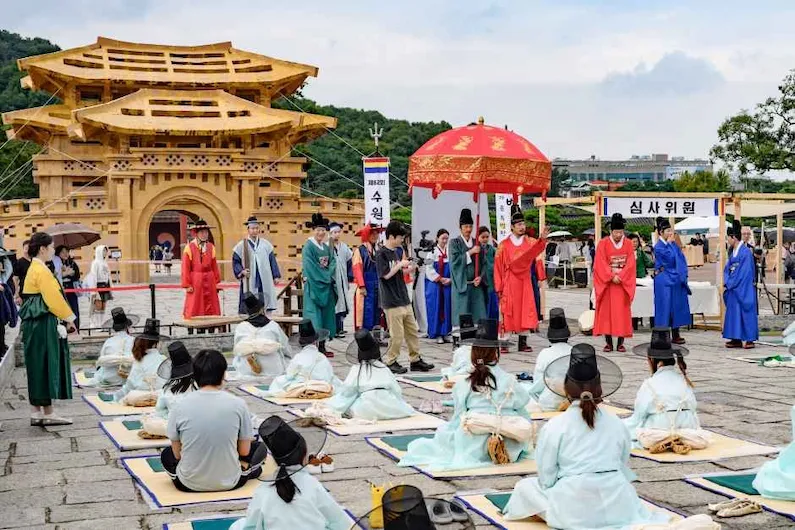
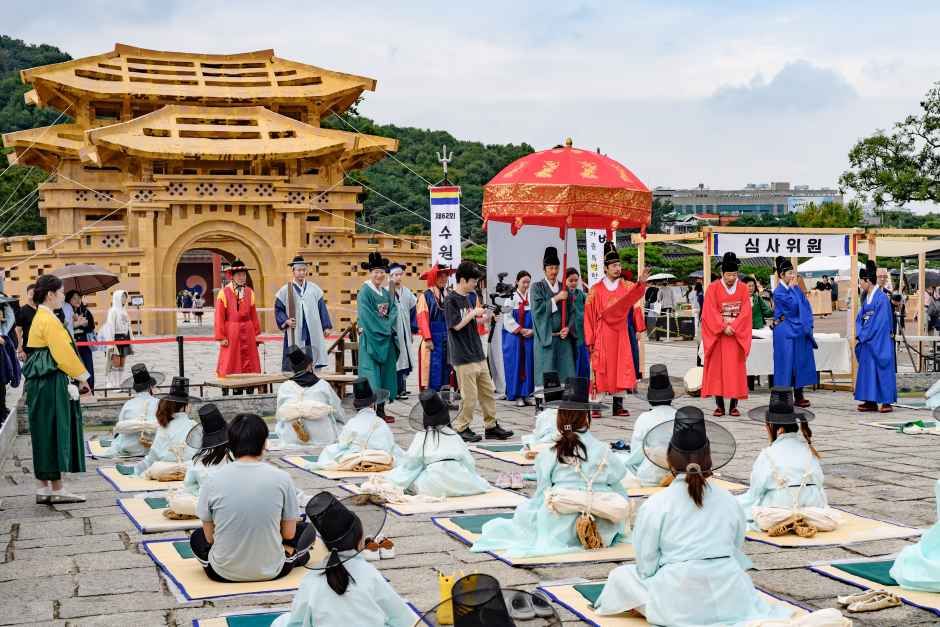
The Suwon Hwaseong Cultural Festival is Suwon’s representative comprehensive cultural arts festival, reinterpreting King Jeongjo’s 8-day royal procession to Hwaseong in 1795 through a modern lens. The historical moments recorded in the Wonhaeng Eulmyo Jeongri Uigwe are brought back to life across performances, parades, hands-on experiences, and citizen participation programs, all set around the UNESCO World Heritage site Suwon Hwaseong Fortress and Hwaseong Haenggung Palace.
The festival’s signature program, King Jeongjo’s Royal Procession, is the largest royal parade in Korea and is enjoyed by citizens and tourists alike, capturing the full grandeur of the Joseon-era pageantry. During the day, visitors can immerse themselves in traditional culture experiences and participatory programs. After nightfall, the festival shifts into a different mode, pairing high-quality performances with the beautifully illuminated scenery of Suwon Hwaseong. The result is a multi-layered festival experience designed for both domestic and international visitors.
King Jeongjo’s Royal Procession
2026. 10. 4. (Sun)
Also called the Eulmyo-year Hwaseong Expedition, this parade recreates the grand royal journey that King Jeongjo conducted for a total of 8 days, from the 9th to the 16th of the leap second month in the Eulmyo year (1795), to celebrate the 60th birthday of his mother, Lady Hyegyeong. The recreation is based on the documentary heritage Wonhaeng Eulmyo Jeongri Uigwe, which recorded the original procession in remarkable detail. Adapted for modern times, the parade re-emerges as the largest royal procession in Korea, forming the centerpiece of the festival and offering citizens and visitors the chance to witness — and participate in — a spectacular piece of living history.
Main Programs
- Theme Performance — Suwon Fantasy – Yajo
- Water Performance — Seonyumong
- *Time Travel_That Day: Haenggung Night Story
- Citizens’ Great Architecture — Hwahong
Experience & Participation Programs
- Citizen’s Dohwaseo
- Byeolsinal
- Yangroyon (Banquet for the Elderly)
- Suwon Palanquin Race
- New Nakseongyeon [Masquerade Ball]
- Fortress Construction Playground
Global Village
The festival also runs a Global Village featuring a lounge exclusively for foreign visitors, along with traditional games and refreshments — an accessible entry point into the atmosphere of a Joseon-era celebration.
Visitor Information
- 📍 Address: 825 Jeongjo-ro, Paldal-gu, Suwon-si, Gyeonggi-do (Namchang-dong)
- 💰 Fee: Free (Some pre-reservation programs may have a fee)
- 📞 Inquiry: 031-5191-3647
- ⭐️ Instagram: https://www.instagram.com/suwonfestival/
- 🖥️ Website: https://shfestival.com/
As there are no food booths within the festival grounds, please use restaurants in the nearby area.
🛏️ Accommodations near the event
What is Suwon Hwaseong?
Suwon Hwaseong is an 18th-century fortress and walled city complex in Suwon, Gyeonggi-do, South Korea. It was built between 1794 and 1796 under King Jeongjo of the Joseon dynasty. Jeongjo had moved the remains of his father, Crown Prince Sado, to the nearby tomb of Yungneung, and the fortress served both to guard that burial site and to establish a royal presence outside the factional disputes of Hanyang, now Seoul.
The fortress is notable for adapting its defenses to the local terrain. Its walls run roughly 5.7 kilometers and include gates, bastions, command posts, observation pavilions, and floodgates. The design makes use of angled walls and concealed firing positions, so defenders could target attackers along the curtain walls instead of firing only straight ahead. Jeongjo planned the works with the scholar-official Jeong Yak-yong, and the entire undertaking was documented in the Hwaseong Seongyeok Uigwe, a detailed official record of materials, labor, and construction methods. That documentation has made Hwaseong one of the best-understood large-scale projects of its period in Korea.
The fortress has been a UNESCO World Heritage Site since 1997. It is open year-round, and walking the wall circuit remains the most direct way to see how the structure relates to the surrounding landscape. The site will also host the 2026 Suwon Hwaseong Cultural Festival, including reenactments of King Jeongjo’s royal processions to the fortress. These events use the historical route and buildings as their setting, and the architecture itself continues to be the central reason for visiting.
