Samrangseong History & Culture Festival
🗓️ 2026.10.03 ~ 2026.10.11
Samrangseong is a fortress that surrounds Jeondeungsa Temple on Ganghwa Island. According to legend, the three sons of Dangun built it to block foreign invasions. It went on to play a role in some of the most significant chapters of Korean history: during the Goryeo Dynasty, after the capital moved to Ganghwa-do to escape the Mongol invasion, it became a center of resistance, and the Daebul Jeong-O-Seol-Do-Ryang, a Buddhist prayer ritual, was conducted there for 120 days. Later, the Annals of the Joseon Dynasty were preserved at Samrangseong for 250 years. The fortress was also the site of victory in the Byeongin Yangyo, when the French army was repelled, and the righteous army won battles there during a week of resistance against the Japanese in the late Korean Empire period. For 5,000 years, the site has remained connected to the events that shaped Korean identity. The Samrangseong History & Culture Festival, now in its 26th year, has been held annually since the first Saturday of October to make that history accessible to the public.
Festival Programs
Main Program
- Opening Ceremony and Autumn Concert
Side Programs
- Academic Seminars
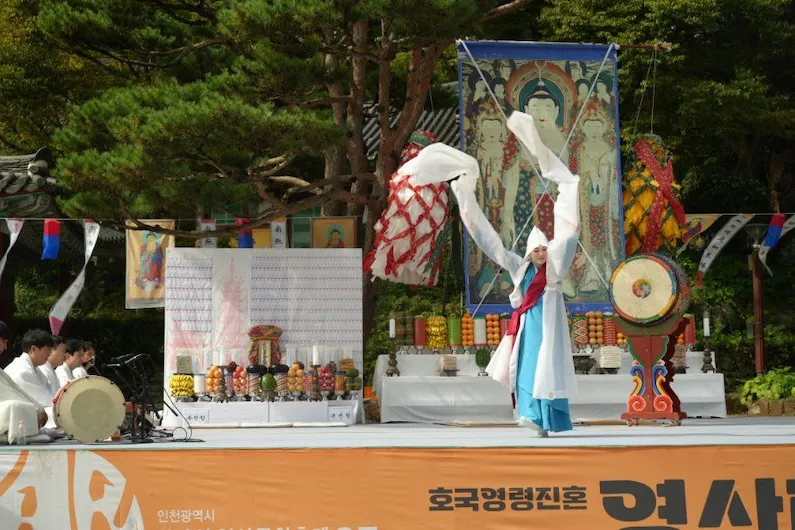
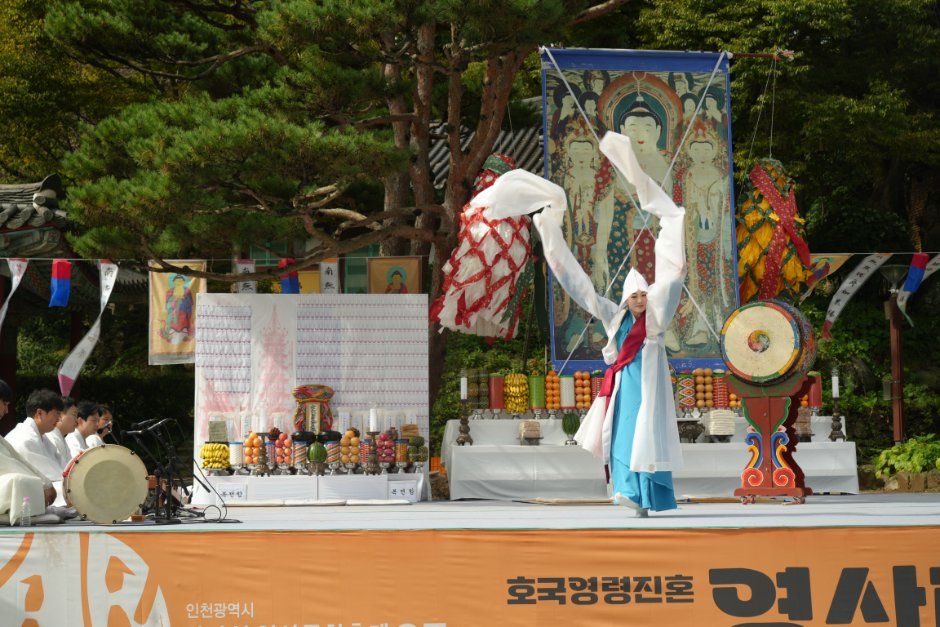
- Yeongsan Daejae (Buddhist ritual)
- Tightrope Walking Reenactment
- Madang-geuk (Traditional Outdoor Play)
Consumer Participation Programs
- Samrangseong Flea Market
- Food Market
- Various Experience Booths
The side programs combine historical reflection with traditional performance, while the participation programs offer a livelier way to spend time on the festival grounds. Admission to all of it is free, which makes it easy to explore the fortress, watch the performances, and still have enough left for the food market.
Visiting Information
📍 Address: 37-41 Jeondeungsa-ro, Gilsang-myeon, Ganghwa-gun, Incheon
🛏️ Accommodation near the event
💰 Fee: Admission Free (Parking: General 4,000 won, Large Bus 8,000 won)
📞 Inquiry: 032-937-0125
🖥️ Website: https://samrangseong.org/
Samrangseong is a hilltop fortress on Ganghwa Island, near the mouth of the Han River. The name, usually translated as “Three Princes’ Fortress,” refers to the three sons of Dangun, the mythical founder of the Korean people. According to the legend, the brothers built the fortress to guard the island and to preserve their father’s legacy. The story has long associated the site with Korea’s founding myth, and that association remains central to how it is presented and understood.
The fortress stands on the ridge of a mountain overlooking the Han River estuary. Its walls, made of packed earth and stone, follow the line of the summit. The original structure was an earthwork, later rebuilt in stone, and the surviving traces belong to that later phase. The site is designated as a historic monument. Within the walls is Jeokseoksa, a temple that has occupied the same mountain for centuries and continues to operate as a place of worship.
As a military installation, Samrangseong is not especially large or elaborate. Its importance comes from the tradition attached to it and from the way that tradition is tied to a specific landscape. Visitors can walk along the walls and look over Ganghwa Island and the waters beyond, but the site itself directs attention to the story behind it. That combination—legend, topography, and an active temple—explains why the fortress is the main venue for the festival and the starting point for its account of Korean history.
