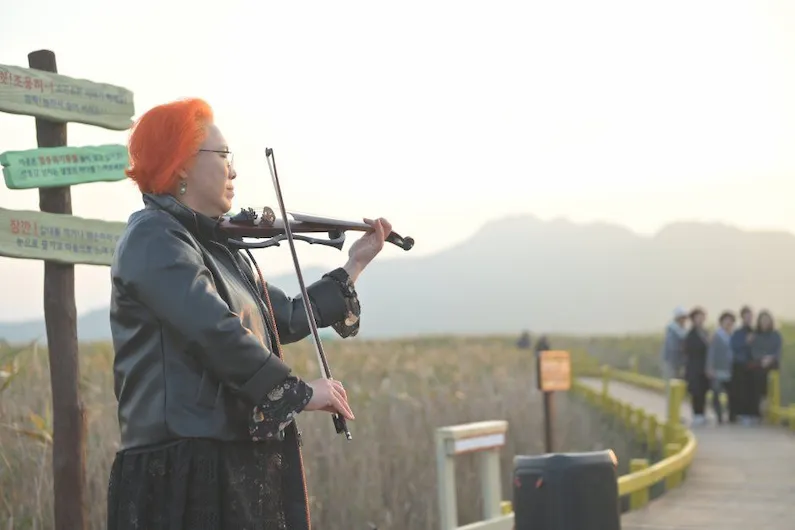
2026 Gangjin Bay Dancing Reed Festival: A Complete Guide to Nature, Family Activities, and Eco-Friendly Fun

2026 Gangjin Bay Dancing Reed Festival: A Complete Guide to Nature, Family Activities, and Eco-Friendly Fun

Gangjin Bay Dancing Reed Festival

🗓️ 2026.10.24 ~ 2026.11.01

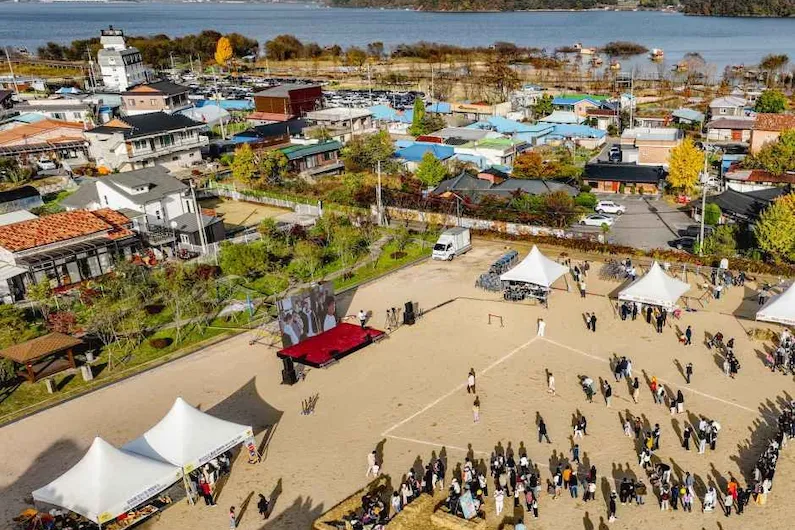
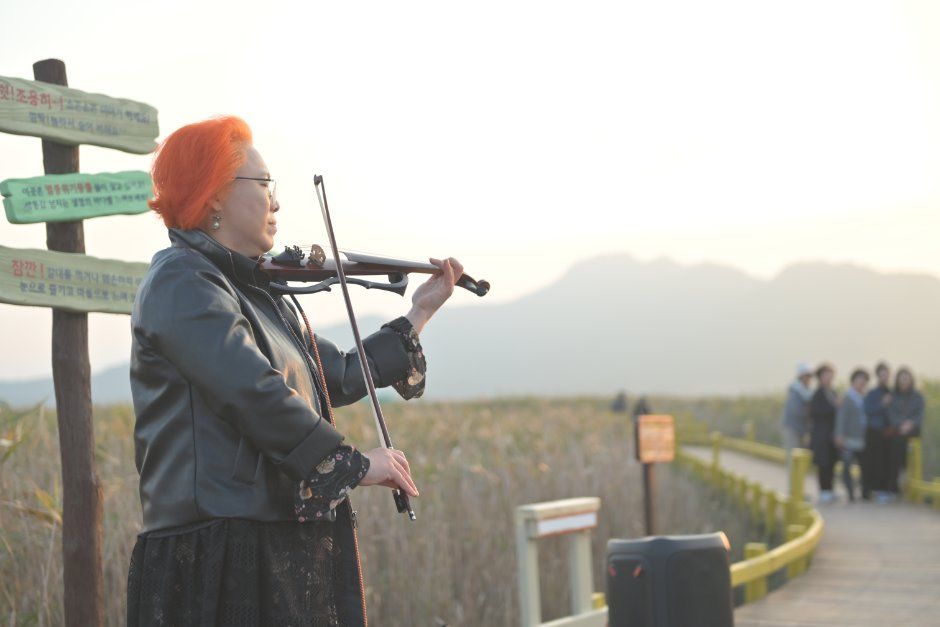
The Gangjinman Dancing Reed Festival takes place at Gangjinman Ecological Park, where 1,572 species of organisms inhabit the wetlands, reed fields, and surrounding landscape. Running from October 24 to November 1, this year’s festival pairs the autumn reeds and sunset views with concerts, participatory programs, and family-friendly activities. It is organized as an ecological culture festival, with the dual aim of highlighting the park’s ecological value and encouraging visitors to think about protecting the natural environment.

Because the program is built around walking trails, outdoor play areas, and hands-on workshops, it suits visitors of all ages. Families, in particular, can use the festival as a way to explore nature together without a formal itinerary: the exploration trail, reed forest, and children’s environmental programs are open and accessible throughout the event.

Main Programs

  • Reed Forest Ecological Expedition – Walk the Gangjinman ecological exploration trail and observe the reed fields.
  • Gangjinman Ecological Experience Center / Promotion Hall
  • Gangjinman Kids Zone
  • Gangjinman Play Park
  • Gangjinman Multi-color Stamp Tour
  • Reed Gazer

The festival also operates environmental programs for children alongside these main attractions, all included with the festival’s free admission.

Experience Programs

  • Making acrylic toothpaste squeezer keyrings
  • Waste exchange center
  • Making waste plastic bottle cap clickers
  • Making pin/mirror buttons
  • Making water game machines
  • Reed Four-Cut photos

The hands-on lineup includes several reuse-based crafts using materials such as plastic bottle caps and other waste items, reinforcing the festival’s environmental theme.

Stage Programs

  • Opening Celebration Concert
  • Healing Talk Concert
  • Gangjin Reed Music Concert
  • Children’s Sing-along Show
  • Autumn Fragrance Concert
  • Birth of a Star in the Reed Forest

Other Details

  • Chrysanthemum exhibition
  • Bicycle trip drawn with two wheels
  • Celadon auction
  • Operation of parasol rental shop and picnic mat rental shop

The chrysanthemum exhibition and celadon auction add regional and seasonal touches, while the parasol and picnic mat rentals make it easy for families to settle in and enjoy the park at a slower pace.

Visitor Information

📍 Address: 47 Saengtaegongwon-gil, Gangjin-eup, Gangjin-gun, Jeonnam-Gwangju Integrated Special City

🛏️ Accommodations near the event

💰 Fee: Free

📞 Inquiry: 061-430-3413

🖥️ Homepage: https://www.gangjin.go.kr/culture/festival/gangjinman_reed
강진만 춤추는 갈대축제

What are reeds?

Reeds are tall, grass-like perennial plants that grow in wetlands, marshes, and along the edges of rivers, lakes, and coastal estuaries. The best-known species in places such as Gangjin Bay is the common reed (Phragmites australis), which can grow three meters or more in height.

Their most recognizable features are the hollow stems and feathery, plume-shaped flower heads. Below ground, reeds spread through a network of rhizomes that anchor them firmly in wet soil. This allows single colonies to expand into extensive fields, sometimes stretching across large areas of a bay or floodplain.

Reeds are important to wetland ecosystems. Their root systems help stabilize shorelines, slow water movement, and filter sediment and pollutants. The dense stalks also provide nesting sites and cover for birds, insects, and fish. In coastal areas like Gangjin Bay, reed beds are part of the habitat that supports migratory birds.

Beyond their ecological role, reeds have been used by people for centuries. The stems are suitable for thatching, mats, baskets, and paper, and they have also been made into simple musical instruments. Because they grow quickly and require little in the way of cultivation, they have long been a practical resource for communities near wetlands.

At the Dancing Reed Festival, the reeds are the central feature. When wind crosses the bay, the stalks bend and ripple in long, rolling waves, and the golden-brown plumes shift in the light. Walking paths through the fields let visitors see this movement directly, while the festival also offers information about wetland conservation and traditional uses of reeds. The name comes from the plant’s visible response to wind, and the experience is less staged performance than natural dynamics on a large scale.
2026 Ansan Science Valley (ASV) Science Festival: Explore AI and Robotics with Free Interactive Experiences

2026 Ansan Science Valley (ASV) Science Festival: Explore AI and Robotics with Free Interactive Experiences

Ansan Science Valley (ASV) Science Festival

🗓️ 2026.11.07 ~ 2026.11.08

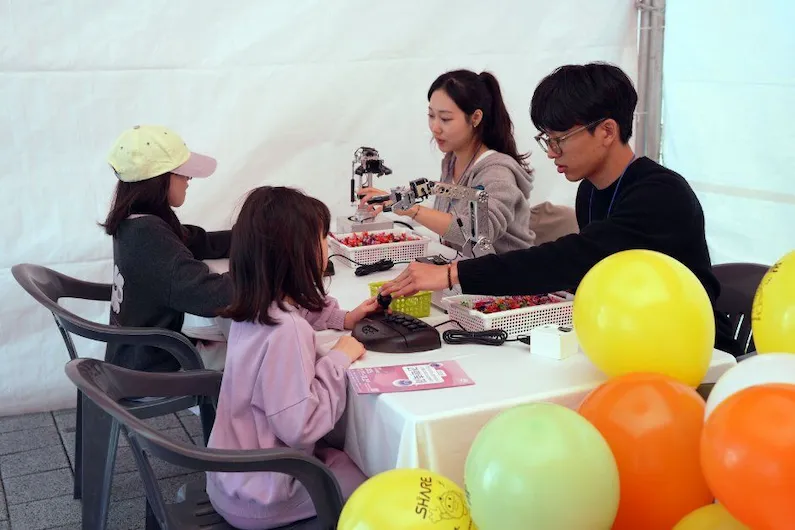
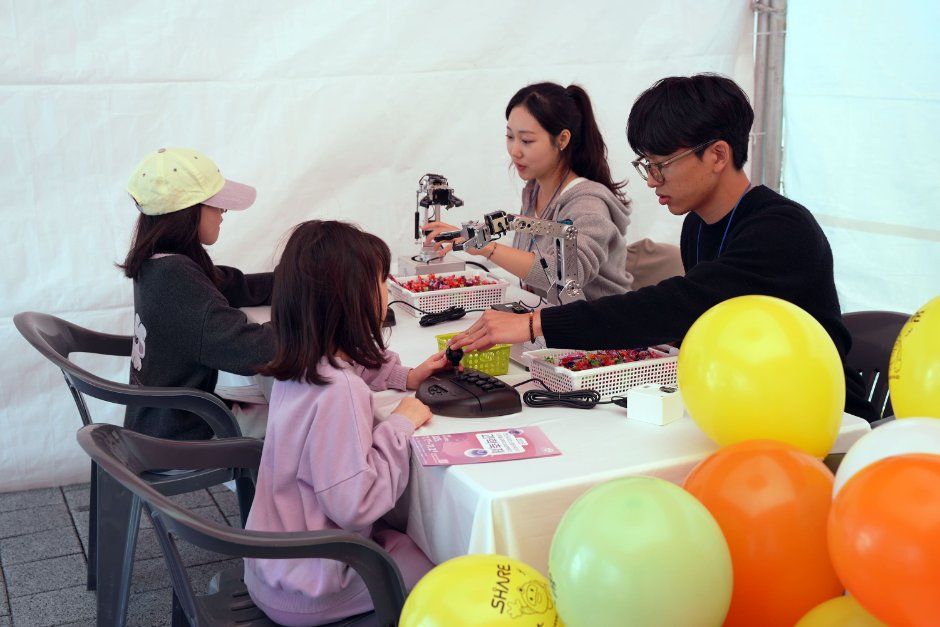
The 2026 Ansan Science Valley (ASV) Science Festival is a citizen-participation science culture festival where visitors can encounter future science and technology—AI, robots, and more—in one place. As Ansan City’s brand festival, it brings together ASV-related agencies, universities, research institutes, companies, foundations, and organizations to offer direct opportunities to see and experience a wide range of future science and technology. This year, in celebration of the 40th anniversary of Ansan City’s promotion to city status, special programs will be prepared to highlight the region’s scientific and technological development and its future vision.

The festival is composed of exhibition and experience programs themed around high-tech fields such as AI and robots, as well as the environment and carbon neutrality. It also includes creative convergence education, science culture performances, and citizen-participation events. Through programs that cross science, humanities, culture, and art, the festival is designed to let everyone—from children to adults—engage with science in an accessible and enjoyable way.

Program Highlights

Main Program
Approximately 90 types of future science and technology experience and exhibition booths.

Side Programs

  • Science talk concerts
  • Science culture performances
  • Robot performances
  • Face painting
  • Clown balloon art

Consumer Participation Program

  • Stamp tour event

Other Contents

  • AI Go robot experience
  • K-pop Robot Hunters
  • Humanoid control mission
  • Random stick-grabbing robot experience
  • Fun AI robot control experience
  • Augmented reality smart playground
  • Drone simulator experience
  • Solar-powered cars
  • GOGO-ssing! Go-karts
  • Finding hidden science in fibers
  • Weather and climate playground
  • AR dodgeball
  • Ride-on robots
  • AI photo zone

Practical Information

📍 Address: 55 Hanyangdaehak-ro, Sangnok-gu, Ansan-si, Gyeonggi-do (Sa-dong)

🛏️ Accommodation near the event

💰 Fee: Free

📞 Inquiry: 02-780-6881

🖥️ Website: asv-2026-delta.vercel.app

Ansan Science Valley (ASV) Science Festival

Ansan Science Valley is a science and technology complex in Ansan, Gyeonggi Province, South Korea. It houses research institutes, startup companies, and educational programs. The valley runs public events throughout the year, including exhibitions and festivals. Its main annual event, the ASV Science Festival, offers demonstrations, open labs, and workshops for families, students, and general visitors. These activities are intended to show how research in fields such as artificial intelligence, robotics, and data science is conducted, and to give visitors a chance to test related tools and methods themselves. The festival is one of the few times the facility opens its labs to the public. Outside the festival, the site functions as a workplace for the organizations based there, with shared equipment, meeting rooms, and support staff.

2026 Korea National Chrysanthemum Festival in Hampyeong: Your Complete Guide to Events, Tickets, and Autumn Magic

2026 Korea National Chrysanthemum Festival in Hampyeong: Your Complete Guide to Events, Tickets, and Autumn Magic

Korea National Chrysanthemum Festival

🗓️ 2026.10.23 ~ 2026.11.08

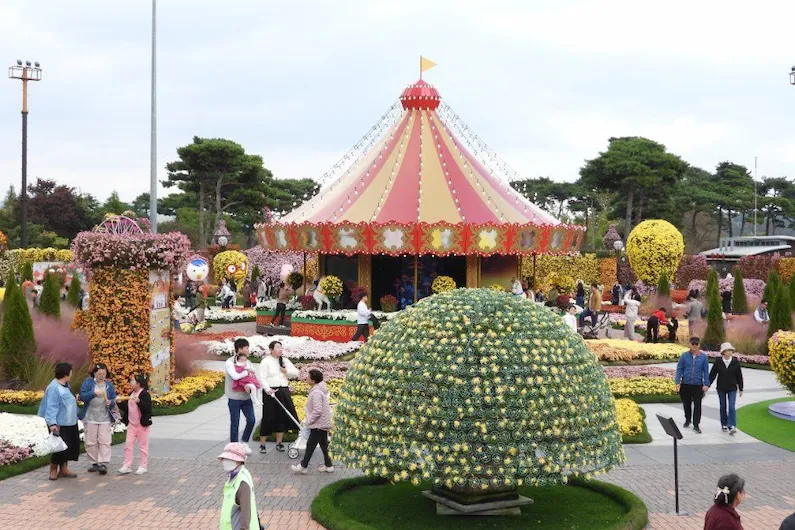
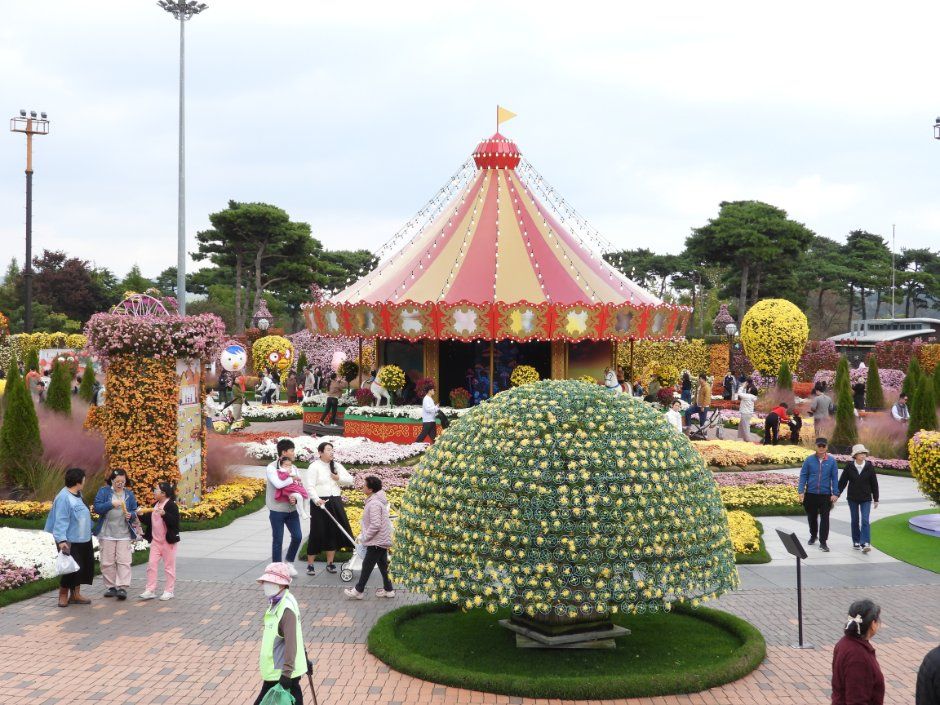
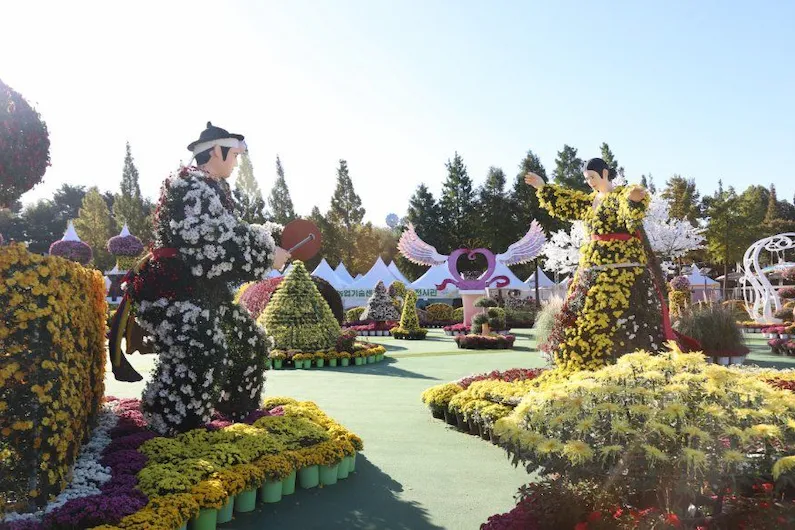
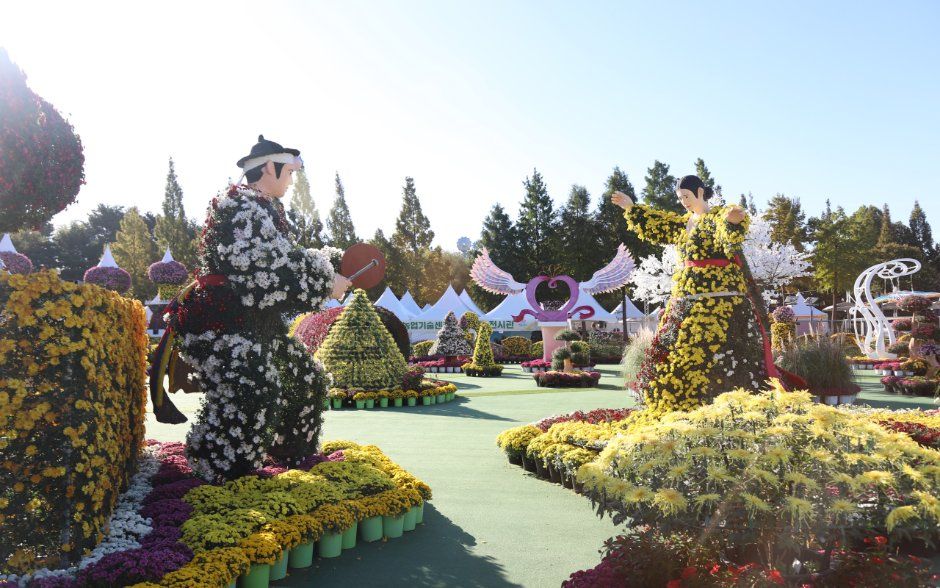
The 2026 Korea National Chrysanthemum Festival is set to take place against the scenic backdrop of Hampyeong’s signature autumn blooms and a pristine natural environment. This year, the event centers on the theme of the ‘Mythical Chrysanthemum Garden,’ a conceptual approach that distinguishes this iteration through its focus on large-scale planned chrysanthemum works and meticulously curated bonsai pieces. Visitors can expect a rich autumn landscape where colorful chrysanthemums harmonize with the local geography to create a visual spectacle.

Beyond the floral exhibitions, the festival is designed to be an immersive destination for families, couples, and tourists—providing a curated blend of cultural, performance, and experiential content that allows guests to linger and absorb the autumn atmosphere. By integrating art, nature, and local culture, the event serves as a nationwide showcase for the unique charm of Hampyeong and the inherent beauty of the chrysanthemum.

Event Highlights and Activities

The festival is divided into several key components to ensure a diverse visitor experience:

1. Performances
Attendees can enjoy a variety of live entertainment, including the Gukhyang Autumn Concert and the energetic Brass Band Street Performance Parade. Additionally, the “2nd Find the Kki-Star” event offers a platform for talent and performance.

2. Interactive Programs
For those seeking engagement over observation, the festival offers several themed activities:

  • Adventure & Play: The Chrysanthemum Land Escape Experience and the Wetland Station Electric Cart Experience.
  • Cultural Immersion: “Chrysanthemum DAY in Hampyeong” and the opportunity for “Dressing up as a Chrysanthemum Princess.”
  • Creativity: A dedicated Chrysanthemum Craft Making Program.

3. Markets and Sales Booths
A wide array of commercial offerings are available, ranging from agricultural and artisanal goods to specialized flora:

  • Local Goods: Agricultural Special Products Market and a Fruit Promotion Hall.
  • Artisanship: A Handicraft Market and the Chrysanthemum Bonsai Sales Center.
  • Dining & Novelties: A Food Market and the Hwang-Baki & Ppom-Bi Pop-up Store.

4. Visitor Services
To ensure accessibility for all guests, the site provides a Stroller/Wheelchair Rental Center and a Plant Sales Center.

Admission and Pricing

The festival employs a tiered pricing structure that rewards advance planning.

Advance Reservation (Available 9. 23. Wed ~ 10. 22. Thu)

  • Individual: Adult 6,300 won | Youth/Military 4,500 won | Kindergarten/Child/Seniors 2,700 won
  • Group: Adult 5,400 won | Youth/Military 3,600 won | Kindergarten/Child/Seniors 1,800 won

On-site Reservation (Available 10. 23. Thu ~ 11. 8. Sun)

  • Individual: Adult 7,000 won | Youth/Military 5,000 won | Kindergarten/Child/Seniors 3,000 won
  • Group: Adult 6,000 won | Youth/Military 4,000 won | Kindergarten/Child/Seniors 2,000 won

Free Admission
Entry is free for residents of Hampyeong-gun, infants and toddlers under 4 years old, persons with disabilities (including one accompanying guardian for those with severe disabilities), and persons eligible for national merit or veterans benefits.

Additional Discounts
A 50% discount is applicable for groups of 20 or more, seniors aged 65 or older, and residents of sister-tied local governments. Furthermore, the Munhwa Nuri Card is accepted for payment.

Visitor Information

📍 Address: 27 Gonjae-ro, Hampyeong-eup, Hampyeong-gun, Jeonnam-Gwangju Integrated Special City

🛏️ Accommodation near the event

💰 Fee: Paid

📞 Inquiry: 061-320-2247

🖥️ Website: Korea National Chrysanthemum Festival Website

Korea Chrysanthemum Festival

Hampyeong is a rural county in South Jeolla Province, in the southwestern part of South Korea. Its landscape is mostly flat, with rice paddies, reed beds, and flower farms spread across the plain, bordered by low mountains. The county town, Hampyeong-eup, is small: a few streets of restaurants, markets, and houses, with none of the commercial density of larger Korean cities. For most of the year, daily life follows agriculture and fishing. In autumn, the county hosts a chrysanthemum festival centered on the Hampyeongcheon Ecology Park, and visitors come from elsewhere in the country.

Hampyeong’s environmental reputation is based on particular projects rather than general slogans. The ecology park follows the Hampyeongcheon stream through wetlands and reed fields, with wooden boardwalks that make the area easy to explore on foot. The county has also invested in butterfly conservation and has hosted a butterfly expo in the past; the insect appears in local signage and promotional material. These efforts are part of a longer attempt to build tourism around the area’s natural assets, and the chrysanthemum festival is the most visible result.

The festival itself is straightforward: chrysanthemums are displayed in planted beds, pots, and temporary structures arranged along the park’s paths. The flowers are not meant to illustrate an abstract idea; they are simply grown and placed well enough to look good in cool autumn weather. Alongside the displays, local stalls sell sweet potatoes, honey, and other farm produce. The nearby coast provides seafood for the county’s restaurants, which are mostly family-run and inexpensive.

What Hampyeong offers is modest, and that is its main appeal. Visitors come for the reed fields in late light, for the flower displays that change each year, and for a pace of travel that is not dictated by a crowded itinerary. The county does not try to mimic a city or turn its landscape into a spectacle. It simply provides the conditions for a calm day outside, and that is enough.

2026 Iksan Ten Million Chrysanthemum Festival Guide: Experience Korea’s Largest Autumn Flower Display and Night Gardens

2026 Iksan Ten Million Chrysanthemum Festival Guide: Experience Korea's Largest Autumn Flower Display and Night Gardens

Iksan Ten Million Chrysanthemum Festival

🗓️ 2026.10.23 ~ 2026.11.01

The Iksan Ten Million Chrysanthemums Festival is one of autumn’s representative flower festivals in Korea, known for its super-large chrysanthemum sculpture works and expansive flower displays. In 2026, the festival returns under the theme “GLOW IKSAN, Iksan Shining Anew Like a Jewel”, turning the city into a vast garden filled with the scent of ten million chrysanthemums.

The festival grounds will feature fragrant chrysanthemum gardens, large-scale sculptures, and flower artworks that draw on Iksan’s historical and cultural stories. Visitors can explore the nation’s largest chrysanthemum garden, view a special exhibition of chrysanthemum bonsai, watch cultural performances, and enjoy a musical fountain alongside a variety of hands-on experiences and events. As the sun sets, the atmosphere shifts: light sculptures, landscape lighting, and fireworks transform the festival into a night garden where chrysanthemums and light come together. It is a rare chance to experience an autumn flower festival both by day and by night.

Main Programs

The festival’s main exhibition areas are organized into several components, each offering a different way to appreciate chrysanthemums.

Chrysanthemum Venue Exhibition & Large-Scale Sculpture Exhibition

The central exhibition showcases chrysanthemums planted across the festival grounds, with an emphasis on large-scale sculpture works. The Iksan Jewel theme is carried through the sculptural displays, creating visual anchors throughout the venue. These oversized pieces are among the festival’s most distinctive attractions and are designed to be viewed both up close and from a distance.

Special Exhibition Hall

The Special Exhibition Hall pairs chrysanthemums with jewels, presenting arrangements in which the flowers “shine” in a way that echoes the festival’s overall theme. This indoor exhibition offers a more refined and intimate setting, contrasting with the large-scale outdoor works.

Indoor Exhibition

Inside the festival halls, visitors will find:

  • Chrysanthemum bonsai displays
  • New floral varieties
  • Multi-wheel large-scale works
  • Bonsai landscape works

These exhibits highlight the range of chrysanthemum cultivation, from delicate miniature compositions to ambitious large-format arrangements.

Night Landscape

Once the sun goes down, the festival grounds open a different kind of display:

  • Moving light sculptures
  • Chrysanthemum light tunnel
  • Landscape lighting

The nighttime program extends the festival experience well beyond daylight hours, with the chrysanthemum light tunnel serving as a walk-through centerpiece and fireworks adding to the evening atmosphere.

Side Programs

Local companies, organizations, farms, and invested or affiliated institutions operate booths throughout the festival. These side programs are organized into several zones:

  • Agricultural and specialty product industrial sales halls
  • Jewel halls
  • Food halls
  • Experience halls
  • Promotion halls

The festival also promotes local home-grown companies, including Dasarang and Samyang Foods, giving visitors a chance to discover and purchase regional products.

Consumer Participation Programs

A number of interactive programs encourage visitors to engage with the festival in a more active way:

  • Hide-and-seek with flowers
  • Mobile stamp tour
  • Instant printing of “life photos”

In addition, the “Let’s Eat Yam (si-go) Eat (meok-go) Go (ja-go) in Iksan” event offers bouquets to visitors who certify that they have used local restaurants and accommodations. The certification requirement is a purchase of 30,000 won or more for food or accommodation, or 15,000 won or more for cafes. This event is open to 1,000 people in total, with 100 participants per day.

Other Events

A range of additional performances and activities will run alongside the main exhibitions:

  • Following the Flower Path ON AIR (visible radio)
  • “The Last Night of October” lovers’ event
  • Ten Million Beautiful Postcards contest
  • Bubble show
  • Magic show
  • Fairy tale storytelling

These programs add variety for visitors of different ages and interests, making the festival suitable for families, couples, and solo travelers alike.

Visitor Information

📍 Address: 322 Hanaro, Iksan-si, Jeonbuk-do (Eoyang-dong)

🛏️ Accommodation near the event

💰 Fee: Free

📞 Inquiry: 063-859-4977

🖥️ Website: www.iksan.go.kr/gukhwa

Iksan Ten Million Chrysanthemums Festival

The Iksan Ten Million Chrysanthemums Festival offers a full autumn itinerary: flower gardens and sculpture exhibitions during the day, light installations and fireworks at night, and a free setting that makes it accessible to all. With its combination of horticultural skill, local culture, and seasonal beauty, the festival stands out as one of the most distinctive flower events of the year.

What is Iksan?

Iksan is a city in North Jeolla Province, South Korea, with a population of roughly 300,000. It lies in the Honam Plain, one of the country’s main agricultural areas, where rice and flowers are widely cultivated. In ancient history, Iksan was a major city of the Baekje kingdom (18 BCE–660 CE). The Mireuksa temple site, a large Buddhist complex from that period, is part of the Baekje Historic Areas on the UNESCO World Heritage list; its surviving stone pagoda is one of the oldest in Korea.

In the modern period, Iksan developed as a railway junction where the Honam and Jeolla lines connect, and as a center for the country’s jewelry trade. Every autumn, the city holds the Ten Million Chrysanthemum Festival, which uses its parks and historic sites to display locally grown chrysanthemums. The festival is Iksan’s largest annual event and reflects the same horticulture that has long supported the local economy. For most visitors, that combination—Baekje-era ruins, railway infrastructure, and flower farming—defines the city more than any single landmark.

2026 Gimpo Marine Corps Cultural Festival at Daemyeong Port: Experience Military Tradition and the Sunset Night Market

2026 Gimpo Marine Corps Cultural Festival at Daemyeong Port: Experience Military Tradition and the Sunset Night Market

Gimpo Marine Corps Cultural Festival at Daemyeong Port

🗓️ 2026.11.07 ~ 2026.11.07

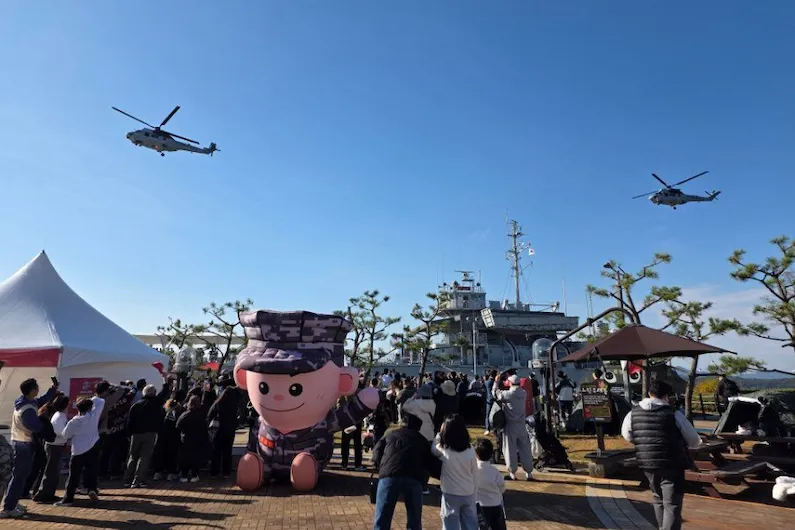
The Gimpo Marine Corps Cultural Festival at Daemyeong Port is a one-day festival that honors the strong spirit and tradition of the Marine Corps while making the most of the region’s identity as the station of the 2nd Marine Division. It offers citizens a direct way to see, feel, and communicate with Marine Corps culture through equipment displays, performances by the military band and honor guard, a steel muscle competition, and hands-on activities such as dog tag and eight-cornered cap making.

The festival is divided into two connected themes. By day, the focus is on Marine Corps culture; by night, the Sunset Night Market takes over the rooftop plaza of the seafood direct sales center. There, visitors can enjoy Gimpo’s food, including seasonal seafood, local food, and self-barbecue. At dusk, the market adopts a night market atmosphere, with busking performances set against the sunset over Daemyeong Port.

This combination makes the event distinctive: two themed festivals—Marine Corps culture by day and sunset and food by night—are experienced together in one space.

1. Main Programs

  • Marine Corps equipment exhibition and experience, military band and honor guard performances, Sunset Night Market (Daemyeong Port direct sales center rooftop), etc.

2. Side Events and Programs

  • Military uniform experience, dog tag making, eight-cornered cap making, laser shooting experience, etc.

Event Details

Gimpo Marine Corps Culture Festival in Daemyeong Port

What is Daemyeong Port?

Daemyeong Port is a working harbor on the western edge of Gimpo, where the Han River meets the tidal waters of the West Sea. For most of its history, it served as a fishing and ferry point for the surrounding villages. Boats went out before dawn and returned in the afternoon with their catches. The tidal flats beside the harbor remain wide and are used by migratory shorebirds and by people digging for shellfish.

The port’s facilities are modest: old concrete seawalls, a short wharf, and rows of mooring buoys. At low tide the water pulls back far enough to open a broad view of the mudflats. In the evening, markets operate on the flat ground just behind the seawall. The site has also been used as a military post at different periods, and traces of that use survive in the area’s layout. The festival takes place within this working setting. It includes formal ceremony, but the surrounding place remains what it is during any other evening: a harbor with boats, tide, mud, and people gathered around food and stalls.

2026 Hwasun Unju Culture Festival: Explore the Mystery of a Thousand Buddhas and Enjoy Traditional Korean Experiences

2026 Hwasun Unju Culture Festival: Explore the Mystery of a Thousand Buddhas and Enjoy Traditional Korean Experiences

Hwasun Unju Culture Festival

🗓️ 2026.11.07 ~ 2026.11.08

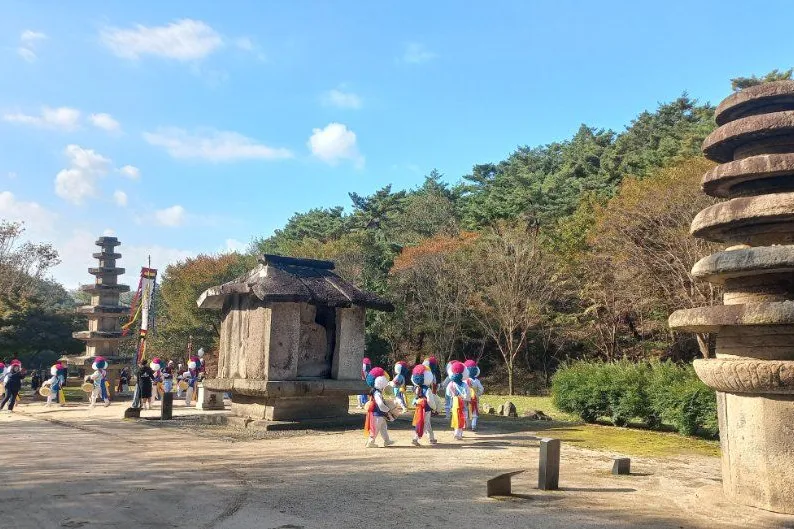
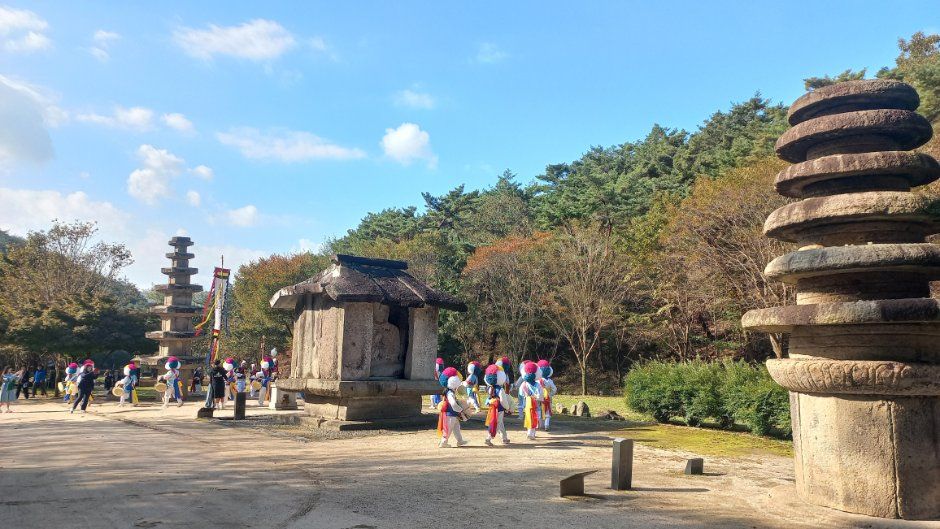
The Hwasun Unju Culture Festival is a representative cultural festival held at Hwasun Unjusa, a mysterious temple site where a thousand Buddhist statues and stone pagodas reside in every valley. In the tranquil temple grounds, where the legend of the Reclining Buddha—which has embraced a thousand years of time—harmonizes with numerous stone pagodas, various cultural and artistic programs unfold for people of all ages and genders. From heart-stirring traditional bell-ringing and Pungmulnori (folk percussion music) to music performances of various genres that enhance the excitement of the festival grounds, participatory missions to explore various parts of Unjusa and rich traditional and cultural experiences are provided. As the autumn deepens, visitors can take a journey through time and space into the mysterious legend of a thousand Buddhas and a thousand pagodas, creating warm rest and special memories.

Programs

1. Unjusa Bell-Ringing Event

The Unjusa Bell-Ringing Event opens the festival with the deep, resonant sound of the temple bell, offering a reflective start to the two-day celebration.

2. Admiring Market (Low and Less)

The Admiring Market (Low and Less) offers a calmer market experience, inviting visitors to slow down and appreciate the quieter details of the festival atmosphere.

3. Buddhist Statue Unveiling Ceremony

This ceremony provides a solemn and meaningful moment, highlighting the Buddhist heritage of Unjusa and its long history of stone statues and pagodas.

4. Experience Programs

  • Temple food experience using vegetarian ingredients
  • Photo printing SNS event
  • Drawing and writing wishes on roof tiles: Displayed in the courtyard of Daeungjeon Hall
  • Hwasun Wood Culture Experience Center: Woodcraft experience, making wooden houses, etc.

5. Resident Participation Programs

Dojang-ri field song demonstration, History and Culture Research and Preservation Society, Doam Women’s Association

6. Performance Programs

A variety of music performances will fill the festival grounds, adding rhythm and energy across different genres throughout the event.

Event Information

📍 Address: Daecho-ri, Doam-myeon, Hwasun-gun, Jeonnam-Gwangju Integrated Special City

🛏️ Accommodation near the event

💰 Fee: Free

📞 Inquiry: 061-373-5482

Hwasun Unju Culture Festival

Unjusa

Unjusa is a Buddhist temple on the slopes of Cheonbulsan, or “Thousand Buddhas Mountain,” in Hwasun-gun, South Jeolla Province. The name means “Temple of the Cloud Jewel.” In Korean it is often called the “Mystery Temple,” a nickname that comes from the stone figures scattered across its grounds.

Most Korean temples follow a common layout: prayer halls, gates, and wooden pavilions arranged along a central axis. Unjusa does not follow that layout. Its most recognizable features are stone Buddhas and stone pagodas standing in open fields. More than one hundred of these figures are spread across the property, either alone or in small groups. Some are larger than life; some are no higher than a person’s waist. They are carved from local stone and placed without obvious symmetry. There is no central row, no clear beginning or end. The collection appears to have been built up over time, but not according to any plan that is visible today.

The temple is traditionally said to have been founded in the early Goryeo period by Doseon, a monk known for geomancy and for reading the spiritual qualities of mountains and water. The common account is that the temple was built to protect the young state and calm unsettling features in the landscape. That may explain why the site was chosen, but it does not explain the number or variety of statues. The reasons behind the stone figures are not recorded. Some historians suggest a royal vow to place a thousand Buddhas at the temple. Others have proposed a military purpose, or a display of state-sponsored Buddhist devotion. Local folklore tells a different story: monks made the stones walk to the site during the night.

Today the collection can be seen directly. Standing Buddhas, seated Buddhas, and Buddhas wearing thin stone hats stand alongside pagodas of plain, compact construction. The phrase “Thousand Buddhas” does not mean that one thousand statues were ever present. It refers to a devotional convention: by moving from stone to stone, offering a sincere bow at each one, a pilgrim may carry his or her wishes to the mountain.

Unjusa remains an open place rather than a tightly organized complex. The unresolved questions about the figures are part of its character, but the site does not depend on solving them. The Hwasun Unju Culture Festival uses the fields as a setting for performances and events, but the stone Buddhas are not an exhibit or an installation. They are simply there, in the grass, and they do not need an explanation to be worth looking at.

2026 Harmonious Brothers Festival in Yesan: Experience Traditional Culture and Family Bonding in Chungcheongnam-do

2026 Harmonious Brothers Festival in Yesan: Experience Traditional Culture and Family Bonding in Chungcheongnam-do

Harmonious Brothers Festival

🗓️ 2026.11.07 ~ 2026.11.08

The Harmonious Brothers Festival is a family-participation cultural festival held in Daeheung-myeon, Yesan-gun, Chungcheongnam-do. It modernly reinterprets the values of brotherly love, sharing, and consideration based on the folk tale of the “Harmony Brothers” passed down in Daeheung-myeon. Through fairy-tale storytelling, traditional games, family-participation events, cultural performances, and markets for local food and agricultural specialties, the festival is structured so that visitors of all ages can experience the region’s history and culture while understanding the values of community.

Near the festival venue are Yesan-gun’s representative tourism facilities, including the Yedang Lake Suspension Bridge and the Yedang Lake Monorail. The event is a representative cultural tourism festival of Yesan-gun, allowing visitors to experience local culture and tourism in one place.

Program Highlights

  1. Pre-event: Brotherly Love Singing Contest, Celebration Performances
  2. Official Event: Opening Ceremony, LED Tron Dance, Saxophone Performance
  3. Performances: Theme Performance, Bubble Magic, Finger Guitar Performance (appeared on KBS Immortal Songs)
  4. Themes: Family-type experiences/practicing filial piety, Traditional game experiences, Storytelling-linked experiences
  5. Regular: Daeheung Tavern, Family Rest Area, Food Zone/Experience Booths

The pre-event opens with a Brotherly Love Singing Contest and celebration performances. The official event follows with an opening ceremony, an LED Tron dance, and a saxophone performance. Additional performances include a theme performance, bubble magic, and a finger guitar act that has appeared on KBS Immortal Songs. The thematic programs focus on family activities and filial piety, traditional games, and experiences linked to the Harmony Brothers story. Throughout the festival, the Daeheung Tavern, Family Rest Area, and Food Zone/Experience Booths operate as regular features.

Practical Information

📍 Address: 3, Uijoeunhyeongjegil, Daeheung-myeon, Yesan-gun, Chungcheongnam-do

🛏️ Accommodations near the event

💰 Fee: Free

📞 Inquiry: 041-331-0619

⭐️ Instagram: https://www.instagram.com/gbfesta_official

Harmony Brothers Festival

The story of Yesan’s Harmonious Brothers is a local tale from Chungcheongnam-do. It has been passed down for generations, but it is not a myth in the usual sense. There are no supernatural events in it. Its point is that two brothers treated each other with consideration, and that this ordinary behaviour had lasting effects on the people around them.

The story is set in a small farming village in what is now Yesan. Two brothers had worked their father’s land together. When their father died, each received a share of the land, and each used it to support his own family. They no longer lived in the same house, but they continued to work the adjacent fields and to pay attention to each other’s circumstances.

Every autumn, after the harvest, the elder brother thought about his younger brother. The younger brother had more children to feed, and his household was under greater pressure. The elder brother worried that the younger man’s share of the harvest would not be enough. So, at night, he carried a bundle of rice from his own storehouse to his brother’s, left it by the door, and returned home. He did this every year, and he never told anyone. He did not want his brother to feel that he had to repay him or even acknowledge the gift.

What the elder brother did not know is that the younger brother was doing the same thing. The younger brother thought about the elder’s age and the increasing difficulty of farm work. He, too, waited until night, took rice from his own harvest, and left it at his elder brother’s door.

This went on for years. Each brother gave what he could, and each brother found that his own supply of grain never seemed to run out. They did not understand why. They assumed that some kind of protection was at work in their home.

One clear autumn night, under a bright moon, the two brothers met on the narrow path between their houses. Each was carrying a bundle of rice. They understood immediately what the other had been doing. Their surprise was followed by laughter, and then by tears. They realised that they had both been giving in secret, out of the same concern and the same desire to spare the other any sense of debt.

From then on, the brothers shared not only their harvests but their households as well. Their families lived together, and the neighbours took notice. People in the village began to call them “the Harmonious Brothers.” The story spread through the region, and the village gained a reputation for the same kind of cooperation.

The story is now the basis of the Yesan Harmonious Brothers Festival. The festival does not treat the tale as a distant legend. It uses the story as a starting point for activities that bring families and neighbours together: shared meals, folk games, and performances staged by local residents. The aim is not to deliver a grand lesson about love or loyalty. The aim is to remind people that harmonious relations are built from small acts of kindness, done without expectation of recognition.

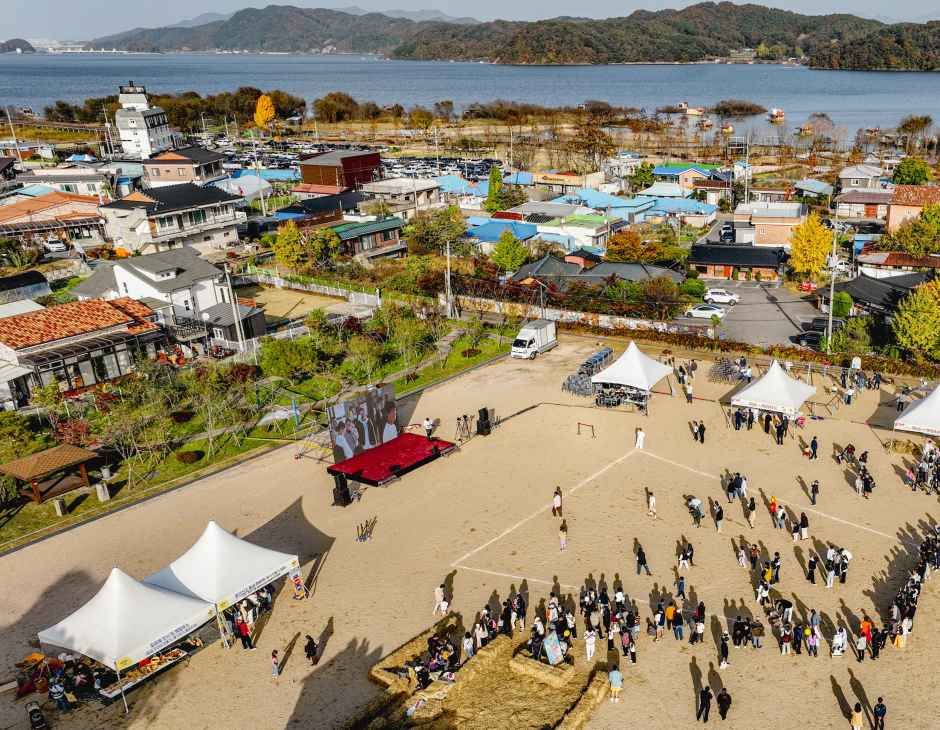
2026 Sanbuk AI Kimjang Culture Festival in Yeoju: Experience Traditional Kimchi Making with a Modern Twist

2026 Sanbuk AI Kimjang Culture Festival in Yeoju: Experience Traditional Kimchi Making with a Modern Twist

Sanbuk AI Kimjang Culture Festival

🗓️ 2026.11.07 ~ 2026.11.08

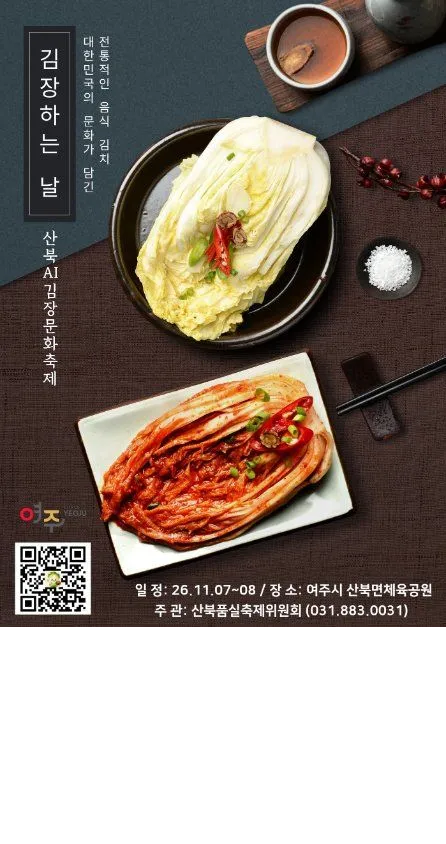
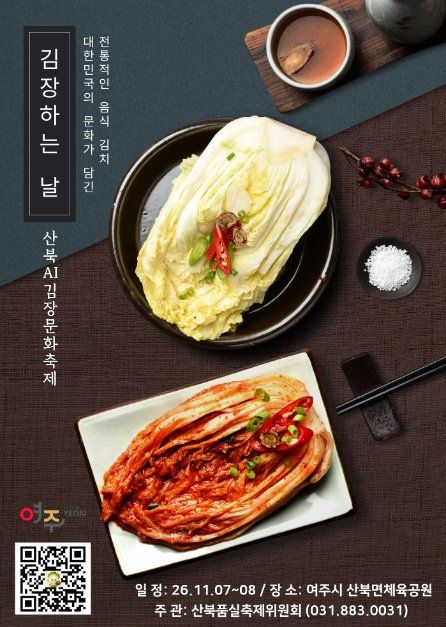
The Sanbuk Pumshil Festival has been a staple of Yeoju for 22 years. The 22nd edition takes place on November 7 and 8, 2026, under the sub-theme “Sanbuk AI Kimjang Culture Festival.” The event gives kimjang, Korea’s traditional kimchi-making culture, a new form that combines hands-on practice with modern technology.

Kimjang is more than a method of preparing food for winter. It was inscribed on UNESCO’s Representative List of the Intangible Cultural Heritage of Humanity in 2013, and it has long served as an occasion for families and neighbors to work together, share skills, and exchange the finished kimchi. The spirit of the tradition lies in cooperation: making together, sharing together, and carrying that warmth through the cold season.

The Sanbuk AI Kimjang Culture Festival continues that spirit while making it easier for anyone to participate. The festival combines technology with the traditional practice, opening it up to people with no prior experience, and pairs fresh local agricultural produce with cutting-edge technology. The result is a festival that preserves the value of local farming while offering a glimpse of agriculture’s future.

Main Program

  • Kimjang Experience 1 – 10kg salted cabbage + 4kg seasoning ingredients
  • Kimjang Experience 2 – 20kg salted cabbage

The first option provides both the salted cabbage and the seasoning ingredients needed to make a full batch of kimchi. The second option supplies a larger volume of salted cabbage for those who want to make a bigger quantity or use their own seasoning.

Side Programs

  • Family Walking Contest
  • Laser Survival
  • Cheerful Athletic Meet

Children’s Experience Programs

  • Millstone Experience – Children get to grind grains with a traditional millstone, offering a direct connection to how food was prepared in the past.
  • Injeolmi Making Experience – Participants make injeolmi, a traditional Korean glutinous rice cake coated with bean powder.
  • Kkakdugi Making Experience – A hands-on session for making kkakdugi, the cubed-radish kimchi that pairs well with many Korean dishes.

Other Details

A dedicated photo zone for the kimjang experience will be set up so visitors can record their own moments at the festival.

Visitor Information

📍 Address: 36 Geumpum 1-ro, Sanbuk-myeon, Yeoju-si, Gyeonggi-do

🛏️ Accommodation near the event

💰 Fee: Free admission

📞 Inquiry: 031-883-0031

🖥️ Website: https://www.산북김장.com/

Sanbuk AI Kimjang Culture Festival

What is kimjang?

Kimjang is Korea’s traditional communal practice of making and sharing kimchi, typically in late autumn. Families and neighbors gather to prepare large batches of fermented vegetables—most often napa cabbage and Korean radish—that will be stored for the winter. The work is organized around cooperation: households share ingredients and labor, and the finished kimchi is often divided among participants. Recipes and techniques are passed down through generations as part of the process. UNESCO recognized kimjang as an Intangible Cultural Heritage of Humanity in 2013, citing its role in community life and in the transmission of culinary knowledge.

At the Sanbuk AI Kimjang Culture Festival, this tradition is presented alongside artificial intelligence and other modern tools. Visitors can observe kimchi-making as it has been practiced and also see how new technology might be applied to preparation, storage, or sharing—without altering the core human effort involved.

2026 Iksan Treasure Hunt Festival: How to Find the Gold Bar and Enjoy Somni Village’s AR Adventures

2026 Iksan Treasure Hunt Festival: How to Find the Gold Bar and Enjoy Somni Village's AR Adventures

Treasure Hunt Festival – Find the Gold Bar!

🗓️ 2026.11.07 ~ 2026.11.08

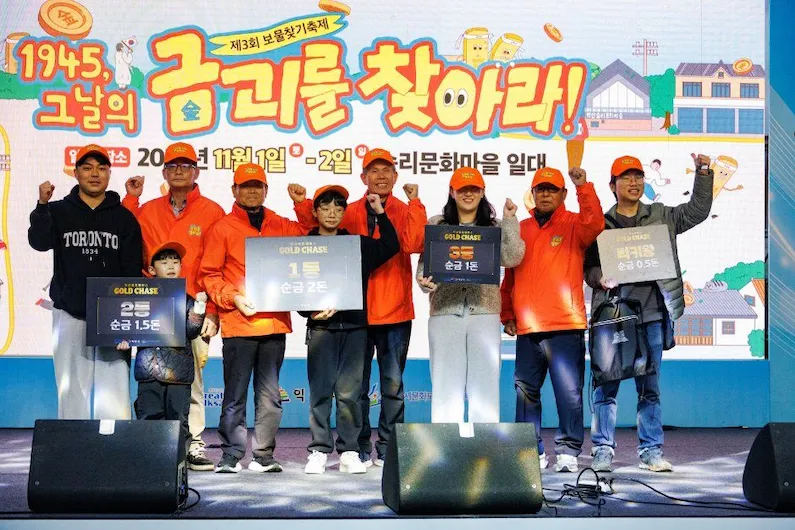
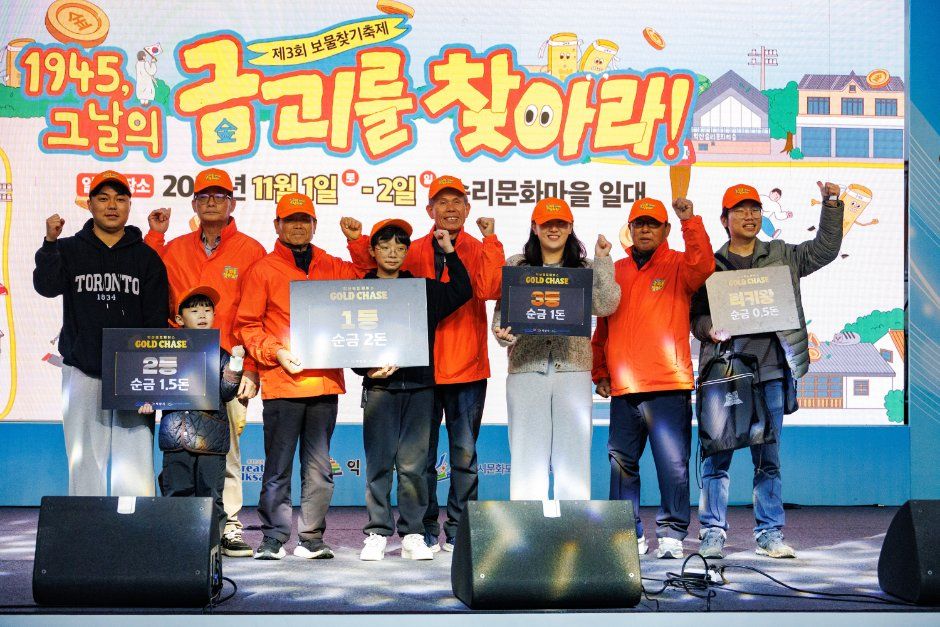
The 4th Treasure Hunt Festival, “Find the Gold Bar!”, runs for two days on November 7–8, 2026, around Somni Village in Inhwa-dong, Iksan-si, Jeonbuk. Somni Village, a modern history and culture village, is turned into an augmented reality (AR) treasure hunt stage. Using a smartphone map, visitors search for clues hidden throughout the alleys, collect gold bar cards, and then take part in a prize draw. The rest of the festival is built around participatory programs such as the Somni Boutique, a chance to experience 1920s modern clothing; the Somni Stamp Tour, which explores the village’s hub spaces; and the Lucky King event. There will also be sights and activities for all ages, including street performances, marching parades, the Irio Shop flea market, jewelry craft and art experiences, a small painting art fair, a children’s playground, and survival experiences. A win-win food market, run with the merchants’ associations of the nearby Old Market and Nambu Market, will be on site as well.

Main Programs

  • AR Treasure Hunt – Operated 4 times; participation fee 5,000 won.
  • Somni Boutique – 1920s modern clothing experience.
  • Somni Stamp Tour – Explore the village’s hub spaces.
  • Lucky King event

Side Programs

  • Street performances
  • Marching parade
  • Irio Shop flea market
  • Somni Culture Vault “In Search of the Puzzle King”
  • Small painting art fair (exhibition)

Consumer Participation Programs

  • AR Treasure Hunt
  • Ball pit treasure hunt
  • Survival experience
  • Jewelry craft and art experience
  • Modern clothing SNS certification mission

Other Details

  • Win-win food market (Old Market and Nambu Market Merchants’ Association)
  • Children’s playground

Usage Fees

  • AR Treasure Hunt: 5,000 won
  • Jewelry craft experience: Some are paid
  • Art experience: Twinkling jewel face painting 3,000 won, etc. Some programs are paid

📍 Address: 28 Inbuk-ro 12-gil, Iksan-si, Jeonbuk Special Self-Governing Province (Jhyeon-dong)

🛏️ Accommodation near the event

💰 Fee: Free (Some experience programs are paid)

📞 Inquiry: 070-4909-1196

⭐️ Instagram: Instagram

🖥️ Homepage: Treasure Hunt Festival – Find the Gold Bar!

Treasure Hunt Festival - Find the Gold Bar!

What is Somni Village?

Somni Village is the augmented-reality story world built for the 2026 Iksan Treasure Hunt Festival. It is not a physical place; it is a location-based digital layer that runs through the festival site. The AR content is anchored to real landmarks in Iksan: Baekje-era grounds, palace ruins, museum courtyards, and riverside paths. When you open the festival’s AR app at these locations, the village appears on your screen as an additional layer on top of the surroundings. Market stalls, period-dressed characters, and text or symbols are placed in relation to the physical space around you.

The name comes from the Latin word for “dream,” and the design follows that idea. The AR scenes are not meant to replace the actual sites. Instead, they give each location a second context within the story. A bench in the park can function as the village well; a museum wall can carry a mural that exists only in the AR layer. The effect is less about illusion than about navigation: what you see in the app corresponds directly to where you are and where you need to go.

Somni Village is also the operational structure for the treasure hunt. The clues, characters, and interactive objects are placed throughout the AR world, each one tied to a real site in Iksan. Participants move between the physical streets and the app’s map of the village, using information from both to make progress. The gold bar is located at a point where the real environment and the virtual overlay align, so finding it requires working through the full set of locations and solving the clues attached to them.

2026 Seoul Whole Family Book Festival at Jeongdok Library: Discover the Joy of Reading with Free Family Activities and Events

2026 Seoul Whole Family Book Festival at Jeongdok Library: Discover the Joy of Reading with Free Family Activities and Events

A Family Book Feast

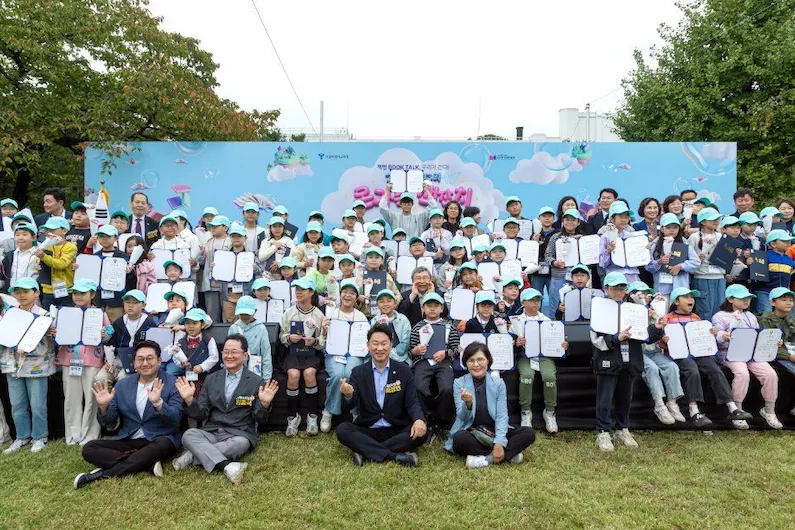
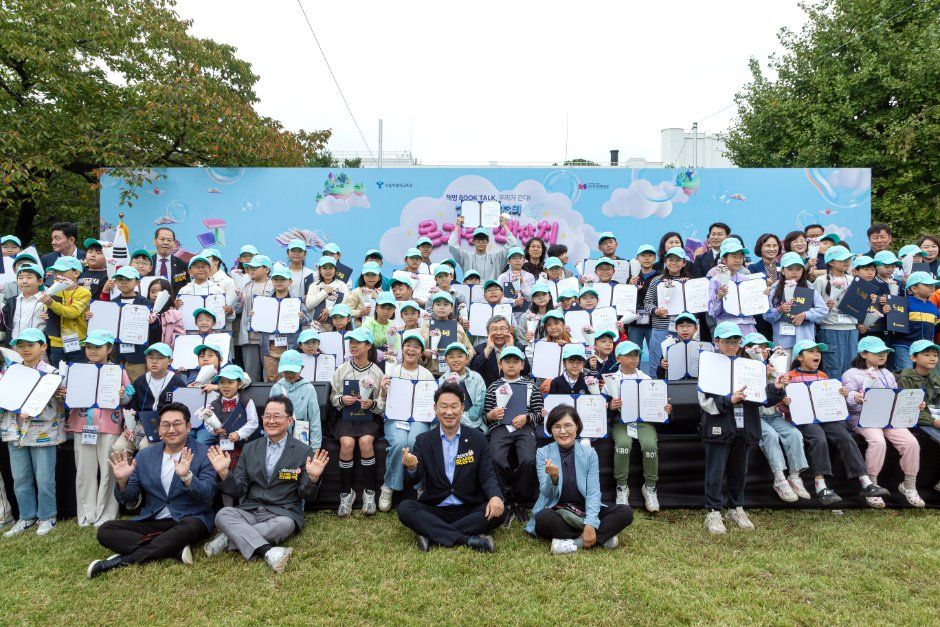
The Whole Family Book Festival is the Seoul Metropolitan Office of Education’s representative reading culture festival. Held every autumn since 2013 at Jeongdok Library, it provides a venue where families and neighbors can mingle and communicate through books. Through various experiences, performances, and exhibitions, the festival lets people encounter the joy and value of reading in their daily lives. It has also grown into a collaborative festival: citizens and students directly participate in the programming, while libraries, lifelong learning centers, local bookstores, and school reading clubs join forces. The diverse lineup includes Reading Family Awards ceremonies, cultural performances, creative activities linked to books, and eco-friendly and traditional culture experiences. With something for people of all ages and genders, the festival makes the case that reading is more than an activity—it is a source of joy in life and community value.

🗓️ 2026.11.07 ~ 2026.11.07

Festival Programs

The festival program is organized into seven sections:

1. Plaza of Honor

  • Library Concert
  • Reading Family Awards

2. Book Sharing Market

3. Unusual Library

  • (Namsan, Dobong, Dongdaemun) Making a Lucky GeoBook, My Promise for the Earth
  • (Songpa, Gangnam, Gangdong, Gaepo) Today Here, Library Total Gathering!
  • (Yangcheon, Gangseo, Gayang-gwan, Gocheok) Meeting a Book is Lucky!
  • (Children’s, Seodaemun, Jongno) Weaving Bookmarks that Connect Hearts
  • (Yongsan, Guro, Dongjak) Clatter-Clatter Stamp Workshop
  • (Mapo, Godeok, Nowon, Yeongdeungpo, Ahyeon Branch) Colorful Star Workshop
  • (Jeongdok) Come visit the Youth Center!
  • (Jeongdok) Jeongdok’s 50 Years Drawn Together by the Whole Family

4. Imagination Factory

  • (Baehwa Girls’ High School) Draw it! One Sentence from a Book
  • (Gwanak High School) Battle in the Book! My Own Keycap Keyring
  • (Seoul Bookstore Association) Book Festival & Rice Cake Festival with Seoul Booksellers
  • (Digital Library) Visiting E-book Experience Booth
  • This-and-That Hangeul Research Institute
  • Mother-of-Pearl Keyring Workshop Containing Light

5. Story Discovery Center

6. Topsy-Turvy Playground

7. Rolling Book Forest

Event Details

📍 Address: 48 Bukchon-ro 5-gil, Jongno-gu, Seoul (Hwadong)

🛏️ Accommodations near the event

💰 Fee: Free

📞 Inquiry: 02-2011-5742

🖥️ Homepage: https://jdlib.sen.go.kr/jdlib/board/index.do?menu%5Fidx=242&manage%5Fidx=2478

Whole Family Book Festival

What is Jeongdok Library?

Jeongdok Library is a public library in Jongno-gu, Seoul, with a particular emphasis on children and family reading. It is located in Samcheong-dong, near the city’s cultural district, and has served the area for several decades. The library includes a children’s reading room, storytime space, family event facilities, and outdoor areas for reading. Its collection covers children’s literature, picture books, and educational materials, with sections organized for different ages.

In addition to lending, the library runs storytime programs, reading events, and workshops for families and school groups. Adults can use the general reading rooms, and the building also serves as a neighborhood gathering place. The festival in 2026 will be hosted at the library, using both its indoor event spaces and the surrounding grounds.

Analytics