
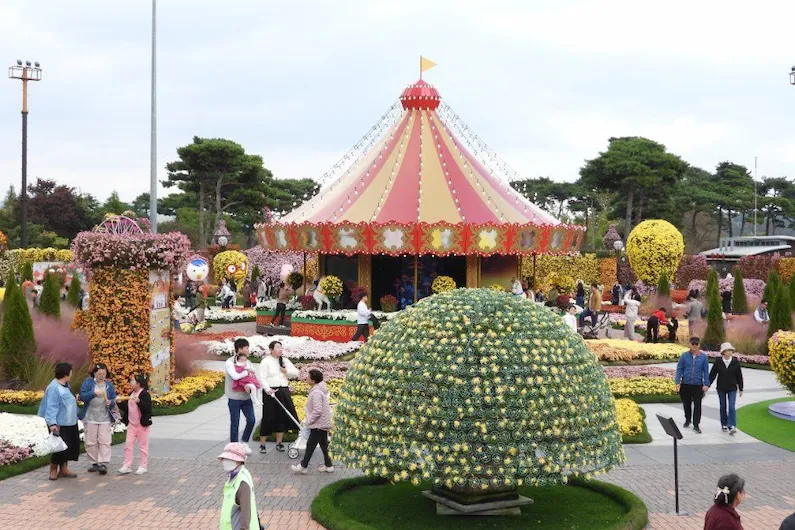
Korea National Chrysanthemum Festival
🗓️ 2026.10.23 ~ 2026.11.08
The 2026 Korea National Chrysanthemum Festival is set to take place against the scenic backdrop of Hampyeong’s signature autumn blooms and a pristine natural environment. This year, the event centers on the theme of the ‘Mythical Chrysanthemum Garden,’ a conceptual approach that distinguishes this iteration through its focus on large-scale planned chrysanthemum works and meticulously curated bonsai pieces. Visitors can expect a rich autumn landscape where colorful chrysanthemums harmonize with the local geography to create a visual spectacle.
Beyond the floral exhibitions, the festival is designed to be an immersive destination for families, couples, and tourists—providing a curated blend of cultural, performance, and experiential content that allows guests to linger and absorb the autumn atmosphere. By integrating art, nature, and local culture, the event serves as a nationwide showcase for the unique charm of Hampyeong and the inherent beauty of the chrysanthemum.
Event Highlights and Activities
The festival is divided into several key components to ensure a diverse visitor experience:
1. Performances
Attendees can enjoy a variety of live entertainment, including the Gukhyang Autumn Concert and the energetic Brass Band Street Performance Parade. Additionally, the “2nd Find the Kki-Star” event offers a platform for talent and performance.
2. Interactive Programs
For those seeking engagement over observation, the festival offers several themed activities:
- Adventure & Play: The Chrysanthemum Land Escape Experience and the Wetland Station Electric Cart Experience.
- Cultural Immersion: “Chrysanthemum DAY in Hampyeong” and the opportunity for “Dressing up as a Chrysanthemum Princess.”
- Creativity: A dedicated Chrysanthemum Craft Making Program.
3. Markets and Sales Booths
A wide array of commercial offerings are available, ranging from agricultural and artisanal goods to specialized flora:
- Local Goods: Agricultural Special Products Market and a Fruit Promotion Hall.
- Artisanship: A Handicraft Market and the Chrysanthemum Bonsai Sales Center.
- Dining & Novelties: A Food Market and the Hwang-Baki & Ppom-Bi Pop-up Store.
4. Visitor Services
To ensure accessibility for all guests, the site provides a Stroller/Wheelchair Rental Center and a Plant Sales Center.
Admission and Pricing
The festival employs a tiered pricing structure that rewards advance planning.
Advance Reservation (Available 9. 23. Wed ~ 10. 22. Thu)
- Individual: Adult 6,300 won | Youth/Military 4,500 won | Kindergarten/Child/Seniors 2,700 won
- Group: Adult 5,400 won | Youth/Military 3,600 won | Kindergarten/Child/Seniors 1,800 won
On-site Reservation (Available 10. 23. Thu ~ 11. 8. Sun)
- Individual: Adult 7,000 won | Youth/Military 5,000 won | Kindergarten/Child/Seniors 3,000 won
- Group: Adult 6,000 won | Youth/Military 4,000 won | Kindergarten/Child/Seniors 2,000 won
Free Admission
Entry is free for residents of Hampyeong-gun, infants and toddlers under 4 years old, persons with disabilities (including one accompanying guardian for those with severe disabilities), and persons eligible for national merit or veterans benefits.
Additional Discounts
A 50% discount is applicable for groups of 20 or more, seniors aged 65 or older, and residents of sister-tied local governments. Furthermore, the Munhwa Nuri Card is accepted for payment.
Visitor Information
📍 Address: 27 Gonjae-ro, Hampyeong-eup, Hampyeong-gun, Jeonnam-Gwangju Integrated Special City
🛏️ Accommodation near the event
💰 Fee: Paid
📞 Inquiry: 061-320-2247
🖥️ Website: Korea National Chrysanthemum Festival Website
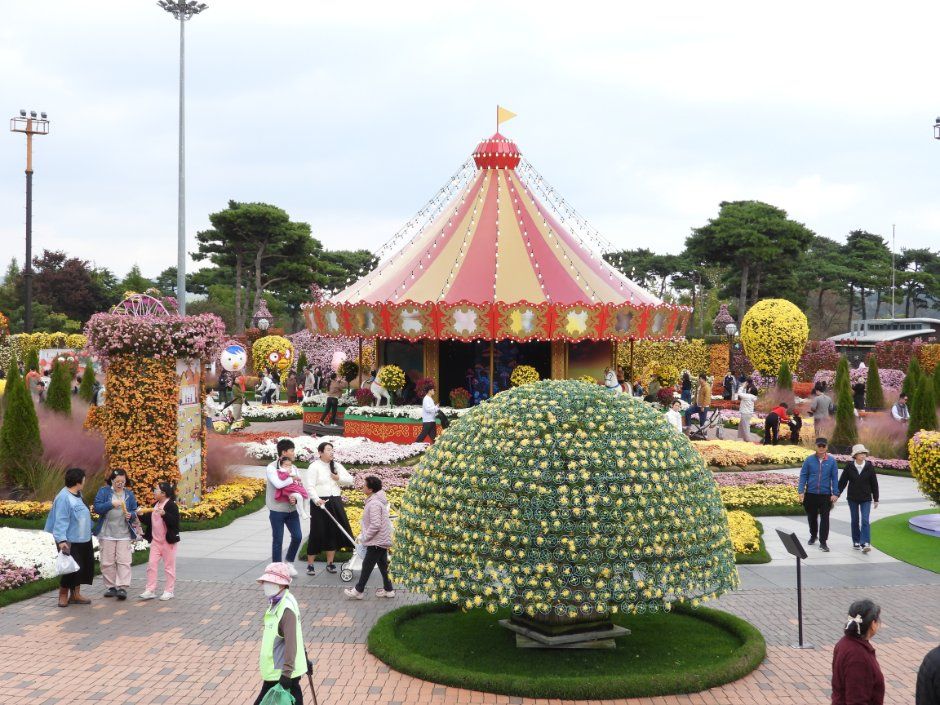
Hampyeong is a rural county in South Jeolla Province, in the southwestern part of South Korea. Its landscape is mostly flat, with rice paddies, reed beds, and flower farms spread across the plain, bordered by low mountains. The county town, Hampyeong-eup, is small: a few streets of restaurants, markets, and houses, with none of the commercial density of larger Korean cities. For most of the year, daily life follows agriculture and fishing. In autumn, the county hosts a chrysanthemum festival centered on the Hampyeongcheon Ecology Park, and visitors come from elsewhere in the country.
Hampyeong’s environmental reputation is based on particular projects rather than general slogans. The ecology park follows the Hampyeongcheon stream through wetlands and reed fields, with wooden boardwalks that make the area easy to explore on foot. The county has also invested in butterfly conservation and has hosted a butterfly expo in the past; the insect appears in local signage and promotional material. These efforts are part of a longer attempt to build tourism around the area’s natural assets, and the chrysanthemum festival is the most visible result.
The festival itself is straightforward: chrysanthemums are displayed in planted beds, pots, and temporary structures arranged along the park’s paths. The flowers are not meant to illustrate an abstract idea; they are simply grown and placed well enough to look good in cool autumn weather. Alongside the displays, local stalls sell sweet potatoes, honey, and other farm produce. The nearby coast provides seafood for the county’s restaurants, which are mostly family-run and inexpensive.
What Hampyeong offers is modest, and that is its main appeal. Visitors come for the reed fields in late light, for the flower displays that change each year, and for a pace of travel that is not dictated by a crowded itinerary. The county does not try to mimic a city or turn its landscape into a spectacle. It simply provides the conditions for a calm day outside, and that is enough.
