
Bonghwa Pine Mushroom Festival
🗓️ 2026.10.15 ~ 2026.10.18
In the late 1990s, Bonghwa-gun began to recognize the high-quality pine mushrooms growing naturally in its clean, deep forests as a future resource for the region; the first Bonghwa Pine Mushroom Festival was held in 1997. From the start, it centered on pine mushroom harvesting experiences, dish tasting events, and local specialty sales exhibitions. Active participation from local residents and growing recognition of the mushrooms’ quality helped the event become one of the Republic of Korea’s representative autumn gastronomic festivals.
A rare mushroom with a distinct profile
Bonghwa pine mushrooms are a rare resource that grows only in clean forest areas at altitudes of 600m or higher. Their aroma and texture are distinct from pine mushrooms grown in other regions, which has drawn attention from domestic and international gourmets. The festival was planned as a “nature-gastronomy convergence festival” where residents and tourists could mingle, moving beyond a simple promotion of local specialties. Over time, it has grown into a comprehensive event where culture, tourism, and economy harmonize, while also spreading the values of nature conservation and coexistence through traditional performances, experiences connected to local agricultural products, and tourist site circulation programs.
The 2026 edition, which coincides with the festival’s 30th anniversary, runs for four days and is organized into four program categories. Across the event, visitors can browse and bid on pine mushrooms, watch performances, eat pine mushroom dishes, and take part in community events.
Experience Programs
- One Mushroom Time Auction!
- Guerrilla On-site Event
- Beat the Pine Mushroom!
- Challenge! Pine Mushroom Golden Bell
Performance Programs
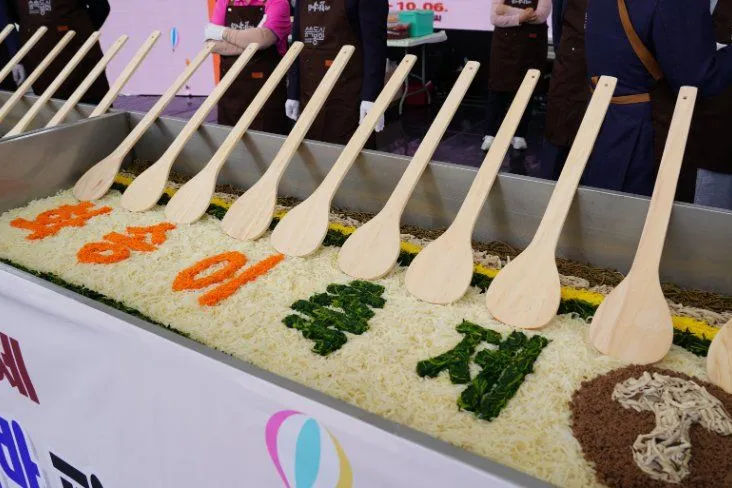
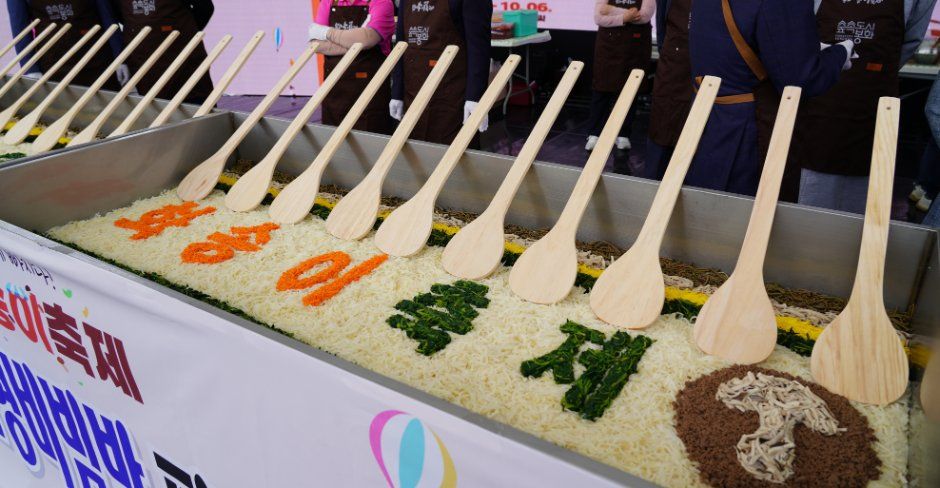
- 5th Osaek-omi Giant Bibimbap Performance
- Opening Ceremony and Opening Celebration Performance
- Bobusang (Peddler) Performance
- Multicultural Song Festival
- Shining Star Concert Season 3
- Closing Ceremony and Closing Celebration Performance
Food Programs
- Pine Mushroom Ramen
- Pine Mushroom Tavern
- Food Truck Zone
Ancillary Promotional Programs
- 43rd Cheongryang Culture Festival
- 2026 Bonghwa-gun Governor’s Cup Ssireum King Selection Tournament
- 2026 Daycare Center Union Sports Day
- Pine Mushroom Karaoke
- Pine Mushroom Sales Market and Herbal Medicine Cattle Sales Center
- Large Restaurant and Herbal Medicine Cattle Tasting Session
- 30th Anniversary History Commemorative Exhibition Tunnel and Photo Zone Establishment
Practical Information
📍 Address: 13 Naeseong-ro 5-gil, Bonghwa-eup, Bonghwa-gun, Gyeongsangbuk-do
🛏️ Accommodations near the event
💰 Fee: Free admission (some experience programs are paid)
📞 Inquiry: 054-674-3053
🖥️ Homepage: bhftf.or.kr/festival/pine_mushroom_festival/index.php
Pine mushrooms, known in Korean as songi, are a wild species (Tricholoma matsutake) that grows in association with pine trees. They are distinct from common cultivated mushrooms such as button mushrooms, and in East Asian cuisine they are used as a specialty ingredient. The mushrooms fruit from the roots of old pine trees, and their occurrence depends closely on the local environment. In the forests around Bonghwa, a mountainous county in central South Korea, the combination of old pine woodland, well-drained soil, and seasonal rainfall provides conditions that suit them well.
The mushroom itself is stout, with a white cap often covered in brown scales. Its smell is strong and distinctive—somewhere between spice and pine forest, with a sweetness that becomes more pronounced when cooked. Because its flavor is aromatic rather than assertive, cooks usually keep preparations simple. In Korea, songi is commonly sliced and grilled over low heat, folded into rice, or added to samgyetang (ginseng chicken soup), where it perfumes the broth. The mushrooms are harvested in autumn, from late September to early November, and are best eaten within a few days of picking.
Matsutake cannot be grown commercially. The fungus forms a mycorrhizal relationship with living pine trees, and attempts to cultivate it have not succeeded. All songi sold and served is wild-harvested. Foragers locate the mushrooms by finding slight cracks in the pine-needle duff or by looking for areas where the needles have been disturbed, and they often work the same forest floors over many seasons. The yield varies from year to year depending on rainfall, temperature, and the health of the trees. In poor years, very few mushrooms appear, which is part of why prices can be high.
The Bonghwa Pine Mushroom Festival, held annually in autumn, was started to let visitors taste and learn about the local harvest. The event now also serves as a way to support the foragers and vendors who supply the regional market. For thirty years it has featured mushroom-focused dishes, guided foraging demonstrations, and information about how songi fits into the local economy. It does not turn the mushroom into something mystical; it simply presents a wild food that cannot be manufactured, only found.
