
Gumi Ramen Festival
🗓️ 2026.11.06 ~ 2026.11.08
The food contents of the festival listed below are from the previous year’s (2025) festival; food contents for the 2026 festival are currently being updated.
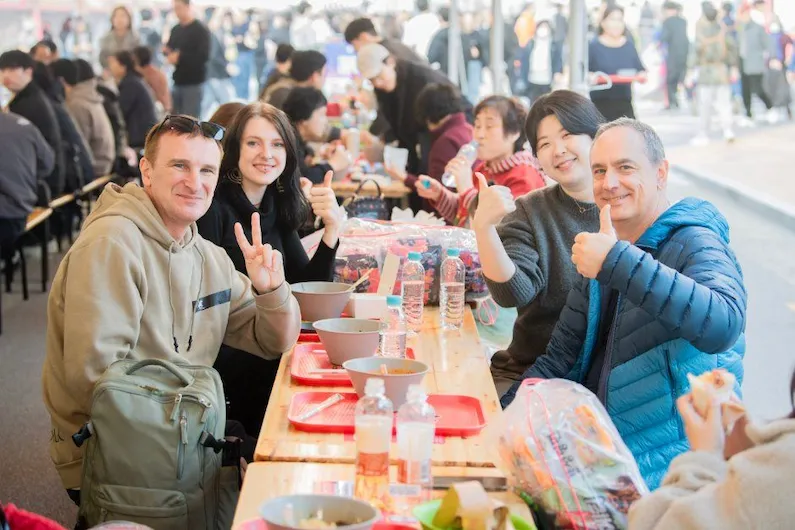
The Gumi Ramyun Festival is a representative regional festival that uses ramyun as a bridge between Gumi’s industry, food culture, and local tourism. Gumi is home to the Nongshim Gumi Plant, one of the country’s leading ramyun production facilities, and the festival turns that industrial foundation into public-facing tourism content. Instead of being confined to a single fairground, the festival spreads across the old downtown—including Gumi Station, Yeokjeon-ro, Munhwa-ro, Geumridan-gil, and Saemaeul Central Market—and treats the entire city center as its festival space.
The event’s key programs include the Ramyun Restaurant, Freshly Fried Ramyun, God Land, the Global Ramyun Challenge, Robot Chef, and the Hururuk Lounge. Visitors can sample ramyun dishes from different regions across the country, taste freshly fried noodles, take part in ramyun-themed experiences, and relax while watching performances. Local restaurants and commercial districts participate as well, connecting the festival grounds to the surrounding old downtown and supporting the local economy. The 2026 edition continues this approach, offering an urban-type tourism festival built around ramyun.
Main Programs
- Ramyun Restaurant – A food program showcasing ramyun dishes from different regions across the country. It gives visitors a practical overview of how ramyun is prepared and enjoyed in various parts of Korea.
- Freshly Fried Ramyun – A representative food program of the Gumi Ramyun Festival, centered on noodles that have just been fried. It is one of the festival’s signature eating experiences.
- God Land – A program focused on ramyun-related experiences and content, offering visitors a deeper look at the culture and enjoyment of ramyun.
- Global Ramyun Challenge – A participatory program involving domestic and international participants, adding a cross-border element to the festival.
Side Programs
- Hururuk Lounge – A relaxed space where visitors can enjoy ramyun alongside performances and other content.
- Programs linked with local restaurants and commercial districts – Local businesses in the old downtown join the festival, expanding the event beyond its main program areas.
- Operation of festival spaces and street content throughout the old downtown area – The old downtown itself becomes a continuous festival venue, with street-level content connecting the different parts of the event.
Consumer Participation Programs
- Making My Own Ramyun – A hands-on program that lets visitors assemble their own ramyun.
- Soup Lab – A participatory program centered on ramyun soup, giving attendees a more active role in creating their food experience.
Other Details
Local restaurants are directly involved in the festival, and the event is closely linked with the old downtown area, including Gumi Station, Yeokjeon-ro, Munhwa-ro, Geumridan-gil, and Saemaeul Central Market. Promotion and marketing for the festival connect the festival grounds with the old downtown commercial districts, helping to revitalize the local economy while making the wider area part of the visitor experience.
Visitor Information
📍 Address: Yeokjeon-ro, Gumi-si, Gyeongsangbuk-do
🛏️ Accommodations near the event
💰 Fee: Free
📞 Inquiry: 054-480-2651~3
⭐️ Instagram: https://www.instagram.com/gumi_ramyun/
🖥️ Homepage: https://www.gumiramyun.com/
What is Korean ramen?
Korean ramen, more accurately called ramyeon (라면), is a type of instant noodle. The package typically contains a dried noodle block and a seasoning packet based on gochugaru (Korean red chili pepper), garlic, and beef or seafood stock. It is cooked in boiling water for a few minutes, and the result is a fast, inexpensive meal.
Ramyeon differs from Japanese ramen, which is usually fresh noodles served in a broth that has been simmered for hours. Korean ramyeon is not trying to replicate that process. Its appeal is simpler: a spicy, savory broth and chewy noodles that can be ready before a pot of rice finishes cooking.
The most common brands, such as Shin Ramyun and Jin Ramen, are widely available overseas as well as in Korea. Home preparation is often customized. A cracked egg dropped into the bubbling pot is a standard addition. Sliced cheese is used to cut the spice, scallions add freshness, and dumplings or a spoonful of gochujang can make the dish more substantial. Creamy and stir-fried variations are also common.
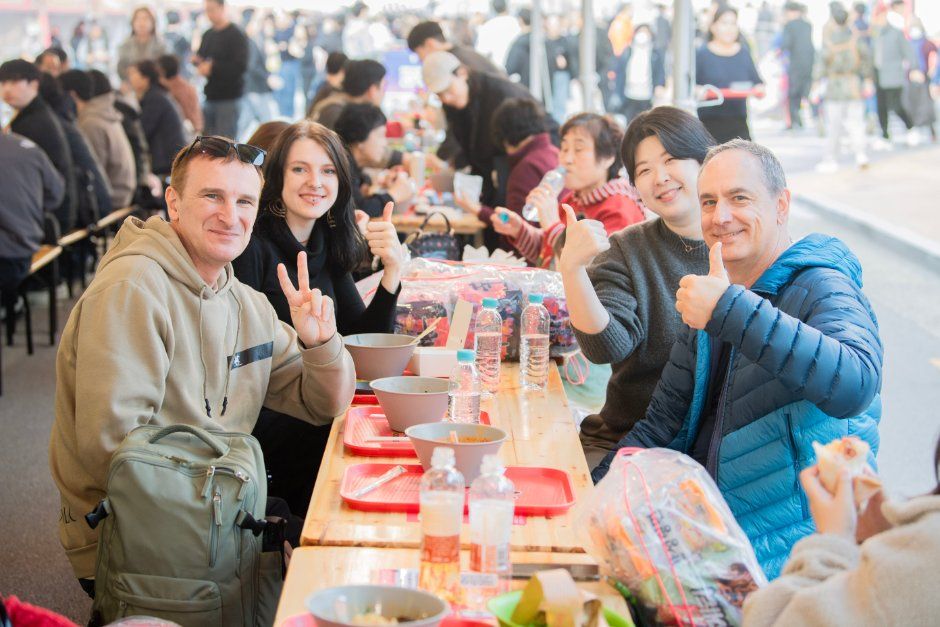
At the Gumi Ramen Festival, stallholders serve different broths and toppings, and visitors can try versions they are unlikely to prepare at home. It is a public showcase of a food that is usually eaten in private kitchens: instant noodles, treated not as a shortcut but as something worth paying attention to.
