
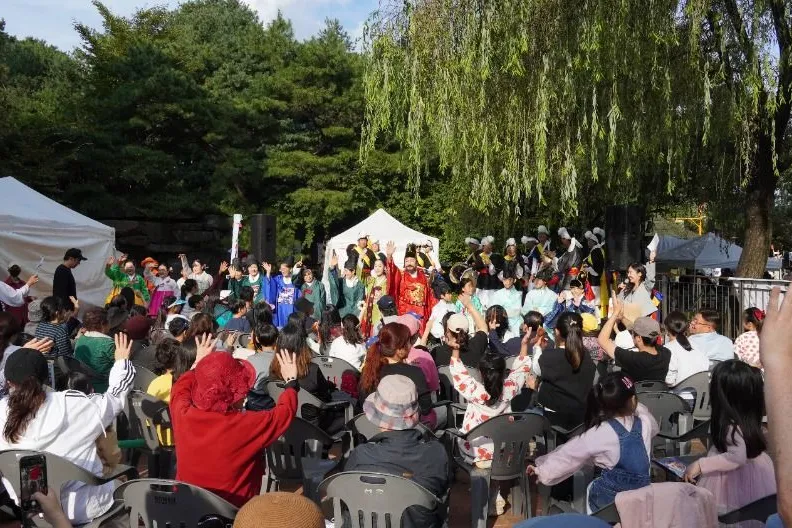
Dobong Hangeul Festival
🗓️ 2026.09.30 ~ 2026.10.12
Hangeul is a writing system born from considering the human heart, connecting the thoughts and intentions of one another. Hangeul conveyed the hearts of the people who struggled to express their meanings and served as a hope that firmly protected the spirit of our nation even amidst a dark history. Dobong-gu, Seoul, is a place imbued with the breath of historical figures who created, protected, and enjoyed Hangeul—from Princess Jeongui, the daughter of King Sejong, to Kansong Jeon Hyeong-pil and Widang Jeong In-bo, who protected our language and script during the Japanese colonial period, and the poet Kim Su-young, who sang of freedom in Hangeul.
The year 2026 marks the 580th anniversary of the proclamation of Hunminjeongeum and the 100th anniversary of the establishment of Hangeul Day and the creation of Hunmaengjeongeum, the script for the visually impaired. In recognition of these milestones, the Dobong Cultural Center is hosting the 15th Dobong Hangeul Festival, “Piercing Through the Darkness, Connecting Hearts.” The festival reflects on the heart toward people contained in Hangeul and the intentions of those who protected it in the darkness of the era. It aims to connect the history of creating, protecting, and enjoying Hangeul with the figures and cultural resources of Dobong, offering a space where visitors can share in that history through exhibitions, performances, and experiences.
Main Programs
- Princess Jeongui Outing — a program drawing on the connection between Princess Jeongui, King Sejong’s daughter, and the Dobong area.
- Hangeul Calligraphy Performance Art — a live performance format that showcases the artistic possibilities of Hangeul as a writing system.
Side Programs
- Exhibition Yard — chronological exhibition, special exhibition, poem and painting exhibition, and more
- Performance Yard — orchestra, culture sharing performance group, and more
Consumer Participation Programs
- Experience and Play Yard — making Braille keyrings, traditional games, and more
Other Contents
- 20th Dobong Writing and Drawing Contest
- Joseon Royal Court Cultural Experience
- And more
📍 Address: 16 Haedeung-ro 32ga-gil, Dobong-gu, Seoul (Banghak-dong)
🛏️ Accommodations near the event
💰 Fee: Free
📞 Inquiry: 02-905-4026
🖥️ Homepage: https://www.dobong.or.kr/main/main.php?categoryid=02&menuid=02&groupid=01
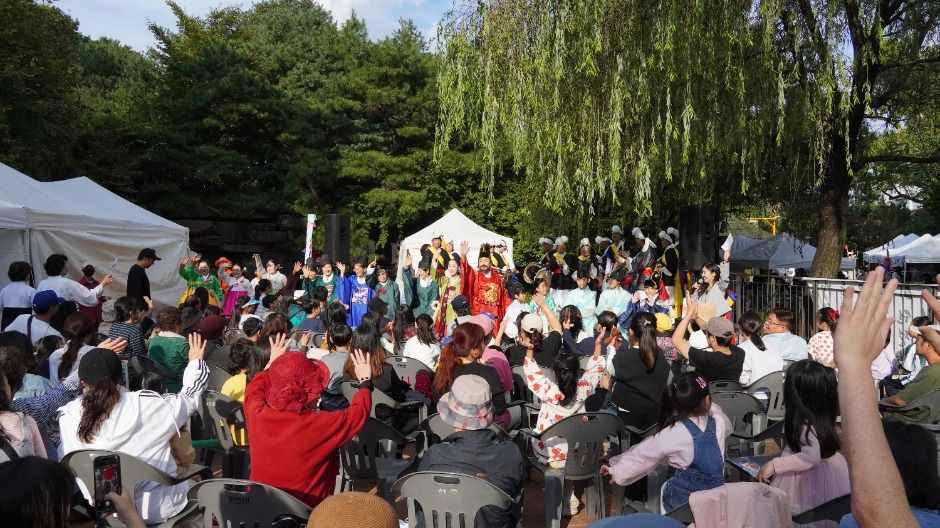
Hangeul and the Dobong Hangeul Festival
Hangeul is the alphabet used to write Korean. It was introduced in 1443 by King Sejong the Great and promulgated in 1446 under the title Hunminjeongeum, “The Proper Sounds for Instructing the People.” The project was intended to provide a practical writing system for Koreans, who at the time had to rely on Classical Chinese for written communication. While Chinese characters remained the preserve of educated elites, Hangeul was designed to be learnable by the general population.
The original set of 28 letters was later reduced to the 24 used today. The design reflects principles of articulation and sound. Consonants are based on the shape of the speech organs used to produce them; for example, the letter for a velar sound is drawn to suggest the back of the tongue blocking the throat. Vowels are composed from straight lines and dots representing heaven, earth, and the human figure. This makes the script easy to describe and reason about, and it has been of continuing interest to linguists.
Hangeul is also significant in Korean cultural history. It has been used for centuries in poetry, fiction, and public documents, and it has survived periods in which its use was discouraged. In South Korea, its creation is commemorated each year on Hangeul Day, and the 580th anniversary is being marked in 2026.
The Dobong Hangeul Festival is one of the events held for this occasion. It includes workshops on calligraphy and letter design, performances that use Hangeul in music and theatre, and displays of historical and contemporary printed materials. The festival is organized around the script itself—how it was made, how it works, and how it continues to be used in daily life.
