<output>
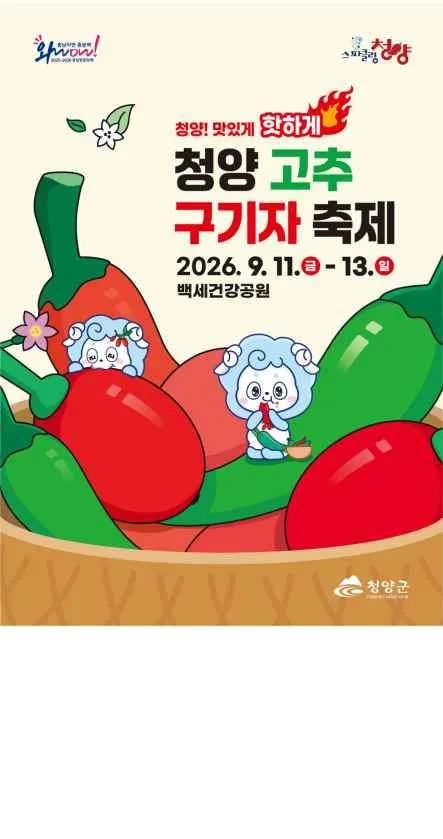
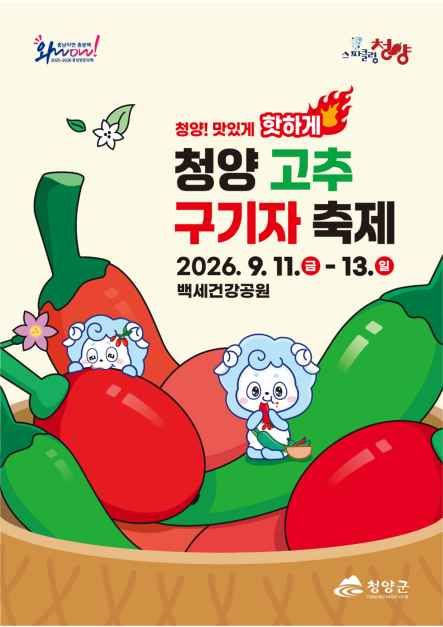
Cheongyang Chili Pepper and Goji Berry Festival
🗓️ 2026.09.11 ~ 2026.09.13
As autumn arrives in South Korea’s Chungcheongnam-do province, the Cheongyang Chili Pepper and Goji Berry Festival transforms this agricultural heartland into a celebration of two ingredients that define the region’s identity. What distinguishes this festival from countless other harvest celebrations across the country is its unwavering focus on participatory experiences—the organizers have designed nearly every element to engage visitors directly rather than keep them at arm’s length as spectators.
Cheongyang-gun has built its agricultural reputation on these two crops: the slender, vividly red cheongyang chili pepper (청양고추), among the spiciest varieties cultivated in Korea, and the antioxidant-rich goji berry (구기자), which thrives in the area’s continental climate with its sharp temperature swings between day and night. The festival leverages these specialties through what organizers describe as “five-sense satisfying” programs—experiences that engage sight, sound, smell, touch, and taste in equal measure.
What to Experience
The festival unfolds across five interconnected zones, each with a distinct focus:
Food Zone
The culinary offerings extend well beyond typical festival fare. A dedicated food court pavilion houses multiple vendors, while the specialized food experience village zone grants more intimate access to preparation techniques. The spicy liquor (酒) and spicy pride provincial college zone represents a particular curiosity—this appears to be a competitive or exhibition space where regional universities present their interpretations of how these ingredients intersect with alcohol. Food trucks provide additional flexibility for visitors with limited time.
Culture Zone
The World Chili Pepper and Goji Berry Welcome Center anchors this area, presumably offering historical and agricultural context for these crops. The Jicheon Stream photo zone and night landscape installations suggest the festival maintains its atmosphere after dark—a practical consideration given that September evenings remain pleasantly temperate.
Experience Zone
This zone concentrates the festival’s hands-on programming. The chili pepper and goji berry photo booth offers a predictable souvenir opportunity, but more substantively, children can engage with a wood experience booth and participate in making Cheongyang-i character snacks. Rice cake making, face painting, and “magic sponge” activities broaden the appeal for families with younger children.
Market Zone
Direct sales channels connect visitors with regional producers. Chili pepper and goji berry sales booths offer the raw ingredients, local agricultural specialty sales booths expand the selection to other regional products, and Cheongyang bread sales suggest that local bakeries have developed signature items incorporating these flavors.
Event Zone
The scheduled performances and competitions form the festival’s public face. Chef Yeo Kyung-rae’s cooking show provides professional culinary demonstration, while the national high school cooking survival competition—a format familiar from Korean television—offers amateur competitors a substantial platform. The Catch! Teenieping sing-along show addresses the preschool and early elementary demographic through a currently popular animated character. The King of Spicy Pride competition presumably tests participants’ tolerance for the chili pepper’s heat. More communally oriented activities include making giant geotjeori (fresh, unfermented kimchi) and assembling goji berry rice cake mosaics—both yielding tangible, shareable results.
Evening entertainment features invited singers including Song Ga-in (a prominent trot vocalist), Park Ji-hyun, Park Hyun-bin, and Solji (former member of the girl group EXID). The “Spread the Excitement of Cheongyang” and resident autonomy performances suggest additional programming drawn from local community groups.
For Families
The 2026 edition has specifically expanded its offerings for families with children. Beyond the aforementioned Catch! Teenieping performances and photo zones, the kids zone incorporates a wooden culture experience area and appearances by Cheongyang’s official mascots: Cheongyang-i, Cheong-chorong, and Cheong-hong-i. This represents a calculated effort to transform what might otherwise be a niche agricultural festival into multi-generational destination.
Practical Information
📍 Address: 16-6 Euncheondong-gil, Cheongyang-eup, Cheongyang-gun, Chungcheongnam-do
🛏️ Accommodations near the event
💰 Fee: Free
📞 Inquiry: 041-940-4852
🖥️ Homepage: https://칠갑마루.com/_festa
What are Cheongyang chili peppers?
Cheongyang chili peppers (청양고추) are a Korean chili variety developed in the 1980s and named after Cheongyang County in South Chungcheong Province. The peppers are slender, finger-sized, with pointed tips and skin that ranges from deep green to bright red depending on ripeness.
These peppers occupy a specific position on the heat spectrum. At 12,000 to 23,000 Scoville Heat Units, they exceed the mild heat of standard Korean green peppers without approaching the intensity of habaneros or ghost peppers. This range makes them useful for cooks who want noticeable spice without masking other flavors. The heat arrives quickly and lingers, followed by a mild sweetness that becomes more pronounced when the peppers are cooked or dried.
Several environmental factors in Cheongyang County contribute to the pepper’s character. The region’s mountainous elevation, significant temperature variation between day and night, and volcanic-derived soils with good drainage all promote higher capsaicin concentration. These conditions are not unique to Cheongyang, but local agricultural research and selective breeding have refined the variety over four decades.
Cheongyang now dominates domestic production of Korean hot peppers, accounting for roughly 70% of the national supply with annual shipments exceeding 200 billion won. This concentration has created a substantial processing economy. The fresh peppers appear in markets from late summer through autumn, but the harvest extends through year-round products: dried flakes (gochugaru), fermented pastes, oils, flavored snacks, and even capsaicin extracts for topical applications. The county hosts an annual pepper festival that draws visitors primarily from surrounding regions, where the crop serves as both agricultural product and local identifier.
In Korean cooking, “Cheongyang” functions as a shorthand for substantial heat. Restaurant menus often specify Cheongyang peppers to signal that a dish will be noticeably spicy rather than mildly seasoned. Home cooks use them fresh in stews and stir-fries, or dried and ground as a finishing spice. The commercial success of the variety has prompted some consideration of geographical indication protections, though the name has already entered general usage for similarly hot peppers grown elsewhere.
