National Heritage Media Art Buyeo Jeongnimsa Temple Site
🗓️ 2026.09.07 ~ 2026.09.27
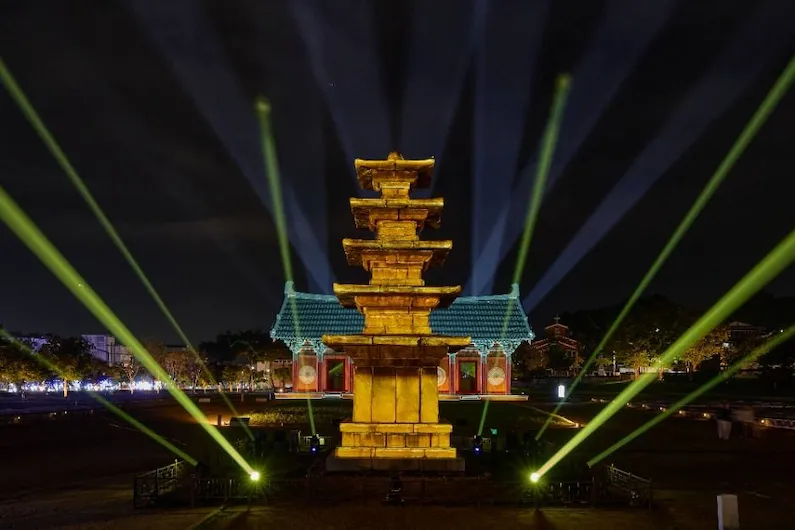
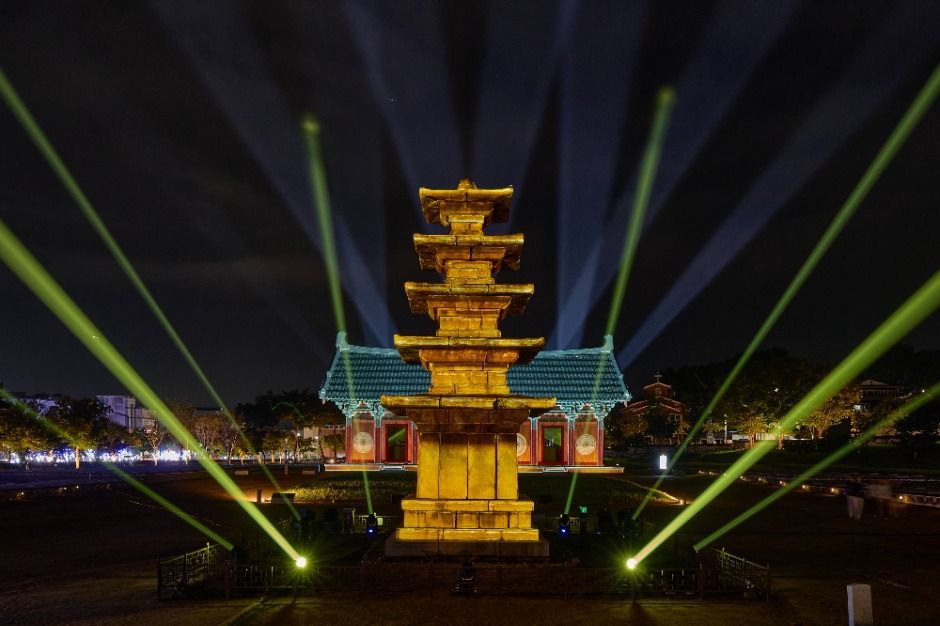
The 2026 National Heritage Media Art Buyeo Jeongnimsa Temple Site transforms the historic grounds of Buyeo Jeongnimsa Temple into a nighttime exhibition of media art, centered on the scholars of Sabi Baekje and the knowledge, technology, and national heritage of that era. Running for 21 days from September 7 to September 27, 2026, the event is held daily from 7:00 PM to 10:00 PM around the temple site, with the Five-Story Stone Pagoda and the former lecture hall serving as key stages for a program that spans image projections, laser art, lighting effects, large-screen installations, visitor-participation content, AI-based experiences, and kinetic art.
The works draw directly on the historical and cultural vocabulary of Sabi Baekje, including the Baekje Gilt-Bronze Incense Burner, lotus-patterned roof tiles, and the kingdom’s achievements in astronomy, crafts, and architecture. Visitors move through both observational and hands-on content, with each zone offering a distinct entry point into the past.
Zone 1
- Boundary of Light
- Light of Sabi
- Lotus Pond of Light
- Pagoda of Light
- Scripture of Light
- Sabi Sermon
- Sabi Garden
Zone 2
- Incense Burner of Light
- Sabi Astronomy
- Wave of Light
- Sabi Flower Point
- Light of Wisdom
- Sabi Workshop
- Pattern of Light & Light Play
Zone 3
- Path of Wisdom
- Light of Transmission
📍 Address: 83 Jeongnim-ro, Buyeo-eup, Buyeo-gun, Chungcheongnam-do
🛏️ Accommodation near the event
💰 Fee: Free
📞 Inquiry: 041-837-1722
⭐️ Instagram: https://www.instagram.com/mediaartbuyeo/
🖥️ Homepage: https://mediaartbuyeo.com/
Sabi Baekje is the name given to the final period of the ancient Korean kingdom of Baekje, when its capital was located at Sabi, in present-day Buyeo County, South Chungcheong Province. The period began in 538 CE, when King Seong moved the court from Ungjin (now Gongju) to Sabi, and ended with the kingdom’s fall in 660 CE.
During this time, the Baekje court established Buddhism as the state religion and used it to consolidate royal authority. The government commissioned temples, sculptures, and ritual objects, and the capital became a node in a network of maritime exchange with China and Japan. Priests, envoys, and artisans traveled through Sabi, carrying texts, Buddhist imagery, and building techniques. The art produced in this period is marked by a restrained sense of line and proportion, and it had a lasting effect on the religious art and architecture of East Asia, particularly in Asuka-period Japan.
The Jeongnimsa temple site in Buyeo is among the most significant surviving remains from the Sabi period. It was a royal temple at the center of the capital, and its layout and stone pagoda provide concrete evidence of Baekje’s architectural practice. The site is now part of the Baekje Historic Areas designated by UNESCO, and it is displayed with lighting and media installations that allow visitors to read the excavated foundations and pagoda without reconstructing the original buildings. Those installations keep the site accessible; the historical record does the rest.
