Osaka Antique Festa
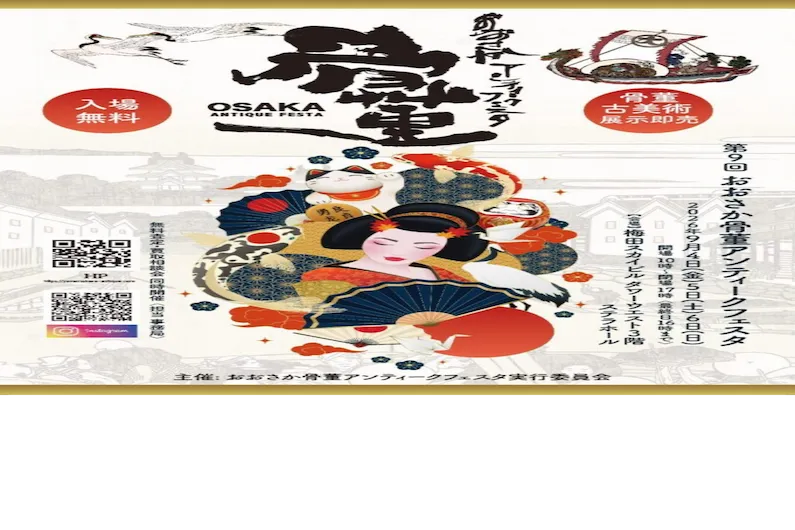
The Osaka Kotto Antique Festa is an exhibition and sale of selected antiques and collectibles at the Umeda Sky Building. Visitors can take part in auction projects held within the venue, and the event also features a contemporary art exhibition.

Additionally, a gathering to listen to Kamigata Rakugo will be held inside the venue on the final day, 9/6 (Sun). Two sessions are scheduled: ①12:00 and ②14:00. Admission is 500 yen for adults, free for those 18 and under, with same-day registration and unreserved seating. The performer will be Katsura Taizo.

The event also extends outdoors: an outdoor event featuring antiques and crafts will be held at the “Wonder Square” outdoor plaza on the 1st floor. Anyone is welcome to participate, whether you want to experience the charm of antiques, are looking for items for your collection, or wish to enjoy encountering new art.
Event Details
- Event Period: 2026/9/4 (Fri) – 6 (Sun)
- Event Hours: 10:00–17:00 (Closing at 16:00 on the final day)
- Event Location: Umeda Sky Building Tower West 3rd Floor Stella Hall (1-1-88 Oyodonaka, Kita-ku, Osaka City)
- Fee: Free Admission
- Inquiries: [email protected]
- Website: https://yumenokura-antique.com/
Kamigata Rakugo is a form of comic storytelling from the Kamigata region, the area around Kyoto and Osaka. It developed alongside Tokyo rakugo, but the two have distinct performance styles. Tokyo rakugo tends to be quick and sharp; Kamigata Rakugo is slower and more relaxed, and it uses the Kansai dialect. In both, a single storyteller sits on a cushion and performs all the roles, using only a folding fan and a cloth to suggest objects and actions. The cast of characters ranges from merchants and servants to samurai and ghosts.
The stories themselves are humorous, but the humour is often gentle. Many are less concerned with punchlines than with the small mistakes and kindnesses of ordinary people, and they can end on a note of reflection rather than a joke. The pacing gives the performers room to suggest a character’s mood through posture and timing. Productions may also include wooden clappers (kotsu) for sound effects, and occasionally shamisen music, which gives performances a theatrical layer. The form has been practised for centuries and remains a regular part of the cultural calendar in Osaka and Kyoto. It offers laughter, but also a specific and local way of looking at human behaviour.
