Well Being ESAKA 2026 at Esaka Park: Free September 26 Autumn Marche with Gourmet Food, Handmade Goods, and Live Performances

Well Being ESAKA 2026 at Esaka Park: Free September 26 Autumn Marche with Gourmet Food, Handmade Goods, and Live Performances

Well Being ESAKA

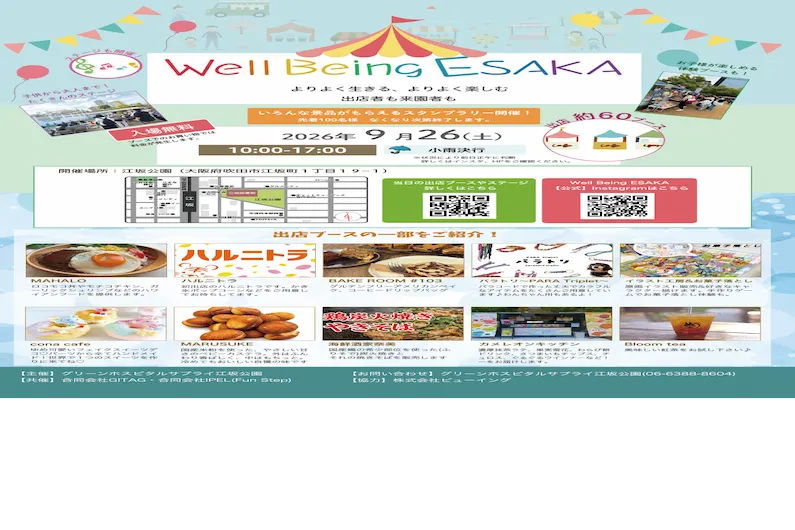
Esaka Park will host a free-admission marche event on Saturday, September 26, 2026, under the theme “A day in autumn to live better and enjoy better.” With the autumn breeze expected to make the open-air setting comfortable, the event combines food stalls, shopping booths, and live stage performances in one place. The theme points to a simple idea: taking a day in autumn to eat well, browse, and enjoy the outdoors.

Since the event is outdoors, visitors should note that it will be held in light rain but cancelled in stormy weather.

Gourmet and shopping booths

A long line of booths will extend through the venue, offering an array of gourmet options. Visitors can find curry, Hawaiian food, fried chicken, and crepes, as well as sales booths featuring one-of-a-kind handmade accessories and miscellaneous goods. Because admission is free, the only cost is whatever visitors choose to spend on food or items. The mix of gourmet stalls and handcrafted goods gives attendees a reason to linger, whether for a full meal or just to browse.

Stage performances

Live music, dance, and hula performances are scheduled during the event. These stage acts are meant to bring the crowd together and will fill the venue with enthusiasm and smiles. With performances running throughout the day, visitors can plan their time around both the stages and the booths.

Event details

  • Event Period: Saturday, September 26, 2026 (Held in light rain, cancelled in stormy weather)
  • Event Time: 10:00–17:00
  • Event Location: Esaka Park (1-19-1 Esakamachi, Suita City, Osaka Prefecture)
  • Fee: Free admission
  • Website: https://wellbeingesaka.com/

🛏️ View hotels near the event

What is Esaka Park?

Esaka Park is a public green space in Suita City, Osaka Prefecture, Japan. It sits in the Esaka neighborhood, a dense area of offices, shops, and apartment buildings. The park’s main features are its open lawns, shaded pathways, seasonal flower beds, and a children’s playground. People use it for walking, jogging, picnicking, or simply sitting on a bench away from traffic.

The park also serves as a venue for community events. Local festivals, morning markets, and outdoor gatherings are held here throughout the year. Its open layout allows for market stalls, a small stage, and room for visitors without feeling cramped. One upcoming event is the Well Being ESAKA 2026 Autumn Marche, a market planned to include food vendors, handmade goods, and live performances. For people who live or work nearby, the park is a practical and pleasant place to meet others and spend time outside.
2026 Yangju Autumn Globe Amaranth Festival: Dates, Flower Fields, and Visitor Guide for the Perfect Autumn Outing

2026 Yangju Autumn Globe Amaranth Festival: Dates, Flower Fields, and Visitor Guide for the Perfect Autumn Outing

Yangju Autumn Globe Amaranth Festival

🗓️ 2026.09.26 ~ 2026.10.04

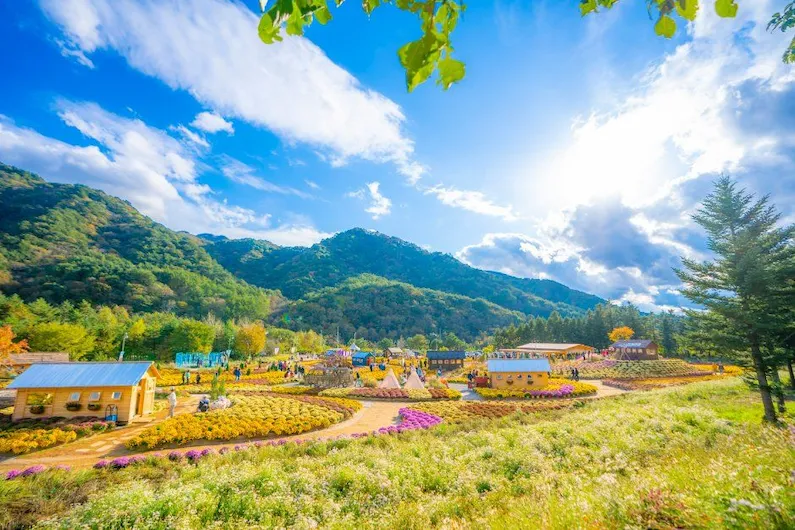
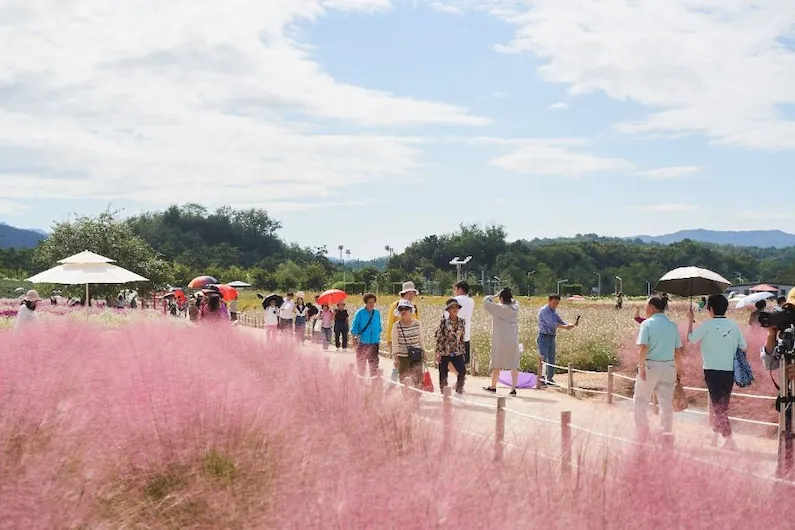
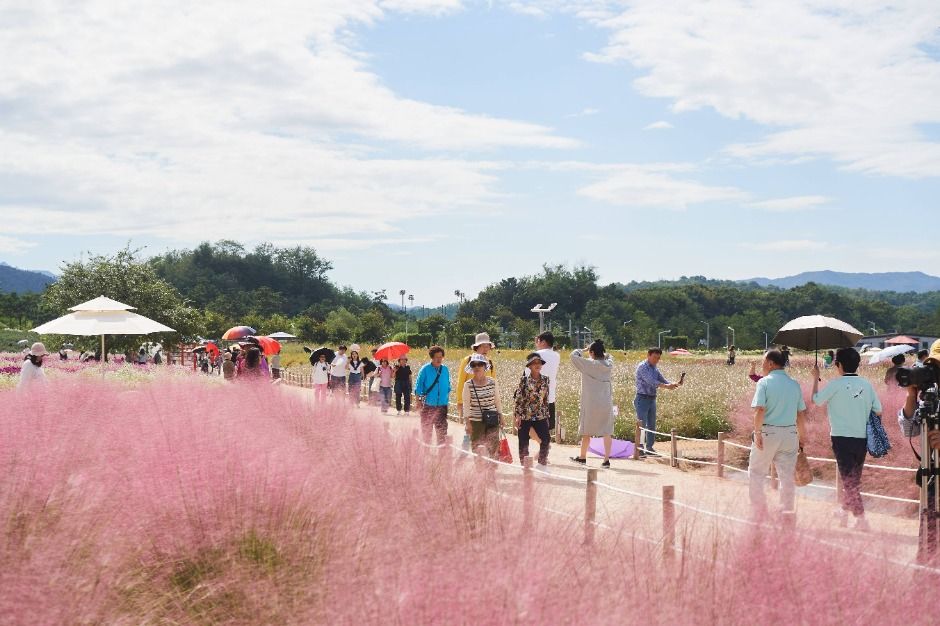
Globe amaranths in seven colors, each with its own flower language and charm, will fill Yangju Nari Farm from September 18 together with more than 20 species of autumn flowers. The seemingly endless flower fields create a space where the splendid atmosphere of autumn can be fully felt. Under the slogan “Yangju’s Autumn Dyed in Globe Amaranth,” the 2026 Yangju Globe Amaranth Autumn Festa will be held during the weekends from September 26 to October 4.

During the festival period, the farm offers flower field viewing along with programs designed for capturing moments with family and partners and for making memories with friends. Performances, hands-on experiences, and photo zones are set up throughout the farm, so visitors of all ages have something to enjoy. The festival program also includes cultural and art performances, specially designed spaces, and experience and market booths.

Yangju Nari Farm is located in the center of northern Gyeonggi Province and is reachable within approximately one hour from anywhere in the metropolitan area, which makes it one of the top spots for autumn outings.

Yangju Globe Amaranth Autumn Festa

Planned performances

  • Katuri Sing-along Show
  • Bubble Magic Show
  • Flower Path Busking

Side events

  • Yangju Globe Amaranth Autumn Festa Marathon (hosted by Yangju City Sports Council)

Practical information

What is globe amaranth?

Globe amaranth (Gomphrena globosa) is an annual flower native to Central America and cultivated in tropical and warm temperate regions worldwide. It belongs to the amaranth family (Amaranthaceae). The common name comes from the flower heads, which are round, clover-like clusters of small tubular florets. These heads are made up of papery bracts rather than true petals, giving them a dry, stiff texture that persists after picking.

The plant grows upright to about 30 to 60 centimeters, with slender green leaves and firm stems. Flowers appear in magenta, purple, pink, white, and red, and remain on the plant from late summer into early autumn. Because the bracts hold their color and shape when dried, globe amaranth is a standard material in dried flower arrangements. In Korea, this durability has associated the plant with longevity and immortality.

The plant also has a history of practical use. Its flowers have been brewed into tea in traditional herbal medicine, and it has served as a source of natural dye and as material for festive decoration. It grows well in hot, sunny conditions and requires little attention once established, which makes it suited to open-field cultivation. These traits are also what allow the Yangju Autumn Globe Amaranth Festival to plant extensive fields of the flower and keep them presentable for visitors over several weeks. For gardeners and florists, globe amaranth offers an annual that does not wilt quickly and holds up both in the ground and after harvest.

2026 Wonju Yongsugol Autumn Flower Festival: Guide to Dates, Tickets, and Stunning Floral Displays

2026 Wonju Yongsugol Autumn Flower Festival: Guide to Dates, Tickets, and Stunning Floral Displays

Wonju Yongsu-gol Autumn Flower Festival

Wonju Yongsugol Autumn Flower Festival

🗓️ 2026.09.23 ~ 2026.10.05

The Wonju Yongsugol Autumn Flower Festival is a community-driven event situated in the Yongsugol area of Seogok-ri, Panbu-myeon, Wonju-si, within the Gangwon Special Self-Governing Province. The 5th iteration of this festival is scheduled for 2026, running for 13 days from September 23 to October 5. Unlike large-scale commercial events, the festival grounds are spaces meticulously created and managed by village residents, who oversee everything from the initial planting of the flower beds to the general operation and environmental maintenance of the site.

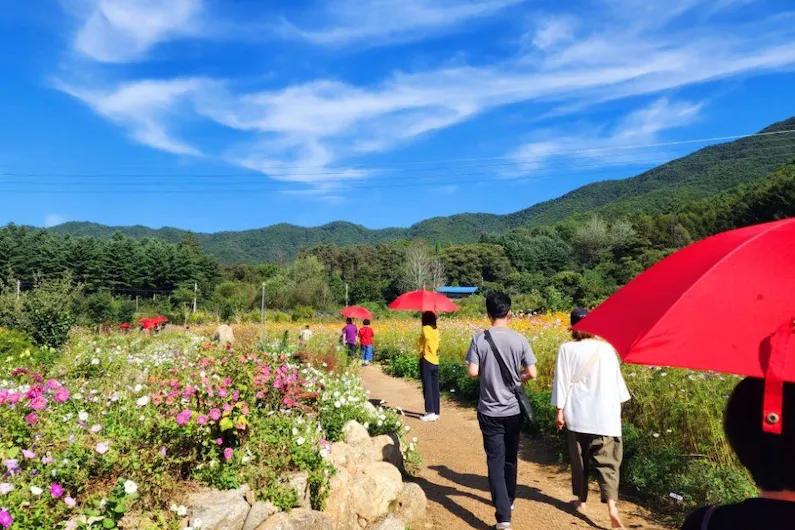
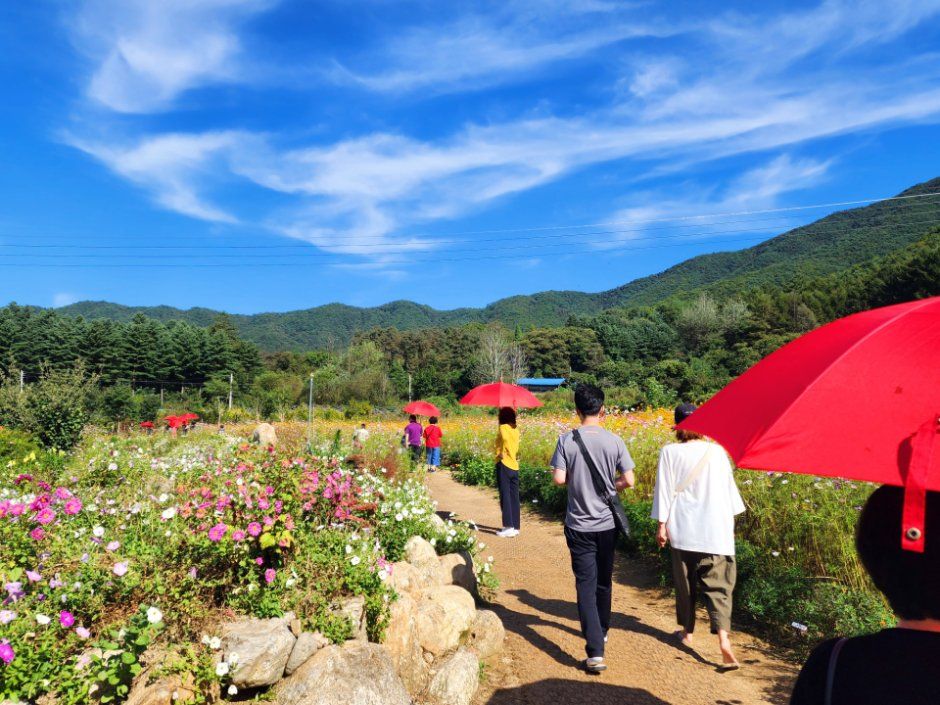
This resident-led initiative transforms the rural landscape into a curated botanical display, utilizing the region’s natural environment to provide a seasonal tourism experience. While Yongsugol is known for its Flower Poppy Festival in the spring, the autumn event shifts its focus to a diverse array of blooms suitable for the cooler months. Visitors can explore several organized sections, each categorized by flower type and color, featuring zinnias, sunflowers, cosmos, yellow cosmos, verbena, globe amaranth, and asters.

Throughout the festival period, the programming focuses heavily on the aesthetic appreciation of the flower beds and photography. To complement the scenery, the local community provides dedicated spaces for the sale of regional agricultural products and traditional food.

Experience Programs and Sales

Beyond the floral displays, the festival offers interactive activities designed to engage visitors of all ages:

  • Experience Programs: Guests may participate in the tin can train experience or engage in natural object craft experiences.
  • Available Sales: A variety of items are available for purchase, including festival commemorative goods, commemorative red umbrellas, local agricultural products, flower seedlings, flower seeds, and various craft products.

Admission and Usage Fees

Entry to the festival is a paid experience, with pricing tiered based on age and eligibility:

Paid Entry

  • Adults and Middle/High school students: 5,000 won
  • Seniors (65 years or older), persons of national merit, the mildly disabled, and groups of 20 people or more: 3,000 won (Note: Discounts are limited to individuals who provide supporting documentation).

Free Entry

  • Elementary school students and younger.
  • Residents of Seogok 4-ri and weekend farm allottees of Flower Poppy Village.
  • Individuals with severe disabilities (grade 3 or higher) provided they bring a welfare card.
  • Disabled groups (please inquire by phone for specific arrangements).

Essential Information

📍 Address: 311 Yongsugol-gil, Panbu-myeon, Wonju-si, Gangwon Special Self-Governing Province

🛏️ Accommodations near the event

💰 Fee: Paid

📞 Inquiry: 033-764-4443

⭐️ Instagram: https://www.instagram.com/yongsugolpoppy/

🖥️ Website: https://blog.naver.com/seogok4/224385651544

Yongsugol

Yongsugol is a valley on the lower slopes of Chiaksan National Park in Wonju, Gangwon Province, South Korea. The name means “Dragon’s Valley,” after a local legend about a dragon said to have lived in the mountain streams that flow through the area. The valley itself is a mix of forested hillsides, rocky outcrops, and a stream that passes by old stone walls and the remains of farming terraces.

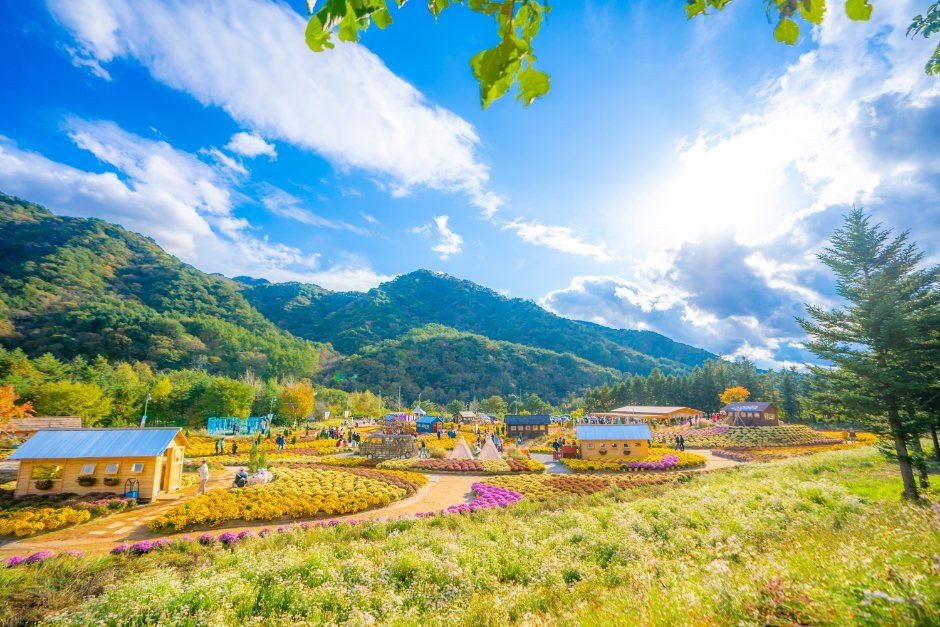
In recent decades, the valley has become known for its autumn flowers. Local residents and volunteers turned former rice paddies and open fields into planted gardens. Chrysanthemums, cosmos, and other late-blooming flowers now fill the lower slopes in October, arranged in beds along walking paths that follow the land’s contours. The plantings are not a formal park; they are working fields and gardens laid out for visitors while the village continues to operate around them. The flowers’ pinks, whites, and yellows sit against the yellows, oranges, and reds of maple trees on the surrounding hillsides.

Although visitor numbers rise sharply in October, Yongsugol still functions as a rural community. Wooden farmhouses, footbridges, and the sound of water over rocks give the valley a settled, unforced character. Walking the paths takes in both the flower displays and the everyday landscape of a mountain village. For most visitors, the appeal is straightforward: a chance to see cultivated autumn color in a valley that has not been turned into a theme park.

Nagoya Horikawa Water Magic Festival 2026: Enjoy Onboard Beer Bars, Floating Markets, and Riverside Events

Nagoya Horikawa Water Magic Festival 2026: Enjoy Onboard Beer Bars, Floating Markets, and Riverside Events

Horikawa Water Magic Festival 2026

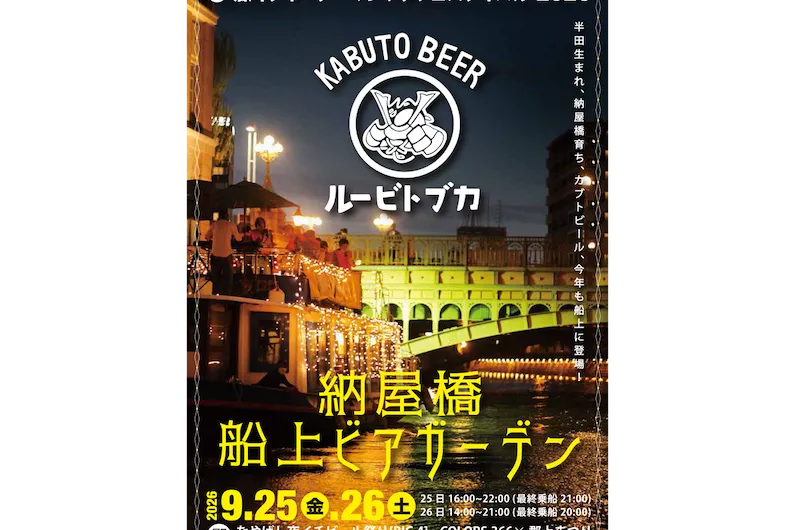
On September 25 and 26, 2026, the Horikawa River and Nayabashi area in Nagoya will host the Horikawa Water Magic Festival. The two-day event revives Showa Nama Kabuto Beer for this occasion only, and pairs it with an onboard beer bar, a floating market on stand-up paddleboards, and the illuminated night view from the water. The riverside is also the site of two concurrent events, so the festival works as a single night out with several different stops.

Onboard Beer Bar

A ferry runs from Pier Nayabashi to the onboard beer bar on the river. On board, you can drink Kabuto Beer or a soft drink while taking in the night view from the water.

  • Date & Time: September 25 (Fri) 16:00–22:00, September 26 (Sat) 14:00–21:00
    The final trip is scheduled for one hour before closing on both days. Depending on congestion, boarding restrictions may be implemented or the final boarding time may be moved earlier, so allow plenty of time. Please also understand if the beer sells out.
  • Price: Enjoyment Ticket: 1,000 yen (includes round trip between Pier Nayabashi and the onboard beer garden, plus one drink). Under-20s: 500 yen. One child of elementary school age or younger is free per one adult (drink not included).
  • Additional Drinks: Kabuto Beer 800 yen, soft drinks 500 yen
  • Boarding Point: Pier Nayabashi (Nayabashi Southeast, in front of Terrasse Nayabashi)

Floating Market

SUPs (Stand Up Paddleboards) will appear on the waters of the Horikawa River to provide snacks and other items.

  • Date & Time: September 26 (Sat), scheduled for the afternoon
  • Price: Free
  • Location: Horikawa Nayabashi area waters

Distribution of SRT Fans

SRT Fans will be distributed at the boarding ticket office. Stickers will also be given to those who follow the official SRT Instagram.

SRT is a new road public transportation system integrated with urban development to expand the mobility of the Nagoya city center and increase ground-level activity. You can board and alight at the Nayabashi bus stop and the Yanagibashi bus stop near Nayabashi.

Concurrent Events

Nayabashi Yo-ichi Beer Festival [BIG4]

In addition to the night market, a special two-day “Yo-ichi” will be held where you can enjoy draft beers from four major manufacturers (Asahi, Suntory, Orion, and Sapporo) that are not usually available. There are also plenty of gourmet stalls, so people who do not drink can enjoy it too.

  • Date & Time: September 25 (Fri) 17:00–21:30, September 26 (Sat) 13:00–21:00
  • Venue: Plazas and promenades between Nayabashi and Nishikibashi

Gujo Festival (COLORS.366 × Gujo)

This popular event lets you experience the full charm of Gujo. The atmosphere of Gujo comes through the Gujo Odori dance, Gujo’s “delicious foods,” and local specialty products. It is an easy stop on the way home from work.

  • Date & Time: September 25 (Fri) 16:00–22:00
  • Venue: COLORS.366

🛏️ View hotels near the event

Event Information

  • Dates: September 25 (Fri) and 26 (Sat), 2026. Canceled in case of rain.
  • Time: 25th (Fri) 16:00–22:00; 26th (Sat) 14:00–21:00
  • Location: Horikawa/Nayabashi Area
  • Price: Free admission (onboard beer garden is paid)
  • Contact: Horikawa Water Magic Festival Executive Committee, TEL: 052-972-2891
  • Homepage: http://horikawa-wmf.com/
  • Access: Get off at “Fushimi” Station on the Subway Higashiyama Line/Tsurumai Line. Approximately 8 minutes walk from Exit 8.
  • Remarks: Only takeout food purchased at the information center special tent (Nayabashi Southeast corner) may be brought onto the onboard beer bar. There is no food for sale on board, so those who require food should purchase it at the information center special tent before boarding.

What is Nagoya’s Horikawa Canal?

The Horikawa Canal is a waterway in Nagoya that runs roughly 15 kilometers from Nagoya Port into the downtown area. It was dug in the early 17th century to transport building materials for Nagoya Castle. After the castle’s construction, it became a commercial route for rice, lumber, and other goods moving between the city and the port. Warehouses and merchant operations lined its banks during that period.

In recent decades, the waterfront was redeveloped for public use. It now has walking paths, illuminated bridges, and open gathering spaces. The canal is also used for city events, including the floating beer bars and market stalls of the Water Magic Festival. It remains an active part of Nagoya’s urban landscape, linking the port area to the center of town while serving as a venue for everyday recreation and seasonal events.

2026 Yecheon Samgangjumak Ferry Landing Festival: Experience Korea’s Last Traditional Tavern this Chuseok

2026 Yecheon Samgangjumak Ferry Landing Festival: Experience Korea's Last Traditional Tavern this Chuseok

Yecheon Samgangjumak Ferry Landing Festival

🗓️ 2026.09.25 ~ 2026.09.27

Yecheon Samgang Jumak Ferry Festival

The Samgang Naru Jumak Festival is a Chuseok holiday event that homecoming visitors and tourists enjoy together, set against Samgang Jumak, the last tavern (jumak) in Korea. The 2026 Yecheon Samgang Naru Jumak Festival will be held for three days from September 25th to 27th in the Samgang Cultural Complex area under the theme “The Tavern Reopened, Samgang Stirring.”

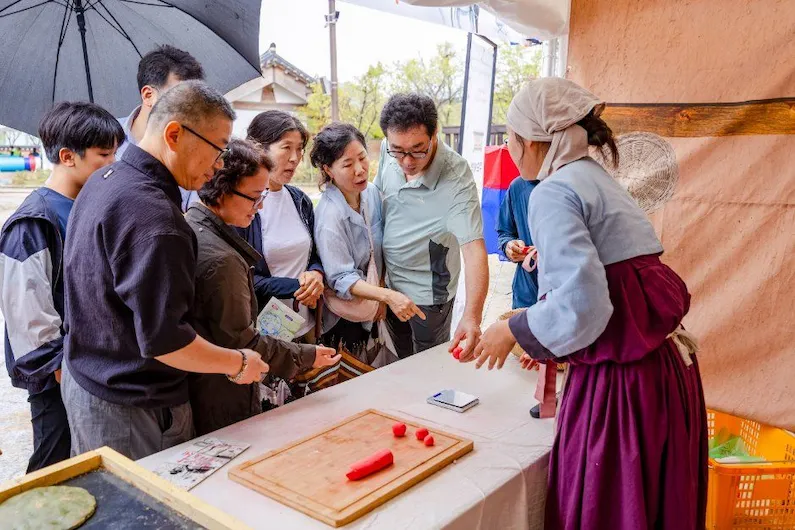
Based on the history and culture of Samgang Jumak—once a resting place for peddlers and travelers crossing the ferry terminal—the festival runs participatory programs including the Peddler Square, where actors dressed as peddlers, tavern keepers, hunters, and merchants bring the past to life. Visitors can also take part in the Samgang Golden Bell to learn about Samgang’s history and culture, try personality tests, and use the slow mailbox.

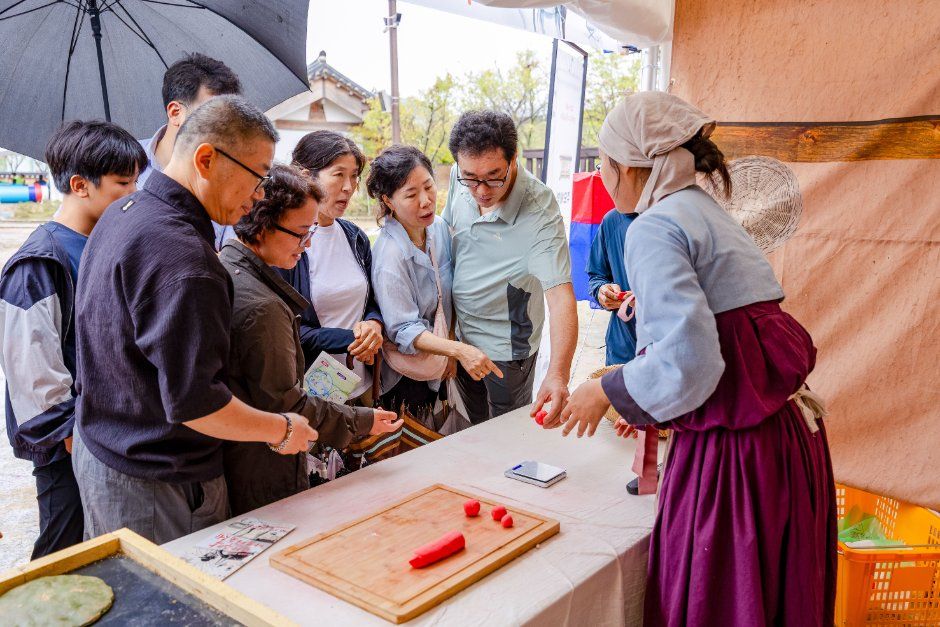
Hands-on activities include making dalgona, shooting, a spinning wheel experience, and hanbok experiences, alongside a dedicated kids’ zone. The entertainment lineup features performances by local artists, busking, and children’s performances. For shopping and dining, the Haeborae Market operates as a linked event with local agricultural and specialty products, handicrafts, and a food zone.

Programs at a Glance

Main Programs

  • Stamp Tour, Peddler Sports Day, Samgang Kids Zone, Samgang Daldal Workshop

Side Programs

  • Spinning Wheel Experience, Traditional Clothing Experience, Caricatures, Samgang Shooting Range, etc.

Performances

  • Local Artist Stage, Samgang Busking, Children’s Performances, etc.

Exhibition & Sales

  • Haeborae Market (Linked Event), Food Trucks, Local Agricultural/Specialty Product Sales, etc.

Event Details

Samgangjumak is a traditional Korean tavern in Yecheon, North Gyeongsang Province. It stands on the bank of the Nakdong River, near the point where three streams meet. That is where the name comes from: sam meaning “three,” and gang meaning “river” or “stream.” A jumak was a wayside tavern in the Joseon period, offering food, drink, and shelter to travelers. Jumaks were once a common feature of roads and river routes, but few have survived in their original form.

The Samgang ferry landing made this location a natural stopping place. During the Joseon era, the Nakdong was a busy transport route. Boats carried grain, salt, cloth, and other goods between inland markets and coastal ports, while travelers used the river for longer journeys. A ferry crossing was a point where people had to wait, and a jumak nearby gave them something to do during that time. A guest could get a hot meal, a bowl of makgeolli, and a place to rest before continuing on. The tavern also served an informal purpose: travelers exchanged news, merchants kept track of market conditions, and local residents heard what was happening beyond their own region.

Samgangjumak is notable because it has remained intact while most jumaks disappeared. The building keeps its original wooden structure, low tables, and open courtyard. It is protected as a cultural heritage site, but it is not treated as a sealed museum piece. Visitors can sit in the tavern, order food and drink, and observe the river at roughly the same pace a traveler would have two hundred years ago.

During the annual Yecheon Samgangjumak Ferry Landing Festival, the tavern becomes the center of a program that includes traditional music, cooking, and brewing demonstrations. The festival uses the site’s history as a ferry stop, and much of the activity takes place around the landing where boats once came and went. For the rest of the year, Samgangjumak operates as a historic tavern, open to visitors who want to understand how a Joseon-era rest stop worked.

2026 Andong International Mask Dance Festival: Experience UNESCO Heritage and Global Culture in Korea

2026 Andong International Mask Dance Festival: Experience UNESCO Heritage and Global Culture in Korea

Andong International Mask Dance Festival

🗓️ 2026.09.24 ~ 2026.10.04

The Andong International Mask Dance Festival is a global festival that brings mask dance traditions from Korea and around the world into one festival site. Korean mask dance, listed as a UNESCO Intangible Cultural Heritage of Humanity, is presented alongside mask dance performances by overseas troupes. The 2026 festival is designed to connect the time preserved in masks with present-day life, and to make those traditions accessible to everyone—from local residents to international visitors.

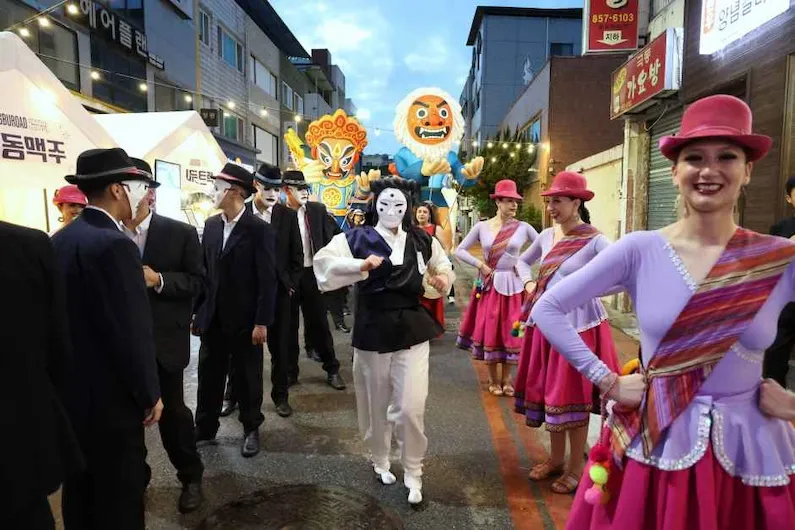
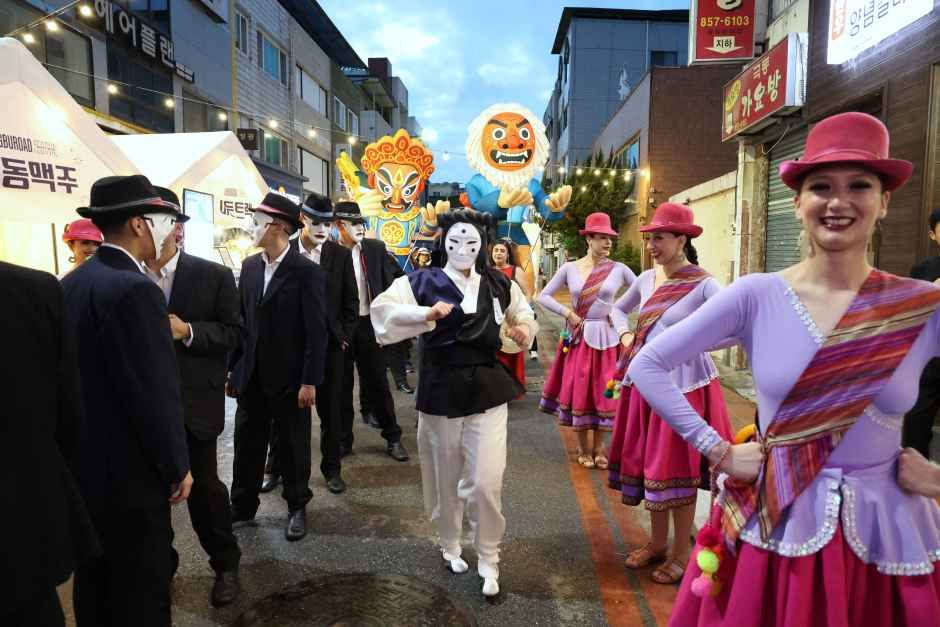
Rather than being purely stage-based, the festival turns the grounds into a participatory space. Visitors can watch a wide range of performances, take part in parades and the Daedong Nanjang (grand feast), follow the World Maskdance Competition, or try hands-on activities like mask making and learning a mask dance. The program includes performances, competitions, and food, making it possible for families, first-time visitors, and longtime enthusiasts to find their own way into the festival.

From children to the elderly, and from local residents to visitors from around the world, the moments when everyone laughs, claps, and shares rhythms in the same space turn the memories carried by masks into living culture. The festival is, in that sense, a “dance for everyone”—made complete by the people who gather, share the same rhythm, and turn a performance into a communal experience.

Andong International Maskdance Festival

Program highlights

  1. Domestic and international maskdance performances — Including domestic mask dance groups listed as UNESCO Intangible Cultural Heritage of Humanity (“Korean Mask Dance”) and overseas mask dance performance groups.
  2. Madang-geuk (traditional outdoor play) & creative plays, mask dance troupe performances
  3. Competition events — Including the World Maskdance Competition, Mask Talent, World Creative Mask Contest, and Mask Dance Drawing Contest.
  4. Citizen participation events — Including Daedong Nanjang and street parades.
  5. Experiential programs — Including mask making and learning mask dance.
  6. Festival food — A chance to experience both the mask dance festival and Andong through its cuisine.

Visitor information

📍 Address: 239 Yuksa-ro, Andong-si, Gyeongsangbuk-do (Unheung-dong)

🛏️ Accommodations near the event

💰 Fee: Free (Some experiential programs and performances at the mask dance performance hall have a fee)

📞 Inquiry: 054-840-3400

🖥️ Website: www.maskdance.com

The Andong Mask Dance, formally known as Hahoe Byeolsingut Talnori, is a Korean mask dance drama from Hahoe Village in Andong. It developed over centuries as part of village rituals intended to appease gods and ancestral spirits, pray for good harvests, and strengthen community ties. It also served as social commentary. Through humor, satire, and dialogue, performers used stock characters to parody the aristocracy and clergy, and to represent ordinary people’s lives. The wooden masks, traditionally carved from alder, distinguish each character by expression and shape; they include the nobleman, the monk, the bride, and the servant.

UNESCO inscribed Talchum, the broader Korean mask dance tradition, on the Representative List of the Intangible Cultural Heritage of Humanity in 2022. The Andong Mask Dance is one of the tradition’s most historically significant and well-documented forms. Its inscription recognizes the practice’s cultural role rather than only its artistic value. The dance is still performed by community members, taught across generations, and adapted over time. UNESCO’s criteria emphasize dialogue, social cohesion, and mutual respect—qualities the performance has carried since its origins. The Andong International Mask Dance Festival, scheduled for 2026, will present the dance as part of this continuing tradition, along with related performances and programs.

2026 Inje Autumn Flower Festival: Experience Romantic Gardens and Literary Healing in Gangwon-do

2026 Inje Autumn Flower Festival: Experience Romantic Gardens and Literary Healing in Gangwon-do

Inje Autumn Flower Festival

🗓️ 2026.09.24 ~ 2026.10.11

The 2026 Inje Autumn Flower Festival adds a touch of specialty by presenting a differentiated garden where literary sensibility and splendid autumn flowers harmonize to commemorate the 100th anniversary of the birth of poet Park In-hwan, a leading figure of Korean modernist poetry. The most significant feature of this festival is that visitors can feel the literary lingering emotions while admiring colorful autumn flowers in a space that modernly reinterprets the poet’s romance.

The festival grounds are diversely composed of themed paths, each carrying a different “wish.” It is ideal for enjoying a leisurely autumn stroll, with sections devoted to happiness, love, communication, and healing, plus a well-being market and a lineup of events that make it a complete autumn outing.

Main Programs

Wish for Happiness

This section features the Park In-hwan Romantic Garden, flower shelters, and the Fortune Observatory.

Wish for Love

Here you will find the wildflower garden, a chrysanthemum bonsai exhibition, and food trucks.

Wish for Communication

A cozy waterfront promenade and a slow mailbox create a calm, reflective atmosphere.

Wish for Healing

Visitors can stroll through the forest cafe and author/community gardens, and enjoy nature experience programs such as tree climbing, treehouses, children’s forests, and bookmark making.

Well-being Market

The market offers local agricultural products, chrysanthemum sales, food trucks, craft experiences, and lively performances.

Events

Alongside the main programs, the festival features a flower path stamp tour, rock-paper-scissors tournament, visit review event, survey event, and sketching contest. These activities, combined with the themed gardens and market, provide a perfect autumn day out.

Visitor Information

📍 Address: Yongdae-ri, Buk-myeon, Inje-gun, Gangwon Special Self-Governing Province

🛏️ Accommodation near the event

💰 Fee: Free (Some programs require a fee)

📞 Inquiry: 033-460-8900

🖥️ Website: https://www.injefestival.com/flower/

Inje Autumn Flower Festival

Inje, Gangwon-do

Inje is a county in Gangwon-do, South Korea, located in the Baekdu-daegan mountain range. The county includes part of Seoraksan, whose highest point, Daecheongbong, is a notable summit in the area. It also has deep valleys, clear streams, and large stretches of forest. The landscape changes with the seasons: snow lingers on the ridges in winter, the slopes turn green in spring and summer, and the hillsides turn red and yellow in autumn.

The county is primarily known for outdoor recreation. Hiking and mountain biking are popular on the surrounding ridges; paragliding is available from some launch sites; and the Soyang River supports fishing and other water-based activities. In autumn, Inje also draws visitors to its gardens and lower slopes, where chrysanthemums and other late-blooming flowers bloom. These places offer a less strenuous alternative to mountain activities. The combination of rugged terrain and cultivated gardens gives the area a varied character, and tourism here includes both active and easygoing recreation.

Night Banquet at Changgyeong Palace 2026: Experience a Royal Joseon Dynasty Feast with Your Family in Seoul

Night Banquet at Changgyeong Palace 2026: Experience a Royal Joseon Dynasty Feast with Your Family in Seoul

Night Banquet at Changgyeong Palace

Changgyeonggung Yayeon

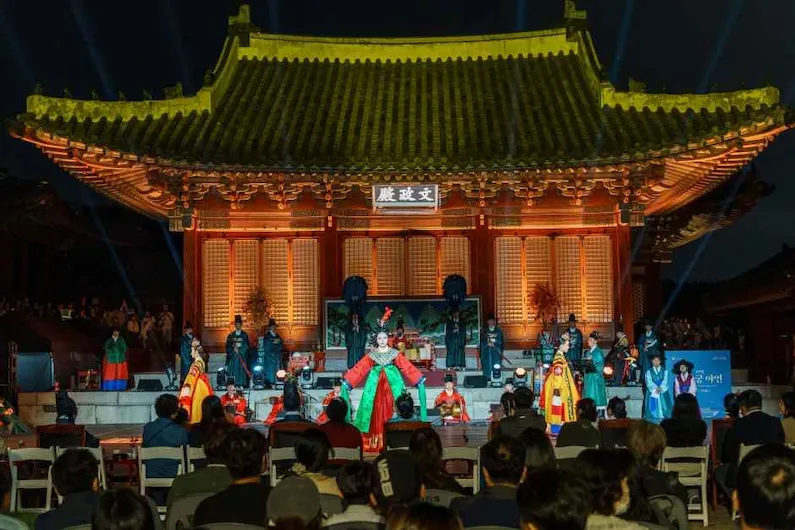
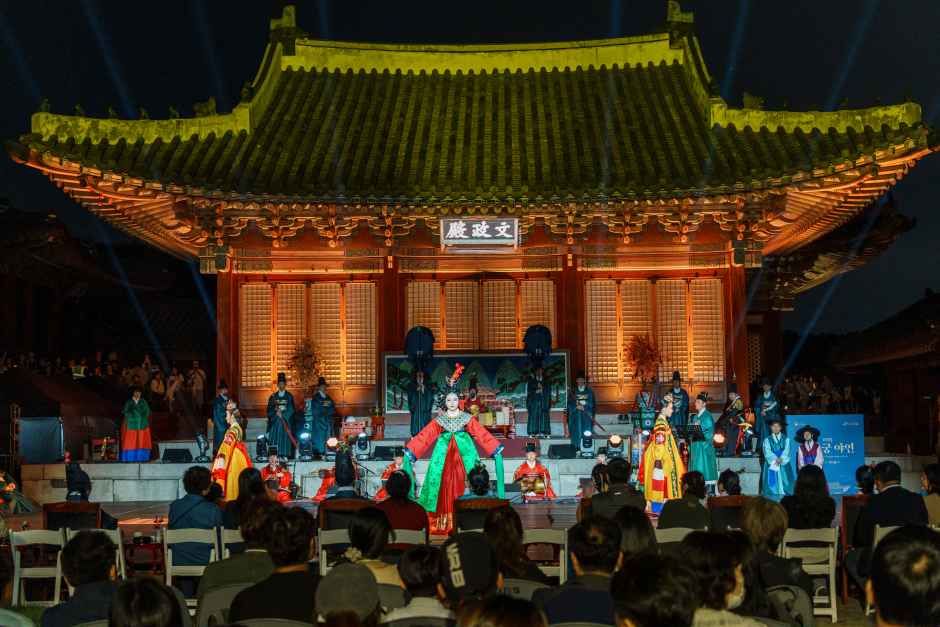
Changgyeonggung Yayeon—”Night Banquet at Changgyeong Palace”—is a family-friendly nighttime royal banquet program that reinterprets the feast Crown Prince Hyomyeong prepared for his father, King Sunjo. The original banquet reflected profound filial piety, and this modern adaptation lets participants enter that world as civil and military officials or as ladies of the outer court of the Joseon dynasty. Dressed in royal attire, guests enjoy royal confections with accompanying family members, watch traditional performances, and take part in traditional experience programs.

🗓️ 2026 schedule

The 2026 program runs for a total of 20 days across two periods:

  • First half: May 7 (Thu) – May 17 (Sun)
  • Second half: September 24 (Thu) – October 4 (Sun)

The event is not held on September 28 (Mon), when Changgyeonggung is closed. The dates include Parents’ Day and the Chuseok holiday, offering a fitting occasion for a family stroll through the palace at night.

📍 Location: 185 Changgyeonggung-ro, Jongno-gu, Seoul (Waryong-dong)

Participation options

1. Paid participants

Paid participants attend the royal nightly banquet as officials or ladies of the outer court. The program includes:

  • Watching royal banquet performances
  • Wearing royal attire and receiving makeup
  • Royal confection experience
  • Filial piety (孝) experience
  • Individual and family photography

2. Accompanying family

Accompanying family members join the banquet and experience programs with paid participants. This includes:

  • Watching royal banquet performances
  • Royal confection experience
  • Writing letters to parents
  • Filial piety (孝) experience
  • Family photo and video filming

3. On-site visitors (free)

On-site visitors can watch a modern reenactment of the Joseon dynasty royal banquet and join side events. This includes:

  • Watching royal banquet performances (first-come, first-served; limited seating)
  • Using select filial piety (孝) experiences and photo zones

💰 Fee: Paid / Free (some experiences and performance viewing)

🛏️ Accommodation near the event

Contact and information

📞 Inquiry: 1522-2295
⭐️ Instagram: Instagram
🖥️ Homepage: Homepage

Changgyeong Palace is one of the Five Grand Palaces built during the Joseon Dynasty (1392–1910) in Seoul. It was constructed in 1483 by King Seongjong as a residence for royal women—queens, dowagers, concubines, and princesses—who lived within the complex. The palace shares a boundary wall with Changdeokgung, but it has a different function and feel. It is smaller, more garden-oriented, and designed around the daily life of the court rather than public ceremony.

The palace has been damaged and rebuilt several times. It was burned during the Japanese invasions of Korea in the 1590s and rebuilt in the early seventeenth century. During the Japanese colonial period (1910–1945), large parts of the grounds were converted into a zoo, botanical garden, and museum. These facilities were later removed, and restoration efforts have since returned the compound to its Joseon layout. Today it is a protected historic site and one of the less crowded royal palaces in Seoul.

Visitors enter through Honghwa Gate, the palace’s main gate, and cross Okcheongyo Bridge, a stone bridge over a narrow waterway. The main throne hall, Myeongjeongjeon, is among the oldest surviving palace buildings in Seoul, and its raised stone platform and double-eaved roof are good examples of early Joseon architecture. The grounds also include a greenhouse, a lotus pond, and shaded paths through the rear garden.

Evening visits are available during certain seasons. The palace is lit after dark, with fixtures positioned along the pavilion eaves and beside the water. The effect is clear and restrained: the buildings remain visible, the paths are walkable, and the site is quiet. It is also a practical place for families, since the grounds are open and the main paths are flat. For visitors who want a Joseon palace without the crowds of Gyeongbokgung, Changgyeong Palace offers a direct and manageable alternative.

“2026 Hadong Bukcheon Cosmos and Buckwheat Flower Festival: 20th Anniversary Dates, Events, and Visitor Guide”

"2026 Hadong Bukcheon Cosmos and Buckwheat Flower Festival: 20th Anniversary Dates, Events, and Visitor Guide"

Hadong Bukcheon Cosmos and Buckwheat Flower Festival

🗓️ 2026.09.22 ~ 2026.10.05

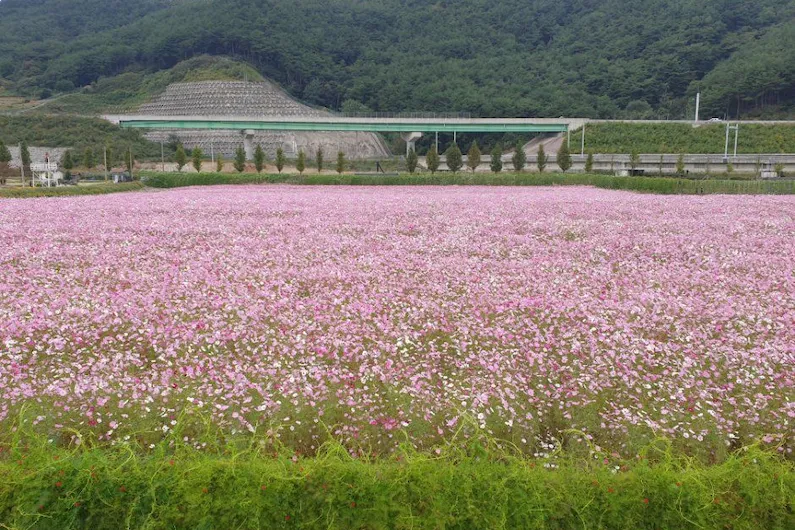
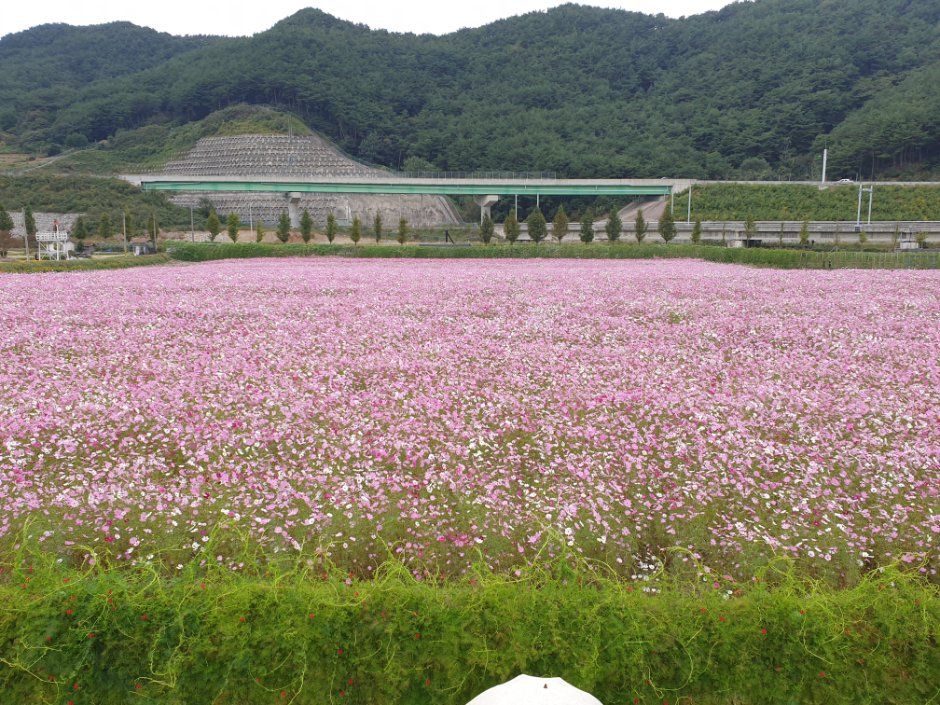
When late summer transitions into early autumn, the fields of Hadong Bukcheon take on their most striking appearance. Pink cosmos blossoms sway above the paths in soft waves, and white buckwheat flowers spread across the ground in dense, snow-like layers. This is the scene at the heart of the ’20th Hadong Bukcheon Cosmos and Buckwheat Flower Festival,’ which opens its gates for two weeks of flowers, performances, and rural experiences.

Since the festival’s first edition in 2007, the Bukcheon Flower Complex has welcomed countless visitors over the past two decades. Its walking paths wind through waves of flowers in full bloom and past cozy rural scenery, offering an unhurried way to experience the countryside. This year’s event is planned to be more colorful and abundant, with performances and hands-on activities added to the natural attractions.

The 20th-anniversary program includes events for both observers and participants. Visitors can stroll through the flower fields at their own pace, then join one of the following activities:

  • 20th Anniversary Celebration: Find the Golden Lucky Pouch – A special search event tied to the 20th anniversary, adding a playful element to a walk around the festival grounds.
  • Challenge 100-Point Karaoke (Tourist Singing Contest) – An open singing contest where tourists can take the stage and aim for a perfect 100-point score.
  • Harmony Bukcheon Residents’ Singing Contest for Chuseok – A Chuseok-season contest featuring Bukcheon residents, blending holiday tradition with local participation.
  • Special rural experience booths for seeing flowers, making, and tasting – Hands-on booths where visitors can observe the flowers up close, make flower-related items, and sample local food.

Visitor Information

📍 Address: 2253-9 Gyeongseo-daero, Bukcheon-myeon, Hadong-gun, Gyeongsangnam-do

🛏️ Accommodation near the event

💰 Fee: Festival admission 2,000 won (Parking free)

📞 Inquiry: 055-884-7416

🖥️ Homepage: www.hadong.go.kr

Hadong Bukcheon Cosmos and Buckwheat Flower Festival

What is Hadong?

Hadong (하동) is a county in South Gyeongsang Province, on the southeastern side of the Korean Peninsula. It lies between the western slopes of Jirisan Mountain and the lower reaches of the Seomjin River. The land is made up of ridges, foothills, and floodplains, and farming still drives both the local economy and the seasonal routine.

The county is known for clean water and air and for an agricultural economy that still dominates the area. Hwagae-myeon has terraced tea fields, some of the oldest and most respected in Korea. The same area is known for persimmons, wild herbs, and the alluvial soil along the Seomjin. In Bukcheon-myeon, where the autumn festival is held, broad floodplains and cooler air from Jirisan suit buckwheat and cosmos. Buckwheat flowers are small and pale; cosmos flowers are taller and come in pink, white, and magenta. When both are in bloom in late September and early October, the fields turn white and pink. There are food stalls, farm goods, and walking paths that follow the field borders and old village lanes.

Hadong also contains Ssanggyesa Temple, a Buddhist temple on Jirisan with a long history, and Hwagae Market, where vendors sell wild vegetables, freshwater fish, and local snacks. The county has been used as a filming location for dramas and movies. What draws production crews is that the area looks like a working countryside, not a reconstructed backdrop.

For a first-time visitor, the main thing to understand is that Hadong is an agricultural county. The Bukcheon festival is a seasonal event, not a constructed attraction. It is centered on buckwheat and cosmos, both of which are planted in the fields around the village, and the venue is the village itself. Visitors who want a quiet walk through farmland will find that here.

Pet Expo 2026 Osaka: Enjoy Dog Shows, Cat Grooming Tips, and Exclusive Pet Shopping at Intex Osaka

Pet Expo 2026 Osaka: Enjoy Dog Shows, Cat Grooming Tips, and Exclusive Pet Shopping at Intex Osaka

Pet Expo 2026 Osaka

Pet Expo 2026 Osaka key visual
Pet Expo 2026 Osaka

Pet Expo 2026 Osaka is a large-scale participatory event where pets are very welcome, held over three days during the latter half of Silver Week at Intex Osaka Halls 1 and 2. From a sports day and 30m sprints that you can challenge together with your dog, to the “Interaction Farm” where you can experience interacting with and feeding small animals such as goats and rabbits as well as reptiles, along with powerful shows, shopping, and kitchen car gourmet, the expo is an experiential event that anyone—whether bringing a pet or simply an animal lover—can enjoy all day long.

A dog enjoying the expo

Participatory Events to Challenge with Your Dog & Powerful Dog Shows

The event offers plenty of physical activities that are easy to join with your dog, including a sports day and 30m sprints. For those who prefer watching, the “Guenta☆Show” features trained dogs performing “Quadrille,” a team performance showcasing synchronized formations, as well as powerful obstacle jumps.

A cat at the expo

Recommended for Cat Lovers! Cat Shows and Grooming Competitions

Cat lovers will find plenty to see. The TICA-certified Cat Show, held on September 21 and 22 only, brings beautiful cats to the stage one after another. On September 23 only, the Kitten Grooming Competition—greatly acclaimed last year—will demonstrate grooming techniques that keep cats both beautiful and healthy. This is a must-see section for anyone interested in cat care.

Pet Expo 2026 Osaka venue area

Great Deals on Latest Goods and Apparel! Kitchen Cars Also Appear

Many shops will open inside the venue, offering pet apparel at bargain prices, specially selected food and treats, and the latest convenient goods. Because re-entry is permitted, you can take your time shopping with your pet or enjoy gourmet food from kitchen cars located both indoors and outdoors.

Event Overview

  • Dates: September 21 (Mon/Holiday) – 23 (Wed/Holiday), 2026
  • Hours: 10:00–17:00 (last entry at 16:30)
  • Location: Intex Osaka Hall 1 & Hall 2, 1-5-102 Nanko Kita, Suminoe-ku, Osaka City
  • Fees: Adults (junior high school students and above): 1,500 yen (advance: 1,300 yen); Children (4 years old to elementary school students): 800 yen (advance: 700 yen); Children 3 years old and under: free. Some corners require separate participation fees or feed costs.
  • Inquiries: 06-6947-1912 (within TV Osaka Business Bureau)
  • Website: pethaku.com/osaka

🛏️ View hotels near the event

What is Intex Osaka?

Intex Osaka is an international exhibition and convention center on reclaimed land in Osaka Bay, adjacent to the Asia and Pacific Trade Center (ATC). It has been in operation since 1985 and is used for trade fairs, public exhibitions, corporate events, and cultural programs. Exhibitors and visitors come from within Japan and from other countries.

The facility contains multiple exhibition halls, along with the usual support spaces for large events: conference rooms, catering areas, registration spaces, and service docks. The separation of public access from logistical operations is a practical advantage, since it lets organizers move materials and equipment in and out without interfering with visitors. Access from central Osaka is straightforward: the nearest station, Trade Center-mae, is on the Nanko Port Town Line, which connects to the Osaka Metro Chuo Line at Nakafuto. There is also on-site parking for those driving. The site is a short walk from the waterfront, which is a minor but welcome detail between sessions.

For Pet Expo, the venue’s strengths are functional rather than decorative. The halls are large enough to run dog show rings, grooming demonstration stages, and exhibitor booths in parallel, while the aisle widths and entrance points help manage visitor flow around animals and queues. The transport options are relevant for an event where attendees bring pets, carry purchases, or need to move heavy equipment. This combination of space and access is what makes Intex Osaka suited to Pet Expo.

Analytics