2026 Drinking Festival FEAT. Japan
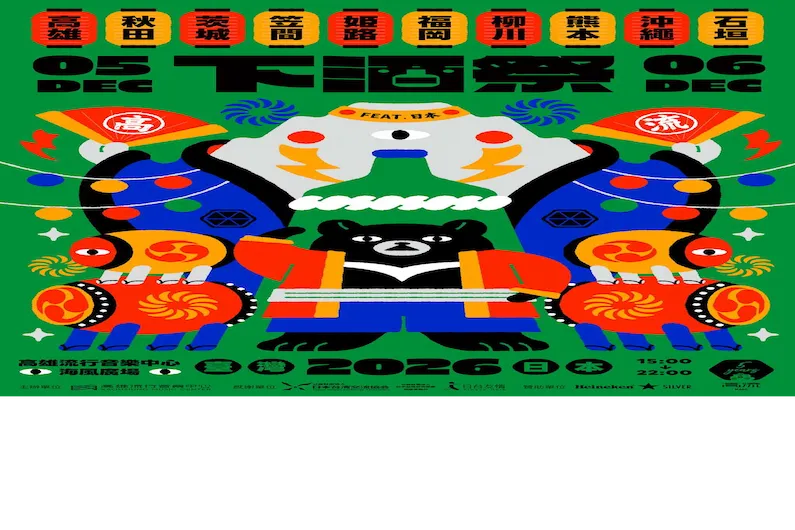
\\ After 2 years // 2026 Drinking Festival FEAT. Japan makes a heavyweight return!!!
After a two-year pause, the Drinking Festival is back in Kaohsiung with a Japan-focused edition. The 2026 event will be held on the Sea Breeze Plaza at Kaohsiung Music Center, with eight musical acts, anime culture, nine major Japanese cities, and more than 50 market food stalls converging in one harbor-side space. With music, food, and drinking snacks all within reach, the festival is built around a simple idea: use shared tables and shared tastes to make friends from around the world.
This year’s lineup spans diverse music styles, with eight acts performing in turns throughout the weekend. For anime fans, the festival also functions as a gathering point, connecting enthusiasts within the larger crowd. The Japan theme runs deeper than the stage: nine major Japanese cities are linked to the event, each represented by food and local culture delivered directly to Kaohsiung.
The drinking side of the festival is just as deliberate, with famous drinking specialties gathered from across Japan. And beyond food and drink, traditional Japanese culture is part of the on-site experience.
➜ 8 musical acts, diverse music styles performing in turns, anime enthusiasts connecting, linking 9 major Japanese cities, and over 50 popular market food stalls. Authentic Japanese vibes brought to the harbor city; use music, food, and drinking snacks at KCMA to make friends with the world.
➜ Direct delivery of representative food and local culture from 9 major Japanese cities, gathering famous drinking specialties.
➜ Traditional Japanese culture, super exciting on-site experiences.
Event information
Event Time ▸ December 5, 2026 (Sat), December 6, 2026 (Sun) 15:00 – 22:00
Event Location ▸ Kaohsiung Music Center, Sea Breeze Plaza

Kaohsiung’s historical and cultural connection to Japan
Kaohsiung’s relationship with Japan has a specific basis: the fifty years between 1895 and 1945, when Taiwan was under Japanese administration. The city, then called Takao, grew from a small fishing and trading port into an industrial and military harbor. Japanese-era projects included modern port facilities, railways, sugar refineries, and aluminum factories. That infrastructure has left a visible mark. Hamasen’s narrow lanes and low-rise buildings reflect early Japanese town planning, and the former Takao railway station and old harbor warehouses remain as preserved landmarks.
The cultural influence extends beyond architecture. Older residents still use conversational Japanese, a legacy of Japanese-language education during the colonial period. After 1945, contact continued through trade, tourism, and regional exchange. In recent decades Japanese popular culture has become a familiar part of the city: anime conventions draw large crowds, J-pop and cosplay have local followings, and convenience-store chains, ramen shops, and izakayas are common. This is not simply nostalgia; it is the result of decades of exchange, and it coexists with an awareness that the early part of the relationship was colonial and unequal.
That context helps explain why the 2026 Drinking Festival FEAT. Japan is planned for Kaohsiung’s harbor. Eight Japanese bands are scheduled to play, and more than fifty food stalls from nine Japanese cities will line the waterfront. The event does not need to introduce Japan to Kaohsiung. The audience already knows the music, the dishes, and the festival’s conventions. Nor is the location incidental: the harbor is where Japanese-era warehousing and port facilities still stand, and where postwar trade first resumed. A festival of this kind is a continuation of a relationship that has been sustained for more than a century, through changes in politics and economics.
