Gangjin Bay Dancing Reed Festival
🗓️ 2026.10.24 ~ 2026.11.01
The Gangjinman Dancing Reed Festival takes place at Gangjinman Ecological Park, where 1,572 species of organisms inhabit the wetlands, reed fields, and surrounding landscape. Running from October 24 to November 1, this year’s festival pairs the autumn reeds and sunset views with concerts, participatory programs, and family-friendly activities. It is organized as an ecological culture festival, with the dual aim of highlighting the park’s ecological value and encouraging visitors to think about protecting the natural environment.
Because the program is built around walking trails, outdoor play areas, and hands-on workshops, it suits visitors of all ages. Families, in particular, can use the festival as a way to explore nature together without a formal itinerary: the exploration trail, reed forest, and children’s environmental programs are open and accessible throughout the event.
Main Programs
- Reed Forest Ecological Expedition – Walk the Gangjinman ecological exploration trail and observe the reed fields.
- Gangjinman Ecological Experience Center / Promotion Hall
- Gangjinman Kids Zone
- Gangjinman Play Park
- Gangjinman Multi-color Stamp Tour
- Reed Gazer
The festival also operates environmental programs for children alongside these main attractions, all included with the festival’s free admission.
Experience Programs
- Making acrylic toothpaste squeezer keyrings
- Waste exchange center
- Making waste plastic bottle cap clickers
- Making pin/mirror buttons
- Making water game machines
- Reed Four-Cut photos
The hands-on lineup includes several reuse-based crafts using materials such as plastic bottle caps and other waste items, reinforcing the festival’s environmental theme.
Stage Programs
- Opening Celebration Concert
- Healing Talk Concert
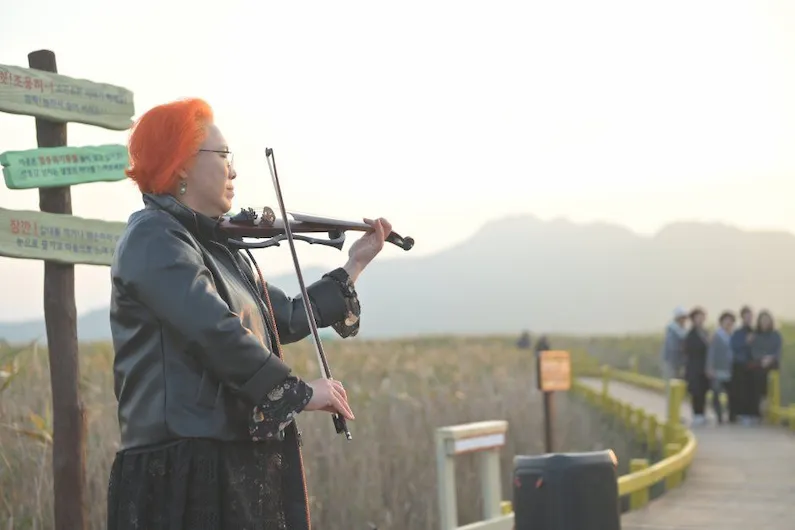
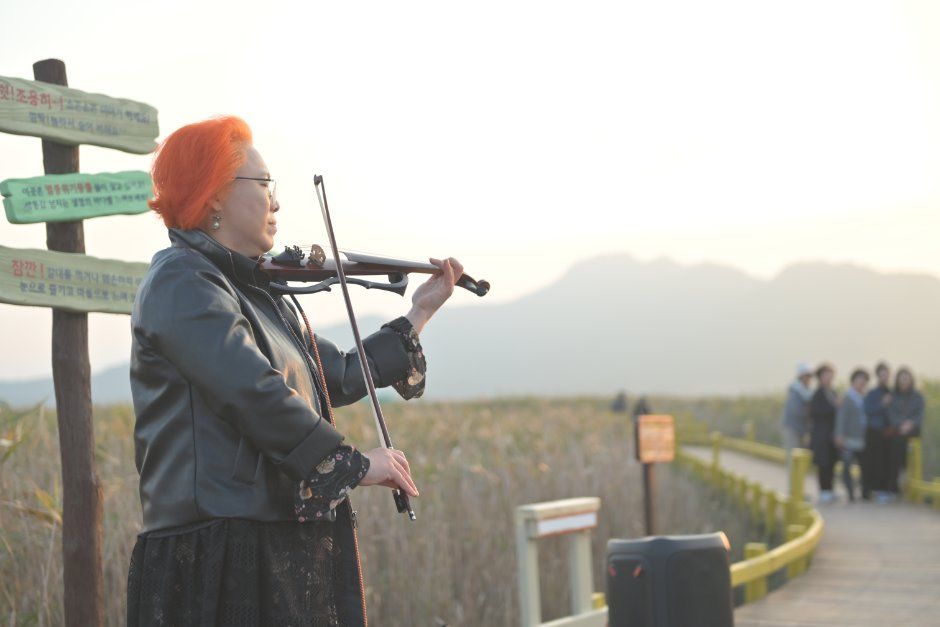
- Gangjin Reed Music Concert
- Children’s Sing-along Show
- Autumn Fragrance Concert
- Birth of a Star in the Reed Forest
Other Details
- Chrysanthemum exhibition
- Bicycle trip drawn with two wheels
- Celadon auction
- Operation of parasol rental shop and picnic mat rental shop
The chrysanthemum exhibition and celadon auction add regional and seasonal touches, while the parasol and picnic mat rentals make it easy for families to settle in and enjoy the park at a slower pace.
Visitor Information
📍 Address: 47 Saengtaegongwon-gil, Gangjin-eup, Gangjin-gun, Jeonnam-Gwangju Integrated Special City
🛏️ Accommodations near the event
💰 Fee: Free
📞 Inquiry: 061-430-3413
🖥️ Homepage: https://www.gangjin.go.kr/culture/festival/gangjinman_reed
What are reeds?
Reeds are tall, grass-like perennial plants that grow in wetlands, marshes, and along the edges of rivers, lakes, and coastal estuaries. The best-known species in places such as Gangjin Bay is the common reed (Phragmites australis), which can grow three meters or more in height.
Their most recognizable features are the hollow stems and feathery, plume-shaped flower heads. Below ground, reeds spread through a network of rhizomes that anchor them firmly in wet soil. This allows single colonies to expand into extensive fields, sometimes stretching across large areas of a bay or floodplain.
Reeds are important to wetland ecosystems. Their root systems help stabilize shorelines, slow water movement, and filter sediment and pollutants. The dense stalks also provide nesting sites and cover for birds, insects, and fish. In coastal areas like Gangjin Bay, reed beds are part of the habitat that supports migratory birds.
Beyond their ecological role, reeds have been used by people for centuries. The stems are suitable for thatching, mats, baskets, and paper, and they have also been made into simple musical instruments. Because they grow quickly and require little in the way of cultivation, they have long been a practical resource for communities near wetlands.
At the Dancing Reed Festival, the reeds are the central feature. When wind crosses the bay, the stalks bend and ripple in long, rolling waves, and the golden-brown plumes shift in the light. Walking paths through the fields let visitors see this movement directly, while the festival also offers information about wetland conservation and traditional uses of reeds. The name comes from the plant’s visible response to wind, and the experience is less staged performance than natural dynamics on a large scale.
