Royal Palace Culture Festival
🗓️ 2026.10.07 ~ 2026.10.11
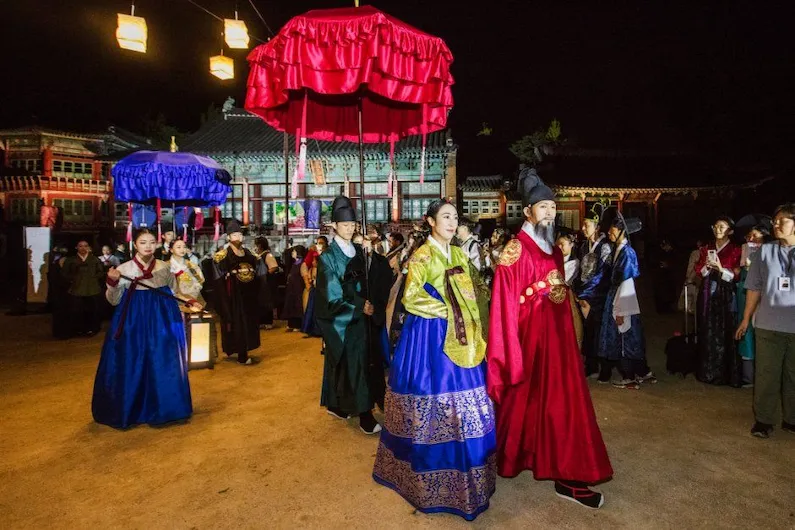
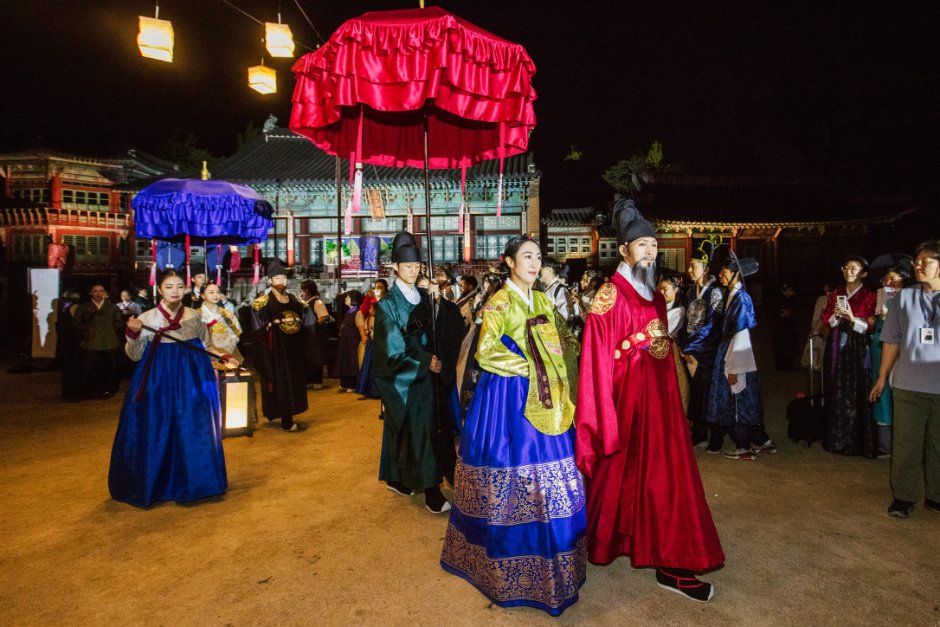
The Royal Culture Festival stands as Korea’s largest national heritage event, occurring biannually every spring and autumn. The festival transforms the five grand palaces of Seoul—Gyeongbokgung, Changdeokgung, Deoksugung, Changgyeonggung, and Gyeonghuigung—along with the Jongmyo Shrine, into expansive stages for the celebration of traditional Korean culture. Through a curated selection of performances, exhibitions, hands-on experiences, and ritual reenactments, the event allows visitors to engage with the historical depth of the Joseon dynasty.
Now celebrating its 12th anniversary, the festival is hosted by the National Heritage Administration and organized by the Korea Heritage Service. The theme for this year is ‘Palaces, Awakening the Arts,’ a vision that seeks to redefine these historic sites—shifting them from static spaces for viewing heritage into dynamic cultural and artistic stages where the foundational roots of K-culture are actively experienced.
The scale of the event continues to grow, as evidenced by the spring festival of 2026, which recorded a historic high of approximately 725,000 attendees. While the spring and autumn iterations share a commitment to heritage, the autumn festival distinguishes itself by leveraging the specific seasonal characteristics of the palaces. Daytime programming focuses on the architectural spaces and historical narratives through exhibitions and tourism tours, while the nighttime hours are dedicated to expanded performance and experience programs set against the dramatic backdrop of palace halls and autumn landscapes.
To mark the commencement of the autumn festivities, a special performance of the KBS2 ‘Immortal Songs – 2026 Royal Culture Festival Special’ will take place on October 6 (Tuesday) at 5 PM at Gyeongbokgung Palace’s Heungryemun Square. Aligned with the theme ‘Palaces, Awakening the Arts,’ this event is designed for multi-generational appeal, featuring a musical spectrum that ranges from traditional Gugak to contemporary K-pop. Admission to this specific event is free, and interested attendees may apply via the official KBS [Immortal Songs] website.
Event Programming
The festival offers a diverse array of activities, some requiring advanced reservations and others available for walk-in participation.
1. Special Event
- KBS2 ‘Immortal Songs: 2026 Royal Culture Festival Special’ Special Performance (Oct. 6)
2. Reservation Programs for Koreans
- Gyeongbokgung Hanbok Banquet
- Palace Pass (Goods)
- Awakening the Morning Palace
- Kyujanggak Chogye Munsin Workshop with Hyang-achi
- Junmyeongdang Children’s School
- Donggwol Jangwonseo
- Jongmyo Architecture Expedition
- Royal Culture Festival Academic Seminar
- Changgyeonggung Mulbit Yeonhwa
3. Reservation Programs for Foreigners
- Gyeongbokgung Hanbok Banquet
- Awakening the Morning Palace
4. On-site Programs
- Joseon Spatial Aesthetics: Order of White (白)
- Changgyeonggung Time Travel
- Royal Playroom
- Royal Culture Festival Street Parade
- Royal Culture Festival Stamp Tour
- From Gwangmu to Yunghee
Essential Visitor Information
📍 Address: 161 Sajik-ro, Jongno-gu, Seoul
🛏️ Accommodations near the event
💰 Fee: Paid (Entrance fees vary by palace)
📞 Inquiry: 1522-2295
⭐️ Instagram: https://www.instagram.com/royalculturefestival_official/
🖥️ Website: https://www.kh.or.kr/fest
What are Seoul’s Five Grand Palaces?
The Five Grand Palaces are the surviving royal complexes built by the Joseon Dynasty (1392–1897). They were constructed as residences for the king and his court and as working centers of government. Each now functions as a museum and public park, and all five are used as venues for the Seoul 2026 Royal Culture Festival.
-
Gyeongbokgung — Built in 1395 as the principal palace, Gyeongbokgung is the largest of the five. The name means “Palace Greatly Blessed by Heaven.” Its layout once contained the main throne hall and government offices, and the complex sits at the northern end of central Seoul.
-
Changdeokgung — A UNESCO World Heritage Site. It was built in 1405 and became the main residence for several kings after Gyeongbokgung was damaged. Its rear garden is a planned landscape that follows the natural shape of the land, which distinguishes it from the symmetrical layouts of the other palaces.
-
Changgyeonggung — Located next to Changdeokgung, this palace was built to house the royal women and was also used for court functions. It is smaller in scale and connected to its neighbor by a gateway, making the two easy to visit together.
-
Deoksugung — The palace has both traditional Korean buildings and early 20th-century Western-style stone structures. King Gojong stayed here after the founding of the Korean Empire in 1897, and the site documents the palace’s later period more than the others do.
-
Gyeonghuigung — Built as a secondary palace, Gyeonghuigung was once large enough to compare with Gyeongbokgung. Most of it was destroyed during the Japanese occupation; the present site includes the main gate and a few restored halls, and it now houses the Seoul Museum of History on its grounds.
The Royal Culture Festival’s programs in 2026 include nighttime lighting, traditional music and dance, reenactments of court ceremonies, and craft workshops. Because each palace has a different history and layout, visiting all five means seeing different examples of Joseon architecture, from the formal central courts of Gyeongbokgung to the smaller residential buildings of Changgyeonggung.
