Cheongsong White Porcelain Festival
🗓️ 2026.09.11 ~ 2026.09.13
Cheongsong White Porcelain is a precious cultural heritage that has been passed down for over 500 years through the soil, water, and fire of Cheongsong, and through the fingertips of artisans. The process of completing a piece—where an artisan’s sincerity and waiting are added to materials obtained from Cheongsong’s nature—is a cultural asset containing the unique life and stories of Cheongsong.
The slogan “500 Years of History, 500 Years of Future, a Thousand-Year Promise” captures the festival’s intention to cherish the memories of the past 500 years and carry that value forward for the next 500 years. It is a promise to look at today’s Cheongsong White Porcelain anew, based on the tradition of the past, and to naturally pass on its beauty and meaning to the next generation.
The 2026 Cheongsong White Porcelain Festival offers a chance to look back at the time Cheongsong White Porcelain has walked, meet the current Cheongsong White Porcelain, and create new stories that will follow. A history of 500 years is not a time that stays in the past; it passes through today and leads to the future. The festival is designed as a time to remember the past 500 years, imagine the next 500 years together, and share a new promise that will eventually lead to a thousand years of history.
Visitors can encounter the beauty of Cheongsong White Porcelain up close through exhibitions, sales, experiences, and various cultural programs, and experience the special value of white porcelain born from soil, fire, and the fingertips of artisans.
Programs and Highlights
Performances
- Opening and closing ceremony performances
- Madang-geuk (traditional outdoor play)
- Puppet shows
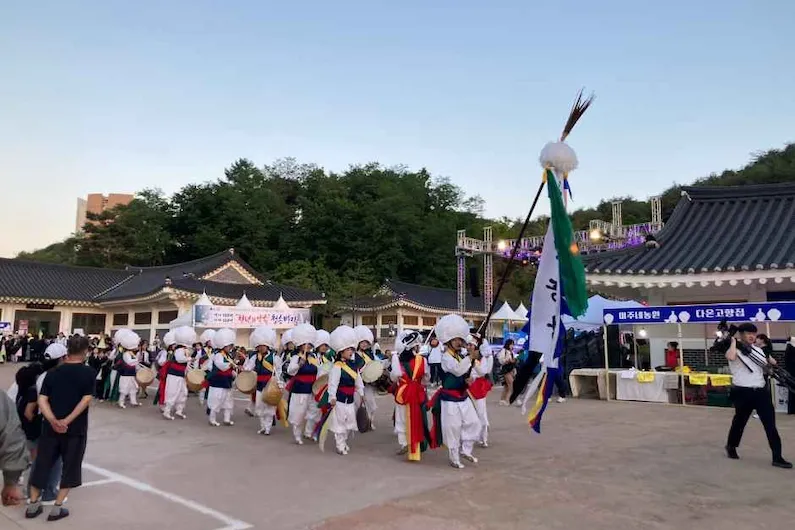
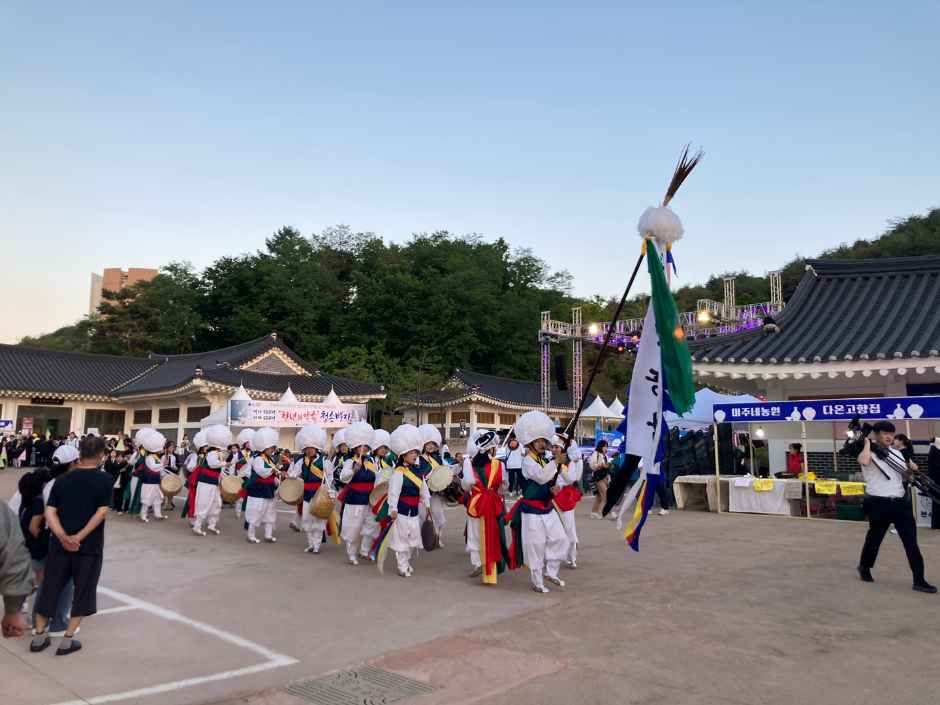
- Samulnori
- Street performances
- Local resident performances
Exhibitions
- Cheongsong White Porcelain photo staging exhibition
- Artist collaboration exhibition
- Cheongsong White Porcelain Research Society exhibition
- Local resident exhibition
Experiences
- Potter’s wheel experience
- Hand-painting experience
- Cheongsong White Porcelain play experience
- Hanging wish wind chimes
- Stamp experience
Sales & Food
- Cheongsong White Porcelain sales zone
- Craft market
- Food trucks
- Jumak (traditional tavern) operation
Festival Information
📍 Address: 36 Cheongsongbaekja-ro, Juwangsan-myeon, Cheongsong-gun, Gyeongsangbuk-do
🛏️ Accommodation near the event
💰 Fee: Free admission (some experience programs have a fee)
📞 Inquiry: 054-874-0101
⭐️ Instagram: https://www.instagram.com/cswp500/
🖥️ Homepage: https://www.cctf.or.kr/
Cheongsong white porcelain (Korean: Cheongsong baekja) is a white-glazed ceramic made in the Cheongsong area of North Gyeongsang Province, in the mountains of southeastern Korea. From roughly the sixteenth to the nineteenth century, local kilns produced a range of daily-use vessels that have been grouped together under this regional name. Unlike the white porcelain made for the royal court near Seoul, Cheongsong wares were not part of a centrally administered industry. They served a mostly local economy, and their reputation developed from the available materials and the skills of potters who settled in the area.
The color of the fired clay is the most noticeable property of Cheongsong baekja. The local clay contains less iron than many other Korean clays, so the body remains pale after firing. A thin glaze over the body produces a slightly milky surface. Depending on the kiln atmosphere and the exact composition of the clay, the resulting tone can have a faint blue cast or a warmer ivory tint. These differences are not treated as defects; they are used as clues for identifying where a piece was made.
The shapes are generally plain and practical. Large jars were used to store grain or fermented sauces; smaller jars held condiments and personal goods; bowls and bottles were made for everyday meals and drinks. Scholars could have used small brush rests or water droppers, but these too are modest in size and decoration. A line incised into the damp clay, a handle attached to a jar, or an iron-brown brushstroke are about as far as decoration usually goes. The surface itself carries the visual interest, and a piece changes appearance as the light moves across the glaze.
Modern visitors to the Cheongsong White Porcelain Festival can see the process in person: clay refinement, throwing, glazing, and firing. The festival also exhibits historical and contemporary pieces, with enough labels and demonstrations to clarify the differences between regional white porcelains. The tradition continues because the basic set of techniques is still practiced, not because the work is presented as an exceptional or mystical art form. It is a regional craft with a clear history, and its look follows from the materials and the uses it was designed for.
