🗓️ 2026.07.20 ~ 2026.08.09
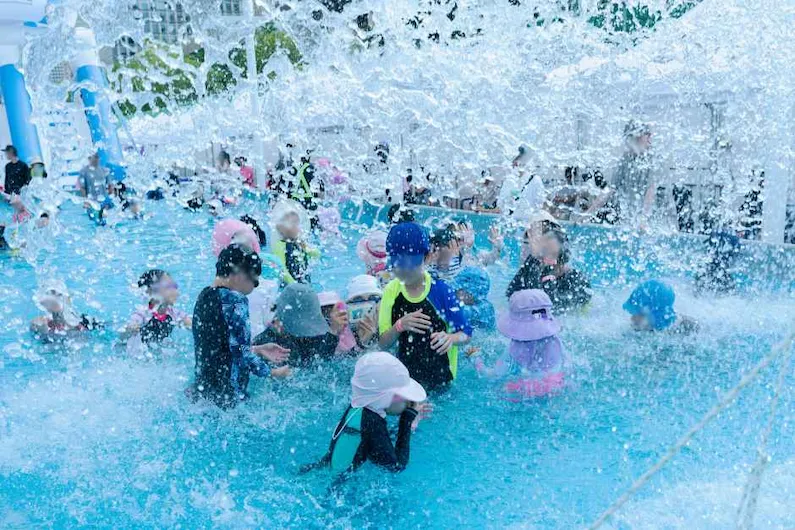
Seoul Summer Beach marks its 4th anniversary in 2026, returning to Gwanghwamun Square and Sejong-ro Park from July 20 through August 9 as Seoul’s representative summer festival that both tourists and citizens can enjoy in the city center during the hot summer. Operating under the slogan “Wave Summer, Play Seoul,” the event converts a portion of central Seoul’s primary civic plaza—terrain typically reserved for political gatherings and cultural exhibitions—into a special summer vacation space where people can enjoy cool water activities and relaxing rest simultaneously in the heart of downtown Seoul. This twenty-one-day installation creates an unusual juxtaposition of aquatic leisure and administrative architecture, allowing visitors to experience water recreation without traveling to the coast while surrounded by government ministries and historic Joseon dynasty landmarks.
The programming divides into three functional zones, each addressing different preferences for how urban dwellers might spend a summer afternoon. The Water Play Zone contains active recreation infrastructure: swimming pools, water slides, overhead water buckets, and bounce pools designed for physical cooling and family use. Those seeking less strenuous activity can move to the Play Wave Zone, which centers on the Sand Agit—a hybrid installation combining a sand playground with a shelter for overhead cover—alongside promotional booths operated by various institutions and companies. Commercial activity concentrates in the Play Market Zone, where small business flea markets and food trucks create a marketplace atmosphere that operates alongside the corporate promotional programming to provide diverse retail and dining options.
What separates this festival from conventional water parks or coastal tourism is its location within the metropolitan core combined with its pricing structure. Installing water facilities on the asphalt of Sejong-daero rather than riverside sand requires different engineering constraints and creates a distinct visitor experience specific to this plaza. The absence of admission fees removes economic barriers that typically restrict access to private aquatic facilities in the capital, while the 4th anniversary indicates operational experience that should manifest in practical logistics like queue management, hygiene protocols, and crowd flow. The integration of small business vending with corporate promotional events also distinguishes the commercial structure from standard municipal festivals that rely exclusively on government funding or single-source sponsorship.
📍 Address: 175 Sejong-daero (Sejong-ro), Jongno-gu, Seoul
🛏️ Accommodations near the event
💰 Fee: Free
📞 Inquiry: 02-6941-0645
⭐️ Instagram: https://www.instagram.com/seoulsummerbeach/
Gwanghwamun Square occupies the space directly in front of Gyeongbokgung Palace’s main gate in central Seoul. Until 2022, this area functioned as a major traffic intersection with twelve lanes of vehicles passing between the palace and the downtown business district. The renovation completed that year removed the road entirely, expanding the public space from 11,000 to 40,000 square meters and restoring a pedestrian connection between the palace and the city that had been severed since the Japanese colonial period.
The redesigned plaza centers on two bronze monuments that predate the square itself. The statue of Admiral Yi Sun-sin has stood here since 1968, depicting the 16th-century naval commander who repelled the Japanese invasion using ironclad turtle ships and innovative tactics. To the south, added in 2009, sits King Sejong the Great, the 15th-century monarch who oversaw the creation of Hangul, the Korean writing system. Both figures face south toward the city, positioned along a sight line that runs from the palace gate down to Cheonggyecheon Stream, while Bugaksan Mountain rises behind the palace to the north.
The square serves practical daily functions for the city. Office workers from the surrounding Jongno skyscrapers cross it during lunch breaks. Tourists use it as a staging area before entering Gyeongbokgung Palace. Protestors gather here because of its visibility and accessibility via Gwanghwamun Station on subway lines 3 and 5. The flat, open granite surface accommodates large crowds without fixed seating or barriers.
During Seoul Summer Beach 2026, the city will install artificial sand beaches across the northern section of the plaza, along with shallow wading pools and mist-generating machines. This temporary conversion will turn the civic space into a seasonal facility for cooling off during the humid summer months. The installation demonstrates how the square accommodates changing uses without permanent alteration, returning to its standard granite surface each autumn.
