Gangneung Coffee Festival
🗓️ 2026.10.21 ~ 2026.10.25
Food and beverage details for the 2026 festival are currently being updated.
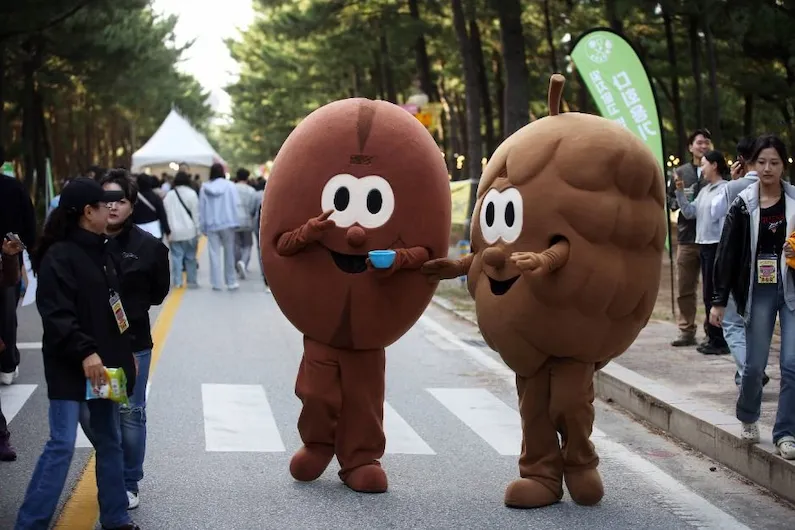
The Gangneung Coffee Festival began as a collection of daily memories rooted in the coffee vending machines at Anmok Beach and the cafe and roasting culture shaped by local coffee artisans. Since 2009, it has grown into a venue that embodies the city’s unique identity by connecting Gangneung’s nature, lifestyle culture, and local commercial districts. Citizens, merchants, coffee industry professionals, and visitors come together to enjoy coffee and share stories of Gangneung through humanities, art, and local content. What started as a cup of coffee enjoyed while looking at the sea has expanded into a culture shared by the city, and the festival now serves as a living local cultural asset that conveys the region’s history, tastes, and community pride.
The festival runs over five days in late October, with programs arranged across Coffee Street, linked spaces, and the wider city. The 2026 edition is divided into three main program groups:
1. Coffee Street Core Programs
- 100 People 100 Tastes
- Starry Night
- Anmok-eyed Coffee RADIO
- Coffee Busking
- Coffee Star
- All Kinds of Gangneung Coffee
- Coffee Experience Zone
- Coffee Picnic
- Coffee Wave
- Coffee Therapy
- Coffee Festival Market
- Handicraft Market
- All Kinds of Coffee Bean Shop
- Coffee and Humanities
- Coffee Master Class
2. Coffee Street Linked Programs
- Festival Exchange
- Fireworks
- Kids Playground
- Coffee Sports Day
3. City-wide Expansion Programs
- Welcome Coffee Shop
- Receipt Event
- Stamp Rally
- Coffee Festival Neighborhood Branch
📍 Address: 20-1 Changhae-ro 14beon-gil, Gangneung-si, Gangwon-do (Gyeonso-dong)
🛏️ Accommodation near the event
💰 Fee: Some programs are paid
📞 Inquiry: 033-647-6802
⭐️ Instagram: https://www.instagram.com/gn.coffeefestival/
🖥️ Homepage: https://www.coffeefestival.net/
Gangneung is often called Korea’s coffee capital, and the label is not simply a tourism slogan. The city’s coffee reputation rests on a series of concrete developments: a long row of independent cafés, an early commitment to specialty roasting, a major annual festival, and a local habit of treating coffee as something to be consumed slowly. Together, these factors explain why the title sticks.
The most visible place to see this is Anmok Coffee Street. The stretch along Anmok Beach is lined with independent operations, many of them connected to roasters who began doing small-batch roasting in the decades before specialty coffee became a mainstream term in Korea. During that period, most coffee sold in the country was instant or commercially blended, and Anmok’s roasters were working with green beans, roast profiles, and brewing conditions in a way that was unusual at the time. Their presence turned the beach road into a practical workshop: you can watch a roaster work, ask about the origin of the beans, and then drink a cup brewed a few meters from the ocean.
Gangneung also developed a specialty coffee culture earlier than most Korean cities. Local baristas and roasters entered national and international competitions, and they brought back not only awards but also new techniques and a broader network of contacts. This concentration of trained professionals raised the local standard. A café in Gangneung has less room to rely on mediocre beans or careless brewing, because a significant share of its customers and neighboring shopkeepers know the difference.
Geography plays a supporting role. The city has clean air and water, and the sea breeze off the east coast has long been cited by local roasters as an advantage in drying and roasting beans. The claim is not easy to verify, but it is an old and commonly repeated part of the local coffee culture. More tangibly, Gangneung’s coastal setting and tourist traffic meant that cafés had to be destinations in their own right. A coffee shop could not survive on convenience alone; it needed a reason for people to travel.
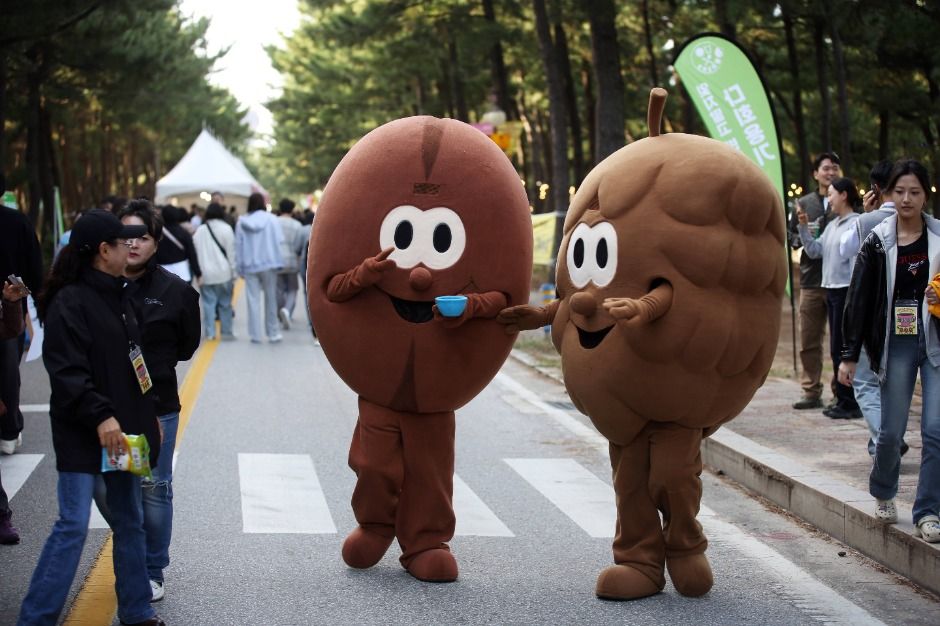
The Gangneung Coffee Festival has made this history more public. The annual event brings together roasting demonstrations, cupping sessions, latte art competitions, and bean markets, and it draws large crowds every autumn. The festival did not invent the city’s coffee culture, but it gave it a formal stage and connected it to a wider audience. For many visitors, the festival is an entry point to a scene that existed all along.
Finally, the pace of Gangneung’s coffee culture is part of the reason for its reputation. Its cafés are not built around fast takeaway service. They are spaces where customers sit by windows, watch the sea, and stay for more than one cup. This way of running a coffee shop is not a marketing angle; it reflects how residents use the cafés. The nickname “coffee capital” may sound exaggerated, but in Gangneung’s case it is a shorthand for a specific, locally developed coffee culture that is still visible today.
