Dongdaemun-gu Beer Festival
🗓️ 2026.08.28 ~ 2026.08.29
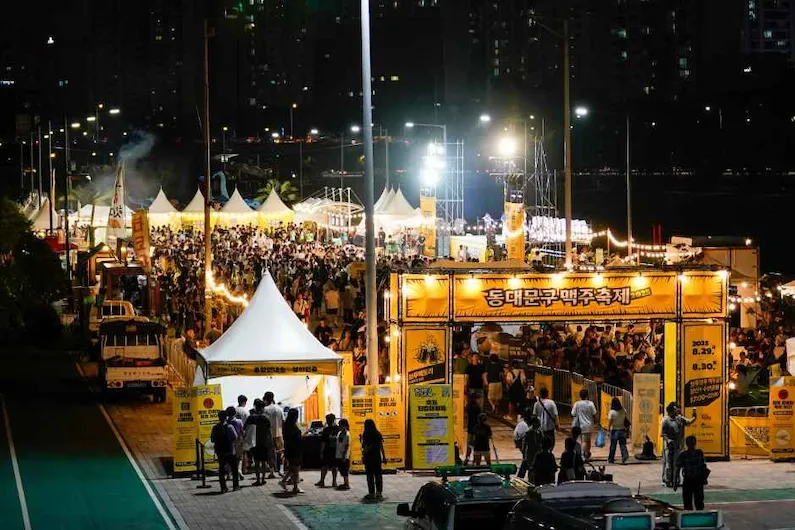
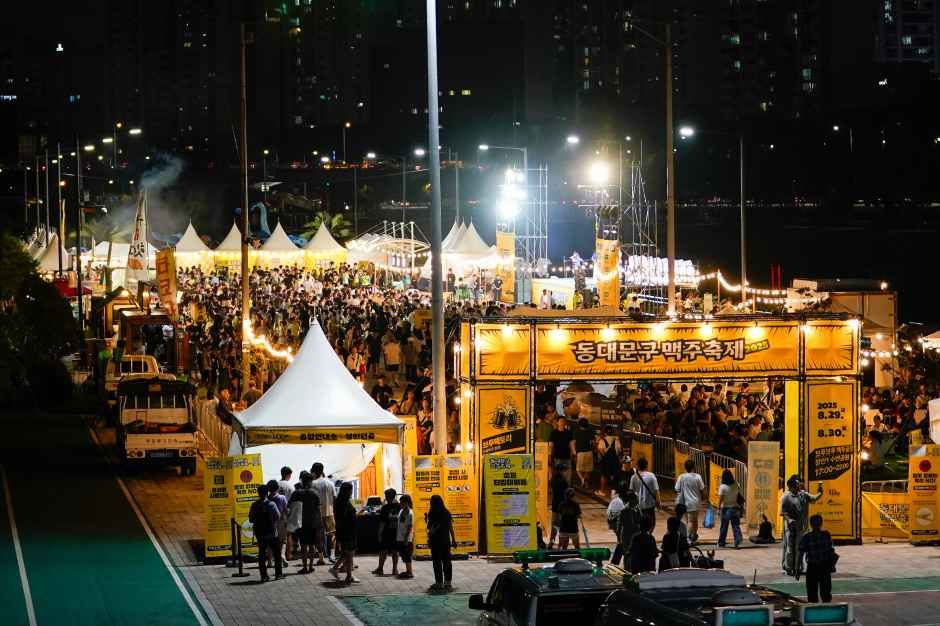
The Dongdaemun-gu Beer Festival occupies a distinctive position in Seoul’s crowded summer festival calendar. Where many outdoor gatherings prioritize scale or headline entertainment, this event cultivates a deliberately intimate, urban atmosphere at Jangan 1 Waterfront Park—a reclaimed riverside space that transforms the city’s industrial edge into something unexpectedly breathable.
What Sets It Apart
Most Korean beer festivals lean heavily on commercial lager promotions and K-pop performances. The Dongdaemun-gu iteration distinguishes itself through three deliberate choices: a focus on craft rather than mass-market brewing, jazz over amplified pop, and programming that extends past midnight without degenerating into noise complaints. The waterfront location—uncommon for Seoul beer events, which typically colonize parking lots or plaza spaces—provides genuine temperature relief and a visual buffer from the surrounding cityscape.
The festival’s timing, fixed to the last weekend of August, captures that specific transitional mood: the urgent desire to extract final pleasures from summer before the academic and corporate calendars resume their autumn intensity.
Program Structure
| Category | Contents |
|---|---|
| Main Stage | Opening ceremony, jazz and acoustic performance programs |
| Brew & Food Street | Craft brewery booths, curated food truck selection |
| Beer Terrace | Designated consumption area with river views |
| Welcome Play | Entrance installation, photo zones, ambient programming |
| Midnight Content | Silent film screenings, camping rest areas, extended dining space |
The midnight programming merits particular attention. Silent film screenings—projected against the water with wireless headphone distribution—solve the noise-violation problem that typically kills late-night festival energy. The camping rest areas, meanwhile, accommodate visitors who arrive by bicycle or public transit and prefer not to navigate return journeys after drinking.
Visitor Essentials
📍 Location: Jangan-dong, Dongdaemun-gu, Seoul (Jangan 1 Waterfront Park)
💰 Admission: Free (Alcohol, food, and beverages are priced separately—expect craft beer at 8,000–12,000 KRW per pour based on previous editions)
📞 Inquiries: 02-3291-5506
🛏️ Accommodations near the event
⭐️ Instagram: https://www.instagram.com/ddm__brewfactory/
🖥️ Website: Festival information
Who This Suits
The demographic here skews older and slower-moving than the Gangnam or Han River alternatives. You will find couples in their thirties, office workers decompressing after Friday deadlines, and photography enthusiasts working the golden-hour waterfront. Families appear during earlier hours, though the midnight content naturally filters toward adult visitors.
If your summer festival experience typically involves fighting through crowds for a glimpse of a distant stage, the Dongdaemun-gu Beer Festival offers a corrective: space to sit, actual conversation volume, and beer selected for taste rather than sponsorship obligations.
What is Dongdaemun-gu?
Dongdaemun-gu is one of the 25 administrative districts of Seoul, South Korea, located in the northeastern part of the capital. Its name translates to “Great East Gate District,” derived from Heunginjimun—one of the eight historic gates of Seoul’s ancient fortress wall that once surrounded the city during the Joseon Dynasty.
Historically, Dongdaemun-gu served as a commercial and transportation hub, with Dongdaemun Market standing as one of Korea’s largest and oldest traditional markets for over a century. The district evolved from a center of textile and wholesale trade into a community that balances industrial heritage with modern residential development, cultural spaces, and waterfront areas along the Jungnangcheon Stream.
The district now has approximately 350,000 residents and encompasses several neighborhoods, including Jangan-dong, where Jangan 1 Waterfront Park hosts an annual beer festival. Dongdaemun-gu’s urban regeneration efforts—particularly the development of streamside parks and pedestrian corridors—reflect Seoul’s broader approach to reclaiming industrial waterways for public recreation.
