Visit Naked Aqua Fantasia 2026 at Chubu Electric Power MIRAI TOWER: Experience an Immersive Underwater World Above Nagoya

Visit Naked Aqua Fantasia 2026 at Chubu Electric Power MIRAI TOWER: Experience an Immersive Underwater World Above Nagoya

Naked Aqua Fantasia

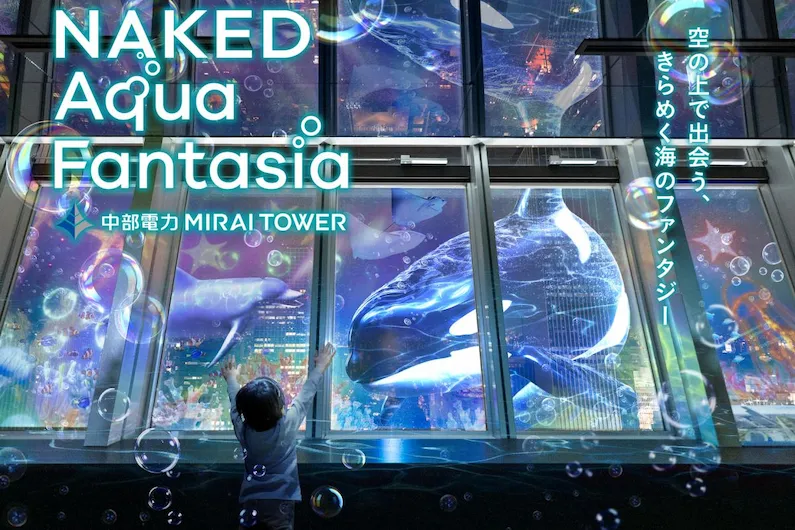
This summer, the Chubu Electric Power MIRAI TOWER transforms its 90-meter-high observation deck into something unexpected: an underwater environment suspended above Nagoya’s city center. Running from July 1 through September 13, 2026, “Naked Aqua Fantasia” merges the tower’s panoramic night views with immersive projection mapping to create an environment where urban skyline and oceanic depths coexist.

Unlike conventional observation deck events that rely solely on static city lights, this installation invites visitors into an active narrative. The space—ordinarily dedicated to contemplative viewing—becomes a vessel for simulated underwater exploration, with digital orcas and marine life traversing the walls and windows. Children participate directly through intuitive touch-points; bubbles appearing on surfaces respond to interaction, releasing sea creatures and creating cause-and-effect engagement that requires no instruction or language comprehension.

The temporal constraints heighten the experience’s specificity. Operating exclusively from 19:00 to 21:00 (extended until 21:40 on Saturdays), the event occupies that precise interval when natural daylight has faded but the city’s artificial illumination remains vivid against the dark horizon. Final admission occurs twenty minutes before closing, ensuring visitors have adequate duration to navigate the deck’s 360-degree environment without rushed progression through the content.

Practical accessibility supports the conceptual ambition. The event runs continuously through its seventy-five-day duration with no closing days, accommodating varying travel schedules and weather considerations. Admission costs remain modest relative to standard tower entry combined with specialized entertainment: 1,800 yen for high school students and adults, 800 yen for elementary and junior high students, with preschool children admitted free. 🛏️ See hotels near the event

Event Details

Dates: Wednesday, July 1, 2026 – Sunday, September 13, 2026
Closed: None
Hours: 19:00 – 21:00 (Note: Until 21:40 on Saturdays)
Final Admission: 20 minutes before closing

Location:
Chubu Electric Power MIRAI TOWER
90m Indoor Observation Deck “Sky Deck”

Fees:

  • Adults (High school students and above): 1,800 yen
  • Children (Elementary and Junior High students): 800 yen
  • Preschoolers: Free

Contact:
Nagoya TV Tower Co., Ltd.
TEL: 052-971-8546
Homepage URL: https://www.nagoya-tv-tower.co.jp/nakedinc/

Access:

  • 3 minutes walk from Exit 3 or Exit 4 of Sakae Station on the Subway Meijo and Higashiyama Lines
  • Immediately after exiting the South Ticket Gate/Exit 4B of Subway Meijo and Sakura-dori Lines “Hisaya-odori Station” or Meitetsu Seto Line “Sakaemachi Station”

Social Media:
Instagram: https://www.instagram.com/nagoya_tv_tower
X: https://x.com/nagoyatvtower

What is Chubu Electric Power MIRAI TOWER?

Chubu Electric Power MIRAI TOWER is a 180-meter steel lattice structure rising from Hisaya Odori Park in Nagoya. Constructed in 1954 as Japan’s first television broadcasting tower, the building operated for seventy years under the name Nagoya TV Tower before Chubu Electric Power acquired naming rights in April 2024 and appended the Japanese word for “future” (mirai).

The tower anchors the Sakae district, positioned at the intersection of the park’s tree-lined pedestrian boulevards and the surrounding commercial grid. Two observation levels occupy the upper shaft: the enclosed Sky Deck at 90 meters and the open-air Sky Balcony at 100 meters. These platforms offer views across the Nobi Plain toward Gifu Prefecture’s mountain ranges, or downward into the orthogonal street pattern of Japan’s fourth-largest city.

Since the 2024 handover, the facility’s programming has shifted from passive observation to active visual display. The steel framework, originally engineered to support broadcasting antennae, now serves as armature for projection mapping installations and seasonal LED illuminations. Interior spaces house temporary digital art exhibitions, while exterior surfaces function as screens for light shows visible across the downtown area.

In 2026, the tower will host Naked Aqua Fantasia, an installation projecting aquatic imagery onto the structure and its surroundings. The event utilizes the tower’s height and central location to create large-scale visual interventions in the urban nightscape, continuing the site’s transition from telecommunications infrastructure to public spectacle venue while retaining its original 1954 structural design.

Marunouchi Hotel Pomme d’Adan Afternoon Tea 2026: Experience the Luxury of Marunouchi Honey and Fukushima Peaches

Marunouchi Hotel Pomme d'Adan Afternoon Tea 2026: Experience the Luxury of Marunouchi Honey and Fukushima Peaches

Pomme d’Adan Afternoon Tea “Marunouchi Honey and Peach Tea Time” [Marunouchi Hotel]

A summer-limited Pomme d’Adan Afternoon Tea to enjoy honey born in Marunouchi and fragrant peaches.

From Wednesday, July 1 through Monday, August 31, 2026, the French restaurant Pomme d’Adan on the 8th floor of the Marunouchi Hotel will offer the summer-limited “Pomme d’Adan Afternoon Tea ‘Marunouchi Honey and Peach Tea Time’.” This tea time is built around two ingredients with notable origins: Marunouchi Honey, produced by an urban beekeeping project in the Tokyo Marunouchi area, and peaches from Kenjo-momo no Sato (Home of Tribute Peaches) in Koori Town, Fukushima Prefecture, an area with a history of presenting peaches to the Imperial Family.

Honey and peaches from distinctive origins

The Marunouchi Honey used in this tea time is collected in an environment surrounded by rich central Tokyo greenery, including the Imperial Palace and Hibiya Park. It is characterized by a gorgeous aroma and elegant sweetness born from the overlapping nectar of seasonal flowers. Its finish is clean, with a transparent and refreshing aftertaste reminiscent of mint and muscat.

The peaches from Kenjo-momo no Sato are nurtured in Koori Town, Fukushima Prefecture, an area blessed with a significant day-and-night temperature difference. The fruit is prized for its fragrant aroma, fruit-filled taste, and melting flesh, offering a deep deliciousness in which moderate acidity harmonizes with strong sweetness.

Sweets

The sweet selection presents peach and Marunouchi Honey in a variety of forms:

  • Peach and Marunouchi Honey Mousse: a gentle sweetness mixed with Marunouchi Honey.
  • Peach and Marunouchi Honey Jasmine Roll: peach jam, custard, and fresh cream rolled in a jasmine-scented roll cake.
  • Peach and Marunouchi Honey Gâteau Weekend: a traditional French confectionery arranged with peach and Marunouchi Honey.
  • Peach Jelly with Marunouchi Honey Tea Syrup: white peach puree jelly combined with lemon crush jelly and Marunouchi Honey, finished with a refreshing taste similar to lemon tea.
  • Peach Clafoutis: a soft, custard-pudding-like texture.
  • Peach Vanilla Macaron.

Savories

The savory lineup is designed for summer, with a balance of sweetness, saltiness, and aroma:

  • Cold Peach and Potato Soup: scented with peach, made with carefully strained sweet leeks and potatoes, and combined with mint for a refreshing aftertaste.
  • Smoked Duck with Peach and Red Wine Gastrique Sauce: duck finished moistly through low-temperature cooking, paired with a gastrique sauce of reduced peach and red wine.
  • Peach, Cottage Cheese, and Prosciutto with Marunouchi Honey: a Caprese-style combination.
  • Corn, Edamame, and Chorizo Cake Salé.
  • Summer Vegetable Honey Lemon Pickles.

Scones are served with clotted cream and Marunouchi Honey.

Drinks and optional mini dessert

The drink plan offers a free-flow café system for 120 minutes, with last order 30 minutes before the end. Choices include coffee, tea, and herb tea, plus a seasonal recommended drink: Sweet White Peach (Ice).

For an additional 1,000 yen, guests can add the Peach Melba Parfait Style mini-dessert. It layers peach, berry sauce, lemon crush jelly, and custard cream, and combines melting peach flesh with vanilla ice cream in a cool parfait presentation. This option is available until sold out.

Menu

Sweets

  • Peach Clafoutis
  • Peach Jelly with Marunouchi Honey Tea Syrup
  • Peach Vanilla Macaron
  • Peach and Marunouchi Honey Mousse
  • Peach and Marunouchi Honey Jasmine Roll
  • Peach and Marunouchi Honey Gâteau Weekend

Savories

  • Cold Peach and Potato Soup
  • Smoked Duck with Peach and Red Wine Gastrique Sauce
  • Peach, Cottage Cheese, and Prosciutto with Marunouchi Honey
  • Corn, Edamame, and Chorizo Cake Salé
  • Summer Vegetable Honey Lemon Pickles

Scones

  • Scone / Clotted Cream, Marunouchi Honey

Drinks *Café free 120-minute system (L.O. 30 minutes before)

  • Seasonal Recommended Drink “Sweet White Peach (Ice)”
  • Coffee / Tea / Herb Tea, etc.

Mini Dessert

  • Peach Melba Parfait Style
    • Additional fee: 1,000 yen
    • Available until sold out

*Menus and business hours are subject to change without notice.
*Prices include consumption tax and service charge.
*All images are for illustrative purposes.
*Please check the official website for detailed contents.

Basic Info

Item Details
Venue / Nearest Station Marunouchi Hotel / Tokyo Station / Otemachi (Tokyo) Station
Location 〒100-0005, 1-6-3 Marunouchi, Chiyoda-ku, Tokyo (MAP)
Venue 8F French Restaurant “Pomme d’Adan”
Period Wednesday, 2026/07/01 – Monday, 2026/08/31
Time Start 14:00 / End 17:30 (L.O. 15:30)
Price / Fee Per person: Weekdays 6,000 yen / Saturdays, Sundays, Holidays 6,500 yen
Mini Dessert Additional fee 1,000 yen
Inquiry 03-3217-1117 (Reception hours: 6:30–22:00)
Official Website https://www.marunouchi-hotel.co.jp/pickup/qz3l3c0w5kq/

*Listed content may have changed. Please check the official website of the venue or organizer for the latest information.
🛏️ View hotels near Tokyo

What is Marunouchi honey?

Marunouchi honey is made by bees kept in the Marunouchi business district in central Tokyo, on hotel rooftops and office-building terraces near the Imperial Palace. The hives are few in number, and the bees draw nectar mainly from seasonal flowers in the Imperial Palace grounds, Marunouchi’s parks, and nearby gardens. That foraging area is varied enough to give the honey a noticeable floral character, with faint citrus and herbaceous notes, and the flavor changes somewhat through the season.

The honey is light amber and mild. It is less pungent than many mountain honeys, and its sweetness is restrained. Because the bees work within a fairly limited part of the city, each harvest is modest, and the honey has the specific character of the immediate district.

At Marunouchi Hotel, the honey appears at breakfast with fruit and scones, in desserts, and alongside champagne. The hotel also sells jars at the front desk, so the product is easy to taste or take home.

Senshu Beach Lantern Festival 2026: Guide to Tickets, Schedule, and Highlights at SENNAN LONG PARK

Senshu Beach Lantern Festival 2026: Guide to Tickets, Schedule, and Highlights at SENNAN LONG PARK

Senshu Beach Lantern Festival Vol. 7: With Everyone’s Wishes, the World Becomes a Little Brighter

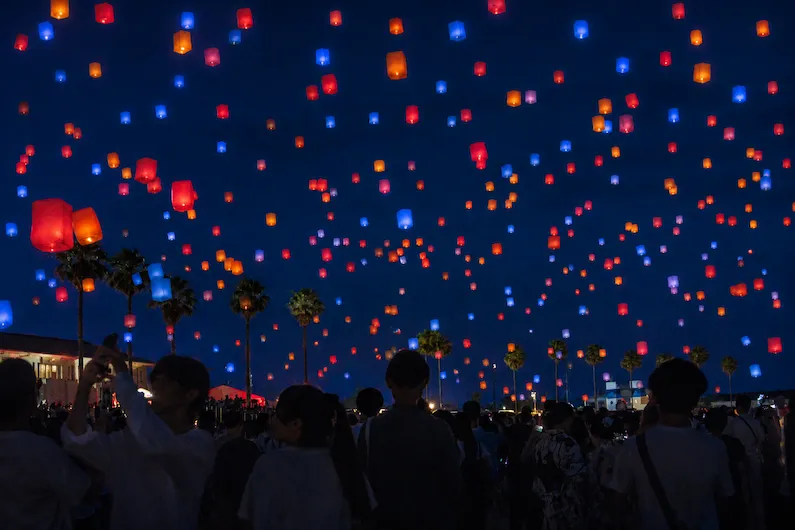
The seventh iteration of the Senshu Beach Lantern Festival returns to the coastal stretch of SENNAN LONG PARK and Tarui Southern Beach, where the Myaku Myaku monument “Waku Waku” remains installed through August 31. This year’s edition operates under its thematic subtitle—suggesting that collective intention creates incremental illumination—manifested literally through the evening lantern release. Unlike previous volumes, the 2026 event incorporates a special project tied to the Expo: alongside the standard orange lanterns, organizers will deploy red and blue variants, creating a tricolor illuminated environment available exclusively this summer. The chromatic expansion transforms the seaside venue—already photogenic during the golden hour—into a distinct nightscape as paper lanterns ascend.

Lanterns illuminating the beach venue

Programming spans a twelve-hour window designed to accommodate varying energy levels and age groups. The daytime component—running from the 12:00 opening until the evening launch—retains popular standard contents including festival stalls and oversized bouncy balloon equipment while introducing two participatory additions. A “Treasure Hunt” makes its first appearance at the event, offering a structured exploration of the grounds, while the “Water Gun Tournament” provides a summer-specific competitive outlet designed specifically for adult participants. These newer elements complement ongoing attractions: street performers demonstrating technical proficiency ranked among Japan’s best, stage presentations by local community groups, and hands-on workshops requiring active creation rather than passive observation.

Festival activities and equipment

Event attendees and performers

Evening lantern release atmosphere

The architectural logic of the schedule builds toward the 20:00 lantern launch, scheduled for both evenings. While admission to the grounds and general viewing require no payment, participation in the release itself operates through an exchange-ticket system. Advance purchases cost ¥5,000 per unit; same-day purchases increase to ¥5,500. Each unit accommodates up to four individuals, allowing families or small groups to distribute the cost. For those preferring guaranteed seating, paid reserved seating will be available for separate purchase.

Event Details

Period: Saturday, July 4, 2026 and Sunday, July 5, 2026
Hours: 12:00–21:00
Lantern Launch: 20:00 (scheduled)
Location: SENNAN LONG PARK and Tarui Southern Beach (2-201 Rinku Minamihama, Sennan City, Osaka Prefecture)
Access: 10-minute walk from Tarui Station on the Nankai Main Line
Admission: Free (lantern participation requires exchange ticket)
Lantern Exchange Ticket: Advance ¥5,000; Same-day ¥5,500 (up to 4 people per unit)
Paid Seating: Available for separate purchase
Inquiries: [email protected] (SBI MUSIC CIRCUS Co., Ltd.)
Website: https://www.senshu-beachlantern.com/

🛏️ View hotels near the event

SENNAN LONG PARK occupies a 2.5-kilometer stretch of Osaka Bay shoreline, accommodating an annual illumination festival structured around three distinct lighting zones. The installation incorporates approximately 10,000 lanterns, varying in construction from traditional washi paper to programmable LED systems.

The western zone, labeled Sunset Lounge, features oversized paper lanterns suspended between mature pine specimens. The spacing creates intermittent shade during daylight hours and concentrated light pools after dark. The eastern Digital Wave section employs projection mapping technology cast directly onto the sand surface; sensors detect pedestrian movement and trigger visual responses in the projected imagery, typically depicting marine ecosystems found in Osaka Bay. At the waterline, the “Sea of Stars” installation arranges LED candles in concentric rings, visible from the elevated boardwalk near the central plaza without obstruction from the dunes.

Programming runs from 18:00 to 21:30 nightly across three stages. The Main Stage presents Awaji puppet theater, a tradition dating to the sixteenth century when ritual performances accompanied religious festivals on Awaji Island. Troupe members manipulate traditional figures carved from lightweight wood, performing narratives drawn from local folklore and classical literature. Contemporary folk bands follow the puppet theater, typically featuring shamisen, taiko, and western string instruments. The Beach Stage hosts smaller acoustic ensembles; audiences sit directly on the sand, surrounded by paper bag lanterns placed at two-meter intervals. At 20:00 each evening, the Lantern Release Ceremony involves the collective release of biodegradable wish lanterns into the surf. Slots are limited and require advance registration at the cultural booth situated near the central plaza entrance.

The Hikari Food Market lines the park’s central pedestrian alley with approximately forty vendors. The selection emphasizes Senshu regional specialties—takoyaki prepared with visible flame finishing, and kakigori flavored with natural butterfly pea flower, which produces a blue-gray tint. Several vendors offer limited-edition ramune in translucent bottles that collect and refract ambient light; purchasers receive LED bases that convert empty bottles into portable lanterns.

Workshops operate at the Lantern Craft Village from 16:00 to 19:00. For ¥1,500, participants receive materials to construct either washi-paper shades or simplified bamboo frames. Instructors demonstrate traditional joining techniques used in Japanese lantern construction. Completed pieces may be added to designated public display areas or retained by the maker. The workshop accepts walk-ins, though reservations are advised for weekend sessions.

First-time visitors should note that the Sunset Boardwalk offers unobstructed sightlines during the twilight period, approximately 18:30 to 19:15, when the remaining natural light balances with the artificial installations. After 19:15, the scene shifts to complete reliance on the festival lighting, which changes photographic exposure requirements significantly.

Tanabata 2026 at Manshuji Temple, Nagoya: How to Participate in Traditional Prayer Services and Collect Limited Edition Goshuin

Tanabata 2026 at Manshuji Temple, Nagoya: How to Participate in Traditional Prayer Services and Collect Limited Edition Goshuin

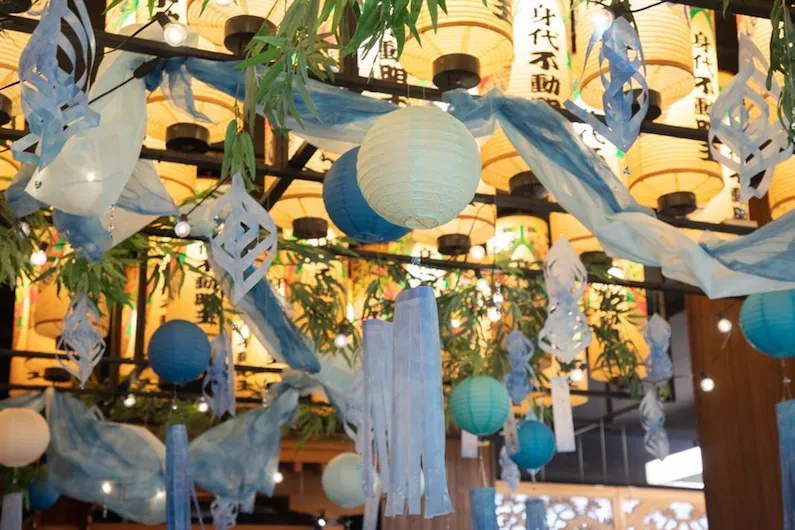
Manshuji Temple hosts an extended observance of Tanabata that distinguishes itself through both duration and astronomical precision, decorating the temple grounds from Friday, June 19th through Wednesday, August 19th, 2026. While many venues celebrate the festival on July 7th according to the Gregorian calendar, this event culminates on the traditional lunar calendar date—August 19th—allowing visitors to align their participation with older celestial calculations that determined the original timing of this star festival.

The temple invites visitors to engage directly with the tradition through tanzaku, vertical paper strips distributed on the grounds upon which you inscribe personal wishes before displaying them among the bamboo and decorative arrangements. These written aspirations receive formal recognition during a dedicated prayer service held specifically on August 19th, commencing at 17:00, during which monks will perform rituals intended to help the wishes materialize; notably, this service carries no admission fee.

For collectors of religious seals, the temple has produced a limited edition Goshuin available exclusively during this Tanabata period, with distribution beginning Sunday, June 28th. Unlike standard seals, these special editions depict the celestial lovers Orihime and Hikoboshi suspended against a night sky—an artistic representation achieved through foil stamping and holographic elements that capture the specific quality of summer starlight. Each seal costs 1,200 yen, though prospective buyers should note that production is strictly limited and sales will conclude immediately upon exhaustion of stock; the temple will announce via social media channels when supplies are depleted.

🛏️ View hotels near the event

Event Details

Dates: Friday, June 19, 2026 – Wednesday, August 19, 2026
Tanabata-mode Goshuin available starting Sunday, June 28th

Hours: 10:00 – 18:00
Tanabata prayer service: Wednesday, August 19th, 17:00 onwards

Location: Kiedake-rin Manshuji Temple

Admission and Fees:

  • Prayer tanzaku (2 strips): 100 yen offering fee
  • Tanabata-mode Goshuin: 1,200 yen each
  • Tanabata prayer service: Free

Access: Approximately 3 minutes walk from Exit 8 of Kamimaezu Station on the Nagoya City Subway Meijo Line

Contact:
Manshuji Temple
TEL: 052-262-0735
FAX: 052-262-2269
Website: https://www.banshoji.or.jp/

Note regarding Tanabata-mode Goshuin: These are available in limited quantities and will end once they run out. The temple will announce via SNS when the limit has been reached.

Goshuin are handwritten inscriptions and seal impressions given to visitors at Japanese temples and shrines. An attendant presses carved wooden stamps into red ink paste, then brushes the temple name, date, and sometimes a short sutra onto a page in the visitor’s book. The practice began during the Edo period, when travel restrictions eased and pilgrimage became popular among common people who needed to document their religious journeys. The thick, textured paper absorbs the ink slowly, leaving a raised, tactile impression that distinguishes these from printed souvenirs.

Collectors carry a goshuincho—an accordion-fold book designed so pages lie flat when open and fold compactly when closed. These range from simple paper covers costing ¥1,000 to elaborate silk-bound editions at ¥3,000 or more. At the temple office, you present your open book with a fee, typically ¥300 to ¥500. The attendant completes the work in three to five minutes, returning the book open to allow the ink to dry. Closed too soon, the wet ink transfers to the facing page, ruining both impressions—a mistake that teaches collectors patience quickly.

For Tanabata 2026, Manshuji Temple will offer designs available only during the festival week. Their Tanabata stamps replace the standard black and red with green bamboo stalks and metallic gold accents, referencing the tanzaku papers where visitors hang written wishes. Some versions depict Orihime and Hikoboshi, the separated celestial lovers, against a star-field background. The application process remains unchanged: present your goshuincho at the temple office, provide the donation, and wait while the staff completes the inscription.

Shibuya Real Squid Game 2026: How to Experience the Netflix Survival Thriller at Tokyu Plaza Shibuya

Shibuya Real Squid Game 2026: How to Experience the Netflix Survival Thriller at Tokyu Plaza Shibuya

Shibuya Real Squid Game

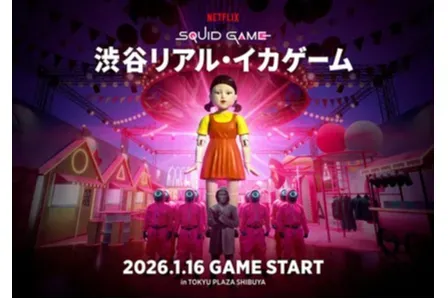
The international touring exhibition based on Netflix’s survival thriller Squid Game makes its Japanese debut on Friday, January 16, 2026, transforming the third floor of Tokyu Plaza Shibuya into a competitive venue accommodating up to 20 participants per session. Tokyu Land Corporation, having acquired operating rights from Netflix, has joined with KX Korea and Dentsu Music & Entertainment to produce this iteration, which occupies the entire renovated floor within Shibuya Fukuras through Monday, July 20, 2026.

Unlike conventional promotional pop-ups, this installation follows a proven format that launched in New York during October 2024 before expanding to Madrid and Seongsu-dong, Seoul. The Tokyo venue replicates the structure of its predecessors: visitors register as players through facial recognition scanning, then compete in six replicate challenges—including “Red Light, Green Light,” “Tug-of-War,” and “Marbles”—across approximately 90 minutes, with the system designating one final winner. The design ensures accessibility for those unfamiliar with the series; no prior viewing is required to understand the mechanics or stakes.

The event arrives amid continued global momentum for the franchise. Squid Game Season 3, which began streaming exclusively on Netflix in June 2025, recorded 60 million views during its first week, ranking first in the Top 10 non-English series across 93 countries and regions. While the competitive format drives the central narrative—participants eliminated during games forfeit their chance at the final designation—the venue supplements the high-stakes sequences with ancillary entertainment: a collaboration café serving themed food and beverages, photography stations equipped with special commemorative frames, and “Young-hee’s Playground,” a retail space handling original merchandise available for purchase before departure.

Event Details

  • Location / Nearest Station: Tokyu Plaza Shibuya / Shibuya Station
  • Address: 〒150-0043
    1-2-3 Dogenzaka, Shibuya-ku, Tokyo, within Shibuya Fukuras (Ground 2F–8F, 17F, 18F)
    [Map]
  • Venue: Tokyu Plaza Shibuya 3rd Floor
  • Event Period: Friday, 2026/01/16 ~ Monday (Holiday), 2026/07/20
  • Hours: Start 11:00 / End 21:00 (Scheduled)
  • Admission: Advance ticket sales are scheduled to begin around mid-November
  • Official Site: Shibuya Fukuras Official Site

Listed content may be subject to change. Please check the official websites of the venue or organizers for the latest information.

🛏️ See hotels near Tokyo

Shibuya Real Squid Game_1
Shibuya Real Squid Game_2
Shibuya Real Squid Game_3

What is Tokyu Plaza Shibuya?

Tokyu Plaza Shibuya, also referred to as Shibuya Fukuras, occupies the southwest corner of Shibuya Station, emerging directly from the New South Gate exit. Completed in 2019 during the district’s extensive redevelopment, the building presents a glass exterior with sharply angled geometry that reflects the dense visual activity of the Scramble Crossing below.

The structure functions primarily as a retail and transit facility. Ten floors contain clothing stores, restaurants, and shared office spaces arranged around a central void that draws natural light down from the roof. The building’s upper level serves as the Shibuya Bus Terminal, handling regional highway departures, while underground corridors connect directly to JR lines, the Keio Inokashira Line, and the station’s main concourses. This physical integration means the building processes thousands of daily commuters who pass through its lower levels en route to trains, while vertical circulation routes separate transient traffic from shoppers and diners above.

For the Real Squid Game 2026 installation, Netflix has converted portions of the complex into functional sets from the series. Production crews adapted the ground floor and central atrium to accommodate full-scale replicas of the game facilities, utilizing the building’s fourteen-meter ceiling heights and column-free floor plates to house the Red Light, Green Light courtyard and the dormitory’s stacked sleeping quarters. Unlike temporary exhibitions in convention halls, this installation occupies an active commercial building, allowing visitors to ascend from Shibuya Station’s platforms and enter the show’s controlled environment without traveling to a separate venue. The design retains the location’s existing concrete and industrial elements, incorporating the building’s actual architecture into the aesthetic of the fictional facility rather than concealing it behind false walls.

Hatena Exhibition 2026 at Seibu Shibuya Store: Discover Your Perception and Explore the Collective Mind

Hatena Exhibition 2026 at Seibu Shibuya Store: Discover Your Perception and Explore the Collective Mind

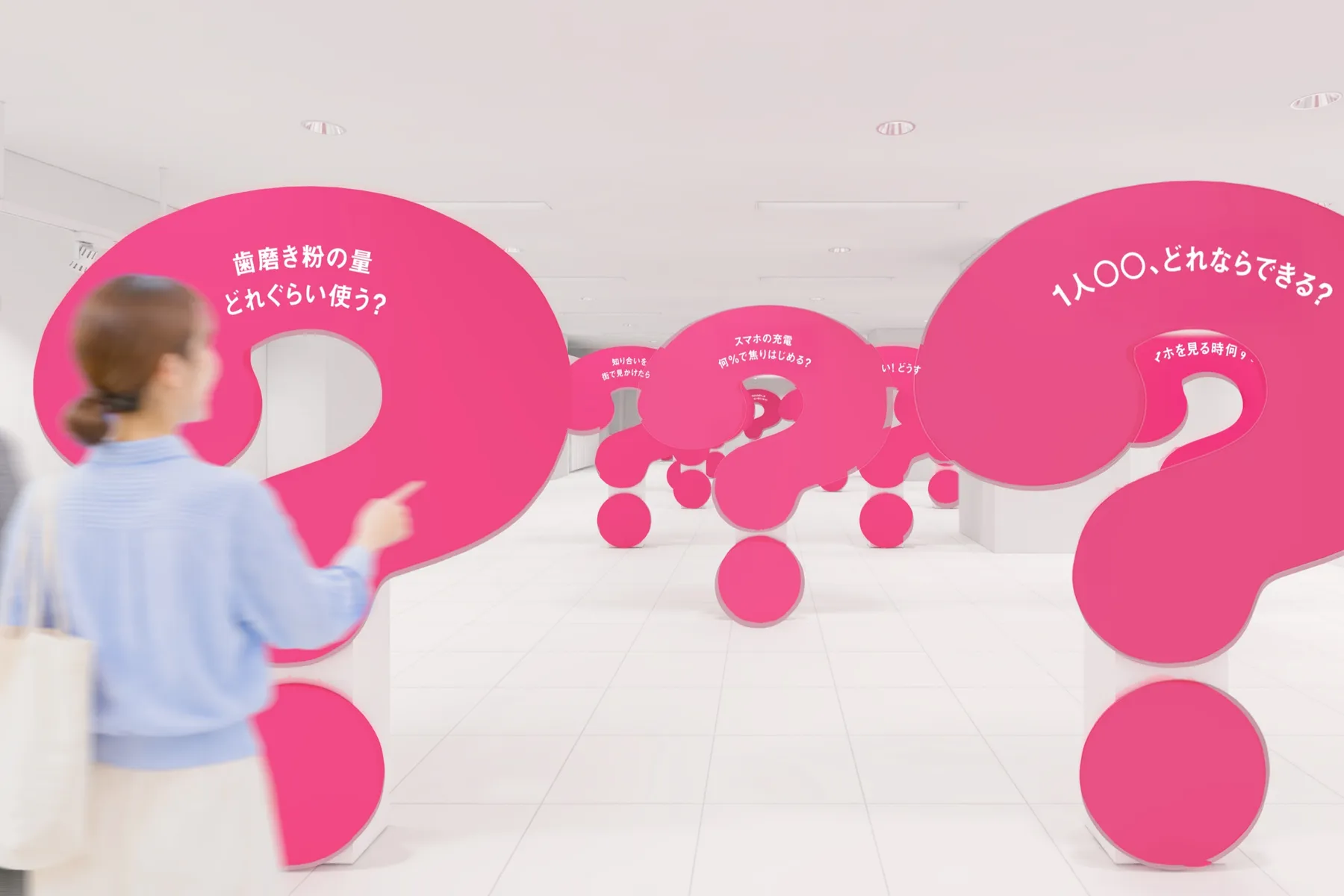
Hatena Exhibition: Mapping the Landscape of Human Perception

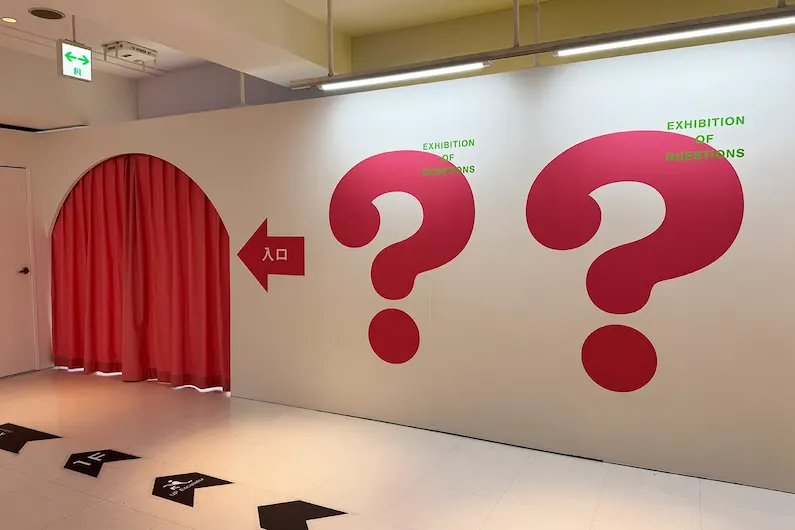
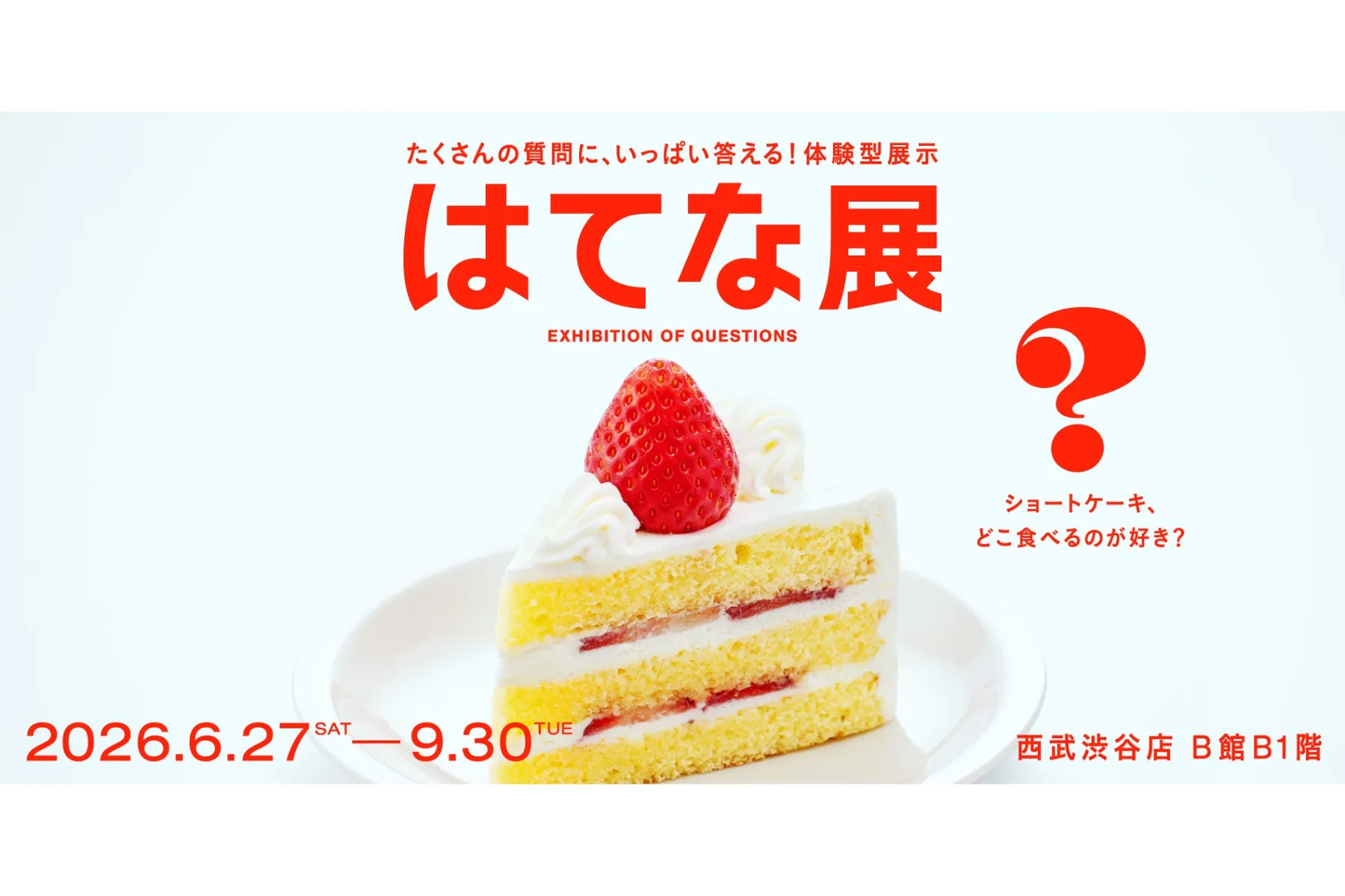
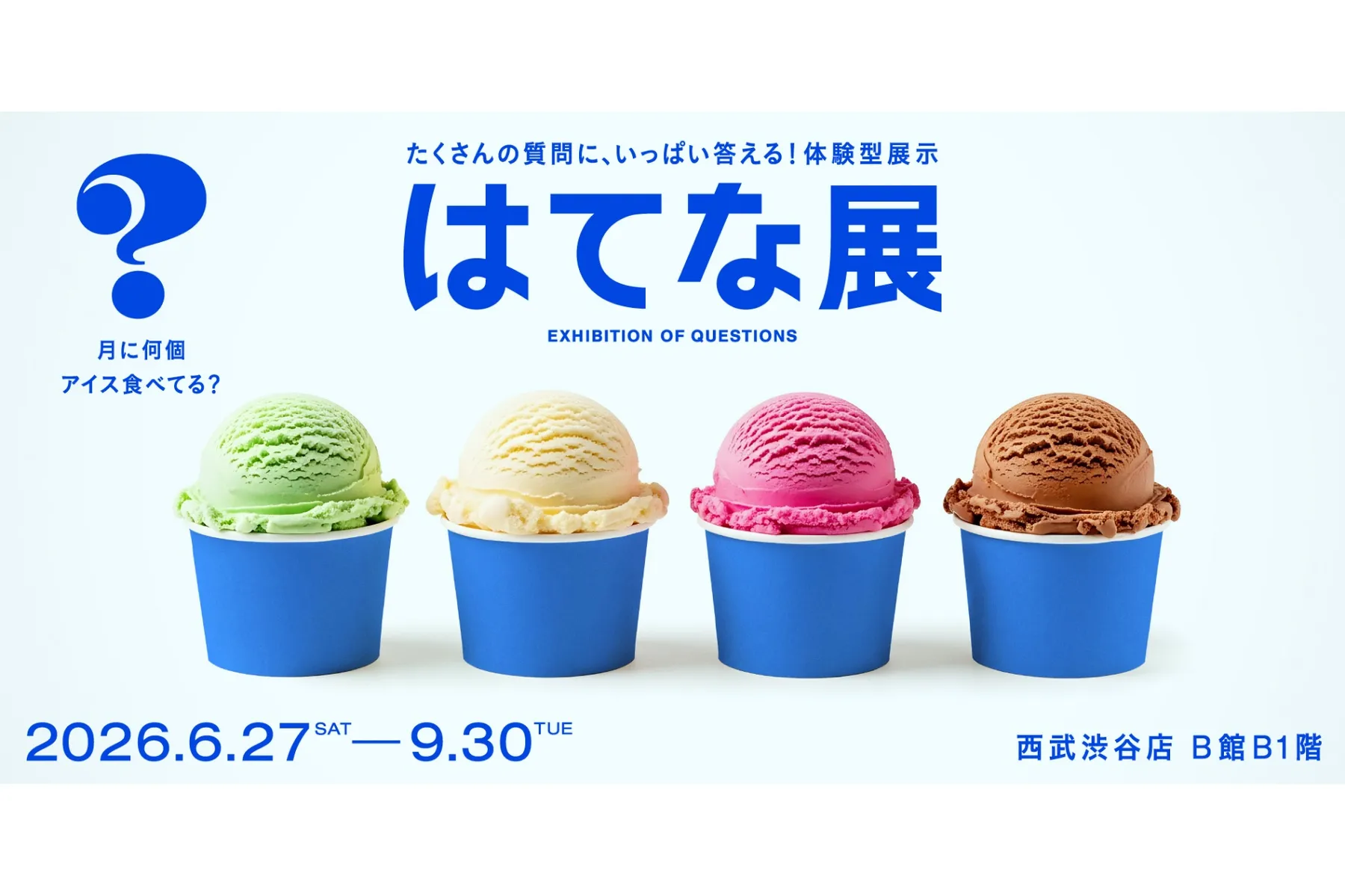
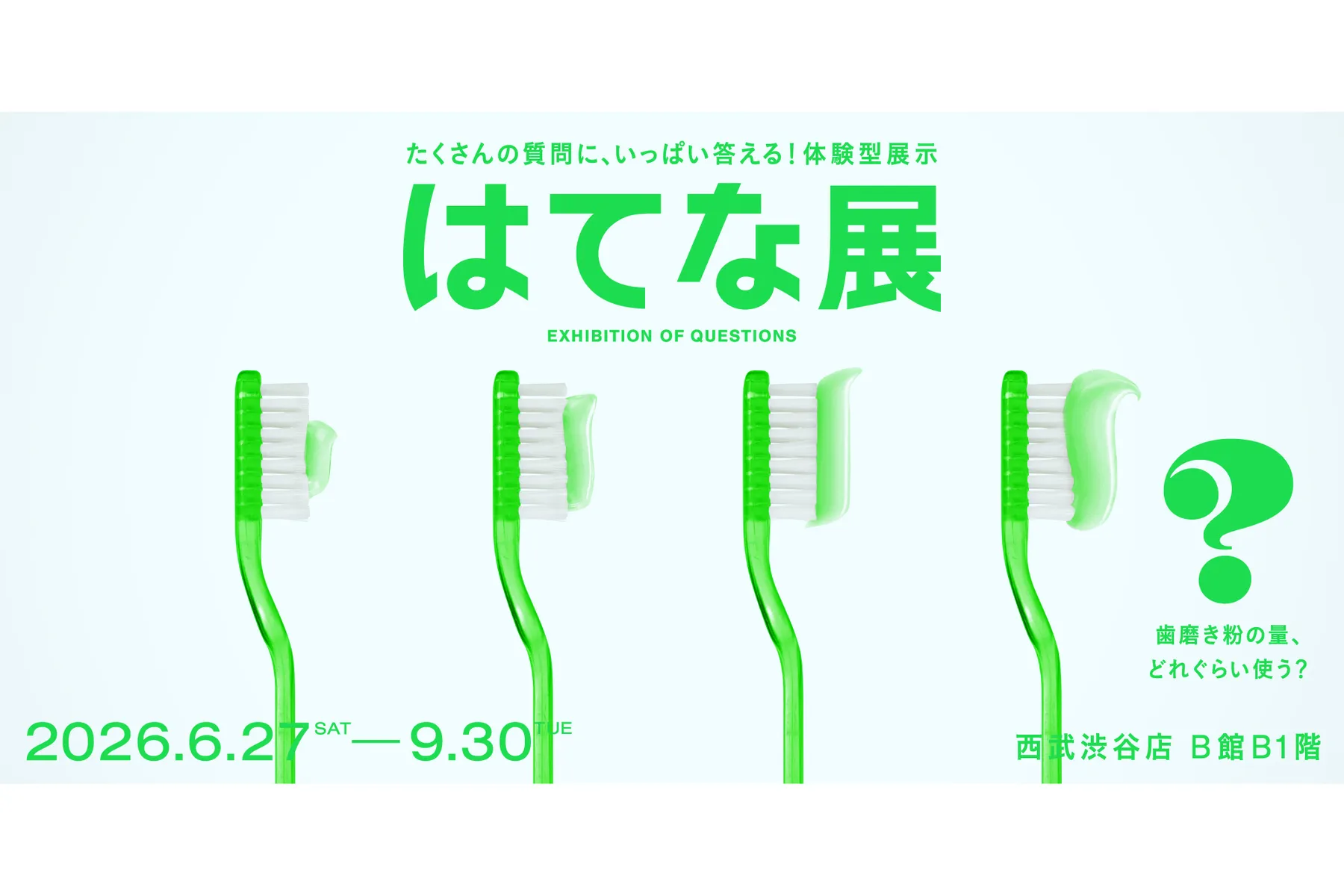
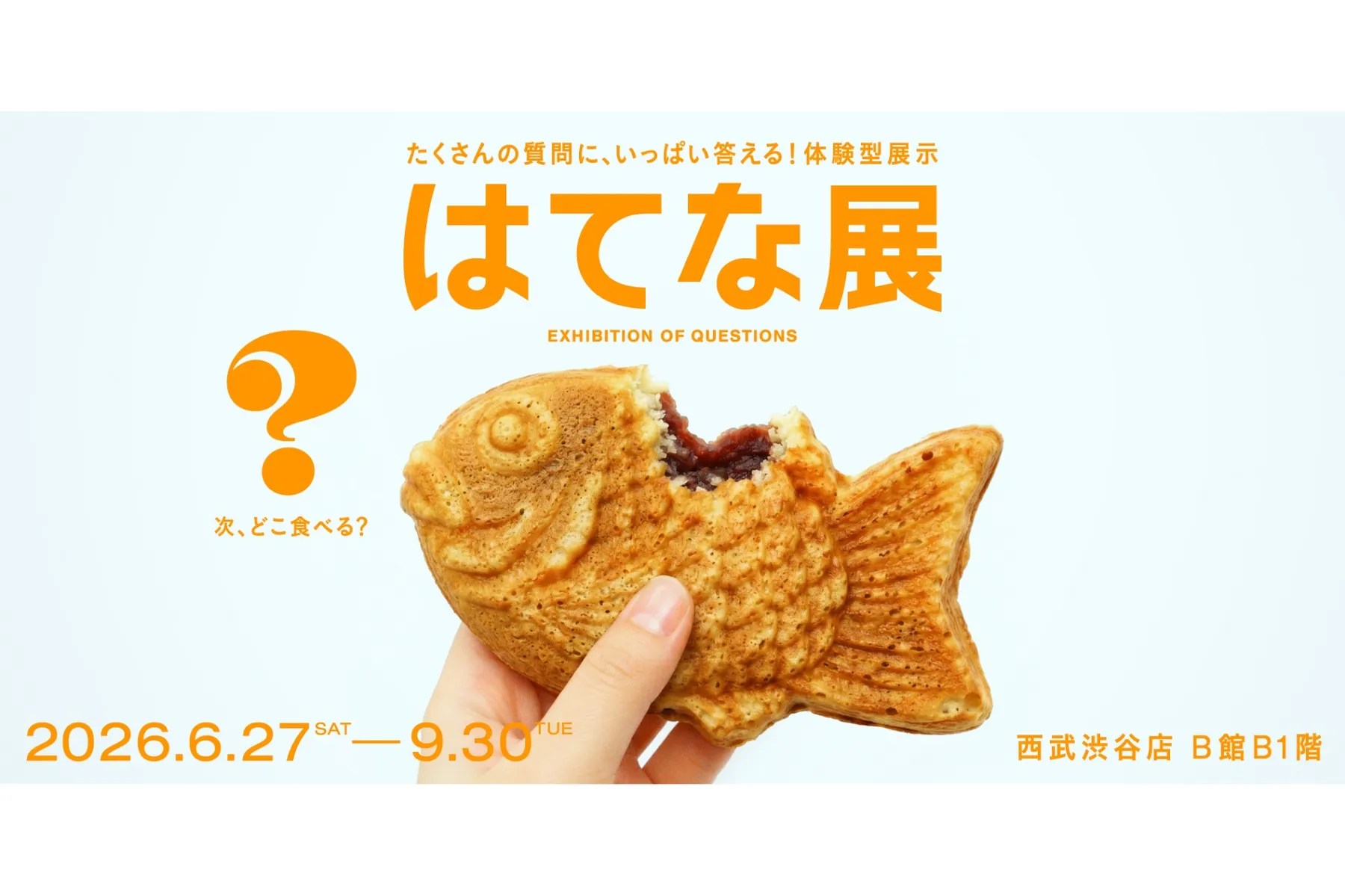
What does “normal” actually mean? The interactive exhibition Hatena (Question Mark), now open at Seibu Shibuya Store, operates from the premise that while we assume shared definitions of everyday concepts, our internal standards diverge in subtle, revealing ways. Created by entaku—the team behind the contemplative “You’re Too Kind Exhibition” and “That’s Not What I Meant Exhibition”—this summer project transforms abstract questions about perception into tangible, visual data.

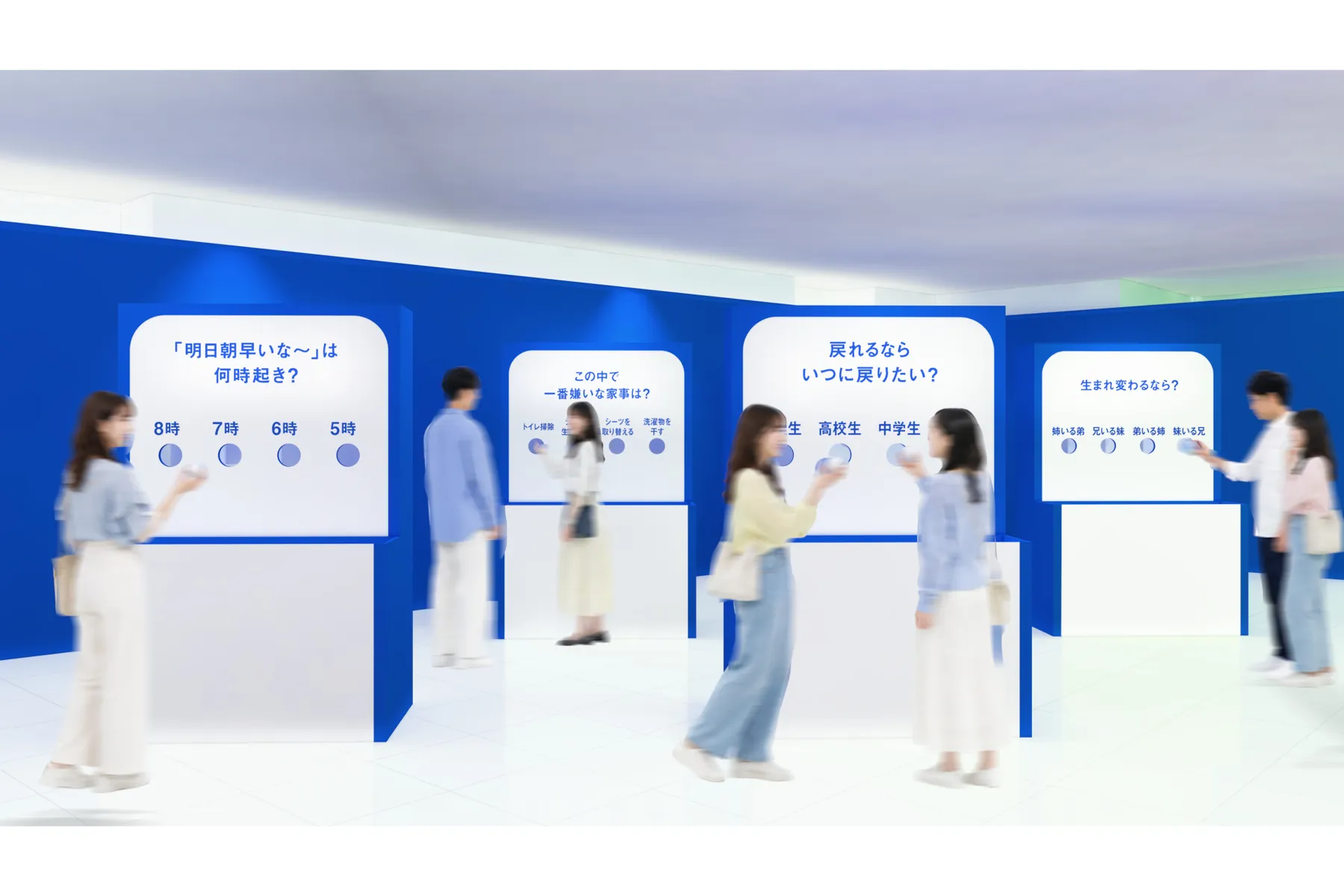
Unlike passive gallery experiences, Hatena functions as a living survey. Visitors navigate the space alone or with companions, responding to questions that expose the gap between personal assumptions and collective reality. The exhibition collects these responses in real-time, creating a dynamic portrait of how differently—or similarly—we perceive the world.

Three Dimensions of the Experience

1. Excavating Internal Standards Through Ambiguity

The exhibition confronts visitors with questions that resist easy answers. These are not trivia queries with correct responses, but probes into the murky territory of personal values and unexamined assumptions. When forced to choose a position on concepts we typically leave unverbalized, we reveal the specific architecture of our own “normal.” The questions function as mirrors, reflecting back the standards we did not know we had until required to articulate them.

2. Visualizing the Collective Mind

Your answer does not disappear into a database; it becomes part of the display itself. The exhibition visualizes response distributions, allowing visitors to locate themselves within the spectrum of answers. Are you aligned with the majority, or do you inhabit the statistical fringe? Does the collective response match your prediction, or does it expose the limitations of your assumptions? This aggregation transforms individual introspection into social discovery, expanding a single question into a network of conversations about why we differ.

3. Conversation as Medium

The exhibition is designed to reward social attendance. When exploring with others, the space naturally generates dialogue: comparisons of positions, justifications for choices, surprise at where alliances form or fracture. Whether you arrive seeking solitary reflection on your own perceptual frameworks or arrive hoping to discover the differences between yourself and your companions, the installation accommodates both modes of discovery—though the conversations that emerge from comparing answers often yield the most unexpected insights.

Essential Information

Location & Access
Venue: Seibu Shibuya Store, Building B, 1st Basement Floor
Nearest Station: Shibuya Station
Address: 〒150-8330 21-1 Udagawacho, Shibuya-ku, Tokyo
MAP

Dates & Hours
Period: June 27 (Saturday) – September 30 (Wednesday), 2026
Hours: 10:00 – 21:00 (Last entry 20:00)
Final day only: 10:00 – 20:00 (Last entry 18:30)

Admission
Weekdays: ¥1,800
Holidays: ¥2,100
Elementary school students and younger: Free

Optional Services
“Actually, you are [???] Diagnosis” (includes sticker): ¥400

Discounts
Persons with a disability handbook receive ¥500 off admission (applicable to the holder and one attendant).

Contact
ENTAKU produce: [email protected]
Official Site: https://entaku.ticket-store.jp/pages/hatena-2026

Note: Event details are subject to change. Please verify current information on the official website before visiting.

🛏️ See hotels near Tokyo

Hatena Exhibition_1 Hatena Exhibition_2 Hatena Exhibition_3 Hatena Exhibition_4 Hatena Exhibition_5 Hatena Exhibition_6

What is Hatena?

In Japanese, hatena (はてな) is the spoken and written word for the question mark, though it carries a distinct emphasis from its English counterpart. Where “question mark” describes a grammatical stop—a final notation of interrogation—hatena operates as an expressive utterance, something closer to “I wonder” or “what could this be.” It names the moment of hesitation itself rather than the punctuation that contains it.

We have adopted hatena as a working method for this exhibition, not merely as a thematic title. The artworks on display are not arranged to deliver definitive statements or authoritative narratives. Instead, they are positioned to generate friction between different modes of looking—scientific, emotional, historical, speculative—without requiring visitors to synthesize these views into a single, coherent interpretation.

The gallery layout enforces this multiplicity. Sightlines cut across open walls, allowing you to observe other visitors observing works you cannot currently see from your physical position. You become aware of your own perspective as exactly that: one angle among several, limited by your height, your movement through the space, and the cultural references you bring to the encounter. The exhibition asks you to hold this awareness without resolving it—to resist the reflex to collapse the difference between what you see and what others might be seeing.

This practice differs from passive uncertainty. Maintaining hatena requires attending to the specific conditions under which you perceive: the gallery lighting, your distance from the work, the sound of another visitor’s footsteps approaching from behind. It treats the exhibition not as an archive of answers, but as a site where questions gain precision through the collision of multiple, simultaneous viewpoints.

Reptiles Fever 2026 in Osaka: Discover Rare Reptiles and Unique Plants at Nanko ATC Hall

Reptiles Fever 2026 in Osaka: Discover Rare Reptiles and Unique Plants at Nanko ATC Hall

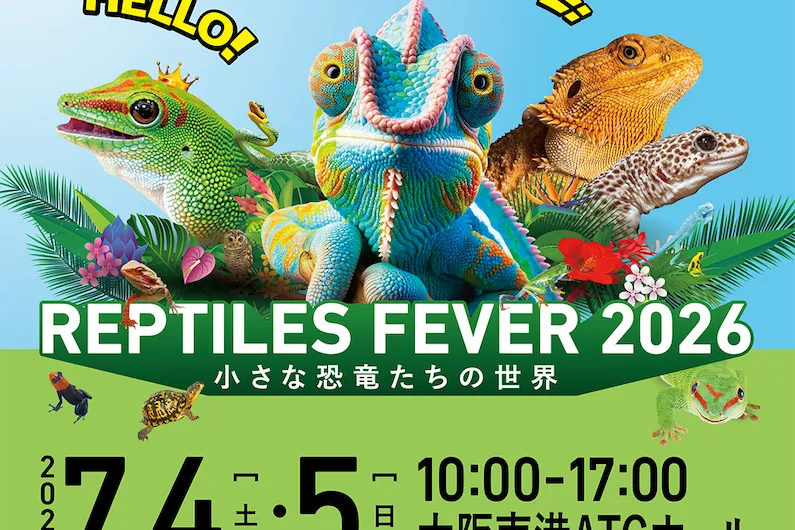
Reptiles Fever 2026: The World of Small Dinosaurs

Recognized as a representative reptile event for the Kansai region, “Reptiles Fever 2026” is returning to the Osaka Nanko ATC Hall. This comprehensive gathering serves as a centralized hub for enthusiasts and curious visitors alike, featuring an array of rare reptiles and amphibians sourced from across the globe alongside the latest advancements in breeding supplies. The event is designed to be an accessible experience for the whole family, offering a wide variety of interaction corners where guests can engage with these animals.

To ensure the safety of the animals and the respect of the vendors, attendees are asked to adhere to specific guidelines: please refrain from taking photos or videos of the sales booths without prior permission, and always verify with the sales staff before filming or photographing. Additionally, animals and their containers must not be touched without the explicit permission of the sales staff.

■Hentai Shokubutsu Club FES Vol.0

Adding a unique botanical dimension to the exhibition, the venue will host “Hentai Shokubutsu Club FES Vol.0.” This marks the inaugural plant sales event for the “Hentai Shokubutsu Club” (Perverted Plant Club)—a unique program dedicated to exploring the “world of beauty and obsession” found in rare and strange plants. The term “perverted” in this context refers to an intense, obsessive love for the unconventional aesthetics of the botanical world.

Visitors can browse a collection of unique plants hand-picked by the two leading minds of the program, Mr. Keisuke Hase and Botanical Gorilla. For those seeking rare specimens, the event offers the opportunity to acquire “fateful pots” that are available exclusively at this venue.


Event Details

Dates
July 4 (Sat) and 5 (Sun), 2026

Time
10:00–17:00 (Last admission at 16:30)

Location
Osaka Nanko ATC Hall

Admission Fees

  • Adults: 1,400 yen (Same-day) / 1,200 yen (Advance)
  • Elementary School Students: 800 yen (Same-day) / 700 yen (Advance)

Note: Advance ticket prices are available until July 3 (Fri) 23:59. Preschool children enter for free. Holders of a disability certificate are eligible for the advance ticket price upon presentation of their certificate. Same-day tickets will be available for purchase at the venue.

Contact & Information

🛏️ View hotels near the event

Nanko ATC Hall (Asia and Pacific Trade Center Hall) sits on Osaka’s artificial southern waterfront in the Nanko district. The building houses approximately 5,000 square meters of exhibition space configured as column-free halls with ceiling heights sufficient for industrial equipment displays and vertical staging. Floor loading capacities support heavy machinery, while the integrated loading bay allows container trucks to discharge directly at the exhibition level.

Constructed in the early 1990s as part of Japan’s initiative to centralize Pacific Rim trade operations, the facility has shifted toward specialized technical conventions, particularly expositions involving live aquatic specimens or biological displays. The hall maintains independent climate zones and backup power systems capable of sustaining controlled environments for temperature-sensitive exhibits—specifications originally designed for perishable trade goods now adapted for living collections.

The venue connects directly to Port Town-higashi Station on the Nanko Port Town Line, twenty minutes from Namba by rail. Drivers reach the site via the Hanshin Expressway Bayshore Route, with truck access to the harbor freight terminals located adjacent to the exhibition halls. The surrounding ATC complex includes retail arcades and waterfront dining terraces, though these operate independently from the exhibition schedule.

Zakka Wonderland 2026 in Osaka: Discover Unique Lifestyle Goods and Design at Namba SkyO

Zakka Wonderland 2026 in Osaka: Discover Unique Lifestyle Goods and Design at Namba SkyO

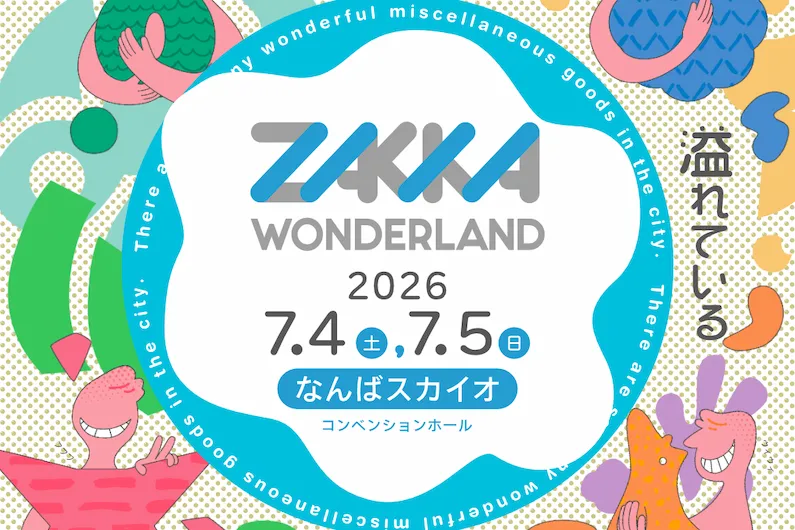
Miscellaneous Goods Wonderland

The Japanese concept of zakka—miscellaneous goods that transcend mere utility to become objects of quiet beauty—has long thrived in Osaka’s urban fabric, where pedestrians encounter small items that catch the eye while walking through the city. ZAKKA WONDERLAND operates on the premise that these discoveries, typically scattered across disparate neighborhoods, deserve temporary consolidation. For two days in early July, the Namba SkyO Convention Hall transforms into a limited-time select shop gathering brands that specialize in lifestyle goods, apparel, and greenery—a direct response to the ongoing disappearance of large stores from the city center.

Unlike permanent retail environments that require sustained foot traffic to justify their existence, this event embraces ephemerality. Specialist manufacturers—those whose scale or production methods preclude flagship presence in major commercial districts—will occupy the seventh floor venue simultaneously, creating a density of curation rarely available outside of established department stores. The assembly emphasizes what the organizers describe as “heart-fluttering” design: objects that establish immediate emotional resonance through material quality, functional elegance, or botanical vitality.

The practical structure of the event reflects shifting urban retail realities. As major anchors vacate central Osaka, ZAKKA WONDERLAND demonstrates that specialized manufacturing can aggregate temporarily to recreate the browsing richness of departed large-format stores without the overhead that made such spaces economically precarious. Visitors gain the efficiency of evaluating multiple specialty categories—lifestyle accessories, wearable goods, and cultivated plants—within a single logistical commitment, while manufacturers gain access to audiences they might not otherwise reach through their standalone locations.

Event Information

Period: July 4 (Saturday) and July 5 (Sunday), 2026
Time: 10:00 to 17:00 (entry permitted until 16:30)
Venue: Namba SkyO Convention Hall, 7th Floor, Namba SkyO, 5-1-60 Namba, Chuo-ku, Osaka City
Admission: Advance tickets ¥800; same-day purchase ¥1,000; complimentary admission for elementary school students and younger
Contact: 06-6354-4634 (Kiss Corporation Co., Ltd.)
Website: https://zakkawonderland.com

🛏️ See hotels near the event

What is Namba SkyO?

Namba SkyO sits atop Nankai Namba Station, where the railway lines meet the southern end of Osaka’s Namba district. Completed in 2018, the building houses eight floors of shops and restaurants above one of the city’s busiest transit interchanges. Unlike the dense, vertical department stores typical of Japanese city centers, SkyO spreads horizontally, occupying the air rights above the platforms and using the physical gap between the elevated tracks and street level.

The architecture favors breadth over verticality. Wide corridors run the length of the station, with full-height windows facing the tracks on one side and the street on the other, allowing clear sightlines across multiple storefronts simultaneously. Tenants tend toward small-scale domestic manufacturers and regional producers rather than international luxury brands. Specific shops specialize in hand-bound notebooks, cast iron cookware from Kansai forges, and furniture by local studio craftsmen. This concentration of independent retailers makes it a consistent source for zakka—household objects that prioritize utility without sacrificing material quality or proportion.

The 2026 Zakka Wonderland event uses SkyO as its primary venue. The building’s existing commercial mix, already focused on functional domestic goods, complements the exhibition’s curation. Visitors arriving by train enter directly onto the retail levels, while the open floor plates accommodate temporary installations without requiring the complete shutdown of regular commerce. The space functions as a working example of the design philosophy being celebrated: everyday objects made with sufficient care that they do not require frequent replacement.

adidas FIFA World Cup Store 2026: Get Your Japan National Team Uniforms and Join Exclusive Events in Tokyo and Chiba

adidas FIFA World Cup Store 2026: Get Your Japan National Team Uniforms and Join Exclusive Events in Tokyo and Chiba

adidas FIFA World Cup Store

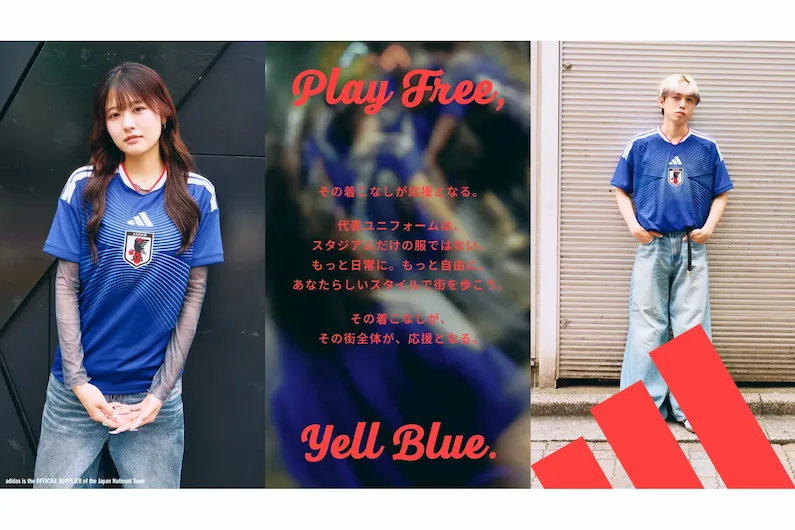
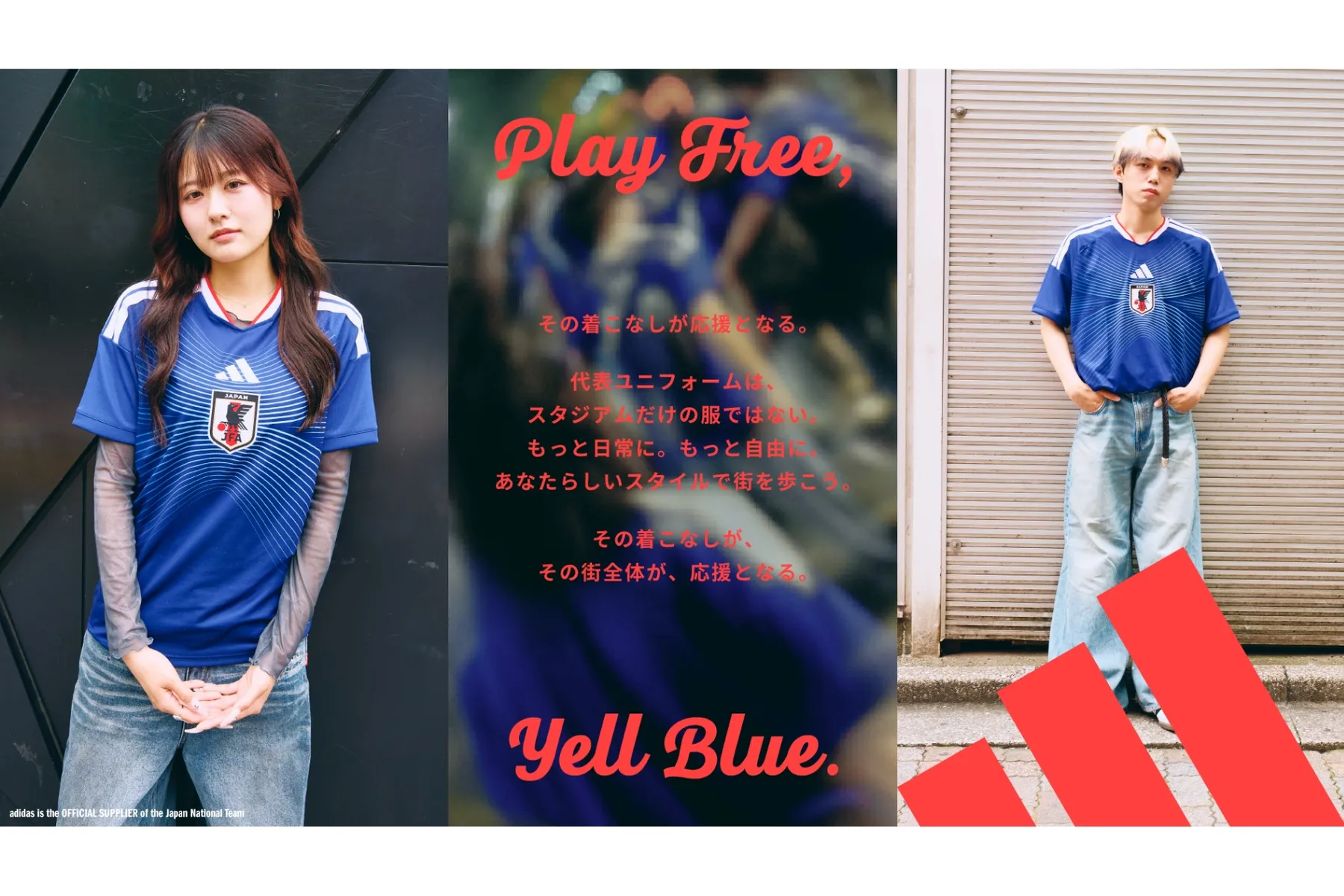
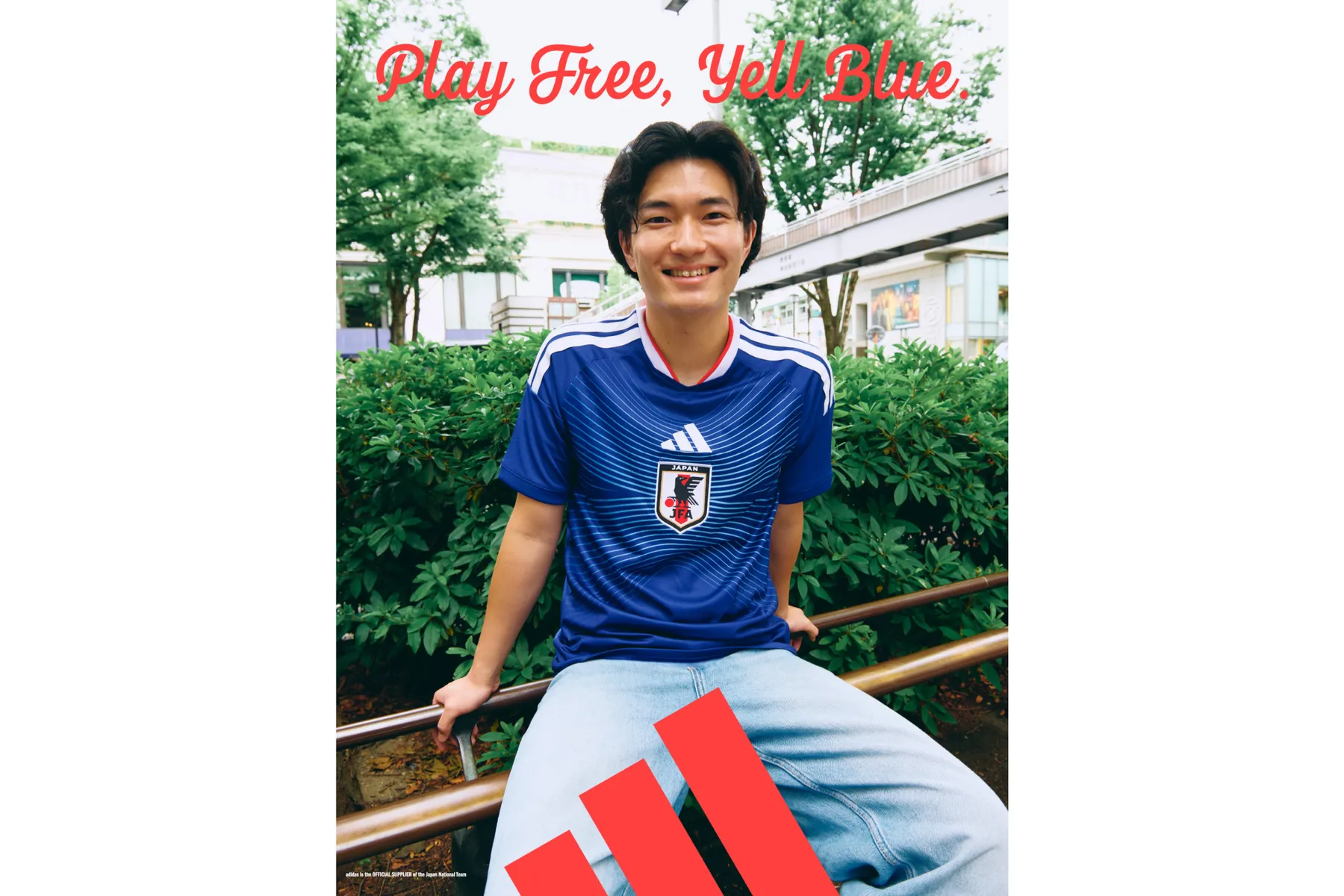
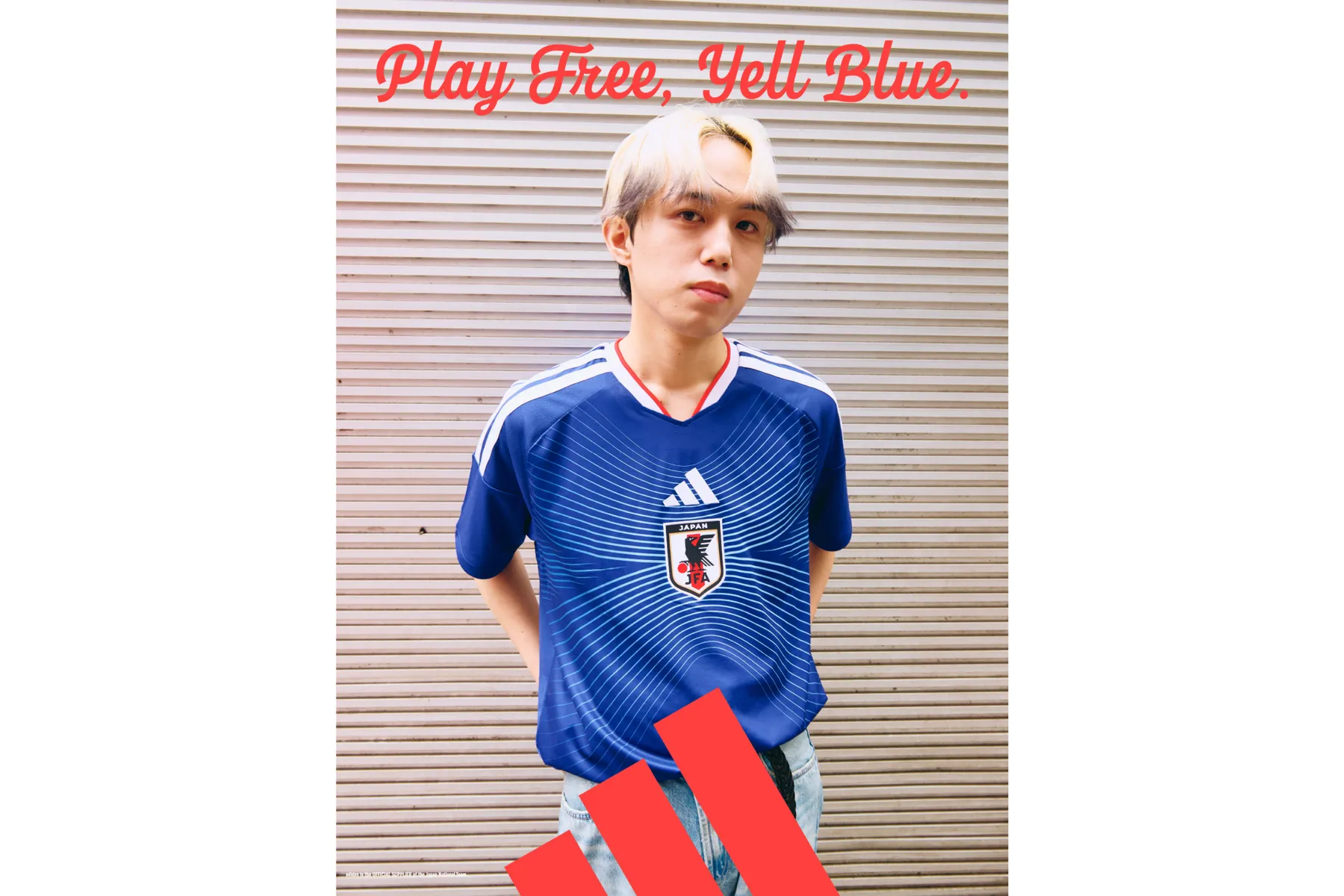
adidas Japan K.K. will open 88 temporary pop-up stores nationwide under the banner “adidas FIFA World Cup Store,” promoting a “Football Lifestyle” where the Japan National Football Team 2026 uniforms function as everyday fashion rather than occasion-specific sportswear. Operating under the concept of “Play Free, Yell Blue,” these spaces emphasize football’s democratic essence—the idea that anyone with the desire to play or enjoy the sport can participate regardless of location, technique, or skill. As the tournament approaches, the stores aim to cultivate a new urban culture of support that merges athletic enthusiasm with contemporary style.

Programming and Features

The stores function as hybrid retail and cultural venues. Core offerings include the Japan National Football Team 2026 uniforms and related merchandise, while select locations host public viewings and talk events featuring former national team players. This programming creates environments where visitors engage with football culture beyond traditional match-day contexts.

#adidasPlayFreeSnap Street Photography Project

At venues hosting public viewings, the “#adidasPlayFreeSnap” project invites visitors wearing the Japan National Team 2026 uniform to participate in a street-style photography session. Photographers will document how individuals incorporate the jerseys into their personal style, with selected images shared across social media platforms. The initiative explicitly aims to normalize football kits as city-appropriate attire and foster a visible culture of support that exists outside stadiums.

Novelty Campaign: Limited-Edition Marking Sheets

To commemorate the release of the uniform song “Kira,” customers purchasing a Japan National Team 2026 uniform will receive a limited-edition marking sheet featuring key visuals of Ado wearing the home and away kits, alongside characters from the music video. These apparel stickers can be attached directly to the uniform. This offer is exclusive to adidas FIFA World Cup Store locations, available at select venues while supplies last.


Venue Information

Tokyo Locations

adidas FIFA World Cup Store Rayard Miyashita Park “PLAY FREE STORE”
📍 Rayard Miyashita Park Park in Park, 6-20-10 Jingumae, Shibuya-ku, Tokyo (Nearest: Shibuya Station, 3 min walk)
📅 Thursday, June 11 – Tuesday, July 7, 2026 | 11:00–21:00
Note: Sunday, June 21 opening delayed to 18:00 due to an event

  • #adidasPlayFreeSnap: Sunday, June 21, 9:00–13:00 & 15:00–16:00 (Photographer: Keita Sugeno)
  • Public Viewing Event: Sunday, June 21, Doors open 11:00, Kick-off 13:00
    • 11:00 Doors open
    • 12:30 Special Talk Show (Guest: Former Japan National Team player Hayuma Tanaka / MC: Yu Fukuda)
    • 13:00 Japan National Team vs. Tunisia National Team
    • Free admission for adiClub members (joinable upon application). Apply here by Wednesday, June 10, 23:59.

adidas FIFA World Cup Store at Laforet Harajuku
📍 1-11-6 Jingumae, Shibuya-ku, Tokyo (Nearest: Meiji-Jingumae [Harajuku] Station, 1 min walk; Harajuku Station, 5 min walk; Omotesando Station, 7 min walk)
📅 Thursday, June 11 – Sunday, June 21, 2026 | 11:00–20:00

  • #adidasPlayFreeSnap: Sunday, June 21 (Photographer: Koichiro Funatsu)
  • Public Viewing Event: Sunday, June 21, Doors open 11:00, Kick-off 13:00
    • 11:00 Doors open
    • 12:30 Special Talk Show (Guests: Former Japan National Team player Yasuhiro Hato / Former Japan Women’s National Team player Aya Sameshima / MC: Shota Kibe)
    • 13:00 Japan National Team vs. Tunisia National Team
    • Pre-registration required. Application period: Thursday, May 28, 12:00 – Sunday, June 14, 23:59. Winners notified by Tuesday, June 16, 19:00. Application Site

adidas FIFA World Cup Store Shinjuku Takashimaya
📍 5-24-2 Sendagaya, Shibuya-ku, Tokyo (Nearest: Shinjuku Station)
📅 Wednesday, June 10 – Tuesday, June 16, 2026 | 10:30–19:30

  • #adidasPlayFreeSnap: Sunday, June 14, 10:30–19:30 (Photographer: Ryoma Kawakami)
  • Special Event: Sunday, June 14, 13:00–15:00 — Photo session with guest Hayuma Tanaka (former Japan National Team player)

adidas FIFA World Cup Store Sunshine City Ikebukuro
📍 Sunshine City Fountain Square, 3-1-1 Higashi-Ikebukuro, Toshima-ku, Tokyo (Nearest: Higashi-Ikebukuro Station / Ikebukuro Station)
📅 Monday, June 15, 2026 only | 3:00–8:00

  • #adidasPlayFreeSnap: Monday, June 15, 3:00–5:00 & 7:00–8:00 (Photographer: Kaoru Goto)
  • Public Viewing Event: Monday, June 15, Doors open 3:00, Kick-off 5:00
    • 3:00 Doors open
    • 4:30 Special Talk Show (Guest: Former Japan National Team player Naohiro Ishikawa / MC: MC YUI)
    • 5:00 Japan National Team vs. Netherlands National Team
    • *Details here. Applications have closed.

adidas FIFA World Cup Store Daimaru Tokyo Store
📍 Daimaru Tokyo 1F, 1-9-1 Marunouchi, Chiyoda-ku, Tokyo (Nearest: Tokyo Station / Nihonbashi [Tokyo] Station)
📅 Wednesday, June 10 – Tuesday, June 30, 2026 | 10:00–20:00
Retail sales only; no public viewing or street snap events scheduled.

Chiba Locations

adidas FIFA World Cup Store Mitsui Outlet Park Kisarazu
📍 3-1-1 Kanatahigashi, Kisarazu-shi, Chiba (Nearest: Sodegaura Station)
📅 Friday, June 12 – Tuesday, July 7, 2026 | 10:00–20:00


Street Snap “#adidasPlayFreeSnap” Locations

The street photography project operates at the following venues during the specified periods:

  • Rayard Miyashita Park — Sunday, June 21, 9:00–13:00 & 15:00–16:00
  • Laforet Harajuku — Sunday, June 21 (during business hours)
  • Shinjuku Takashimaya — Sunday, June 14, 10:30–19:30
  • Sunshine City Ikebukuro — Monday, June 15, 3:00–5:00 & 7:00–8:00

Photographers will capture visitors wearing the Japan National Football Team 2026 uniform to showcase individual styling approaches and cheering aesthetics. Selected images will be distributed via social media to promote the integration of football apparel into daily wardrobe choices.


Basic Information

Event Period:
Wednesday, June 10 – Tuesday, July 7, 2026
Opening dates and operating hours vary by specific location; individual venue schedules take precedence.

Official Site:
https://www.adidas.jp/fifa_world_cup_store

Note:
Event content and schedules are subject to change. Confirm current details via official venue or organizer websites before visiting.

🛏️ See hotels near Tokyo

adidas FIFA World Cup Store_1 adidas FIFA World Cup Store_2 adidas FIFA World Cup Store_3 adidas FIFA World Cup Store_4 adidas FIFA World Cup Store_5 adidas FIFA World Cup Store_6 adidas FIFA World Cup Store_7 adidas FIFA World Cup Store_8

What is Chiba?

Chiba sits on the eastern shore of Tokyo Bay, a prefecture defined by industrial ports, reclaimed waterfront, and urban centers built on fill land. It operates as Tokyo’s logistical counterpart—hosting Narita Airport, the country’s busiest seaport, and the distribution networks that supply the capital—while maintaining a character distinct from the dense verticality across the water. Chiba City, the prefectural capital, anchors the western coast with a population of nearly one million, its skyline of residential towers and commercial complexes facing Tokyo across the bay.

For visitors attending the adidas FIFA World Cup Store 2026, Chiba provides a straightforward alternative to central Tokyo’s congestion. The JR Sobu Line and Keisei Electric Railway connect Chiba Station to Tokyo Station in approximately thirty to forty minutes, making the journey shorter for fans staying in eastern neighborhoods like Ueno or Asakusa than traveling across the city center.

The store itself occupies space within Chiba’s retail districts, likely near the port area or within one of the bayside shopping complexes—buildings constructed on land that formerly served industrial purposes. Unlike Tokyo’s vertical retail environments, Chiba’s commercial areas spread horizontally across the flat coastal terrain, with wider streets and open plazas that accommodate large temporary installations without the logistical constraints of Shibuya or Shinjuku. Visitors can purchase Japan National Team merchandise, test equipment on display surfaces, or view match screenings without navigating the dense pedestrian flows that characterize central Tokyo during major tournaments.

STAR WARS SPECIAL STORE by BENELIC: Get Exclusive Merchandise at Tokyo Solamachi and Yokohama Landmark Plaza

STAR WARS SPECIAL STORE by BENELIC: Get Exclusive Merchandise at Tokyo Solamachi and Yokohama Landmark Plaza

STAR WARS SPECIAL STORE by BENELIC

For enthusiasts of the galaxy far, far away, the “STAR WARS SPECIAL STORE by BENELIC” is expanding its footprint with two new locations. Starting Friday, April 24, 2026, a new store will open at Tokyo Solamachi(R), followed by an opening at Yokohama Landmark Plaza on Wednesday, April 29, 2026 (a public holiday).

These stores arrive at a pivotal moment for the fandom, providing a physical space to build anticipation for the upcoming film Star Wars: The Mandalorian & Grogu. Furthermore, the timing allows visitors to celebrate “Star Wars Day” on May 4th—a global tradition for fans—within a dedicated retail environment. These new venues complement the existing location at Ikebukuro PARCO, ensuring that collectors across the region have access to high-quality themed merchandise.

To incentivize early visits, Benelic is implementing a purchase campaign where customers can receive original stickers and original shopping bags as gifts, with the specific reward depending on the total amount spent in-store.

Exclusive and Advance Merchandise

A primary draw for collectors will be the location-specific items and timed releases. The Tokyo Solamachi branch will offer an exclusive pin, while the Landmark Plaza location will host an advance sale for specific accessories.

Tokyo Solamachi Limited Edition

The following item is available exclusively at the Tokyo Solamachi retail store and will not be sold through the online shop:

  • Product Name: STAR WARS GROGU CUTEST IN THE GALAXY STAR WARS SPECIAL STORE by BENELIC TOKYO Solamachi® Limited Pins
  • Price: 2,025 yen (tax included)
  • Size: Approx. W36 × H35 mm
  • Material: Zinc alloy, brass, epoxy resin
  • Release Date: Friday, April 24, 2026

Landmark Plaza Advance Sale

Certain items will be available at Landmark Plaza before they hit other channels. While later sales are planned for the Ikebukuro PARCO and Tokyo Solamachi stores—as well as the Benelic Online shop—the following can be acquired early at Landmark Plaza:

  • Product Name: STAR WARS / The Mandalorian & Grogu Shopping Bag Grogu & Anzellan
  • Price: 1,430 yen (tax included)
  • Size: Approx. W300 × H420 × D120 mm
  • Material: Polypropylene, paper
  • Release Date: Wednesday (public holiday), April 29, 2026

New Product Lineup (Launching April 24)

Beyond the limited editions, a wave of new general merchandise will launch on April 24 to coincide with the Tokyo Solamachi opening. The collection focuses on a blend of eccentric home goods and practical fashion.

Among the highlights are the “Funbaruz” plushies featuring an Ewok design—which are specifically engineered to be sandwiched between the user’s stomach and desk to support correct posture—and a series of palm-sized Darth Vader statues designed for desk ornamentation. For those seeking wearable items, the store will introduce drawstring shoulder bags, pouches, and card cases that utilize lightsaber parts as aesthetic accents.

*Please check the official website for detailed contents.

Basic Information

Locations and Access

Tokyo Solamachi(R)

  • Nearest Stations: Tokyo Skytree Station / Oshiage <Skytree-mae> Station
  • Venue: Tokyo Skytree Town Solamachi 4F

Landmark Plaza

  • Nearest Stations: Minatomirai Station / Sakuragicho Station
  • Venue: Landmark Plaza 3F

Event Periods

  • Tokyo Skytree Town Solamachi: Friday, April 24, 2026 – Sunday, August 2, 2026
  • Landmark Plaza: Wednesday (public holiday), April 29, 2026 – Sunday, May 24, 2026

Operating Hours

  • Tokyo Skytree Town Solamachi 4F: 10:00 – 21:00 (subject to commercial facility hours)
  • Landmark Plaza 3F: 11:00 – 20:00 (subject to commercial facility hours)

Official Resources

*The published content may be subject to change. Please check the official website of the venue or organizer for the latest information.

🛏️ See hotels near Tokyo

STAR WARS SPECIAL STORE by BENELIC_1 STAR WARS SPECIAL STORE by BENELIC_2 STAR WARS SPECIAL STORE by BENELIC_3 STAR WARS SPECIAL STORE by BENELIC_4 STAR WARS SPECIAL STORE by BENELIC_5 STAR WARS SPECIAL STORE by BENELIC_6 STAR WARS SPECIAL STORE by BENELIC_7 STAR WARS SPECIAL STORE by BENELIC_8 STAR WARS SPECIAL STORE by BENELIC_9 STAR WARS SPECIAL STORE by BENELIC_10 STAR WARS SPECIAL STORE by BENELIC_11 STAR WARS SPECIAL STORE by BENELIC_12 STAR WARS SPECIAL STORE by BENELIC_13 STAR WARS SPECIAL STORE by BENELIC_14 STAR WARS SPECIAL STORE by BENELIC_15 STAR WARS SPECIAL STORE by BENELIC_16 STAR WARS SPECIAL STORE by BENELIC_17 STAR WARS SPECIAL STORE by BENELIC_18 STAR WARS SPECIAL STORE by BENELIC_19 STAR WARS SPECIAL STORE by BENELIC_20

Tokyo Solamachi occupies the base of the Tokyo Skytree, forming a retail podium that connects the tower directly to Oshiage and Tokyo Skytree stations. Opened in May 2012 alongside the tower itself, the complex houses approximately 300 shops and restaurants across its multiple floors, serving both as a transit hub and a destination in its own right.

The spatial organization separates the facility into distinct zones—the Solamachi Core and East Yard—unified by wide interior promenades that handle pedestrian flow between the station gates and the Skytree’s observation deck elevators. This layout ensures visitors pass through retail and dining areas regardless of whether they intend to ascend the tower. The tenant mix includes mid-range fashion brands, specialty food vendors selling traditional Edo-period crafts, and restaurants ranging from quick-service counters to the formal dining room on the 30th and 31st floors.

Situated in Sumida, the complex draws a steady cross-section of tower tourists, local residents, and office workers from the surrounding district. The ground-floor plazas accommodate temporary retail installations and seasonal markets, while upper levels host satellite cultural institutions including a planetarium and postal museum. Rather than targeting luxury consumers, the merchandise selection emphasizes accessible price points, character goods, and Tokyo-specific souvenirs, reflecting the area’s history as a center for artisan manufacturing.

Analytics