Visit Nagoya Sword World’s 2026 Summer Festival with Lord Hideyoshi and Lord Toshiie: A Family-Friendly Guide to History and Fun

Visit Nagoya Sword World's 2026 Summer Festival with Lord Hideyoshi and Lord Toshiie: A Family-Friendly Guide to History and Fun

Step Back to the Sengoku Period: Summer Festival with Lord Hideyoshi and Lord Toshiie at Nagoya Sword World

On Friday, July 24, 2026, the Nagoya Sword Museum—known as “Nagoya Sword World”—transforms its Main Building 2nd Floor lobby into a spirited summer festival ground where history and family entertainment converge. This single-day event, titled “Summer Festival with Lord Hideyoshi and Lord Toshiie,” offers visitors the rare opportunity to interact with two of Japan’s most pivotal historical figures while experiencing traditional festival culture within the context of one of the nation’s premier sword collections.

The afternoon brings together Lord Toyotomi Hideyoshi—the warlord who completed the unification of Japan—and Lord Maeda Toshiie, the distinguished warrior and founder of the Kaga domain, both portrayed by members of the Nagoya Omotenashi Bushotai®. Adding to the spectacle, the Jingasa-tai Odori-mai will perform traditional dances in conical war hats, creating an atmosphere that bridges the museum’s martial artifacts with the lively entertainment of the Sengoku period.

What distinguishes this festival from standard summer matsuri is its integration with the museum’s unique identity. While visitors explore the blade collections that define Nagoya Sword World, they can also participate in classic carnival activities including target shooting (shateki), ring toss (wanage), and capsule toy vending machines—each offering substantial prizes. The program extends beyond games to include a formal tea ceremony demonstration, curated photo opportunities with the warlord reenactors, and informative gallery talks that contextualize the weapons within Japan’s festival traditions.

For families considering attendance, July 24 presents a significant financial incentive: admission is free for children of elementary school age and younger exclusively on this date. This represents a departure from standard pricing, which typically charges junior high and elementary students at the door. To accommodate this offer, parents should notify the staffed reception at the museum shop on the 1st floor of the North Building upon arrival, as admission tickets will be issued for eligible children.

Event Details

Date and Time
Friday, July 24, 2026, from 10:00 to 17:00 (final admission at 16:30)

Venue
Nagoya Sword Museum “Nagoya Sword World”
Summer Festival Venue: Main Building 2nd Floor, Lobby in front of the entrance gate

Admission Fees

  • General: 1,200 yen
  • Seniors (65 and older): 1,000 yen
  • University/High school students: 500 yen
  • Junior high/Elementary school students: Free admission only on Friday, July 24
  • Preschool children: Free
  • Persons with disabilities (including one companion): Free *Please present your disability certificate.
  • Groups (20 or more people): 300 yen discount for General admission / 100 yen discount for non-General categories

Note: Since admission tickets will be issued for children of elementary school age and younger, please notify the staffed reception at the museum shop on the 1st floor of the North Building.

Access

  • 10-minute walk from Yabacho Station on the Nagoya City Subway Meijo Line
  • 9-minute walk from Osu Kannon Station on the Nagoya City Subway Tsurumai Line
  • 12-minute walk from Fushimi Station on the Nagoya City Subway Higashiyama Line

Contact
Nagoya Sword Museum “Nagoya Sword World”
Email: [email protected]
Homepage: https://prtimes.jp/main/html/rd/p/000000077.000023091.html

🛏️ See hotels near the event

Nagoya Sword World is a historical theme park and museum located in Aichi Prefecture, exploring Japanese sword craftsmanship and Sengoku period military history. The facility centers on a reconstructed Edo-period castle town, where timber-framed buildings house both permanent exhibitions and working forges. Smiths demonstrate traditional folding and tempering techniques using the same grades of tamahagane steel and pine charcoal that defined the era’s metallurgy.

The collection features authenticated nihontō historically linked to Central Japan’s warlords, including several blades attributed to the region’s major clans. Rather than presenting these weapons in isolation, the park examines their physical construction within the context of 16th-century warfare. Visitors can observe the differential hardening process that produces the hamon (temper line), examine the grain structure of traditional steel, and discuss with artisans how smiths balanced hardness against brittleness when forging weapons intended for battlefield use.

The programming particularly investigates the military alliance between Toyotomi Hideyoshi and Maeda Toshiie, two figures who established their power bases in this region. Historical reenactments and seasonal performances analyze the political strategies and logistical challenges that defined this relationship. The annual Summer Festival expands these themes through extended theatrical programming and temporary exhibitions drawn from private collections.

Educational offerings range from wood sword training for younger visitors to advanced seminars on metallurgical analysis and blade appraisal. The facility accommodates various levels of prior knowledge, providing structured entry points for newcomers while maintaining the technical precision required by serious researchers. This approach allows direct engagement with martial traditions without compromising the historical accuracy of the demonstrations or the safety of the participants.

2026 Incheon Pentaport Rock Festival Guide: How to Get Blind Tickets and Plan Your Visit to Songdo Moonlight Festival Park

2026 Incheon Pentaport Rock Festival Guide: How to Get Blind Tickets and Plan Your Visit to Songdo Moonlight Festival Park

2026 Incheon Pentaport Rock Festival

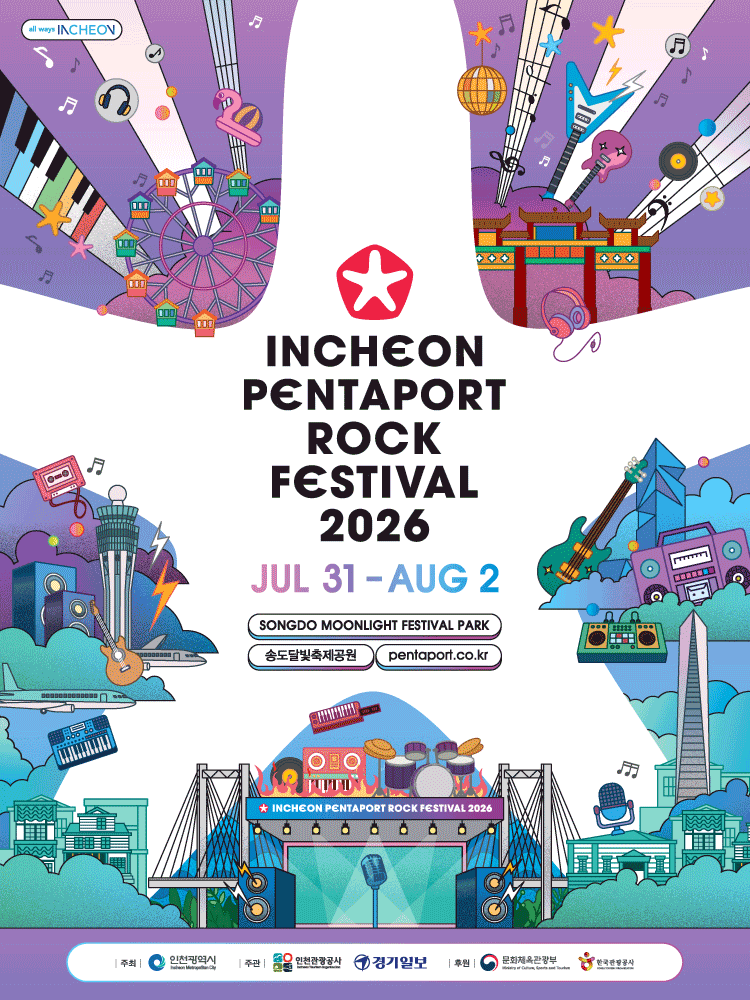
Poster

The 2026 Incheon Pentaport Rock Festival will occupy Songdo Moonlight Festival Park from July 31 through August 2, offering three days of rock music programming from 11:00 AM to 10:00 PM daily. The event distinguishes its ticketing approach through a blind sale mechanism—a limited window opening April 24, 2026, at 2:00 PM—that reduces the three-day pass cost by 30 percent (from 240,000 KRW to 168,000 KRW) for purchasers buying before the artist lineup announcement.

Event Information

  • 🗓️ Date: 2026-07-31 ~ 2026-08-02
  • 📍 Venue: Songdo Moonlight Festival Park
  • Address: 350 Central-ro, Yeonsu-gu, Incheon (Songdo-dong)
  • Age Limit: All ages permitted

Located in Incheon’s Songdo International Business District, the Moonlight Festival Park provides an open-air setting for the festival. The all-ages admission policy permits entry for attendees of any age group, though parents and guardians should note the implications of large crowd environments and sustained high-volume music exposure for young children.

Schedule

The festival operates on identical hours across all three days:

  • Friday, July 31, 2026: 11:00 AM ~ 10:00 PM (KST)
  • Saturday, August 1, 2026: 11:00 AM ~ 10:00 PM (KST)
  • Sunday, August 2, 2026: 11:00 AM ~ 10:00 PM (KST)

Ticket Information

Blind Ticket Sale

The blind ticket window opens on Friday, April 24, 2026, at 2:00 PM and closes upon sell-out. This limited-release tranche offers the three-day pass at 168,000 KRW—a reduction from the standard price of 240,000 KRW—available strictly on a first-come, first-served basis. Purchasers are limited to four tickets per ID, and sales terminate automatically once the allocated inventory depletes.

Ticketing Protocol and Restrictions

By completing a ticket purchase, attendees agree to the festival’s performance guidelines, which organizers may modify depending on operational requirements. All tickets are distributed exclusively through a mobile ticket service; physical tickets are not issued, eliminating options for delivery or on-site pickup. The mobile ticket gifting function is disabled for this event.

Mobile tickets require exchange for physical wristbands at the venue entrance. Once obtained, these wristbands permit free re-entry to the festival grounds. Attendees must wear their 3-day pass wristbands continuously throughout the entire viewing schedule, from initial entry through the conclusion of the final day’s programming.

Important constraints regarding wristbands: Entry wristbands cannot be reissued under any circumstances if lost, stolen, or damaged, so attendees should exercise particular care in securing them. Transfer, resale, and name changes are strictly prohibited. The organizers, hosts, and partners assume no responsibility for damages resulting from illegal ticket transactions, which remain entirely the responsibility of the transacting parties.

Performance and Refund Policies

Performing artists and scheduled performance times are subject to change due to unavoidable circumstances. As a matter of policy, refunds are not issued in response to lineup or schedule modifications. Same-day refunds are also unavailable for entry delays caused by venue congestion. Attendees should arrive in advance to accommodate potential queuing at entry points and booths.

Depending on real-time conditions on the event dates, entry may require waiting in organized queues; attendees should follow staff instructions to facilitate smooth ingress.

Accommodations and Equipment

For attendees traveling from outside Incheon, the above link provides access to nearby lodging options within the Songdo area and surrounding districts. Those requiring seating equipment can access festival chair options through the provided affiliate link.

Festival Guidelines

The guidelines referenced in this article and exposed within the official work description are designed to ensure safe, enjoyable festival attendance while minimizing operational inconveniences. Attendees should review the complete festival guidelines provided in the detailed images below before completing their purchase:

이 포스팅은 쿠팡 파트너스 활동의 일환으로, 이에 따른 일정액의 수수료를 제공받습니다.

Waterbomb Seoul 2026 Guide: Tickets, Dates, and Everything You Need to Know for the Ultimate Summer Experience

Waterbomb Seoul 2026 Guide: Tickets, Dates, and Everything You Need to Know for the Ultimate Summer Experience

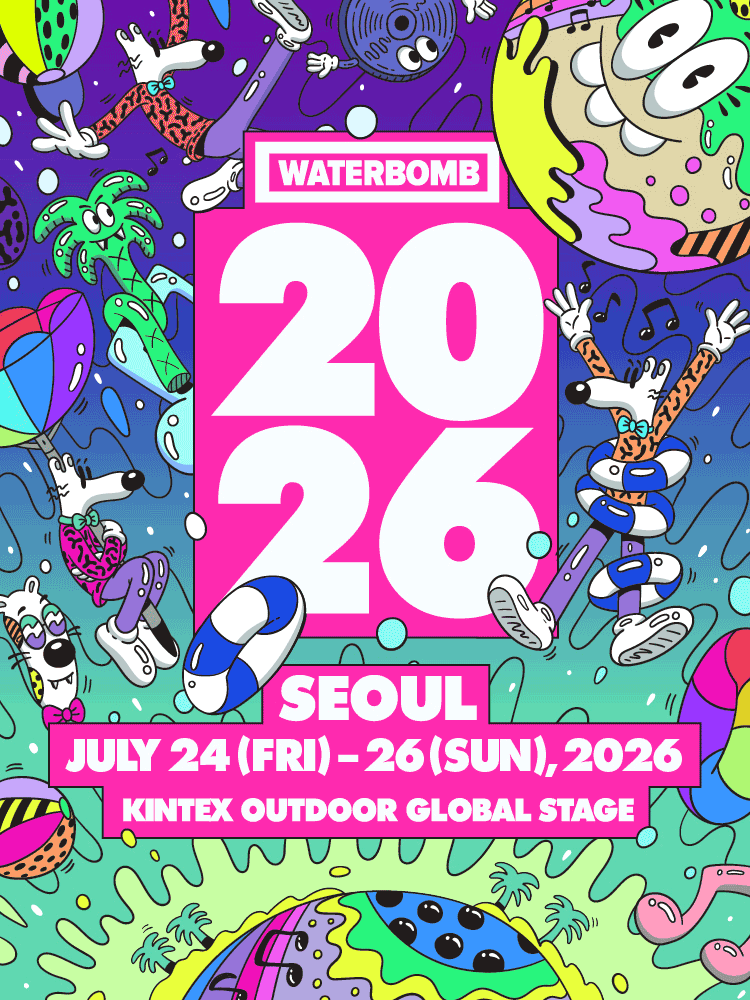
Waterbomb Seoul 2026

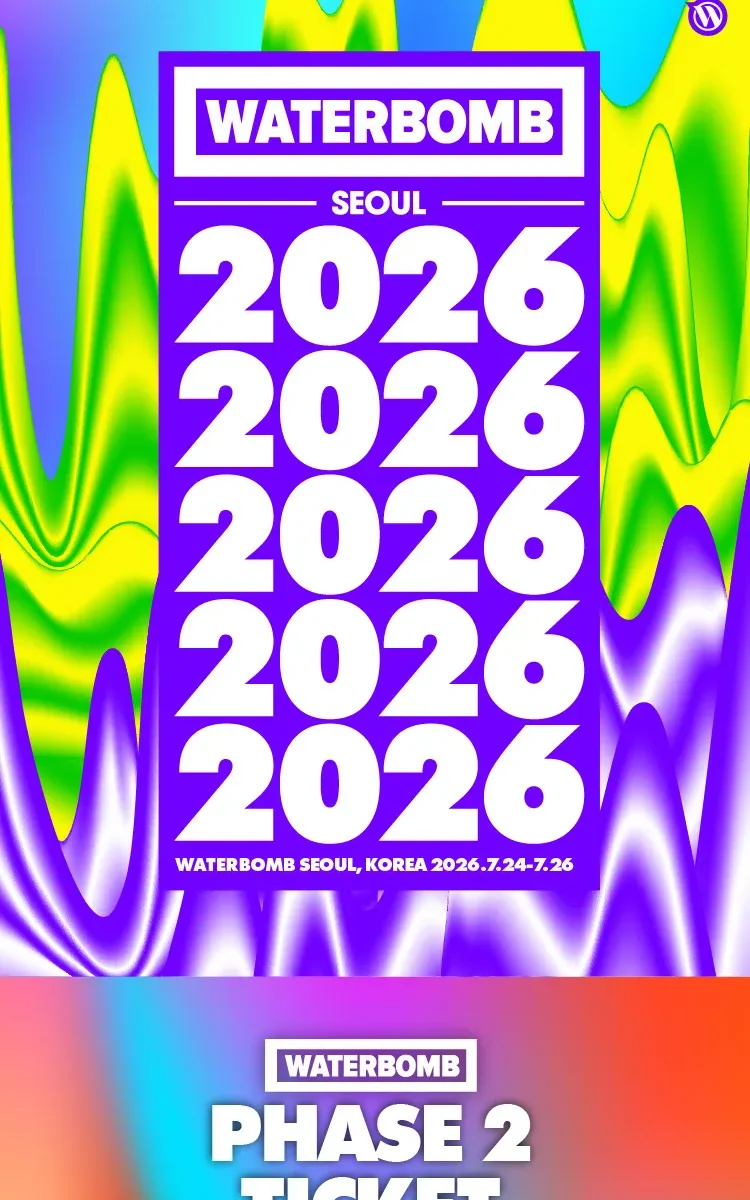
Poster

South Korea’s annual Waterbomb festival returns to Seoul in 2026, offering a distinct alternative to traditional summer concerts through its integration of high-energy EDM and hip-hop performances with large-scale water combat. Unlike conventional music events where audiences remain spectators, Waterbomb operates on a team-based battle system—Green versus Yellow—where attendees, equipped with water guns, engage in playful warfare while artists perform on stage. This format converts the venue into an immersive summer arena where remaining dry is neither expected nor particularly desirable, making waterproof phone cases and quick-dry clothing advisable preparations rather than afterthoughts.

Event Information

The festival takes place at the KINTEX Outdoor Global Stage, located within the Korea International Exhibition Center in Ilsan, Goyang—a northern suburb of Seoul accessible via the Seoul Metropolitan Subway system. This dedicated outdoor space accommodates the event’s unique combination of concert staging and water-based activities, providing sufficient area for the team zones and water artillery deployment that characterize the Waterbomb experience.

Schedule

Detailed operating hours and timetable will be announced later.

Ticket Prices

Admission is structured by day and team affiliation, with Saturday commanding a premium pricing tier:

  • Friday, July 24:

    • (Fri) 2nd Ticket_Green Team (Admission): 110,000 KRW
    • (Fri) 2nd Ticket_Yellow Team (Admission): 110,000 KRW
  • Saturday, July 25:

    • (Sat) 3rd Ticket_Green Team (Admission): 121,000 KRW
    • (Sat) 3rd Ticket_Yellow Team (Admission): 121,000 KRW
  • Sunday, July 26:

    • (Sun) 3rd Ticket_Green Team (Admission): 110,000 KRW
    • (Sun) 3rd Ticket_Yellow Team (Admission): 110,000 KRW

Team selection—Green or Yellow—determines which faction you will join during the water battles, though pricing remains consistent across both teams for any given day.

Festival Information and Reservation Guidelines

Waterbomb Seoul 2026 Reservation Notice

Tickets for this event utilize a QR code system; physical tickets are not shipped separately. Instead, QR codes are transmitted collectively to the mobile phone number provided during reservation exactly ten days prior to the event date. The accuracy of the entered mobile number is therefore critical—errors in contact information may result in non-delivery of admission credentials without possibility of same-day resolution.

Ticketing operates on a tiered release system: quantities are limited for each session, and when tickets for a specific session sell out, the subsequent session opens for purchase. Buyers should verify their eligibility against the age restriction; the event is strictly limited to attendees aged 19 and above, defined as those born on or before December 31, 2007 (based on 2026 calendar year).

Entry requires presentation of physical identification for adult verification; entry will be refused without proper ID, and same-day refunds are not granted for admission denials based on identification failures. The detailed performance timetable will be announced through official channels at a later date. All performance-related information—including potential schedule changes and safety protocols—is disseminated exclusively through the official Instagram account and website. Reservation of tickets constitutes agreement to all terms regarding reservation procedures, entry protocols, refund policies, and viewing guidelines.

이 포스팅은 쿠팡 파트너스 활동의 일환으로, 이에 따른 일정액의 수수료를 제공받습니다.

Busan Fireworks Festival Guide: Best Viewing Locations, Transportation Tips, and Visitor Advice

<-2> Busan Fireworks Festival

| Location | Gwangalli Beach area |
| Host | Busan Metropolitan City |
| Organizer | Busan Culture & Tourism Festival Organizing Committee |
| Homepage | |

Overview

The Busan Fireworks Festival represents not merely a pyrotechnic display but a comprehensive multimedia maritime show that has become the largest of its kind in Asia, drawing over one million spectators annually to the southern port city. Hosted by Busan Metropolitan City and organized by the Busan Culture & Tourism Festival Organizing Committee, this event stands alongside the Busan International Film Festival as one of the metropolis’s signature cultural products.

What distinguishes this festival from its counterpart in Seoul—specifically the Seoul International Fireworks Festival, with which it shares recognition as one of Korea’s two major fireworks celebrations—is its maritime setting. Whereas Seoul’s event unfolds along the narrow Han River, necessitating strict safety limitations that constrain production scale, Busan’s festival launches from the open sea, allowing for unrestricted pyrotechnic creativity and larger explosive displays. The festival integrates laser shows with precisely choreographed musical accompaniment, featuring unique firework shapes and giant shells that transform the night sky above Gwangalli Beach into a synchronized canvas of light and sound.

Venue and Timing

The festival occurs annually on the last Saturday of October, a scheduling choice designed to maximize attendance while preserving Sunday for recovery from the inevitable logistical challenges. This Saturday tradition mirrors the Seoul International Fireworks Festival’s approach, though since 2019 the event has shifted to the first Saturday of November.

The primary stage encompasses the waters fronting Gwangalli Beach and the iconic Gwangandaegyo Bridge, where barges position themselves to launch fireworks from both sea and bridge structures. The maritime location effectively eliminates fire concerns; indeed, during the 14th festival in 2018, when a fire broke out on a barge, many attendees remained oblivious to the incident.

Since the 11th festival in 2015, the production has expanded to a “3-Point” system, launching fireworks simultaneously from Marine City and Igidae in addition to Gwangalli Beach. However, this creates a tiered viewing experience: the “Overseas Invited Fireworks Show” remains visible exclusively from Gwangalli Beach, while the “Busan Multi Fireworks Show” can be viewed from all three locations. Certain central areas of Gwangalli sandy beach have been designated as premium tourist seating since 2015.

Historical Evolution

The festival’s origins trace to November 16, 2005, when an Advanced Multimedia Maritime Show celebrated the APEC Summit with an investment of 1.3 billion won, attracting one million spectators and creating what locals described as a “hell gate” scene on Busan Metro Line 2. Inspired by this success, the city rebranded the event as the Busan World Fireworks Festival on November 10, 2006, expanding the scale to accommodate 1.1 million attendees; from 2007 onward, pre-festival events accompanied the main celebration.

By the 6th festival in 2010, attendance had surged to 2.6 million—establishing the event as Busan’s representative tourism product and prompting the city to specifically target Japanese tourists residing in Tsushima. The 2011 festival proceeded despite rain, while the 2012 edition, originally scheduled for October 26–27, was postponed to 8:00 PM on October 28 due to inclement weather. The 2013 festival ran from Friday, October 25 to Saturday, October 26 under the theme “50 Years of Love, Busan!” and included a public proposal event during the 2012 festival for a couple selected through open recruitment.

The 10th festival in 2014 featured narration by Bae Chul-soo, while 2015 marked a significant operational change: the introduction of paid seating on the beach (S seats at 70,000 won and R seats with tables at 100,000 won), the implementation of the 3-Point production, and narration by Yang Hee-eun alongside KNN announcer Jeong Hee-jeong and stadium announcer Ragio of the Busan kt Sonicboom. The 2016 edition abolished the pre-festival, scheduling colorful smoke bombs from 18:00–20:00 by China’s Sunny Co. (2011 competition winner), an Overseas Invited Fireworks Show from 20:00–20:15, an LED Water Board Maritime Show from 20:15–20:25, and the main Busan Multi Fireworks Show from 20:25–21:00, with Bae Chul-soo returning as narrator.

The 2017 festival featured Italy’s Paraent Co. for the overseas segment with narration by Yoon Do-hyun, while 2018 hosted Japan’s Marutama Co. with Bae Chul-soo narrating—the latter event notable for a fire on a barge that fortunately did not spread to remaining gunpowder. The 2019 festival, held on Saturday, November 2 with narration by actor Jo Jin-woong, featured OSTs from Japanese animations including Mazinger Z, Cowboy Bebop, and Howl’s Moving Castle during the Japanese team’s performance. The 16th festival, scheduled for November 7, 2020, was canceled due to COVID-19—a fate shared by the Seoul International Fireworks Festival that year.

Viewing Locations

The festival offers a spectrum of viewing experiences ranging from immersive beachfront participation to distant, contemplative observation from mountain peaks. Truly, every kind of place is listed among the options, each presenting distinct advantages and compromises regarding sound synchronization, crowd density, and visual perspective.

Primary Beachfront

Gwangalli Beach serves as the epicenter, where over one million people crowd the sandy beach to experience the full multimedia presentation. From this vantage point, fireworks explode in precise synchronization with music including “Busan Seagull,” pop songs, K-pop, and orchestral arrangements—a cohesion of sound and light unavailable elsewhere. High-rise hotels, condominiums, and restaurants behind the beach offer festival products with extreme overcharging, yet the beach remains optimal for the complete experience. Based on experience, the exodus is said to be a parade of zombies, with Gwang-an Station, Suyeong Station, and Millak Station becoming gathering places for these exhausted crowds.

Millak-dong Waterfront Park ranks as the third most popular viewing spot, located right next to Gwangalli near the Raw Fish Center harbor. While access to the breakwater is completely restricted due to dangerous drop-offs into deep water, and music cannot be heard clearly, spectators flock here when the beach interior becomes impossibly crowded.

Namcheon-dong Samick Beach Apartments on the opposite side ranks as the second-best prime spot alongside Gwangalli Beach proper, offering clear views of the Gwangandaegyo Bridge—though this popularity means the “hell gate” of congestion opens here as well.

Alternative Coastal Perspectives

Marine City offers a diagonal rear view of the Gwangandaegyo Bridge from a distance actually closer than Gwangalli Beach. Since 2015, fireworks launch from waters in front of Marine City as part of the 3-Point production. Residents of coastal mixed-use apartments here enjoy premium views—units facing the bridge command higher prices—though they suffer greatly from noise pollution.

Yongho Bay (Yongho 1-dong) encompasses the reclaimed land area featuring apartment complexes such as LG Metro City, GS Heights Xi, and W, facing Marine City across the water. This location has attracted huge crowds since becoming known as a viable alternative.

Igidae Park in Yongho-dong offers viewing near Dongsaengmal and Seopjari—the filming location for the movie Haeund—with well-equipped Gwangandaegyo Bridge viewing facilities. Unlike mountain alternatives, this location requires no hiking, and since recent years, audio systems, organizing staff, and police presence have enhanced both atmosphere and safety, albeit with smaller sound volume.

The Bay 101, opened mid-2014 as a complex marina facility with yachts, restaurants, and accommodation, provides an alternative to Marine City or Dongbaekseom, particularly for those wishing to view fireworks launched before Dongbaekseom alongside Marine City’s night view—though comfort here requires payment.

Cheongsapo, located along the abandoned Donghae Nambu Line site in Haeundae, presents a surprisingly less-known option with clear Gwangandaegyo Bridge visibility. The Cheongsapo Daritdol Observatory offers daytime sightseeing with nighttime fireworks viewing potential.

Mountain Vantage Points

For those willing to sacrifice musical synchronization to avoid crowds, nearby mountains offer panoramic perspectives.

Mt. Hwangnyeong and Mt. Geumnyeong provide elevated views, with the beacon tower at Mt. Hwangnyeong’s summit offering the best overlook of Gwangalli. However, this location has itself become a “hell gate,” particularly around the Geumnyeong Mountain Youth Training Center, with vehicle entry completely restricted and blocked roads necessitating walking up.

Mt. Jangsan (638m altitude) features the Ganbiosan beacon tower, built during the Joseon Dynasty to observe enemy ships, offering panoramic views of the entire Gwangandaegyo Bridge and surroundings. The significant hike required—coupled with dangerous descent paths in darkness—deters all but avid hikers, and the fireworks, arranged for beach viewing, lose emotional impact from this distance.

Mt. Baesan in Yeonje-gu (260m) offers comfortable viewing precisely because its distance discourages crowds, though the hiking pressure remains a bonus consideration for those seeking exercise with their pyrotechnics.

Bonglaesan in Yeongdo-gu and Mt. Cheonma in Seo-gu provide views from the old city center and western Busan respectively, with the latter’s observatory offering clear bridge visibility—though the distance between these locations and Haeundae-gu remains considerable.

Geumjeongsan offers multiple viewing points including Sanggyebong (reached via bus 33 to Guman-deok terminal then hiking), and the 3rd/4th Watchtowers, Godangbong, Gyemyeongam, and Gyemyeongbong Observatory Rock (reached via bus 203 to Geumjeongsanseong East Gate, followed by 40 minutes to 2 hours of hiking). These areas exceed 640m altitude and present dangers after dark, attracting almost exclusively hikers. Gyemyeongam, a subsidiary hermitage of Beomeosa Temple, offers a concrete path—steep but safer than general trails—for descent.

Distant and Unique Locations

Dongbaekseom Nurimaru in Haeundae, reached via a 10-minute walk from Dongbaek Station, serves East Busan residents primarily from Haeundae-gu. Professional photographers and amateurs deploy tripods and chairs early to claim prime photo positions.

Dalmaji Hill (Mipo Moontan Road) beyond Dongbaekseom provides clear bridge visibility, drawing crowds seeking alternatives to the main beach.

LCT (Landmark Tower) allows viewing from the 98th to 100th-floor observatories of this super high-rise before Haeundae Beach—access restricted to authorized persons only.

Lotte Mall Gwangbok Branch offers rooftop observatory views of the bridge from the Busan Tower side, though distance limits visibility from this old city center location.

Busan Tower permits viewing but prohibits photography due to glass reflections.

Busan International Finance Center (BIFC) allows viewing from its high-rise observatory, though distance and access restrictions apply.

Pusan National University Main Stadium provides distant views from the top of the stands, while various campuses of Pukyong National University (Yongdang and Daeyeon dormitories/College of Humanities and Social Sciences) offer emergency options when all else fails.

Tsushima Island, Japan (49.5km distant) presents perhaps the most unique viewing experience, where the festival serves as an international tourism product despite the significant sound delay and light scattering that biases colors toward red, orange, and yellow. Japan actively promotes this cross-border viewing opportunity.

Technical Production and Broadcast

The festival’s musical curation has evolved from simple background tracks to sophisticated thematic selections encompassing not only traditional fireworks accompaniment (classical and new age) but trending songs, past hits, and broadly relatable tracks—with the finale invariably remaining classical. As scale increased, famous DJs and celebrity narrators were incorporated, while Gwangandaegyo Bridge LED upgrades enabled subtitle displays for romantic atmosphere. Speakers are installed at major viewing points including Gwangalli Beach, Yongho-dong pier, Igidae City Nature Park, and Dongbaekseom.

For those unable to attend, KNN provides terrestrial DMB and radio broadcasts—though these typically cut off around 8:50 PM for regular programming, just before the finale. Busan MBC DMB broadcast the complete event in 2016. T-broad utilizes multiple cameras for dynamic coverage, while CJ HelloVision broadcasts in Full HD. Nevertheless, the limitations of broadcast media are significant: the super-giant fireworks and bridge explosions vary in size, launch angle, altitude, and distance, requiring constant camera switching that interrupts the experience, and large fireworks cannot be fully captured on screen—reducing the experience to less than a quarter of its in-person impact.

Practical Considerations

Transportation Logistics

The festival creates maximum demand across all transport modes, accompanied by what can only be described as severely overcrowded conditions. Busan Metro extends operating hours, with Line 2’s Geumnyeonsan Station and Gwang-an Station, plus Line 3’s Suyeong Station, serving the area. Bus 38 records its highest annual transport revenue on this day, while buses 1006 and 1011—despite not passing nearby—detour through Suyeong Intersection due to their Gwangandaegyo Bridge routes.

From Busan Station, bus 41 provides direct service, with buses 40, 1001, and 1003 as alternatives—though traffic delays are inevitable. The metro route requires taking Line 1 to Seomyeon, transferring to Line 2, and alighting at Geumnyeonsan Station. From Bujeon Station, bus 83 offers the most convenient access. From Busan Central Bus Terminal, bus 51 travels directly to Gwangalli Beach in approximately 90 minutes (longer with traffic), though the metro alternative via Seomyeon also exceeds one hour. From Busan Western Intercity Bus Terminal, Line 2 from Sasang Station provides immediate access.

Critical logistical realities include the complete closure of Gwangnam-ro, Gwang-an-ro, and Gwang-an Beach Road to general vehicles, with only city buses permitted on some routes. The lower deck of Gwangandaegyo Bridge closes entirely, forcing detours via Suyeong Intersection, the 2nd Mandeok Tunnel, or the Busan Outer Ring Expressway. City tour buses suspend operations, while Haeundae–Nam-masan intercity buses occasionally cancel last services when Gwangalli proves impossible to enter.

The scale of attendance—2.6 million representing over half Busan’s 3.5 million population—creates a uniquely challenging environment. In Seoul terms, this equates to eight million people converging on Yeouido. Communication failures are severe, with A-GPS often failing to function, and the crush of humanity at Suyeong, Gwang-an, and Millak Stations requires police and railway social service agents to control crowds from the station stairs themselves. Paradoxically, walking to Millak Station or Centum City Station may prove faster than attempting to board at the immediate vicinity.

Indeed, walking often outpaces vehicular transport: the Marine City area via Centum City requires approximately one hour on foot, Haeundae New Town two hours, and Seomyeon similarly two hours. Residents prepared to walk should note that bicycles—including folding models—are strictly prohibited on city buses and metro trains on festival day, with station employees and railway social service agents enforcing this restriction.

For those unable to navigate the post-festival exodus, spending the night at Gwangalli Beach or nearby PC cafes until the first morning train presents a viable alternative.

Safety and Etiquette

The convergence of millions in limited space creates genuine safety concerns, with transport capacity at bus stops and subway stations easily exceeded. Spectators must exercise patience and yield to one another to prevent disasters. Families with infants or young children face particular risks during the exodus, when falls could result in crushing injuries. Two return strategies are recommended: leaving slightly before the finale concludes, or preparing refreshments to extend the beach stay by 1–2 hours post-event, allowing crowds to dissipate naturally.

First-time attendees must prepare for significant temperature drops; despite Busan’s southern location, October nights by the sea are extremely cold with biting winds. Parkas, knee blankets, and scarves are essential regardless of daytime warmth. Snacks and drinks are advisable given the difficulty of procurement amidst crowds, and restroom use should be completed by 6:00 PM at the latest—women face particularly cumbersome queues, despite increased mobile toilet facilities and agreements allowing beachside merchants to open restrooms to the public.

Manners expectations include removing shoes when entering the sandy beach, avoiding foods with excessive moisture that might spill on neighboring spectators, maintaining queue discipline, and remaining seated during the performance to preserve sightlines for those behind.

Economic and Environmental Impact

The festival’s economic reality includes extreme overcharging across accommodation and dining, with beachfront cafe window seats commanding 100,000 to 150,000 won for reservations including minimal refreshments—a practice nearly universal among major franchises except for directly managed S Cafe locations.

Environmental management remains challenging despite the distribution of 50,000 trash bags in 2014 (continuing through 2017), with local residents citing light pollution, noise, and illegal dumping as grounds for petitions to abolish the event. Attendees must take personal responsibility for their waste.

Capturing the Experience

For those determined to film, the advice is paradoxical: abandon the attempt to capture the climax. Fireworks are moving fluids that defy fixed capture, and the emotion created by sea breeze, music, and spectacle cannot be preserved even one-tenth by camera. Moderate photography followed by complete immersion in the experience—which can never be repeated—is the recommended approach.

Video Archives

2018 Busan Fireworks Festival Video

2019 Busan Fireworks Festival Video

As the organizers note: if watched from a high place, it becomes merely a fireworks festival; if watched from the beach, it becomes a multimedia maritime show. The choice remains with each individual spectator.

What is Busan famous for?

Busan sits on Korea’s southeastern coast, where the Nakdong River delta meets the Sea of Japan. Mountains crowd the city from the west and north, leaving limited flat land that has built upward into dense residential towers. As the country’s second-largest city, it developed around a protected natural harbor that remains one of East Asia’s busiest container ports.

Haeundae Beach occupies the eastern curve of the coastline, a 1.5-kilometer strip of sand backed by high-rise hotels and apartment blocks. Further west, Gwangalli Beach offers a narrower but longer arch with direct views across the bay to Gwangan Bridge. These two beaches host the annual Busan Fireworks Festival each October, when spectators gather on the sand to watch displays launched from the bridge deck and from barges anchored offshore.

The port drives the local economy, handling international shipping routes and passenger ferries to Japan. At Jagalchi Fish Market, vendors sell live seafood from tanks that line the lower level, while the upper floors house restaurants where buyers eat fish cleaned and prepared on the spot. The industry shapes daily routines here more than in inland cities; mornings start before dawn at the auction halls.

Gwangan Bridge spans 7.4 kilometers across the bay, connecting the central districts with Haeundae. The cable-stayed design features LED lighting that changes color after dark. During the fireworks festival, crews mount launch tubes on the bridge itself, using the structure as a firing platform that stretches horizontally across the water.

In October, the Busan International Film Festival brings directors and distributors to the city for ten days of screenings at venues including the Busan Cinema Center, where an outdoor theater seats four thousand. Elsewhere, Gamcheon Culture Village covers a steep slope with houses painted in blues, pinks, and yellows, arranged in tiers that follow the contour lines and connected by staircases that replace streets too narrow for cars.

The festival works because of this geography. Viewers can spread along both beaches with clear sightlines to the bridge, while the bay contains the debris and reflects the light. The subway connects both beach areas, the port’s logistics experience helps manage the temporary infrastructure, and the density of hotels accommodates the overflow crowds. Using the bridge as a launch platform creates a horizontal line of fire that is visible from multiple angles across the city.

Gion Tsujiri Matcha and Hydrangea Afternoon Tea 2026: Menu, Locations, and Reservations for Tokyo, Yokohama, and Saitama

Gion Tsujiri Matcha and Hydrangea Afternoon Tea 2026: Menu, Locations, and Reservations for Tokyo, Yokohama, and Saitama

Matcha and Hydrangea Afternoon Tea with Gion Tsujiri

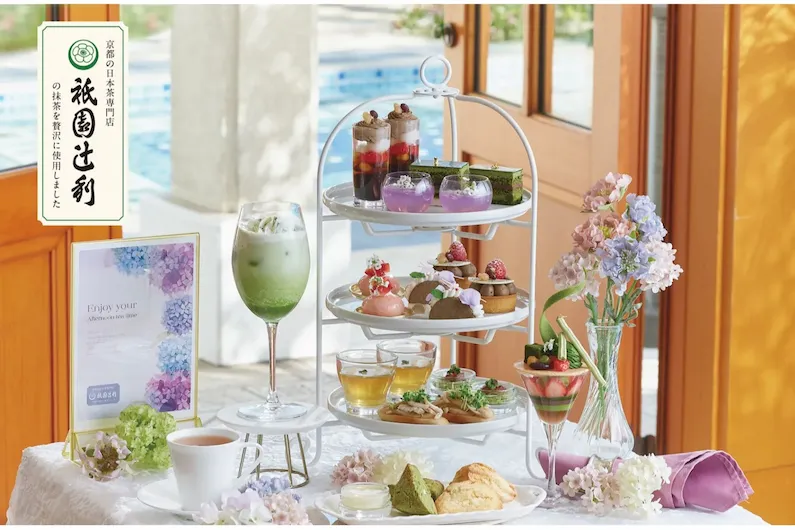
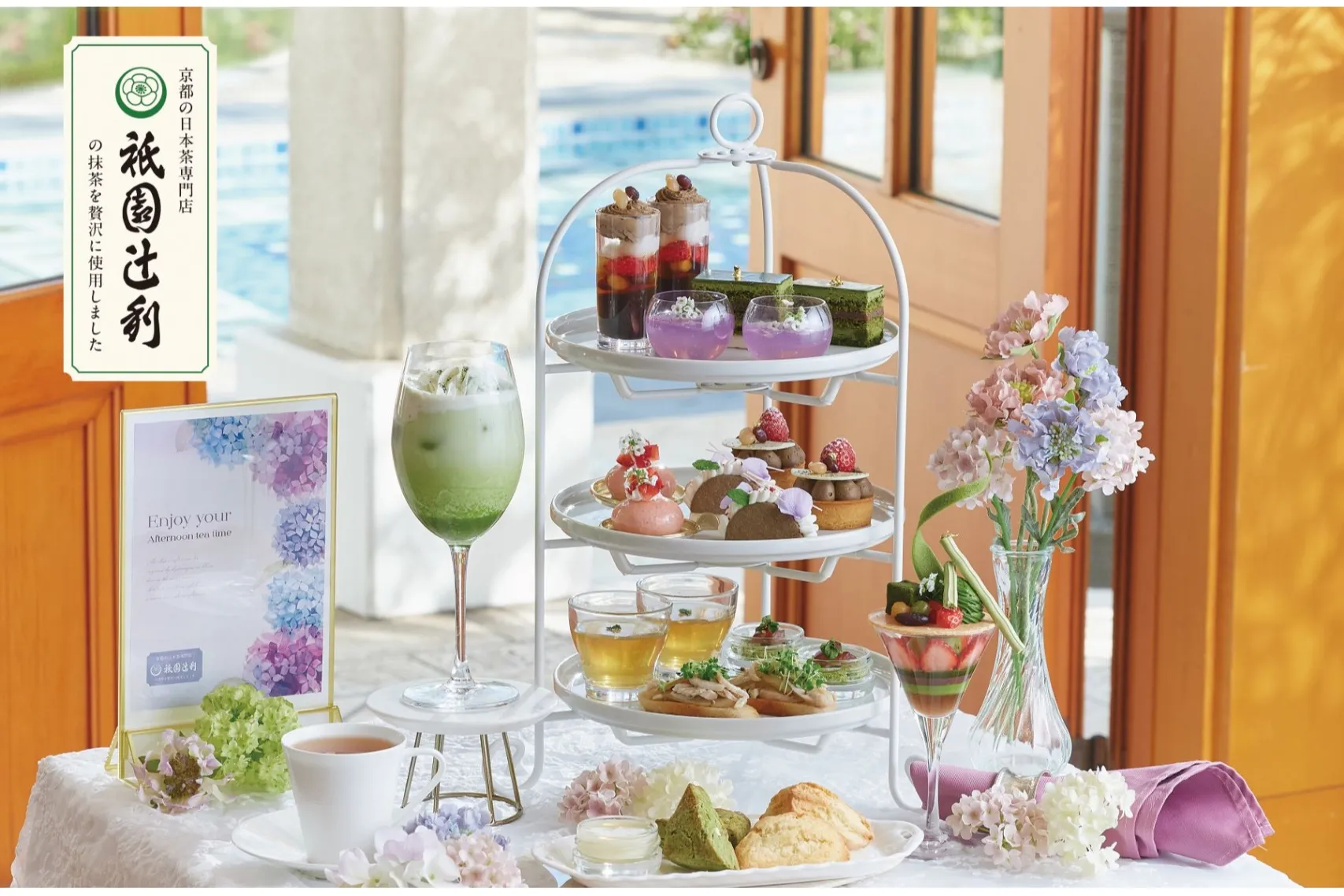
A refreshing early summer moment enjoying Gion Tsujiri’s matcha in the season when hydrangeas bloom beautifully, glistening with raindrops.

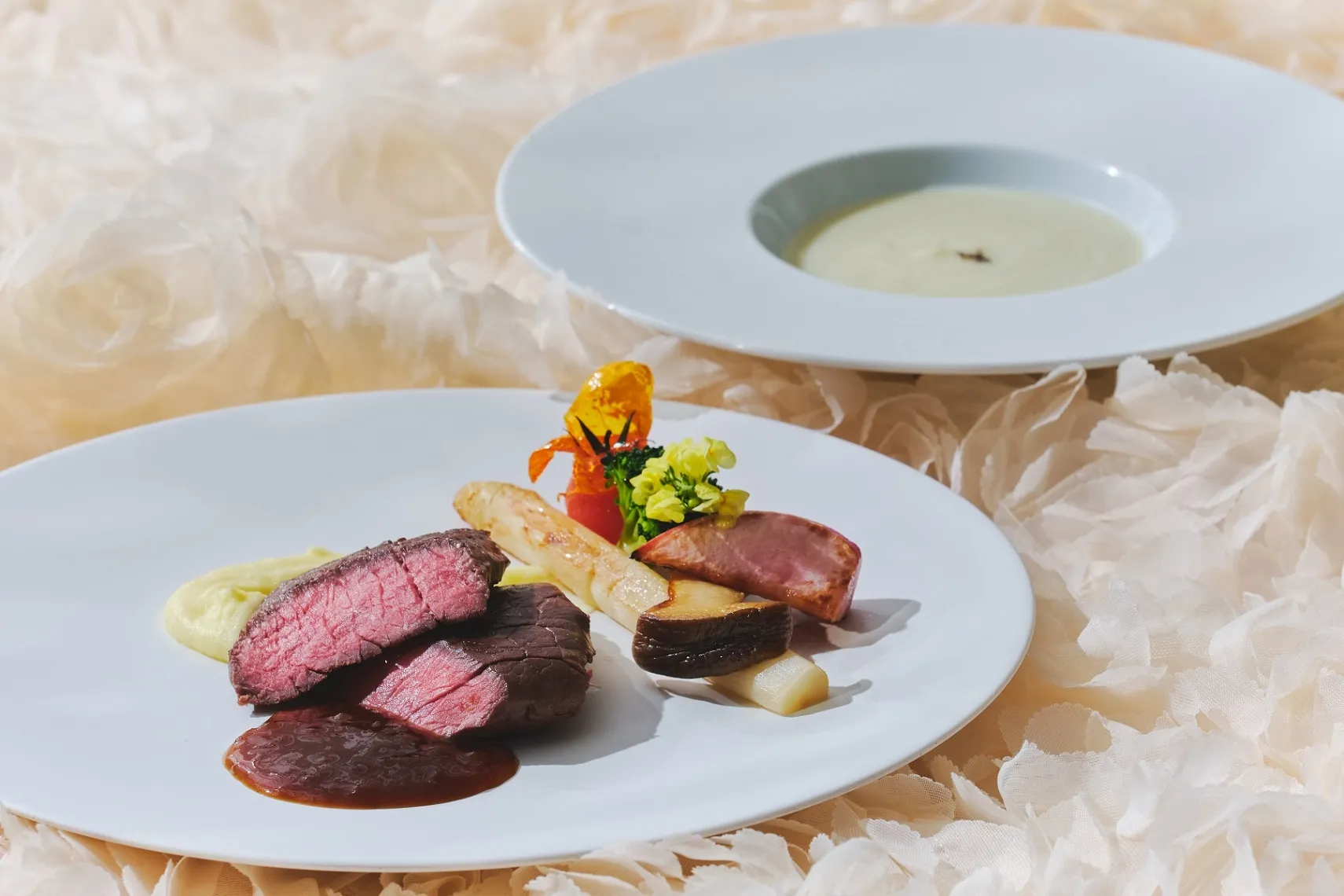
Each spring, the afternoon tea series at select venues draws consistent attention for its rotating seasonal themes and meticulous execution by an exclusive pastry chef. This year’s early summer installment centers on Gion Tsujiri’s matcha—renowned for its depth of aroma and umami—set against the visual motif of hydrangeas in peak bloom, their petals heavy with raindrops.

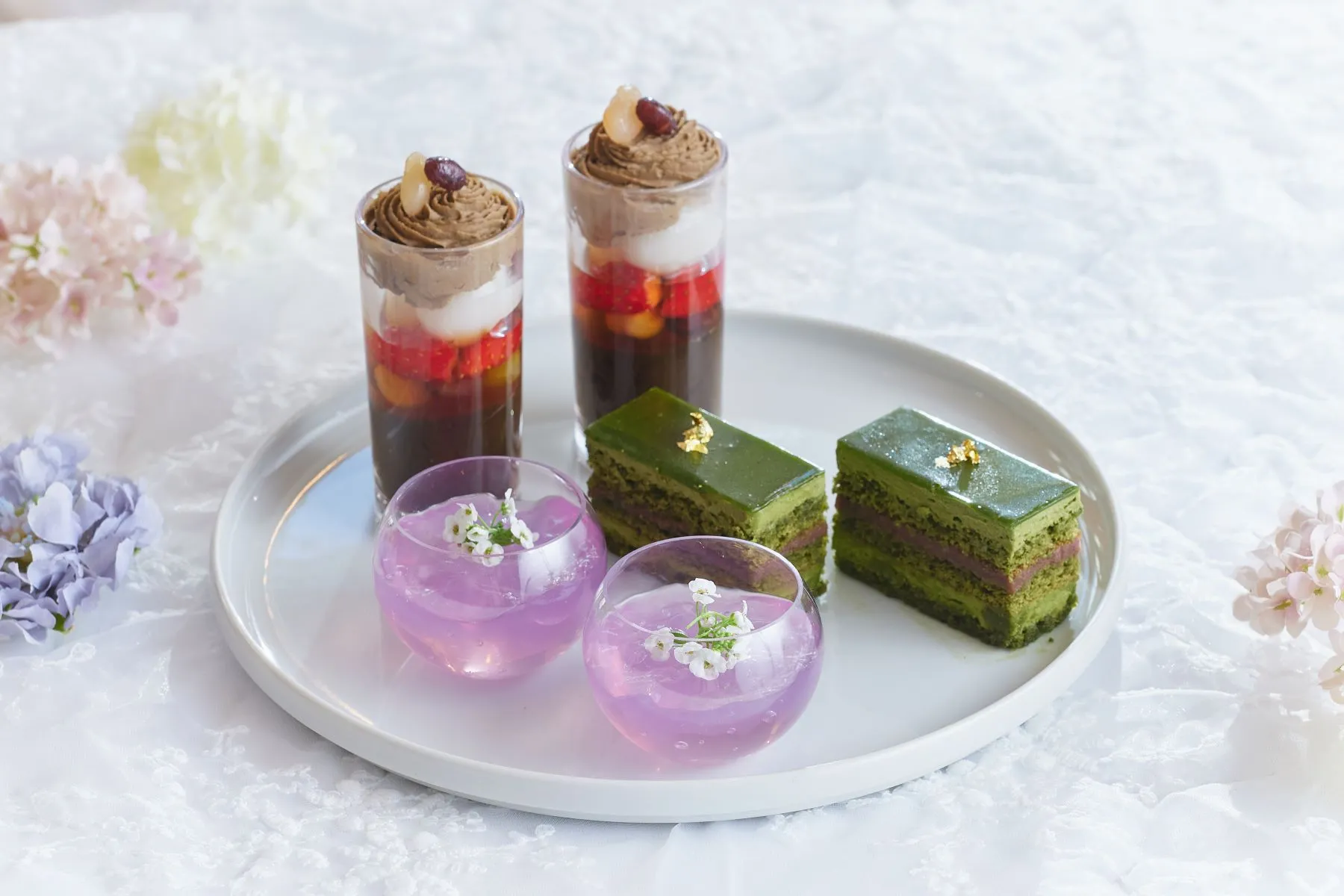
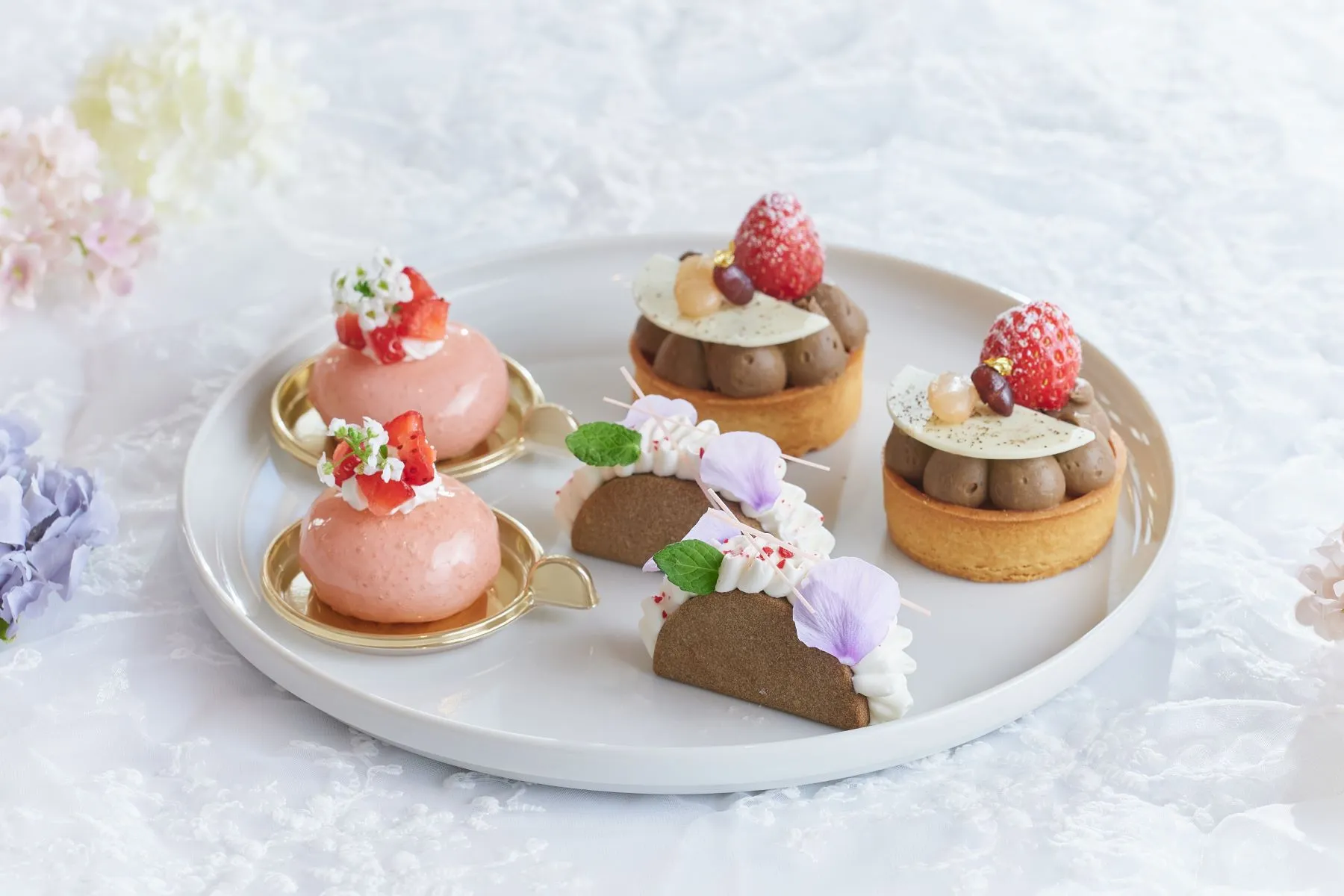
The first tier presents a study in contrasts: a Japanese-Western fusion Hojicha Verrine layered with seasonal fruits and shiratama dango; a Matcha Opera built from multiple strata of traditional matcha; and a translucent jelly whose appearance evokes the specific phenomenon of hydrangeas glistening after rainfall.

The second tier comprises six distinct preparations where the pastry chef deploys Gion Tsujiri’s matcha and hojicha in concentrated form. Notable compositions include a mousse calibrated so the slight bitterness of matcha meets the sweet-tart edge of strawberries; hojicha cookie butter sandwiches finished with edible flowers; and a hojicha tart where the textural interplay between crisp pastry shell and rich cream receives deliberate emphasis.

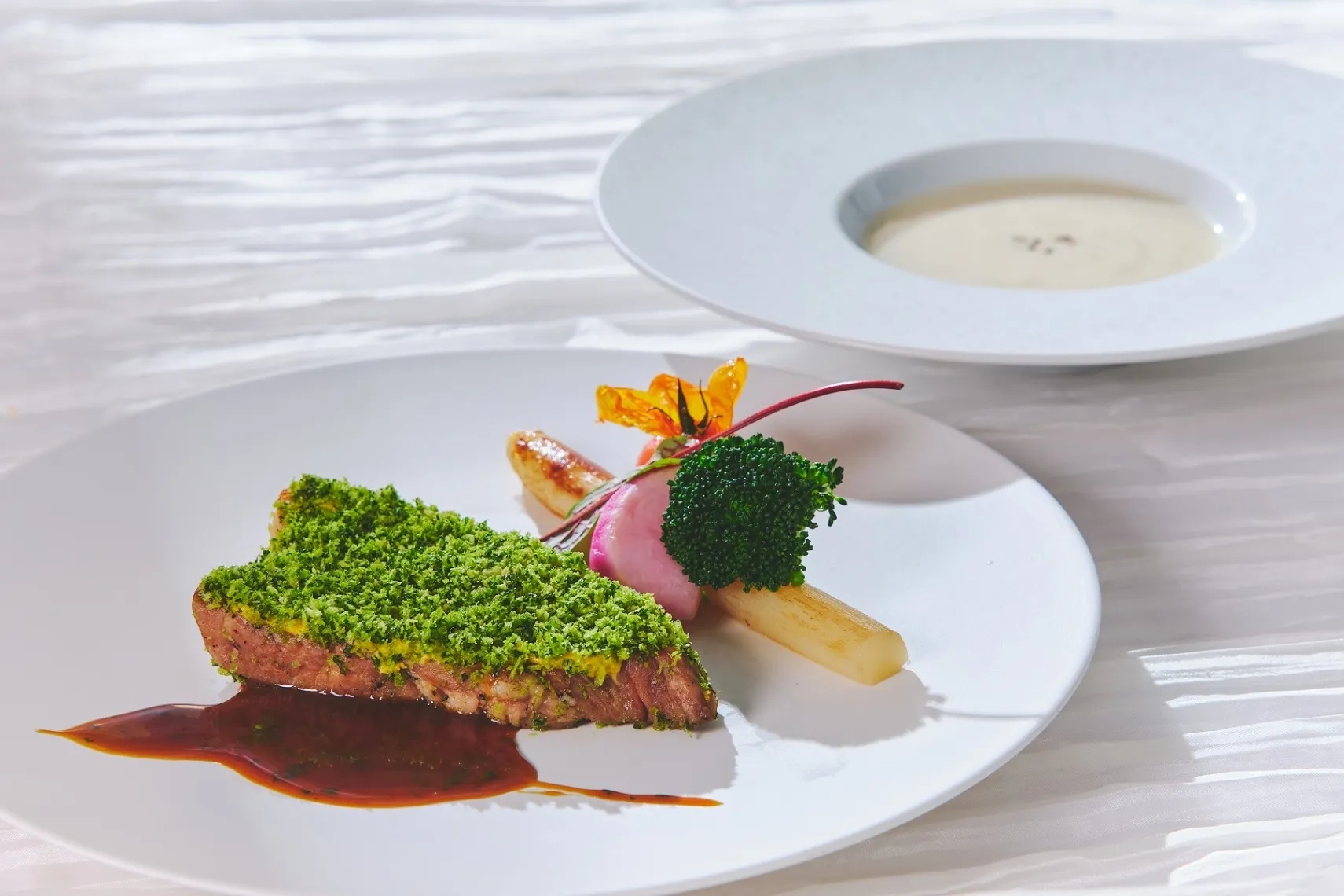
The third tier balances the preceding sweetness with three savory items: a bonito consommé whose aroma derives from carefully extracted dashi; a chicken ham open sandwich accented by the crunch of lightly pickled burdock; and a matcha couscous tabbouleh with marinated tuna that extends the tea theme into the savory realm.

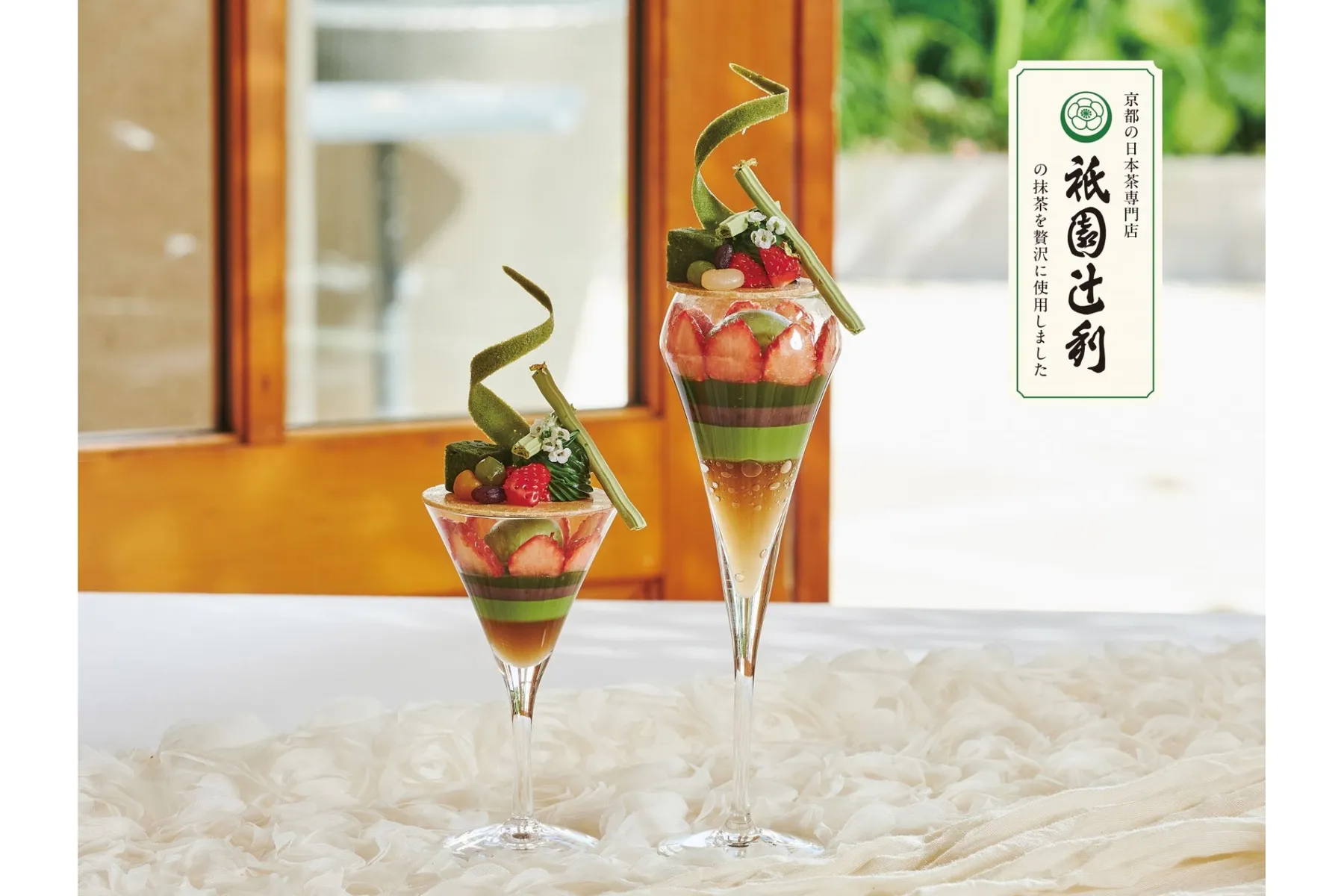
Those seeking amplification of the core experience may add the Uji Matcha and Strawberry Parfait with Gion Tsujiri (from 2,990 yen including cafe charge), engineered to deliver both matcha and hojicha simultaneously through tiered ingredients that preserve each tea’s distinct character.


Menu Details

Sweets

  • Hojicha Verrine
  • Butterfly Pea Jelly
  • Matcha Opera
  • Strawberry and Matcha Mousse
  • Hojicha Cookie Butter Sandwich
  • Hojicha Tart

Savories

  • Bonito Consommé Soup
  • Lightly Pickled Burdock and Chicken Ham Open Sandwich
  • Matcha and Couscous Tabbouleh Salad with Marinated Tuna

Scone Stand

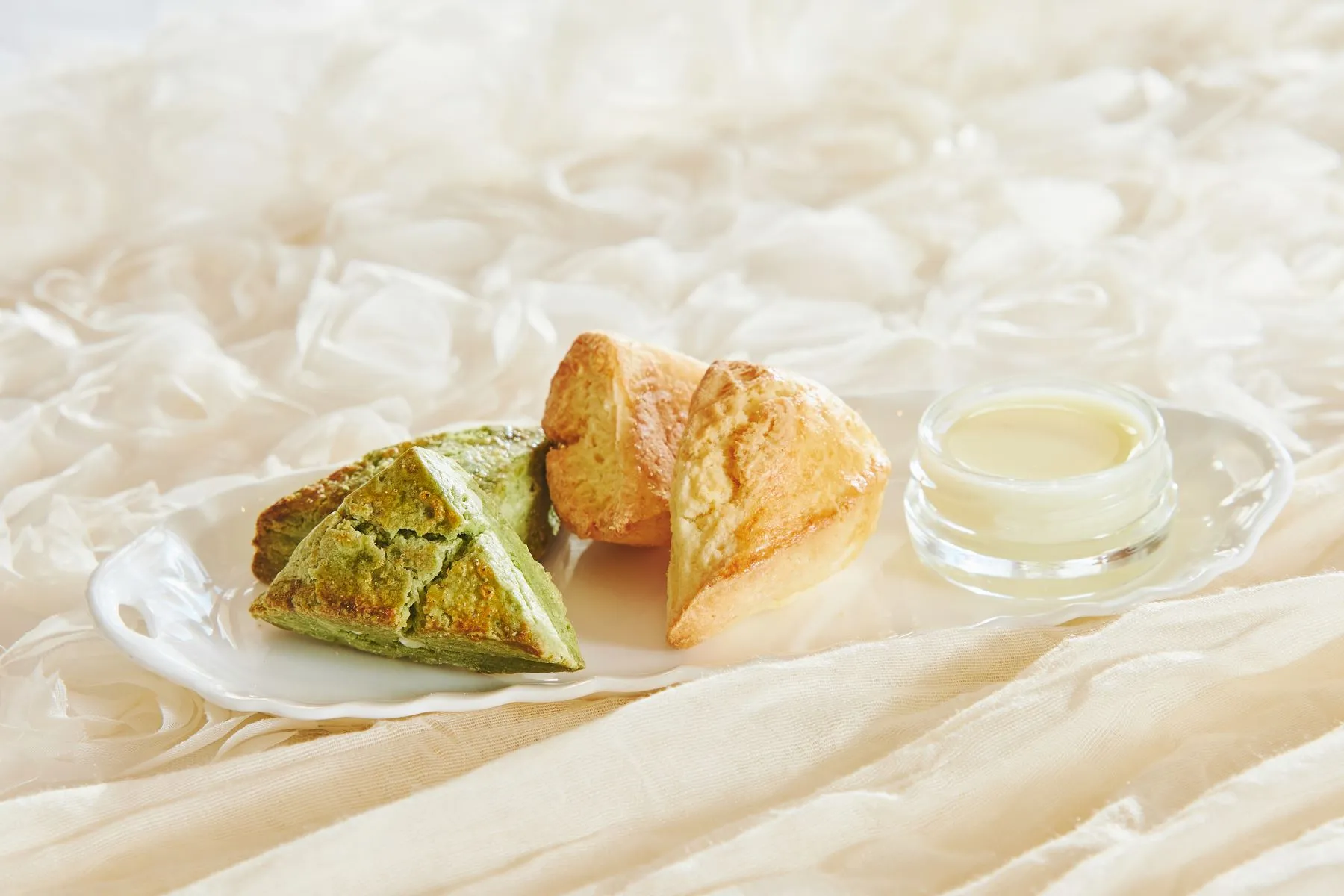
  • Matcha and White Chocolate
  • Plain (served with condensed milk)

Drinks

Yokohama and Omiya Stores: All-you-can-drink tea (Mariage Frères), coffee, etc. (last order at 90 minutes)

Tokyo Shirokane Store:

Plan Inclusions
Standard 1 cup of Mariage Frères tea + all-you-can-drink tea, coffee, soft drinks
Tea Selection Mariage Frères tea selection + all drinks from Standard Plan

Options

  • Parfait (from 2,990 yen including cafe charge)
  • Mini Parfait
  • French Fries
  • Matcha Drink (Hot & Ice)

Items other than the parfait may be ordered as a set with the afternoon tea. The Tokyo Shirokane store offers only mini parfaits and matcha drinks (hot & ice).


Practical Information

Venues & Access

Venue Location Nearest Station
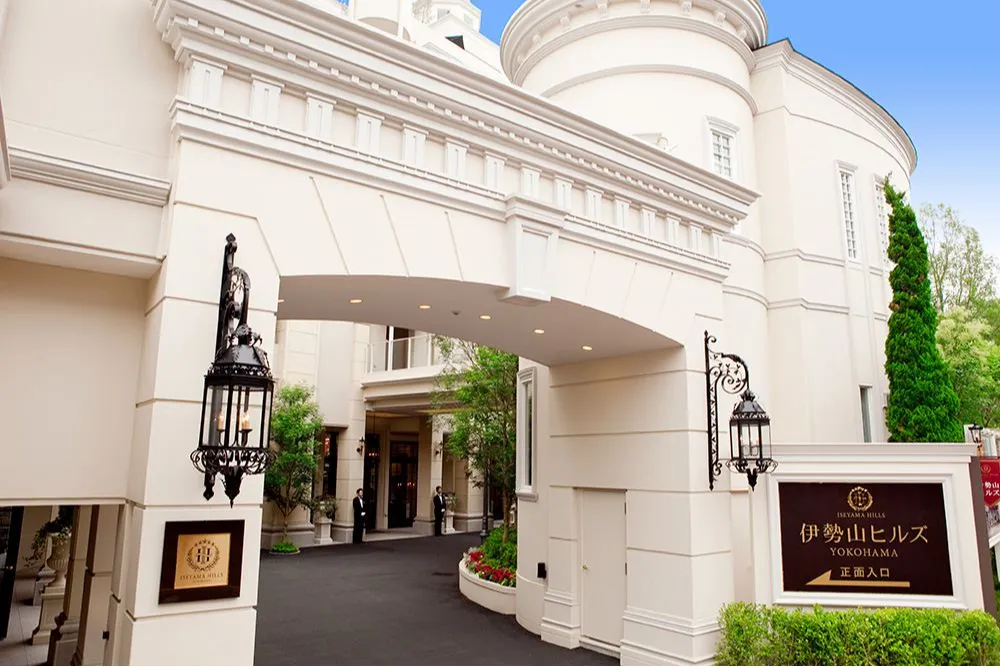
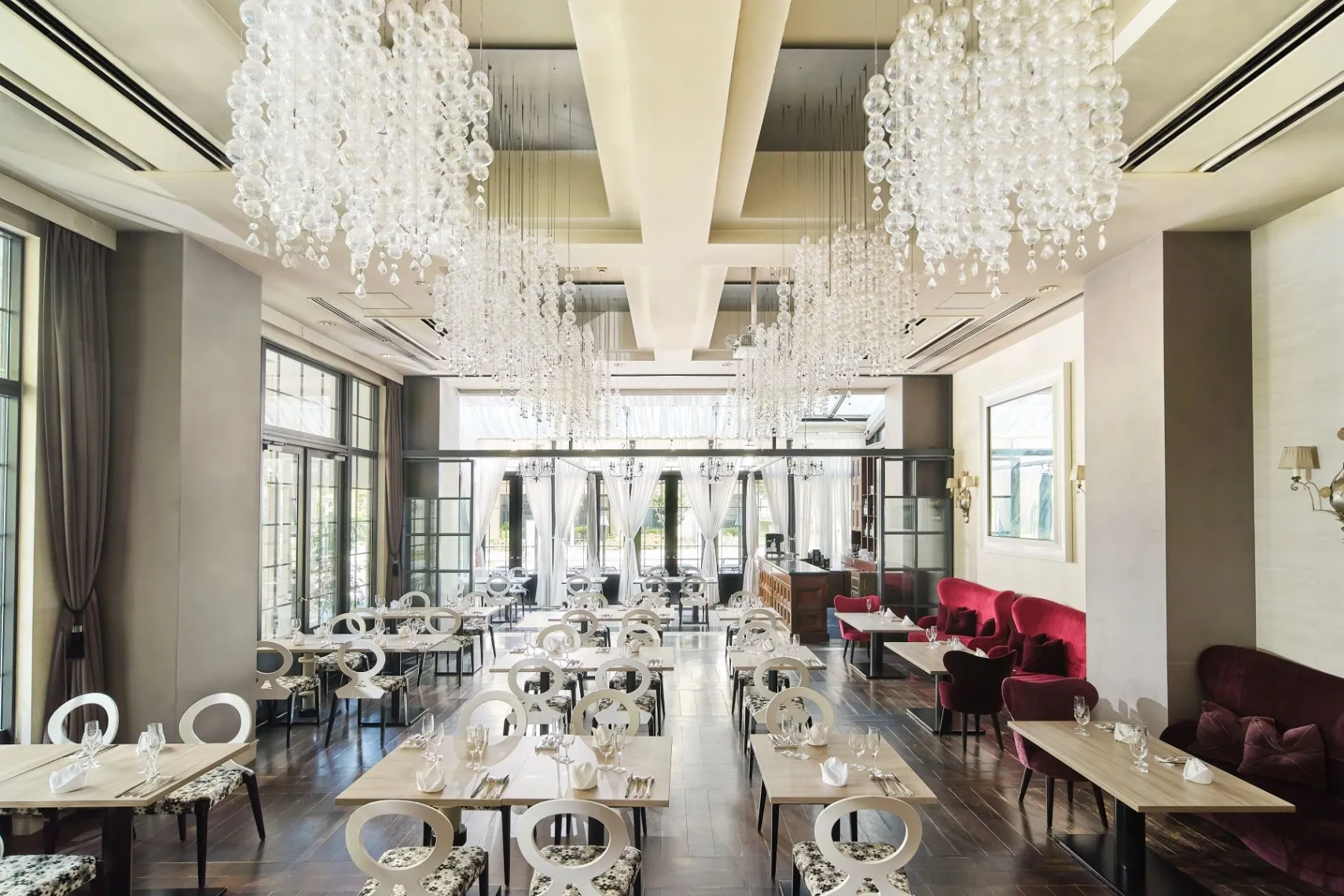
Ristorante Mangiare Iseyama Yokohama Sakuragicho Station
Omiya Riku Cafe & Restaurant Shikiteni Saitama Toro Station / Kamomiya Station
Shirokane Geihinkan Art Grace Club Tokyo Meguro Station

Event Period

  • Ristorante Mangiare Iseyama: Wednesday, May 13 – Monday, June 29, 2026 | Closed Tuesdays
  • Omiya Riku Cafe & Restaurant Shikiteni: Wednesday, May 13 – Monday, June 29, 2026 | Closed Tuesdays
  • Shirokane Geihinkan Art Grace Club: Thursday, May 14, 28; Friday, May 29; Thursday, June 4; Friday, June 19 | Closed Mondays, Tuesdays (except holidays), and company-designated days

Hours

Venue Hours Last Entry
Ristorante Mangiare Iseyama Weekdays 12:00–17:00; Weekends/Holidays 14:00–16:30 15:00
Omiya Riku Cafe & Restaurant 11:00–16:30 15:00
Shirokane Geihinkan Art Grace Club 12:00–14:00 Reception closes 15 minutes prior; L.O. 30 minutes prior

Pricing

Venue Weekdays Weekends/Holidays
Ristorante Mangiare Iseyama from 5,500 yen from 6,000 yen
Omiya Riku Cafe & Restaurant from 4,580 yen from 4,800 yen
Shirokane Geihinkan Art Grace Club from 5,500 yen (flat rate)

All prices include consumption tax and a 15% service charge.

Reservations & Inquiries

Venue Phone
Ristorante Mangiare Iseyama 045-260-8845
Omiya Riku Cafe & Restaurant Shikiteni 048-662-5551
Shirokane Geihinkan Art Grace Club 03-5475-3388

Official Sites

Listed content may be subject to change. Please confirm current details through the official venue or organizer website.


🛏️ See hotels near Tokyo

Matcha and Hydrangea Afternoon Tea with Gion Tsujiri_1
Matcha and Hydrangea Afternoon Tea with Gion Tsujiri_2
Matcha and Hydrangea Afternoon Tea with Gion Tsujiri_3
Matcha and Hydrangea Afternoon Tea with Gion Tsujiri_4
Matcha and Hydrangea Afternoon Tea with Gion Tsujiri_5
Matcha and Hydrangea Afternoon Tea with Gion Tsujiri_6
Matcha and Hydrangea Afternoon Tea with Gion Tsujiri_7
Matcha and Hydrangea Afternoon Tea with Gion Tsujiri_8
Matcha and Hydrangea Afternoon Tea with Gion Tsujiri_9
Matcha and Hydrangea Afternoon Tea with Gion Tsujiri_10
Matcha and Hydrangea Afternoon Tea with Gion Tsujiri_11
Matcha and Hydrangea Afternoon Tea with Gion Tsujiri_12
Matcha and Hydrangea Afternoon Tea with Gion Tsujiri_13
Matcha and Hydrangea Afternoon Tea with Gion Tsujiri_14
Matcha and Hydrangea Afternoon Tea with Gion Tsujiri_15
Matcha and Hydrangea Afternoon Tea with Gion Tsujiri_16

What is Tsujiri?

Tsujiri is a Japanese tea company founded in 1860 in Kyoto’s Gion district by Tsuji Riemon, a tea merchant who concentrated on developing methods for matcha cultivation and production. The original shop still operates in the same location.

Riemon’s work centered on refining tea processing techniques and establishing quality standards. His methods attracted enough attention that he received recognition from the imperial court—a formal acknowledgment of his contribution to tea production rather than a narrative of revolutionary transformation.

The company has since expanded into cafés and confectionery shops across Japan. These locations serve matcha drinks, desserts, and seasonal items, with the Tsujiri brand associated specifically with Uji matcha, a variety grown in the Uji region near Kyoto.

The Gion Tsujiri name refers to the original flagship operation, maintaining the connection to the company’s founding location while operating as a modern business.

Akigawa Valley Hydrangea Festival 2026: Complete Guide to Two Hydrangea Mountains, Hot Springs & Limited Tours in Early Summer Tokyo

Akigawa Valley Hydrangea Festival 2026: Complete Guide to Two Hydrangea Mountains, Hot Springs & Limited Tours in Early Summer Tokyo

Akigawa Valley Hydrangea Festival 2026

A miraculous floral landscape in early summer Tokyo. The “Akigawa Valley Hydrangea Festival 2026” will be held.

During the blooming season, in addition to the “Instagram Photo Contest #AkigawaHydrangea2026” and the sale of “hydrangea-limited gourmet food & goods,” there are advantageous set plans to enjoy flower sightseeing and BBQ nearby, as well as advantageous set tickets for the skin-beautifying hot spring “Akigawa Valley Sene-no-Yu,” which has previously won 1st place in the “Smooth Skin Category” of the National Hot Spring Election. Furthermore, for the first time this year, a two-day limited “Hydrangea Special Tour” will be implemented. Additionally, coupon pamphlets providing discounts at restaurants and for the purchase of local specialties within Akiruno City will be distributed at the reception of the two hydrangea spots, so why not fully enjoy the Akigawa Valley in early summer?

What distinguishes this festival from other floral events in the Tokyo region is the scale and personal history behind its two signature mountains—one cultivated by a single individual’s 50-year devotion, the other offering rare white hydrangea varieties across a vast 30,000-square-meter landscape. Visitors can combine flower viewing with hot spring bathing, local cuisine, and hands-on workshops rather than confining themselves to a single activity.


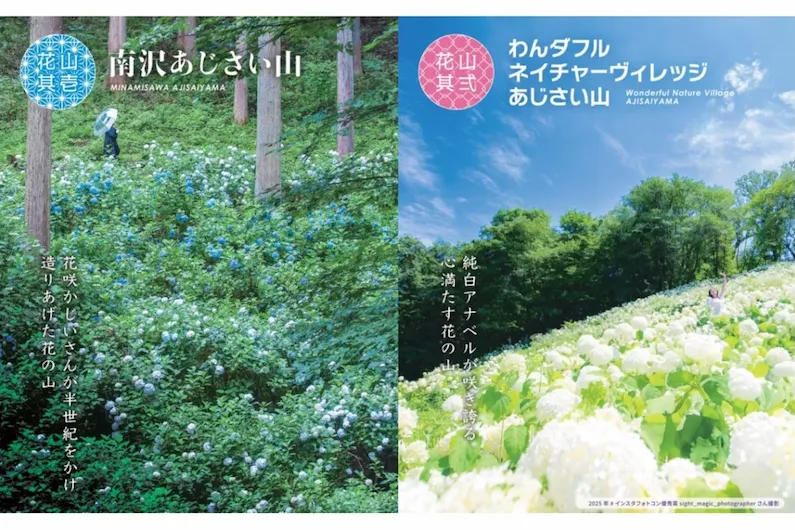
■ Flower Mountain One: A hydrangea paradise where 50 years of passion bloom, “Minamisawa Hydrangea Mountain”

This is a mountain where Mr. Chuichi Minamisawa, who lived in this area, continued to plant hydrangeas with the wish to “fill the path to his parents’ graves with hydrangeas.” Because he wanted to see everyone’s happy faces, he continued planting hydrangeas for 50 years, and now the number of hydrangeas blooming on the mountain exceeds 15,000 plants. There are over 50 types of hydrangeas, including rare varieties that are seldom seen in Japan. Surrounded by tall trees, for about one month from June, vivid hydrangeas in blue, purple, and white bloom in profusion, creating a fantastical atmosphere.

The mountain’s origin as a personal tribute that gradually transformed into a public garden lends it an emotional texture absent from commercially developed attractions. The dense canopy of surrounding trees filters sunlight into dappled patterns across the blooms, producing photographic conditions that change perceptibly across the day.

Admission Adults (Junior high school students and older) 600 yen / Children (Elementary school students) 400 yen
* Preschoolers are free
* All displayed prices include tax
Inquiries 090-5540-9100 (Person in charge: Takamizu)

Access: Please come to the mountain from JR Musashi-Itsukaichi Station by foot, taxi, or the limited-time paid shuttle bus.

Note: Since there is no parking available, if you come by car, please use the coin parking lots around “Musashi-Itsukaichi Station.”


■ Flower Mountain Two: Pure white Annabelles that enchant visitors, “Wan-derful Nature Village Hydrangea Mountain”

The hydrangea mountain is located within the Wan-derful Nature Village, adjacent to Tokyo Summerland. In the hydrangea area of approximately 30,000 square meters, you can enjoy the performance of approximately 60 species and 15,000 hydrangea plants, such as the “Annabelle Snowy Mountain” where pure white Annabelle hydrangeas grow in clusters. At the entrance of the hydrangea area, white and pink Annabelles blooming at the foot of the mountain gently welcome visitors. As you proceed along the hiking course surrounded by colorful hydrangeas, the “Annabelle Snowy Mountain,” which dyes the entire slope in pure white, spreads out before your eyes. Furthermore, from the mountaintop, a magnificent view spreads out, overlooking the grand mountain range of Okutama and the clear stream of the Akigawa River.

The progression from colored varieties at lower elevation to the dramatic monochromatic display higher up creates a structured narrative experience for visitors walking the course. The mountaintop vantage point—unusual for a hydrangea garden—adds topographical variety that justifies the physical effort of ascent.

Admission Adults (Junior high school students and older) 850 yen / Elementary school students and younger are free
Parking fee Standard cars 700 yen / Motorcycles 300 yen / Buses 2,000 yen
* All displayed prices include tax
Inquiries 042-558-5861

Access:

  • By car: Please use the Wan-derful Nature Village parking lot.
  • By train: Please take a taxi or local bus from JR Akigawa Station to Tokyo Summerland; from Tokyo Summerland to Wan-derful Nature Village, please use the free shuttle bus.

■ Limited to 2 days! “Savoring Flowers and the Breeze” A luxurious one-day trip to two hydrangea mountains and the satoyama countryside

A special day visiting two hydrangea mountains in the Akigawa Valley in early summer, guided by local staff. Staff who manage the mountains will introduce stories that can only be heard here, such as the behind-the-scenes of pruning and care to make the flowers bloom beautifully. Furthermore, you can experience the “Hydrangea Flower Temari Making” workshop, limited to this tour, making it a program where you can feel the charm of hydrangeas more deeply. Please enjoy a heart-filling healing time along with a satoyama lunch using local ingredients and a hot spring.

This tour addresses a practical challenge many visitors face: the two mountains, while both in the Akigawa Valley, require separate transit arrangements on ordinary days. The guided format eliminates navigation concerns while adding narrative context that solitary visitors would miss. The workshop component—dried flower temari creation—produces a keepsake with longer utility than standard tourist photographs.

Event Overview
Dates Saturday, June 20th and Sunday, June 21st
Time 8:45 AM – 3:30 PM
Capacity 20 people per day
Minimum participants 10 people for each day
Participation fee 16,500 yen per person (tax included)

Itinerary:

Time Activity
8:45 JR Musashi-Itsukaichi Station (Gathering)
9:00–10:15 Visit to Wan-derful Nature Village Hydrangea Mountain (with local guide)
* Limited workshop “Dried Flower Making”
10:45–12:00 Visit to Minamisawa Hydrangea Mountain (with local guide)
12:30–13:30 Private room lunch / Exquisite gourmet using local specialties at Ishifune dining
13:30–15:00 Akigawa Valley Sene-no-Yu “Shopping / Hot spring bath (Free entry for each individual *separate fee)”
15:30 JR Musashi-Itsukaichi Station (Dismissal)

All photos are for illustrative purposes only.


Additional Program Information

  • Instagram Photo Contest “#AkigawaHydrangea2026”
  • Sale of hydrangea-limited gourmet food & goods
  • Minamisawa Hydrangea Mountain × Shizenjin Village BBQ
  • Wan-derful Nature Village Hydrangea Mountain & BBQ

Please check the official website for detailed information.


Basic Information

Location / Nearest Station Minamisawa Hydrangea Mountain: Musashi-Itsukaichi Station
Tokyo Summerland Wan-derful Nature Village: Akigawa Station
Period 2026/06/06 (Sat) ~ 2026/07/05 (Sun)
Time Start 9:00 / End 17:00
Official Website https://tokyomountain-tours.jp/ajisaimatsuri/ja/index.html

The published content may have changed. Please check the official website of the venue or organizer for the latest information.

🛏️ View hotels near Tokyo

What is Akigawa Valley?

Akigawa Valley is a gorge in western Tokyo, about 90 minutes from Shinjuku by train. The Akigawa River carved it over millennia, leaving a 20-kilometer stretch of terrain that now sits within Chichibu-Tama-Kai National Park. It is one of the easier natural escapes from the capital.

The valley sits lower than the surrounding hills, which traps cool air and moisture. Hydrangeas grow well here. Limestone cliffs rise on both sides of the river, and the slopes are covered with cedar and broadleaf forest—maples and beeches among them—that redden in autumn. Hiking trails run through the hills, connecting villages, old railway tunnels, and occasional shrines.

The area industrialized briefly during the Meiji era. Limestone mining and silk production brought workers and infrastructure; when those industries faded, the railways were abandoned and the mines closed. What remains—overgrown tracks, stone walls, restored wooden buildings—now forms part of the landscape. The term “satoyama” describes this kind of place, where settlement and forest have coexisted long enough to feel interdependent.

In early summer, when Tokyo’s eastern wards grow humid and stagnant, the valley stays three or four degrees cooler. The river and the elevation keep the air moist. Hydrangeas bloom longer here than in most of the region, and two mountains in particular—Mt. Hinokiboramaru and the western approach to Mt. Takao—draw visitors from the city for the flowers.

Uemura Matsuen 150th Anniversary Retrospective at the Nakanoshima Museum of Art, Osaka (2025): See the Bijin-ga Masterpieces

Uemura Matsuen 150th Anniversary Retrospective at the Nakanoshima Museum of Art, Osaka (2025): See the Bijin-ga Masterpieces

Uemura Matsuen 150th Anniversary Retrospective at the Nakanoshima Museum of Art, Osaka (March 29–June 1)

Image Placeholder 1

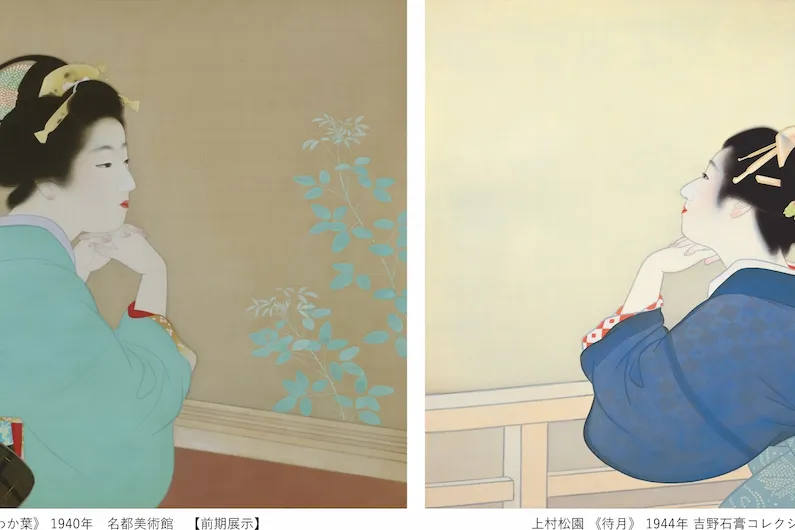
Commemorating the 150th anniversary of the birth of Uemura Matsuen (1875-1949), the Nakanoshima Museum of Art in Osaka presents a major retrospective exhibition from March 29th to June 1st, 2025. Uemura Matsuen established herself as a preeminent figure in the genre of bijin-ga (pictures of beautiful women) during a period when female artists faced significant societal constraints. Through remarkable dedication and effort, she not only gained renown but also carved out a unique artistic path. While deeply respecting and studying artistic traditions, Matsuen developed her own distinct mode of figurative expression, consistently pursuing and depicting her idealized vision of femininity throughout her life.

Her portrayals of elegant and pure female figures possess a timeless quality that continues to resonate deeply with contemporary audiences. Matsuen’s prolific artistic career spanned six decades, leaving an indelible mark on the trajectory of modern Japanese art. Furthermore, her achievements position her as a crucial pioneer for subsequent generations of female artists in Japan. This exhibition represents the first large-scale retrospective of her work to be hosted at an Osaka museum, offering a significant opportunity to engage with her legacy.

Image Placeholder 2

The exhibition brings together an impressive collection of over 100 works, meticulously tracing Matsuen’s artistic development from her early explorations to her mature, later-period style. Visitors will have the chance to view celebrated masterpieces, including pieces designated as Important Cultural Properties such as Mother and Child and Jo-no-mai (First Dance). Other significant works on display include Kusazoshiarai-Komachi and Late Autumn. This comprehensive assembly of exquisite paintings provides a thorough overview of Uemura Matsuen’s influential artistic journey.

■ Related Events

A series of lectures and gallery talks will accompany the exhibition, offering deeper insights into Uemura Matsuen’s art and context:

  • March 29 (Sat) Lecture: "On the Art of Uemura Matsuen (Tentative Title)"

    • Speaker: Reiko Nakamura (Chief Researcher, The National Museum of Modern Art, Tokyo)
  • April 26 (Sat) Lecture: "The Transition of Female Figures Depicted by Uemura Matsuen"

    • Speaker: Satoshi Yamada (Art Historian)
  • May 11 (Sun) Lecture: "20th Century Female Painters"

    • Speakers: Megumi Kitahara (Professor Emeritus, Osaka University), Tomoko Ogawa (Curator, Osaka Nakanoshima Museum of Art)

    Details for the above three lectures:

    • Time: 14:00 – 15:30 (Doors open at 13:30)
    • Venue: Osaka Nakanoshima Museum of Art, 1st floor hall
    • Capacity: 150 people (Admission is on a first-come, first-served basis; no prior registration is required)
    • Fee: Free admission to the lecture itself; however, an exhibition ticket (a used stub is acceptable) is required for entry.
  • April 16 (Wed) & May 22 (Thu) Gallery Talk by the Curator in Charge

    • Time: 15:00 – 15:45
    • Capacity: 30 people (Prior registration is required)
    • Venue: Osaka Nakanoshima Museum of Art, 4th floor exhibition room
    • Fee: Free admission to the talk; however, an exhibition ticket valid for the day of the talk is required.

Exhibition Details

  • Exhibition Period: March 29 (Sat) – June 1 (Sun), 2025
    • First Period: March 29 – May 11
    • Second Period: May 13 – June 1
  • Closed: Mondays, and Wednesday, May 7. Please note the museum will be open on Monday, April 28 and Monday, May 5 (national holiday).
  • Opening Hours: 10:00 – 17:00 (Last admission is at 16:30)
  • Venue: Osaka Nakanoshima Museum of Art, 4th floor exhibition room (4-3-1 Nakanoshima, Kita-ku, Osaka City)
  • Admission Fees:
    • General: 1,800 yen (1,600 yen)
    • University/High School Students: 1,500 yen (1,300 yen)
    • Elementary/Junior High School Students: 500 yen (300 yen)
    • Prices shown in parentheses represent advance purchase or group rates. Advance tickets are available for purchase until 23:59 on Friday, March 28.
    • Residents of Osaka City aged 65 and over are subject to the standard general admission fee.
  • Contact: 06-4301-7285 (Osaka City General Call Center / Naniwa Call)
    • Reception Hours: 8:00 – 21:00 (Open year-round)
  • Official Website/SNS: https://art.nikkei.com/shoen/

🛏️ See hotels near the event

Understanding Bijin-ga

Bijin-ga, meaning "pictures of beautiful women," is a genre of Japanese art that depicts women, emphasizing their beauty, grace, and elegance. This genre played a significant role in Japanese art history, especially during the Edo period, and is closely linked with ukiyo-e woodblock prints. Artists in this genre portrayed women in various contexts, from everyday life to more idealized representations, capturing the fashion, hairstyles, and cultural practices of the time.

Beyond physical beauty, bijin-ga reflects cultural and aesthetic values, illustrating idealized femininity and the societal roles of women in historical Japan. Artists like Uemura Matsuen, known for their skill in bijin-ga, have enriched the genre with emotional depth and technical precision, creating works that continue to engage audiences. Through the use of color, composition, and expression, bijin-ga provides insight into Japan’s cultural and artistic heritage, encouraging viewers to appreciate the complexity of its subjects.

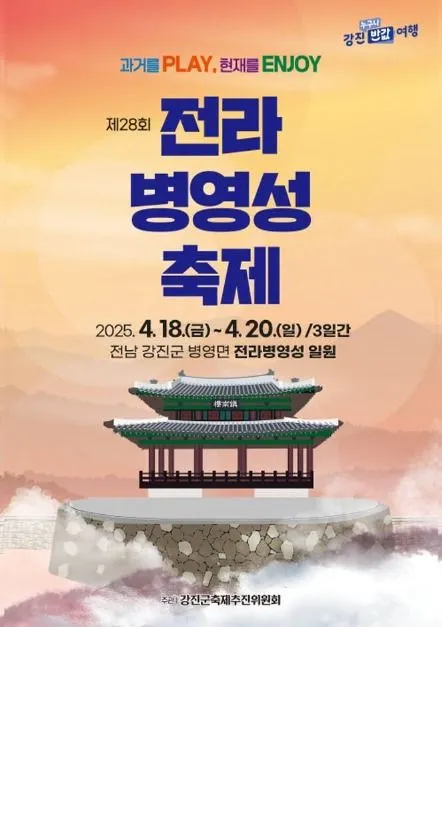
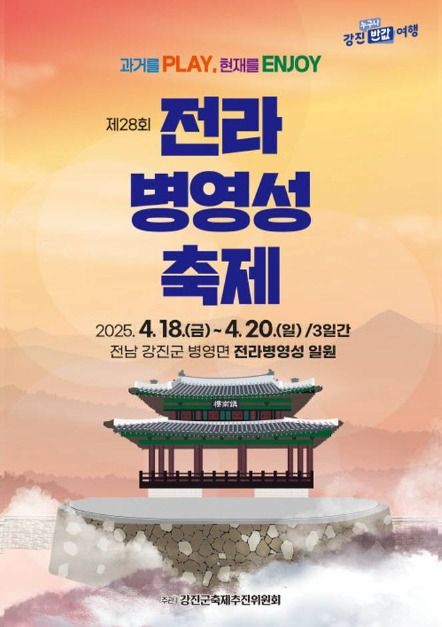
Experience Gangjin’s History at the 2025 Jeolla Byeongyeongseong Festival (April 18-20)

Experience Gangjin's History at the 2025 Jeolla Byeongyeongseong Festival (April 18-20)

Gangjin Jeolla Byeongyeongseong Festival

🗓️ Festival Dates: 2025.04.18 ~ 2025.04.20

The Gangjin Jeolla Byeongyeongseong Festival offers a diverse array of cultural experiences and activities designed to engage visitors of all ages and backgrounds. Its unique appeal stems from its deep connection to Korean history, particularly the strategic military past of the Gangjin region.

The festival celebrates the legacy of the Jeolla Byeongyeong, a crucial military command center. Originally established in Gwangsanhyeon during the late Goryeo Dynasty to counter Japanese pirate invasions more effectively, the command was later relocated to Dogang, marking the beginning of Gangjin’s history. As the headquarters overseeing the military forces of over 50 counties in Jeolla-do, the Jeolla Byeongyeongseong held significant military authority.

Furthermore, the Byeongyeongseong site holds a unique place in international history as the location where Hendrick Hamel, credited with providing the first detailed Western account of Korea, was exiled. Hamel lived and worked in Gangjin Byeongyeong for seven years following his arrival in 1656. This historical connection is commemorated not only through the festival but also at the nearby ‘Hamel Memorial Hall’, making the area an important historical and cultural heritage site related to Hamel’s experiences.

Festival Programs and Activities

The festival features a wide range of scheduled events and attractions:

1. Main Stage Programs:
Experience a variety of performances including:

  • Cotton Candy Performance
  • Joseon Magic Show
  • Spring Mini Concert
  • Traditional Performing Arts Performance by Artists
  • Children’s Sing-Along Show (featuring Chaepinityping, Pinkfong and Teunteunssem’s Dance Party)
  • Gangjin Celadon Auction
  • Citizens’ Harmony Event
  • Byeongyeongseong Entrance Ceremony Parade
  • Opening Ceremony
  • Opening Celebration Performance, etc.

2. Sub-programs:
Delve deeper into local history and heritage with:

  • Admiral Ma Cheon-mok Memorial Service
  • Suinsanseong Exploration

3. Consumer Participation Event:

  • Pre-registration Event for Visiting the Jeolla Byeongyeongseong Festival (details likely available closer to the event date)

4. Food and Refreshments:
Enjoy local flavors and themed offerings such as:

  • Byeongyeongseong Tavern
  • Hamel Village Beer-Coffee
  • Byeongyeonghyangsi (Chorokmideum), etc.

Visitor Information

📍 Address: 33, Cheongjachon-gil, Daegu-myeon, Gangjin-gun, Jeollanam-do

🛏️ Accommodation near the event

💰 Fee: Free admission

📞 Contact: 061-430-3352

🖥️ Homepage: www.gangjin.go.kr/

Gangjin Jeolla Byeongyeongseong Festival

What is Byeongyeongseong?

Byeongyeongseong refers to historical military fortresses that were integral to the defense and administration of regions in Korea’s past. Strategically located, these fortresses protected against invasions and helped maintain order within the provinces. Constructed with sturdy stone walls and equipped with various defensive structures, Byeongyeongseong served as centers for military operations and governance. In Gangjin, the remnants of these fortresses provide insight into their architectural design and strategic significance. The Jeolla Byeongyeongseong Festival celebrates this history, offering visitors the chance to explore the legacy of these fortresses through reenactments, exhibitions, and interactive experiences.

Catch Tom & Jerry in Nagoya: 85th Anniversary Exhibition at PARCO (April 18 – May 11, 2025)

Catch Tom & Jerry in Nagoya: 85th Anniversary Exhibition at PARCO (April 18 - May 11, 2025)

Tom and Jerry: 85 Years of Laughter

The beloved animated series Tom and Jerry, first introduced to audiences in 1940 by the creative duo William Hanna and Joseph Barbera, has consistently delivered laughter across generations. Its timeless slapstick comedy, centered around the perpetual chase between Tom the cat and Jerry the mouse, continues to entertain children and adults globally. As the series approaches its remarkable 85th anniversary in 2025, this special exhibition celebrates its enduring legacy.

Titled "Tom and Jerry 85th Anniversary Exhibition: When You Laugh, I Laugh Too," the event delves into the casual yet captivating daily lives of the iconic pair, highlighting how their interactions offer "hints for turning everyday life into laughter"—a theme maintained since the series’ inception. Visitors are invited into an interactive experience designed to immerse them in the world of Tom and Jerry. Through unique displays and engaging photo opportunities, the exhibition focuses specifically on the complex relationship between the main characters and their interactions with unique companion characters. Furthermore, a substantial collection of merchandise, featuring over 1,500 items including original exhibition exclusives, will be available for purchase.

※ The image featured at the top serves as the key visual for "Tom and Jerry 85th Anniversary Exhibition: When You Laugh, I Laugh Too."

🛏️ View hotels near the event


Event Schedule

Dates: Friday, April 18, 2025 – Sunday, May 11, 2025

Time: 10:00 – 21:00 daily

Location

Venue: Nagoya PARCO South Building 9F, PARCO HALL
Address: 3-29-1 Sakae, Naka-ku, Nagoya, Aichi Prefecture

Admission Fees

All listed prices include tax.

Advance Tickets:

  • General: 1,400 yen
  • University/High School Students: 1,000 yen
  • Junior High/Elementary School Students: 600 yen

Same-Day Tickets:

  • General: 1,600 yen
  • University/High School Students: 1,200 yen
  • Junior High/Elementary School Students: 800 yen

Important Notes Regarding Admission

  • As mentioned, entry requires a timed appointment to alleviate congestion.
  • Admission is free for preschool children. However, they must be accompanied by a guardian aged 18 years or older, and the accompanying guardian is required to pay the standard admission fee.
  • Individuals presenting a disability certificate are entitled to free admission for one accompanying caregiver per certificate holder. Please be aware that caregivers admitted under this provision are not permitted to purchase merchandise.
  • These admission tickets are not eligible for use with various discounts or privileges, including JFR shareholder benefits.
  • For comprehensive details on ticketing, appointments, and admission policies, please refer to the "Tom and Jerry 85th Anniversary Exhibition: When You Laugh, I Laugh Too" page on the Nagoya PARCO website.

Contact Information

Organization: Nagoya PARCO (Information Counter)
Telephone: 052-264-8111 (Available 10:00 – 21:00)
Official Event Website: https://art.parco.jp/nagoya/detail/?id=1649

Access

The venue is conveniently accessible via public transport. Take the Subway Meijo Line and alight at "Yabacho" Station.


TOM AND JERRY and all related characters and elements © & ™ Turner Entertainment Co. (s25)

What is PARCO?

PARCO is a chain of department stores in Japan, established in 1969. It is known for offering a mix of fashion, lifestyle, and entertainment options. Beyond shopping, PARCO locations serve as community spaces, hosting events, exhibitions, and pop-up shops. The Nagoya PARCO, currently featuring the Tom & Jerry 85th Anniversary Exhibition, exemplifies this approach. It draws both locals and tourists with a variety of local and international brands and a focus on art and culture. The exhibition space at PARCO is well-suited for celebrating Tom & Jerry, providing fans with an opportunity to explore the cartoon’s history and legacy.

dancyu Festival 2025 in Shinjuku: Taste the Best of Japanese Cuisine (Free Entry!)

dancyu Festival 2025 in Shinjuku: Taste the Best of Japanese Cuisine (Free Entry!)

dancyu Festival 2025: A Culinary Celebration in Shinjuku

Experience signature dishes and exclusive menu items from over 40 esteemed establishments. Admission is free, and no reservations are necessary—simply bring your appetite.

Prepare for a remarkable culinary event as "dancyu," the magazine that has significantly shaped Japan’s food culture since its inception in 1990, presents the "dancyu Festival 2025." Centered around the theme "Food is Entertainment!", this festival promises a vibrant gathering of talent from diverse culinary fields. Attendees can anticipate an impressive lineup featuring experts in French, Italian, Chinese, and Japanese cuisine, alongside specialists in Sushi and Patisserie.

This event offers a unique opportunity to savor special menus crafted on-site by renowned chefs, sample Japanese sake from popular breweries, explore overseas craft beers, and purchase sweets, bread, and seasonings available exclusively at the festival. More than 40 shops are scheduled to participate, each presenting their signature offerings and unique festival-only creations. It is an open invitation to all food enthusiasts seeking exceptional tastes and culinary discoveries.

Featured Menu Highlights

While numerous special dishes await, here is a glimpse into the types of offerings you can expect:

  • Ginza Yoshizawa: Serving Japanese Black Wagyu Female Beef prepared as "Teppan Sukiyaki."
  • Hitsuji Public: Offering flavorful "Lamb Chops with Homemade Harissa Yogurt Sauce."
  • La Casa di Tetsuo Ota: Presenting the "dancyu Special Can-Can," a unique festival item.
  • Toraya An Stand: Providing their popular "Anpan" (Red Bean Paste Bun).

Please note that this represents only a small selection of the extensive and varied menu items that will be available throughout the festival.

Event Details

Location & Access:

Dates & Times:

  • Event Period: Saturday, April 12, 2025 – Sunday, April 13, 2025
  • Hours: 10:00 AM – 5:00 PM daily

Admission:

  • Fee: Free

Contact & Information:

Important Notes:

  • Weather Policy: The event will proceed rain or shine, including light rain conditions. However, cancellation or changes to operating hours may occur due to unforeseen circumstances, such as equipment failure at the venue or natural disasters.
  • Congestion: Entry may be temporarily restricted during peak hours to manage crowd levels.
  • Information Accuracy: Published details are subject to change. Visitors are advised to consult the official venue and organizer websites for the most current information before attending.

🛏️ Find hotels near Tokyo

dancyu Festival 2025 Image 1
dancyu Festival 2025 Image 2
dancyu Festival 2025 Image 3
dancyu Festival 2025 Image 4
dancyu Festival 2025 Image 5
dancyu Festival 2025 Image 6

What is dancyu?

dancyu is a Japanese food magazine that has been engaging readers since 1990. It focuses on Japanese cuisine, offering insights into both traditional and modern culinary practices. Known for its quality photography and storytelling, dancyu appeals to both amateur food enthusiasts and professional chefs. Each issue covers a range of topics, including regional dishes, seasonal ingredients, interviews with chefs, and reviews of dining trends. By highlighting the craft and dedication in Japanese cooking, dancyu plays a significant role in Japan’s food culture, encouraging readers to explore the country’s diverse flavors.

Analytics