Gumi Ramen Festival
🗓️ 2026.11.06 ~ 2026.11.08

The Gumi Ramyeon Festival is a representative regional festival that connects Gumi’s industry, food culture, and local tourism through ramyeon. Gumi is the city where Nongshim—a representative domestic ramyeon company—operates its Gumi plant, and the festival builds on that industrial foundation to turn ramyeon into local tourism content. The 2026 edition runs from November 6 to 8, and entry is free.
What makes the festival stand out is its use of the city itself. The event takes place in the original downtown area, including Gumi Station, Yeokjeon-ro, Munhwa-ro, Geumridan-gil, and Saemaul Central Market. Instead of a single dedicated venue, the entire city center becomes the festival space. Local restaurants and commercial districts take part, linking the festival grounds to the old downtown and supporting the local economy in the process.
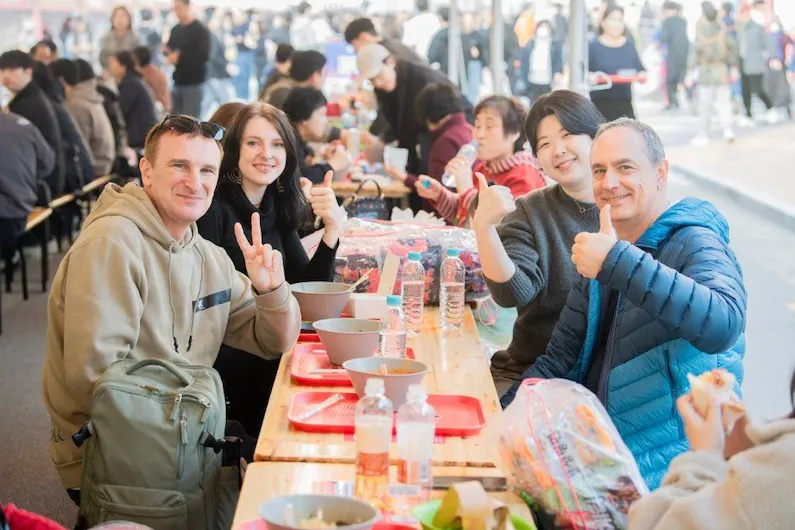
For visitors, the program list is built around ramyeon in many forms. Ramyeon Restaurant serves ramyeon dishes from different regions across the country. Freshly Fried Ramyeon is the festival’s signature food program, utilizing freshly fried noodles. God-Land operates experiences and content related to ramyeon, and the Global Ramyeon Challenge invites domestic and international participants to join a participatory ramyeon-related program. Robot Chef is also among the main programs, and the Hururuk Lounge provides a space to relax with ramyeon while enjoying performances and content.
Main Programs
- Ramyeon Restaurant: A food program showcasing various ramyeon dishes from different regions across the country.
- Freshly Fried Ramyeon: A representative food program of the Gumi Ramyeon Festival, utilizing freshly fried noodles.
- God-Land: Operation of experiences and content related to ramyeon.
- Global Ramyeon Challenge: A participatory ramyeon-related program involving domestic and international participants.
- Robot Chef: A main program operated at the festival.
Side Programs
- Hururuk Lounge: A space to relax with ramyeon and enjoy performances and content.
- Programs linked with local restaurants and commercial districts.
- Operation of festival spaces and street content throughout the original downtown area.
Consumer Participation Programs
- Making My Own Ramyeon
- Soup Lab
Other Details
- Participation of local restaurants.
- Linkage with original downtown areas such as Gumi Station, Yeokjeon-ro, Munhwa-ro, Geumridan-gil, and Saemaul Central Market.
- Promotion and marketing linking the festival site and original downtown commercial districts.
The 2026 Gumi Ramyeon Festival showcases Gumi as an urban tourism destination by connecting regional industry, tourism, food culture, and commercial districts through ramyeon. With the entire original downtown as its stage, it turns a familiar food into a reason to explore the city.
📍 Address: Yeokjeon-ro, Gumi-si, Gyeongsangbuk-do
🛏️ Accommodations near the event
💰 Fee: Free
📞 Inquiry: 054-480-2651~3
⭐️ Instagram: https://www.instagram.com/gumi_ramyun/
🖥️ Homepage: https://www.gumiramyun.com/
What is Gumi known for?
Gumi is known primarily as a manufacturing center for South Korea’s electronics and information technology industries. It has been called the country’s “digital industrial capital,” and since the 1970s it has hosted large production facilities for Samsung and LG Electronics. The Gumi National Industrial Complex, established in the late 1960s as part of government-led industrialization, runs along the Nakdong River. It produces semiconductors, mobile phones, displays, and automotive components for domestic and international markets. The complex remains central to the local economy and to South Korea’s electronics supply chain.
Gumi also has a non-industrial side. Geumosan Mountain rises behind the city, with forested trails and remnants of fortress walls for hikers. Older cultural sites include Dongsusa Temple and the Buddhist stone carvings at Seonsan. The area has connections to Korean scholars and military figures, and local museums and monuments document that history. The Nakdong River runs through the city, and its banks are used for parks and walking paths.
The Gumi Ramyeon Festival, held annually, focuses on another part of the city’s identity. It brings together noodle vendors, cooking demonstrations, and tasting events, and it draws visitors from nearby cities. Gumi’s attractions are both industrial and cultural: it is a city where electronics manufacturing operates alongside mountain hiking, historical sites, and local food.
