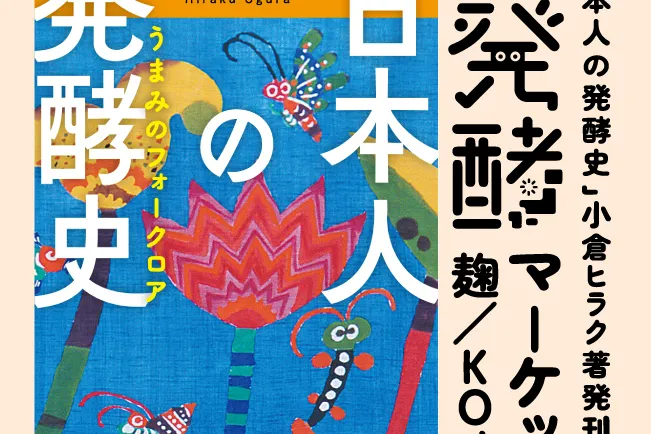
Commemorating the Publication of “The History of Japanese Fermentation” by Hiraku Ogura: The 5th Fermentation Market – Koji/KOJI: Books, Fermentation, and a “Naorai” Drinking Party + Aoyama Book Center Pop-Up

Fermentation has evolved into a cornerstone of contemporary food culture, moving beyond simple preservation to become a subject of culinary and academic interest. The 5th Fermentation Market, themed around “Naorai”—a traditional Japanese banquet culture where participants gather to eat and drink after a religious ritual—seeks to translate this heritage into a modern experiential event. Visitors can engage with the culture through five senses, participating in koji-making workshops and attending drinking parties focused on craft sake hosted by fermentation designer Hiraku Ogura. The event further integrates literature and regional specialty foods through a dedicated Aoyama Book Center pop-up and a curated selection of fermented products from across Japan.

Featured Presenter: Hiraku Ogura
The event is centered around the work of fermentation designer Hiraku Ogura, who will publish his latest book, “History of Fermentation of the Japanese People,” on Tuesday, August 25. This work presents a unique food culture theory that examines the development of Japanese cuisine through the lenses of “Shinsen” (offerings made to the gods) and the biological process of fermentation.
To provide a tangible application of these theories, a “Fermentation BAR” will be established at the venue. This space allows attendees to experience Japanese food culture in a realistic setting, with a particular emphasis on “craft sake” brewed from rice.
🎁 A giveaway campaign to win a copy of “History of Fermentation of the Japanese People” is currently active on the official Osaka Schedule X account; interested participants may enter here.

Regional Fermented Foods via the “Fermentation Department”
The “Fermentation Department,” a specialty shop located in Shimokitazawa, Tokyo, and owned by Hiraku Ogura, will return to the market this year. The shop will curate a selection of fermented products gathered from various regions of Japan, offering a lineup of seasonings and foods that the staff highly recommend for their unique flavor profiles. In coordination with the book “Japan Fermentation Travelogue,” the exhibition will specifically highlight products from Niigata, including salmon, kanzuri, and amazake.

Programming: Drinking Parties, Talks, and Workshops
The event schedule includes a variety of interactive and intellectual highlights designed to broaden the visitor’s understanding of fermentation. These include:
- Fermentation Drinking Parties: Hosted by Hiraku Ogura, these sessions focus on the social and cultural aspects of craft beverages.
- Interdisciplinary Talk Events: A series of discussions featuring a diverse array of experts—including university professors, brewery proprietresses, Shinto priests, and musicians—to explore fermentation from multiple perspectives.
- Koji-making Workshops: Hands-on sessions led by professionals for those wishing to learn the technical aspects of koji production.
The complete event schedule can be viewed here.
Event Logistics
- Period: Wednesday, August 26, 2026 – Monday, August 31, 2026
- Hours: 10:00 – 20:00
- Location: Hanshin Umeda Main Store 1st Floor, Shokusai Terrace (1-13-13 Umeda, Kita-ku, Osaka City)
- Admission: Free
- Official Website: https://web.hh-online.jp/hanshin/contents/str/20260826.html
Koji is the common name for the fungus Aspergillus oryzae, which has been used in Japanese food production for centuries. It is not eaten by itself, but is grown on steamed rice, barley, soybeans, or other grains to create a base for fermented foods. The grain is inoculated with spores and kept in a warm, humid environment for roughly two days while the mold grows and releases enzymes. Amylases break down starches into sugars, and proteases break down proteins into amino acids. These chemical changes are what allow sake to ferment, give soy sauce its savory character, and produce the flavor and texture of miso. The same process is also used for mirin, rice vinegar, and shio-koji, a salted koji preparation used as a marinade for meat and fish. In shio-koji, the enzymes act directly on proteins, which can tenderize food and bring out a mild, rounded savoriness. Aspergillus oryzae is considered safe for food use and, unlike some other molds, does not produce toxins under normal cultivation conditions. Its role is straightforward: it provides the enzymes that many Japanese pantry staples depend on.
