
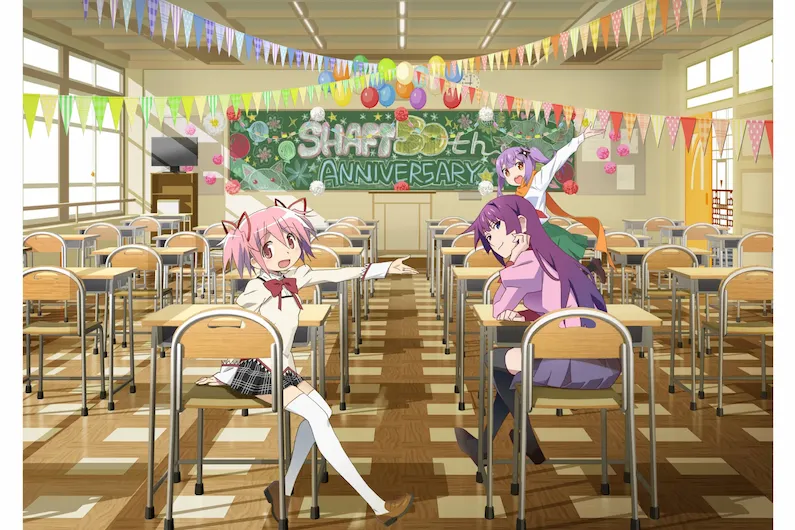
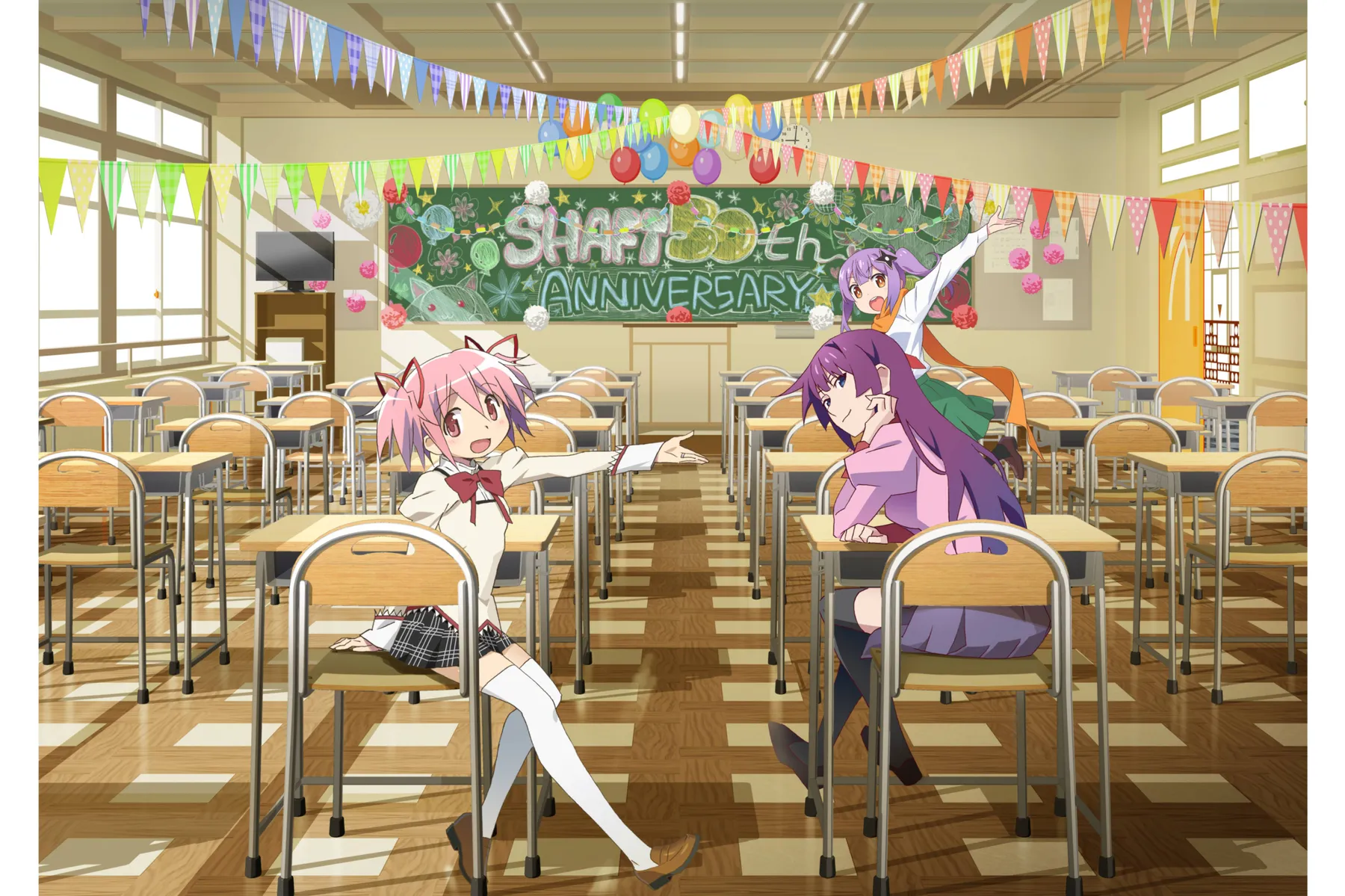
Shaft 50th Anniversary Exhibition
An event, the “Shaft 50th Anniversary Exhibition,” will be held to commemorate the 50th anniversary of the establishment of animation studio Shaft.
The animation studio Shaft marks fifty years of operation with a comprehensive retrospective at Mixalive TOKYO in Ikebukuro. Running across two distinct periods in late December 2025 and January 2026, the Shaft 50th Anniversary Exhibition examines the 50 turning points that shaped the studio’s distinctive creative identity—often referred to as “Shaft-ism”—through original artwork, setting materials, and production documents rarely seen by the public.
The exhibition encompasses the full scope of the studio’s output, from the Monogatari Series—the work that catalyzed Shaft’s commercial breakthrough—to Puella Magi Madoka Magica, which is currently anticipating its first new theatrical release in twelve years. The display also incorporates the studio’s latest production, Ninja and Assassin’s Living Together, alongside earlier works such as Sayonara, Zetsubou-Sensei, offering visitors a comprehensive view of the studio’s evolution from its origins to its current trajectory.
Exhibition Content and Visitor Benefits
The curatorial approach centers on the “encounters” and pivotal moments that generated Shaft’s characteristic visual language. Visitors will encounter behind-the-scenes documentation detailing the conception of the studio’s major works, including commentary from creators and previously unreleased production materials that illuminate the technical and artistic decisions behind the studio’s most influential series.
Entry includes a visitor bonus: a special two-layer sticker (70mm × 70mm) selected randomly from approximately twenty designs. The specific designs available will differ between the exhibition’s first and second halves, effectively creating two distinct collection periods for repeat visitors. The sticker designs are subject to change.
Ticket Information
Admission is structured across several categories, with pricing varying by purchase timing and visitor status.
Exhibition Admission Tickets (Tax Included)
| Ticket Type | Adults | Students (Elementary–High School) | Disability Certificate Holders |
|---|---|---|---|
| Advance | ¥2,500 | ¥1,800 | ¥1,500 |
| Same-Day | ¥2,700 | ¥2,000 | ¥1,700 |
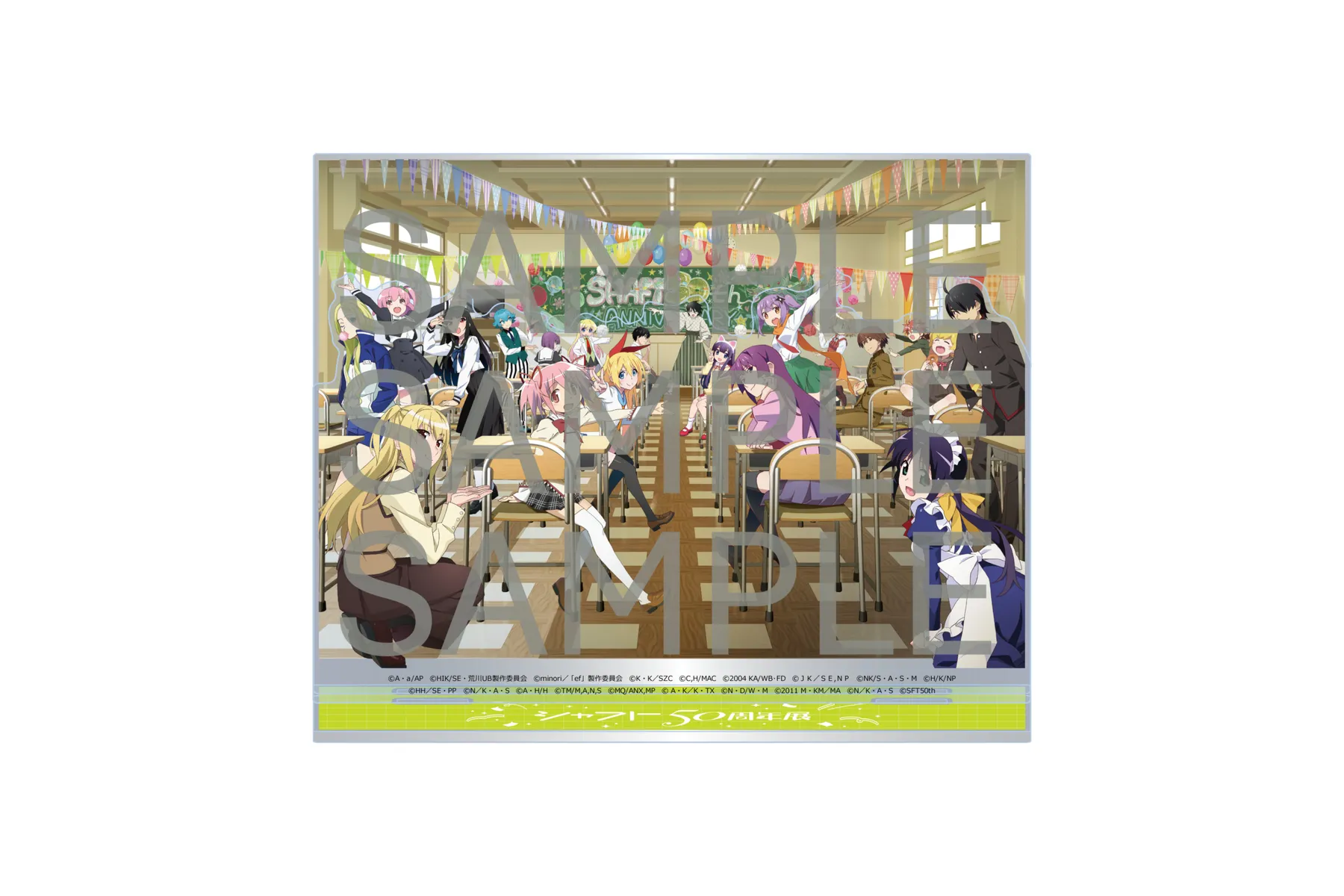
Admission Ticket with Limited Goods: ¥7,500
This premium ticket includes exhibition entry plus an Event Key Visual Big Acrylic Diorama (approximately 200mm × 152.5mm). Note that the contents of the limited goods are subject to change.
Special Talk Show Event
On Saturday, January 10, 2026, the exhibition hosts a collaborative event with Mixa Animation Diary: “Shaft 50th Anniversary Exhibition × Mixa Animation Diary ‘Bakemonogatari'”. This one-day-only talk show reunites the principal voice cast to discuss their memories from the original broadcast of Bakemonogatari.
Event Schedule
- Day Session: Doors open 13:45; Event starts 14:30
- Night Session: Doors open 17:45; Event starts 18:30
Venue
Mixalive TOKYO 6F Theater Mixa
1-14-3 Higashi-Ikebukuro, Toshima-ku, Tokyo
Cast
- Hiroshi Kamiya (Role of Koyomi Araragi)
- Chiwa Saito (Role of Hitagi Senjougahara)
- Emiri Katō (Role of Mayoi Hachikuji)
- Kana Hanazawa (Role of Nadeko Sengoku)
- Yui Horie (Role of Tsubasa Hanekawa)
Cast members are subject to change without notice. Please be aware of this in advance.
Talk Show Ticket Information
Tickets are available for both physical attendance and streaming, with strict quantity limits (maximum two tickets per person per performance). Preschool children may not enter.
Venue Tickets (Include streaming access for all seats)
- General (Day/Night): ¥13,000 per session
- Bench Seat—Rear of 2nd floor (Day/Night): ¥10,000 per session
- Includes visitor bonus
Streaming Tickets
- Individual session (Day or Night): ¥3,000
- Day & Night Combined: ¥5,500
All prices include tax; various fees are separate.
Sales Schedule
Venue Ticket Sales:
- Playguide Advance Sale (Lottery): Friday, November 21, 2025, 18:00 – Sunday, December 14, 2025, 23:59
- General Sale (First-come, first-served): Saturday, December 27, 2025, 12:00 – Until sold out
If venue tickets sell out during advance sales, general sales will end.
Streaming Viewing Ticket Sales:
Friday, November 21, 2025, 18:00 – Sunday, January 18, 2026, 20:00
Streaming Archive Period:
Through Sunday, January 18, 2026, 23:59
Practical Information
Location
Venue: Mixalive TOKYO
Nearest Station: Ikebukuro Station
Address:
〒170-0013
1-14-3 Higashi-Ikebukuro, Toshima-ku, Tokyo
MAP
Exhibition Period
- First Half: Saturday, December 27, 2025 – Tuesday, January 6, 2026
- Second Half: Thursday, January 8, 2026 – Sunday, January 18, 2026
Closed: Wednesday, January 1, 2026 and Wednesday, January 7, 2026
Hours
11:00 – 21:00 (Final admission 20:00)
Official Website
https://shaft-50th.jp/exhibition/
The listed content may have changed. For the latest information, please check the official website of the venue or organizer.



© Shaft 50th Anniversary Exhibition Production Committee
© Nakayama/Ditama / Wani Books / Mahoro Matteic Production Committee
© 2004 Keitaro Arima / Wani Books · Flying Dog
© Hekiru Hikawa / Square Enix · Paniponi Production Committee
© Ken Akamatsu · Kodansha / Kanto Magic Association · TV Tokyo
© minori / “ef” Production Committee
© Jin Kobayashi / Square Enix · Natsu no Arashi! Production Committee
© 2011 Kaisei Endo · KADOKAWA Media Factory / Maria†Holic Alive Production Committee
© Ume Aoki · Houbunsha / Hidamari Apartments Management Association
© Koji Kumeta · Kodansha / Sayonara Zetsubou-Sensei Production Committee
© Hikaru Nakamura / Square Enix · Arakawa UB Production Committee
© Nisio Isin / Kodansha · Aniplex · Shaft
© Magica Quartet/Aniplex, Madoka Project
© Chika Umino · Hakusensha / “March Comes in Like a Lion” Anime Production Committee
© Naoshi Komi / Shueisha · Aniplex · Shaft · MBS
© TYPE-MOON/Marvelous, Aniplex, Notes, SHAFT
© AZONE INTERNATIONAL · acus / Assault Lily Project
© Hamburger / KADOKAWA / Ninkoro Production Committee
Shaft, Inc. (株式会社シャフト) began operations in 1975 as an outsourcing studio, handling in-between animation and production assistance for larger Tokyo-based companies. For decades, the company operated on the industry’s periphery, executing contract work for established outfits before gradually assuming primary production responsibilities in the late 1990s.
The studio’s orientation shifted substantially in the mid-2000s with the arrival of director Akiyuki Shinbo, who brought a visual approach informed by experimental theater, architectural photography, and expressionist cinema. Under his direction, Shaft developed a recognizable formal vocabulary: extreme camera angles (particularly vertical tilts that disorient spatial relationships), dense typographic overlays, flat geometric color blocking, and editing patterns that privilege emotional association over physical continuity. These techniques first consolidated in series like Pani Poni Dash! (2005) and Hidamari Sketch (2007), distinguishing Shaft’s output from prevailing television conventions.
Subsequent productions applied this visual framework to disparate source material. Puella Magi Madoka Magica (2011) adapted the magical girl format through a horror narrative structure, using the studio’s characteristic visual fragmentation to literalize psychological collapse. The Monogatari Series, beginning with Bakemonogatari (2009), translated Nisio Isin’s dialogue-heavy novels through rapid montage and impossible architecture. Later works like March Comes In Like a Lion (2016) muted the house style to accommodate quieter character observation, while Sayonara, Zetsubou-Sensei (2007) deployed exaggerated visual metaphors for absurdist satire.
Now marking fifty years since its founding, Shaft maintains active production with a 2025 exhibition at Mixalive TOKYO tracing its technical evolution. The display encompasses layout drawings and animation cels from their outsourcing period through to contemporary digital productions, documenting the studio’s transition from hand-painted cels to digital compositing while retaining the mid-2000s storyboarding methodologies that define its current output.
