Perfect fit Namsadang Bawudeugi Festival
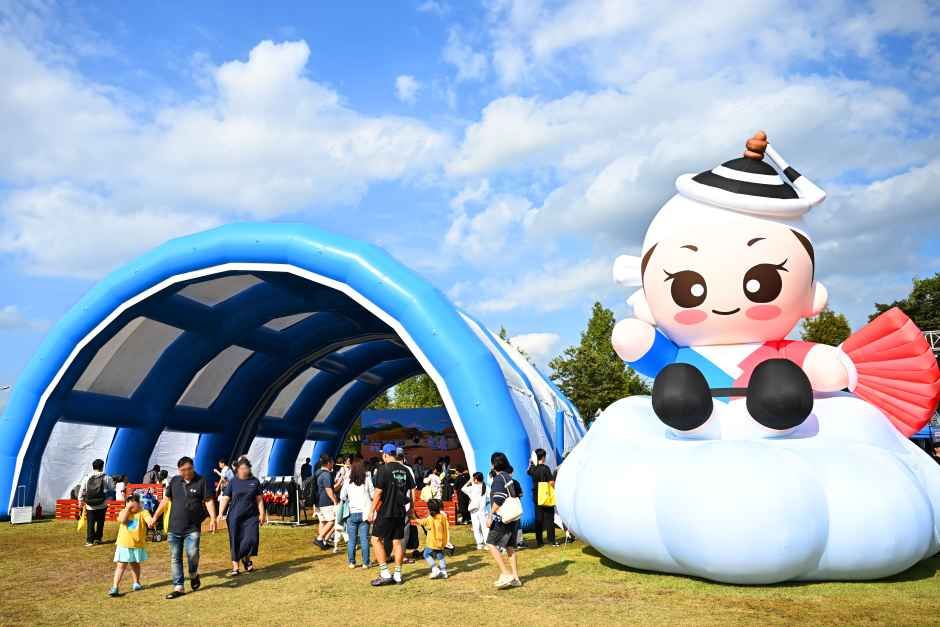
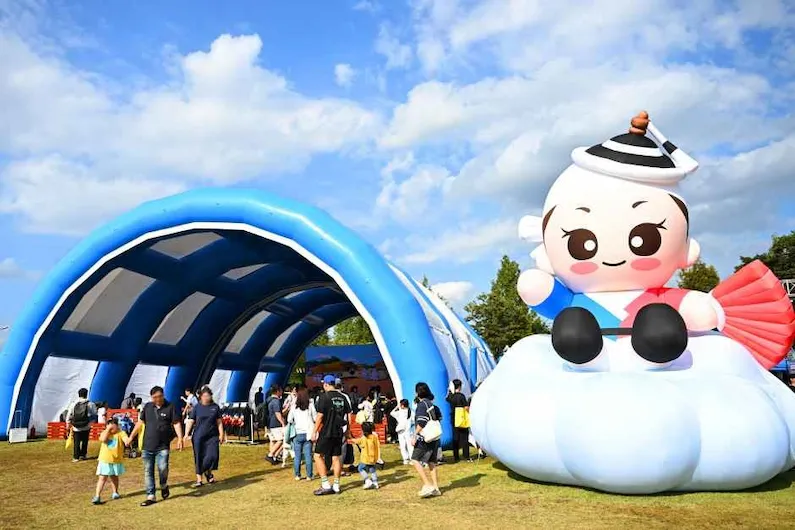
The Anseongmachum Namsadang Baudeogi Festival is a comprehensive celebration based on Namsadangnori, a traditional performing art that has earned its place as a UNESCO Intangible Cultural Heritage of Humanity. By inheriting and developing the artistic spirit of Baudeogi—who served as the first female Kkokdusoe (leader) during the Joseon Dynasty—and the distinct style of the Anseong Namsadang troupe, the festival offers a curated variety of programs accessible to visitors of all ages.
What sets this event apart is its ability to harmonize tradition with modernity, allowing visitors to encounter the essence of tightrope walking and Namsadangnori in a vivid, close-up setting. The festival effectively combines history, culture, performance, and tourism to establish itself as a representative traditional culture festival of the Republic of Korea, attracting both domestic and international tourists.
One of the most immersive aspects of the event is the Anseong Old Market, which reproduces the abundance and atmosphere of one of the three largest markets in the country during the Joseon Dynasty. Beyond this historical recreation, guests can engage with traditional culture experiences, domestic and international traditional art performances, and overseas folk performances.
Event Programming
The festival is structured across several distinct categories to ensure a multifaceted experience:
1. Official Events
The formal progression of the festival is marked by the Memorial Ceremony, the Eve Festival, the Market Opening Ceremony, and the official Opening and Closing Ceremonies.
2. Experiences
Visitors can explore the Baudeogi Theme Park, participate in the Baudeogi Culture Tour, or wander through the Anseong Old Market and the Anseong Culture Market.
3. Exhibition & Promotion
The event features a dedicated Anseong Livestock Grilled Meat Zone and various agricultural and livestock product sales. Educational and visual highlights include the Anseong Master Exhibition, the Baudeogi Light Festival, and the Global Studio.
4. Performances
The core of the festival’s artistic offering includes Namsadangnori, Traditional Wedding reenactments, Geuknori (traditional play), and the World Heritage Masterclass.
5. Citizen Stage
Community involvement is highlighted through THE NEXT Baudeogi Competition, the Citizen Choir Festival, a 100-person Saxophone performance, and the Citizen Art Stage.
Essential Visitor Information
🗓️ 2026.10.02 ~ 2026.10.05
📍 Address: 198 Namsadang-ro, Bogae-myeon, Anseong-si, Gyeonggi-do
💰 Fee: Free
📞 Inquiry: 031-678-5414
⭐️ Instagram: https://www.instagram.com/baudeogi26/
🖥️ Website: https://www.anseong.go.kr/
🛏️ Accommodation near the event
What is Namsadang?
Namsadang refers to the itinerant all-male entertainment troupes that traveled across Korea during the Joseon dynasty (1392–1897). The name means “wandering male shows,” and the troupes did exactly that: they moved from village to town with instruments, props, and costumes, performing for commoners at local markets, festivals, and rural gatherings.
A Namsadang performance was not a single act but a full program combining music, acrobatics, comedy, dance, and storytelling. The traditional lineup had six parts: pungmul (percussion and dance), beona (plate spinning and balancing tricks), salpan (acrobatics and tumbling), deotboegi (masked dance-comedy), deolmi (a puppet play), and jultagi (tightrope walking). Every role required sustained training, and troupes were organized with clear hierarchies and specialized duties, much like small communities.
In Joseon society, Namsadang performers were largely landless wanderers, placed outside the accepted social order. Their status was marginal, but their art reached a wide audience. The performances were loud, comic, and technically demanding. Through satire and parody, they could mock the ruling class, acknowledge the difficulties of ordinary life, and keep folk culture active in a period when official institutions offered it little support.
Certain troupes were tied to particular regions. One of the most important bases was Anseong, and it was there in the 19th century that a performer named Baudeogi became the first documented woman to lead a Namsadang troupe. In a tradition that had been exclusively male, her position was remarkable, and accounts of her skill and leadership have survived in local memory. Anseong now honors her through the Anseongmachum Namsadang Baudeogi Festival, where Namsadang arts are staged alongside other folk practices.
The festival continues to draw on a performance tradition that has been passed down through generations. Namsadang remains distinct from more formal, court-centered Korean performance arts, and its modern presentations preserve an approach to entertainment that was built around direct contact with village audiences. Seeing it today means encountering not a relic but a living practice, shaped by centuries of wandering performers and their audiences.
