Pyeongchang Nongak & Mountain Food Festival
🗓️ 2026.09.18 ~ 2026.09.20
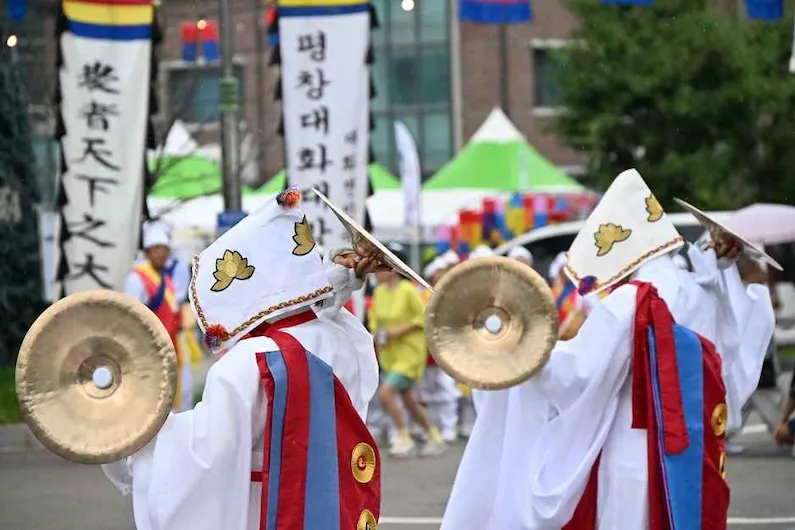
The Pyeongchang Nongak & Mountain Food Festival is held annually in Yongpyeong-myeon, Pyeongchang-gun, the village where the Pyeongchang Dunjeonpyeong Nongak—a representative intangible cultural asset of Gangwon Province—is preserved and carried on. Nongak, Korea’s traditional farmers’ performance, is known for its driving percussion and communal dances, and this festival places that heritage at the center of a weekend of food, performance, and hands-on activities. Over the years, the festival has developed into an event visited by many tourists, since it offers something for people of all ages and genders.
This year’s festival marks its 6th anniversary under the theme “Delicious Sounds of Pyeongchang Love! The Delicious Mountain Food of Exciting Pyeongchang Nongak.” By combining regional mountain food with exciting performances and experiences centered on the Pyeongchang Dunjeonpyeong Nongak, this edition will present a more diverse and abundant range of attractions than before. The event is colorfully composed of various food programs including jar barbecue, skewer grilling experiences, and market-style soup (jangteogukbap), as well as traditional culture experiences and various performances such as madanggeuk (open-air plays). It offers everyone an unforgettable autumn atmosphere of Pyeongchang, where the exciting rhythms of Nongak blend with Pyeongchang’s delicious and generous hospitality.
The programs are organized into four categories:
1. Main Programs
Folk performances (Nongak, Gilnori, Madanggeuk, etc.) and singer performances.
2. Side Programs
Busking (traditional Korean music and fusion gugak, etc.).
3. Experience Programs
Straw craft, folk games, and playing folk instruments, etc.
4. Food
Jar barbecue, skewer grilling experience, etc.
📍 Address: 7 Galjeongji-gil, Yongpyeong-myeon, Pyeongchang-gun, Gangwon-do
🛏️ Accommodations near the event
💰 Fee: Free (Food is paid)
📞 Inquiry: 033-332-4333
🖥️ Website: Website url
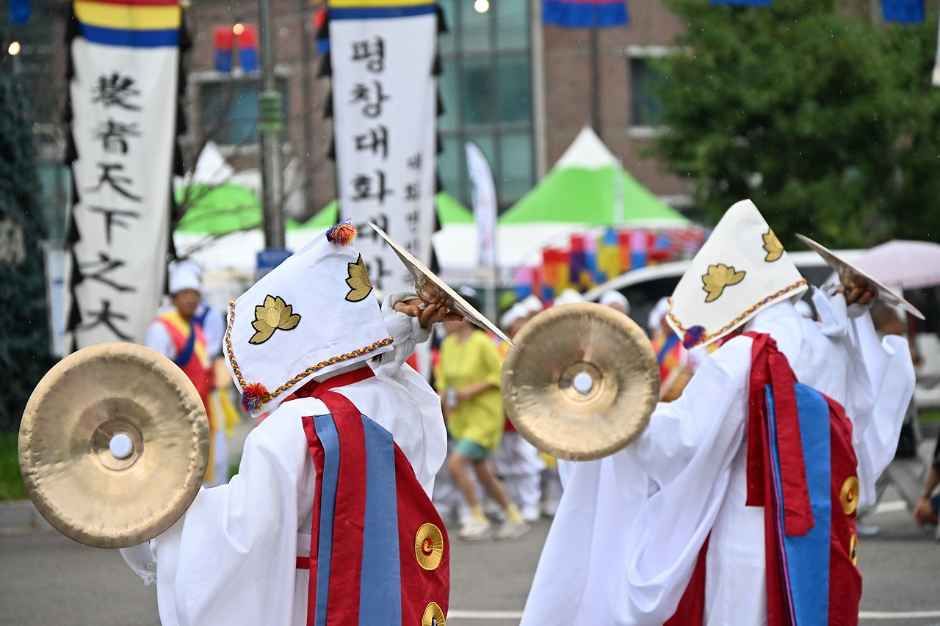
Nongak is a traditional Korean farmers’ performance art. It developed in rural areas as a way for villagers to coordinate labor, mark seasonal events, and maintain communal ties. The music is played on four instruments: the buk barrel drum, the kkwaenggwari small gong, the jing large gong, and the hourglass-shaped janggu. The kkwaenggwari leads the ensemble, while the other instruments maintain the rhythm and shape the pace of each piece.
The performance extends beyond the band. Dancers wear sangmo, caps fitted with long ribbon streamers, and move their heads to draw clean arcs and spirals in the air. Some sections feature staged comic exchanges, processional formations, and direct calls to the audience. These elements give nongak a theatrical character while preserving its origins as a village practice.
Nongak has been performed on stage for decades and was listed by UNESCO as an Intangible Cultural Heritage of Humanity in 2014. At the 2026 Pyeongchang Nongak & Mountain Food Festival, it will be programmed as a main attraction, with performances scheduled throughout the grounds. The presentation will keep the music and movement at the center, rather than using them as background for the food events.
