Yeongdeok National Heritage Night Tour
🗓️ 2026.08.21 ~ 2026.08.23
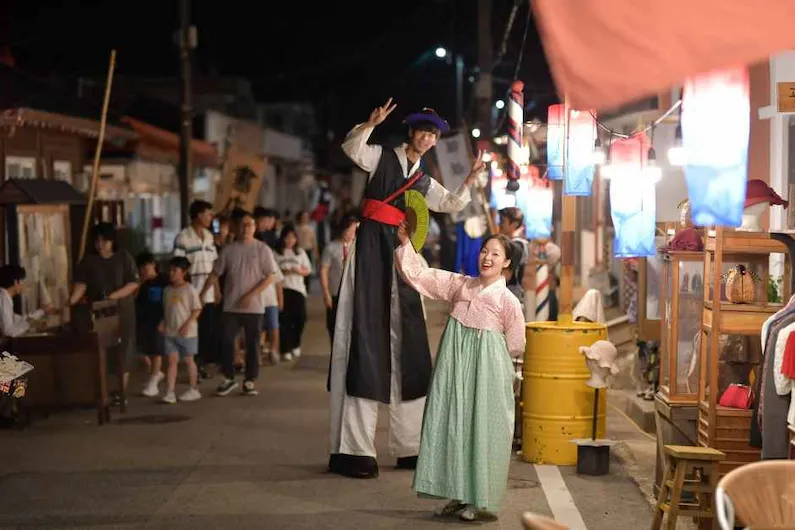
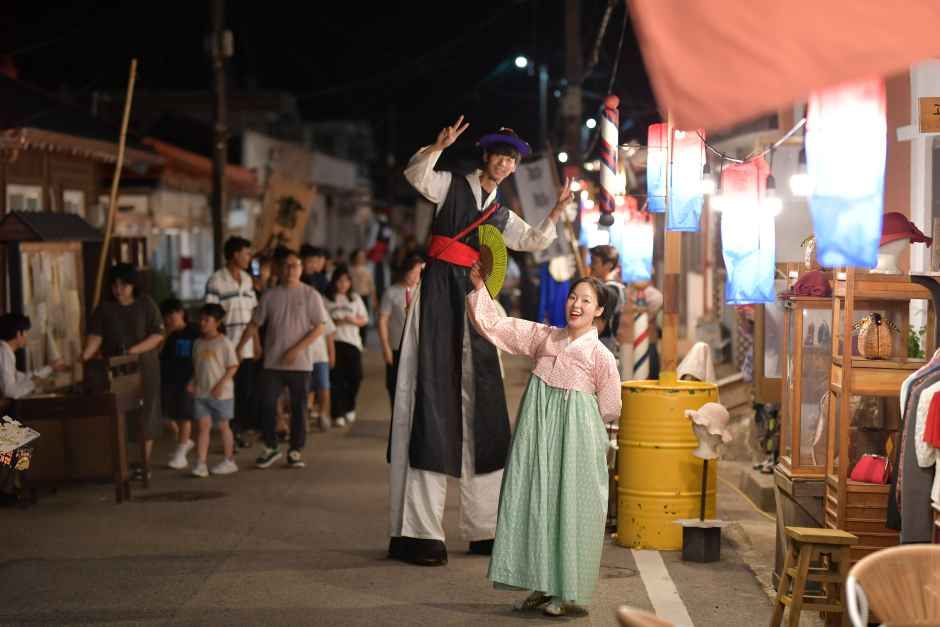
The 2026 Yeongdeok National Heritage Night Tour, subtitled “Yeonghae 1926, Walking Through That Night,” transforms the Modern History and Culture Space of Yeonghae Market Street into a three-day immersive portal to the past. Running from August 21 to 23, 2026, this nightly history and culture festival invites visitors to wander through alleys meticulously revived to reflect Yeonghae as it appeared one hundred years ago.
The significance of the location itself warrants attention. Yeonghae Market Street holds designation as state-registered cultural heritage at the myeon (township) level—a distinction shared by only five other regions across the nation. This scarcity amplifies what the Night Tour offers: not a generic heritage experience, but one rooted in a genuinely rare surviving urban fabric.
What Sets This Apart
Where many heritage festivals content themselves with static displays, this event pursues full environmental storytelling. The year 1926 functions as more than a decorative motif; it structures every programmatic choice, from the musical repertoire to the food vendors’ preparations. Visitors encounter not exhibits about history, but history reconstructed as navigable space.
Program Overview
All events operate from 7 PM to 11 PM across eight thematic categories—Night View, Night Path, Night History, Night Story, Night Legend, Night Food, Night Stay, and Night Market—with forty programs running daily. Admission is free.
| Category | Offerings |
|---|---|
| Main Performances | Site-specific musical Yeonghae 1926, Gokmadan Circus, cabaret performances, modern costume parade, National Heritage Media Facade, intangible heritage including Yeongdeok Wolwolyicheongcheong and Onggi artisan demonstrations |
| Experience & Exploration | Night Tour sticker map tour, rickshaw experience, modern costume experience, silent cinema, hands-on workshops for lanterns, Taegeukgi keyrings, and rubbing prints |
| Food & Market | Yeonghae Club (tavern recreation using Yeongdeok specialties), food trucks, linked events with Yeonghae Manse Market, Yeongdeok peach specialty sales |
| Accommodation | Partner Hanok guesthouses at Goesi Folk Village, Wongu Traditional Village, and Inryang Traditional Theme Village |
Practical Information
📍 Address: 10 Yeju 2-gil, Yeonghae-myeon, Yeongdeok-gun, Gyeongsangbuk-do
🛏️ Accommodation near the event
💰 Fee: Free
📞 Inquiry: 054-730-5852
⭐️ Instagram: https://www.instagram.com/festival.yd
🖥️ Homepage: http://yahaeng.ydstay.kr/
What is Yeonghae Market Street?
Yeonghae Market Street is a commercial district in Yeongdeok’s old town, built during the 1920s when the Japanese colonial administration developed the area as a regional fishing and trade center. The street connects inland mountain villages with the coastal economy, historically trading in marine products, medicinal herbs, and imported goods.
The name combines “Yeong” (영, 永) from Yeongdeok with “hae” (海), meaning sea. The architecture shows what happens when Japanese colonial commercial design meets Korean practical needs: two-story wooden buildings with curved tile roofs, projecting upper floors, and covered walkways that kept traders dry through winter storms and summer rains. The scale is smaller than colonial markets in major cities—narrow lanes branch from the main street where specific trades settled. Copper smiths, net menders, rice wine brewers, and fortune tellers worked in designated sections.
Yeongdeok’s geographic isolation kept this market intact while comparable sites elsewhere were demolished during Korea’s rapid development or rebuilt as tourist approximations. The original wooden floors absorbed decades of salt water; fishmongers sold gwamegi (half-dried billfish) through the 1970s; layered signage in hangul and kanji accumulated without deliberate curation. The 2019 designation as a National Registered Cultural Property acknowledges this continuity rather than freezing the street as a museum piece.
Today about 180 structures remain across twelve alleys, with roughly forty percent retaining original elements from the 1920s-1940s. Preservation follows an “adaptive authenticity” approach—contemporary businesses operate here, but with requirements to maintain historical materials and spatial relationships. The National Heritage Night Tour works within this framework, using buildings that actually witnessed the economic and social changes of early twentieth-century coastal Korea rather than constructing a theatrical version of the past.
